

P0463 on 2012-2018 Audi A6: Fuel Level Sensor Circuit High Causes and Fixes
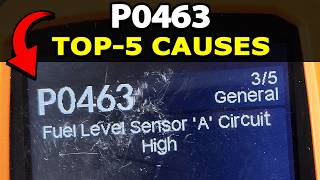
P0463 on a 2012-2018 Audi A6 almost always means a bad fuel level sending unit in the gas tank. This causes an incorrect fuel gauge reading, often stuck on full. Expect to pay $900-$1,500 for a professional repair due to high OEM part costs and the labor involved in accessing the saddle-style tank.
- P0463 on your Audi A6 points to a problem with the fuel level sensor circuit, most likely a failed sensor inside the fuel tank.
- The main symptom will be an unreliable or non-functional fuel gauge, which poses a risk of running out of gas.
- The engine's performance will not be affected, and the car remains drivable.
- The most common fix is to replace the fuel level sending unit, which can be a costly repair, particularly if using OEM parts. The correct part for Sensor 'A' is typically the right-side unit.
What's Unique About the 2012-2018 Audi A6
The 2012-2018 Audi A6 (C7 generation), especially in its common Quattro all-wheel-drive configuration, uses a saddle-shaped fuel tank to make room for the driveshaft. This design necessitates two separate fuel level sensors to accurately measure the fuel on both sides of the 'hump'. Code P0463 refers to a fault in the primary sensor, often called Sensor 'A', which is typically integrated with the main fuel pump assembly on the right (passenger) side of the tank. The second sensor on the left side is a separate unit.
Symptoms You May Notice
- Check Engine Light is on
- Fuel gauge reads full at all times
- Fuel gauge fluctuates erratically or gives inconsistent readings
- Fuel gauge is stuck on empty, even with fuel in the tank
- Low fuel warning light may stay on or flash
- In rare cases, engine hesitation or stalling if the computer is confused about fuel levels
- Replacing the entire fuel pump when only the sending unit has failed (though they are often sold as one assembly).
- Replacing the instrument cluster fuel gauge, which is rarely the cause of the issue. 🎬 See this Audi A6 fuel gauge fix walkthrough
Most Likely Causes
- Faulty Fuel Level Sending Unit 🔴 High Probability → Shop Fuel Tank Sending Unit The variable resistor contacts on the sending unit's circuit board can wear out or become contaminated over time, causing an open circuit and leading to the high voltage reading. 🎬 Watch: How to diagnose and fix a P0463 code This is the most common point of failure for this code.
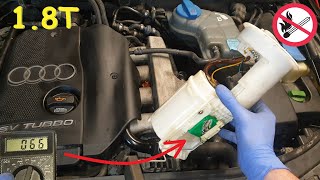
How to confirm: Access the sending unit under the rear seat. Measure its resistance with a multimeter while moving the float arm. The resistance should change smoothly without any jumps to infinite resistance (open circuit). A reading that is consistently open or does not change indicates a bad sensor.
Typical fix: Replace the fuel level sending unit. On the C7 A6, Sensor 'A' is typically the right-side (passenger) unit, which may be integrated with the fuel pump. It is often replaced as a complete assembly. A new sealing ring should always be used.
Est. part cost: $250-$1000 - Wiring or Connector Issue 🟡 Medium Probability The wiring harness leading to the fuel tank is located under the rear seat, where it can be susceptible to corrosion from moisture or physical damage. A short to power, a broken wire, or a poor ground connection can cause the high voltage reading.
How to confirm: Visually inspect the wiring harness and connector at the top of the fuel tank (under the access panel) for any signs of corrosion, chafing, or loose pins. Perform a voltage and ground check at the connector with a multimeter. A reading consistently above 4.8V can indicate a high-circuit condition.
Typical fix: Repair the damaged section of the wiring harness or clean/replace the corroded connector. Ensure the ground connection for the fuel tank is clean and secure.
Est. part cost: $10-$100
Rare But Worth Checking
- Faulty Powertrain Control Module (PCM): This is very rare. The PCM should only be considered after all other possibilities, including the sensor and its entire circuit, have been thoroughly tested and ruled out. An ECM software update could potentially resolve incorrect threshold tables.
- Stuck Fuel Level Float: Less common than sensor failure, but the float arm can become mechanically stuck in the full position due to debris in the tank or a damaged float, leading to a constant high reading.
Diagnosis Steps
- Scan the vehicle's computer system to confirm P0463 is the only code present and record freeze frame data.
- Observe the fuel gauge behavior. Note if it is stuck on full, empty, or moves erratically.
- Gain access to the top of the fuel tank. This requires removing the rear seat bottom cushion to expose the access panels for both the left and right side units.
- Identify Sensor 'A', which is typically the right (passenger side) unit.
- Disconnect the electrical connector for the identified fuel level sending unit.
- Inspect the connector and wiring for any visible signs of damage, corrosion, or moisture.
- With the key on, use a multimeter to check for the correct reference voltage and a good ground at the connector. A healthy sensor circuit should typically read between 0.5V (empty) and 4.5V (full). A reading above 4.8V confirms the high circuit condition.
- If wiring seems okay, remove the sending unit/fuel pump assembly from the tank. This requires a special lock ring tool. 🎬 Watch: How to replace the fuel level sensor and pump
- Test the sending unit's variable resistor by connecting a multimeter and manually moving the float arm up and down. The resistance reading should sweep smoothly without any dropouts or open circuits.
- If the sensor fails the resistance test, it is faulty and needs to be replaced.
Parts You'll Likely Need
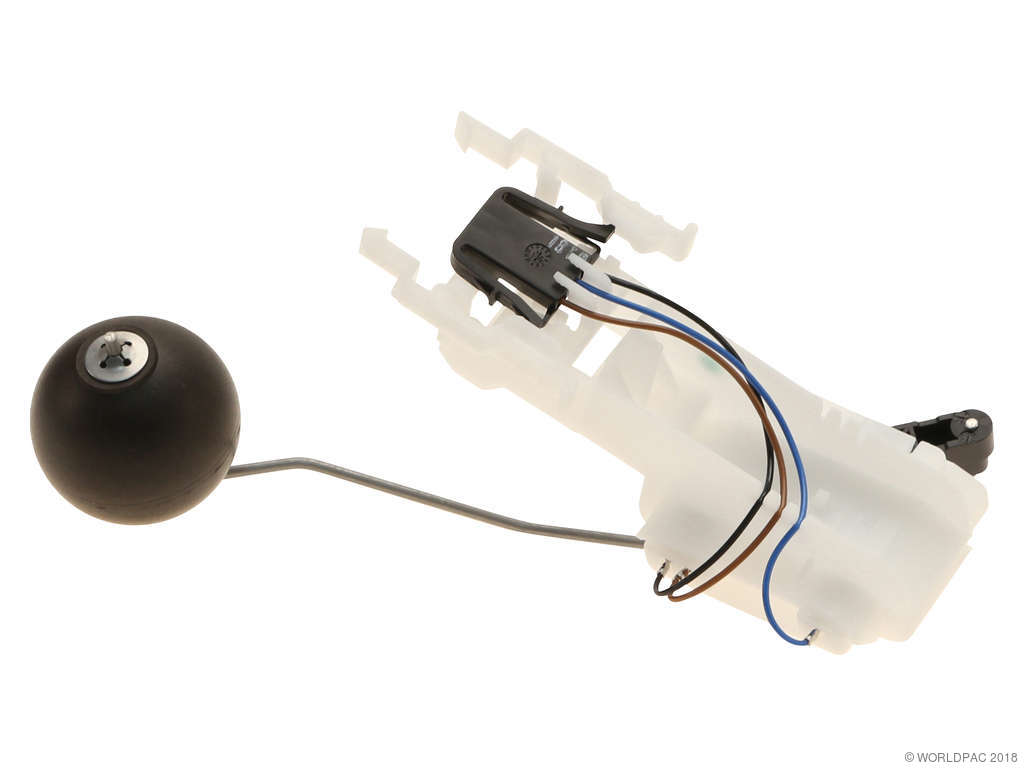
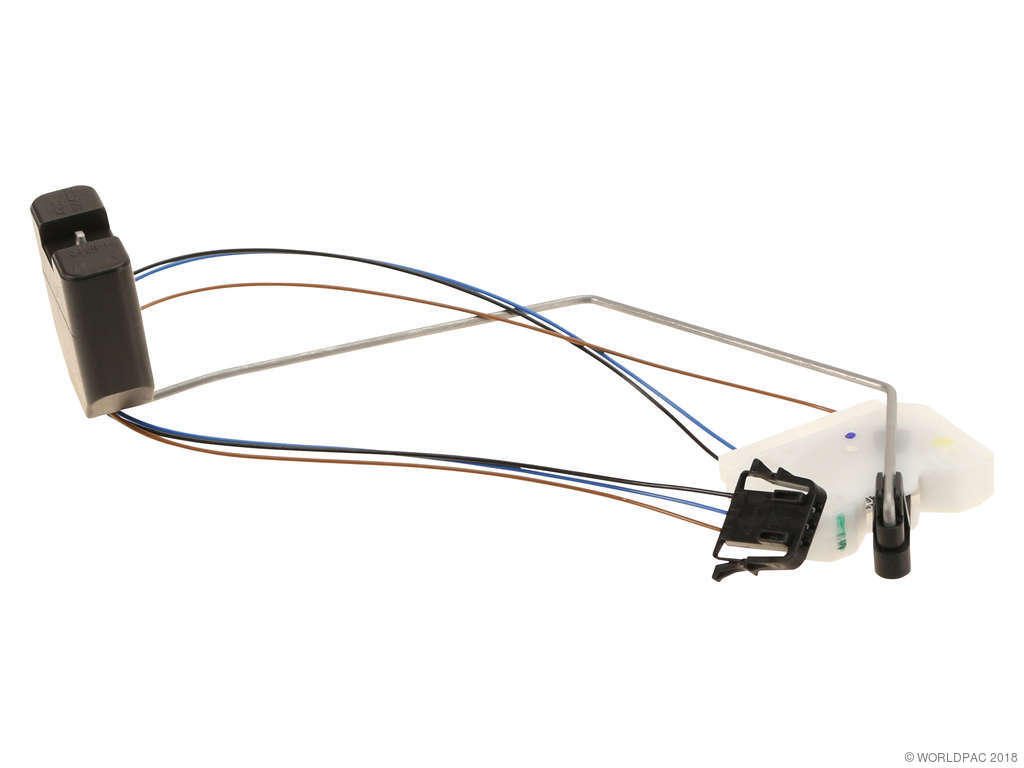
- Fuel Level Sending Unit (Right Side)
(OEM #4G0919673B)— This is the component that fails most often, causing the P0463 code. It contains the float and variable resistor that measures the fuel level on the primary side of the saddle tank.
Trusted brands: Genuine Audi, VDO
OEM price range: $350-$1000
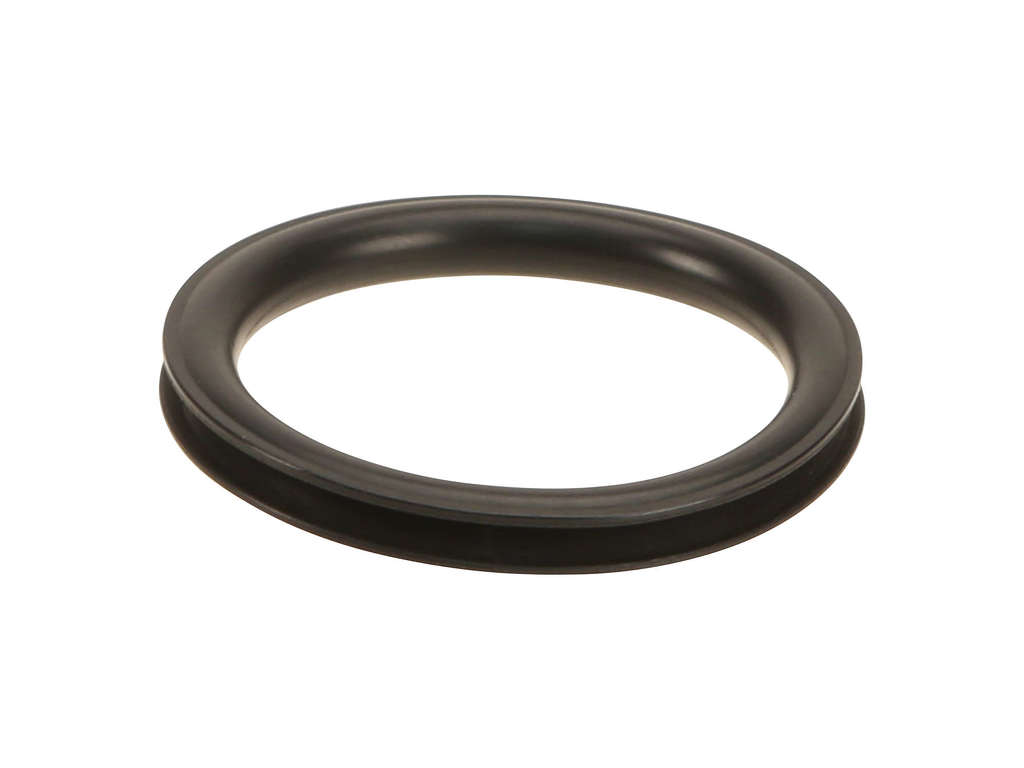
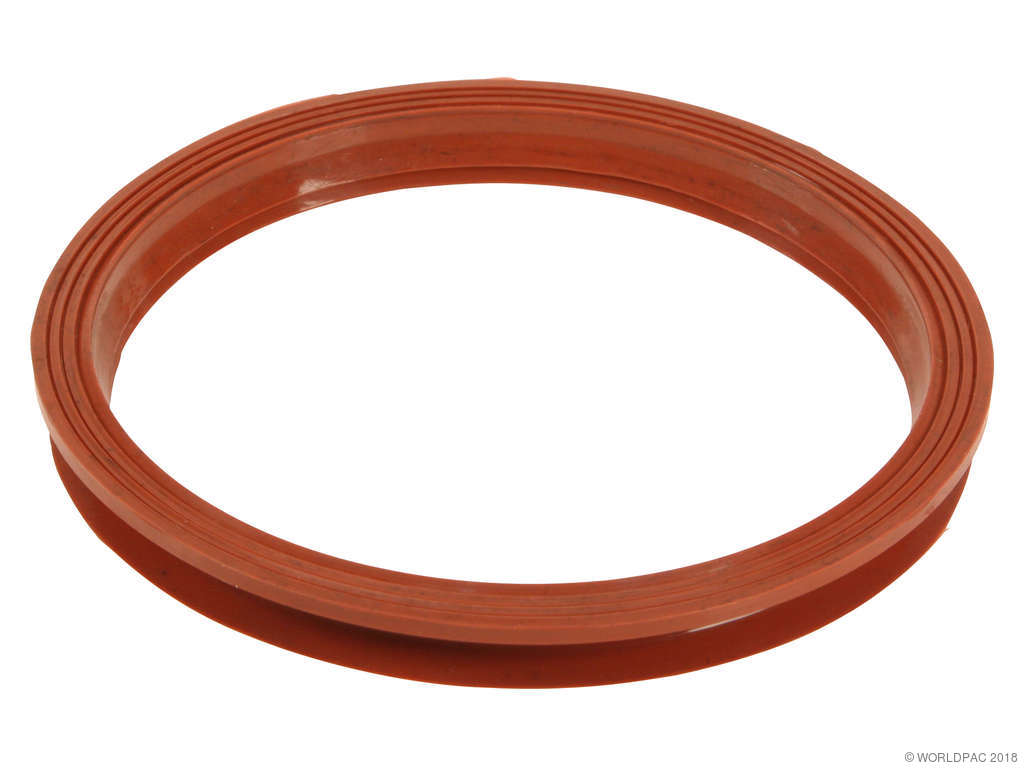
Aftermarket price range: $250-$500 - Fuel Tank Sealing Ring — This gasket must be replaced any time the sending unit is removed from the fuel tank to prevent fuel leaks and vapor escape.
Trusted brands: Genuine Audi, Elring
OEM price range: $20-$40
Aftermarket price range: $10-$25
Platform-Specific Known Issues
- Right vs. Left Sensor: On Quattro models, there are two sensors. P0463 specifically refers to Sensor 'A', which is almost always the sensor on the right (passenger) side of the vehicle. It's crucial to diagnose the correct side before ordering parts.
Mechanic-Grade Diagnostic Values
- Fuel Level Sensor 'A' (G) Resistance — expected: 56 to 68 Ohms (Full) and 295 to 305 Ohms (Empty).. Failure: A reading of infinite resistance (open circuit) or a value that does not change smoothly as the float arm is moved.
- Fuel Level Sensor Signal Voltage at Connector — expected: Approximately 0.5V (Empty) to 4.5V (Full).. Failure: A reading consistently above 4.8V indicates a 'Circuit High' condition, confirming the fault described by P0463.
Hidden / Shadow Codes Worth Checking
- B10581B: Fuel Level Sensor 2 - Resistance Too High. While P0463 points to Sensor 'A' (Sensor 1), seeing a body code like this for the other sensor (Sensor 2) can confirm issues with the overall fuel level sensing system and may appear alongside the primary P-code. (see via Advanced scan tools like VCDS or ODIS that can read manufacturer-specific body control module codes.)
Scan Tool Commands That Help
- VCDS (VAG-COM): Advanced Measuring Values in Module 17-Instruments — To view the live resistance (Ohm) and calculated fuel level (Liters) being reported by each fuel sender individually without removing them from the tank. This is a crucial first step to confirm if the sensor is sending an out-of-spec signal (e.g., maximum resistance) to the instrument cluster.
- VCDS (VAG-COM): Output Tests in Module 17-Instruments — To command a full sweep of all gauges on the instrument cluster. If the fuel gauge sweeps correctly from empty to full and back, it confirms the gauge motor itself is functional, pointing the diagnosis back towards the sensor or wiring.
Wiring & Ground Locations
- Sender Earth Connection — Terminates within the main dash panel wiring harness, not locally at the fuel tank.. A common misdiagnosis is to assume the sensor grounds near the tank. A high resistance or open in this ground path, which runs the length of the car, can cause the P0463 code even if the sensor itself is good. Technicians should check for ground continuity from the sender connector all the way back to the instrument cluster (J285) ground pins.
Real Owner Repair Stories
- Ross-Tech Forums user (2015 Audi A6 (UK)) — Fuel gauge intermittently failing, with a fault code for Fuel Level Sensor 2.
❌ Tried (didn't work) A new genuine Audi fuel pump module/sender assembly was fitted at considerable cost, but the fault returned.
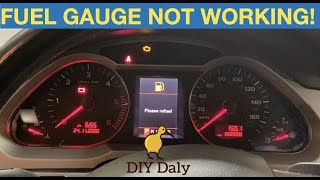
✅ What actually fixed it The issue was still being diagnosed, but the focus shifted from the new part to the wiring. The technician drag-tested the female pins in the connector (which were fine) and was investigating the ground connection path back to the dash panel, suspecting an intermittent open in the harness. This highlights that even a new OEM part won't fix a wiring or ground issue. - YouTube video by DIY Daily (2007 Audi A6 (C6 generation)) — Fuel gauge stuck on empty, fault code 00771 (Fuel Level Sensor Open Circuit).
❌ Tried (didn't work) Initial visual inspection showed no obvious issues.
✅ What actually fixed it The problem was a poor connection within the electrical plug on top of the sender unit. Simply wiggling the wires caused the gauge to start working again. The video notes this is a common issue and a pigtail connector repair kit is available. This suggests that before replacing the whole unit, the connector integrity should be thoroughly checked.
OEM Part Supersession History
4G0919673B→4G0919673B (current)— This is the part number for the Right (Passenger) side fuel level sender, which corresponds to Sensor 'A' for P0463.
Heads up: Do not confuse with 4G0919673C, which is the Left (Driver) side sender. They are not interchangeable. Ordering the wrong part is a common and costly mistake.
Model Year Variations Within This Range
- 2012-2018: The C7 generation received a facelift for the 2016 model year which included revised engines and new transmissions. However, the core fuel system, including the saddle tank and dual-sender setup, remained consistent. Diagnosis and parts for P0463 are the same across the entire generation.
Diagnostic Flowchart
Other Known Issues on This Vehicle
Issues unrelated to this code that are worth knowing about as an owner of this generation:
- 3.0T Water Pump & Thermostat Failure 🔴 High — Very common, often failing between 60,000-90,000 miles. The plastic components are prone to cracking, leading to coolant leaks. (Ref: A class action lawsuit was filed regarding this issue. TSB 2040491/1 addresses thermostat issues on some early models.)
- 3.0T Timing Chain Tensioner Wear 🔴 High — More common on earlier C7 models (pre-2016). The primary symptom is a metallic rattle from the back of the engine on cold starts lasting more than 2-3 seconds. Repair is extremely labor-intensive as the engine must be removed.
- 3.0T PCV Valve Failure 🟠 Medium — Common failure item leading to a whistling or honking noise at idle, rough idle, and increased oil consumption. The part is located under the supercharger, making replacement labor-intensive.
- Carbon Buildup on Intake Valves 🟠 Medium — Inherent to all direct-injection (TFSI) engines on this platform. Typically requires cleaning every 60,000-80,000 miles to prevent misfires, hesitation, and loss of power.
- Early 2.0T Oil Consumption 🔴 High — Affects early 2.0 TFSI engines (EA888 Gen 2) due to piston ring design, leading to excessive oil burning. (Ref: Subject to a class action lawsuit in some markets.)
Used vs. New Parts: Buying Guide for This Vehicle
When a used part is the smart pick: It is generally not recommended to use a salvaged fuel level sending unit for this repair. The part has a known wear-and-tear failure mode on its resistor strip. A used part may work temporarily but is likely to fail soon after installation, forcing you to perform the labor-intensive job a second time.
Donor-vehicle mileage cap: roughly under 60000 miles for the part to have meaningful remaining life.
What to inspect on the donor part:
- Ensure the float arm moves freely without binding.
- Check that the electrical connector pins are clean, straight, and free of any corrosion.
- If possible, test the resistance of the used unit with a multimeter before purchase to ensure it sweeps smoothly through its range.
OEM-only on this vehicle (don't cheap out):
- Fuel Level Sending Unit
Aftermarket brands forum-validated for this vehicle:
- VDO (often the Original Equipment Manufacturer for Audi)
Brands owners have reported issues with on this vehicle:
- Generic, unbranded units from online marketplaces have a high rate of premature failure or inaccurate readings out of the box.
Real Owner Stories
Aggregated from forums and TSBs cited above. Mileages and costs reflect what owners reported in those sources.
2012 Audi A6
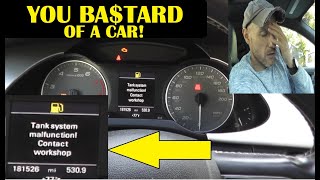
Symptoms: Initial error message: "Fuel tank system malfunction! Contact dealer". The fuel gauge went blank despite a full tank. The issue was intermittent; the gauge returned to normal after some driving but the error reappeared on restart.
What fixed it: The user did not report a definitive fix, but another owner in the same discussion noted the issue was resolved under warranty by the dealer, though the repair was described as costly.
Source hint: AudiWorld Forums - A6 MY12 Fuel tank system malfunction!
2015 Audi A6 C7
Symptoms: The fuel level only reads sometimes. Other times the dash displays a tank malfunction error. Diagnostic tests showed fuel sensor 2's resistance was too high.
What fixed it: The owner attempted to service the fuel pump and float assembly, but the fix only worked for a few minutes.
Source hint: AudiWorld Forums
Related OBD-II Codes
Frequently Asked Questions
Which fuel sensor is causing the P0463 code on my Quattro Audi A6?
Can I fix the 'Fuel tank system malfunction' error by just tightening my gas cap?
Is the fuel level sending unit a common failure point for the 2012-2018 Audi A6?
Does the Audi A7 share this same fuel sensor issue?
What voltage should I see when testing the fuel sender connector on my A6?
Are there any known engine issues I should look out for while my A6 is in the shop for fuel sensor repair?
Helpful Videos
We Have This Part in Stock


The information in this article is provided for general reference and educational purposes only. Vehicle specifications, procedures, and part compatibility can vary by production date, trim level, and region. Always consult your vehicle's factory service manual and verify part numbers before purchasing or performing repairs. Safety-critical components such as airbags, seat belts, and braking systems should be installed by a qualified professional.
- Audi A6:
- 🧭 Diagnostic Flowchart
- 🎬 Helpful Videos
- 🛍️ Shop This Part
- What's Unique About the 2012-2018 Audi A6
- Symptoms You May Notice
- Most Likely Causes
- Rare But Worth Checking
- Diagnosis Steps
- Parts You'll Likely Need
- Platform-Specific Known Issues
- Mechanic-Grade Diagnostic Values
- Hidden / Shadow Codes Worth Checking
- Scan Tool Commands That Help
- Wiring & Ground Locations
- Real Owner Repair Stories
- OEM Part Supersession History
- Model Year Variations Within This Range
- Other Known Issues on This Vehicle
- Used vs. New Parts: Buying Guide for This Vehicle
- Real Owner Stories
- 2012 Audi A6
- 2015 Audi A6 C7
- Related OBD-II Codes
- Frequently Asked Questions
- 🎟️ Get 5% Off