

P0463 on 2017-2024 Audi RS3: Fuel Level Sensor Circuit High Input Causes and Fixes
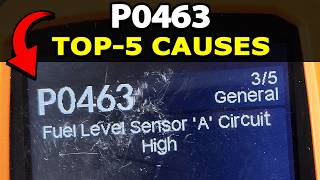
On a 2017-2024 Audi RS3, code P0463 is almost always caused by a failed fuel level sensor (sending unit). This will make your fuel gauge stop working. The sensor is part of the fuel pump assembly, but you often don't need to replace the entire expensive fuel tank.
- P0463 on your RS3 means the fuel gauge will not work because of a failed fuel level sensor.
- The most common cause is the sensor itself, not the wiring or the entire fuel tank.
- Do not agree to a full fuel tank replacement unless it has been proven that the sensor cannot be serviced separately or the tank itself is damaged.
- Diagnosis with a tool like VCDS to read live sensor resistance is the best first step.
- The repair can be done by a DIYer with mechanical skill, but involves handling fuel and requires safety precautions.
What's Unique About the 2017-2024 Audi RS3
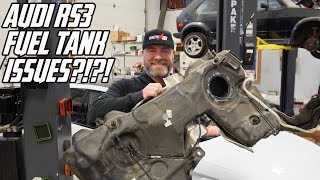
The Audi RS3 uses a saddle-style fuel tank with at least two fuel level sensors to provide an accurate reading as fuel shifts. Code P0463 typically points to a failure of the primary sensor, which is integrated into the main fuel pump assembly. A common misdiagnosis by dealerships is to replace the entire fuel tank assembly, which is an extremely expensive repair. However, owner experiences and detailed mechanic videos show that the issue is often just the small, replaceable sensor module on the pump, not the tank itself.
Generation note: This guide covers both the 8V (2017-2020) and 8Y (2021-2024) generations of the Audi RS3. The underlying fuel system design and the likely cause of this code are similar across both generations, with parts catalogs showing the same fuel level sender part number for both.
Symptoms You May Notice
- Check Engine Light is on
- Fuel gauge is blank, reads empty, or does not move
- "Fuel tank system malfunction! Contact workshop" message on the dashboard
- Low fuel warning light may be on constantly
- In some cases, the car may stall at idle
- Inaccurate or fluctuating fuel gauge readings
- Replacing the entire fuel tank. This is an extremely expensive and usually unnecessary repair. The sensor is almost always the culprit, and it is a serviceable part separate from the tank itself.
Most Likely Causes
- Faulty Fuel Level Sensor (Sending Unit) 🔴 High Probability → Shop Fuel Tank Sending Unit The sensor is a variable resistor with a moving float arm, and the resistor contacts can wear out or fail over time, causing an open circuit which results in a 'high input' or 'resistance too high' reading. This is the most common failure point for this code.
How to confirm: Use a diagnostic tool like VCDS to read the measuring blocks for the fuel level sensors. The faulty sensor will show a fixed, high resistance value (e.g., 295 ohms or higher) that does not change. Alternatively, remove the fuel pump assembly and test the sensor's resistance with a multimeter while moving the float arm; the resistance should sweep smoothly through its range, not stay fixed or show open.
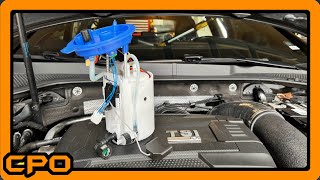
Typical fix: Replace the fuel level sensor. The sensor is attached to the fuel pump assembly. While some may replace the entire pump assembly, it is possible to just replace the sensor itself, which is less expensive.
Est. part cost: $250-$300 for an OEM sensor. - Wiring or Connector Issue ⚪ Low Probability The connector on top of the fuel pump assembly can develop corrosion or a loose pin, interrupting the signal. A short to voltage in the signal wire can also cause this code. This is less common than outright sensor failure but should be checked.
How to confirm: Access the top of the fuel pump assembly under the rear seat. Disconnect the electrical connector and inspect for any signs of corrosion, backed-out pins, or damage to the wiring harness. Check for a poor ground connection.
Typical fix: Clean the connector terminals with an electrical contact cleaner. If a wire is damaged, it will need to be repaired. If the connector itself is damaged, it may need to be replaced.
Est. part cost: $5-$50
Rare But Worth Checking
- Stuck Fuel Level Float: The float arm can become physically stuck in one position due to debris in the tank or corrosion, especially if the car has been sitting for a long time. When diagnosing, a visual inspection of the float's movement is worthwhile.
- Faulty Instrument Cluster or ECU: → Shop Instrument Cluster In very rare cases, the problem could be with the instrument cluster that displays the gauge or the ECU that interprets the signal. This is highly unlikely and should only be considered after all other possibilities have been exhausted.
Diagnosis Steps
- Scan the vehicle with an OBD-II scanner to confirm P0463 is the primary code.
- Use an advanced scanner (like VCDS for Audi) to view live data from the fuel level sensors. The code often specifies 'Sensor 1' or 'Sensor A'. In VCDS, this may be under both the Engine and Instruments modules.
- Observe the resistance (ohm) reading from the sensor. A healthy sensor will show changing resistance as fuel sloshes. A faulty one will often be stuck at a high value (e.g., over 290 ohms). A Vancity Audi video showed a faulty sensor stuck at 295 ohms.
- If the sensor reading is faulty, gain access to the fuel pump assembly by removing the rear seat bottom cushion and the access cover located under the passenger-side rear seat.
- Disconnect the electrical connector and inspect it for corrosion or damage.
- If the connector is clean, the next step is to remove the fuel pump assembly from the tank. Warning: This involves working with gasoline and requires proper safety precautions, including disconnecting the battery and ensuring good ventilation.
- Once the assembly is removed, you can test the sensor directly with a multimeter set to ohms. Connect the leads to the sensor pins and manually move the float arm. The resistance should change smoothly. If it's erratic, jumps, or reads as an open circuit, the sensor is bad.
- If the sensor tests good, the problem lies in the wiring between the pump and the ECU, which will require further circuit tracing.
Parts You'll Likely Need
- Fuel Gauge Sending Unit (Fuel Level Sensor)
(OEM #8V0919673D)— This is the electronic sensor that fails, causing the high resistance/voltage reading that triggers the P0463 code.
Trusted brands: Genuine Audi VW
OEM price range: $250-$300
Aftermarket price range: Not commonly available - Fuel Pump Lock Ring and Seal — It is best practice to replace the lock ring and rubber seal when accessing the fuel pump assembly to ensure a proper, vapor-tight seal on the fuel tank.
Trusted brands: Genuine Audi VW
OEM price range: $30-$50
Aftermarket price range: $15-$25
Platform-Specific Known Issues
- A detailed video from Vancity Audi on YouTube specifically addresses this P0463 code on an RS3. The technician initially prepared to replace the entire fuel tank based on advice, but upon diagnosis, discovered only the sender unit was faulty. After cleaning the connector and confirming the sensor's failure via VCDS (stuck at 295 ohms), they replaced only the sensor, which resolved the issue. This strongly corroborates that individual sensor replacement is the correct fix. 🎬 Watch this Vancity Audi walkthrough of the RS3 sensor repair.
Mechanic-Grade Diagnostic Values
- Fuel Level Sensor 1 (G) Resistance via VCDS/OBDeleven — expected: Sweeps smoothly from approx. 79 Ohms (Full) to 295 Ohms (Empty).. Failure: Stuck at a fixed high value, typically 295 Ohms or higher, indicating an open circuit or internal failure.
Hidden / Shadow Codes Worth Checking
- Fuel level sensor 1 resistance too high: → Shop Fuel Tank Sending Unit This is a more descriptive fault often found in the Instrument Cluster control module, which directly points to the electrical resistance of the sensor being out of specification, whereas the generic P0463 is often in the Engine module. (see via VCDS by Ross-Tech or ODIS (dealer tool) when scanning the Instrument Cluster module.)
Scan Tool Commands That Help
- VCDS (VAG-COM): Adaptation - Channel 30 — After replacing a fuel level sender, this function in the Instrument Cluster module allows for fine-tuning the gauge calibration. The default value is 128, and it can be adjusted to correct minor inaccuracies in the fuel gauge reading.
- VCDS (VAG-COM): Basic Settings - Drain Fuel Tank — This function, found in the Engine module, can be used to activate the low-pressure fuel pump to safely empty the fuel tank before service, which is a required safety step before removing the fuel pump assembly.
Wiring & Ground Locations
- Fuel Pump Control Module (J538) — On top of the fuel tank, accessible through the access hatch under the rear passenger-side seat.. This module processes the signal from the fuel level sender before it goes to the rest of the car's network. While rarely the cause, a fault in this module or its connector could mimic a sensor failure.
- Chassis Ground Point — On the passenger side of the vehicle, near the rear seat hinge area, there is a factory ground stud where multiple body and lighting components are grounded.. While the fuel pump assembly has its own ground within its harness, a poor main chassis ground in this area could potentially cause intermittent electrical issues for various components, including the fuel system.
Real Owner Repair Stories
- Audi RS3 Forum (2014 Audi S3 (8V Platform, similar fuel system)) — Tank system failure error message, red flashing empty fuel light, fuel gauge not working.
❌ Tried (didn't work) Replaced the primary fuel level sender (which had visibly burnt out)., Replaced the secondary fuel level sender.
✅ What actually fixed it The forum thread ended without a final confirmed fix. The specialist garage was stumped after replacing both senders and checking the wiring, yet still reading a 'high resistance' fault. This highlights that even after replacing the common parts, the issue can persist, potentially due to a wiring problem between the pump and the control module or a rare control module fault.
OEM Part Supersession History
8V0919673D→No supersession found.— The part number appears to be consistent for the specified vehicle range.
Model Year Variations Within This Range
- 2017-2020 (8V) vs 2021-2024 (8Y): While the core 2.5L engine and MQB platform are shared, the 8Y features a revised engine (DNWA vs DAZA), updated interior technology, and different body styling. However, for the purposes of code P0463, the fuel system components, including the level sender (8V0919673D), remain the same, making the diagnosis and repair process identical.
Diagnostic Flowchart
Other Known Issues on This Vehicle
Issues unrelated to this code that are worth knowing about as an owner of this generation:
- Water Pump / Thermostat Housing Leak 🟠 Medium — Common failure item, often occurring at relatively low mileage (e.g., 30,000-60,000 miles). The plastic housing can warp or crack, causing coolant leaks.
- Haldex AWD Pump Failure 🟠 Medium — The electric pump for the Haldex AWD system can fail, often due to a clogged internal filter screen, leading to a loss of all-wheel drive. Regular fluid and filter service (every 30-40k miles) is critical for prevention. (Ref: Fault codes like 01155, 02248, or 01324 are common indicators.)
- Front Brake Squeal at Low Speeds 🟡 Low — A very common owner complaint. The high-performance brakes tend to squeal during light, low-speed application. It is often considered a characteristic of the brake pad material rather than a defect. (Ref: TSB 2034181/21 addresses general brake noise analysis but is not a specific fix-all for this complaint.)
- Intake Valve Carbon Buildup 🟠 Medium — As a direct-injection engine, the DAZA/DNWA is prone to carbon buildup on the intake valves over time (typically noticeable after 30,000+ miles), which can restrict airflow and reduce performance.
- High Oil Consumption / PCV System Faults 🟠 Medium — Some owners, particularly those with tuned engines, report higher than average oil consumption. This can sometimes be traced back to a failing PCV valve, which can lead to other issues if not addressed.
Used vs. New Parts: Buying Guide for This Vehicle
When a used part is the smart pick: A used part is generally not recommended for this repair. The fuel level sensor is an electronic component with a moving part (a variable resistor) that is known to wear out over time. Buying a used sensor carries a high risk of premature failure, as you have no way of knowing its remaining service life.
Donor-vehicle mileage cap: roughly under 20000 miles for the part to have meaningful remaining life.
What to inspect on the donor part:
- If considering used, source from the lowest mileage donor vehicle possible.
- Visually inspect the resistor strip for any signs of burning, corrosion, or excessive wear on the contacts.
- Test the used part with a multimeter before installation. Move the float arm through its full range of motion and ensure the resistance changes smoothly without any dropouts or spikes.
OEM-only on this vehicle (don't cheap out):
- Fuel Level Sensor (Sending Unit)
Aftermarket brands forum-validated for this vehicle:
- No well-documented, forum-validated aftermarket brands exist for this specific sensor. The consensus is to use the Genuine Audi/VW part.
Brands owners have reported issues with on this vehicle:
- Unnamed, no-brand parts from online marketplaces should be avoided due to a high likelihood of incorrect resistance ranges, poor quality, and short lifespan.
Real Owner Stories
Aggregated from forums and TSBs cited above. Mileages and costs reflect what owners reported in those sources.
2018 Audi RS3 2.5L TFSI
Symptoms: The technician found the fuel level sensor reading was stuck at a fixed 295 ohms in VCDS, and the dashboard displayed a 'Fuel tank system malfunction! Contact workshop' message.
What fixed it: The technician replaced only the fuel level sender unit rather than the entire fuel tank assembly.
Source hint: VanCity Audi on YouTube: 'Audi RS3 Fuel Pump Level Sensor Fix'
Audi RS3 2.5L TFSI
Symptoms: Fuel gauge issues and P0463 code; the owner was quoted nearly $3,000 for a full tank replacement by a service center.
What fixed it: A fuel pump swap (which includes the sensor) resolved the issue.
Cost: $2700-$3000
Source hint: Reddit r/Audi
Related OBD-II Codes
Frequently Asked Questions
My Audi dealer says I need to replace the entire fuel tank for a P0463 code; is this necessary for the RS3?
What VCDS resistance values should I look for to confirm a bad sensor on my RS3?
Where is the fuel pump access point located on the 2017-2024 RS3?
Can I use an aftermarket fuel level sensor to fix this code?
Does the RS3 share this fuel sensor issue with the TT RS?
Could my RS3's stalling at idle be related to the P0463 code?
Helpful Videos
Used OEM Parts in Stock
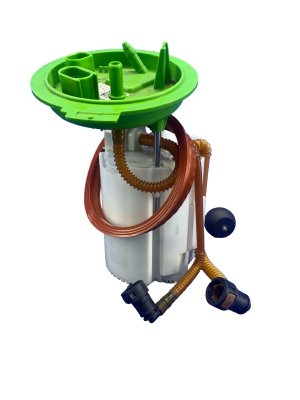
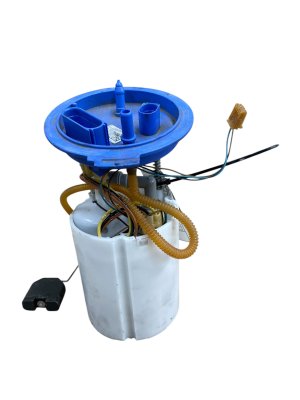
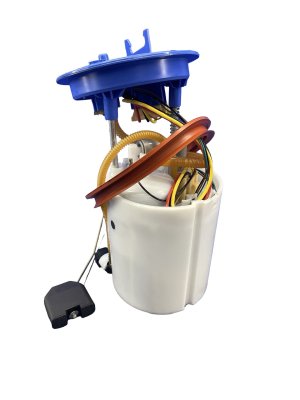
New Aftermarket Parts Available
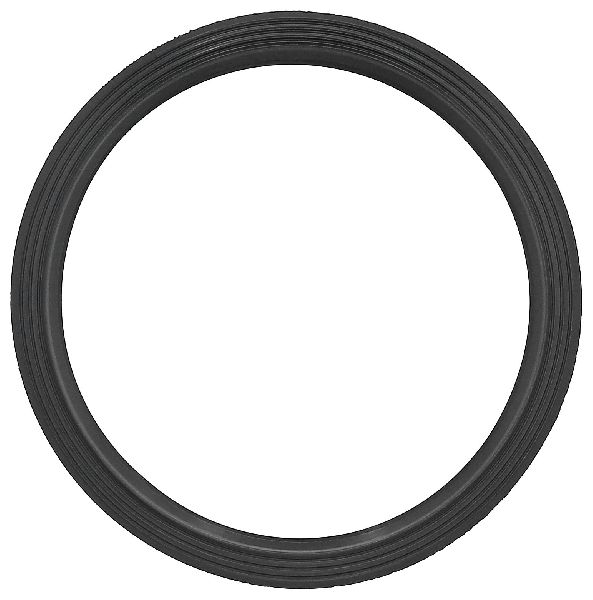

The information in this article is provided for general reference and educational purposes only. Vehicle specifications, procedures, and part compatibility can vary by production date, trim level, and region. Always consult your vehicle's factory service manual and verify part numbers before purchasing or performing repairs. Safety-critical components such as airbags, seat belts, and braking systems should be installed by a qualified professional.
- Audi RS3:
- 🧭 Diagnostic Flowchart
- 🎬 Helpful Videos
- 🛍️ Shop This Part
- What's Unique About the 2017-2024 Audi RS3
- Symptoms You May Notice
- Most Likely Causes
- Rare But Worth Checking
- Diagnosis Steps
- Parts You'll Likely Need
- Platform-Specific Known Issues
- Mechanic-Grade Diagnostic Values
- Hidden / Shadow Codes Worth Checking
- Scan Tool Commands That Help
- Wiring & Ground Locations
- Real Owner Repair Stories
- OEM Part Supersession History
- Model Year Variations Within This Range
- Other Known Issues on This Vehicle
- Used vs. New Parts: Buying Guide for This Vehicle
- Real Owner Stories
- 2018 Audi RS3 2.5L TFSI
- Audi RS3 2.5L TFSI
- Related OBD-II Codes
- Frequently Asked Questions
- 🎟️ Get 5% Off