

P0463 on 2013-2017 Audi SQ5: Fuel Level Sensor Circuit High Causes and Fixes
This code indicates a high voltage signal from the fuel level sensor, usually caused by a failing sensor inside the fuel tank. This leads to an inaccurate or erratic fuel gauge and can cause stalling when the tank is low. The most common fix is to replace the fuel level sending unit, which is often part of the fuel pump assembly. On Quattro models like the SQ5, there are two sensors, and P0463 points to 'Sensor A', which is typically the one integrated with the main fuel pump on the passenger si
- P0463 on a 2013-2017 Audi SQ5 means the primary fuel level sensor circuit (Sensor 'A') is sending a signal that is too high.
- The most common symptoms are an inaccurate fuel gauge (often stuck on full) and potential engine stalling when fuel is low.
- The most probable cause is a failed fuel level sending unit located inside the fuel tank on the passenger side, which is part of the fuel pump assembly.
- Before replacing parts, always check the wiring and connector at the top of the fuel tank for corrosion or damage.
- Driving with this code is possible, but you must manually track fuel consumption to avoid running out of gas.
What's Unique About the 2013-2017 Audi SQ5
For the 2013-2017 Audi SQ5 (first generation, 8R), which uses the Quattro all-wheel-drive system, the fuel tank is a 'saddle' design that straddles the driveshaft. This necessitates two separate fuel level sensors to get an accurate reading. P0463 specifically refers to 'Sensor A' or 'Sensor 1', which is the primary sending unit integrated with the main fuel pump, located under the rear passenger-side seat. While some other Audi models have TSBs related to software glitches causing similar codes (like P0461), P0463 on the SQ5 almost always points to a hardware failure of the sensor itself or its wiring. Owners report that symptoms like an erratic gauge and engine stalling become most noticeable when the fuel level drops below a quarter of a tank.
Symptoms You May Notice
- Check Engine Light is on
- Fuel gauge is inaccurate, erratic, or stuck on full
- Engine stalling, especially when the fuel level is low (below 1/4 tank)
- Low fuel warning light may flash or stay on
- Inaccurate calculation of remaining range on the trip computer
- Sudden fuel gauge drops from a low reading (e.g., 1/4 tank) to empty
- Replacing the fuel pump when only the sending unit has failed (though they are often sold as one assembly).
- Replacing the instrument cluster before thoroughly testing the fuel level sensor and its wiring. 🎬 Watch this guide on troubleshooting fuel gauges and sending units
- Replacing the secondary fuel level sensor (on the driver's side) when P0463 specifically points to Sensor 'A' (on the passenger side).
Most Likely Causes
- Faulty Fuel Level Sensor (Sending Unit) 🔴 High Probability → Shop Fuel Tank Sending Unit The fuel level sensor is a wear item. The internal variable resistor can fail over time, leading to an open circuit or readings that are out of range, causing the high voltage signal.
How to confirm: Access the fuel pump module under the rear passenger-side seat. With a diagnostic tool like VCDS, monitor the resistance values from both fuel level senders. Compare the readings to the actual fuel level. A reading that is stuck high or doesn't change when fuel is added/removed points to a failed sensor. A user on AudiWorld forums suggests measuring resistance across the pins on the 6-pin connector to diagnose the issue.
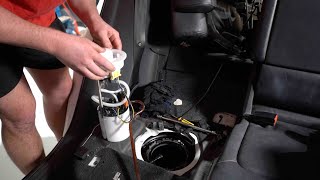
Typical fix: Replace the fuel level sending unit. On the Audi SQ5, this sensor is integrated into the fuel pump assembly and requires replacing the entire unit. This is a job that can be done by a DIYer by removing the rear seat bench. 🎬 Watch this step-by-step fuel pump replacement tutorial
Est. part cost: $200-$400 - Damaged Wiring or Corroded Connectors 🟡 Medium Probability The wiring and connector for the fuel pump module are located under the rear seat, where they can be susceptible to moisture from spills or physical damage from items placed on the seat.
How to confirm: Visually inspect the wiring harness and the 6-pin connector going to the fuel pump assembly for any signs of corrosion, frayed wires, or loose pins. Perform a continuity test on the signal and ground wires between the sensor and the relevant control module.
Typical fix: Repair the damaged section of wiring or clean/replace the corroded connector. Ensure the connector is fully seated and the locking tab is engaged.
Est. part cost: $10-$50 - Poor Ground Connection ⚪ Low Probability The fuel tank and sensor rely on a solid ground connection to the chassis. While less common, corrosion or a loose ground strap can create high resistance in the circuit, potentially triggering this code.
How to confirm: Locate the ground strap for the fuel tank and check for corrosion or looseness. Test the ground circuit with a multimeter to check for high resistance back to the chassis ground.
Typical fix: Clean the contact points of the ground connection to bare metal and tighten the strap securely.
Est. part cost: $1-$5
Rare But Worth Checking
- Faulty Instrument Cluster: → Shop Instrument Cluster In rare cases, the instrument cluster itself can fail or have incorrect coding, leading to incorrect gauge readings even with a good signal from the sensor. One Audi A4 owner fixed a similar issue by correcting the fuel tank type coding (AWD vs FWD) in the instrument cluster module using VAG-COM. This is unlikely and should only be considered after ruling out the sensor and wiring.
- Powertrain Control Module (PCM) Issue: A software glitch or internal failure of the PCM is very rare but possible. This would typically be accompanied by other seemingly unrelated trouble codes and is a last resort in diagnosis.
Diagnosis Steps
- Scan the vehicle for any other stored trouble codes to ensure P0463 is not a symptom of a larger issue.
- With a scan tool (like VCDS), observe the live data for both fuel level sensors. Compare the readings to the actual fuel level in the tank.
- Gain access to the top of the fuel tank by removing the rear seat cushion. The primary sensor ('A') is under a cover on the passenger side.
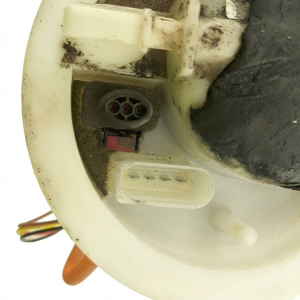
- Visually inspect the fuel pump module's electrical connector and wiring harness for any signs of corrosion, damage, or loose connections.
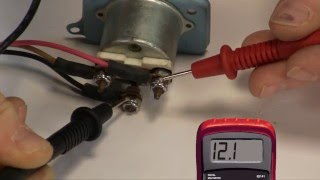
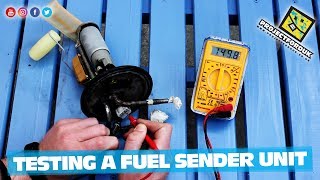
- Disconnect the connector and use a digital multimeter to test the resistance of the fuel level sensor. Check the reading with a full tank versus a near-empty tank to see if it changes according to manufacturer specifications. 🎬 See how to easily test a fuel sender unit A high or infinite resistance reading indicates a failed sensor.
- If the sensor tests bad, it needs to be replaced. This involves removing the locking ring and lifting the entire fuel pump assembly from the tank.
- If the sensor tests good, check the wiring between the sensor and the PCM for continuity and shorts to ground or power.
- Verify that the ground circuit for the fuel tank and sensor is clean and secure.
Parts You'll Likely Need
- Fuel Level Sending Unit / Fuel Pump Assembly
(OEM #8R0-919-673-F)— This is the component that fails most frequently, causing the P0463 code. It is the sensor that directly measures the fuel level and is integrated with the fuel pump.
Trusted brands: Audi Genuine, Bosch, VDO
OEM price range: $200-$290
Aftermarket price range: $150-$220
Platform-Specific Known Issues
- The Audi SQ5 uses a saddle-style fuel tank with two level sensors. P0463 specifically refers to Sensor 'A', which is part of the main fuel pump assembly on the passenger side of the vehicle.
Mechanic-Grade Diagnostic Values
- Fuel Level Sensor 1 (G) Resistance — expected: Full Tank: 56 to 68 Ω. Empty Tank: 295 to 305 Ω.. Failure: An infinite resistance (open circuit) or a reading that is stuck and does not change as fuel level changes. A reading significantly outside the expected range.
- Fuel Level Sensor 2 (G169) Resistance — expected: Full Tank: 47 to 65 Ω. Empty Tank: 275 to 296 Ω.. Failure: While P0463 points to Sensor 1, knowing the value for Sensor 2 is useful for comparison during diagnosis.
- VCDS Live Data - Instrument Cluster (Address 17), Measuring Value Block Group 008 — expected: The fields for 'Fuel level (sensor 1)' should show changing values in liters and ohms that correspond to the actual fuel in the tank.. Failure: A static, impossibly high, or zero reading for Sensor 1 that doesn't change when the vehicle is rocked or fuel is added points to a sensor or circuit failure.
Hidden / Shadow Codes Worth Checking
- B103E1B: Fuel gauge sensor 1 Resistance too high. This is a Body/Comfort Control Module (BCM) code that is more specific than the generic P0463 and directly points to a high resistance fault in the primary sensor circuit. (see via Dealer-level scanners (ODIS) or advanced tools like VCDS will show this code, typically stored in the Comfort System Central Control Module, J393 (address word 0046).)
Scan Tool Commands That Help
- VCDS (VAG-COM): Instrument Cluster (17) -> Output Tests (03) — To verify the functionality of the instrument cluster fuel gauge itself. The test will sweep the needle through its full range. If the gauge sweeps correctly, the instrument cluster is likely not the cause of the problem.
- VCDS (VAG-COM) or OBDeleven: Instrument Cluster (17) -> Adaptation -> Channel 30: Tank Characteristic (Fuel Level Sensor 1) — This is for fine-tuning the fuel gauge calibration after a sensor replacement if the reading is slightly off. It is NOT a fix for a P0463 code caused by a hardware failure. The default value is typically 128, and it can be adjusted slightly. Attempting to use this to compensate for a failed sensor will not work.
Wiring & Ground Locations
- Fuel Pump / Sender Unit Connector — On top of the fuel pump flange, under the access cover beneath the rear passenger-side seat.. This is the primary connection point for the fuel level sensor. Corrosion or damage to the pins and wires here is a common cause of the P0463 code.
- Fuel Pump Control Module (J538) — On some Audi Q5/SQ5 models, it is located near the fuel tank, sometimes requiring removal of the right rear wheel and wheelhouse liner to access.. This module powers the fuel pump and processes signals. While less common to fail than the sender, a fault in this module or its wiring can cause fuel system-related codes.
- Ground Connection Point — There are multiple chassis ground points. A key one for rear components is often located behind the rear side panel trim or near the center tunnel under the carpet.. A poor ground connection for the fuel pump/sender assembly can cause high resistance in the circuit, leading to a P0463 code.
Real Owner Repair Stories
- Carly.com Forum Summary (2013 Audi SQ5) — Check engine light, engine stalling when idling, erratic fuel gauge readings, especially below 1/4 tank.
❌ Tried (didn't work) Initial diagnosis pointed towards a general fuel system issue.
✅ What actually fixed it The user confirmed the issue was present with error code P0463. A similar case on a 2015 S5 was resolved by replacing the failing fuel level sensor. The recommended fix for the SQ5 was to replace the sensor unit.
OEM Part Supersession History
8R0-919-673-D→8R0-919-673-E, 8R0-919-673-F— Standard part revisions for manufacturing improvements or supplier changes.
Heads up: The listed part numbers (D, E, F) are generally interchangeable for the 2013-2017 Q5/SQ5 platform. Always confirm fitment with a VIN.
Diagnostic Flowchart
Other Known Issues on This Vehicle
Issues unrelated to this code that are worth knowing about as an owner of this generation:
- Water Pump & Thermostat Failure 🔴 High — Very common, typically between 60,000 and 90,000 miles. The original components are plastic and prone to cracking and leaking. (Ref: Multiple component revisions and service actions have been issued over the years.)
- Intake Valve Carbon Buildup 🟠 Medium — Common to all direct-injection engines. Significant power loss and misfires can occur after 80,000 miles, requiring manual cleaning (walnut blasting).
- PCV Valve (Oil Separator) Failure 🟠 Medium — The PCV valve, located under the supercharger, can fail, causing excessive oil consumption, rough idle, lean codes, or a whistling noise. (Ref: An updated PCV unit was released by Audi to address early failures.)
- Timing Chain Tensioner Wear 🟠 Medium — Less common than on the 2.0T engine, but can occur at higher mileage. A brief rattle on a cold start is the primary symptom. If the rattle persists, it requires attention to prevent chain slack.
- Coolant Leaks Under Supercharger 🟠 Medium — The intercooler cores located beneath the supercharger can develop slow leaks over time, leading to unexplained coolant loss and potential misfires if coolant enters the intake.
Used vs. New Parts: Buying Guide for This Vehicle
When a used part is the smart pick: A used part is generally NOT recommended for this repair. The fuel level sender is a wear item, and the labor to access and replace it is significant. The risk of a used part failing prematurely outweighs the cost savings.
Donor-vehicle mileage cap: roughly under 40000 miles for the part to have meaningful remaining life.
What to inspect on the donor part:
- Verify the part number exactly matches the original or its supersession.
- Inspect the electrical connector pins for any signs of corrosion, melting, or damage.
- Ensure the plastic housing is not cracked or damaged from removal.
- If possible, test the resistance of the sender before purchase to ensure it's within the specified range.
OEM-only on this vehicle (don't cheap out):
- While not strictly OEM-only, using a Genuine Audi part or a reputable OEM supplier like VDO or Bosch is highly recommended for fuel system components to ensure reliability and proper function.
Aftermarket brands forum-validated for this vehicle:
- VDO (often the original OEM supplier)
- Bosch
Brands owners have reported issues with on this vehicle:
- Generic, unbranded, or "white-box" fuel pump assemblies from online marketplaces. These often have high failure rates and may not have correctly calibrated sending units.
Real Owner Stories
Aggregated from forums and TSBs cited above. Mileages and costs reflect what owners reported in those sources.
2013 Audi SQ5 — 24000 miles
Symptoms: Check engine light is on and the engine stalls when idling, specifically when the fuel gauge shows less than a quarter tank. The gauge is erratic at low levels, jumping from 1/4 to empty suddenly.
What fixed it: Replacement of the fuel level sensor unit.
Cost: $300-$310
Source hint: Carly.com Blog/Forum Summary
2014 Audi S4 (B8.5 Platform)
Symptoms: The fuel gauge was inaccurate, reading off by about half a tank. Diagnostic steps involved measuring resistance at the 6-pin plug under the rear seat.
What fixed it: Diagnostic advice suggested measuring resistance across the pins to identify which of the two senders in the saddle-tank system failed.
Source hint: AudiWorld Forums - B8.5 S4 Fuel Gauge issue
Related OBD-II Codes
Frequently Asked Questions
Where is the fuel level sensor located on my Audi SQ5, and can I replace it myself?
Why does my SQ5 stall when the fuel gauge shows 1/4 tank remaining?
How can I use VCDS to confirm if the sensor is bad before buying parts?
Does the SQ5 have more than one fuel level sensor?
Are there other common issues on the 2013-2017 SQ5 I should look out for while fixing this?
Can I just replace the sensor, or do I need the whole fuel pump?
Helpful Videos

We Have This Part in Stock

The information in this article is provided for general reference and educational purposes only. Vehicle specifications, procedures, and part compatibility can vary by production date, trim level, and region. Always consult your vehicle's factory service manual and verify part numbers before purchasing or performing repairs. Safety-critical components such as airbags, seat belts, and braking systems should be installed by a qualified professional.
- Audi SQ5:
- 🧭 Diagnostic Flowchart
- 🎬 Helpful Videos
- 🛍️ Shop This Part
- What's Unique About the 2013-2017 Audi SQ5
- Symptoms You May Notice
- Most Likely Causes
- Rare But Worth Checking
- Diagnosis Steps
- Parts You'll Likely Need
- Platform-Specific Known Issues
- Mechanic-Grade Diagnostic Values
- Hidden / Shadow Codes Worth Checking
- Scan Tool Commands That Help
- Wiring & Ground Locations
- Real Owner Repair Stories
- OEM Part Supersession History
- Other Known Issues on This Vehicle
- Used vs. New Parts: Buying Guide for This Vehicle
- Real Owner Stories
- 2013 Audi SQ5 — 24000 miles
- 2014 Audi S4 (B8.5 Platform)
- Related OBD-II Codes
- Frequently Asked Questions
- 🎟️ Get 5% Off