

P0463 on 2014-2020 BMW 4 Series: Fuel Level Sensor Circuit High Input Fixes
This code indicates a problem with the fuel level sensor, causing an incorrect fuel gauge reading. The most common cause is a faulty fuel level sending unit inside the fuel tank. Your BMW has two of these sensors. Expect a repair cost of several hundred to over a thousand dollars, depending on which sensor has failed and the required labor.
- P0463 on a 2014-2020 BMW 4 Series means there's a high voltage signal from a fuel level sensor, almost always causing an incorrect fuel gauge reading.
- The most likely culprit is a failed fuel level sending unit. Your car has two of them in its saddle-style tank, and either can be the cause.
- Diagnosis requires a BMW-specific scan tool to read live data from both sensors to pinpoint the faulty one before disassembly.
- While you can drive with this code, you risk running out of gas. It's best to get it repaired to ensure you have an accurate fuel reading.
What's Unique About the 2014-2020 BMW 4 Series
The 2014-2020 BMW 4 Series (F32/F33/F36 generation) uses a saddle-style fuel tank with two separate fuel level sensors—one on the driver's side and one on the passenger's side. A failure of either sensor can trigger the P0463 code. The passenger-side sensor is typically integrated with the main fuel pump assembly, while the driver's side unit is a standalone sensor. Unlike some other BMW models where a driver-side sensor failure requires replacing the entire fuel tank, on the F3x platform, both sensors are generally serviceable individually. However, accessing them still requires removing the rear seat bench.
Symptoms You May Notice
- Check Engine Light is on
- Fuel gauge is stuck on full or reads inaccurately
- Fuel gauge fluctuates erratically
- Low fuel warning light may illuminate even with a full tank
- Risk of running out of fuel unexpectedly
- Drivetrain Malfunction warning may appear in some cases
- Replacing the fuel pump when only the sending unit has failed (though they are often sold as one assembly for the passenger side).
- Replacing the instrument cluster, assuming the gauge itself is the problem without checking the sensor circuit first.
- Replacing the wrong side sending unit. It is critical to use a scan tool to identify which of the two sensors is reporting the faulty reading before starting the repair.
Most Likely Causes
- Faulty Fuel Level Sensor (Sending Unit) 🔴 High Probability → Shop Fuel Tank Sending Unit The variable resistor strip on the sensor's float arm can wear out or become contaminated over time. This creates an open or high-resistance point in the circuit, which the DME reads as a high voltage signal, triggering the P0463 code.
How to confirm: Access the fuel level senders via the access panels under the rear seat. Use a BMW-specific scan tool (like ISTA) to read the live resistance values from each sensor individually. A sensor reading that is erratic, stuck, or shows an open circuit 🎬 See how to diagnose and fix a P0463 code. when moving the float arm confirms failure. A multimeter can also be used to test resistance directly at the sensor's pins.
Typical fix: Replace the faulty fuel level sending unit. The passenger side unit is part of the fuel pump assembly, while the driver's side is a separate sensor. Always replace the large rubber gasket/seal to prevent fuel leaks and EVAP codes.
Est. part cost: $100-$300 per sensor - Wiring or Connector Issue 🟡 Medium Probability The wiring connectors on top of the fuel tank access panels are exposed to some moisture and dirt when the rear seat is removed for service. Over time, pins can corrode or wires can become frayed, leading to a poor connection and high resistance in the circuit.
How to confirm: Visually inspect the wiring harness and connectors going to both fuel level sensors for any signs of corrosion (green crust), backed-out pins, or chafed wires. Perform a continuity test on the signal and ground wires from the sensor connector back to the control module.
Typical fix: Clean the corroded connector pins with electrical contact cleaner or replace the connector pigtail if damage is severe. Repair any broken or chafed wires.
Est. part cost: $10-$100 - Poor Ground Connection ⚪ Low Probability
How to confirm: Locate the ground strap or wire for the fuel tank/pump assembly. Ensure it is clean, tight, and free of corrosion. Test for voltage drop on the ground circuit.
Typical fix: Clean the grounding point and re-secure the connection.
Est. part cost: $1-$5
Rare But Worth Checking
- Faulty Powertrain Control Module (DME): This is very rare. All other possibilities, especially the sensor and its wiring, should be exhaustively checked before considering DME replacement.
- Blown Fuse: In some related models, a blown fuse for the fuel pump circuit has been reported to cause misleading fuel sensor codes. It's a quick and easy check before diving into more complex diagnostics.
- Instrument Cluster (KOMBI) Software Error: → Shop Instrument Cluster BMW issued a TSB (SI B62 18 17) for some 2017-2018 models where a software error in the instrument cluster could cause an erroneous fuel gauge display, sometimes leading to the vehicle running out of fuel unexpectedly. The fix is a vehicle software update. 🎬 Watch how to recalibrate a faulty BMW fuel gauge.
Diagnosis Steps
- Scan the vehicle's computer system with a BMW-specific tool to confirm P0463 and identify which sensor ('A' usually refers to the primary sensor, but confirmation is needed) is at fault. Note any other codes.
- Using the scan tool's live data function, observe the voltage or resistance readings from both the left and right fuel level sensors. A reading that is stuck high (e.g., near or above 5 volts) or shows an open circuit points to the problem circuit.
- Gain access to the fuel pump and sending units by removing the lower rear seat cushion and the metal access panels.
- Disconnect the electrical connector for the suspect fuel level sensor.
- Visually inspect the connector and wiring for any signs of damage, corrosion, or moisture.
- With the key on, check for the correct reference voltage and ground at the connector using a multimeter.
- Measure the resistance of the fuel level sensor. For F3x models, a typical range is around 70 Ohms (empty) to 350 Ohms (full). Actuate the float arm by hand and watch for a smooth change in resistance. An erratic reading, an open circuit (infinite resistance), or a short indicates a bad sensor.
- If the sensor tests good, the issue is likely in the wiring between the sensor and the control module. Perform a continuity and voltage drop test on the signal wire and ground wire.
- If all wiring and the sensor check out, the problem may be with the control module, but this is highly unlikely.
Parts You'll Likely Need
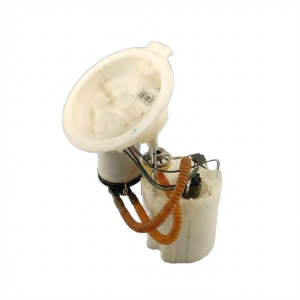
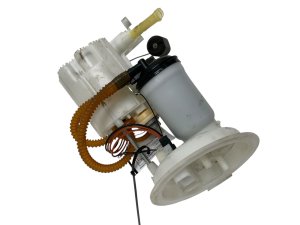
- Fuel Level Sending Unit (Right/Passenger Side, with Fuel Pump)
(OEM #16117243975)— This is a common failure point. The sensor on the passenger side is integrated with the main fuel pump assembly. Part number may vary by specific model and year.
Trusted brands: Bosch, VDO, Genuine BMW
OEM price range: $300-$500
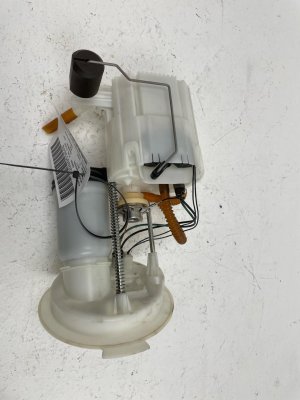
Aftermarket price range: $150-$350 - Fuel Level Sending Unit (Left/Driver Side)
(OEM #16117273277)— The secondary sensor on the driver's side can also fail, causing the same code. Part number may vary by specific model and year.
Trusted brands: VDO, Genuine BMW
OEM price range: $150-$250
Aftermarket price range: $80-$150 - Fuel Tank Sending Unit Gasket / Seal
(OEM #16117195474)— This seal is crucial and should always be replaced when accessing the fuel sending units to prevent dangerous fuel leaks and EVAP system codes. Two are required, one for each side.
Trusted brands: Genuine BMW, URO Parts
OEM price range: $20-$40
Aftermarket price range: $10-$25 - Fuel Tank Lock Ring
(OEM #16117243976)— The plastic lock ring that holds the sending unit in place can be brittle and may break during removal. It's wise to have a replacement on hand. Two are required.
Trusted brands: Genuine BMW
OEM price range: $15-$30
Aftermarket price range: $10-$20
Technical Service Bulletins (TSBs) & Recalls
- SI B62 18 17: For some 2017-2018 models, BMW issued a bulletin regarding erroneous fuel gauge displays where the vehicle could run out of fuel despite the gauge showing fuel remaining. The cause was identified as a software error in the instrument cluster, and the fix is to reprogram the vehicle with updated software (ISTA 4.09.1x or higher). While not directly for P0463, it addresses related symptoms.
Platform-Specific Known Issues
- Owner Experience: DIY Replacement: A user on the F30POST forum described a similar fuel gauge issue on their F30 3 Series (a platform mate). The fix was replacing the driver's side fuel level sensor. The process involved removing the rear seat bottom, 🎬 Watch this DIY walkthrough of the rear seat and sensor removal. disconnecting the battery, removing the access cover, disconnecting the fuel line and electrical connector, removing the large lock ring, and carefully swapping the sensor unit. The importance of replacing the gasket was emphasized to ensure a proper seal.
Mechanic-Grade Diagnostic Values
- Fuel Level Sensor Signal Voltage — expected: Approx. 0.5V (empty) to 4.5V (full). Failure: A reading consistently at or above 4.8V-5.0V indicates a high circuit condition and will trigger P0463.
- Fuel Level Sensor Resistance — expected: A smooth sweep from low resistance (full) to high resistance (empty). A common BMW range is ~70 Ohms (empty) to ~350 Ohms (full), though specific values can vary.. Failure: An infinite resistance reading (open circuit), a reading of -1 ohms, or a value that jumps erratically when the float is moved indicates a failed sensor.
Hidden / Shadow Codes Worth Checking
- E12C03: Right fuel level sensor: Short circuit to B+ or signal implausible. This code points directly to the passenger-side sensor assembly. (see via BMW-specific diagnostic software such as ISTA, INPA, or advanced handheld scanners like BimmerLink.)
- E12C01: Left fuel level sensor: Short circuit to B+ or signal implausible. This code points directly to the driver-side sensor. (see via BMW-specific diagnostic software such as ISTA, INPA, or advanced handheld scanners.)
- B7F70B: Fuel level sensor implausible. This code is often stored in the instrument cluster (KOMBI) and can be caused by a software error, especially after refueling. (see via BMW-specific diagnostic software like ISTA.)
Scan Tool Commands That Help
- ISTA (Integrated Service Technical Application): Calculate Test Plan / Guided Troubleshooting — After reading the fault codes, ISTA can generate a specific, step-by-step diagnostic plan. For fuel level sensor faults, it will guide the technician through checking live data, wiring, and component functionality to pinpoint the exact cause of the code.
Wiring & Ground Locations
- Junction Box Electronics (JBE) — Located behind the glove box in the passenger footwell. The glove box must be removed for access.. The JBE (or REM on some F3x models) is the control module that receives the raw resistance/voltage signals from both fuel level sensors. It processes this information before sending a calculated fuel level to the instrument cluster over the CAN bus. A fault within the JBE is rare but possible.
- Fuel Pump Control Module (EKPS) — Located behind the trim panel on the right side of the vehicle, between the rear seat cushion and the door.. While primarily responsible for controlling the fuel pump's speed, the EKPS is part of the overall fuel delivery system. A fault in this module or its wiring could potentially affect the power or ground supply shared by the sensor circuits.
Real Owner Repair Stories
- F30POST Forum (BMW F30 3 Series (platform mate to the 4 Series)) — Fuel gauge would read full for over 200 miles, then drop rapidly to half a tank in 20 miles, and sometimes go back up. The left sensor reading in ISTA would jump from 0L to a stuck value of 39.5L.
❌ Tried (didn't work) Hard reset by disconnecting the battery for over 30 minutes.
✅ What actually fixed it The user ultimately bypassed the faulty driver's side (left) sensor by installing a 500-ohm resistor in its circuit. This tricked the system into thinking that side was always empty, allowing the gauge to primarily reflect the reading from the working passenger side sensor, which restored a usable (though not perfectly accurate) low fuel warning. This implies the left sensor had failed internally.
OEM Part Supersession History
16117414482, 16117297778→16117243975— Standard design improvement and revision by BMW to address reliability issues.
Heads up: The newest part number (16117243975) is the correct replacement for the earlier versions and is backward compatible for all 2014-2020 4 Series models.
Diagnostic Flowchart
Other Known Issues on This Vehicle
Issues unrelated to this code that are worth knowing about as an owner of this generation:
- N20/N26 Engine Timing Chain Guide Failure 🔴 High — Common on models produced before 2015, typically between 50,000-80,000 miles. A whining noise from the front of the engine is a key warning sign. (Ref: BMW issued a limited warranty extension (SI B11 03 17) for this issue, but not a full recall.)
- Oil Filter Housing Gasket (OFHG) Leak 🟠 Medium — Very common across most engines used in this platform (N20, N55, B-series). The gasket hardens and leaks oil, often onto the serpentine belt, which can cause belt failure and catastrophic engine damage if ingested.
- Plastic Charge Pipe Failure 🟠 Medium — The OEM plastic charge pipe, especially on turbocharged models like the 428i and 435i, can become brittle from heat cycles and crack under boost, causing a sudden loss of power.
- Electronic Wastegate Actuator Failure 🟠 Medium — The electronic actuator for the turbo wastegate can fail, leading to 'Drivetrain Malfunction' warnings and reduced engine power. This is more common on the N55 engine.
- Valve Cover and Gasket Leaks 🟡 Low — Similar to the OFHG, the valve cover and its gasket can become brittle and leak oil, causing a burning smell as oil drips onto hot exhaust components.
- Coolant Hoses and Water Pump Leaks 🟠 Medium — Leaks can develop from various plastic cooling system components, including the water pump, thermostat housing, and various hoses, leading to coolant loss and potential overheating.
Used vs. New Parts: Buying Guide for This Vehicle
When a used part is the smart pick: For the fuel level sending units (both the standalone driver's side and the passenger side assembly with the pump), a used part from a low-mileage, accident-damaged vehicle can be a cost-effective alternative to a new OEM part. The failure is typically due to wear on the resistor, so a lower-mileage part has significant life left.
Donor-vehicle mileage cap: roughly under 60000 miles for the part to have meaningful remaining life.
What to inspect on the donor part:
- Verify the donor vehicle's mileage.
- Inspect the electrical connector pins for any signs of corrosion or damage.
- Check the plastic housing for cracks or signs of warping.
- Ensure the float arm moves freely without sticking or binding.
OEM-only on this vehicle (don't cheap out):
- Fuel Tank Sending Unit Gasket / Seal (Part # 16117195474)
- Fuel Tank Lock Ring (Part # 16117243976)
Aftermarket brands forum-validated for this vehicle:
- VDO (often the Original Equipment Manufacturer for BMW)
- Bosch
Brands owners have reported issues with on this vehicle:
- Unbranded, generic parts from online marketplaces have a higher reported failure rate. While cheaper, they may not last and can provide inaccurate readings from the start.
Real Owner Stories
Aggregated from forums and TSBs cited above. Mileages and costs reflect what owners reported in those sources.
2014 BMW 3 Series (F30 platform mate)
Symptoms: Fuel gauge issue where the reading was inaccurate or erratic.
What fixed it: Replacing the driver's side fuel level sensor. The process required removing the rear seat bottom, the access cover, and the large lock ring to swap the sensor unit.
Source hint: f30.bimmerpost.com forum threads and vehicle_specific_issues DIY replacement section
Related OBD-II Codes
Frequently Asked Questions
Does BMW Service Bulletin SI B62 18 17 apply to my 4 Series fuel gauge issue?
I have a 'Drivetrain Malfunction' warning along with my fuel gauge acting up; are they related?
Which fuel sensor is likely bad on my F32 4 Series, the driver or passenger side?
Can I just clean the sensors instead of spending $100-$300 on new parts?
Is the P0463 code common on other BMW models similar to the 4 Series?
What resistance values should I look for when testing the fuel sensors on my F3x 4 Series?
Helpful Videos
We Have This Part in Stock

The information in this article is provided for general reference and educational purposes only. Vehicle specifications, procedures, and part compatibility can vary by production date, trim level, and region. Always consult your vehicle's factory service manual and verify part numbers before purchasing or performing repairs. Safety-critical components such as airbags, seat belts, and braking systems should be installed by a qualified professional.
- BMW 4 Series:
- 🧭 Diagnostic Flowchart
- 🎬 Helpful Videos
- 🛍️ Shop This Part
- What's Unique About the 2014-2020 BMW 4 Series
- Symptoms You May Notice
- Most Likely Causes
- Rare But Worth Checking
- Diagnosis Steps
- Parts You'll Likely Need
- Technical Service Bulletins (TSBs) & Recalls
- Platform-Specific Known Issues
- Mechanic-Grade Diagnostic Values
- Hidden / Shadow Codes Worth Checking
- Scan Tool Commands That Help
- Wiring & Ground Locations
- Real Owner Repair Stories
- OEM Part Supersession History
- Other Known Issues on This Vehicle
- Used vs. New Parts: Buying Guide for This Vehicle
- Real Owner Stories
- 2014 BMW 3 Series (F30 platform mate)
- Related OBD-II Codes
- Frequently Asked Questions
- 🎟️ Get 5% Off