

P0463 on 2011-2017 BMW 5 Series: Fuel Level Sensor Circuit High Input Causes and Fixes
On a 2011-2017 BMW 5 Series (F10), code P0463 is most often caused by a faulty fuel level sensor. The vehicle has two sensors; if the passenger side sensor fails, it's a moderate repair. If the driver's side sensor fails, the entire fuel tank must be replaced, which is a very expensive fix.
- P0463 on an F10 BMW means there's a problem with a fuel level sensor, indicating a 'high input' voltage.
- The car has two sensors. The passenger-side one is serviceable, but a failure of the driver-side sensor requires replacing the entire fuel tank.
- Diagnosis should start with a BMW-specific scan tool to read the resistance values from both sensors independently to pinpoint the faulty unit.
- Before ordering expensive parts, check for simpler issues like stuck floats, disconnected internal wiring, or corrosion on the external connectors.
What's Unique About the 2011-2017 BMW 5 Series
The 2011-2017 BMW 5 Series (F10 generation) uses a saddle-shaped fuel tank with two separate fuel level sensors—one on the passenger side and one on the driver's side. While the passenger-side sensor is typically part of the main fuel pump assembly and can be replaced, the driver's-side sensor is integrated into the fuel tank and is not sold as a separate part. This design means that a failure of the driver's-side sensor requires the replacement of the entire fuel tank, turning a common issue into a potentially very expensive repair, a fact corroborated by numerous owner experiences in forums.
Symptoms You May Notice
- Check Engine Light is on.
- Fuel gauge reads inaccurately (e.g., stuck on full, stuck on empty, or fluctuates wildly).
- Low fuel warning light may illuminate even with fuel in the tank.
- Vehicle may run out of fuel unexpectedly.
- "Drivetrain Malfunction" message may appear in some cases.
- Replacing the fuel pump when only the separate sending unit was needed (if applicable).
- Replacing the instrument cluster before properly diagnosing both fuel level sensors and their wiring.
- Assuming the passenger-side sensor is bad when the fault lies with the non-serviceable driver-side sensor, leading to a repeat repair.
- Replacing the entire fuel tank when the issue was a simple wiring or connector problem.
Most Likely Causes
- Faulty Passenger-Side Fuel Level Sensor 🔴 High Probability → Shop Fuel Tank Sending Unit The fuel level sending unit is a common wear item. The passenger-side unit is the more frequently replaced part because it is serviceable and integrated with the low-pressure fuel pump.
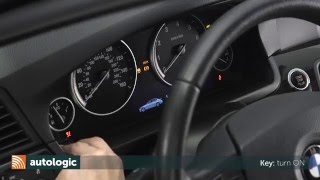
How to confirm: Use a BMW-specific scan tool (like ISTA) or an advanced OBD-II scanner to monitor live data 🎬 Watch: How to view fuel sensor data using the instrument cluster. for both fuel level sensors. In a forum discussion, an owner confirmed a faulty right sensor when its resistance reading was over 500 ohms with a full tank, while the left sensor read a normal ~52 ohms. You can also remove the unit from under the rear seat and test its resistance with a multimeter while moving the float arm; the resistance should change smoothly.
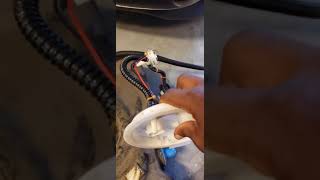
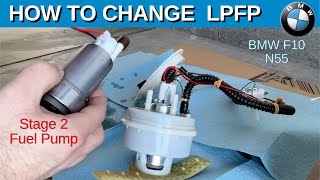
Typical fix: Replace the passenger-side fuel level sensor, which is often integrated into the low-pressure fuel pump assembly. 🎬 See this walkthrough on replacing the low pressure fuel pump. The part is sometimes referred to as the 'Fuel Level Sending Unit'.
Est. part cost: $150-$400 - Faulty Driver-Side Fuel Level Sensor 🟡 Medium Probability → Shop Fuel Tank Sending Unit This sensor can fail just like the passenger-side unit, but it is a much larger problem due to its integration with the fuel tank.
How to confirm: Use a BMW-specific scan tool to monitor live data for both fuel level sensors. If the driver-side (left) sensor reading is erratic, stuck high, or illogical while the passenger-side sensor reads correctly, the fault is confirmed. There is no other practical test as the sensor cannot be easily removed.
Typical fix: The entire fuel tank must be replaced, as the sensor is not available separately. This has been confirmed by multiple owners in forum discussions who received this diagnosis from dealers.
Est. part cost: $1500-$2500 - Damaged Wiring or Corroded Connector ⚪ Low Probability The connectors and wiring are located under the rear seat cushion, where they are generally protected but can be subject to damage or moisture if spills occur. A faulty ground circuit can also cause a high input reading.
How to confirm: Visually inspect the wiring and connector pins for the fuel pump assembly under the rear passenger-side seat cover. Check for corrosion, bent pins, or broken wires. Test for continuity and proper voltage at the connector using a multimeter and a vehicle-specific wiring diagram.
Typical fix: Repair the damaged section of the wiring harness or replace the connector pigtail.
Est. part cost: $20-$100
Rare But Worth Checking
- Stuck Fuel Level Float: Sometimes the float arm can get physically stuck due to debris or the mechanism binding inside the tank. A YouTube video for an F10 showed a case where simply accessing the sensor and freeing a stuck mechanism resolved an E12C03 fuel sensor error without replacing parts.
- Faulty Control Module (JBE, EKPS, or DME): While rare, the module responsible for interpreting the sensor's signal (like the Junction Box Electronics or Fuel Pump Control Module) can fail. This is especially possible if there is evidence of water intrusion in the trunk area where these modules are often located. This should only be considered after thoroughly ruling out the sensors and wiring.
Diagnosis Steps
- Connect a BMW-compatible OBD-II scanner (e.g., with ISTA software) and confirm P0463 is the primary code. Note any other related fuel system codes.
- Access the live data function on the scan tool to view the separate readings from the left (driver) and right (passenger) fuel level sensors. BMW software often shows this as resistance in ohms or volume in liters.
- Observe the readings. A faulty sensor will likely show an illogical or fixed high value. For example, a reading over 500 ohms on a full tank was indicative of a bad sensor in one forum post, while a good sensor read around 50 ohms. A 'high input' code suggests an open circuit or maximum resistance.
- If the passenger-side (right) sensor is suspect, gain access to it by removing the rear seat bottom cushion and the service cover.
- Disconnect the electrical connector and inspect for any signs of corrosion or damage. Test the wiring for correct voltage and ground.
- If the wiring looks good, you can test the sensor's resistance with a multimeter while manually moving the float arm. The resistance should change smoothly. An open circuit (infinite resistance) or no change in resistance indicates a failed sensor.
- If the scan tool points to the driver-side (left) sensor as the source of the high input signal, the diagnosis is unfortunately complete. The fix is a new fuel tank, as this sensor is not serviceable.
Parts You'll Likely Need
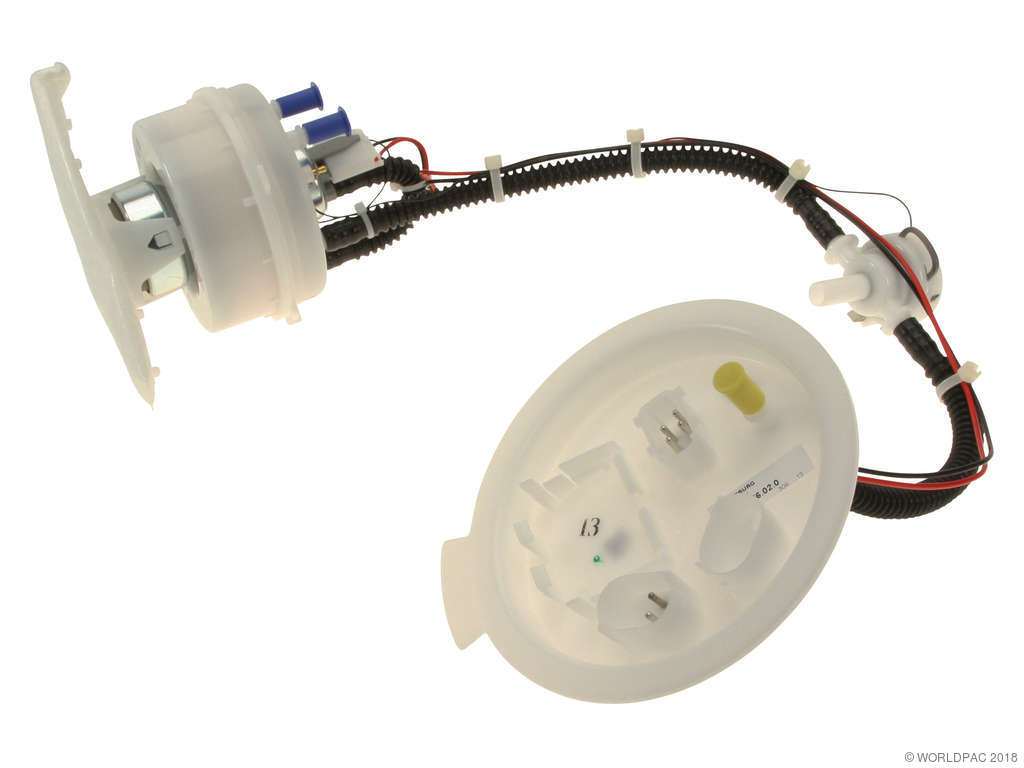
- Fuel Pump and Level Sensor Assembly (Right/Passenger Side)
(OEM #16117297340 (or superseding numbers like 1611726064))— This is the most common and serviceable part that fails, causing P0463. It contains the fuel pump and the right-side fuel level sensor.
Trusted brands: BMW (OEM), VDO, Bosch
OEM price range: $300-$500
Aftermarket price range: $150-$300 - Fuel Tank — Required if the left (driver's side) fuel level sensor has failed, as it is integrated into the tank and not sold separately.
Trusted brands: BMW (OEM)
OEM price range: $1500-$2500
Technical Service Bulletins (TSBs) & Recalls
- SI B16 15 14: While not directly for P0463, this TSB addresses a micro-leak fault (FC 190302) in the fuel tank ventilation system (NVLD) for F10 and other models. An issue in the tank's pressure system could potentially affect sensor readings, making this TSB relevant for a comprehensive diagnosis of fuel system errors.
- SI B62 07 16: Addresses an error in the instrument cluster where fuel level fluctuations while stationary are misinterpreted as refueling, causing the ECO PRO bonus range to reset. The fix is a vehicle software update (programming with ISTA/P 3.58.0 or higher). This is relevant as a software issue can cause unexpected fuel level readings.
Platform-Specific Known Issues
- The driver's side fuel level sensor is integrated into the fuel tank and is not a serviceable part. A failure of this sensor requires a complete fuel tank replacement, a very costly repair confirmed by multiple owners.
- Water intrusion in the trunk can damage the fuel pump control module (EKPS), leading to various fuel system codes, including P0461 which is closely related to P0463.
Mechanic-Grade Diagnostic Values
- Fuel Level Sensor Resistance (Right/Passenger Side) — expected: Resistance should be low when the tank side is full and increase as the level drops. A healthy sensor on a full tank should read around 50-75 ohms.. Failure: A very high resistance reading (e.g., over 500 ohms) or an open circuit (infinite resistance) indicates a fault. The P0463 'High Input' code corresponds to this high resistance/open circuit reading.
- Fuel Level Sensor Resistance (Left/Driver Side) — expected: Similar to the right sensor, resistance should be low when full (~52 ohms reported in one case) and increase as the level drops.. Failure: A resistance reading that is stuck high, erratic, or shows an open circuit when tested via scan tool live data.
- Fuel Level Sensor Voltage (at DME/EKPS) — expected: Signal voltage should typically range from approximately 0.5V (empty) to 4.5V (full).. Failure: A voltage signal that is stuck high (near or above 5V) is what triggers the P0463 code.
Hidden / Shadow Codes Worth Checking
- E12C03: Right fuel level sensor: Short circuit to B+ or signal implausible. This is a BMW-specific code stored in the instrument cluster (KOMBI) or JBE that directly points to a fault with the passenger-side sensor. (see via BMW-specific diagnostic software such as ISTA, INPA, or advanced handheld scanners (e.g., BimmerLink).)
- E12C01: Left fuel level sensor: Short circuit to B+ or signal implausible. This BMW-specific code points directly to the non-serviceable driver-side sensor, often meaning a tank replacement is needed. (see via BMW-specific diagnostic software such as ISTA, INPA, or advanced handheld scanners.)
- 8020B8 / 8020B9: Fault codes related to the left fuel level sensor, indicating a persistent issue that may require tank replacement. (see via BMW-specific diagnostic software (ISTA, etc.).)
Scan Tool Commands That Help
- ISTA: Fuel system bleeding — After replacing a fuel pump, fuel filter, or the fuel level sensor assembly, it is critical to run the fuel system bleeding service function. This primes the low-pressure system, purges air, and prevents damage to the high-pressure fuel pump (HPFP) on startup. The procedure runs the in-tank pump for a set duration (e.g., 120 seconds).
- ISTA: Vehicle Test / Read Out Fault Memory — This is the initial step to read all module-specific fault codes (like E12C03) across the entire vehicle network, which provides more detail than a generic P-code reader.
Wiring & Ground Locations
- EKPS (Fuel Pump Control Module) — In the trunk on the passenger side, near the battery, under the floor trim panel.. The EKPS module receives the raw data from both fuel level sensors and sends the processed information to other modules. A failure here, often due to water intrusion in the trunk, can cause fuel level reading faults. Check the module and its connectors for corrosion.
- Main Chassis Ground (Trunk) — In the trunk, near the battery negative terminal. A large brown cable connects the battery's negative post to a grounding point on the chassis.. A poor main ground can cause a variety of electrical issues. While less likely to cause a specific 'High Input' code (which suggests an open circuit), verifying this ground is clean and tight is a fundamental step in any electrical diagnosis.
- Engine-to-Chassis Ground Strap — Varies by engine, but typically a braided strap connecting the engine block or transmission to the vehicle's chassis, often near an engine mount. On the N20 engine, one is located near the passenger side engine mount.. A corroded or broken engine ground strap can cause slow cranking and other electrical gremlins. While not a direct cause of P0463, its condition is important for overall vehicle electrical health.
Real Owner Repair Stories
- YouTube user on channel 'Repairs & Reviews' (2012 BMW 528i (F10)) — Fuel gauge on 'E' with gas in the tank, Check Engine Light on with codes for Fuel Level Sensor A and B Circuit High.
❌ Tried (didn't work) Bought a used fuel pump., Bought an entire used fuel tank assembly.
✅ What actually fixed it The two halves of the fuel level sensor assembly inside the tank had simply become disconnected from each other. The fix was to access the fuel pump assembly, find the disconnected sensor components, and clip them back together. No parts needed to be replaced. - Bimmerpost user 'alex0607' (BMW F10 (model unspecified)) — Fuel gauge showing less fuel than actual amount, sometimes showing full when it's not.
❌ Tried (didn't work) Initial observation and data logging.
✅ What actually fixed it The user diagnosed a faulty right (passenger-side) fuel level sensor by using the instrument cluster's hidden menu to read live resistance values. With a full tank, the good left sensor read ~52 ohms while the faulty right sensor read over 500 ohms. This confirmed the fault was in the serviceable right-side sensor, avoiding an unnecessary tank replacement.
OEM Part Supersession History
16117260650→16117297340— Part has been updated by BMW. This is for the serviceable right-hand (passenger side) fuel level sensor assembly.
Model Year Variations Within This Range
- 2012/03+: The wiring diagram for the low-pressure fuel system, including the EKPS module, changed for vehicles produced from March 2012 onwards. While the function is the same, technicians should ensure they are using the correct diagram for the vehicle's production date when diagnosing wiring issues.
Diagnostic Flowchart
Other Known Issues on This Vehicle
Issues unrelated to this code that are worth knowing about as an owner of this generation:
- N20 Engine Timing Chain Failure 🔴 High — Common on models produced between 2012 and early 2015. A high-pitched whining noise is the primary warning sign. Failure can be catastrophic. (Ref: BMW issued a limited warranty extension (7 years/70,000 miles) and a class-action lawsuit was settled. See TSB SI B11 03 17.)
- Electric Water Pump Failure (N55 Engine) 🔴 High — A very common failure item, typically occurring between 60,000 and 100,000 miles. Failure is often sudden and can lead to rapid overheating.
- Oil Filter Housing Gasket (OFHG) Leak 🟠 Medium — Extremely common on N52, N54, and N55 engines. The gasket hardens and leaks oil, which can drip onto the serpentine belt, causing it to slip or shred.
- N63 Engine (550i) Multiple Failures 🔴 High — Pre-LCI (2011-2013) 550i models with the N63 V8 are known for excessive oil consumption, timing chain issues, and failures of injectors, fuel pumps, and valve stem seals. (Ref: BMW offered an N63 Customer Care Package to address some issues on cars under warranty.)
- Trunk Water Leaks 🟠 Medium — Water can leak into the trunk/battery area due to clogged sunroof drains or failed body seals. This can damage sensitive electronic modules located there, including the fuel pump control unit (EKPS).
Used vs. New Parts: Buying Guide for This Vehicle
When a used part is the smart pick: For the serviceable passenger-side fuel pump/sensor assembly, a used part from a low-mileage donor car can be a cost-effective option. If the entire fuel tank must be replaced due to a failed driver-side sensor, a used tank is often the only financially viable alternative to an extremely expensive new OEM tank.
Donor-vehicle mileage cap: roughly under 80000 miles for the part to have meaningful remaining life.
What to inspect on the donor part:
- Verify the part came from a vehicle with the exact same model, engine, and year range to ensure compatibility, especially for the EKPS module.
- Inspect the electrical connector pins on the part for any signs of green or white corrosion, which indicates water damage.
- If buying a complete used tank, try to get a warranty from the seller (junkyard/recycler) as you cannot test the integrated driver-side sensor before installation.
- Ask for the donor vehicle's VIN to confirm mileage and production date.
OEM-only on this vehicle (don't cheap out):
- Fuel Tank: As the driver-side sensor is integrated, there are no aftermarket options for the complete fuel tank assembly. The only choices are new OEM or used OEM.
Aftermarket brands forum-validated for this vehicle:
- VDO (often the original OEM supplier)
- Bosch
Brands owners have reported issues with on this vehicle:
- No-name, unbranded fuel pump assemblies from online marketplaces are a significant risk due to high failure rates and potential incompatibility.
Real Owner Stories
Aggregated from forums and TSBs cited above. Mileages and costs reflect what owners reported in those sources.
2012 BMW 528i (F10)
Symptoms: The vehicle was running out of fuel unexpectedly and the fuel gauge was reading inaccurately.
What fixed it: The owner discovered that the two sensor components had simply become disconnected from each other inside the tank.
Source hint: YouTube - '2012 BMW 528i F10 fuel level sensor issue fixed'
BMW 5 Series (F10)
Symptoms: Fuel gauge error (E12C03) where the gauge was providing the wrong reading.
What fixed it: The owner found the sensor float mechanism was physically sticking and resolved it by cleaning and freeing the mechanism without replacing parts.
Source hint: YouTube - 'BMW Fuel Gauge Wrong? EASY Fix Without Replacing Sensor!'
BMW 5 Series (F10)
Symptoms: The owner sought help to diagnose which sensor was faulty using the hidden menu to check ohm readings.
What fixed it: Identified the right-side (passenger) sensor was faulty because it read over 500 ohms while the left read 52 ohms.
Source hint: f10.bimmerpost.com thread titled 'Pls help to diagnose which fuel level sensor is faulty.'
BMW 5 Series (F10)
Symptoms: Fuel level sensor failure leading to a dealership diagnosis.
What fixed it: The owner was quoted for a full fuel tank replacement because the failed sensor was on the driver's side and is non-serviceable.
Cost: $1500-$2500
Source hint: f10.bimmerpost.com thread titled 'Fuel Gauge / Level Sensor Failure'
Related OBD-II Codes
Frequently Asked Questions
Can I replace just the driver-side fuel level sensor on my F10 5 Series?
Is there a TSB for fuel gauge fluctuations on the 5 Series?
How can I tell if the passenger-side or driver-side sensor is causing the P0463 code?
Does TSB SI B16 15 14 relate to my fuel level sensor issues?
Where is the passenger-side fuel level sensor located?
Could a 'Drivetrain Malfunction' message be related to my fuel gauge acting up?
Helpful Videos

Used OEM Parts in Stock
New Aftermarket Parts Available

The information in this article is provided for general reference and educational purposes only. Vehicle specifications, procedures, and part compatibility can vary by production date, trim level, and region. Always consult your vehicle's factory service manual and verify part numbers before purchasing or performing repairs. Safety-critical components such as airbags, seat belts, and braking systems should be installed by a qualified professional.
- BMW 5 Series:
- 🧭 Diagnostic Flowchart
- 🎬 Helpful Videos
- 🛍️ Shop This Part
- What's Unique About the 2011-2017 BMW 5 Series
- Symptoms You May Notice
- Most Likely Causes
- Rare But Worth Checking
- Diagnosis Steps
- Parts You'll Likely Need
- Technical Service Bulletins (TSBs) & Recalls
- Platform-Specific Known Issues
- Mechanic-Grade Diagnostic Values
- Hidden / Shadow Codes Worth Checking
- Scan Tool Commands That Help
- Wiring & Ground Locations
- Real Owner Repair Stories
- OEM Part Supersession History
- Model Year Variations Within This Range
- Other Known Issues on This Vehicle
- Used vs. New Parts: Buying Guide for This Vehicle
- Real Owner Stories
- 2012 BMW 528i (F10)
- BMW 5 Series (F10)
- BMW 5 Series (F10)
- BMW 5 Series (F10)
- Related OBD-II Codes
- Frequently Asked Questions
- 🎟️ Get 5% Off