

P0463 on 2000-2005 Buick LeSabre: Fuel Level Sensor Circuit High Input Causes and Fixes
On a 2000-2005 Buick LeSabre, code P0463 is almost always caused by a failed fuel level sensor, which is part of the fuel pump assembly in the tank. Expect an inaccurate or dead fuel gauge. A major advantage for this specific vehicle is the fuel pump access panel in the trunk, which eliminates the need to drop the fuel tank. Replacing the entire fuel pump module is the common and recommended fix.
- P0463 on your LeSabre means the fuel level sensor circuit has a fault, almost always causing an incorrect fuel gauge reading.
- The most likely culprit is the fuel level sensor itself, which is part of the fuel pump module inside the gas tank.
- A huge advantage on this car is the trunk access panel, which makes replacing the fuel pump module a relatively simple DIY job that doesn't require dropping the tank.
- Driving is possible, but risky, as you could run out of gas at any time. Use your trip meter to track fuel usage.
- The standard repair is to replace the entire fuel pump module assembly. Using a quality OEM (Delphi) or reputable aftermarket part is strongly advised to ensure reliability.
What's Unique About the 2000-2005 Buick LeSabre
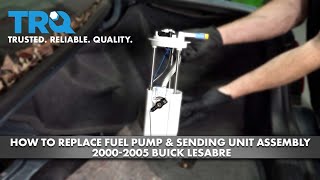
The 2000-2005 Buick LeSabre belongs to the final generation of the model, sharing its GM H-body platform with the Pontiac Bonneville and Oldsmobile Aurora. For this vehicle, the fuel level sensor (or sending unit) is not a standalone part; it is integrated into the main fuel pump module inside the gas tank. This design means that a simple sensor failure often requires the replacement of the entire fuel pump assembly. However, a significant and fortunate feature of the LeSabre and its platform mates is a fuel pump access panel located in the trunk, under the carpet. This door allows direct access to the top of the fuel tank, making it possible to replace the fuel pump module without the difficult and time-consuming process of dropping the fuel tank. 🎬 See this walkthrough for replacing the fuel pump assembly. This drastically reduces labor time and cost compared to many other vehicles.
Symptoms You May Notice
- Inaccurate or erratic fuel gauge (stuck on full, empty, or fluctuating wildly).
- Check Engine Light is on (though not always).
- Low fuel warning light may be on, even with a full tank.
- Running out of fuel unexpectedly despite the gauge showing fuel.
- Fuel gauge reads full when the sending unit is disconnected, and empty when the signal and ground wires are jumped.
- Replacing the instrument cluster before checking the fuel sending unit and wiring.
- Replacing the fuel pump without confirming the sensor is the root cause, although they are replaced together.
- Assuming a new aftermarket pump is good. There are reports of new, non-OEM sending units being faulty out of the box, causing the P0463 code to persist after replacement.
Most Likely Causes
- Faulty Fuel Level Sensor / Fuel Pump Module 🔴 High Probability → Shop Fuel Tank Sending Unit The fuel level sensor is a wear item consisting of a float arm and a variable resistor with wiper contacts. Over time, the resistive strip develops worn or 'dead' spots from the constant movement of the wiper arm, causing an open circuit. This open circuit results in a high voltage signal (over 2.9V), triggering the P0463 code. 🎬 Watch: Expert troubleshooting for erratic GM fuel gauges and P0463. Since it's integrated with the fuel pump, the entire module is the common failure point and recommended replacement. In some cases, environmental factors play a role; for instance, NHTSA ODI #10371320 notes that sulfur in the gasoline can cause the small wires in the sensor to corrode and eventually break, triggering the P0463 error.
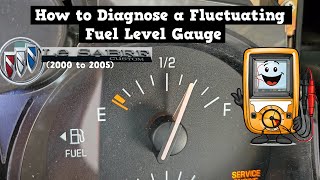
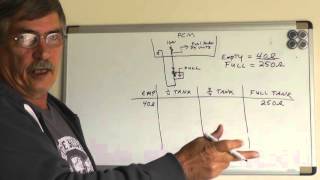
How to confirm: A technician can use a scan tool to read the live voltage data from the fuel level sensor. A reading that is stuck high (typically near 5 volts) or fluctuates wildly points to a bad sensor. 🎬 Watch: How to diagnose a fluctuating fuel level gauge. An ohmmeter can also be used on the disconnected unit; the GM spec is typically around 40 ohms when empty and 250 ohms when full. Some sources cite a range of 90 to 233 ohms. Sweeping the float arm should show a smooth change in resistance without any dropouts or open readings.
Typical fix: Replace the entire fuel pump module assembly, which includes the fuel pump, fuel pressure regulator, and the fuel level sensor. It is highly recommended to use an OEM (Delphi) or high-quality aftermarket brand. Some aftermarket pumps require splicing a new wiring connector, which is usually included.
Est. part cost: $180-$450 (Aftermarket), $800-$1200 (OEM) - Damaged Wiring or Connectors 🟡 Medium Probability The main electrical connector on top of the fuel pump module can become brittle and break during removal. More commonly, the terminals inside the connector corrode or lose tension, creating high resistance or an open circuit, which causes the high voltage reading. The wiring harness leading to the fuel tank is exposed under the vehicle and can be susceptible to corrosion from road salt and moisture, or physical damage from road debris.
How to confirm: Visually inspect the wiring harness from the PCM to the fuel tank for any breaks, chafing, or corrosion. Pay close attention to the main connector on top of the fuel tank module for melted plastic or sooty deposits, which indicate a poor connection. Check for 5 volts on the purple signal wire at the connector with the key on, engine off, and connector unplugged. This confirms the PCM is sending the reference voltage.
Typical fix: Repair the damaged section of wire or replace the corroded/broken connector pigtail.
Est. part cost: $10-$50 - Poor Ground Connection ⚪ Low Probability The ground circuit for the fuel pump module can corrode or become loose over time, creating high resistance. On this platform, the ground splice pack is a common point of failure and can be difficult to access. A bad ground can cause the signal voltage to float high. The primary ground for the fuel pump module is often located in the rear of the vehicle, sometimes near the rear seat or in the trunk area.
How to confirm: Perform a voltage drop test on the ground circuit (black with white stripe wire) for the fuel pump module. High resistance or an open circuit on the ground side can cause the P0463 code. A bad ground will typically affect the fuel pump's operation as well, which may not be the case if only the gauge is failing.
Typical fix: Locate the ground point (may require removing rear seat components), clean the connection point to bare metal, and secure the ground wire.
Est. part cost: $0-$5
Rare But Worth Checking
- Faulty Instrument Cluster: → Shop Instrument Cluster While rare, a failure in the instrument panel cluster itself can cause incorrect fuel gauge readings. This should only be considered after all fuel tank-related components and wiring have been ruled out. The cluster receives fuel level data via Class 2 serial data from the PCM.
- Faulty Powertrain Control Module (PCM): A defective PCM is a very rare cause for this code. The PCM supplies the reference voltage and ground for the sensor circuit. It should only be suspected after every other possibility has been exhaustively tested and eliminated.
Diagnosis Steps
- Verify the code with a reliable OBD-II scanner. Note that this code may not turn on the Check Engine Light.
- Use the scanner to observe the live data for the 'Fuel Level' parameter. Note the reading (often a percentage or voltage). A high, fixed reading (e.g., >2.9V) with a partially full tank suggests a circuit high fault.
- Access the fuel pump module connector via the access panel in the trunk. Disconnect it.
- With the key on, check the fuel gauge. It should read past full. This indicates an open circuit, which is expected.
- Use a jumper wire to connect the purple signal wire terminal to the black/white ground wire terminal in the harness-side connector. With the key on, the fuel gauge should now read empty. If steps 4 and 5 pass, the wiring to the cluster and the cluster itself are good.
- If the wiring and cluster are confirmed good, the fault is almost certainly the fuel level sensor within the fuel pump module.
- Before replacing, inspect the connector for corrosion or damage. Many aftermarket pumps require splicing a new connector pigtail, which comes with the new pump.
- Replace the fuel pump module assembly. It is highly recommended to use a quality brand like Delphi (OEM) or Bosch to avoid premature failure.
- After replacement, clear the code and verify the fuel gauge reads correctly.
Parts You'll Likely Need
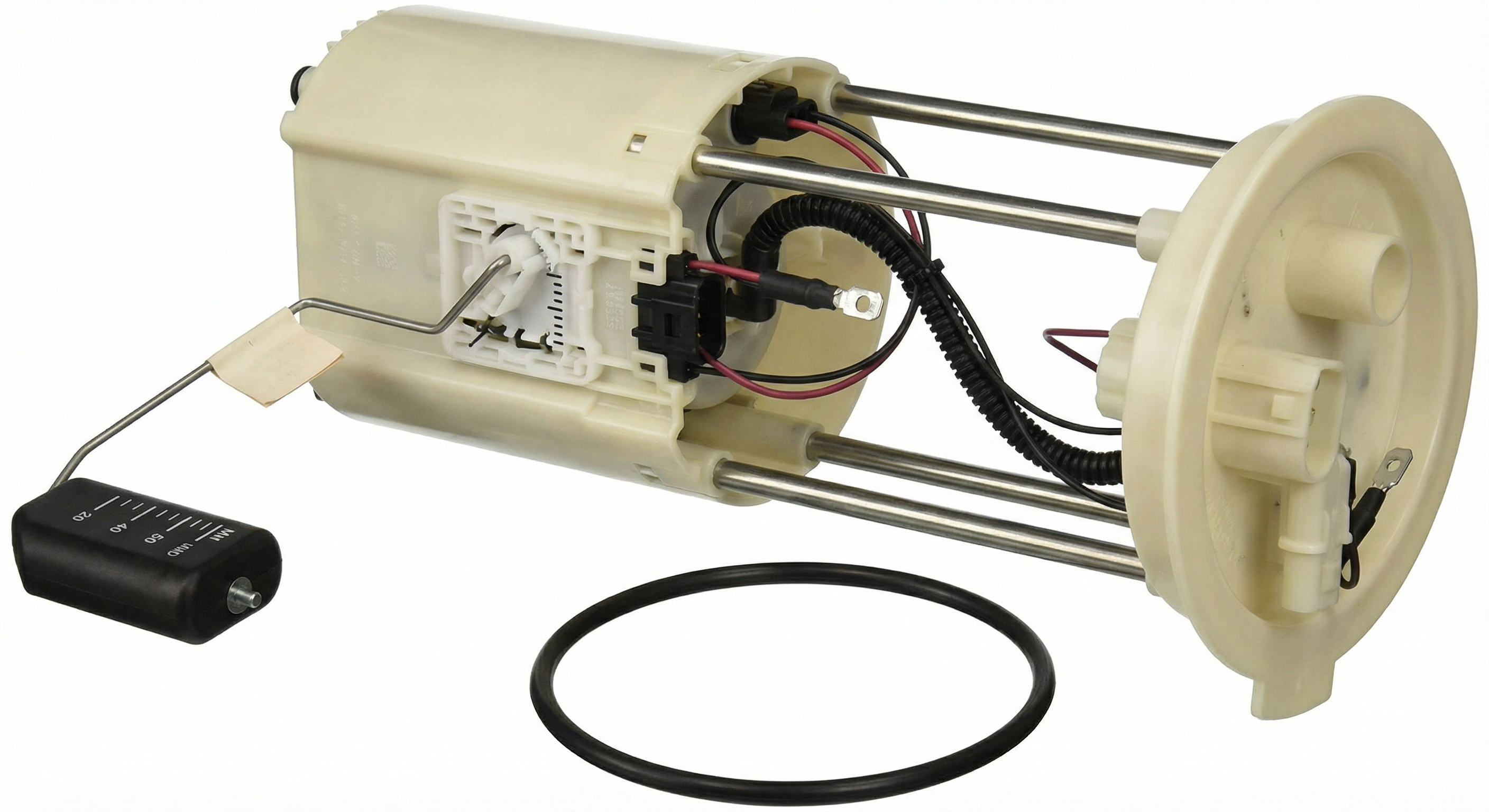
- Fuel Pump Module Assembly
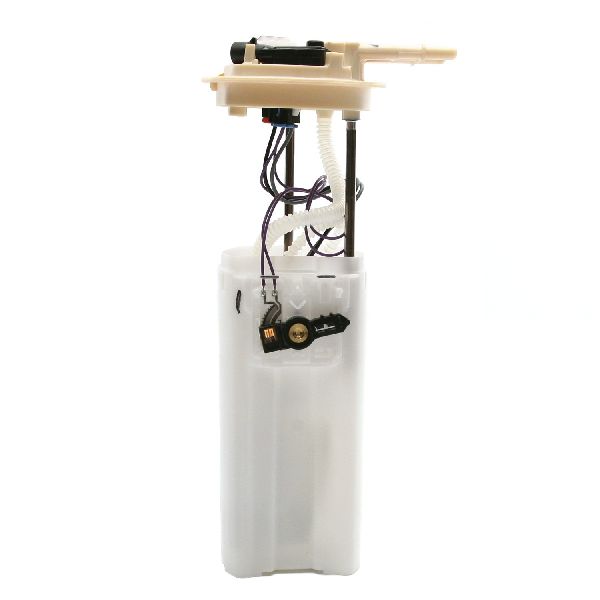
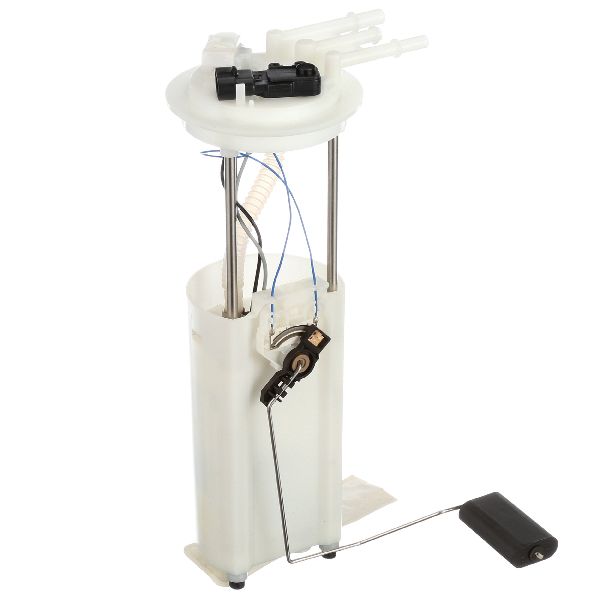
(OEM #Delphi FG0272 (confirm with VIN))— This is the most common failure. The assembly includes the fuel pump, level sensor, and strainer, and is the standard method of repair for a failed sensor on this vehicle. Using a quality part is critical to avoid repeat failure.
Trusted brands: Delphi (OEM), ACDelco, Bosch, Spectra Premium
OEM price range: $800-$1200
Aftermarket price range: $180-$450
Technical Service Bulletins (TSBs) & Recalls
- While no specific TSB for P0463 on this model was found, GM did issue a special coverage program for faulty fuel level sensors on 2005-2009 SUVs (like the Trailblazer), covering half the repair cost. This indicates a known history of GM fuel sensor issues from this era.
Platform-Specific Known Issues
- Trunk Access Panel Simplifies Repair: Unlike many vehicles that require dropping the fuel tank, the 2000-2005 LeSabre has a metal access panel under the trunk carpet, held on by several small bolts. This makes accessing and replacing the fuel pump module a much easier job that can be done in a couple of hours, significantly lowering labor costs.
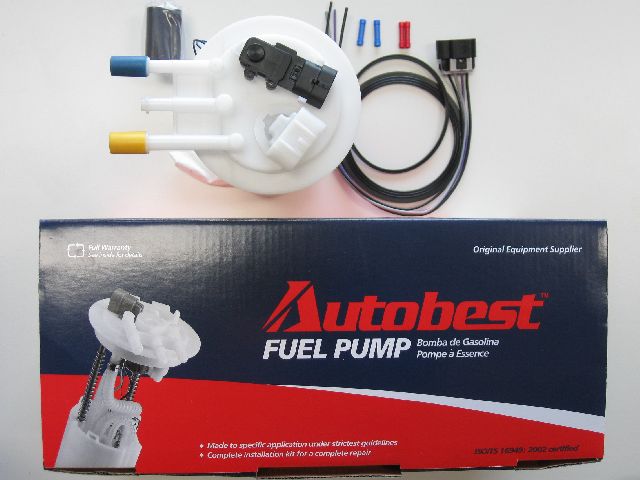
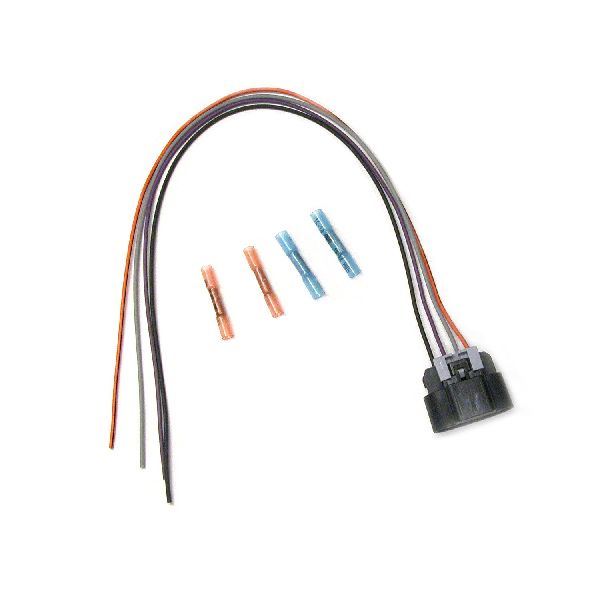
- Wiring Connector Splicing Often Required: Many aftermarket fuel pump modules, and even some newer OEM versions, use a different electrical connector than the original factory part (often a flat 1x4 pin vs the original 2x2 square plug). The new pump will typically include a new pigtail connector that must be spliced into the vehicle's harness by cutting the old connector off and connecting the new one, matching wire colors.
- Fuel Pressure Regulator Recall (2000 Model Year): There was a safety recall (NHTSA #04V090000) for a potentially leaky fuel pressure regulator on some 2000 LeSabre models. While not directly related to the P0463 code, the regulator is part of the fuel pump module, so replacing the module with a new one resolves this potential issue.
Mechanic-Grade Diagnostic Values
- Fuel Level Sensor Resistance — expected: 40 Ohms (Empty) to 250 Ohms (Full). Failure: An open circuit (infinite resistance) or readings outside this range. Fluctuations or dead spots when moving the float arm also indicate failure.
- Fuel Level Sensor Resistance (Alternate Source) — expected: 90 Ohms to 233 Ohms. Failure: Fluctuating readings or values outside this range when testing at the pump connector.
- Fuel Level Sensor Signal Voltage (at PCM) — expected: Approximately 0.5V (Empty) to 2.5V (Full).. Failure: A sustained voltage reading above 2.9 volts for over 2 minutes will set the code.
- Sensor Ground Voltage Drop (at pump connector) — expected: Near 0 Volts (e.g., < 0.05V or 50mV).. Failure: A high voltage reading (e.g., approaching the 5V reference) on the ground wire indicates a bad ground connection, which can cause the signal voltage to read artificially high.
Scan Tool Commands That Help
- GM Tech 2: Special Functions -> Fuel System -> Fuel Gauge Test — This bidirectional command allows the technician to command the fuel gauge to specific positions (e.g., empty, half, full) directly from the scan tool. If the gauge responds correctly, it proves the instrument cluster and the Class 2 data line between the PCM and cluster are working, isolating the fault to the sensor, wiring, or PCM.
- GM Tech 2: Data Display -> Fuel Tank Level Remaining — Used to monitor the live data parameter for the fuel level as interpreted by the PCM. This is the primary data point to watch. A reading stuck at a high value that doesn't change with fuel level confirms the PCM is seeing the fault condition.
Wiring & Ground Locations
- Fuel Pump Module Connector — On top of the fuel tank, accessible through the panel under the trunk carpet.. This is the primary connection point for testing. The Purple wire is the fuel level signal, and the Black/White wire is the sensor ground.
- G302 — Under the rear seat on the driver's side, near the rear fuse box.. This ground point serves the rear fuse box and the remote control door lock receiver. While not the direct ground for the pump, a poor connection here can cause various electrical issues in the rear of the vehicle.
- G303 — Under the right front passenger seat.. This grounds the inflatable restraint module. While unrelated to the fuel system, wiring diagrams show it as a major ground point in the passenger cabin area, and issues here can point to systemic grounding problems.
- Splice Pack S302 — In the main body harness, often near the driver's side power seat breakout.. GM vehicles of this era are known for corrosion in under-carpet splice packs, which bundle multiple ground wires together. Corrosion here can create high resistance on numerous circuits, including potentially the fuel sender ground.
Real Owner Repair Stories
- YouTube channel 'Car & Truck' (2000-2005 Buick LeSabre (exact year not specified)) — Fluctuating gas gauge needle, both with engine running and with key-on-engine-off.
❌ Tried (didn't work) The video focused on direct diagnosis rather than trial-and-error parts replacement.
✅ What actually fixed it The fuel level sensor (sending unit) was confirmed bad via an ohmmeter test at the pump connector, which showed fluctuating resistance instead of a steady reading. A known-good sending unit was temporarily connected to the vehicle's harness, and the gauge responded perfectly. The final fix was replacing the entire fuel pump module assembly.
OEM Part Supersession History
GM 25326326 (Sensor Kit)→Included in full module assemblies like Delphi FG0272 or ACDelco MU1199/MU238.— The industry shifted from offering standalone sensors to complete, easier-to-install modules that address the pump and sensor at once.
Heads up: Many replacement modules use an updated, flat 1x4 inline connector instead of the original square 2x2 connector. The new module must include a harness adapter pigtail to be spliced onto the vehicle's wiring.
Diagnostic Flowchart
Used vs. New Parts: Buying Guide for This Vehicle
When a used part is the smart pick: For this repair, a used part is generally a poor choice. The fuel level sensor is a primary wear item, and a used assembly from a junkyard has an unknown amount of life left and carries a high risk of premature failure, forcing you to do the job again. Given the relatively low cost of a new aftermarket assembly and the critical nature of the fuel pump, new is strongly recommended.
Donor-vehicle mileage cap: roughly under 50000 miles for the part to have meaningful remaining life.
What to inspect on the donor part:
- Verify the donor vehicle's mileage is as low as possible.
- Inspect the electrical connector on the used unit for any signs of melting, corrosion, or brittle plastic.
- If possible, test the resistance of the sending unit with a multimeter before purchase, sweeping the float arm to check for smooth operation (40-250 ohms).
Aftermarket brands forum-validated for this vehicle:
- Delphi (Original Equipment Manufacturer)
- Bosch
- ACDelco (Often rebranded Delphi)
- Spectra Premium
Brands owners have reported issues with on this vehicle:
- Unnamed, 'white-box' or ultra-low-cost brands found on online marketplaces have a high reported failure rate, often with the sending unit being inaccurate right out of the box.
Real Owner Stories
Aggregated from forums and TSBs cited above. Mileages and costs reflect what owners reported in those sources.
2003 Buick LeSabre 3.8L
Symptoms: A 'haywire' fuel gauge that becomes more erratic when the tank is below half full.
What fixed it: The discussion pointed to a classic worn sending unit as the cause, with a secondary suggestion to check ground connections.
Source hint: Car Talk Community - '2003 Buick LeSabre Confusing Problem'
2000-2005 Buick LeSabre 3.8L
Symptoms: After having a shop replace the fuel pump to fix a P0463 code, the code and symptoms remained.
What fixed it: The discussion concluded the likely cause was either a faulty new aftermarket part or an issue with the wiring splice required for the installation.
Source hint: GMTNation Forum - 'Fuel gauge issue after fuel pump P0463'
Buick Owner Report
Symptoms: An owner reported that their vehicle would stall during road tests. Diagnostic scans revealed multiple error codes including P0300, P0463, P1096, P0103, and P0128.
What fixed it: According to NHTSA ODI #10262365, the repair involved replacing an older battery, servicing the positive cable, and reprogramming the ECM.
Source hint: NHTSA ODI #10262365
Related OBD-II Codes
Frequently Asked Questions
Do I have to drop the fuel tank to replace the fuel pump on my 2000-2005 LeSabre?
I bought a new fuel pump for my LeSabre, but the electrical connector is different. Is this the wrong part?
Is there a recall for the P0463 fuel gauge problem on my 2000 LeSabre?
My mechanic says the whole fuel pump module needs to be replaced, but only the gauge is broken. Is this correct?
What brand of fuel pump is recommended for this car to avoid having the problem come back?
How can I test if the problem is the sending unit or the wiring on my LeSabre?
Helpful Videos
Used OEM Parts in Stock
New Aftermarket Parts Available


The information in this article is provided for general reference and educational purposes only. Vehicle specifications, procedures, and part compatibility can vary by production date, trim level, and region. Always consult your vehicle's factory service manual and verify part numbers before purchasing or performing repairs. Safety-critical components such as airbags, seat belts, and braking systems should be installed by a qualified professional.
- Buick LeSabre:
- 🧭 Diagnostic Flowchart
- 🎬 Helpful Videos
- 🛍️ Shop This Part
- What's Unique About the 2000-2005 Buick LeSabre
- Symptoms You May Notice
- Most Likely Causes
- Rare But Worth Checking
- Diagnosis Steps
- Parts You'll Likely Need
- Technical Service Bulletins (TSBs) & Recalls
- Platform-Specific Known Issues
- Mechanic-Grade Diagnostic Values
- Scan Tool Commands That Help
- Wiring & Ground Locations
- Real Owner Repair Stories
- OEM Part Supersession History
- Used vs. New Parts: Buying Guide for This Vehicle
- Real Owner Stories
- 2003 Buick LeSabre 3.8L
- 2000-2005 Buick LeSabre 3.8L
- Buick Owner Report
- Related OBD-II Codes
- Frequently Asked Questions
- 🎟️ Get 5% Off