

P0463 on 2005-2010 Chevrolet Cobalt: Fuel Level Sensor Circuit High Input Fixes
This code almost always means the fuel level sensor, which is part of the fuel pump module in the gas tank, has failed. The most common fix is to replace the entire fuel pump module. Expect to pay $150-$300 for the part.
- P0463 on a Cobalt means the fuel level sensor circuit is sending a signal that's too high.
- The most common symptom is a fuel gauge that is stuck on full or empty, or fluctuates wildly.
- The fix is almost always replacing the entire fuel pump module, which contains the faulty sensor.
- While you can drive the car, you risk running out of gas unexpectedly, so it's best to repair it promptly.
- Before buying parts, check the wiring and connector at the top of the fuel tank for any obvious damage or corrosion.
What's Unique About the 2005-2010 Chevrolet Cobalt
The 2005-2010 Chevrolet Cobalt uses a conventional fuel level sending unit integrated into the fuel pump module. There are no particularly unique design flaws that make this model more prone to P0463 than other vehicles of its era. The issue is typically a straightforward failure of the sensor due to age and wear from constant contact with fuel. The sending unit operates on a resistance range of approximately 40 ohms (empty) to 250 ohms (full).
Symptoms You May Notice
- Check Engine Light is on
- Fuel gauge reads full all the time
- Fuel gauge reads empty, even with a full tank
- Fuel gauge fluctuates erratically
- Low fuel warning light may be illuminated
- In rare cases, the engine may stall if the computer is confused about fuel levels.
- Replacing the instrument cluster when the problem is the sensor in the tank.
- Replacing the fuel pump itself when only the sending unit has failed (though they are often sold as one assembly).
Most Likely Causes
- Failed Fuel Level Sensor 🔴 High Probability → Shop Fuel Tank Sending Unit The sensor is a moving part (a float on a resistor strip) that wears out over time from constant exposure to fuel and vibration. The contact fingers on the float arm can break off, causing an open circuit.
How to confirm: Access the fuel pump module. With the ignition on, measure the voltage on the signal wire. A reading that is stuck high (near 5 volts) regardless of the float's position indicates a failed sensor. Alternatively, measure the resistance of the sensor while moving the float arm; it should sweep smoothly within the specified range (approx. 40 ohms at empty to 250 ohms at full for a Cobalt). An infinite resistance reading indicates an open circuit within the sensor.
Typical fix: Replace the entire fuel pump module, as the sensor is typically integrated into it.
Est. part cost: $150-$300 - Damaged Wiring or Connectors 🟡 Medium Probability The wiring harness runs underneath the vehicle and is exposed to road debris, moisture, and corrosion, which can cause an open or short in the circuit. The connector on top of the fuel tank is a common point of failure.
How to confirm: Visually inspect the wiring harness from the fuel tank to the ECM for any breaks, chafing, or corrosion, especially at the connector on top of the fuel tank. Perform a continuity test on the signal and ground wires.
Typical fix: Repair the damaged section of wire or replace the corroded connector.
Est. part cost: $5-$50 - Poor Ground Connection ⚪ Low Probability The ground for the fuel pump module can corrode over time, leading to high resistance in the circuit. This can cause the sensor to send inaccurate readings.
How to confirm: Locate the ground wire for the fuel pump module (refer to a service manual) and check for corrosion or looseness. Perform a voltage drop test on the ground circuit. A proper ground should read near 0.0 volts.
Typical fix: Clean the grounding point to bare metal and secure the connection.
Est. part cost: $1-$5
Rare But Worth Checking
- Faulty Powertrain Control Module (PCM): This is extremely rare. The PCM should only be considered after all other possibilities, including the sensor and wiring, have been definitively ruled out.
- Faulty Instrument Cluster: → Shop Instrument Cluster While a faulty cluster can cause an incorrect gauge reading, it is less likely to be the root cause of a P0463 code, which is set by the PCM based on the sensor's direct input. A failing stepper motor in the cluster is a possible cause for an erratic gauge but typically won't set a P0463 code.
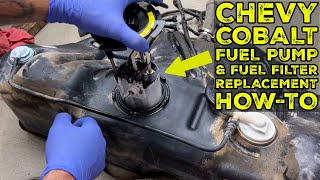
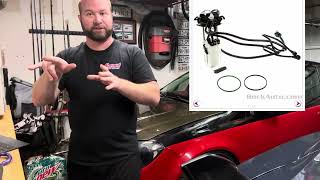
- Faulty Body Control Module (BCM): A failing BCM on a Cobalt can cause widespread electrical issues, including erratic gauge behavior. If the fuel gauge problem is accompanied by other strange electrical symptoms like flashing lights or malfunctioning power locks, the BCM could be the culprit. It is located on the passenger side of the center console. 🎬 Watch: How to diagnose and fix Cobalt fuel gauge issues
Diagnosis Steps
- Confirm the Code: Use an OBD-II scanner to verify that P0463 is the only code present. Note any other codes.
- Check Live Data: Use the scanner to observe the 'Fuel Tank Level Remaining' parameter. The reading should be between 4% and 98%. A value stuck at a high percentage (e.g., 99% or more) regardless of the actual fuel level points towards a sensor or circuit issue.
- Inspect Wiring: Visually inspect the wiring harness leading to the fuel tank. Look for any obvious signs of damage, corrosion, or loose connections, particularly at the connector on top of the fuel pump module.
- Test the Circuit at the Pump: Gain access to the top of the fuel tank. Disconnect the fuel pump module connector. With the ignition on, use a multimeter to check for reference voltage on the signal wire. This confirms the PCM is sending a signal.
- Test the Sensor: With the connector still off, measure the resistance across the fuel level sensor pins on the pump module itself. The resistance should be between approximately 40 ohms (empty) and 250 ohms (full). While a helper gently rocks the vehicle to slosh fuel, watch for a smooth change in resistance. 🎬 See: How to test a fuel level sensor without removing the pump A steady, unchanging reading (especially an open circuit/infinite resistance) confirms a bad sensor.
- Check the Ground: Verify that the ground circuit for the fuel pump module has good continuity to the chassis ground. A voltage drop test should show less than 0.1V. Test for less than 1 ohm between the low reference circuit terminal and a good chassis ground.
- Isolate the Fault: If the sensor tests good and the wiring appears intact, the fault may lie further up the harness or, in very rare cases, with the PCM itself.
Parts You'll Likely Need
- Fuel Pump and Sender Assembly
(OEM #ACDelco MU1374, ACDelco MU1653)— The fuel level sensor (sender) is almost always integrated with the fuel pump into a single module. Replacing the entire assembly is the standard repair and also replaces the aging fuel pump.
Trusted brands: ACDelco, Delphi, Bosch, Spectra Premium
OEM price range: $250-$350
Aftermarket price range: $150-$250 - Fuel Level Sensor Kit (Sender Only)
(OEM #GM 19332414)— For some models, the sensor/sender unit can be purchased separately from the fuel pump, offering a potentially cheaper repair if the pump itself is still functional.
Trusted brands: ACDelco
OEM price range: $75-$150
Related Codes That Often Appear With This One
- P0462 — This code means 'Fuel Level Sensor Circuit Low Input.' Seeing both P0462 and P0463 intermittently can indicate a sensor that is failing and shorting out or has a completely broken resistor strip.
Technical Service Bulletins (TSBs) & Recalls
- GM TSB 18-NA-365: While not for the Cobalt specifically, this TSB for newer GM vehicles discusses a range of fuel level sensor codes including P0463 caused by blocked transfer jets in the fuel tank, indicating GM's ongoing attention to fuel sending unit issues.
Mechanic-Grade Diagnostic Values
- Fuel Level Sensor Resistance — expected: 40-45 ohms when empty, 240-250 ohms when full.. Failure: An infinite (open) reading, or a reading that does not change smoothly as the float arm moves.
- Fuel Level Sensor Ground Circuit Resistance — expected: Less than 1.0 ohm.. Failure: A reading higher than 1.0 ohm indicates excessive resistance in the ground circuit.
- Scan Tool 'Fuel Tank Level Remaining' Parameter — expected: Between 4% and 98%.. Failure: A value stuck at or above 99% regardless of the actual fuel level.
Wiring & Ground Locations
- Fuel Pump Module Connector — On top of the fuel pump module, accessible by lowering the fuel tank.. This is the primary connection point for the fuel level sensor. Corrosion or damage here is a common cause of P0463. The signal wire (typically purple) and ground wire (black) can be tested at this connector.
- Fuel Pump Ground — The ground wire from the fuel pump harness connects to the chassis near the fuel tank.. A corroded or loose ground connection can cause high resistance in the circuit, leading to the high voltage signal that triggers P0463.
- Body Control Module (BCM) — Located in the center console, accessible from the passenger footwell. It often incorporates the passenger side fuse box.. In rare cases of widespread electrical issues, a faulty BCM can cause erratic gauge behavior. A problem here would likely be accompanied by other seemingly unrelated electrical symptoms.
Real Owner Repair Stories
- The Chevrolet Cobalt SS Forum (2007 Chevrolet Cobalt LT) — Fuel gauge not reading properly after filling the tank; it would stop part way (e.g., 1/4 or 3/4) and rise to full very slowly. All other gauges worked correctly.
❌ Tried (didn't work) A dealership diagnosed the problem as a faulty gauge cluster and quoted $700+ for replacement and reprogramming.
✅ What actually fixed it The user suspected the sending unit was the actual problem, especially since it started after a fuel pump recall service. Another forum member provided the correct resistance specs (40-45 ohms empty, 240-250 ohms full) to test the sending unit directly, confirming it as the likely culprit over the expensive instrument cluster.
Diagnostic Flowchart
Other Known Issues on This Vehicle
Issues unrelated to this code that are worth knowing about as an owner of this generation:
- Faulty Ignition Switch 🔴 High — Extremely widespread, subject to a massive recall (GM recall N140112). The switch can unexpectedly move from 'Run' to 'Accessory' or 'Off' while driving, disabling the engine, power steering, power brakes, and airbags. (Ref: NHTSA 14V047000)
- Sudden Loss of Electric Power Steering 🔴 High — Very common across the entire 2005-2010 model year range, leading to a major recall. The electric power steering motor can fail suddenly, making the vehicle very difficult to steer at low speeds. (Ref: NHTSA 10V073000)
- Timing Chain Tensioner Failure 🟠 Medium — A known issue where the timing chain tensioner fails, causing a rattling noise on cold starts. If not addressed, it can lead to the timing chain skipping or breaking, causing significant engine damage.
- Shifter Cable Failure 🟡 Low — The automatic transmission shifter cable can fail, preventing the vehicle from going into the selected gear or causing the ignition key to become stuck. (Ref: NHTSA 09V073000)
- EVAP System Faults (Gas Cap) 🟡 Low — A failing or improperly sealed gas cap is a frequent cause for the Check Engine Light with EVAP-related codes.
Used vs. New Parts: Buying Guide for This Vehicle
When a used part is the smart pick: A used fuel pump module from a junkyard can be a cost-effective option if the budget is tight. Since the primary failure is the electronic sensor, a part from a lower-mileage, newer model year donor vehicle has a reasonable chance of having significant life left.
Donor-vehicle mileage cap: roughly under 80000 miles for the part to have meaningful remaining life.
What to inspect on the donor part:
- Check for a clean, corrosion-free electrical connector.
- Inspect the plastic housing for any cracks or signs of fuel leaks, especially around the ports.
- If possible, ask the salvage yard for the mileage of the donor car.
- Avoid parts from vehicles that show signs of sitting for a long time with old fuel (heavy varnish smell).
Aftermarket brands forum-validated for this vehicle:
- ACDelco (OEM)
- Delphi
- Bosch
Brands owners have reported issues with on this vehicle:
- Unbranded, 'white box' parts from online marketplaces should be avoided, as their quality control and longevity can be highly questionable.
Real Owner Stories
Aggregated from forums and TSBs cited above. Mileages and costs reflect what owners reported in those sources.
Chevrolet Cobalt SS
Symptoms: The fuel gauge was jumping around erratically and the car threw code P0463.
What fixed it: Diagnostic advice suggested checking the wiring and ground for the sensor to resolve the erratic signal.
Source hint: Cobalt SS Network - P0463 - Help
Chevrolet Cobalt SS
Symptoms: The fuel gauge was not working properly and providing incorrect readings following a fuel pump replacement.
What fixed it: Testing the resistance of the sending unit (checking for 40-45 ohms empty/240-250 ohms full) and diagnosing the instrument cluster's stepper motor.
Source hint: The Chevrolet Cobalt SS Forum - Fuel gauge not working properly. Gauge or sending unit?
Chevrolet Cobalt (Year Unspecified)
Symptoms: The vehicle triggered a P0463 code, indicating a high input from the fuel level sensor circuit.
What fixed it: The sensor was identified as being stuck or having a short in the circuit; the sender unit was identified as a replaceable part.
Source hint: Chevrolet Forum - po463
Documented NHTSA Reports
Chevrolet Malibu (Cross-Manufacturer Reference)
Symptoms: An owner reported that the fuel gauge began to act erratically before eventually reading empty all the time, accompanied by an active P0463 code.
Source: NHTSA ODI #10759346
Chevrolet Trailblazer (Cross-Manufacturer Reference)
Symptoms: A report describes the fuel gauge "acting crazy" and reading empty regardless of the actual fuel level, triggering a P0463 code for high fuel input.
Source: NHTSA ODI #10407281
Chevrolet Malibu (Cross-Manufacturer Reference)
Symptoms: An owner noted the Check Engine Light illuminated with code P0463 after experiencing intermittent gauge issues.
Source: NHTSA ODI #10691136
Chevrolet Traverse (Cross-Manufacturer Reference)
Symptoms: A repair shop found codes P0452 and P0463; however, replacing the fuel pump module did not immediately resolve the issue.
Source: NHTSA ODI #11615682
Chevrolet Traverse (Cross-Manufacturer Reference)
Symptoms: An owner reported that even after having two fuel level sensors installed, the Check Engine Light returned with codes P0463, P069E, and C0045.
Source: NHTSA ODI #11399819
Related OBD-II Codes
Frequently Asked Questions
What are the specific resistance values I should look for when testing the fuel level sensor on my Cobalt?
Does GM TSB 18-NA-365 apply specifically to my 2005-2010 Cobalt?
Can I replace just the fuel level sender, or do I need the whole pump assembly?
Is there a recall for the fuel system on the 2005-2010 Cobalt?
Could a bad ground cause my fuel gauge to fluctuate erratically?
Why is the fuel level sensor so prone to failure on this specific vehicle?
Helpful Videos



Used OEM Parts in Stock
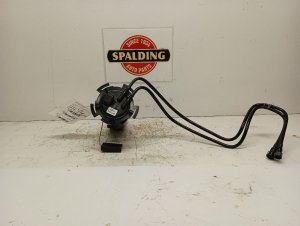
New Aftermarket Parts Available

The information in this article is provided for general reference and educational purposes only. Vehicle specifications, procedures, and part compatibility can vary by production date, trim level, and region. Always consult your vehicle's factory service manual and verify part numbers before purchasing or performing repairs. Safety-critical components such as airbags, seat belts, and braking systems should be installed by a qualified professional.
- Chevrolet Cobalt:
- 🧭 Diagnostic Flowchart
- 🎬 Helpful Videos
- 🛍️ Shop This Part
- What's Unique About the 2005-2010 Chevrolet Cobalt
- Symptoms You May Notice
- Most Likely Causes
- Rare But Worth Checking
- Diagnosis Steps
- Parts You'll Likely Need
- Related Codes That Often Appear With This One
- Technical Service Bulletins (TSBs) & Recalls
- Mechanic-Grade Diagnostic Values
- Wiring & Ground Locations
- Real Owner Repair Stories
- Other Known Issues on This Vehicle
- Used vs. New Parts: Buying Guide for This Vehicle
- Real Owner Stories
- Chevrolet Cobalt SS
- Chevrolet Cobalt SS
- Chevrolet Cobalt (Year Unspecified)
- Documented NHTSA Reports
- Chevrolet Malibu (Cross-Manufacturer Reference)
- Chevrolet Trailblazer (Cross-Manufacturer Reference)
- Chevrolet Malibu (Cross-Manufacturer Reference)
- Chevrolet Traverse (Cross-Manufacturer Reference)
- Chevrolet Traverse (Cross-Manufacturer Reference)
- Related OBD-II Codes
- Frequently Asked Questions
- 🎟️ Get 5% Off