

P0463 on 2003-2026 Chevrolet Express: Fuel Level Sensor Circuit High Input Causes and Fixes
P0463 on a Chevrolet Express most often means the fuel level sensor inside the fuel tank has failed, causing the gauge to read full or empty. The fix is typically to replace the entire fuel pump module. A close second cause is a damaged wiring harness along the frame. Repair costs range from $400 to $800 at a shop.
- P0463 means your fuel gauge is unreliable; track your mileage to avoid running out of gas.
- The most likely cause is a failed fuel level sensor, which is inside the fuel tank and usually part of the fuel pump module.
- Before replacing the expensive fuel pump module, thoroughly inspect the wiring harness along the frame for damage, especially near the driveshaft.
- Also, check the fuel tank's ground strap to ensure it is clean and secure.
- Replacing the fuel pump module is a significant job that requires dropping the fuel tank, making it a difficult DIY for beginners.
What's Unique About the 2003-2026 Chevrolet Express
The Chevrolet Express has been in the same generation (GMT610) since 2003, but its long production run means fuel system components and wiring can vary. The primary issue is the sheer commonality of fuel level sensor failure on these vans, as noted by repair databases. Furthermore, as a body-on-frame work vehicle, the wiring harness running along the frame is susceptible to damage from road debris, corrosion, or rubbing against chassis components, which is a specific cause of the 'high circuit' fault. The job is also complicated by the large standard 31-gallon fuel tank, which is heavy and cumbersome to drop for DIY replacement, leading some owners to consider cutting an access hatch in the van floor.
Generation note: The 2003-2026 Chevrolet Express is technically a single generation (GMT610). However, there have been multiple facelifts and powertrain updates. The specific fuel level sensor or fuel pump module part number will vary depending on the model year, engine type (gas/diesel), and fuel tank size. It is critical to use your vehicle's VIN to get the correct replacement part.
Symptoms You May Notice
- Check Engine Light is on
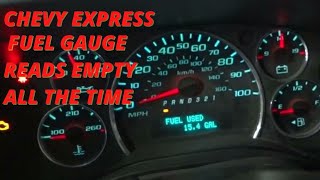
- Fuel gauge is inaccurate, erratic, stuck on Full, or stuck on Empty.
- Fuel gauge reads 'Full' constantly (a classic sign of an open circuit/high input).
- Low fuel warning light stays on or flashes, even with fuel in the tank.
- Running out of gas unexpectedly while the gauge still shows fuel.
- Replacing the instrument cluster when the problem is a simple wiring issue.
- Replacing the fuel pump when only the level sensor has failed (though they are often sold as one unit).
Most Likely Causes
- Faulty Fuel Level Sensor 🔴 High Probability → Shop Fuel Tank Sending Unit The fuel level sensor is a known high-failure item on the Chevrolet Express platform. The carbon resistor strip on the sender card wears out over time, creating an open spot that the PCM reads as infinite resistance (high voltage).
How to confirm: After confirming the wiring is intact, test the sensor's resistance at the fuel pump electrical connector. The resistance should change smoothly as the fuel level shifts. A typical GM sensor reads ~40 ohms empty and ~250 ohms full. An infinite reading (O.L. on a multimeter) indicates a failed sensor.
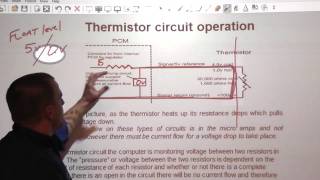
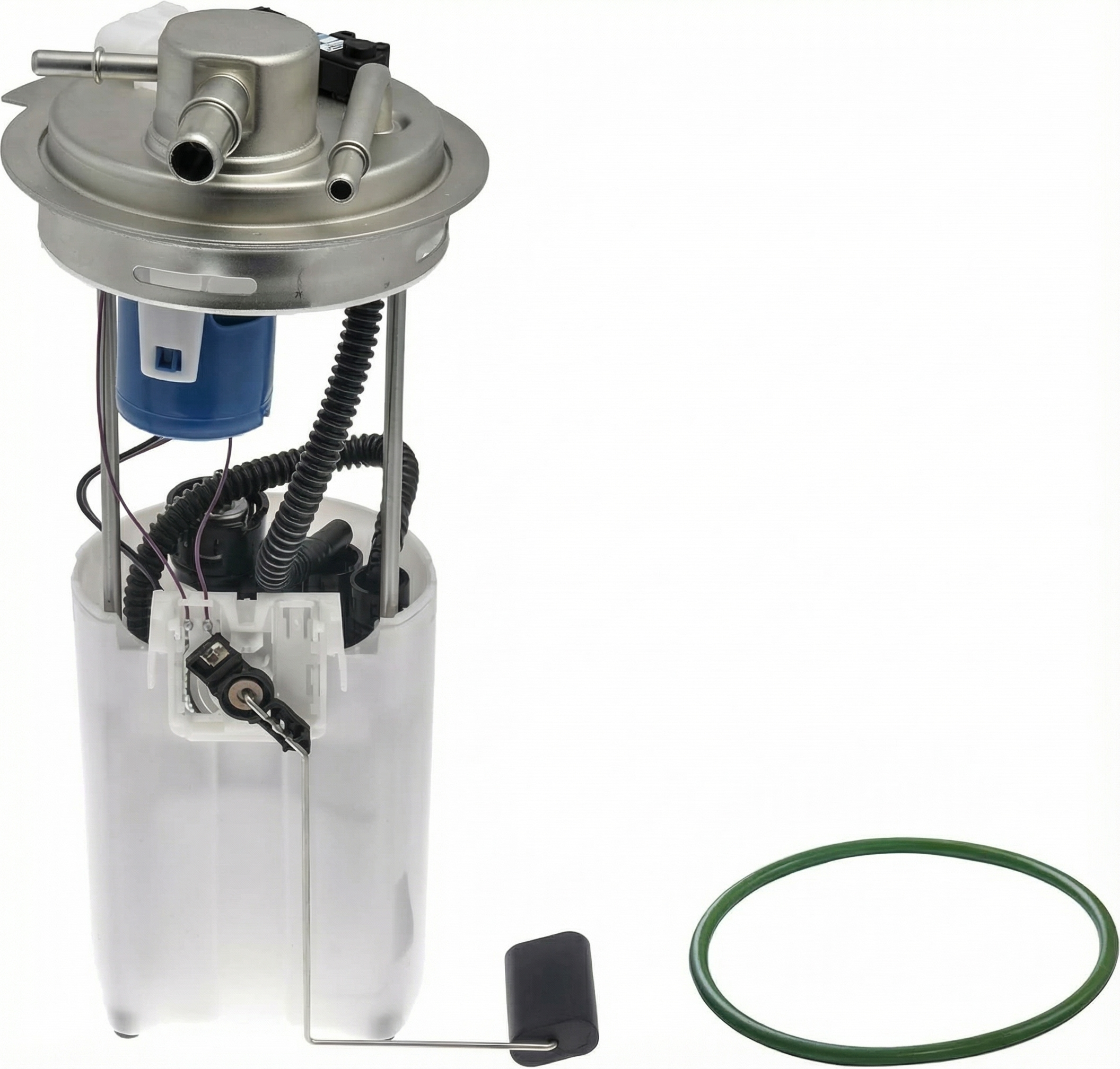
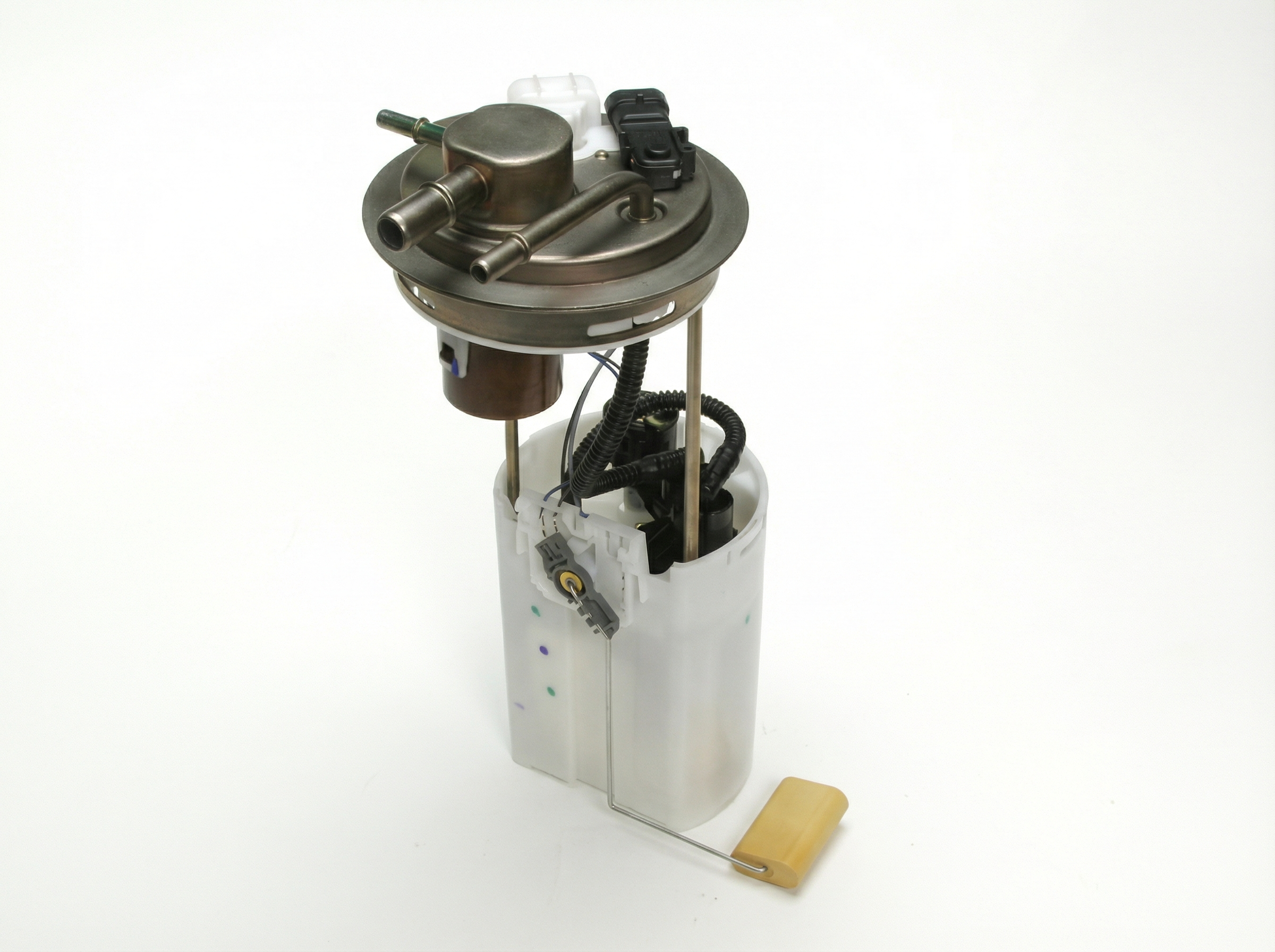
Typical fix: Replace the fuel level sensor. The sensor is almost always integrated into the fuel pump module, so the entire module is typically replaced. This requires dropping the fuel tank. 🎬 Watch: Step-by-step guide to replacing the fuel pump and sensor.
Est. part cost: $150-$400 - Damaged Wiring or Corroded Connector 🟡 Medium Probability The wiring harness runs along the driver's side frame rail and is exposed to the elements. Wires can become frayed, broken, or corroded from rubbing against the frame, especially above the rear axle or near the fuel filter. The main connector on top of the fuel tank is also prone to corrosion and breakage upon removal.
How to confirm: Visually inspect the entire wiring harness from the fuel tank to the engine bay. Pay close attention to the connector on top of the fuel pump module for any green or white corrosion. Check for continuity on the signal (purple) and ground (tan) wires using a multimeter.
Typical fix: Repair the damaged section of wire or clean/replace the corroded connector. Pigtail kits are available for the fuel pump connector.
Est. part cost: $5-$50 - Bad Fuel Tank Ground ⚪ Low Probability → Shop Fuel Tank The ground strap from the fuel tank to the vehicle's frame can rust and break, creating an open circuit for the fuel level sender.
How to confirm: Locate the ground strap attached to the fuel tank or its mounting straps. Check for corrosion, looseness, or a complete break. Test for good ground continuity from the pump connector's ground wire to a clean spot on the chassis frame with a multimeter.
Typical fix: Clean the contact points and re-secure the ground strap, or replace the strap if it's broken.
Est. part cost: $10-$30
Rare But Worth Checking
- Stuck Fuel Level Float Arm: Corrosion inside the tank or a bent arm can cause the float to get stuck in the 'full' position, which would send a constant high signal. This is less common than electrical failure but possible, especially if the vehicle has been sitting or has debris in the tank.
- Faulty Instrument Panel Cluster (IPC): → Shop Instrument Cluster In rare cases, the gauge cluster itself can fail and cause incorrect readings, even if the sensor is sending a correct signal. This is usually accompanied by other gauge-related issues or total cluster failure.
- Faulty Powertrain Control Module (PCM): A failure within the PCM is very rare but possible. This should only be considered after all other possibilities (sensor, wiring, grounds) have been exhaustively ruled out with a multimeter.
Diagnosis Steps
- Read the code with an OBD-II scanner to confirm P0463 is present. Use the scanner's live data function to observe the 'Fuel Level Sensor' voltage. A reading stuck at or near 5V strongly suggests an open circuit.
- Inspect the fuel tank, mounting straps, and nearby frame rails for any signs of physical damage.
- Locate and inspect the fuel tank ground strap. Ensure it is clean, tight, and not broken.
- Trace the fuel pump wiring harness from the tank forward. Look for any chafed, melted, or broken wires, especially where the harness passes over the frame or near the driveshaft.
- Disconnect the electrical connector at the fuel pump module. Inspect the pins for corrosion or damage. These connectors often break on removal due to age and brittleness. Clean as necessary.
- Using a wiring diagram, identify the fuel level sensor signal (typically a purple wire) and ground/low reference (typically a tan wire) at the connector.
- With a multimeter set to Ohms (Ω), measure the resistance across the sensor's pins on the fuel pump side. A typical GM sensor should read around 40 ohms when empty and 250 ohms when full. An open circuit (infinite resistance, or 'O.L.') confirms a bad sensor.
- If the sensor tests good, check the wiring. With the key on, the signal wire (purple) at the harness connector should have a 5V reference from the PCM. The ground wire should have excellent continuity to the chassis ground.
- If the sensor tests bad, the fuel tank must be lowered to replace the fuel pump module/fuel level sensor assembly.
Parts You'll Likely Need
- Fuel Pump and Sender Assembly
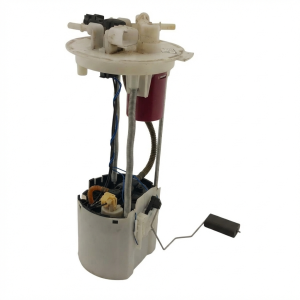
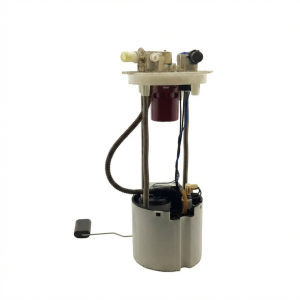
(OEM #ACDelco MU1613 (A common replacement for many 2004-2007 V8 models, confirm with VIN))— This is the most common cause of P0463. The fuel level sensor (sender) is integrated with the fuel pump into a single module that must be replaced as a unit.
Trusted brands: ACDelco, GM Genuine Parts, Delphi, Spectra Premium
OEM price range: $250-$450
Aftermarket price range: $100-$250
Related Codes That Often Appear With This One
- P0461 — P0461 indicates 'Fuel Level Sensor Circuit Range/Performance'. It often appears with P0463 as the sensor's signal is not just high, but also erratic or irrational, which is common as the sender fails.
- P0462 — P0462 is the opposite code, 'Fuel Level Sensor Circuit Low Input'. Seeing both P0462 and P0463 can point to a sensor that is shorting out intermittently or has a completely failed resistor strip.
Technical Service Bulletins (TSBs) & Recalls
- 17-NA-204: Although for Silverado models, it describes a condition where chassis components can damage the fuel tank or wiring, leading to codes including P0463. This is relevant due to the similar body-on-frame construction.
- 05-06-04-027: Addresses erratic fuel gauge readings on various GM models, sometimes correctable with a cluster software update.
Platform-Specific Known Issues
- A GM Technical Service Bulletin (TSB 17-NA-204) for related truck platforms notes that the driveshaft can contact and wear through the fuel tank or its wiring, causing fuel level codes and potential leaks. While not for the Express specifically, the underlying design is similar and worth inspecting.
- TSB 05-06-04-027 addresses erratic fuel gauge readings on some older GM trucks and SUVs, recommending a software update for the instrument cluster. While less common for the P0463 'high input' fault, it's a known issue in the family.
Mechanic-Grade Diagnostic Values
- Fuel Level Sensor Resistance — expected: ~40 Ohms (Empty) to ~250 Ohms (Full). Failure: A reading of 'O.L.' (Open Loop) or infinite resistance across the sensor pins.
- Fuel Level Sensor Signal Voltage (Live Data) — expected: ~0.5V (Empty) to ~2.7V (Full). Failure: Voltage is stuck at or near 5.0V, indicating an open circuit.
- PCM Code Trigger Threshold — expected: Signal voltage must remain below ~4.8V.. Failure: The PCM will set P0463 if the signal voltage exceeds ~4.8V for more than 5-10 seconds.
- Sensor 5V Reference Check — expected: With the key on and pump connector unplugged, the purple wire in the harness should show ~5V.. Failure: 0V indicates a wiring problem between the PCM and the connector, or a faulty PCM.
Scan Tool Commands That Help
- Tech2 / GDS2: Instrument Panel Cluster (IPC) -> Special Functions -> Gauge Sweep — Use this to rule out a physically stuck or failed fuel gauge needle in the instrument cluster. If the gauge sweeps its full range correctly with this command, the cluster itself is likely not the problem.
Wiring & Ground Locations
- Fuel Pump Connector — Top of the fuel pump module, accessible after lowering the fuel tank.. This is the primary connection point. Pins for the purple (signal) and tan/black (low reference) wires can corrode or break. The plastic connector itself often becomes brittle and can be damaged during removal.
- G401 (or similar G4xx) — On the driver's side frame rail, typically rearward of the fuel tank, near the rear lights.. This is a common ground point for the fuel system and other rear components. A corroded or broken ground at this location can create an open circuit, causing a P0463 code.
- Harness Chafe Point — Along the driver's side frame rail, particularly where the harness goes over the rear axle or near the body mounts.. Vibration and debris can cause the harness to rub through, breaking the purple or tan/black wire for the fuel level sensor. This is a common cause if the sensor and connector test good.
Real Owner Repair Stories
- Chevrolet Forum user (2005 Chevrolet Express 2500) — P0463 code, fuel gauge reads full.
❌ Tried (didn't work) Replaced fuel pump/sender assembly.
✅ What actually fixed it Found a broken purple wire inside the main wiring harness loom. The break was located along the frame rail below the driver's side door, far from the fuel tank itself. The wire had corroded and finally broke. - TheDieselPage.com Forums user (2006 Chevrolet Express 3500 with Duramax Diesel) — P0463, erratic fuel gauge.
❌ Tried (didn't work) Initial visual inspection of the harness near the tank showed no issues.
✅ What actually fixed it The wiring harness that runs over the transmission
crossmember had sagged and made contact with the exhaust pipe, melting the insulation and causing the signal wire to short/open. Repairing the melted section of the harness resolved the code.
Documented NHTSA Reports
- An owner reported in NHTSA ODI #11615682 that a repair shop replaced the fuel pump module for codes P0452 and P0463, but this did not resolve the problem.
- NHTSA ODI #10759346 describes a situation where the fuel gauge readings worsened until the gauge read empty and the check engine light activated with code P0463.
- A report in NHTSA ODI #10407281 notes the fuel gauge acting erratically and reading empty regardless of fuel level, leading to a P0463 code for high fuel input.
- NHTSA ODI #10691136 mentions the check engine light illuminating with code P0463 after the gauge displayed erratic behavior.
- According to NHTSA ODI #11399819, an owner had two fuel level sensors installed without success in preventing the return of codes P0463, P069E, and C0045.
OEM Part Supersession History
Varies significantly by year/engine/tank size (e.g., ACDelco MU1613)→Multiple, often VIN-specific part numbers (e.g., MU2103, MU2333)— Minor design improvements, material changes for different fuel types (E85), or consolidation of parts.
Heads up: Using a non-VIN-matched part can result in an incorrect resistance range (causing constant gauge inaccuracy), incompatible electrical connectors, or fuel compatibility issues (e.g., using a non-Flex Fuel pump in an E85 vehicle can lead to premature failure).
Model Year Variations Within This Range
- Approx. 2004+: Introduction of Flex Fuel (E85) compatible models required fuel pump modules with different internal materials. Using a standard gasoline pump with E85 fuel will cause rapid deterioration.
- All years: Diesel engine models have a completely different fuel pump and sender assembly ('Fuel Transfer Pump') compared to gasoline engines. Diagnostics and parts are not interchangeable.
- Approx. 2018+: Later models may have updated Body Control Module (BCM) or Powertrain Control Module (PCM) software for interpreting the fuel level signal. While the sensor's function is the same, diagnostics could involve the BCM more directly.
Diagnostic Flowchart
Other Known Issues on This Vehicle
Issues unrelated to this code that are worth knowing about as an owner of this generation:
- Intake Manifold Gasket Leaks 🔴 High — Very common on V8 engines (4.8L, 5.3L, 6.0L), especially from 2003-2007. Can cause coolant loss, oil contamination, and lean/misfire codes.
- 4L60E/4L80E Transmission Failures 🟠 Medium — The 4L60E (in 1500 models) is known for 3-4 clutch pack failure, while both it and the heavier-duty 4L80E can suffer from torque converter clutch shudder or solenoid failures, typically over 100k-150k miles.
- Passlock Anti-Theft System Faults 🟠 Medium — Common across many GM vehicles of this era. A faulty sensor in the ignition lock cylinder can cause an intermittent no-start condition, often requiring a specific 'relearn' procedure or permanent disabling via a PCM tune.
- Rocker Panel and Body Rust 🔴 High — Extremely common, especially in regions that use road salt. The long rocker panels below the doors trap moisture and rust from the inside out, often requiring extensive sheet metal repair.
- Rear Taillight Wiring Damage 🟡 Low — The wiring harness for the rear lights can be damaged through normal use of the cargo area, leading to intermittent or total failure of brake lights and turn signals.
Used vs. New Parts: Buying Guide for This Vehicle
When a used part is the smart pick: A used part is almost never a smart choice for this repair. The fuel level sender is a wear item, and the labor to access it is very high. The only exception might be sourcing a used wiring harness pigtail if the connector is broken and a new one is unavailable.
Donor-vehicle mileage cap: roughly under 20000 miles for the part to have meaningful remaining life.
What to inspect on the donor part:
- For a connector pigtail, ensure the plastic is not brittle and the locking tab is intact.
- Check for any signs of corrosion (green or white powder) on the metal pins.
- Ensure at least 6 inches of wire is attached to allow for proper splicing.
OEM-only on this vehicle (don't cheap out):
- Fuel Pump and Sender Assembly: Due to the high labor cost of replacement, using a part with a known service life and warranty (OEM or top-tier aftermarket) is critical to avoid a repeat failure.
Aftermarket brands forum-validated for this vehicle:
- Delphi (often the original OEM supplier)
- Spectra Premium
Brands owners have reported issues with on this vehicle:
- Unbranded, 'white box' parts from online marketplaces are frequently cited on forums as failing within a year, sometimes immediately upon installation due to incorrect resistance specifications.
Real Owner Stories
Aggregated from forums and TSBs cited above. Mileages and costs reflect what owners reported in those sources.
2003 Chevrolet Express 2500 6.0L
Symptoms: P0463 (high voltage fuel sensor circuit) and P1122 (throttle position circuit intermittent low voltage) both indicating a break or open circuit.
What fixed it: Checking the harness inside a 'rain guard' over a fuse box in the engine bay.
Source hint: owner_reports: r/VanLife
2003-2026 Chevrolet Express (General Platform)
Symptoms: The P0463 code returned even after a shop replaced the fuel pump.
What fixed it: Repairing the main fuel connector at the pump assembly, which had broken during the initial removal and was not making a solid connection.
Source hint: GMTNation.com thread titled 'Fuel gauge issue after fuel pump P0463'
Related OBD-II Codes
Frequently Asked Questions
My 2003 Express has a P0463 and a P1122; do these share a common failure point?
Does the Chevrolet Express have a TSB for erratic fuel gauge readings?
Is it true that the driveshaft can cause fuel system codes on this platform?
Can I just replace the fuel level sensor, or do I need a whole new pump module?
What are the specific resistance values I should look for when testing my Express fuel sender?
Are there any common wiring failure points on the Express frame?
Helpful Videos
We Have This Part in Stock

The information in this article is provided for general reference and educational purposes only. Vehicle specifications, procedures, and part compatibility can vary by production date, trim level, and region. Always consult your vehicle's factory service manual and verify part numbers before purchasing or performing repairs. Safety-critical components such as airbags, seat belts, and braking systems should be installed by a qualified professional.
- Chevrolet Express:
- 🧭 Diagnostic Flowchart
- 🎬 Helpful Videos
- 🛍️ Shop This Part
- What's Unique About the 2003-2026 Chevrolet Express
- Symptoms You May Notice
- Most Likely Causes
- Rare But Worth Checking
- Diagnosis Steps
- Parts You'll Likely Need
- Related Codes That Often Appear With This One
- Technical Service Bulletins (TSBs) & Recalls
- Platform-Specific Known Issues
- Mechanic-Grade Diagnostic Values
- Scan Tool Commands That Help
- Wiring & Ground Locations
- Real Owner Repair Stories
- Documented NHTSA Reports
- OEM Part Supersession History
- Model Year Variations Within This Range
- Other Known Issues on This Vehicle
- Used vs. New Parts: Buying Guide for This Vehicle
- Real Owner Stories
- 2003 Chevrolet Express 2500 6.0L
- 2003-2026 Chevrolet Express (General Platform)
- Related OBD-II Codes
- Frequently Asked Questions
- 🎟️ Get 5% Off