

P0463 on 2006-2013 Chevrolet Impala: Fuel Level Sensor Circuit High Input Causes and Fixes
On a 2006-2013 Impala, P0463 almost always means the fuel level sensor has failed. This sensor is part of the fuel pump module inside the gas tank. The most common fix is replacing the entire fuel pump module, which can cost between $400 and $800 at a shop. Before replacing parts, check the wiring and ground connections for corrosion, as this can also cause the code.
- P0463 on a 2006-2013 Impala points to a problem with the fuel level sensor circuit, most often the sensor itself.
- The primary symptom will be an inaccurate or non-working fuel gauge, which can leave you stranded.
- The most common fix is to replace the entire fuel pump module located inside the fuel tank.
- Before replacing the expensive module, it is wise to perform a quick visual inspection of the wiring harness and ground connection for any obvious damage.
- Sulfur in gasoline is a known cause of sensor failure on GM vehicles of this era, so using quality fuel may prolong the life of the replacement part.
What's Unique About the 2006-2013 Chevrolet Impala
On this generation of Chevrolet Impala and other GM W-body vehicles, erratic and incorrect fuel gauge readings are a commonly reported issue. While wiring issues can occur, the sensor itself, which is integrated into the fuel pump module, is the most frequent point of failure. A known issue across many GM platforms from this era is the buildup of sulfur deposits from certain fuel blends on the sensor's resistor contacts. This corrosion increases resistance, causing voltage spikes and inaccurate readings that can trigger a P0463 code before the unit fails completely.
Symptoms You May Notice
- Check Engine Light is on
- Fuel gauge reads full all the time
- Fuel gauge reads empty all the time, possibly with a low fuel warning light
- Fuel gauge fluctuates wildly and unpredictably
- Low fuel warning light is always on or flashes intermittently
- Replacing the instrument cluster. The gauge itself is rarely the problem; it simply displays the faulty information it receives from the PCM.
Most Likely Causes
- Failed Fuel Level Sensor (Sending Unit) 🔴 High Probability → Shop Fuel Tank Sending Unit The fuel level sensor is a wear item, and failures are common on these vehicles due to age, mileage, and the previously mentioned issue of sulfur contamination on the sensor contacts. It is integrated into the fuel pump module, making it a more involved repair.
How to confirm: Access the fuel pump module connector at the top of the fuel tank. Measure the resistance between the fuel level sensor signal and ground pins. On many GM vehicles, the resistance should be around 40 ohms when empty and 250 ohms when full. An open circuit (infinite resistance) or a reading that doesn't change when the float arm is moved (if the unit is removed) confirms a failed sensor.
Typical fix: Replace the entire fuel pump module, which includes the fuel pump, fuel level sensor, and float. This is the most common and recommended repair.
Est. part cost: $150-$400 - Damaged Wiring or Connectors 🟡 Medium Probability The wiring harness runs along the vehicle's frame to the fuel tank and can be susceptible to damage from road debris, corrosion, or improper repairs. The connector on top of the fuel tank is particularly exposed to the elements.
How to confirm: Visually inspect the wiring harness from the PCM to the fuel tank for any breaks, chafing, or corrosion, paying special attention to the connector at the top of the fuel tank. Perform a voltage and continuity test on the signal wire. A short to voltage in the signal wire will cause a constant high reading.
Typical fix: Repair the damaged section of the wiring harness or replace the affected connector.
Est. part cost: $10-$50 - Poor Ground Connection ⚪ Low Probability The ground strap for the fuel tank or related circuits can corrode or become loose over time, especially in regions with harsh winters and road salt.
How to confirm: Locate the ground point for the fuel tank/pump circuit. This is often a black wire bolted to the chassis near the fuel tank. Measure the resistance between the ground wire at the fuel pump connector and a known good chassis ground. A reading above a few ohms indicates a poor ground.
Typical fix: Clean the corrosion from the ground point and chassis with a wire brush and re-secure the connection tightly.
Est. part cost: $1-$5
Rare But Worth Checking
- Faulty Powertrain Control Module (PCM): This is extremely rare. Before condemning the PCM, all other possibilities, including the sensor, wiring, and grounds, must be exhaustively tested and ruled out.
Diagnosis Steps
- Scan the vehicle's computer for P0463 and any other related codes.
- Using a scan tool, observe the live data for the fuel level sensor voltage. If it is stuck at a high value (typically near 5 volts), it confirms the PCM is seeing the fault.
- Visually inspect the wiring harness leading to the fuel tank. Look for any obvious signs of damage, corrosion, or loose connections, especially at the main connector on top of the tank.
- Check the ground connection for the fuel tank. Ensure it is clean, tight, and free of corrosion.
- If wiring and grounds appear okay, the next step is to test the fuel level sensor itself. This requires accessing the top of the fuel tank to disconnect the fuel pump module connector. On an Impala, this is typically done by dropping the fuel tank.
- With a multimeter set to Ohms, measure the resistance across the fuel level sensor pins on the module. Compare this reading to the manufacturer's specifications (e.g., ~40 ohms empty, ~250 ohms full). An open circuit (infinite resistance) points to a bad sensor.
- If the sensor tests bad, the fuel pump module needs to be replaced. Be sure to relieve fuel system pressure before disconnecting any fuel lines.
Parts You'll Likely Need
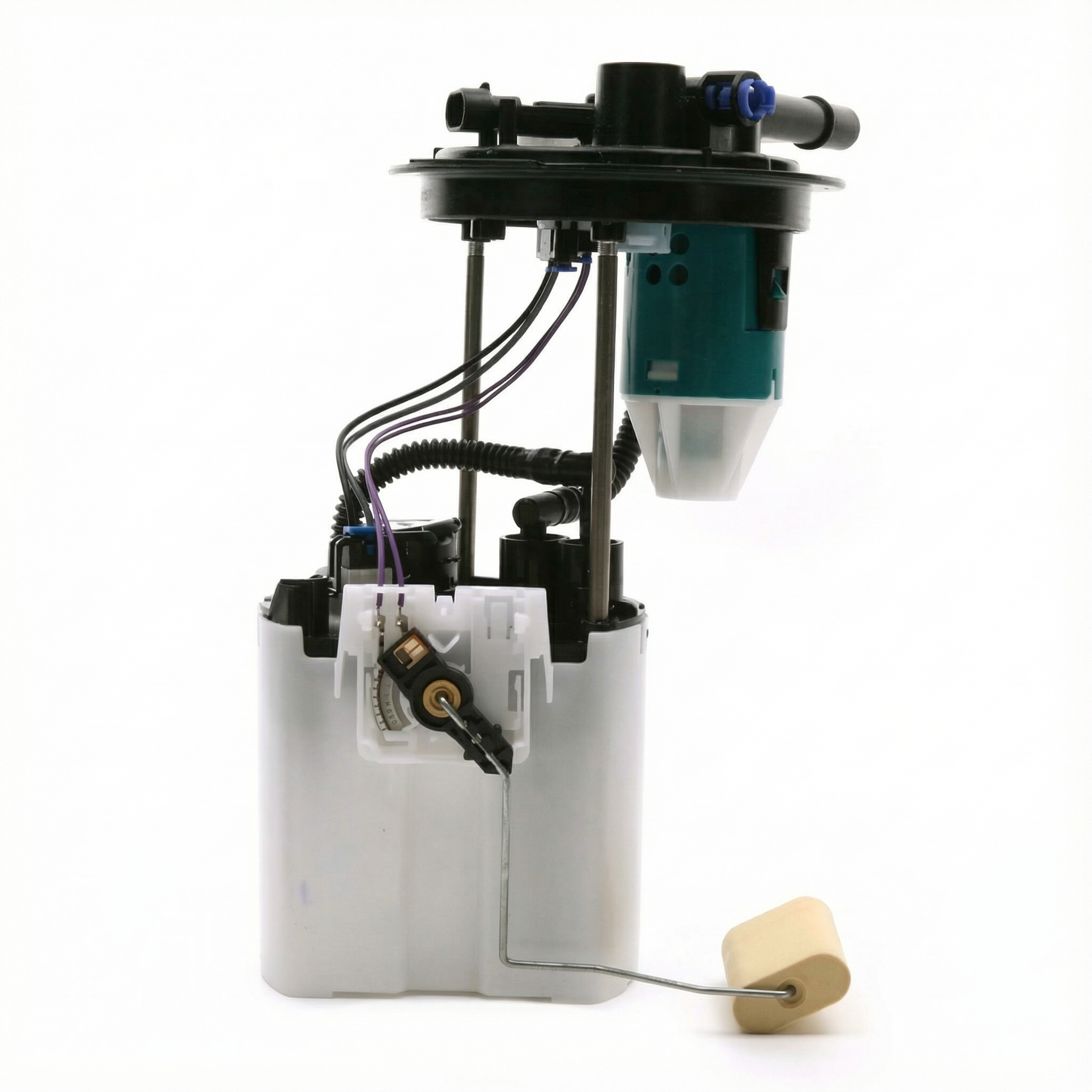
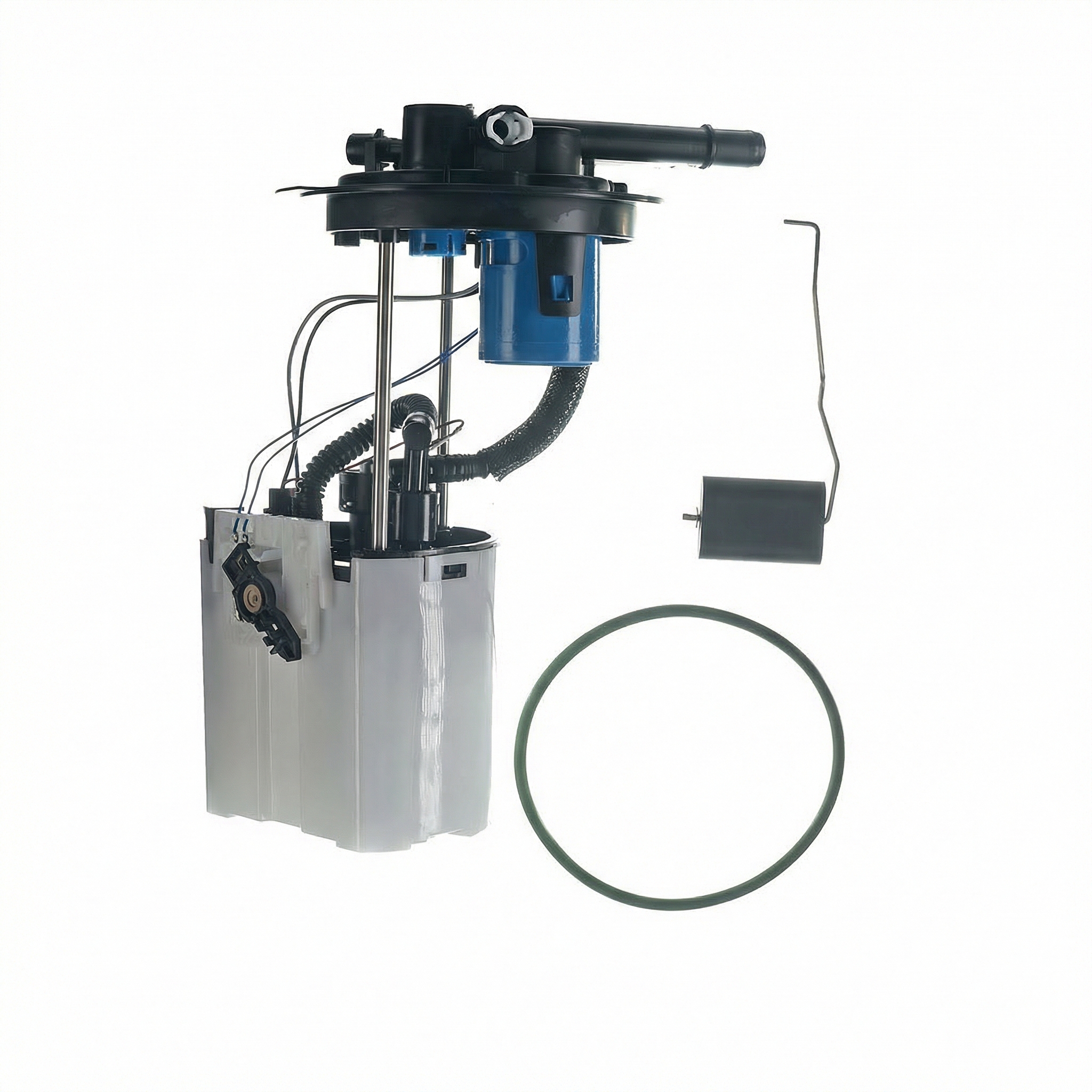
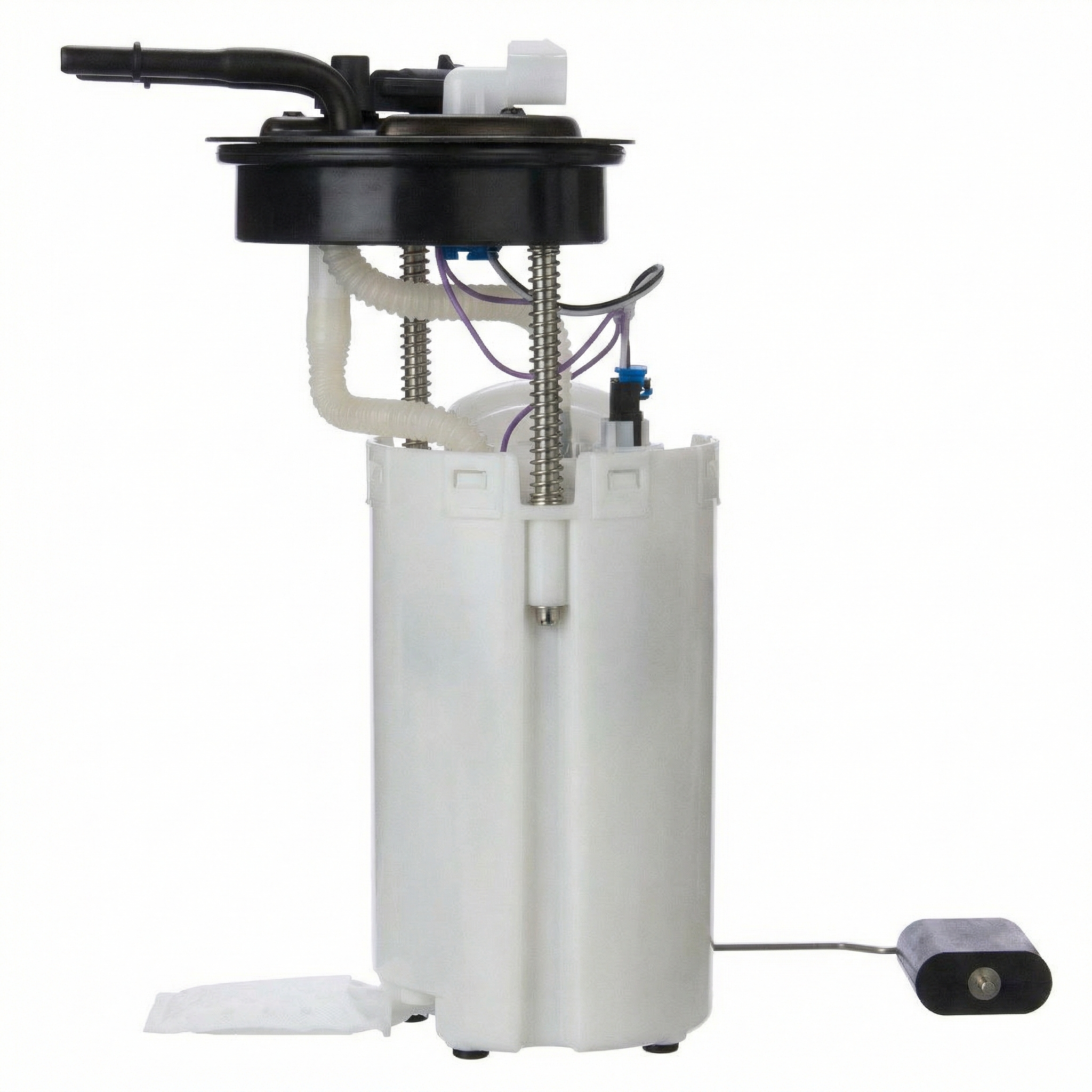
- Fuel Pump Module Assembly
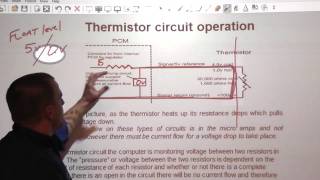
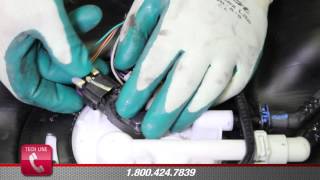
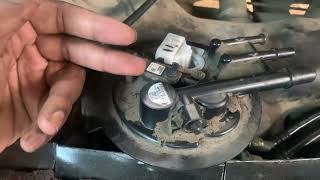
(OEM #ACDelco MU1780 (GM Part #19179627) is a common replacement, but always verify with VIN.)— The fuel level sensor is integrated into the fuel pump module. Replacing the entire assembly is the standard and most reliable repair for a failed sensor. 🎬 See this step-by-step fuel pump replacement walkthrough
Trusted brands: ACDelco, Delphi, Spectra Premium
OEM price range: $250-$400
Aftermarket price range: $150-$250
Related Codes That Often Appear With This One
- P0461 — This code indicates a 'Fuel Level Sensor Circuit Range/Performance' issue. It can appear alongside P0463 as the sensor begins to fail, sending signals that are not just high, but also erratic or irrational.
- P0462 — This is the opposite code, 'Fuel Level Sensor Circuit Low Input'. Seeing both codes intermittently can point to a sensor that is shorting out or has a completely failed resistor strip.
Technical Service Bulletins (TSBs) & Recalls
- While no specific TSB for P0463 on the 2006-2013 Impala was found, GM TSB #02-06-04-010A and #01-06-04-008C for other models describe the exact issue of erratic fuel gauge readings caused by sulfur in fuel corroding the sender contacts. The prescribed fix was often a redesigned sender with corrosion-resistant contacts or a PCM reprogram to filter out voltage spikes.
Platform-Specific Known Issues
- Some owners have reported temporary fixes by using a quality fuel system cleaner (such as one with PEA - polyetheramine, like Chevron Techron) to clean sulfur deposits off the sensor contacts. GM even issued a TSB for other vehicles recommending an additive (GM Fuel System Treatment Plus) for this issue. However, this is often not a permanent solution once the code is firmly set.
Mechanic-Grade Diagnostic Values
- Fuel Level Sensor Resistance — expected: Approximately 40 Ohms (Empty) to 250 Ohms (Full).. Failure: A reading of infinite resistance (Open Loop / OL) indicates a break in the sensor's resistor card. A reading that does not change smoothly as the float arm is moved also indicates failure.
- Fuel Level Sensor Signal Voltage (at PCM/BCM, via Scan Tool) — expected: Varies between approximately 0.5V (Empty) and 4.5V (Full) on a 5V reference circuit.. Failure: A voltage reading stuck at or near 5.0V confirms the 'High Input' condition and points to an open in the signal circuit or a completely failed sensor.
- Sensor Ground Circuit Voltage Drop (at fuel pump connector) — expected: Less than 100mV (0.1V) with the circuit powered.. Failure: A reading significantly higher than 0.1V indicates high resistance in the ground circuit, likely due to corrosion at the G401 ground point.
Scan Tool Commands That Help
- GM Tech2 / GDS2: Instrument Panel Cluster (IPC) > Output Control > Fuel Gauge Sweep Test — This bidirectional command forces the fuel gauge needle to sweep from empty to full. If the gauge moves correctly during the test but reads incorrectly during normal operation, it proves the instrument cluster and its stepper motor are functional. This effectively rules out the gauge itself and isolates the problem to the sensor, wiring, or the module reading the sensor (PCM/BCM).
Wiring & Ground Locations
- Fuel Pump Module Connector — On top of the fuel tank, accessible after the tank is lowered.. This is the primary connection point for the fuel level sensor. The pins (typically purple for signal, black for ground) are highly susceptible to corrosion from moisture and road salt, which can create an open circuit and trigger P0463.
- G401 — On the outer side of the left-hand (driver's side) frame rail, near the rear of the vehicle.. This is the main chassis ground point for the fuel pump module, including the fuel level sensor. Corrosion or a loose connection here will cause a floating ground, leading to erratic or high voltage readings from the sensor.
Real Owner Repair Stories
- Chevrolet Forum user (2007 Chevrolet Impala) — Check Engine Light on with code P0463, fuel gauge constantly reading full.
❌ Tried (didn't work) Initially suspected the fuel level sensor itself.
✅ What actually fixed it After dropping the tank to replace the fuel pump module, the owner found that the pins inside the main electrical connector on top of the tank were severely corroded. Cleaning the pins and applying dielectric grease solved the problem without needing to replace the entire pump assembly. This highlights the importance of checking the connector before condemning the part.
OEM Part Supersession History
GM #19179627 (ACDelco MU1780)→GM #19303114, then GM #19370153— Standard part number updates and potential minor revisions to improve reliability or address supplier changes.
Heads up: While superseded parts should be backward compatible, it is always critical to verify the correct part number for the specific vehicle's VIN, especially considering the engine change in 2012.
Model Year Variations Within This Range
- 2012-2013: For the 2012 model year, the 3.5L and 3.9L V6 engines were replaced by a single 3.6L LFX V6 engine. This newer engine is direct-injected and uses a different Engine Control Module (ECM) and a 6-speed automatic transmission. While the fuel level sensor's principle of operation (40-250 ohms) remains the same, the wiring path and the module interpreting the data are different from the 2006-2011 models. Diagnostics should confirm which module (BCM or ECM) processes the fuel level signal on these later models.
Diagnostic Flowchart
Other Known Issues on This Vehicle
Issues unrelated to this code that are worth knowing about as an owner of this generation:
- 4T65-E Transmission Failure/Erratic Shifting 🔴 High — Common, especially on 2006-2011 models. Issues like harsh shifting, slipping, or complete failure can occur, often related to failed pressure control solenoids.
- Intermediate Steering Shaft Clunk 🟡 Low — Very common across this generation. A clunking or popping noise is heard and felt through the steering wheel, especially at low speeds. Caused by a lack of lubrication in the sliding shaft. (Ref: Multiple TSBs issued, e.g., #00-02-35-003E, #01-02-32-001P)
- HVAC Blend Door Actuator Failure 🟠 Medium — Extremely common. Presents as a loud clicking or ticking sound from the dashboard when changing temperature or airflow settings. Caused by stripped plastic gears inside the actuator.
- Intake Manifold Gasket Leaks (3.8L V6) 🔴 High — A well-known failure point on the 3800 Series II/III engines used in 2006-2009 models (non-VVT). The original plastic gaskets and plastic upper intake manifold degrade, causing coolant leaks that can lead to engine damage if not addressed.
- Excessive Oil Consumption (3.5L & 3.9L V6) 🟠 Medium — Reported by many owners. Can be caused by worn piston rings or valve seals, leading to low oil levels between changes and potential engine damage if not monitored closely.
Used vs. New Parts: Buying Guide for This Vehicle
When a used part is the smart pick: Never. The labor to drop the fuel tank is significant (2-3.5 hours). The risk of a used fuel pump motor or level sensor failing shortly after installation far outweighs the small cost savings. This is a job you only want to do once.
What to inspect on the donor part:
- Not applicable as used parts are not recommended.
OEM-only on this vehicle (don't cheap out):
- Fuel Pump Module Assembly
Aftermarket brands forum-validated for this vehicle:
- ACDelco (OEM)
- Delphi (Often the original OEM supplier)
Brands owners have reported issues with on this vehicle:
- Spectra Premium (Some forum users report higher failure rates compared to OEM/Delphi)
- Airtex (Mixed reviews from users)
Real Owner Stories
Aggregated from forums and TSBs cited above. Mileages and costs reflect what owners reported in those sources.
2011 Chevrolet Impala FlexFuel
Symptoms: Fuel gauge always reads empty no matter if I have a full tank and the check engine light is on.
What fixed it: The owner replaced the whole fuel pump module, but noted the problem persisted, suggesting a potential issue with the wiring harness or connector which are also known failure points.
Source hint: Reddit r/Impala
1998 Chevrolet Lumina (W-Body Platform Mate)
Symptoms: Gas gauge fluctuates wildly.
What fixed it: The discussion cites a GM TSB blaming sulfur in gasoline and recommends using a fuel additive to clean the sensor contacts.
Source hint: w-body.com Community - 'gas gauge fluctuates 98 3100 lumina'
Chevrolet Corvette (GM Era-Specific Issue)
Symptoms: Fuel Gauge to Zero; fuel blends containing aggressive sulphur compounds react with the fuel sender assembly, resulting in voltage spikes.
What fixed it: GM TSB #02-06-04-010A suggests the fix involves a redesigned sender with corrosion-resistant contacts or a PCM reprogram.
Source hint: CorvetteForum - 'Fuel Gauge to Zero Fix'
Documented NHTSA Reports
NHTSA ODI #10407281
Symptoms: An owner reported the fuel gauge "acting crazy," reading empty regardless of actual fuel level. The check engine light triggered code P0463 for high fuel input, which the owner noted would cause a state inspection failure.
NHTSA ODI #10759346
Symptoms: A report describes a fuel gauge that progressively worsened until it just read empty, accompanied by an active P0463 code and a check engine light.
NHTSA ODI #11615682
Symptoms: An owner found codes P0452 and P0463 after a fill-up. Notably, the repair shop replaced the fuel pump module, but this did not resolve the underlying issue.
NHTSA ODI #11399819
Symptoms: A report indicates that even after having two fuel level sensors installed, the check engine light and code P0463 returned.
NHTSA ODI #10691136
Symptoms: An owner reported an intermittent check engine light that was diagnosed as code P0463.
Related OBD-II Codes
Frequently Asked Questions
Is there a TSB for the erratic fuel gauge readings on my 2006-2013 Chevrolet Impala?
Can I fix the P0463 code on my Impala by just using a fuel additive?
What are the typical resistance values for the fuel level sensor on a GM vehicle like the Impala?
Do I have to replace the whole fuel pump if only the sensor is bad?
Why does my fuel gauge read full all the time on my 2011 Impala?
Is the fuel level sensor easy to access on the 2006-2013 Impala?
Helpful Videos

Used OEM Parts in Stock
New Aftermarket Parts Available


The information in this article is provided for general reference and educational purposes only. Vehicle specifications, procedures, and part compatibility can vary by production date, trim level, and region. Always consult your vehicle's factory service manual and verify part numbers before purchasing or performing repairs. Safety-critical components such as airbags, seat belts, and braking systems should be installed by a qualified professional.
- Chevrolet Impala:
- 🧭 Diagnostic Flowchart
- 🎬 Helpful Videos
- 🛍️ Shop This Part
- What's Unique About the 2006-2013 Chevrolet Impala
- Symptoms You May Notice
- Most Likely Causes
- Rare But Worth Checking
- Diagnosis Steps
- Parts You'll Likely Need
- Related Codes That Often Appear With This One
- Technical Service Bulletins (TSBs) & Recalls
- Platform-Specific Known Issues
- Mechanic-Grade Diagnostic Values
- Scan Tool Commands That Help
- Wiring & Ground Locations
- Real Owner Repair Stories
- OEM Part Supersession History
- Model Year Variations Within This Range
- Other Known Issues on This Vehicle
- Used vs. New Parts: Buying Guide for This Vehicle
- Real Owner Stories
- 2011 Chevrolet Impala FlexFuel
- 1998 Chevrolet Lumina (W-Body Platform Mate)
- Chevrolet Corvette (GM Era-Specific Issue)
- Documented NHTSA Reports
- NHTSA ODI #10407281
- NHTSA ODI #10759346
- NHTSA ODI #11615682
- NHTSA ODI #11399819
- NHTSA ODI #10691136
- Related OBD-II Codes
- Frequently Asked Questions
- 🎟️ Get 5% Off