

P0463 on 2007-2013 Chevrolet Silverado 1500: Fuel Level Sensor Causes and Fixes
P0463 on a 2007-2013 Silverado almost always means the fuel level sensor inside the gas tank has failed. This causes the gas gauge to read empty and the low fuel light to come on. The fix is to replace the sensor, which is part of the fuel pump module, requiring either dropping the tank or lifting the bed for access.
- P0463 on this Silverado is almost certainly a failed fuel level sensor inside the gas tank.
- You can continue to drive, but you must track your mileage to avoid running out of gas.
- The repair is labor-intensive, requiring the fuel tank to be dropped or the truck bed to be lifted.
- Due to the high labor cost, it is strongly recommended to replace the entire fuel pump module assembly, not just the sensor.
- Before ordering parts, perform a basic inspection of the wiring connector on top of the tank for corrosion.
What's Unique About the 2007-2013 Chevrolet Silverado 1500
The 2007-2013 (GMT900 generation) Silverado is well-known for fuel level sensor failures. This isn't due to a complex system design but rather a common wear-and-tear issue where the small, spring-loaded electrical contacts that ride along the sensor's resistor board physically wear out, corrode, or break off entirely. This creates an open circuit, causing the voltage to spike and trigger the P0463 code. Unlike some other platforms with software-related fuel gauge problems, the P0463 code on this truck is almost always a direct result of this physical component failure inside the tank. The repair is purely mechanical and electrical, involving the replacement of the sending unit.
Generation note: The 2007 model year is a transition period. This guide primarily covers the second generation (GMT900) from 2007-2013. However, Chevrolet also sold the first generation (GMT800) as the 'Silverado Classic' in 2007. The fuel level sensor failure is a common issue on both generations, and the repair process is similar.
Symptoms You May Notice
- Check Engine Light is on
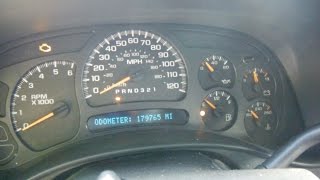
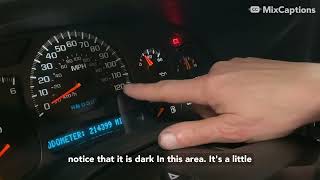
- Fuel gauge reads empty or fluctuates erratically
- Low fuel warning light is illuminated, even with fuel in the tank
- Driver Information Center may display a "Fuel Range Low" message
- Fuel gauge intermittently drops to zero then returns to normal (a sign of impending failure).
- Replacing the fuel pump when only the sensor has failed. While often done as a preventative measure, if budget is a concern, the sensor can sometimes be replaced separately.
- Replacing the instrument cluster. The gauge is simply displaying the default reading sent by the ECM due to the fault; the cluster itself is rarely the problem.
- Using fuel additives to clean the sensor. While some GM service information suggests Techron concentrate can sometimes clean sulfur deposits from contacts, it will not fix a physically broken or worn-out sensor, which is the most common failure mode for this code.
Most Likely Causes
- Failed Fuel Level Sensor (Sending Unit) 🔴 High Probability → Shop Fuel Tank Sending Unit The variable resistor contacts on the sensor board are a common failure point. They can wear down, corrode from sulfur in fuel, or physically break off, creating an open circuit that the ECM interprets as a high voltage fault. This is a widely documented failure on GMT900 trucks.
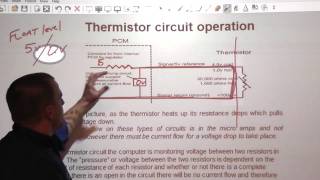
How to confirm: After confirming the wiring is intact, the most definitive test is to access the fuel pump module and measure the resistance of the sensor's circuit. With a multimeter connected to the signal and low-reference pins (often purple and orange/black wires), the resistance should read between ~40 ohms (empty) and ~250 ohms (full) and change smoothly when moving the float arm. An infinite (OL) reading confirms a bad sensor. 🎬 Watch: How to test the fuel sending unit with a multimeter.
Typical fix: Replace the fuel level sensor. Since accessing the sensor requires significant labor (dropping the tank or lifting the bed), it is highly recommended to replace the entire fuel pump module assembly, which includes the sensor, pump, and a new seal.
Est. part cost: $40-$80 for the sensor alone; $150-$350 for a complete fuel pump module assembly. - Wiring or Connector Issue 🟡 Medium Probability The main wiring harness connector on top of the fuel pump module is exposed to weather and road debris, making it a prime location for corrosion. A corroded pin on the signal or ground circuit can create high resistance or an open circuit. The chassis ground connection for the fuel pump, typically located on the frame rail, can also rust and fail.
How to confirm: Visually inspect the wiring harness and the 4-pin connector at the fuel pump for any signs of green or white corrosion, damage, or loose pins. Use a multimeter to check for continuity on the signal wire (purple) and verify the ground wire has less than 1 ohm of resistance to a clean chassis ground.
Typical fix: Clean the corroded connectors with a contact cleaner and apply dielectric grease. Repair or replace any damaged sections of the wiring harness. Sometimes the connector pigtail itself needs to be replaced.
Est. part cost: $15-$60 for a new connector pigtail and wiring supplies.
Rare But Worth Checking
- Faulty Engine Control Module (ECM): This is very uncommon. The ECM should only be considered a potential cause after the fuel level sensor and all related wiring have been thoroughly tested and proven to be good. A diagnostic scan tool that can read the raw fuel level data from the ECM can help confirm if the ECM is the source of the fault.
- Faulty Instrument Panel Cluster (IPC): → Shop Instrument Cluster In rare cases, the instrument cluster itself can fail, leading to improper gauge readings. However, this would not typically set a P0463 code, which originates from the ECM's reading of the sensor circuit. An IPC failure is more likely to be a dead gauge with no associated engine codes.
Diagnosis Steps
- Read the code with an OBD-II scanner to confirm P0463 is present.
- Using a scan tool with live data, observe the 'Fuel Tank Level Remaining' parameter. A reading of 0% or a nonsensical value while fuel is in the tank points towards the sensor circuit.
- Inspect the wiring harness leading to the fuel tank. Look for any obvious damage, chafing, or corrosion, paying close attention to the main 4-pin connector on top of the fuel pump module.
- Locate and inspect the chassis ground for the fuel pump module. Ensure it is clean, tight, and free of corrosion.
- If wiring appears okay, the next step is to test the sensor itself. This requires accessing the top of the fuel tank by either lowering the tank or lifting the truck bed. 🎬 See how to access the tank using the bed tilt method.
- Disconnect the fuel pump module connector. With a multimeter set to Ohms, measure the resistance between the fuel level sensor signal (purple wire) and low-reference (orange/black wire) pins on the module side. The resistance should be between ~40-250 Ohms and change smoothly as you move the float arm. A reading of open-loop (OL) or infinite resistance indicates a failed sensor.
- If the sensor tests good, the fault lies in the wiring between the ECM and the tank. Perform a continuity test on the signal and ground wires back to the ECM connector. If wiring is good, the ECM itself is the last, and very rare, possibility.
Parts You'll Likely Need
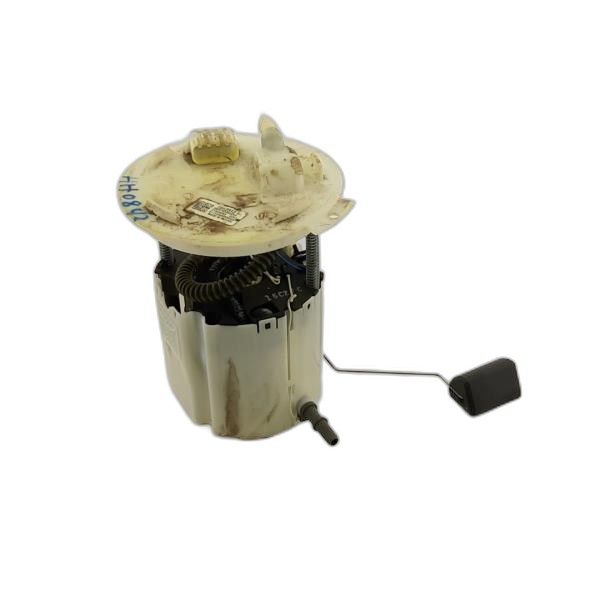
- Fuel Pump Module Assembly
(OEM #ACDelco MU1613 (w/ EVAP pressure sensor), ACDelco MU1614 (w/o EVAP pressure sensor))— This is the most common fix. It replaces the failed fuel level sensor and, as a preventative measure, the fuel pump itself. The labor to access the part is significant, making this an efficient all-in-one repair.
Trusted brands: ACDelco, Delphi
OEM price range: $250-$400
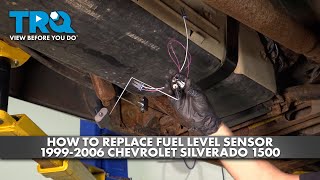
Aftermarket price range: $150-$250 - Fuel Level Sensor — If you are certain only the sensor has failed and want to save on parts cost, the sensor is often sold separately. However, given the labor involved, most owners and shops opt to replace the entire module. 🎬 Watch this DIY walkthrough for replacing the fuel level sensor.
Trusted brands: ACDelco, Delphi
OEM price range: $60-$100
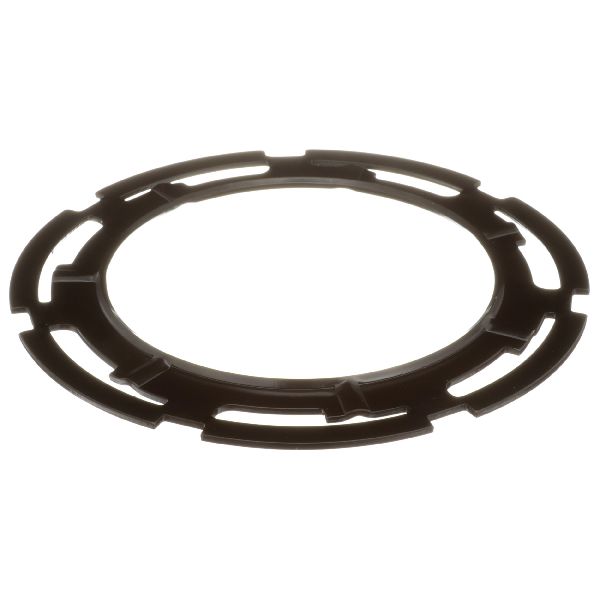
Aftermarket price range: $40-$80 - Fuel Tank Lock Ring — The metal lock ring that secures the fuel pump module to the tank is often rusted and can be damaged during removal. It is highly recommended to have a new one on hand before starting the job, especially in rust-prone regions.
Trusted brands: ACDelco, Dorman
OEM price range: $15-$30
Aftermarket price range: $10-$20
Related Codes That Often Appear With This One
- P0461 — P0461 indicates the sensor's performance is out of range or erratic. It can appear alongside P0463 if the sensor is failing intermittently before it fails completely into an open-circuit (high voltage) state.
- P0462 — P0462 indicates a 'Circuit Low' condition. Seeing this with P0463 would suggest a very erratic sensor or wiring short that is fluctuating between both extremes, though this combination is less common than P0463 alone.
Technical Service Bulletins (TSBs) & Recalls
- TSB 18-NA-365: While not exclusively for this model year range, this TSB addresses a range of fuel system codes including P0463 on some GM vehicles, related to stalling or incorrect fuel gauge readings. It points towards potential fuel pump module issues.
Platform-Specific Known Issues
- To access the fuel pump module, owners have two main options: dropping the fuel tank or lifting the truck bed. Lifting the bed is often considered easier as it avoids dealing with a heavy, potentially full fuel tank and disconnecting multiple lines. This involves removing the bed bolts, disconnecting the filler neck, and unplugging the taillight harness before lifting one side or the entire bed with helpers or an engine hoist.
- The ground wire for the fuel filler neck must be disconnected before dropping the tank or lifting the bed.
Mechanic-Grade Diagnostic Values
- Fuel Level Sensor Resistance Range — expected: ~40 ohms (Empty) to ~250 ohms (Full). Failure: An open circuit (OL / infinite resistance) or a reading outside this range.
- ECM Voltage Threshold for P0463 — expected: Below 3.5 volts. Failure: A sensor output voltage greater than 3.5 volts for more than 30 seconds will set the code.
- Fuel Level Sensor Signal Circuit (at ECM) — expected: Purple wire at ECM connector X1, Pin 39.. Failure: Testing this pin for voltage or continuity back to the tank connector can isolate a wiring fault from a sensor fault.
- Low Reference (Ground) Circuit Resistance — expected: Less than 1 ohm between the low reference circuit wire and a clean chassis ground.. Failure: Greater than 1 ohm indicates high resistance or an open in the ground circuit.
Scan Tool Commands That Help
- Tech2/GDS2: Fuel Tank Level Remaining (%) Parameter — This is the primary live data PID to watch. With the key on, it should read between 4-98%. A reading of 0% or an illogical value while fuel is present points to a fault in the sensor circuit.
- Tech2/GDS2: Jumpering Signal and Low Reference Circuits — As a circuit test without a sensor, a technician can install a 3-amp fused jumper between the signal circuit (Purple) and low reference circuit (Black) at the tank connector. The scan tool's 'Fuel Tank Level Remaining' parameter should read greater than 98%. If it does not, the fault is in the wiring to the ECM or the ECM itself.
Wiring & Ground Locations
- Fuel Pump/Sensor Connector — On top of the fuel pump module, accessible by dropping the tank or lifting the bed.. This 4-pin connector is the primary interface for the fuel level sensor. The Purple wire is the signal, and the Black wire (sometimes with a white stripe) is the low reference/ground. Corrosion here is a common cause of P0463.
- G303 — On the left (driver's side) B-pillar, behind the trim panel.. While not the primary fuel pump ground, service manuals list G303 as a ground point in the rear body harness. A fault here could potentially affect various rear components, though it's a less likely cause for P0463 specifically.
- Main Fuel Pump Ground — Bolted to the driver's side frame rail, typically below the driver's door area.. This is the most critical ground for the entire fuel pump module. It is a black wire leading from the harness to a bolt on the frame. Heavy corrosion at this single point can cause an open circuit, leading to P0463 and/or a no-start condition.
- ECM Connector X1, Pin 39 — At the Engine Control Module (ECM).. This is the specific pin where the ECM receives the fuel level signal from the purple wire. Probing this pin is the final step to confirm if the signal is reaching the ECM, helping to differentiate a wiring problem from a rare ECM failure.
Real Owner Repair Stories
- GM-Trucks.com Forum User (2004 GMC Sierra 1500 (GMT800, but same principle)) — No gas getting to the engine, suspected fuel pump issue.
❌ Tried (didn't work) Initial diagnosis pointed to a bad fuel pump.
✅ What actually fixed it The user discovered the ground wire for the fuel pump was not making a good connection. After locating the ground point on the frame and cleaning it, the connection was restored and the fuel system functioned properly. This highlights the importance of checking the simple ground connection on the frame rail before replacing the entire pump assembly. - YouTube DIY Repair Video (Chevy Silverado (GMT800)) — Fuel gauge stuck on empty.
❌ Tried (didn't work) Adding fuel to the tank did not change the gauge reading.
✅ What actually fixed it The owner replaced the fuel level sensor, which is attached to the fuel pump module. The video documents the process of lifting the driver's side of the truck bed to gain access, which avoided the need to drop the fuel tank. The final cost was around $75 for the sensor and 5 hours of labor, versus a dealership quote of $600. - NHTSA ODI #10759346 — An owner of a similar Chevrolet model reported that the fuel gauge issue worsened until it read empty, accompanied by the check engine light and an active P0463 code.
- NHTSA ODI #11615682 — One owner reported that after receiving codes P0452 and P0463, a repair shop replaced the fuel pump module, but this did not resolve the underlying issue.
OEM Part Supersession History
19369915→ACDelco MU1613— Standard part number update and consolidation by GM/ACDelco.
Heads up: Some replacement modules, including OEM ACDelco kits, may come with a new-style connector pigtail. If the vehicle's harness has the old-style plug, the new pigtail must be spliced in. The kit typically includes instructions for this.
Model Year Variations Within This Range
- 2007-2008: Primarily used the 4-speed 4L60-E automatic transmission. The fuel system itself is largely the same as later years, but these early models are more likely to have the older style fuel pump connector.
- 2009-2013: The 6-speed 6L80 automatic transmission became standard, replacing the 4-speed. While this doesn't directly affect the P0463 code, trucks from 2009 onwards are more likely to have the updated fuel pump connector from the factory, potentially simplifying replacement.
- 2007-2013 (5.3L V8): Many 5.3L V8 engines in this generation were equipped with Active Fuel Management (AFM), which had its own set of potential issues (like oil consumption and lifter failure) unrelated to the fuel level sensor. The 4.8L V8 did not have AFM and is often considered more reliable in this regard, though it is just as susceptible to the P0463 fuel sensor failure.
Diagnostic Flowchart
Other Known Issues on This Vehicle
Issues unrelated to this code that are worth knowing about as an owner of this generation:
- Active Fuel Management (AFM) Lifter Failure 🔴 High — Common, especially on 5.3L and 6.2L V8s, often occurring between 50,000 and 100,000 miles. Can lead to camshaft damage.
- Cracked Dashboard 🟠 Medium — Extremely common across all GMT900 trucks, especially in warmer climates. Cracks typically form near the passenger airbag and instrument cluster bezel.
- Rear Wheel Well and Cab Corner Rust 🔴 High — Very common in regions that use road salt. A design flaw traps moisture and debris behind the wheel arch, causing rust from the inside out.
- Excessive Oil Consumption 🟠 Medium — Often linked to the AFM system and a poorly designed PCV system, particularly in earlier 2007-2011 models. Can lead to fouled spark plugs and contributes to lifter issues.
- 4L60-E Transmission Failures 🟠 Medium — While a long-running design, issues like failed 3-4 clutch packs, torque converter problems, or harsh shifts are not uncommon, especially over 100,000 miles. (Ref: Multiple TSBs exist, such as #08-07-30-023 for torque converter seal leaks.)
Used vs. New Parts: Buying Guide for This Vehicle
When a used part is the smart pick: For this repair, a used part is generally not recommended. The fuel level sensor is a known high-failure wear item. A used fuel pump module from a junkyard has an unknown amount of life left and carries a high risk of failing again soon, forcing you to repeat the significant labor of accessing the tank.
Donor-vehicle mileage cap: roughly under 50000 miles for the part to have meaningful remaining life.
What to inspect on the donor part:
- If considering a used part is unavoidable, look for a donor vehicle with the lowest possible mileage.
- Inspect the connector pins on the used module for any signs of corrosion (green or white powder) or heat damage (discolored plastic).
- Ask for a warranty if buying from a professional salvage yard.
Aftermarket brands forum-validated for this vehicle:
- ACDelco (OEM supplier)
- Delphi (Also an OEM supplier, highly regarded)
Brands owners have reported issues with on this vehicle:
- Unnamed or 'white box' brands from online marketplaces. While very cheap, forum users and mechanics report high rates of premature failure, inaccurate readings due to bent float arms, and incorrect wiring, making the low initial cost a poor value given the labor involved.
Documented NHTSA Reports
NHTSA Reported Issues
NHTSA ODI #10407281: An owner reported that their fuel indicator was reading empty regardless of the actual fuel level, resulting in a P0463 code for high fuel input.
NHTSA ODI #10691136: A report describes the check engine light illuminating with code P0463 confirmed during a diagnostic check.
NHTSA ODI #11399819: One owner noted that even after having two fuel level sensors installed, the check engine light returned with codes P0463, P069E, and C0045.
Real Owner Stories
Aggregated from forums and TSBs cited above. Mileages and costs reflect what owners reported in those sources.
2007-2013 Chevrolet Silverado 1500
Symptoms: The gas gauge was intermittently dropping to zero and then returning to the correct reading, which indicated the sensor was in the process of failing completely.
What fixed it: Replacement of the fuel level sensor/sending unit.
Source hint: GM-Trucks.com - 'Fuel Level Sensor Issue'
2007 Chevrolet Suburban
Symptoms: The P0463 error code persisted even after the fuel level sensor was replaced.
What fixed it: The owner had to investigate wiring and connectors outside of the sending unit itself, as the fault was not in the new sensor.
Source hint: Chevrolet Forum - '2007 Suburban Fuel Level Sensor P0463 error code AFTER REPLACEMENT'
Related OBD-II Codes
Frequently Asked Questions
Is there a TSB for fuel gauge issues on my 2007-2013 Silverado?
Should I replace just the sensor or the whole fuel pump module on my GMT900 truck?
What are the resistance specs for testing the fuel level sending unit on a Silverado?
I've heard I can lift the truck bed instead of dropping the tank to fix P0463; is this true?
Which wires should I probe at the fuel pump connector to diagnose the P0463 code?
Could a bad ground cause a P0463 code on my Chevy truck?
Helpful Videos


Used OEM Parts in Stock
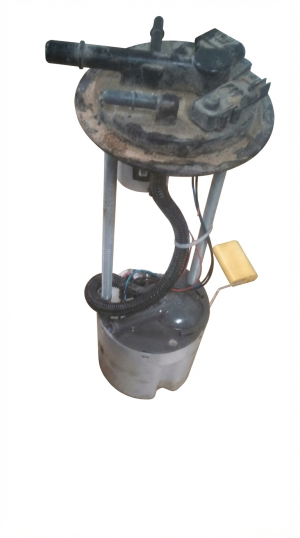
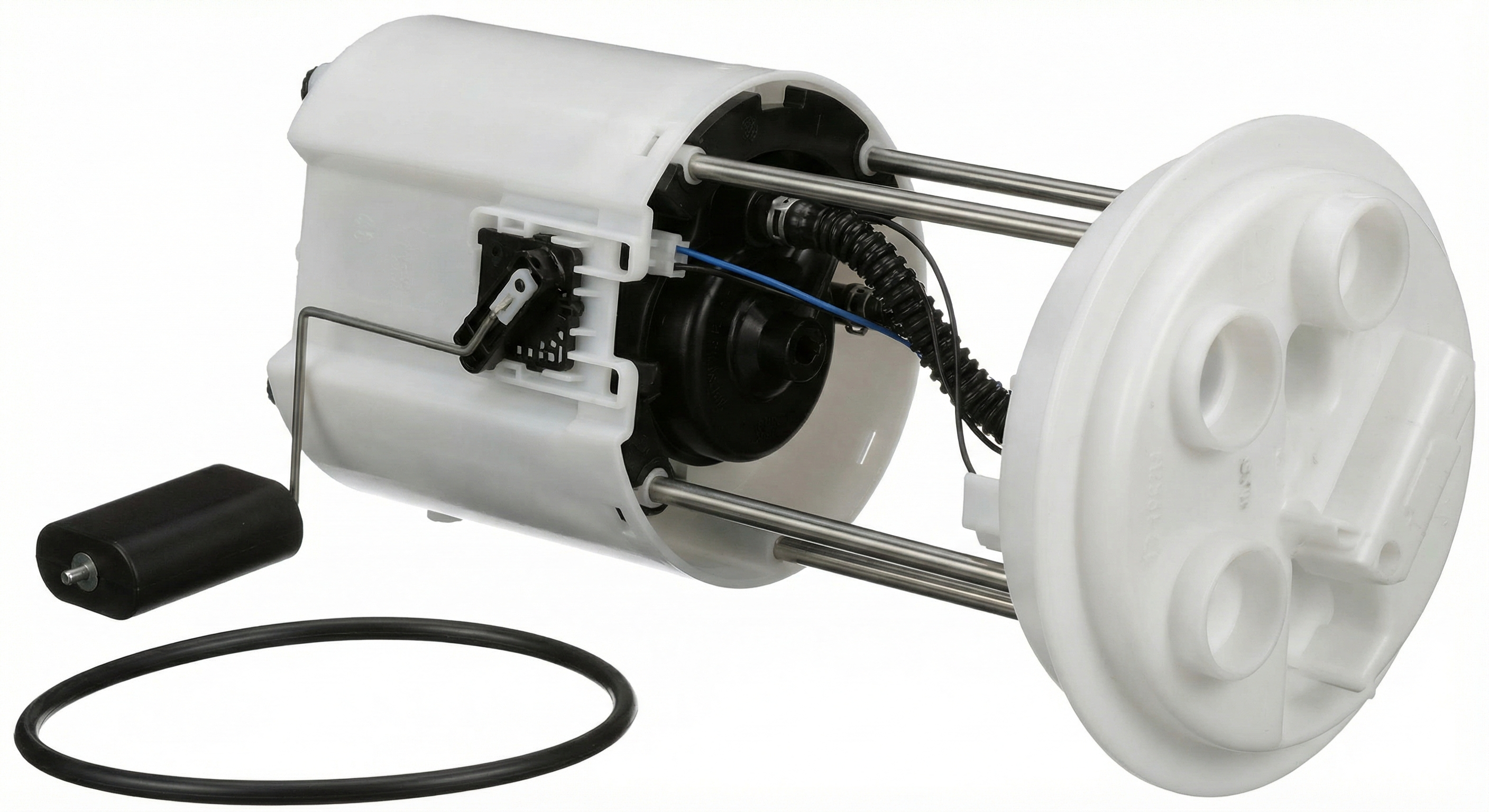
New Aftermarket Parts Available


The information in this article is provided for general reference and educational purposes only. Vehicle specifications, procedures, and part compatibility can vary by production date, trim level, and region. Always consult your vehicle's factory service manual and verify part numbers before purchasing or performing repairs. Safety-critical components such as airbags, seat belts, and braking systems should be installed by a qualified professional.
- Chevrolet Silverado 1500:
- 🧭 Diagnostic Flowchart
- 🎬 Helpful Videos
- 🛍️ Shop This Part
- What's Unique About the 2007-2013 Chevrolet Silverado 1500
- Symptoms You May Notice
- Most Likely Causes
- Rare But Worth Checking
- Diagnosis Steps
- Parts You'll Likely Need
- Related Codes That Often Appear With This One
- Technical Service Bulletins (TSBs) & Recalls
- Platform-Specific Known Issues
- Mechanic-Grade Diagnostic Values
- Scan Tool Commands That Help
- Wiring & Ground Locations
- Real Owner Repair Stories
- OEM Part Supersession History
- Model Year Variations Within This Range
- Other Known Issues on This Vehicle
- Used vs. New Parts: Buying Guide for This Vehicle
- Documented NHTSA Reports
- NHTSA Reported Issues
- Real Owner Stories
- 2007-2013 Chevrolet Silverado 1500
- 2007 Chevrolet Suburban
- Related OBD-II Codes
- Frequently Asked Questions
- 🎟️ Get 5% Off