

P0463 on 2002-2009 Chevrolet Trailblazer: Fuel Level Sensor Causes and Fixes
On a 2002-2009 Trailblazer, P0463 almost always means the fuel level sensor has failed. Because the sensor is part of the fuel pump module, the entire module usually needs to be replaced. Expect to pay $450-$700 at a shop. A less common but possible cause is a failed instrument cluster, a known issue on this platform.
- P0463 on a Trailblazer points to a problem with the fuel level reading, specifically a 'high input' or open circuit.
- The most likely cause is a failed fuel level sensor, which requires replacing the entire fuel pump module in the gas tank.
- Before ordering a fuel pump, check ALL gauges on your dashboard. If others are also faulty, the problem is likely the instrument cluster itself, a separate and equally common issue.
- This repair requires dropping the fuel tank, which is a difficult and potentially dangerous DIY job. Ensure the tank is as empty as possible and take all safety precautions.
- Always inspect the wiring and ground connections before replacing expensive components.
What's Unique About the 2002-2009 Chevrolet Trailblazer
On the GMT360 platform, which includes the Trailblazer, the fuel level sending unit is a notoriously common failure item. While wiring can be a cause, the sensor itself is the most frequent culprit. A second, very common issue on this generation of GM trucks is the failure of the stepper motors within the instrument cluster, which can cause an erratic fuel gauge and mimic the symptoms of a bad sensor. It's crucial to determine if other gauges are also malfunctioning before assuming the problem is in the fuel tank.
Symptoms You May Notice
- Check Engine Light is on
- Fuel gauge reads inaccurately (e.g., stuck on Full or Empty)
- Fuel gauge fluctuates wildly or behaves erratically
- Low fuel warning light may be on constantly or flashing
- Replacing the fuel pump module when the actual problem is a faulty instrument cluster. If other gauges are also acting up, the cluster is the more likely cause.
Most Likely Causes
- Failed Fuel Level Sensor / Fuel Pump Module 🔴 High Probability → Shop Fuel Tank Sending Unit The fuel level sensor is a known high-failure part on this platform, often malfunctioning over time. It is integrated into the fuel pump module, so the entire assembly is typically replaced.
How to confirm: Access the fuel pump connector and use a multimeter to test the resistance of the sending unit circuit. On these GM vehicles, the resistance should be approximately 40 ohms when the tank is empty and 250 ohms when full. An open circuit (infinite resistance) or a reading that doesn't change smoothly as the float moves confirms a bad sensor.
Typical fix: Replace the entire fuel pump module assembly. This requires dropping the fuel tank. Some DIY-ers have cut an access panel in the floor under the rear seat to avoid dropping the tank, though this is not a factory-approved procedure.
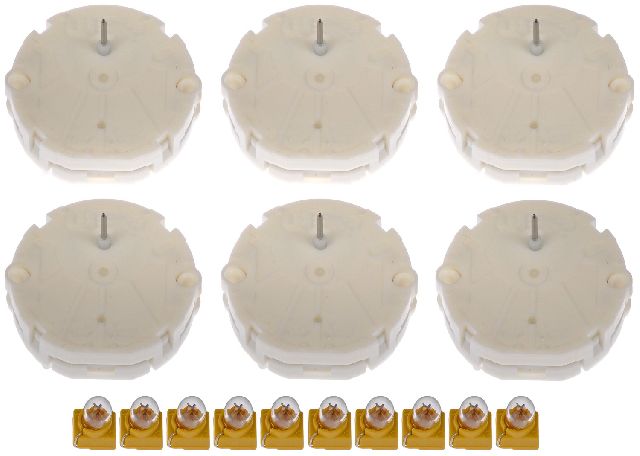
Est. part cost: $150-$350 - Faulty Instrument Panel Cluster (IPC) 🟡 Medium Probability → Shop Instrument Cluster GM vehicles from this era used stepper motors (specifically models like X27.168) in the instrument cluster that are prone to failure, causing gauges to stick, peg out, or stop working entirely. This is a well-documented, widespread issue.
How to confirm: Check if other gauges (speedometer, tachometer, temperature) are also behaving erratically. If multiple gauges are faulty, the problem is almost certainly the instrument cluster's stepper motors, not the individual sensors.
Typical fix: The instrument cluster must be removed, and the individual faulty stepper motors must be de-soldered and replaced with new ones. This can be done by a specialist repair service or as a DIY project for those with soldering skills.
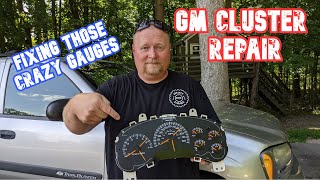
Est. part cost: $100-$250 for a repair service, or $15-$30 for a set of replacement stepper motors. 🎬 Watch: How to repair the instrument cluster stepper motors
- Damaged Wiring or Connectors ⚪ Low Probability Wiring that runs along the frame rail to the fuel tank can be damaged by road debris or corrosion over time, especially in regions that use road salt. The main connector on top of the fuel pump module is also exposed to the elements and can develop corrosion.
How to confirm: Visually inspect the wiring harness from the PCM to the fuel tank. Check for chafed, broken, or corroded wires. Unplug the connector at the fuel pump and check for corrosion or damage on the pins.
Typical fix: Repair the damaged section of the wiring harness or replace the corroded connector.
Est. part cost: $10-$50
Rare But Worth Checking
- Poor Ground Connection: The fuel pump module's ground is critical. A corroded or loose ground strap for the fuel tank or chassis can cause a high-voltage reading and trigger the code. Always check the ground connections before replacing expensive parts.
Diagnosis Steps
- Check for other codes in the system with an OBD-II scanner.
- Observe the instrument cluster. Are any other gauges (speedometer, tachometer, temp) behaving erratically? If yes, the instrument cluster is the likely culprit.
- If only the fuel gauge is faulty, inspect the wiring harness leading to the fuel tank. Look for any visible damage, corrosion, or loose connections, especially at the connector on top of the fuel pump module.
- Check for a solid ground connection at the fuel tank and on the vehicle's frame.
- If wiring and grounds appear okay, the next step is to test the fuel level sensor itself. This requires accessing the top of the fuel tank. Using a multimeter, measure the resistance on the sensor circuit. The reading should be between ~40 ohms (empty) and ~250 ohms (full) and should change smoothly as the fuel level changes.
- If the sensor tests bad (e.g., shows infinite resistance), the fuel pump module assembly needs to be replaced.
Parts You'll Likely Need
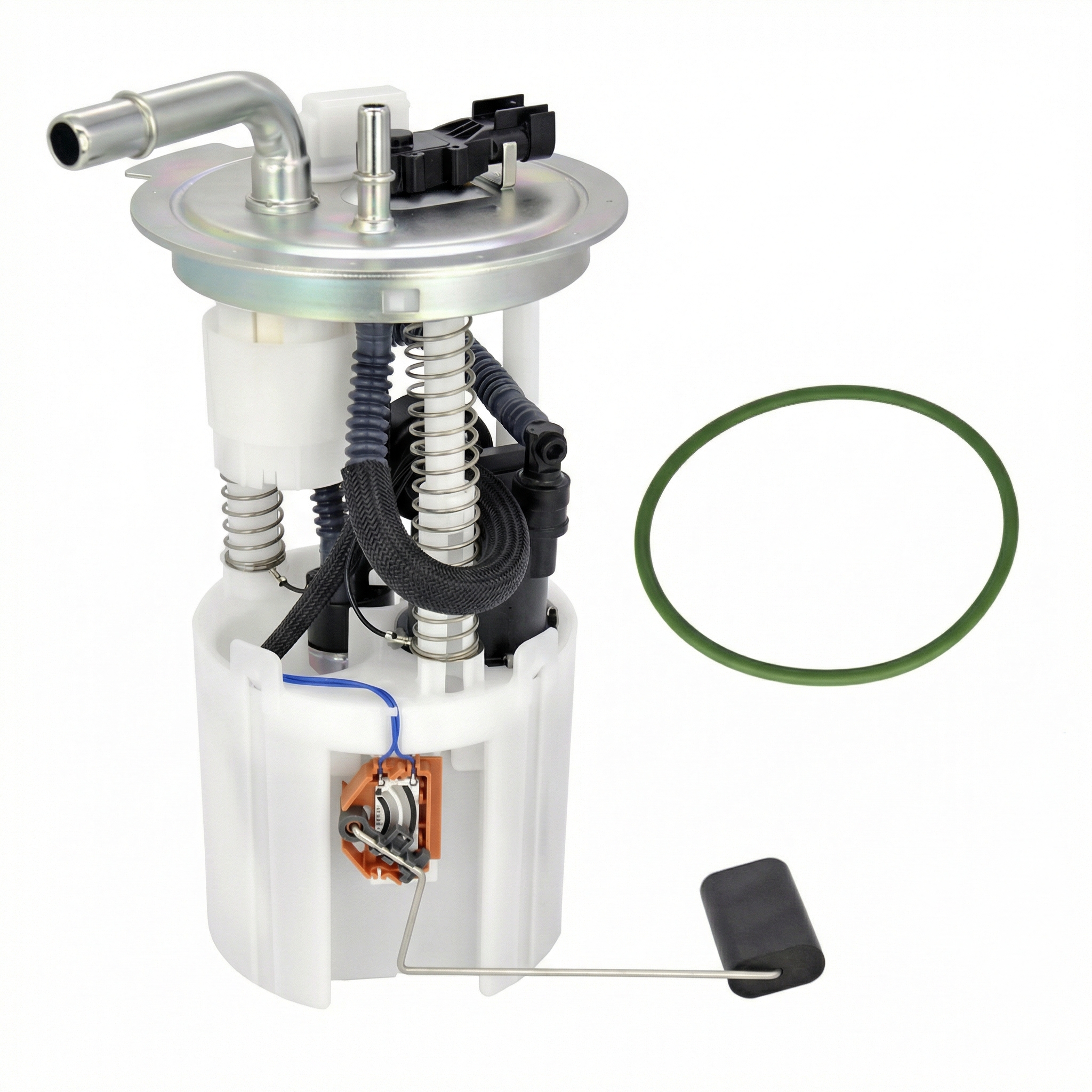
- Fuel Pump Module Assembly
(OEM #19418261)— This is the most common cause of P0463. The fuel level sensor is integrated into this assembly and is not typically sold separately. This part number supersedes older numbers like 19153374 and 88966955.
Trusted brands: ACDelco (OEM), Delphi, Bosch (e.g., #67415)
OEM price range: $250-$350
Aftermarket price range: $150-$250 - Instrument Cluster Stepper Motor
(OEM #x27.168 (or x25.168))— If multiple gauges are failing, the individual stepper motors inside the cluster have likely gone bad. These can be purchased in kits to replace all at once.
Trusted brands: Switec, Juken
OEM price range: $400-$600 for a new cluster
Aftermarket price range: $15-$30 for a set of 6 motors
Related Codes That Often Appear With This One
- P0462 — This code means 'Fuel Level Sensor Circuit Low Input.' Seeing both P0462 and P0463 intermittently can indicate a sensor that is failing and giving erratic readings across its entire range.
Platform-Specific Known Issues
- For 2005-2007 models, General Motors had a special service policy (GM Special Policy No. 07099) that covered a portion of the repair cost for a failed fuel level sensor for up to 10 years or 120,000 miles. While this policy has likely expired for all vehicles, it highlights how common this specific failure is.
Mechanic-Grade Diagnostic Values
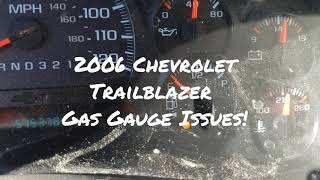
- Fuel Level Sensor Signal Voltage — expected: Approx. 0.5V (Empty) to 4.5V (Full). The voltage should change smoothly as the fuel level changes.. Failure: A reading that is stuck at 5.0V indicates an open in the signal circuit or a failed sensor, which triggers P0463. 🎬 See: Diagnosing Trailblazer gas gauge issues
- Fuel Level Sensor Resistance — expected: Approx. 40 Ohms (Empty) to 250 Ohms (Full).. Failure: A reading of infinite resistance (OL) indicates an open circuit within the sensor's variable resistor. A reading that does not change when the float arm is moved also indicates failure.
- Sensor Ground Voltage (at fuel pump connector, backprobed) — expected: Near 0.0V (less than 100mV).. Failure: Significant voltage (e.g., above 0.1V) on the ground wire indicates a poor ground connection, which can cause an artificially high signal voltage reading at the PCM.
Scan Tool Commands That Help
- Tech2 / GDS2 or equivalent professional scanner: Instrument Cluster Gauge Sweep / Self-Test — This is a critical first step if the instrument cluster is suspected. This command orders all gauges to move through their full range of motion. If the fuel gauge fails to sweep correctly while others do, it points to a faulty fuel gauge stepper motor, not the sending unit.
- Tech2 / GDS2 or equivalent professional scanner: Fuel Pump Relay Command ON/OFF — While not directly for the P0463 sensor circuit, this is used to verify the integrity of the fuel pump's power and ground circuits. If you have other fuel-related issues, this helps isolate the problem to the sensor side versus the pump motor side.
Wiring & Ground Locations
- Fuel Pump Module Connector (C405) — On top of the fuel pump module, accessible after dropping the fuel tank.. This is the primary connection point for the fuel level sensor. The Purple wire is the signal wire, and the Black (or Orange/Black) wire is the sensor ground. Corrosion or damage here is a common cause of the code.
- G201 (Splice Pack SP201) — In the passenger side footwell, behind the kick panel, bolted to the body.. This is a major ground point for numerous interior components, including the Instrument Panel Cluster (IPC). A poor connection at G201 can cause erratic behavior in all gauges, mimicking a P0463 code. If multiple gauges are acting strangely, this ground should be inspected and cleaned.
- G107 — On the side of the engine block, near the front.. While primarily related to engine components, this ground is shared by circuits that can influence the fuel pump relay. A poor ground here can cause voltage drops that lead to various electrical issues, though it's a less direct cause for P0463 than G201 or the sensor's own ground.
Real Owner Repair Stories
- Synthesized from multiple threads on TrailVoy.com and GMTNation.com (2005 Chevrolet Trailblazer LS) — Check Engine Light on with code P0463. Fuel gauge was stuck on Full regardless of how much fuel was in the tank.
❌ Tried (didn't work) Initially suspected wiring but a visual inspection showed no obvious damage along the frame rail.
✅ What actually fixed it The owner observed that all other gauges (speedometer, tachometer, temp, oil pressure) were working perfectly. This strongly suggested the problem was not the common instrument cluster stepper motor failure. Based on this, the owner proceeded with dropping the fuel tank and replacing the entire fuel pump module assembly. After replacement, the code was cleared and the fuel gauge began reading correctly. The final cause was a failed sending unit within the original module. - Synthesized from multiple threads on ChevroletForum.com and YouTube repair videos (2004 GMC Envoy (platform mate)) — Fuel gauge was behaving erratically, sometimes reading Full, sometimes Empty, and triggering a P0463. The speedometer would also occasionally stick or read 0 mph while driving.
❌ Tried (didn't work) The owner considered replacing the fuel pump module first, but was advised to check all gauges., Clearing the code would work temporarily, but it would return as soon as the gauge acted up again.
✅ What actually fixed it The fact that both the fuel gauge and speedometer were malfunctioning pointed directly to the instrument panel cluster (IPC). The owner removed the cluster, and using a soldering iron, replaced all six stepper motors (part number X27.168) on the circuit board. After reinstallation, all gauges, including the fuel gauge, functioned correctly and the P0463 code did not return.
Model Year Variations Within This Range
- 2003-2007: These model years are particularly susceptible to the instrument panel cluster stepper motor failure. While the fuel sending unit can fail on any 2002-2009 model, if you have a vehicle in the 2003-2007 range and see a P0463, the probability of the instrument cluster being the root cause (or a concurrent failure) is significantly higher.
Diagnostic Flowchart
Other Known Issues on This Vehicle
Issues unrelated to this code that are worth knowing about as an owner of this generation:
- Failing Fan Clutch 🔴 High — Very common. Can fail to engage causing overheating, or lock on causing excessive noise and reduced power/MPG.
- Faulty Ignition Switch 🔴 High — Common failure leading to no-start conditions or stalling. Was subject to a major GM recall. (Ref: GM Ignition Switch Recall)
- Front Axle Disconnect / 4WD Actuator Failure 🟠 Medium — The front axle actuator is a common failure point, causing the 'Service 4WD' light and inoperative four-wheel drive.
- Cracked Cylinder Head / Worn Valve Seats (4.2L I6) 🔴 High — The valve seats on the 4.2L engine are known to wear prematurely, causing loss of compression and misfires.
- Driver's Door Module Failure 🟠 Medium — Water intrusion can cause the driver's door module to corrode and fail, making windows/locks inoperative. This was subject to a recall. (Ref: NHTSA RECALL 12V406000)
- Failed Blower Motor Resistor 🟡 Low — A very common failure causing the HVAC fan to only work on the highest setting.
Used vs. New Parts: Buying Guide for This Vehicle
When a used part is the smart pick: A used instrument cluster can be a cost-effective option IF it comes from a reputable seller who guarantees it works, and you are comfortable with the mileage being incorrect or know a specialist who can reprogram it. For nearly all other parts related to this code, new is strongly recommended.
Donor-vehicle mileage cap: roughly under 100000 miles for the part to have meaningful remaining life.
What to inspect on the donor part:
- For a used instrument cluster, ask for a video of it powering up and performing a gauge sweep if possible.
- Check the plastic housing for cracks, especially around the mounting tabs.
- Ensure the clear plastic lens is not deeply scratched or hazed over.
OEM-only on this vehicle (don't cheap out):
- While not strictly 'OEM-only', using a high-quality OEM (ACDelco) or reputable Tier 1 aftermarket (Delphi, Bosch) fuel pump module is highly recommended. The labor involved in replacement is too high to risk using a low-quality, no-name part that could fail prematurely.
Aftermarket brands forum-validated for this vehicle:
- Fuel Pump Module: Delphi, Bosch, ACDelco (OEM)
- Instrument Cluster Stepper Motors: Switec (specifically model X27.168)
Brands owners have reported issues with on this vehicle:
- Generic, unbranded 'white box' fuel pump modules sold on auction sites. Forum users frequently report premature failures with these units, sometimes within months.
Real Owner Stories
Aggregated from forums and TSBs cited above. Mileages and costs reflect what owners reported in those sources.
2005-2007 Chevrolet Trailblazer — ~110000 miles
Symptoms: Fuel level sensor failed, leading to inaccurate fuel gauge readings.
What fixed it: Repair cost was partially covered by GM Special Policy No. 07099.
Source hint: vehicle_specific_issues
2002-2009 Chevrolet Trailblazer
Symptoms: Fuel gauge was erratic or dead.
What fixed it: Replacing the entire fuel pump module, which contains the sensor.
Source hint: ChevroletForum.com
2002-2009 Chevrolet Trailblazer
Symptoms: Fuel gauge behaving erratically alongside other gauges like the speedometer and tachometer.
What fixed it: Removing the instrument cluster and replacing the individual faulty stepper motors.
Source hint: TrailVoy.com
2002-2009 Chevrolet Trailblazer
Symptoms: P0463 code triggered by a failed fuel level sensor.
What fixed it: Fuel pump module replacement, with some users opting for the 'access hatch' method to avoid dropping the tank.
Source hint: GMTNation.com
NHTSA ODI #10407281
Symptoms: An owner reported the fuel gauge reading empty regardless of actual fuel level, accompanied by a Check Engine Light for code P0463 (high fuel input).
What fixed it: The owner noted this failure would cause the vehicle to fail state inspection.
NHTSA ODI #10492821
Symptoms: The fuel gauge dropped to zero and thereafter read intermittently between normal and empty.
What fixed it: The owner identified the error code P0463 as indicating a fuel sending unit failure, creating a dangerous situation regarding fuel level awareness.
Documented NHTSA Reports
In addition to platform-specific issues, several NHTSA reports highlight the broader impact of this code on GM vehicles. For instance, NHTSA ODI #10759346 describes a situation where the fuel gauge eventually read only empty as the P0463 code became active. While some repairs are straightforward, NHTSA ODI #11615682 notes a case where replacing the fuel pump module did not immediately resolve the P0463 and P0452 codes. Furthermore, NHTSA ODI #11399819 reports a persistent issue where multiple fuel level sensors were installed without successfully preventing the return of codes P0463, P069E, and C0045.
Related OBD-II Codes
Frequently Asked Questions
Is there a special GM policy for the fuel level sensor on my 2006 Trailblazer?
My fuel gauge is stuck on empty, but my speedometer is also acting weird. Is it still the fuel sensor?
What should the resistance reading be for a healthy fuel sending unit on a Trailblazer?
Can I fix the fuel gauge without dropping the heavy fuel tank?
Could road salt in my area be causing the P0463 code?
If I need to replace the fuel level sensor, do I have to buy the whole pump?
Helpful Videos


Used OEM Parts in Stock
New Aftermarket Parts Available


The information in this article is provided for general reference and educational purposes only. Vehicle specifications, procedures, and part compatibility can vary by production date, trim level, and region. Always consult your vehicle's factory service manual and verify part numbers before purchasing or performing repairs. Safety-critical components such as airbags, seat belts, and braking systems should be installed by a qualified professional.
- Chevrolet Trailblazer:
- 🧭 Diagnostic Flowchart
- 🎬 Helpful Videos
- 🛍️ Shop This Part
- What's Unique About the 2002-2009 Chevrolet Trailblazer
- Symptoms You May Notice
- Most Likely Causes
- Rare But Worth Checking
- Diagnosis Steps
- Parts You'll Likely Need
- Related Codes That Often Appear With This One
- Platform-Specific Known Issues
- Mechanic-Grade Diagnostic Values
- Scan Tool Commands That Help
- Wiring & Ground Locations
- Real Owner Repair Stories
- Model Year Variations Within This Range
- Other Known Issues on This Vehicle
- Used vs. New Parts: Buying Guide for This Vehicle
- Real Owner Stories
- 2005-2007 Chevrolet Trailblazer — ~110000 miles
- 2002-2009 Chevrolet Trailblazer
- 2002-2009 Chevrolet Trailblazer
- 2002-2009 Chevrolet Trailblazer
- NHTSA ODI #10407281
- NHTSA ODI #10492821
- Documented NHTSA Reports
- Related OBD-II Codes
- Frequently Asked Questions
- 🎟️ Get 5% Off