

P0463 on 2018-2023 Chevrolet Traverse: Fuel Level Sensor Circuit High Input Causes and Fixes
This code indicates a problem with the fuel level sensor circuit, causing an inaccurate fuel gauge. The most common cause is a faulty fuel level sensor, which is sold separately from the fuel pump. On AWD models, a known issue is a blocked jet pump in the fuel pump module that prevents fuel transfer, mimicking a sensor failure. Expect a repair cost of $1,400-$2,200 if the entire fuel pump module needs replacement, as the fuel tank must be removed.
- P0463 means your Traverse's computer is getting a faulty 'high voltage' signal from the fuel level sensor.
- The most common symptom is a fuel gauge stuck on 'Full', accompanied by the Check Engine Light.
- You can continue driving, but you must track your mileage to avoid running out of gas.
- The most likely cause is a failed fuel level sensor, which is part of the fuel pump module inside the gas tank.
- This is not a simple DIY fix; replacing the fuel pump module requires dropping the fuel tank and is a costly repair best handled by a professional.
What's Unique About the 2018-2023 Chevrolet Traverse
For the 2018-2023 Chevrolet Traverse, the fuel level sensor is available as a separate component from the fuel pump module. However, the repair still requires removing the fuel tank to access it. A critical issue specific to All-Wheel Drive (AWD) models is detailed in GM Technical Service Bulletin (TSB) 18-NA-365. This TSB notes that a blocked transfer jet port in the primary fuel pump module can prevent fuel from moving from the secondary (passenger) side of the saddle tank to the primary (driver) side. This causes the primary side to run empty, making the sensor report high resistance (250 Ohms) and triggering P0463, even when there is significant fuel remaining in the tank.
Symptoms You May Notice
- Check Engine Light is on
- Fuel gauge reads full and does not move
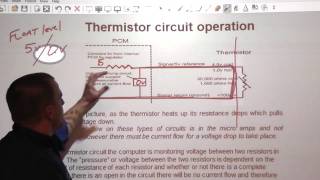
- Fuel gauge fluctuates erratically or reads empty when the tank is not. 🎬 Watch: A breakdown of common causes and fixes for P0463.
- Low fuel warning light may illuminate unexpectedly or stay on.
- The 'Distance to Empty' or 'Range' display on the trip computer is inaccurate.
- On AWD models, engine stalling may occur with the fuel gauge still showing adequate fuel, due to fuel starvation on the primary side of the tank.
- Replacing the instrument cluster. While the cluster displays the fuel level, it rarely causes a P0463 code. The problem is almost always in the circuit between the tank and the computer, as the raw sensor data is processed by the BCM first.
- Replacing the fuel level sensor on AWD models when the actual fault is a blocked transfer jet in the fuel pump module, as described in TSB 18-NA-365.
Most Likely Causes
- Faulty Fuel Level Sending Unit 🔴 High Probability → Shop Fuel Tank Sending Unit The sending unit is a variable resistor with a float arm. The resistor contacts or the spring-loaded 'fingers' that ride on it can wear out, break, or become corroded over time, leading to an open circuit, which causes the high voltage reading.
How to confirm: Use a scan tool to monitor the fuel level sensor voltage; a reading stuck near 5 volts indicates an open circuit. The definitive test is to access the fuel tank harness connector (X350) and test the sensor's resistance with a multimeter. The resistance should be between 40 ohms (full) and 250 ohms (empty) and change smoothly as the fuel level changes.
Typical fix: Replace the fuel level sensor kit. This part is sold separately from the fuel pump module but still requires removing the fuel tank for access.
Est. part cost: $80-$150 - Damaged Wiring or Loose Connectors 🟡 Medium Probability The wiring harness runs from the fuel tank to the front of the vehicle, making it susceptible to damage from road debris or corrosion, especially at the main connector on top of the fuel tank module (X350). A broken or corroded wire in the signal or ground circuit can create an open, causing the P0463 code.
How to confirm: Visually inspect the wiring harness for any signs of chafing, breaks, or corrosion. Pay close attention to the X350 connector. Use a multimeter to check for continuity on the signal (typically purple) and ground wires between the BCM and the fuel pump connector. A break in the signal or ground wire will cause a high input reading.
Typical fix: Repair the damaged section of the wire or replace the faulty connector pigtail.
Est. part cost: $20-$100 - Poor Ground Connection ⚪ Low Probability The fuel system components rely on a solid ground to the chassis. Corrosion or a loose connection at the ground strap for the fuel tank can create high resistance in the circuit, which the PCM interprets as a high voltage signal. Electrical issues from bad grounds are a known weak point on this platform.
How to confirm: Locate the ground strap for the fuel tank and inspect it for corrosion or looseness. Test the ground circuit for high resistance using a multimeter from the pump connector to a known good chassis ground. A reading of more than a few ohms indicates a problem.
Typical fix: Clean the contact points of the ground connection and tighten it securely. If the strap is heavily corroded, replace it.
Est. part cost: $10-$30
Rare But Worth Checking
- Faulty Powertrain Control Module (PCM) or Body Control Module (BCM): This is extremely rare. Before condemning the PCM or BCM, all other possibilities, including the sensor, wiring, and grounds, must be exhaustively ruled out. This diagnosis should be left to a professional with advanced diagnostic tools.
- Blocked Fuel Pump Module Transfer Jet (AWD Models): → Shop Fuel Pump As per TSB 18-NA-365, a blocked port on the primary fuel pump module can stop fuel transfer from the secondary side of the tank. This starves the primary side, causing its level sensor to read empty (250 Ohms) and set P0463, even with fuel in the tank. The fix is to replace the primary fuel pump module, not the sensor.
Diagnosis Steps
- Connect an OBD-II scanner to confirm P0463 is the primary code and check for any other related codes listed in TSB 18-NA-365 (e.g., P0461, P0462, P2067).
- Use a scan tool with live data to view the 'Fuel Level Sensor Voltage'. A reading stuck at or near 5 volts points to an open circuit or faulty sensor.
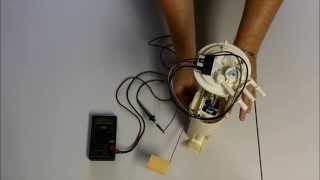
- Use the scan tool's bidirectional controls to command the instrument panel fuel gauge from 0% to 100%. 🎬 Watch: How to test a GM fuel gauge and sending unit. If the gauge sweeps correctly, the instrument cluster is good, and the fault is in the sensor, wiring, or BCM.
- Locate and inspect the fuel tank harness connector (X350) for corrosion, damage, or loose pins.
- With the key on, back-probe the X350 connector. Check the signal wire (typically purple) for 5 volts and the sensor ground wire (typically orange/black) for near 0 volts. A good ground should read less than 0.1 volts.
- With the connector unplugged, use a multimeter to measure the resistance across the two sensor pins on the tank side. Per TSB 18-NA-365, the reading should be between 40 Ohms (full) and 250 Ohms (empty). An infinite reading (OL) indicates a bad sensor.
- For AWD models, if the primary sensor reads near 250 Ohms (empty) but the secondary sensor reads less than 250 Ohms (has fuel), suspect a blocked transfer jet per TSB 18-NA-365.
- If the sensor and wiring test good, the fault may lie in the Body Control Module (BCM), but this is very rare.
Parts You'll Likely Need
- Fuel Level Sensor Kit
(OEM #GM Genuine 85088491 (supersedes 84717990, 23282528))— This is the most common cause of P0463. The sensor's resistor card fails, creating an open circuit. For the 2018-2023 Traverse, this is sold as a separate kit from the main fuel pump module.
Trusted brands: ACDelco, Delphi
OEM price range: $80-$150
Aftermarket price range: $50-$100 - Fuel Pump and Sender Assembly
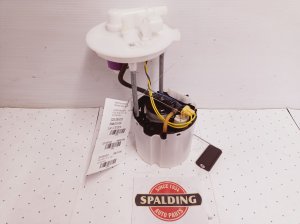
(OEM #GM Genuine 85513895 (ACDelco M10237))— This is only needed on AWD models if diagnosis via TSB 18-NA-365 points to a blocked internal transfer jet. In this specific case, the pump module must be replaced, not the sensor.
Trusted brands: ACDelco, Delphi
OEM price range: $1200-$1750
Aftermarket price range: $800-$1300
Related Codes That Often Appear With This One
- P0462 — This code means 'Fuel Level Sensor Circuit Low Input'. Seeing it along with P0463 could indicate an intermittent short or open in the wiring or a failing sensor that is fluctuating wildly. Both are listed in TSB 18-NA-365.
- P069E — This code indicates a 'Fuel Pump Control Module Requested MIL Illumination'. On some GM vehicles, a fault in the fuel level sending unit can be flagged by the Fuel Pump Control Module (FPCM), which then asks the main PCM to turn on the Check Engine Light. NHTSA ODI #11399819 notes an instance where P069E appeared alongside P0463 and C0045 even after multiple fuel level sensors were installed.
- P0461 — This code means 'Fuel Level Sensor Circuit Range/Performance'. It can be set alongside P0463 if the sensor signal is erratic or irrational, not just stuck high. TSB 18-NA-365 specifically lists this code with P0463 for related fuel system issues.
Technical Service Bulletins (TSBs) & Recalls
- 18-NA-365
Platform-Specific Known Issues
- TSB 18-NA-365: Released in February 2019 for 2017-2018 Traverse, Enclave, and XT5 models, this bulletin addresses a range of fuel level sensor codes including P0463, P0461, P0462, and others. It points toward a potential issue on AWD models where a blocked transfer jet in the primary fuel pump module prevents fuel transfer from the secondary side of the tank, causing the primary side to run empty and trigger fuel level codes despite fuel being present in the tank.
Mechanic-Grade Diagnostic Values
- Fuel Level Sensor Resistance — expected: 40 Ohms (Full) to 250 Ohms (Empty). Failure: A reading of infinity (OL) indicates an open circuit/bad sensor. A reading that does not change when fuel level changes also indicates a failure.
- Fuel Level Sensor Signal Wire Voltage (at sensor connector, key on) — expected: ~5.0 Volts. Failure: Significantly less than 5.0 Volts may indicate a wiring issue or a short to ground.
- Fuel Level Sensor Ground Wire Voltage (at sensor connector, key on, circuit loaded) — expected: Near 0.0 Volts (ideally < 0.1V). Failure: Voltage significantly above 0.1V (e.g., reading 5V) indicates a bad ground connection, which will cause a P0463.
Scan Tool Commands That Help
- GDS2 / Tech2 or equivalent professional scanner: Instrument Panel Cluster > Output Control > Fuel Gauge — Use this bidirectional command to sweep the fuel gauge from 0% to 100%. If the gauge moves correctly, it confirms the instrument cluster and its internal stepper motor are working, isolating the fault to the sensor, wiring, or BCM/PCM.
Wiring & Ground Locations
- BCM (Body Control Module) — Located on the passenger side of the center console, behind the fuse panel.. The BCM receives the raw voltage signal from the fuel level sensor, processes it, and sends the information to the instrument cluster via the CAN bus. A fault here, though rare, can cause this code.
- X350 Connector — The main harness connector between the chassis wiring and the fuel tank wiring harness.. This is the primary access point for testing the fuel level sensor circuit without dropping the fuel tank. TSB 18-NA-365 directs all initial resistance checks to be performed here.
Real Owner Repair Stories
- GM Technical Service Bulletin 18-NA-365 (2017-2018 Chevrolet Traverse (and other GM platforms) with AWD) — Stalling, lack of engine performance, low range displayed with adequate fuel on gauge, and MIL with codes P0463, P0461, P2067, etc.
❌ Tried (didn't work) Replacing the fuel level sensor when it was not the root cause.
✅ What actually fixed it The documented cause was a blocked transfer jet port in the primary fuel pump module, preventing fuel transfer from the secondary side of the saddle tank. The correct fix was to replace the entire primary fuel pump module (not the sensor) to restore fuel transfer capability. - NHTSA ODI #11615682 — An owner reported that after filling the tank, the vehicle threw codes P0452 and P0463. Replacing the fuel pump module did not resolve the issue.
- NHTSA ODI #10759346 — A report describes a situation where the fuel gauge eventually just reads empty and the check engine light illuminates with an active P0463 code.
- NHTSA ODI #10407281 — An owner noted the fuel gauge reading empty regardless of the actual fuel level, accompanied by a check engine light for code P0463 (high fuel input).
- NHTSA ODI #10691136 — A driver reported the check engine light illuminated and a subsequent scan at a parts store confirmed code P0463.
OEM Part Supersession History
23282528→84717990, then 85088491— Part revision and consolidation by manufacturer.
Heads up: These part numbers are for the Fuel Level Sensor Kit only, and do not include the fuel pump.85513895→85088487— Part revision by manufacturer.
Heads up: These part numbers are for the Fuel Pump Module WITHOUT the fuel level sensor.
Diagnostic Flowchart
Other Known Issues on This Vehicle
Issues unrelated to this code that are worth knowing about as an owner of this generation:
- 9-Speed Transmission Shudder 🟠 Medium — Common issue, often appearing between 30,000-100,000 miles. Owners report a shudder or vibration during light acceleration or between shifts. (Ref: Multiple TSBs exist. A common fix is a transmission fluid flush with an updated fluid type (Mobil 1 Full Synthetic LV ATF HP). Some cases require torque converter replacement.)
- Start/Stop System Accumulator Failure 🔴 High — Affects a wide range of 2018-2020 GM models, including the Traverse. Can occur at any mileage. (Ref: Recall N202313440. The accumulator endcap may have missing bolts, which can lead to a transmission fluid leak, loss of propulsion, and potential fire risk.)
- Service Brake Assist Message / DTC P0557 🟠 Medium — Reported by owners, often related to the brake booster pressure sensor. (Ref: TSB #20NA071 addresses a Service Engine Soon lamp and/or Service Power Brake Assist message with DTC P0557 or P0558 stored.)
- Engine Problems (Stalling, Oil Consumption) 🟠 Medium — Some owners report issues with excessive oil consumption, engine stalling, or rough idling.
- Electrical and Infotainment Glitches 🟡 Low — Complaints include the infotainment screen freezing, Bluetooth connectivity issues, and random error messages. (Ref: Software updates are periodically released by dealers to address some of these concerns.)
Used vs. New Parts: Buying Guide for This Vehicle
When a used part is the smart pick: A used part is generally not recommended for this repair. The primary failure parts are the fuel level sensor (a wear item) and the fuel pump module (a critical component). The labor to drop the fuel tank is significant, making it unwise to install a part with an unknown history or limited remaining lifespan.
Donor-vehicle mileage cap: roughly under 40000 miles for the part to have meaningful remaining life.
What to inspect on the donor part:
- Verify the part is from a vehicle within the correct year range (2018-2023).
- Inspect the electrical connector pins for any signs of corrosion, melting, or damage.
- If possible, test the resistance of the used sensor before purchase to ensure it reads within the 40-250 Ohm range and isn't open (OL).
- Avoid parts from vehicles that show signs of sitting for a long time, as old fuel can damage the sensor and pump.
OEM-only on this vehicle (don't cheap out):
- Fuel Pump Module
Aftermarket brands forum-validated for this vehicle:
- ACDelco (OEM)
- Delphi
Brands owners have reported issues with on this vehicle:
- No-name, unbranded parts from online marketplaces should be avoided due to the high labor cost of a repeat repair.
Real Owner Stories
Aggregated from forums and TSBs cited above. Mileages and costs reflect what owners reported in those sources.
2018 Chevrolet Traverse AWD
Symptoms: The fuel gauge showed adequate fuel, but the engine stalled due to fuel starvation on the primary side of the tank.
What fixed it: Addressed a blocked transfer jet in the primary fuel pump module as described in TSB 18-NA-365.
Source hint: TSB 18-NA-365
2018-2023 Chevrolet Traverse
Symptoms: P0463 code appeared even after the fuel pump was replaced.
What fixed it: Repaired a damaged wiring connector that was broken during the initial fuel pump repair.
Source hint: gmtnation.com thread 'Fuel gauge issue after fuel pump P0463'
Related OBD-II Codes
Frequently Asked Questions
Does TSB 18-NA-365 apply to my 2018 Chevrolet Traverse AWD?
Can I replace just the fuel level sensor on my Traverse, or do I need a whole new fuel pump?
Why does my Traverse stall even though the fuel gauge says I still have gas?
What voltage should I see for the fuel level sensor on a scan tool?
What are the correct resistance values for the fuel level sending unit on the 2018-2023 Traverse?
Is there a specific connector I should check for corrosion or damage?
Helpful Videos

We Have This Part in Stock

The information in this article is provided for general reference and educational purposes only. Vehicle specifications, procedures, and part compatibility can vary by production date, trim level, and region. Always consult your vehicle's factory service manual and verify part numbers before purchasing or performing repairs. Safety-critical components such as airbags, seat belts, and braking systems should be installed by a qualified professional.
- Chevrolet Traverse:
- 🧭 Diagnostic Flowchart
- 🎬 Helpful Videos
- 🛍️ Shop This Part
- What's Unique About the 2018-2023 Chevrolet Traverse
- Symptoms You May Notice
- Most Likely Causes
- Rare But Worth Checking
- Diagnosis Steps
- Parts You'll Likely Need
- Related Codes That Often Appear With This One
- Technical Service Bulletins (TSBs) & Recalls
- Platform-Specific Known Issues
- Mechanic-Grade Diagnostic Values
- Scan Tool Commands That Help
- Wiring & Ground Locations
- Real Owner Repair Stories
- OEM Part Supersession History
- Other Known Issues on This Vehicle
- Used vs. New Parts: Buying Guide for This Vehicle
- Real Owner Stories
- 2018 Chevrolet Traverse AWD
- 2018-2023 Chevrolet Traverse
- Related OBD-II Codes
- Frequently Asked Questions
- 🎟️ Get 5% Off