

P0463 on 2006-2010 Dodge Charger: Fuel Level Sensor Circuit High Input Causes and Fixes
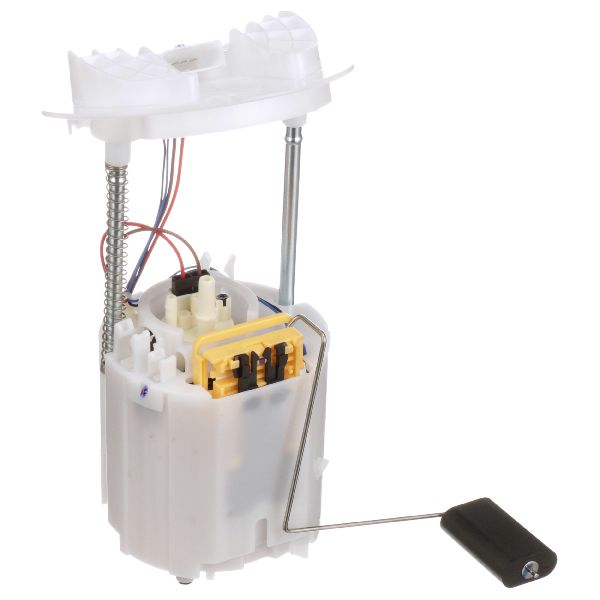
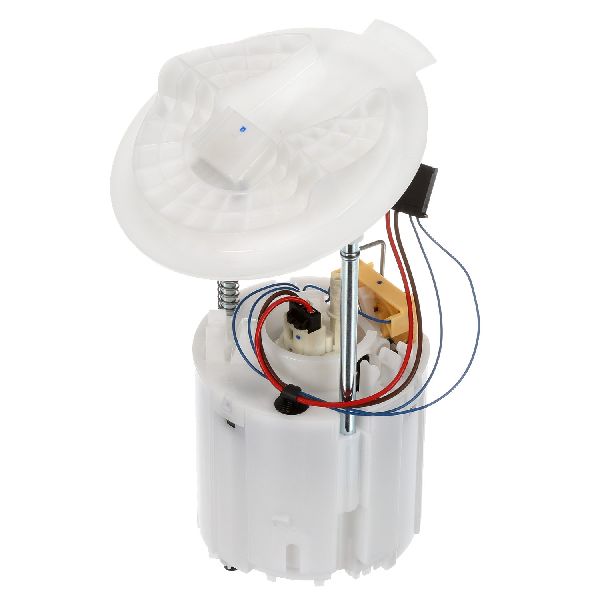
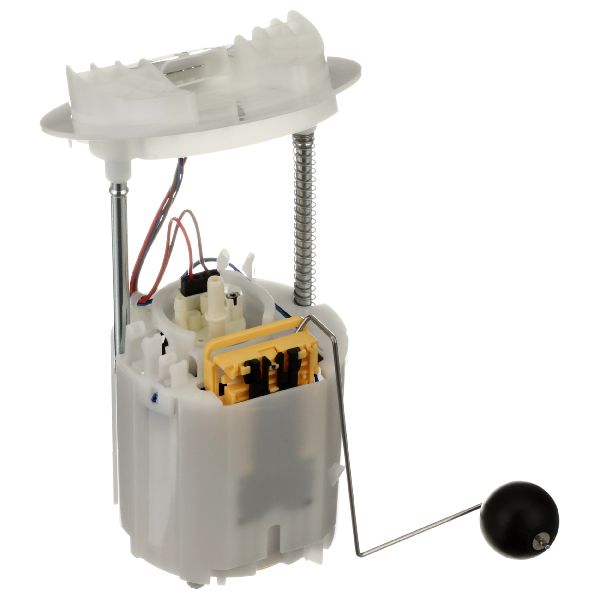
On a 2006-2010 Dodge Charger, code P0463 almost always means the fuel level sending unit has failed. This sensor is part of the fuel pump module inside the gas tank. The fix is to replace the fuel pump module, which is accessible under the rear seat. Expect to pay $150-$300 for a quality aftermarket part.
- P0463 on your Charger means the fuel gauge is unreliable because the primary fuel level sensor has likely failed.
- You can still drive the car, but you risk running out of gas. Track your mileage as a backup.
- The most probable fix is to replace the driver's side fuel pump module.
- This repair can be done by a DIYer with basic tools, as the fuel pumps are accessed from under the rear seat, not by dropping the tank.
- Consider replacing the passenger side sending unit at the same time to prevent a similar failure in the near future.
What's Unique About the 2006-2010 Dodge Charger
The 2006-2010 Dodge Charger (and its Chrysler 300/Dodge Magnum cousins) uses a saddle-style fuel tank to accommodate the driveshaft. This design requires two fuel level sending units: a primary one with the main fuel pump on the driver's side (Sensor 'A') and a secondary 'jet pump' and sender on the passenger's side. While P0463 specifically points to the primary sensor, a failure in either unit or the wiring between them can cause gauge issues. A common symptom unique to this platform is the disabling of the remote start feature, as the car's computer believes it has no fuel and prevents the engine from starting as a safety measure.
Symptoms You May Notice
- Check Engine Light is on
- Fuel gauge is inaccurate, stuck on full, or stuck on empty
- Fuel gauge fluctuates erratically
- Low fuel warning light is always on or flashes incorrectly
- Remote start feature is disabled
- Replacing only the fuel pump motor when the issue is with the sending unit. The sending unit is the cause of the P0463 code, not the pump motor itself.
- Replacing the instrument cluster. While a faulty cluster can cause gauge issues, it is highly unlikely to be the cause of a P0463 code and should only be considered after thorough diagnosis proves the sensor and wiring are good.
Most Likely Causes
- Failed Fuel Level Sending Unit 🔴 High Probability → Shop Fuel Tank Sending Unit The resistive material on the sending unit's circuit board wears out over time, creating an open circuit. This is a very common failure part on the LX platform vehicles.
How to confirm: Access the fuel pump module connector under the rear seat on the driver's side. Use a multimeter to test the resistance (ohms) of the sender. The reading will likely be out of the manufacturer's specified range or show an open circuit (infinite resistance).
Typical fix: Replace the entire fuel pump module, which contains the integrated sending unit. On the Charger, there is a primary (driver side) and secondary (passenger side) unit; the P0463 code points to the primary unit. Many owners choose to replace both at the same time as a preventative measure.
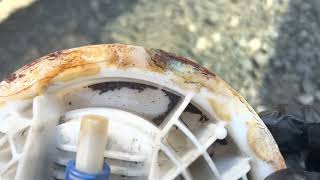
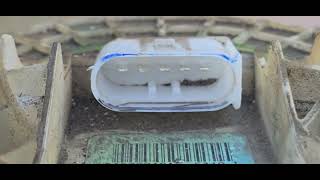
Est. part cost: $150-$400 - Damaged Wiring or Corroded/Melted Connector 🟡 Medium Probability The main fuel pump connector is located under the rear seat cushion. There are numerous owner reports of this connector overheating and melting, causing a poor connection or an open circuit. This can also lead to a fuel smell in the cabin if the plastic 🎬 Watch: Why these fuel pump connectors fail and melt on the pump hat melts through.
How to confirm: Visually inspect the wiring harness and connector pins on top of the driver's side fuel tank access panel. Look for any signs of browning, blackening, melting plastic, or corrosion. Test for 5V reference and ground at the connector.
Typical fix: If the connector is melted, it must be replaced with a new pigtail. If only minor corrosion is present, it can be cleaned. In some cases, a revised Mopar fuel pump comes with an updated harness connector that must be spliced in.
Est. part cost: $20-$50 for a pigtail, or included with a new pump assembly. - Poor Ground Connection ⚪ Low Probability
How to confirm: Locate the ground wire for the fuel pump circuit (typically a black/orange wire on these models) and test its integrity using a multimeter. Check for high resistance between the ground pin at the connector and a known-good chassis ground.
Typical fix: Clean the corrosion or rust from the ground point and re-secure the connection.
Est. part cost: $0-$5
Rare But Worth Checking
- Stuck Fuel Float Arm: Less common than electrical failure, but the float arm can become physically stuck due to debris in the fuel tank or corrosion, especially if the vehicle has been sitting for a long time.
- Faulty Powertrain Control Module (PCM) or Instrument Cluster: → Shop Instrument Cluster This is extremely rare. Before suspecting the PCM or cluster, all other possibilities with the sensor, wiring, and grounds must be exhaustively ruled out.
Diagnosis Steps
- Scan the vehicle with an OBD-II scanner to confirm P0463 is the active code.
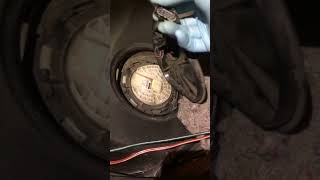
- Gain access to the fuel pump modules by removing the rear seat bottom cushion. You will see two black circular access panels.
- The primary fuel pump and sender (Sensor 'A') is on the driver's side. Disconnect the electrical connector.
- Visually inspect the connector and wiring for any signs of corrosion, melting, or damage. Pay close attention to the pins for signs of overheating.
- With the key on, use a multimeter to verify there is a reference voltage and a good ground at the connector.
- If power and ground are good, set the multimeter to measure Ohms. Connect it to the two pins for the sending unit on the fuel pump module itself.
- Compare the resistance reading to the manufacturer's specification for the current fuel level. A reading of infinite resistance (OL) indicates an open circuit and a failed sender.
- If the sender tests good, the fault is likely in the wiring between the pump and the PCM. If the sender tests bad, the fuel pump module needs to be replaced.
Parts You'll Likely Need
- Fuel Pump and Sender Assembly (Driver's Side)
(OEM #5161808AD (superseded by 68102700AE))— This is the most common failure. The fuel level sending unit wears out and is integrated into the fuel pump module, making replacement of the entire assembly the standard repair.
Trusted brands: Bosch, Delphi, Spectra Premium, Carter, Autobest
OEM price range: $400-$600
Aftermarket price range: $150-$300
Related Codes That Often Appear With This One
- P0462 — P0462 is 'Fuel Level Sensor Circuit Low Input'. If there is an intermittent short or failure in the circuit, both codes could potentially be stored at different times.
- P0461 — P0461 is 'Fuel Level Sensor Circuit Range/Performance'. This code indicates the signal is erratic or not changing as expected (e.g., not changing after refueling), which can be caused by the same failing sending unit that triggers P0463.
Platform-Specific Known Issues
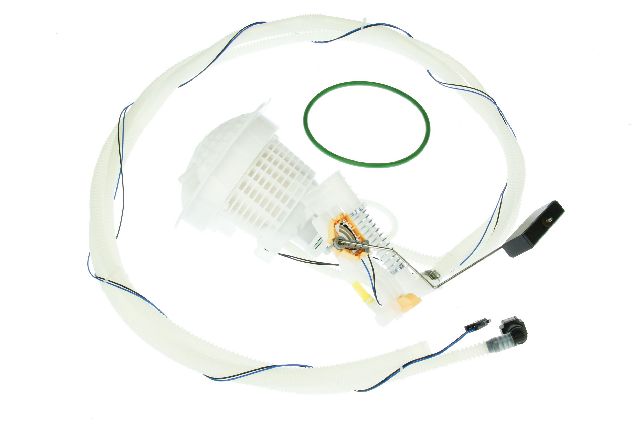
- The use of a saddle-style fuel tank means there are two sending units. While P0463 points to the primary (driver's side) unit, it's common for both to fail around the same time. Many owners choose to replace both the driver's side pump/sender and the passenger side sender/jet pump assembly simultaneously.
Mechanic-Grade Diagnostic Values
- Primary Fuel Level Sensor Resistance (at the pump module connector) — expected: Approximately 73-90 Ohms when the tank is empty, and ~10 Ohms when the tank is full. A reading at half-tank should be around 23-25 Ohms.. Failure: A reading of infinite resistance (OL - Open Loop) indicates a worn out or broken sensor, which is the direct cause of P0463. 🎬 Watch: How to diagnose and fix the P0463 engine code Readings that do not change smoothly as the float arm is moved also indicate failure.
- Fuel Pump Relay Power Supply (at the rear fuse box/TIPM) — expected: Constant 12V+ at the relay's power input pin, even with the key off. This comes from a 20A fuse in the trunk fuse box.. Failure: No voltage indicates a blown fuse or a problem with the Totally Integrated Power Module (TIPM).
Scan Tool Commands That Help
- wiTech or other advanced scan tool: Instrument Cluster Actuator Test — Use this function to rule out a faulty instrument cluster. The test commands all gauges (speedometer, tachometer, fuel, temp) to sweep through their range. If the fuel gauge sweeps correctly during this test, the gauge itself is working, and the fault lies in the sensor, wiring, or PCM. This test can often be initiated without a scan tool by holding the odometer reset button while turning the key to the 'ON' position.
Wiring & Ground Locations
- G300 — On the floor pan, under the driver's seat.. This is a primary chassis ground point for components in the rear driver's side of the cabin. While the fuel pump has its own ground wire in the harness, a corroded G300 can cause various strange electrical issues in the vicinity.
- Fuel Pump Connector (Driver's Side) — Under the rear seat cushion on the driver's side, on top of the fuel pump access cover.. This is the main connection point for the primary fuel pump and level sender. It is a known failure point for melting due to the original design placing the main power and ground pins next to each other. All testing for the sender and pump motor is performed here.
Real Owner Repair Stories
- Compilation of multiple YouTube videos and forum posts (Multiple 2006-2010 Dodge Chargers, Chrysler 300s, and Dodge Magnums) — Car won't start after replacing fuel pump, or P0463 code appears immediately after replacement.
❌ Tried (didn't work) Replacing a failed fuel pump with a new one (OEM or aftermarket) and plugging the original vehicle harness directly into the new pump.
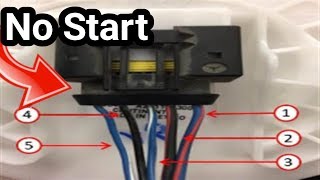
✅ What actually fixed it The problem was that new replacement fuel pumps have a different pinout on the connector to solve an overheating/melting issue. The new pump comes with a mandatory pigtail harness that must be spliced into the car's wiring. The new harness separates the power and ground wires to prevent them from overheating. Failing to use the new pigtail results in a no-start condition and/or immediate fault codes because the pump and sender are not receiving power and signals on the correct pins.
OEM Part Supersession History
Multiple, including 5161808AD→68102700AE (and subsequent revisions)— The original fuel pump design had the main power and ground pins located next to each other on the connector. This led to high resistance, overheating, and melting of the connector and pump hat. The new design, detailed in TSB 08-152-23, relocates the ground pin to separate it from the power pin, mitigating the issue.
Heads up: The new pump (68102700AE, etc.) is NOT plug-and-play with the original vehicle harness. The new pigtail connector provided with the pump MUST be spliced into the vehicle's wiring to match the new pinout. Failure to do so will result in a no-start condition and/or incorrect gauge readings.
Diagnostic Flowchart
Other Known Issues on This Vehicle
Issues unrelated to this code that are worth knowing about as an owner of this generation:
- Shifter Stuck in Park ('Pink Thingy' Failure) 🔴 High — Extremely common on 2005-2007 models. A small plastic lever in the shifter assembly breaks, preventing the car from being shifted out of Park. (Ref: No recall, but it is a widely documented failure. Aftermarket metal replacement parts are the recommended fix.)
- Premature Front Suspension Wear 🟠 Medium — Common across all 2006-2010 models. Control arm bushings, tension struts, and outer tie rod ends wear out, causing clunking, popping, or rattling noises from the front end.
- HEMI 'Tick' (MDS Lifter Failure) 🔴 High — A known issue on the 5.7L HEMI V8 with Multi-Displacement System (MDS). A ticking noise can develop, often indicating a failing lifter or camshaft, which can lead to significant engine damage if ignored.
- Transmission Shifting Problems 🟠 Medium — Owners have reported issues like hard shifting, slippage, and hesitation. Often, these problems can be addressed with a software update to the Transmission Control Module (TCM) by a dealer. (Ref: Software updates were issued to address some shifting complaints.)
Used vs. New Parts: Buying Guide for This Vehicle
When a used part is the smart pick: For this specific repair, a used part from a salvage yard is STRONGLY discouraged. The primary failure modes are wear of the resistive sensor strip and a known design defect causing the electrical connector to melt. A used part will have existing wear and is highly likely to have the original, flawed connector design.
What to inspect on the donor part:
- Not applicable, as used parts are not recommended.
OEM-only on this vehicle (don't cheap out):
- While not strictly OEM-only, using a quality OEM (Mopar) or top-tier aftermarket (Bosch, Delphi) replacement is highly recommended. The OEM part is guaranteed to come with the necessary updated wiring pigtail and instructions per the TSB.
Aftermarket brands forum-validated for this vehicle:
- Bosch
- Delphi
- Spectra Premium
Brands owners have reported issues with on this vehicle:
- Unknown or unbranded 'white box' parts should be avoided. Some owners have reported repeated failures with very low-cost units, including the same connector melting issue the OEM part was redesigned to fix.
Real Owner Stories
Aggregated from forums and TSBs cited above. Mileages and costs reflect what owners reported in those sources.
2010 Dodge Charger — 121000 miles
Symptoms: Car went out while driving on the highway
What fixed it: The owner attempted to replace the left hand fuel pump and fuel pump relay, though the initial report ended during the troubleshooting phase of these components.
Source hint: r/MechanicAdvice
2005-2010 Chrysler 300C
Symptoms: Burnt fuel pump connector and a noticeable gas smell in the vehicle.
What fixed it: Replacement of the melted fuel pump connector; the owner noted that similar melted connectors were found on multiple Chargers and 300s in salvage yards.
Source hint: DodgeForum.com: Burnt Fuel Pump Connector, Gas Smell
2006-2010 Dodge Charger
Symptoms: Repeatedly failing fuel pump where the connector burnt up and melted a hole in the top of the pump hat.
What fixed it: Replacement of the fuel pump and addressing the high current/poor connection at the harness connector.
Source hint: Reddit r/Charger: Melted fuel pump connector issue
Related OBD-II Codes
Frequently Asked Questions
Why is my 2006-2010 Dodge Charger's remote start no longer working since the check engine light came on?
I smell gasoline inside my Charger's cabin; could this be related to the P0463 code?
Which fuel sending unit should I replace first on my Charger to fix P0463?
Can I just clean the connector pins to fix the fuel gauge fluctuation?
Is there a specific wire I should check for a bad ground on the 2006-2010 models?
Where are the fuel pump access panels located on the 2006-2010 Charger?
Helpful Videos
Used OEM Parts in Stock
New Aftermarket Parts Available


The information in this article is provided for general reference and educational purposes only. Vehicle specifications, procedures, and part compatibility can vary by production date, trim level, and region. Always consult your vehicle's factory service manual and verify part numbers before purchasing or performing repairs. Safety-critical components such as airbags, seat belts, and braking systems should be installed by a qualified professional.
- Dodge Charger:
- 🧭 Diagnostic Flowchart
- 🎬 Helpful Videos
- 🛍️ Shop This Part
- What's Unique About the 2006-2010 Dodge Charger
- Symptoms You May Notice
- Most Likely Causes
- Rare But Worth Checking
- Diagnosis Steps
- Parts You'll Likely Need
- Related Codes That Often Appear With This One
- Platform-Specific Known Issues
- Mechanic-Grade Diagnostic Values
- Scan Tool Commands That Help
- Wiring & Ground Locations
- Real Owner Repair Stories
- OEM Part Supersession History
- Other Known Issues on This Vehicle
- Used vs. New Parts: Buying Guide for This Vehicle
- Real Owner Stories
- 2010 Dodge Charger — 121000 miles
- 2005-2010 Chrysler 300C
- 2006-2010 Dodge Charger
- Related OBD-II Codes
- Frequently Asked Questions
- 🎟️ Get 5% Off