

P0463 on 2013-2019 Ford Escape: Fuel Level Sensor Circuit High Causes and Fixes
Code P0463 on a 2013-2019 Ford Escape means the fuel level sensor is sending an abnormally high voltage signal, typically over 4.5-5.0 volts. This usually points to a faulty fuel level sending unit, which is part of the fuel pump assembly. Expect to replace the entire fuel pump module to fix the issue, after first checking for corroded wiring at the tank connector.
- P0463 on your Escape points to a high voltage signal from the fuel level sensor circuit, usually caused by the sensor itself failing open.
- The most common symptom is a fuel gauge stuck on 'Full' and an illuminated Check Engine Light.
- Before replacing the expensive fuel pump module, ALWAYS inspect the wiring connector on top of the fuel tank for corrosion, as this is a common and much cheaper fix.
- The fix is most often replacing the entire fuel pump module, as the sensor is built into it. Part numbers vary by engine.
- This repair can be costly at a shop ($400-$2100) due to high OEM part prices and the labor to drop the fuel tank. DIY is possible but difficult, requiring safety precautions.
What's Unique About the 2013-2019 Ford Escape
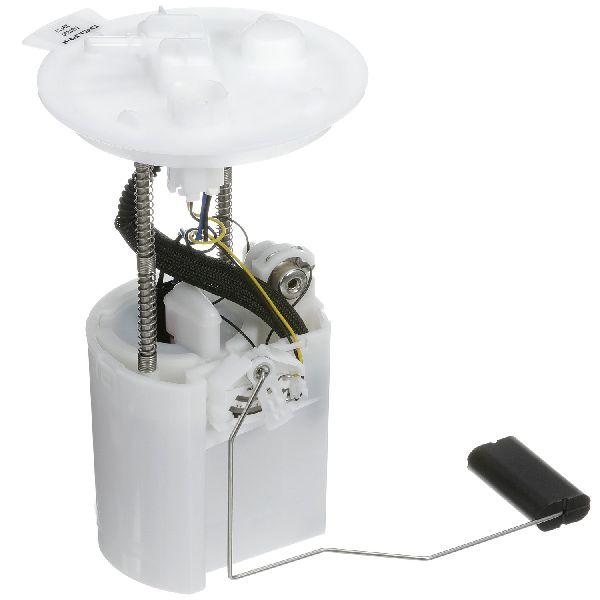
For the 2013-2019 Ford Escape, the fuel level sensor is not typically sold as a standalone part by Ford. It is integrated into the main fuel pump and sending unit assembly located inside the fuel tank. Therefore, a P0463 code almost always necessitates the replacement of the entire fuel pump module, even if the pump itself is still functional. This makes the repair more involved and costly than replacing a simple sensor.
Symptoms You May Notice
- Check Engine Light is on
- Fuel gauge reads full all the time (most common symptom for 'Circuit High')
- Fuel gauge reads empty when the tank has fuel
- Fuel gauge fluctuates erratically
- Low fuel warning light may be on constantly
- Distance-to-empty display is inaccurate or shows dashes
- Replacing the fuel pump when the issue is only a corroded connector on top of the tank. It is crucial to inspect the wiring before buying an expensive new pump module.
- Replacing the instrument cluster when the fault lies with the sensor in the tank.
- Replacing the fuel pressure sensor on the engine's fuel rail; this part is unrelated to the fuel level sending unit in the tank.
Most Likely Causes
- Faulty Fuel Level Sending Unit 🔴 High Probability → Shop Fuel Tank Sending Unit The sending unit's resistive strip can wear out, get coated with sulfur deposits from fuel, or break, leading to an open circuit which the PCM interprets as maximum (high) voltage. On this vehicle, it is integrated with the fuel pump module.
How to confirm: Test the resistance of the sending unit with a multimeter at the fuel pump connector. 🎬 Watch: How to test a fuel level sensor without removing the pump The resistance should change smoothly when the float arm is moved. An open circuit (infinite resistance) or a reading that doesn't change confirms it's bad. This requires removing the unit from the tank.
Typical fix: Replace the entire fuel pump and sending unit assembly.
Est. part cost: $350-$1300 - Wiring or Connector Issue 🟡 Medium Probability The main wiring harness connector on top of the fuel tank is exposed to road salt, moisture, and debris under the vehicle. This makes it highly susceptible to corrosion on the pins, which can create high resistance or an open circuit, mimicking a sensor failure and triggering P0463.
How to confirm: Visually inspect the wiring and the large connector on top of the fuel tank (may require lowering the tank slightly for access) for green/white corrosion, bent pins, or physical damage. Perform a continuity and voltage drop test on the signal, power, and ground wires between the PCM and the fuel pump connector.
Typical fix: Clean the connector terminals with a contact cleaner and a small brush. If corrosion is severe, the connector pigtail may need to be replaced. Apply dielectric grease to the connection upon reassembly to prevent future moisture intrusion.
Est. part cost: $10-$50 - Stuck Fuel Level Float ⚪ Low Probability Debris in the fuel tank or corrosion on the float arm pivot can cause the arm to get stuck in the 'full' position. This is less common than an electrical failure of the sender card.
How to confirm: This can only be confirmed by removing the fuel pump module from the tank and visually inspecting if the float arm can move freely through its full range of motion.
Typical fix: Attempt to free the stuck float arm. If the arm is damaged, bent, or the issue is caused by internal tank debris, the entire fuel pump module should be replaced to prevent recurrence.
Est. part cost: $0-$1300
Rare But Worth Checking
- Faulty Powertrain Control Module (PCM): This is extremely rare. The PCM should only be considered after all other possibilities, including the sensor and all related wiring, have been thoroughly tested and ruled out. A failed PCM is often misdiagnosed when the real issue is wiring.
- Faulty Instrument Cluster: → Shop Instrument Cluster A failure in the instrument cluster can sometimes cause incorrect gauge readings, but it is less likely to set a 'Circuit High' code in the PCM. It may set its own code, like a B1201. This is an uncommon cause for P0463 specifically. 🎬 See how to remove the instrument gauge cluster
Diagnosis Steps
- Confirm the presence of the P0463 code using an OBD-II scanner. Note if any other codes, like B1201 (instrument cluster), are present.
- Check the fuel gauge reading. With P0463, it will typically be stuck on Full.
- Gain access to the fuel pump module's electrical connector. On the Escape, this is on top of the fuel tank and usually requires lowering the tank for access.
- Thoroughly inspect the connector and wiring harness for any signs of corrosion (green or white powder), backed-out pins, or wire damage. This is a very common failure point.
- If the connector is corroded, clean it thoroughly or replace the pigtail. Re-test. If the code is gone, this was the issue.
- If the connector is clean, use a multimeter to check for reference voltage and a good ground at the connector with the key on.
- Test the resistance of the sending unit through the connector pins. Compare the reading to the manufacturer's specification for the current fuel level. A reading of infinite resistance (open circuit) will cause a P0463.
- If the resistance is out of specification, the fuel pump/sending unit assembly needs to be replaced.
- If the wiring and sensor test good, the problem may be a rare fault with the PCM or instrument cluster, which requires more advanced diagnostics.
Parts You'll Likely Need
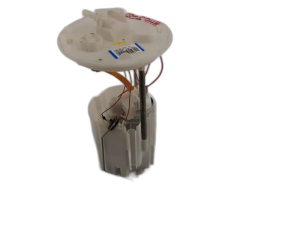
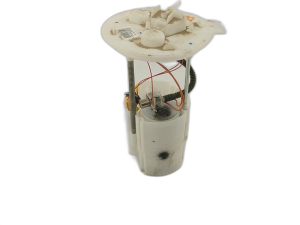
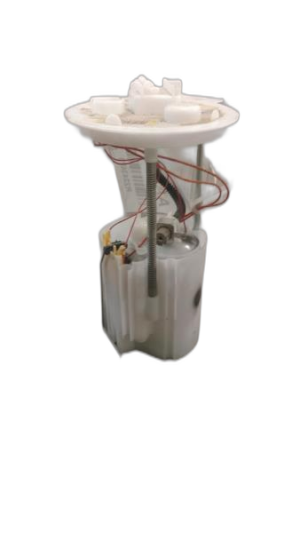
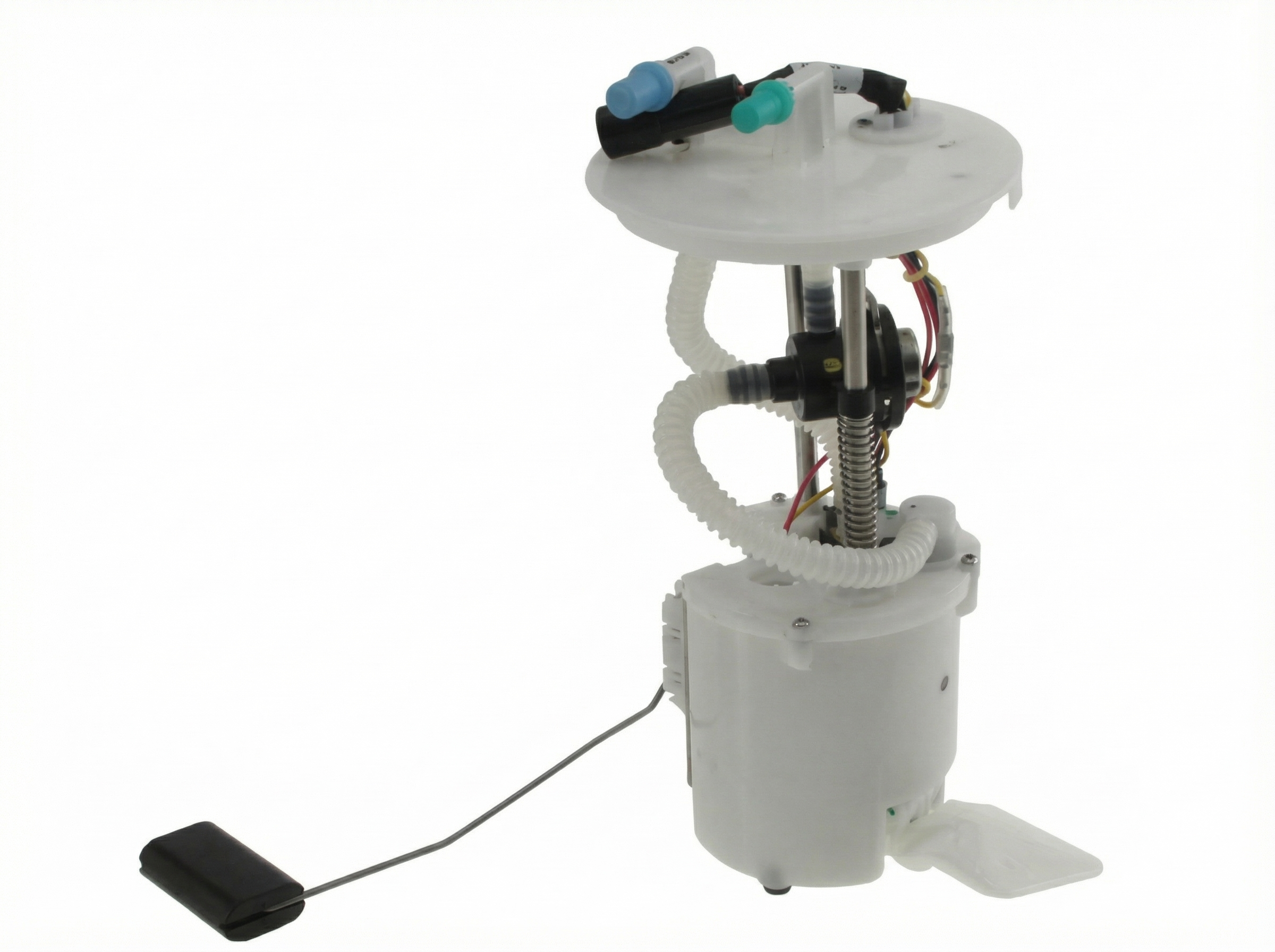
- Fuel Pump and Sending Unit Assembly
(OEM #Motorcraft PFS1063 (for 2.0L EcoBoost), Motorcraft PFS1064 (for 1.6L EcoBoost), Motorcraft PFS1062 (for 2.5L))— This is the most common failure part. The fuel level sensor is integrated into this module, and it is the primary component responsible for sending the fuel level signal.
Trusted brands: Motorcraft, Bosch, Delphi, Denso, Carter
OEM price range: $1127-$1309
Aftermarket price range: $60-$450
Technical Service Bulletins (TSBs) & Recalls
- TSB 05-21-3: While for older 2002-2006 Explorer/Mountaineer models, this Technical Service Bulletin details the diagnostic theory for P0463 and an associated instrument cluster code B1201. It describes how an open/high resistance in the sender circuit causes the code and gauge inaccuracy, a principle that still applies to the Escape.
Mechanic-Grade Diagnostic Values
- Fuel Level Sender Resistance — expected: Approximately 16 Ohms when the tank is empty and 158 Ohms when the tank is full.. Failure: A reading of infinite resistance (open circuit) or a value that does not change when moving the float arm indicates a failed sender.
- Fuel Level Sensor Signal Voltage — expected: Typically 0.5V (Empty) to 4.5V (Full).. Failure: A signal voltage stuck above 4.5V-5.0V will trigger the P0463 code.
Scan Tool Commands That Help
- Instrument Cluster Self-Diagnostic Mode: → Shop Instrument Cluster Enter 'TEST' mode by holding the 'OK' button on the steering wheel while turning the ignition to ON. — This built-in feature can be used to perform a gauge sweep test, check for DTCs stored by the cluster, and test indicator lights without an external scan tool. This helps determine if the gauge itself is physically stuck or if the fault is purely electronic.
- Ford IDS (Integrated Diagnostic System): Datalogger for Fuel Level PIDs (Parameter IDs) — A professional technician can use the Ford IDS to monitor the raw voltage and percentage data from the fuel level sensor in real-time. This allows for observing signal stability and confirming if the voltage is truly stuck high, which is definitive proof before condemning an expensive part.
Wiring & Ground Locations
- Fuel Pump Control Module (FPCM) — Under the rear seat cushion, beneath the carpet, typically on the right (passenger) side.. While not a primary cause for P0463, which is a sensor circuit code, knowing its location is critical for comprehensive fuel system diagnostics. The wiring for the fuel pump and sender passes through this area, and any damage or corrosion near the module could potentially affect the sender circuit.
- Fuel Pump Assembly Connector — On top of the fuel tank, accessible via an access panel under the rear seat on the driver's side.. This is the primary connection point for testing the fuel level sender's resistance and voltage. The two smaller gauge wires in the four-wire connector are typically for the fuel level sender. Corrosion here is a common cause of fuel level sensor codes.
Real Owner Repair Stories
- YouTube channel 'QUICKTIMES MECHANIC' (2013-2019 Ford Escape (general model range covered)) — Vehicle won't start or is hard to start, accompanied by fuel system codes.
❌ Tried (didn't work) Initial diagnosis was unclear.
✅ What actually fixed it The video demonstrates the replacement of the Fuel Pump Control Module located under the rear seat as a fix for certain fuel-related starting issues. While not directly for P0463, it highlights a related component and its location.
Model Year Variations Within This Range
- 2017-2019: The 2017 model year introduced a facelift to the Escape, which included new engine options (a new 2.0L Twin-Scroll EcoBoost). While the fundamental fuel system design and the cause of P0463 remained the same, part numbers for the fuel pump assembly may differ slightly for these newer engines compared to the 2013-2016 models. Always verify the part number with the vehicle's VIN.
Diagnostic Flowchart
Other Known Issues on This Vehicle
Issues unrelated to this code that are worth knowing about as an owner of this generation:
- Engine Coolant Intrusion (EcoBoost) 🔴 High — Common on 1.5L, 1.6L, and 2.0L EcoBoost engines. A design flaw can cause coolant to leak into the cylinders, leading to misfires, white smoke, and eventual engine failure. Multiple lawsuits and service bulletins (e.g., 19-2375 for 1.5L) address this. (Ref: Recall 13S12 / NHTSA 12V431000 for 1.6L overheating risk; TSB 19-2375 for 1.5L coolant intrusion.)
- 6F35 Transmission Failure 🔴 High — Widespread across the 2013-2019 generation. Symptoms include harsh shifting, shuddering, slipping, and complete failure, sometimes before 100,000 miles. Lack of maintenance exacerbates the issue, but design flaws are cited in class-action lawsuits. (Ref: No major recall, but numerous TSBs and a dismissed class-action lawsuit highlight the problem's prevalence.)
- Door Latch Failure 🟠 Medium — A pawl spring tab in the door latch assembly can break, preventing the door from latching securely or causing it to open while driving. This was common enough to trigger a major recall. (Ref: Recall 16S30 / NHTSA Campaign Number 16V643000.)
- Turbocharger Overboost/Failure (EcoBoost) 🟠 Medium — Often presents as an overboost code. The cause can be a failed diaphragm or boost controller solenoid. While not as frequent as engine or transmission issues, it's a known problem with the turbocharged models.
- EVAP Purge Valve Failure 🟡 Low — A failing EVAP purge solenoid is a common issue, leading to a Check Engine Light, rough idle after refueling, and difficulty starting. It's a relatively simple and inexpensive fix.
Used vs. New Parts: Buying Guide for This Vehicle
When a used part is the smart pick: A used fuel pump assembly from a reputable salvage yard can be a cost-effective option, especially if the donor vehicle has low mileage. Since the failure is electronic (the sender card) rather than mechanical wear of the pump itself, a used part has a reasonable chance of a long service life. It's a gamble, but one that can save hundreds of dollars.
Donor-vehicle mileage cap: roughly under 60000 miles for the part to have meaningful remaining life.
What to inspect on the donor part:
- Look for a donor vehicle from a dry climate to minimize the risk of corrosion on the connector.
- Verify the part number matches your original unit, especially considering the different engines (1.6L, 2.0L, 2.5L).
- Inspect the electrical connector pins on the used unit for any signs of green or white corrosion before purchase.
- Ensure the plastic housing is not cracked or damaged from removal.
Aftermarket brands forum-validated for this vehicle:
- Motorcraft (OEM)
- Bosch
- Delphi
- Denso
Brands owners have reported issues with on this vehicle:
- Be cautious of unbranded, generic 'white-box' parts from online marketplaces. While very cheap, they have a high failure rate and may not have the correct resistance range, leading to an inaccurate gauge even if the code is cleared.
Real Owner Stories
Aggregated from forums and TSBs cited above. Mileages and costs reflect what owners reported in those sources.
2014 Ford Escape Titanium
Symptoms: Check engine light is on with code P0463, described as 'Fuel Level Sensor A Circuit High'.
What fixed it: The owner was seeking the specific part for the code; the context identifies the integrated fuel pump and sending unit assembly as the typical replacement part.
Source hint: reddit.com/r/fordescape/comments/1ajc32m/code_p0463/
2014 Ford Mustang V6
Symptoms: Fuel gauge not working and P0463 code present.
What fixed it: The owner replaced the fuel pressure sensor and then the fuel pump, but the issue persisted, suggesting a wiring harness or instrument cluster fault.
Source hint: reddit.com/r/AskMechanics/comments/17q3p2c/p0463_code_fuel_gage_not_working_mustang_2014_v6/
Related OBD-II Codes
Frequently Asked Questions
Does TSB 05-21-3 apply to my 2013-2019 Ford Escape?
Can I just replace the fuel level sensor, or do I need the whole pump assembly?
Is there a specific connector I should check for corrosion on my Escape?
Does the Lincoln MKC share this fuel sensor issue with the Escape?
Could my P0463 code be related to the common EcoBoost coolant intrusion issue?
Why does my distance-to-empty display show dashes instead of a number?
Helpful Videos
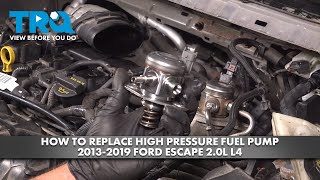

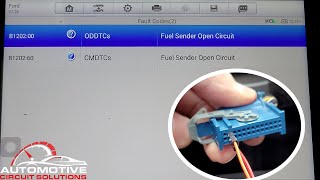
Used OEM Parts in Stock
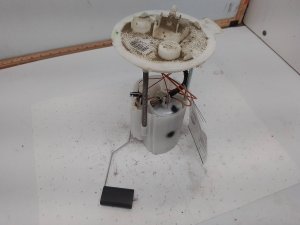
New Aftermarket Parts Available


The information in this article is provided for general reference and educational purposes only. Vehicle specifications, procedures, and part compatibility can vary by production date, trim level, and region. Always consult your vehicle's factory service manual and verify part numbers before purchasing or performing repairs. Safety-critical components such as airbags, seat belts, and braking systems should be installed by a qualified professional.
- Ford Escape:
- 🧭 Diagnostic Flowchart
- 🎬 Helpful Videos
- 🛍️ Shop This Part
- What's Unique About the 2013-2019 Ford Escape
- Symptoms You May Notice
- Most Likely Causes
- Rare But Worth Checking
- Diagnosis Steps
- Parts You'll Likely Need
- Technical Service Bulletins (TSBs) & Recalls
- Mechanic-Grade Diagnostic Values
- Scan Tool Commands That Help
- Wiring & Ground Locations
- Real Owner Repair Stories
- Model Year Variations Within This Range
- Other Known Issues on This Vehicle
- Used vs. New Parts: Buying Guide for This Vehicle
- Real Owner Stories
- 2014 Ford Escape Titanium
- 2014 Ford Mustang V6
- Related OBD-II Codes
- Frequently Asked Questions
- 🎟️ Get 5% Off