

P0463 on 2007-2017 Ford Expedition: Fuel Level Sensor High Input Causes & Fixes
This code means the fuel level sensor is sending a signal that's too high, causing an inaccurate or inoperative fuel gauge. The most common fix is replacing the entire fuel pump and sending unit assembly, which is located inside the fuel tank. Expect a shop repair to cost between $890 and $1,481, while the part itself can be $300 or more. The issue is identical on the 2007-2017 Lincoln Navigator.
- P0463 on a 2007-2017 Expedition points to a 'high input' from the fuel level sensor, almost always causing an incorrect fuel gauge reading.
- The most probable cause is a failed fuel level sending unit, which is part of the complete fuel pump assembly inside the gas tank.
- The repair is labor-intensive as it requires the fuel tank to be lowered to access the fuel pump module.
- While you can continue driving, you risk running out of fuel unexpectedly. It's best to track your mileage per tank as a temporary backup until the repair is made.
- Before replacing the expensive fuel pump assembly, it's wise to inspect the wiring and connectors leading to the tank for any obvious damage or corrosion.
What's Unique About the 2007-2017 Ford Expedition
The 2007-2017 Ford Expedition belongs to a single generation (the third, U324), which simplifies diagnosis. However, the engine changed from a 5.4L V8 to a 3.5L V6 EcoBoost in 2015, which affects part numbers but not the fundamental cause of P0463. Like many Ford trucks of this era, the fuel level sending unit is not sold as a separate component but is integrated into the complete fuel pump module. This means a failure of the small sending unit requires the replacement of the entire assembly, a more expensive and labor-intensive job that involves dropping the fuel tank. Due to the difficulty of dropping the tank, a subculture of owners has developed a DIY workaround of cutting an access panel in the floor of the vehicle to reach the pump.
Symptoms You May Notice
- Check Engine Light is on.
- Fuel gauge behaves erratically, jumping between full, empty, or other readings.
- Fuel gauge is stuck on full.
- Fuel gauge is stuck on empty, often with the low fuel light on.
- Fuel gauge reads full for an extended period after filling up, then drops suddenly.
- Low fuel warning light may stay on or flash, even with a full tank.
- Replacing only the fuel pump when the issue is the integrated sending unit.
- Replacing the instrument cluster before properly diagnosing the sending unit and its wiring.
- Assuming the problem is fixed by clearing the code, only to have it return after the next fill-up.
Most Likely Causes
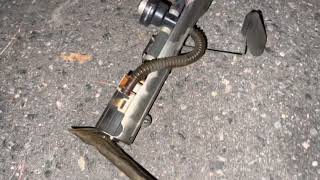
- Failed Fuel Level Sending Unit 🔴 High Probability → Shop Fuel Tank Sending Unit The sending unit has a wiper arm that moves across a resistive strip. Over many years and miles, this strip wears out or becomes coated with sulfur from gasoline, creating an open spot. This open circuit is the most common cause of the 'high input' P0463 code. Fuel additives like Chevron Techron are sometimes recommended as a temporary cleaning measure.
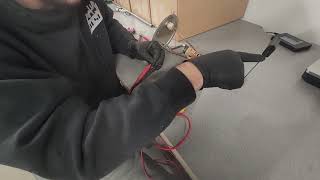
How to confirm: Access the fuel pump connector and measure the resistance of the sending unit circuit. 🎬 Watch: How to test your Ford fuel sending unit. A typical Ford sensor should read between 15-25 ohms when empty and 145-160 ohms when full. A reading of infinite resistance (Open Line or OL on a multimeter) confirms a failed sending unit.
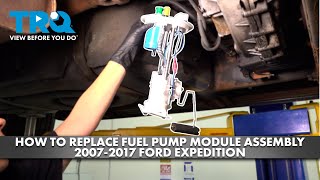
Typical fix: Replace the entire fuel pump and sending unit assembly. 🎬 Watch: Step-by-step guide to replacing the fuel pump module assembly. The sending unit is typically not available as a separate part for this vehicle.
Est. part cost: $302 - $1,076 - Damaged Wiring or Corroded Connector 🟡 Medium Probability The main harness connector for the fuel pump is located on top of the fuel tank, exposed to the elements. Moisture and road salt can lead to corrosion within the connector pins, causing a high-resistance or open circuit. In some cases, the connector can overheat and melt due to a poor connection, a failure sometimes attributed to the original pump drawing more current as it ages.
How to confirm: Visually inspect the wiring harness leading to the fuel tank for any signs of chafing, breaks, or rodent damage. Unplug the connector at the fuel pump module and check for green or white corrosion, bent pins, or signs of melting.
Typical fix: Clean the connector with electrical contact cleaner and apply dielectric grease. If damaged, the connector pigtail (e.g., Motorcraft WPT-1658) must be spliced in.
Est. part cost: $10 - $50 - Poor Ground Connection ⚪ Low Probability
How to confirm: Locate the primary ground for the fuel pump system (often G403 on a rear frame cross-member) and check for rust, corrosion, or looseness. Test for high resistance between the ground pin at the fuel pump connector and a clean chassis ground point.
Typical fix: Clean the contact points of the ground connection with a wire brush and re-secure it tightly.
Est. part cost: $1 - $10
Rare But Worth Checking
- Faulty Instrument Cluster: → Shop Instrument Cluster While rare, the instrument cluster itself can fail, causing incorrect gauge readings. This is usually suspected only after the sending unit and wiring have been confirmed to be good.
- Faulty Powertrain Control Module (PCM): This is extremely unlikely and should be considered a last resort after all other possibilities have been exhaustively ruled out by a professional.
Diagnosis Steps
- Read the trouble codes with an OBD-II scanner to confirm P0463 is present and check for any other related codes.
- Visually inspect the wiring harness leading from the main vehicle body to the fuel tank. Look for any obvious signs of damage, chafing, or corrosion.
- Check the connector at the fuel pump module on top of the tank. Ensure it is seated correctly and inspect the pins for corrosion or damage.
- Using a wiring diagram, identify the fuel level sensor signal and ground wires at the fuel pump connector.
- With the key on, use a multimeter to check the voltage on the signal wire. A 'high input' code often means the voltage is stuck high (e.g., 5 volts) when it should be lower depending on the fuel level.
- Test the sensor's resistance. Unplug the connector and measure the resistance between the sensor's signal and ground pins. Compare this reading to the manufacturer's specifications (approx. 15-160 Ohms). A reading of infinite resistance (open circuit) is a common cause for P0463 and points to a bad sending unit.
- If the wiring and connector are good and the sensor resistance is out of spec or open, the fuel pump/sending unit assembly needs to be replaced.
Parts You'll Likely Need
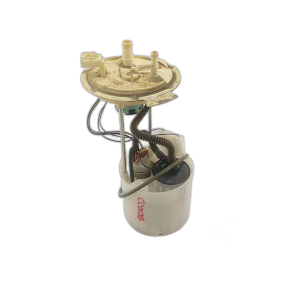
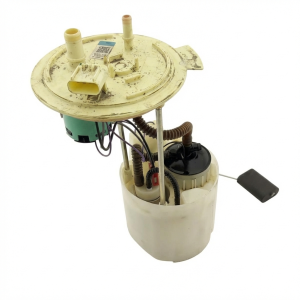
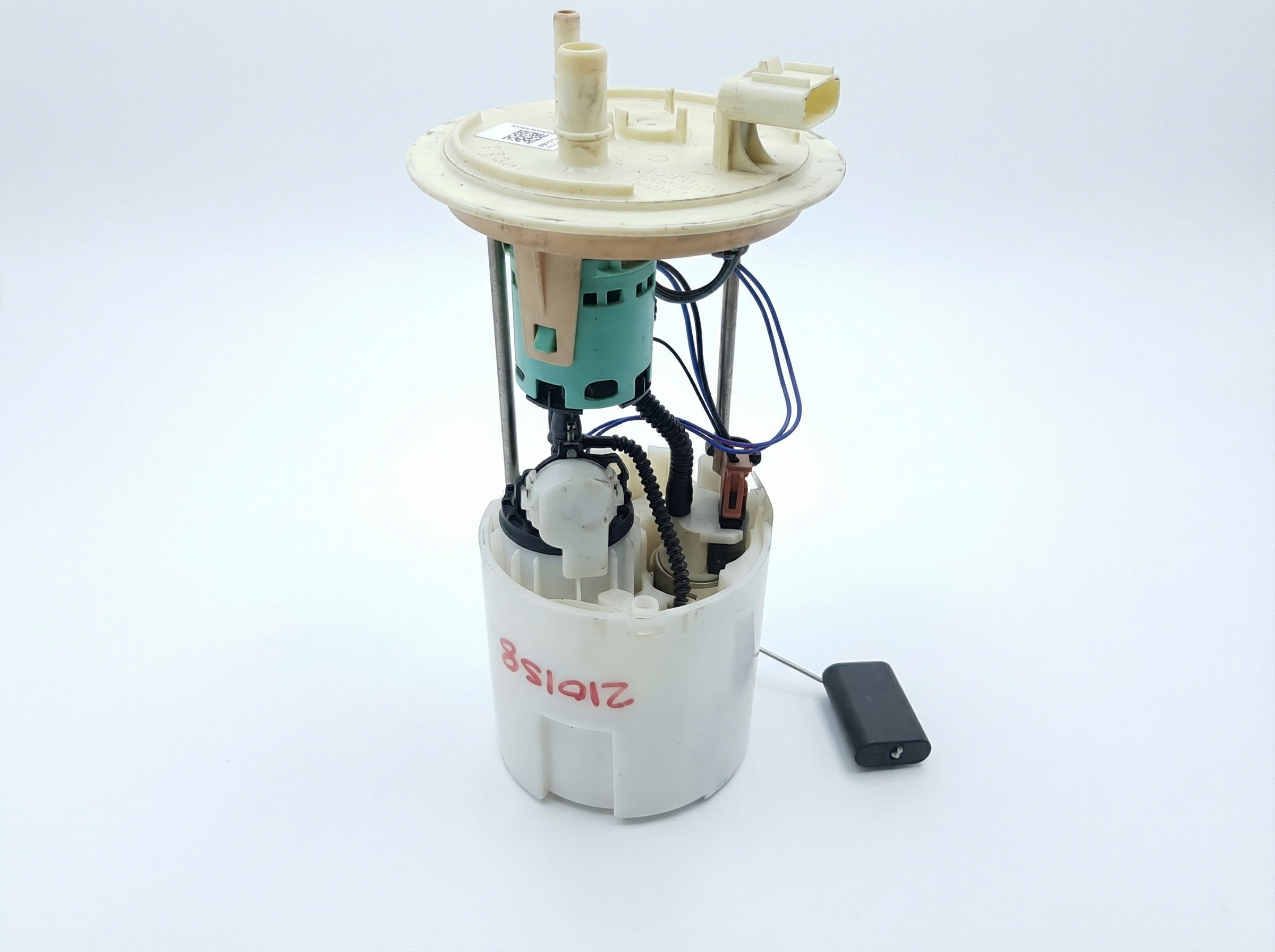
- Fuel Pump and Sender Assembly
(OEM #Varies by year and wheelbase. Examples: Motorcraft PFS-552 (2009-14, 131" WB), PFS-579 (2009-14, 119" WB), PFS-1045 (2015-17, 119" WB), PFS-1046 (2015-17, 131" WB). Always verify with VIN.)— This is the most common cause of failure. The fuel level sender is integrated into the assembly and is not typically sold separately. Replacing the entire module resolves the issue and replaces the fuel pump as a preventative measure.
Trusted brands: Motorcraft, Delphi, Bosch, Spectra Premium
OEM price range: $480 - $1076
Aftermarket price range: $302 - $600
Related Codes That Often Appear With This One
- P0461 — This code indicates a performance/range issue with the fuel level sensor, often appearing with P0463 as the sensor begins to fail intermittently.
- P0462 — This code indicates a 'Circuit Low Input,' the opposite of P0463. Seeing both could suggest erratic sensor behavior or a wiring problem causing shorts to both power and ground.
Technical Service Bulletins (TSBs) & Recalls
- While no TSB is specific to the 2007-2017 Expedition for P0463, Ford TSB 05-21-3 and TSB 06-17-10 for older Explorers address the exact same issue. They cite sulfur contamination on the sender card causing high resistance and provide diagnostic resistance values (10-160 ohms) that are a useful reference for this repair.
Platform-Specific Known Issues
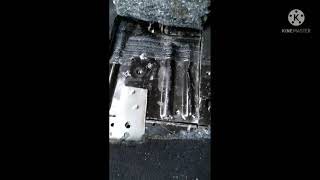
- DIY Access Panel Modification: Due to the high labor cost of dropping the fuel tank, many DIY owners choose to cut an access hole in the vehicle floor above the fuel pump. This is a permanent modification that involves cutting sheet metal directly above the fuel tank, which carries significant risk if not done with extreme care. Videos and forum posts document the process, but it is not a manufacturer-approved repair. 🎬 See how to install a DIY fuel pump access panel.
Mechanic-Grade Diagnostic Values
- Fuel Level Sensor Resistance (at pump connector) — expected: ~15 Ohms (±2) at Empty, ~160 Ohms (±4) at Full.. Failure: A reading of infinite resistance (OL) indicates an open circuit in the sender, a common cause of P0463.
- Fuel Level Sensor Resistance (alternate spec) — expected: 22.5 Ohms at Empty to 145 Ohms at Full.. Failure: Readings outside this range or that do not change smoothly when rocking the vehicle indicate a faulty sender.
- Fuel Pump Fuse — expected: 20 Amp fuse in position #44 of the under-hood power distribution box.. Failure: A blown fuse will cause a no-start condition, but is worth checking.
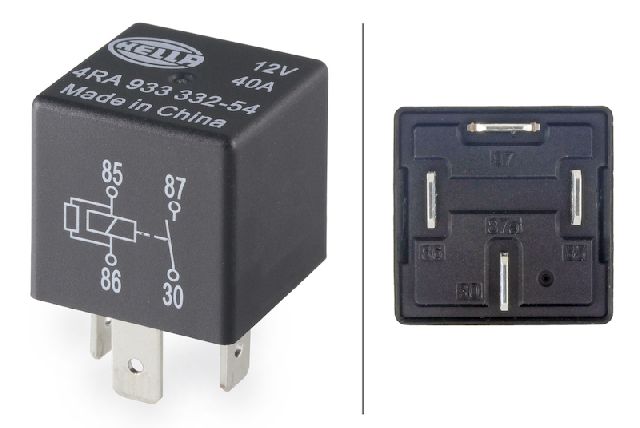
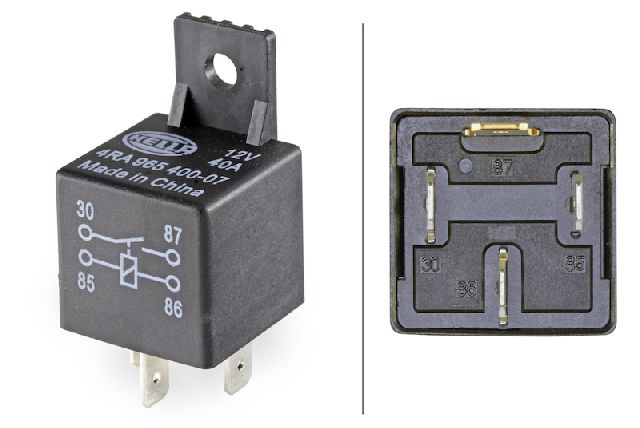
- Fuel Pump Relay — expected: Relay in position #5 of the under-hood power distribution box.. Failure: A failed relay will cause a no-start condition.
Wiring & Ground Locations
- G403 — On the right rear corner of the vehicle frame, near the rear cross-member.. This is a primary ground point for rear-body components, including potentially the fuel pump module. Corrosion here can cause high resistance in the ground circuit, leading to various electrical faults including P0463.
- Fuel Pump Driver Module (FPDM) — On 2015+ models, it may be located on top of a frame member, above and behind the driver's side rear wheel, sometimes behind a small panel. On earlier models, it is often integrated into the fuel pump assembly inside the tank.. While a failing FPDM typically causes no-start or stalling issues, a poor connection or fault in the module (if external) can affect the entire fuel pump electrical system. It's a key component to inspect for corrosion or damage when diagnosing fuel system codes.
- Power Distribution Box (Under Hood) — Front, center of the engine bay.. This box contains the fuel pump relay (#5) and fuel pump fuse (#44), which are essential for the fuel pump's operation. For 2009-2014 models, it also contains a fuel pump diode.
Real Owner Repair Stories
- expeditionforum.com user (2010 Ford Expedition Limited) — Vehicle quit running.
❌ Tried (didn't work) Initially suspected a bad ground, ran a new ground wire from the frame to the pump harness, which worked temporarily.
✅ What actually fixed it The problem returned and was ultimately traced to a failed Fuel Pump Driver Module (FPDM), located on top of the frame behind the driver's side rear wheel. Replacing this module resolved the no-power issue to the pump. - expeditionforum.com user (2016 Ford Expedition EL EcoBoost, 45k miles) — Not specified, but led to fuel system diagnosis.
❌ Tried (didn't work) Replaced the external Fuel Pump Driver Module (FPDM) located above the driver's side rear wheel.
✅ What actually fixed it The actual cause of the problem was a failed in-tank fuel pump, which required replacement.
OEM Part Supersession History
9l1z9h307c, pfs531→PFS-552— Part revision and consolidation by Ford/Motorcraft.
Heads up: PFS-552 is specified for the standard 119" wheelbase 2009-2014 models. Always verify part number by VIN as different wheelbases (e.g., Expedition EL) use different assemblies.
Model Year Variations Within This Range
- 2009-2014: These models include a fuel pump diode in the under-hood power distribution box, in addition to the fuse and relay.
- 2015-2017: The fuel pump diode is not present in the power distribution box for these model years. The engine changed to the 3.5L EcoBoost, requiring different fuel pump assembly part numbers (e.g., PFS-1045/PFS-1046) compared to the 5.4L V8.
Diagnostic Flowchart
Other Known Issues on This Vehicle
Issues unrelated to this code that are worth knowing about as an owner of this generation:
- Ford 5.4L 3V Triton Cam Phaser & Timing Chain Failure 🔴 High — Extremely common on 2007-2014 models, often starting as a 'diesel-like' ticking noise on startup around 80,000-120,000 miles. Caused by failing VCT solenoids, worn timing chain guides, and low oil pressure.
- Ford 5.4L 3V Triton Spark Plug Breakage 🟠 Medium — A notorious issue on 2007-2008 models with the 5.4L engine. The original two-piece spark plug design can separate during removal, leaving the tip seized in the cylinder head.
- 6R80 Transmission Molded Leadframe Failure 🔴 High — Affects 2011-2013 models primarily. A failure of the internal molded leadframe (which contains the output speed sensor) can cause sudden downshifts to 1st or engagement in 5th gear from a stop, with loss of speedometer. (Ref: TSB 16-0008)
- 3.5L EcoBoost Timing Chain Wear 🟠 Medium — On 2015-2017 models, the timing chain can stretch, causing a rattling noise on cold starts. This is more common on higher-mileage vehicles or those with inconsistent oil change histories.
- Fuel Pump Driver Module (FPDM) Corrosion 🟠 Medium → Shop Fuel Pump — The FPDM is mounted to the frame near the spare tire and is highly susceptible to corrosion from road salt and moisture. This can cause the aluminum casing to crack, allowing water intrusion and leading to a no-start condition.
Used vs. New Parts: Buying Guide for This Vehicle
When a used part is the smart pick: A used part is almost never recommended for this repair. The fuel pump is a wear item and the sending unit fails from age and contamination. A used assembly carries a high risk of premature failure of either the pump or the sender, forcing you to do the labor-intensive job twice.
Donor-vehicle mileage cap: roughly under 30000 miles for the part to have meaningful remaining life.
What to inspect on the donor part:
- Verify the donor vehicle's mileage is extremely low.
- Inspect the electrical connector on top of the assembly for any signs of corrosion, overheating, or melting.
- Ensure the plastic housing is not cracked or damaged.
- If possible, test the resistance of the sending unit before purchase to ensure it is within spec (~15-160 ohms).
OEM-only on this vehicle (don't cheap out):
- Fuel Pump and Sender Assembly
Aftermarket brands forum-validated for this vehicle:
- Motorcraft (OEM)
- Delphi
- Bosch
- Spectra Premium
- Airtex
Brands owners have reported issues with on this vehicle:
- Unnamed 'Amazon special' or no-name eBay brands have been reported by forum users to fail prematurely, sometimes causing additional diagnostic trouble (e.g., lean codes due to low pressure) and requiring the job to be redone with a quality part.
Real Owner Stories
Aggregated from forums and TSBs cited above. Mileages and costs reflect what owners reported in those sources.
2010 Ford Expedition EL
Symptoms: The owner observed code P0463 and chose to ignore the erratic gauge, instead using the trip meter to track fuel levels due to the difficulty and cost of dropping the tank.
What fixed it: The owner was evaluating the difficulty of dropping the tank versus the repair cost; the context identifies the assembly replacement as the standard fix.
Source hint: expeditionforum.com
2009-2014 Ford F-150 (Platform Mate)
Symptoms: The fuel gauge would read full until the tank reached a quarter full, then it would suddenly drop to empty.
What fixed it: The owner mentioned trying fuel cleaner, noting the issue was identical to a previous Expedition they owned.
Source hint: ford-trucks.com
Related OBD-II Codes
Frequently Asked Questions
Does Ford TSB 05-21-3 or 06-17-10 apply to my 2007-2017 Expedition?
Can I replace just the fuel level sending unit on my Expedition to fix P0463?
Is there a way to avoid the high labor cost of dropping the fuel tank?
What resistance should I see when testing the fuel level sensor on my Ford?
Could a fuel additive like Chevron Techron fix my erratic fuel gauge?
Is there a specific electrical connector I should check for corrosion?
Helpful Videos
Used OEM Parts in Stock
New Aftermarket Parts Available



The information in this article is provided for general reference and educational purposes only. Vehicle specifications, procedures, and part compatibility can vary by production date, trim level, and region. Always consult your vehicle's factory service manual and verify part numbers before purchasing or performing repairs. Safety-critical components such as airbags, seat belts, and braking systems should be installed by a qualified professional.
- Ford Expedition:
- 🧭 Diagnostic Flowchart
- 🎬 Helpful Videos
- 🛍️ Shop This Part
- What's Unique About the 2007-2017 Ford Expedition
- Symptoms You May Notice
- Most Likely Causes
- Rare But Worth Checking
- Diagnosis Steps
- Parts You'll Likely Need
- Related Codes That Often Appear With This One
- Technical Service Bulletins (TSBs) & Recalls
- Platform-Specific Known Issues
- Mechanic-Grade Diagnostic Values
- Wiring & Ground Locations
- Real Owner Repair Stories
- OEM Part Supersession History
- Model Year Variations Within This Range
- Other Known Issues on This Vehicle
- Used vs. New Parts: Buying Guide for This Vehicle
- Real Owner Stories
- 2010 Ford Expedition EL
- 2009-2014 Ford F-150 (Platform Mate)
- Related OBD-II Codes
- Frequently Asked Questions
- 🎟️ Get 5% Off