

P0463 on 2015-2020 Ford F-150: Fuel Level Sensor Circuit High Causes and Fixes
This code means your F-150's computer is getting an impossibly high voltage signal from the fuel level sensor. This is almost always caused by an open circuit, most commonly from a failed sensor inside the fuel tank. The fix is replacing the entire fuel pump module, which includes the faulty sensor. Expect to pay $300-$500 for an OEM part and 2-4 hours of labor, as the fuel tank must be dropped or the bed lifted.
- P0463 on a 2015-2020 F-150 points to a problem with the fuel level sensor circuit, most often the sensor itself.
- The fuel level sensor is part of the fuel pump module, so the entire assembly must be replaced to fix it.
- The repair is labor-intensive (DIY difficulty 4/5), requiring you to either drop the fuel tank or lift the truck bed.
- Before replacing the expensive fuel pump module, always inspect the wiring and connectors for corrosion or damage, as this can be a simpler fix.
- Do not ignore this code. While the truck will run, you risk running out of fuel unexpectedly.
What's Unique About the 2015-2020 Ford F-150
On the 2015-2020 F-150, the fuel level sensor is not sold as a separate component but is integrated into the complete fuel pump module assembly. This means a simple sensor failure requires replacing the entire in-tank unit. The repair is labor-intensive, requiring either lifting the truck bed or dropping the 23, 26, or 36-gallon fuel tank for access. While the code itself is generic, the repair path for this specific truck is non-trivial and more expensive than on vehicles with more easily accessible or separate sensors.
Symptoms You May Notice
- Check Engine Light is on
- Fuel gauge reads incorrectly (e.g., stuck on full or empty)
- Fuel gauge fluctuates erratically
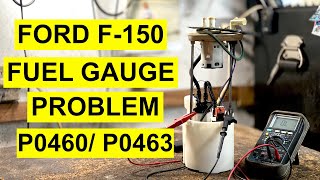
- Distance-to-Empty (DTE) display is inaccurate 🎬 Watch: Diagnosing erratic fuel gauge readings and P0463 codes. or shows dashes
- Low fuel warning light may be illuminated despite having fuel in the tank
- Replacing the instrument cluster before testing the fuel sending unit and wiring.
- Replacing the fuel pump for a drivability issue when the code is solely related to the level sensor, although they are part of the same assembly.
Most Likely Causes
- Faulty Fuel Level Sending Unit 🔴 High Probability → Shop Fuel Tank Sending Unit The sending unit is part of the fuel pump module and its internal resistor card is the most common point of failure for this code. Wear over time can cause an open spot in the resistor, leading to the 'high input' reading.
How to confirm: After accessing the fuel pump module connector (C434), measure the resistance between the Yellow/White wire (signal) and the Black/Orange wire (ground). The reading should be between ~15 ohms (empty) and ~138 ohms (full). An infinite resistance (OL) reading indicates an open circuit within the sending unit, confirming it is faulty. This test is definitive. 🎬 See how to troubleshoot and fix common F-150 fuel gauge problems.
Typical fix: Replace the entire fuel pump and sender assembly. The sensor is not sold separately for this model.
Est. part cost: $250-$500 - Damaged Wiring or Corroded Connector 🟡 Medium Probability The main wiring harness connector (C434) on top of the fuel tank is exposed to road spray and debris, making it susceptible to moisture intrusion and corrosion. A corroded pin or broken wire (especially the YE-WH signal wire or BK-OG ground wire) can create an open circuit.
How to confirm: Visually inspect connector C434 on top of the fuel tank for green/white corrosion, pushed-out pins, or chewed/frayed wires. Perform a continuity test on the signal and ground wires from the connector back to the PCM if the connector looks clean but the sensor tests good.
Typical fix: Clean the connector terminals with electrical contact cleaner and apply dielectric grease. If the connector or wiring is severely damaged, a new pigtail connector (e.g., Motorcraft WPT-1109) may need to be spliced in.
Est. part cost: $20-$60 - Poor Ground Connection ⚪ Low Probability The fuel pump module grounds through the wiring harness to a chassis ground point. While less common than sensor or connector failure, corrosion at the main chassis ground point for that harness can cause high resistance.
How to confirm: Locate the fuel system's ground point on the vehicle's frame, often near the driver's side frame rail. Check the Black/Orange wire at the fuel pump connector for good continuity to the chassis ground. A high resistance reading (above 5 Ohms) indicates a bad ground connection.
Typical fix: Clean the ground connection point to bare metal and re-secure the ground strap/wire. Replace the terminal if it is broken.
Est. part cost: $10-$30
Rare But Worth Checking
- Faulty Instrument Panel Cluster (IPC): → Shop Instrument Cluster While rare, the instrument cluster itself can fail and cause incorrect gauge readings. The IPC processes the raw signal from the sender before displaying it. This should only be considered after the fuel sending unit and wiring have been definitively ruled out.
- Faulty Powertrain Control Module (PCM): A PCM failure is extremely unlikely but possible. It is the last resort in diagnosis after all other components in the fuel level sensor circuit have been proven to be good.
Diagnosis Steps
- Scan for any other DTCs. P0463 is often solitary but can be paired with P0460 or P0462.
- Perform a visual inspection of the wiring harness leading to the fuel tank. Look for any obvious signs of damage, corrosion, or loose connections, especially at the main connector on top of the tank (C434).
- If access is possible, disconnect the C434 connector. Using a multimeter set to Ohms, test the resistance between the Yellow/White and Black/Orange pins on the fuel pump module side.
- The reading should be between ~15 ohms (empty) and ~138 ohms (full). An open circuit (OL on the meter) confirms a faulty sending unit. If the reading is within spec, the problem is likely in the wiring or PCM.
- To test the wiring, check for continuity on the YE-WH and BK-OG wires from the C434 connector to the PCM connector. Check the BK-OG wire for good continuity to chassis ground.
- A TSB for older F-150s (08-2-9) noted that sulfur in fuel could cause high resistance on the sender. While less common with modern fuels, using a different brand of Top Tier gasoline for a few tanks could be a low-cost diagnostic step if readings are borderline.
- Given the very high probability of sensor failure, if wiring appears visually intact, the most practical step is to replace the fuel pump module assembly.
Parts You'll Likely Need
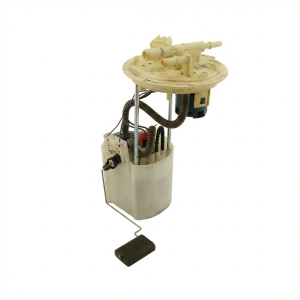
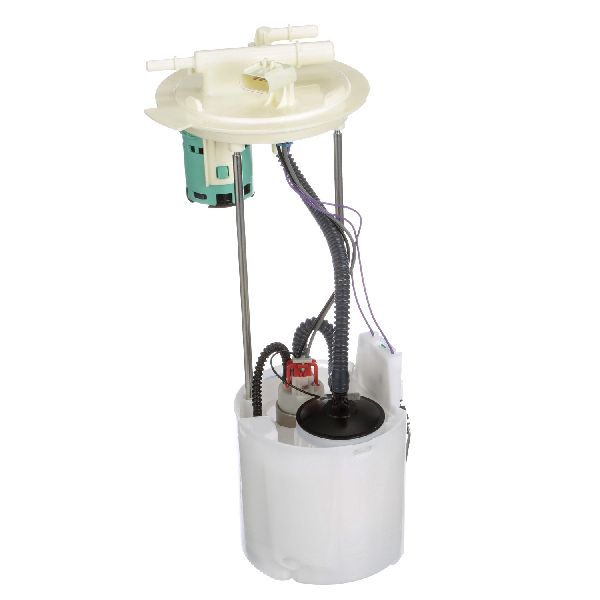
- Fuel Pump and Sender Assembly
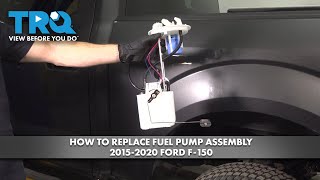
(OEM #Varies by tank size/engine. Ex: FL0268, PFS1068. (VIN verification is required for correct part 🎬 Watch: Step-by-step guide to replacing the fuel pump assembly.).)— This is the most common cause of P0463. The fuel level sensor (sender) is integrated into this module and is not sold separately. Replacing the assembly resolves the faulty sensor.
Trusted brands: Motorcraft, Bosch, Delphi, TRQ
OEM price range: $350-$550
Aftermarket price range: $200-$400
Related Codes That Often Appear With This One
- P0462 — This code is for 'Fuel Level Sensor Circuit Low Input'. Seeing it alongside P0463 could indicate an intermittent wiring problem causing the signal to swing between open (high) and shorted to ground (low).
- P0460 — This code for 'Fuel Level Sensor 'A' Circuit' indicates a general fault in the circuit, which could be triggered by the same root causes as P0463, such as an erratic signal.
Technical Service Bulletins (TSBs) & Recalls
- TSB 08-2-9: While for the 2004-2008 F-150, this TSB directly addresses P0463 caused by high resistance in the fuel level sender due to sulfur contamination. It provides context for a potential, though less common, cause.
Platform-Specific Known Issues
- Sulfur Contamination in Fuel (Older Models): TSB 08-2-9 was issued for 2004-2008 F-150s, noting that sulfur contamination in fuel could cause an open or high resistance on the fuel level sender, triggering P0463. While fuel quality has improved, this highlights the sender's sensitivity to its environment.
Mechanic-Grade Diagnostic Values
- Fuel Level Sender Resistance (Standard Fuel) — expected: 15 ohms (± 2) at Empty to 160 ohms (± 4) at Full. Failure: Infinite resistance (OL) indicates an open circuit. A reading that doesn't change smoothly when moving the float indicates a worn spot.
- Fuel Level Sender Resistance (Flex-Fuel) — expected: 7 ohms (± 2) at Empty to 138 ohms (± 4) at Full. Failure: Infinite resistance (OL) or readings outside this specific range for FFV models.
- Fuel Level Sensor Signal Voltage (at sensor) — expected: ~0.5V (Empty) to ~4.5V (Full) on a 5V reference circuit.. Failure: A reading consistently above 4.8V indicates a high circuit condition, triggering P0463.
- Ground Circuit Resistance — expected: Less than 5 ohms. Failure: Resistance values above 5 ohms between the sensor ground terminal and a clean chassis ground point indicate a poor ground connection.
- Voltage at Instrument Cluster Connector C220a — expected: 0 Volts with key on, engine off. Failure: Any voltage present on pin 27 (YE/WH) or pin 28 (BK/OG) with the cluster disconnected indicates a short to voltage in the harness.
Scan Tool Commands That Help
- Ford IDS (Integrated Diagnostic System): Instrument Cluster Self-Test / Datalogger for IPC and PCM PIDs — The cluster self-test can sweep the gauges to confirm mechanical operation. More importantly, using the datalogger to monitor the Fuel Level Input PID (FLI) from the PCM and the raw resistance/voltage from the IPC can help determine if the fault is at the sender, in the wiring, or being misinterpreted by a module.
Wiring & Ground Locations
- C434 — The main 4-pin electrical connector on top of the fuel pump module, accessible after dropping the tank or lifting the bed.. This is the primary test point to differentiate between a faulty sending unit (inside the tank) and a wiring/PCM issue (outside the tank). Testing resistance on the pump side of this connector isolates the sender.
- Fuel Pump Driver Module (FPDM) Connector — Located on a frame crossmember, typically above the spare tire area.. While the FPDM primarily controls the pump motor, its wiring is bundled with the sender unit wiring. Damage or corrosion at this nearby connector or its harness section can also cause an open in the sender circuit.
- Chassis Ground for Fuel System — Typically located on the driver's side frame rail near the fuel tank. The ground wire is the Black/Orange wire in the harness.. A corroded or loose frame ground will create high resistance for the entire fuel pump module, including the sending unit, potentially causing a P0463 code.
Model Year Variations Within This Range
- 2018-2020: A mid-cycle refresh occurred in 2018, introducing a new base 3.3L V6, a 3.0L Power Stroke diesel option, and expanded use of the 10-speed automatic transmission. While the fundamental operation of the fuel level sending unit remained the same, be aware that different engine and drivetrain configurations may have slightly different harness routings or part numbers for the fuel pump module.
- 2015-2020 (Flex-Fuel vs Standard): Flex-Fuel (FFV) models use a different resistance range for the fuel level sender (7-138 ohms) compared to standard gasoline models (15-160 ohms). Using the wrong diagnostic values could lead to a misdiagnosis.
Diagnostic Flowchart
Other Known Issues on This Vehicle
Issues unrelated to this code that are worth knowing about as an owner of this generation:
- 10R80 10-Speed Transmission Harsh/Erratic Shifting 🔴 High — Widespread on 2017-2019 models. Can manifest as harsh shifts (especially 3rd-5th), jerking, or delayed engagement. Less frequent on 2020 models but still possible. (Ref: TSB 21-2315, TSB 23-2350 (PCM reprogram); in severe cases, requires valve body or internal component (CDF drum) replacement.)
- Frozen Door Latches 🔴 High — Common on 2015-2018 models in cold climates. Doors may fail to open or, more dangerously, fail to latch closed, potentially opening while driving. (Ref: Recall 17S33 (install water shields), Customer Satisfaction Program 18N03. A class-action lawsuit was also settled.)
- Panoramic Sunroof Failure 🟠 Medium — A common point of failure across all years. Issues include rattling, leaking, and failure to open/close due to broken plastic guide arms. (Ref: No specific recall, but numerous TSBs exist for adjustments and lubrication. Aftermarket repair kits are widely used.)
- 5.0L V8 Excessive Oil Consumption 🟠 Medium — Affects some 2018-2020 models with the 5.0L V8 engine, attributed to high vacuum during deceleration pulling oil past the piston rings. (Ref: TSB 19-2365; fix involves a PCM reprogram to reduce engine vacuum and installing a new, longer engine oil dipstick.)
Used vs. New Parts: Buying Guide for This Vehicle
When a used part is the smart pick: A used fuel pump assembly from a junkyard is a high-risk, low-reward option for this repair. The primary failure mode is wear and tear on the sender's resistor card, which is an age- and use-related failure. A used part may have significant wear already and could fail soon after installation. It only makes sense if the budget is extremely tight and you are doing the labor yourself, accepting the risk of having to do the job again.
Donor-vehicle mileage cap: roughly under 50000 miles for the part to have meaningful remaining life.
What to inspect on the donor part:
- Source a part from a vehicle with the lowest possible mileage.
- Inspect the electrical connector pins for any signs of corrosion (green or white powder).
- If possible, test the resistance of the used part before purchase. It should read within spec and change smoothly as you move the float arm.
- Avoid parts from vehicles that have been sitting for a long time, as fuel can varnish and damage the sender.
OEM-only on this vehicle (don't cheap out):
- Fuel Pump and Sender Assembly
Aftermarket brands forum-validated for this vehicle:
- Bosch
- Delphi
- TRQ
Brands owners have reported issues with on this vehicle:
- Unbranded, no-name units from online marketplaces are frequently cited in forums as having high failure rates or inaccurate readings out of the box.
Real Owner Stories
Aggregated from forums and TSBs cited above. Mileages and costs reflect what owners reported in those sources.
2015 Ford F-150
Symptoms: The fuel gauge was acting erratically and the Distance-to-Empty (DTE) display showed dashes instead of a number.
What fixed it: Replacement of the fuel pump module assembly because the internal resistor card in the sending unit had failed.
Source hint: f150forum.com - 'How does the fuel guage sender work?'
2010 Ford F-150
Symptoms: The Check Engine Light came on with code P0463, indicating a circuit high input for the fuel level sensor.
What fixed it: The repair required dropping the fuel tank to access and replace the fuel level sender unit.
Source hint: f150forum.com - 'P0463 Fuel Level Sensor Circuit High Input'
Related OBD-II Codes
Frequently Asked Questions
Can I just replace the fuel level sensor on my 2015-2020 F-150 to fix P0463?
Does TSB 08-2-9 regarding sulfur contamination apply to my 2015-2020 F-150?
What are the specific resistance values I should see when testing the fuel sender on a 2015+ F-150?
Which wires should I test at the C434 connector to diagnose this code?
Is there a specific replacement part for a corroded wiring connector on the fuel tank?
Could my F-150's P0463 code be caused by a bad ground?
Helpful Videos
Used OEM Parts in Stock
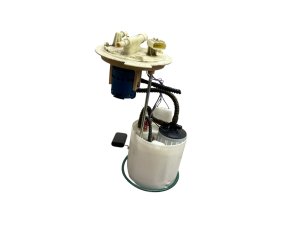
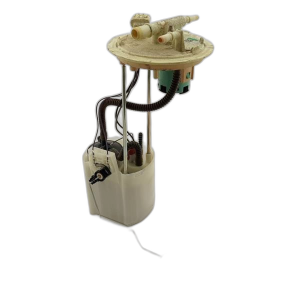
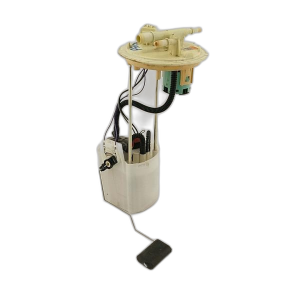
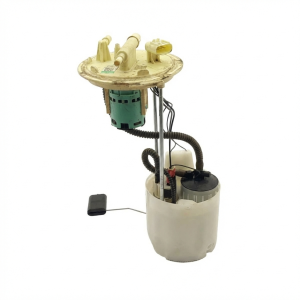
New Aftermarket Parts Available


The information in this article is provided for general reference and educational purposes only. Vehicle specifications, procedures, and part compatibility can vary by production date, trim level, and region. Always consult your vehicle's factory service manual and verify part numbers before purchasing or performing repairs. Safety-critical components such as airbags, seat belts, and braking systems should be installed by a qualified professional.
- Ford F-150:
- 🧭 Diagnostic Flowchart
- 🎬 Helpful Videos
- 🛍️ Shop This Part
- What's Unique About the 2015-2020 Ford F-150
- Symptoms You May Notice
- Most Likely Causes
- Rare But Worth Checking
- Diagnosis Steps
- Parts You'll Likely Need
- Related Codes That Often Appear With This One
- Technical Service Bulletins (TSBs) & Recalls
- Platform-Specific Known Issues
- Mechanic-Grade Diagnostic Values
- Scan Tool Commands That Help
- Wiring & Ground Locations
- Model Year Variations Within This Range
- Other Known Issues on This Vehicle
- Used vs. New Parts: Buying Guide for This Vehicle
- Real Owner Stories
- 2015 Ford F-150
- 2010 Ford F-150
- Related OBD-II Codes
- Frequently Asked Questions
- 🎟️ Get 5% Off