

P0463 on 2003-2026 GMC Savana: Fuel Level Sensor Circuit High Input Causes and Fixes
P0463 on a GMC Savana almost always means the fuel level sensor has failed. This sensor is part of the fuel pump module inside the gas tank. The fix requires dropping the tank and replacing the entire fuel pump module, which can be a costly and labor-intensive repair. An open circuit in the wiring harness is the second most likely cause.
- P0463 on your Savana means the fuel level sensor circuit has an electrical fault, usually an open circuit.
- The most likely cause is a failed fuel level sensor, which is part of the fuel pump module inside the gas tank.
- You can continue to drive, but you won't know how much fuel you have, so track your mileage to avoid running out of gas.
- The repair involves dropping the fuel tank to replace the entire fuel pump module, making it a difficult and potentially expensive job.
- Before replacing the pump, it's wise to inspect the wiring harness for any visible damage, as this can sometimes be a cheaper fix.
What's Unique About the 2003-2026 GMC Savana
The GMC Savana has been built on the same basic platform (GMT610) since 2003, meaning the fuel system design is very similar across this wide year range. The primary issue is that the fuel level sensor is integrated into the fuel pump module inside the fuel tank. Due to the van's large size and the location of the fuel tank, replacing this module is a significant job. Additionally, wiring harnesses on these work vans are susceptible to damage from corrosion and road debris, which can sometimes mimic a sensor failure. The Chevrolet Express is an identical platform mate and suffers from the exact same issues.
Generation note: The 2003-2026 GMC Savana is part of a single long-running generation (officially the second generation, which started in 1996, but the relevant platform is GMT610 from 2003 onwards). While there have been powertrain and minor electronic updates, the fundamental design of the fuel tank and pump module has remained consistent. Therefore, the causes and fixes for P0463 are largely the same across this entire model year range. Newer models (approx. 2008+) may incorporate a Fuel Pump Control Module (FPCM) which can be an additional point of failure.
Symptoms You May Notice
- Check Engine Light is on
- Fuel gauge reads full and does not move
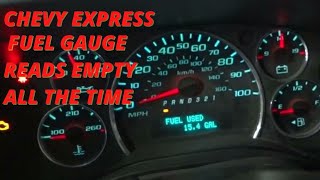
- Fuel gauge reads empty, even with fuel in the tank
- Fuel gauge fluctuates erratically
- Low fuel warning light may be on constantly
- Replacing the instrument cluster. The gauge itself is almost never the problem; it simply displays the faulty information it receives from the PCM, which is getting a bad signal from the sensor circuit.
- Replacing the fuel pump assembly with a version that does not include the fuel level sensor. Some part kits only contain the pump itself, and if the old sensor is not transferred over (or is the failed part), the problem will persist.
Most Likely Causes
- Failed Fuel Level Sensor / Sending Unit 🔴 High Probability → Shop Fuel Tank Sending Unit The sensor's internal variable resistor contacts wear out or break over time from normal use and exposure to fuel additives or corrosion. This is the most common point of failure for this code. Aftermarket units can also be of poor quality and fail prematurely.
How to confirm: Use a scan tool to observe the fuel level sensor voltage. A reading stuck near 5 volts points to an open circuit, typical of a failed sensor. Alternatively, test the sensor's resistance with a multimeter while moving the float arm; the resistance should change smoothly from approximately 40 ohms (full) to 250 ohms (empty). An open circuit or erratic readings confirm failure.
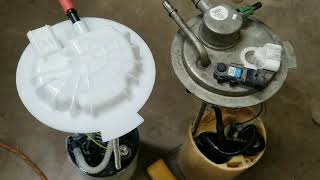
Typical fix: Replace the entire fuel pump module, as the sensor is typically integrated. Some kits allow replacing just the sensor, but given the labor involved, replacing the whole module is often recommended.
Est. part cost: $250-$500 - Damaged Wiring or Connectors 🟡 Medium Probability The wiring harness running along the frame to the fuel tank is exposed to road salt, moisture, and debris, which can lead to corrosion and breaks in the wires, especially at the main connector on top of the fuel tank. This connector can become brittle and break during fuel pump replacement.
How to confirm: Visually inspect the wiring harness from the PCM to the fuel tank for any signs of chafing, breaks, or corrosion. Pay close attention to the main connector on top of the fuel pump module. Use a multimeter to check for continuity on the signal wire (typically purple) and ground wire (typically black) between the PCM and the tank connector. Check for a 5V reference signal from the PCM.
Typical fix: Repair the damaged section of wiring or replace the connector pigtail.
Est. part cost: $20-$100
Rare But Worth Checking
- Faulty Fuel Pump Control Module (FPCM): → Shop Fuel Pump On newer models (approx. 2008+), the FPCM can fail due to water intrusion, causing various fuel system-related codes and symptoms, including stalling and incorrect fuel readings. This is less common for just a P0463 but worth considering if other fuel-related codes are present.
- Faulty Powertrain Control Module (PCM) or Instrument Cluster: → Shop Instrument Cluster It is extremely rare for the PCM or the instrument cluster itself to be the cause of this specific code. All other possibilities should be exhaustively ruled out before considering this.
Diagnosis Steps
- Connect an OBD-II scanner and confirm the presence of the P0463 code. Check for any other related codes like P0461 or P0462.
- Using the scanner's live data function, observe the voltage from the 'Fuel Level Sensor'. A reading that is stuck high (typically near 5V) regardless of the actual fuel level confirms the 'High Input' condition.
- Visually inspect the wiring harness leading to the fuel tank. Look for any obvious damage, corrosion, or loose connections, paying special attention to the area above the tank and the main connector.
- If wiring appears intact, access the fuel pump module connector on top of the tank. Disconnect it and check the harness side. With the key on, you should have a 5-volt reference on one wire (often purple) and a good ground on another (often black).
- If the 5V reference or ground is missing, the problem is in the wiring back to the PCM or a faulty PCM itself (rare).
- If the reference voltage and ground are good, the problem is inside the tank. The fuel level sensor is almost certainly the culprit.
- To definitively confirm the sensor has failed, you can test the resistance across the sensor's pins on the fuel pump module. It should read between 40 and 250 ohms and change smoothly as the float arm is moved. An open (infinite resistance) reading confirms failure.
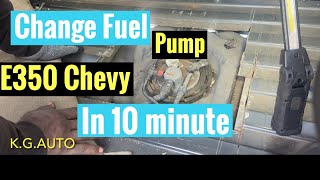
- To replace the module, the fuel tank must be safely disconnected and lowered from the vehicle. This is a labor-intensive job. 🎬 See this step-by-step guide to replacing the fuel pump.
Parts You'll Likely Need
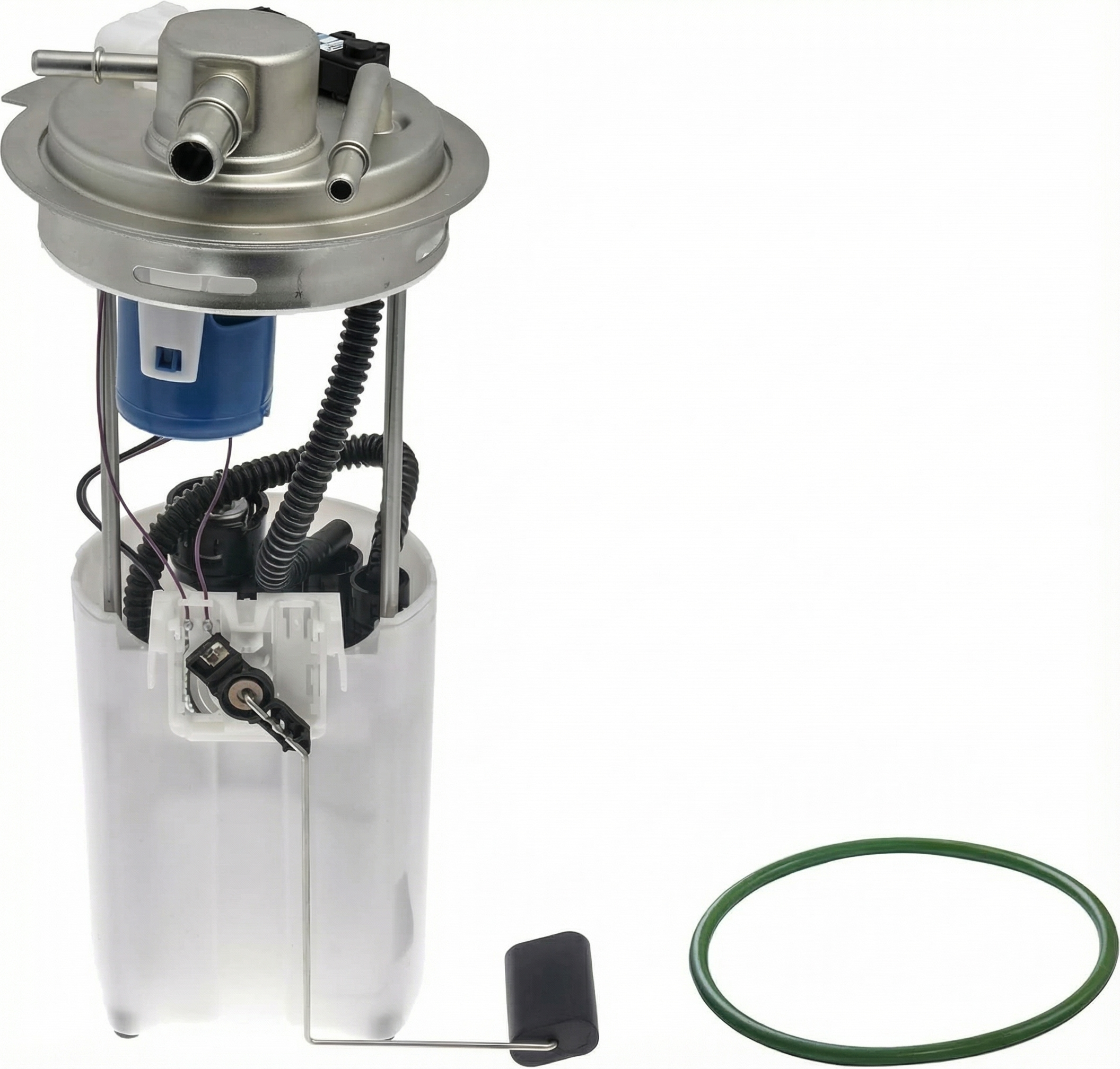
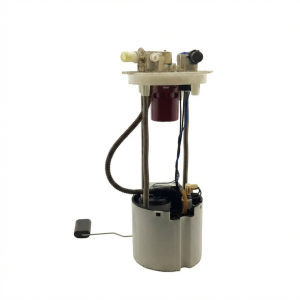
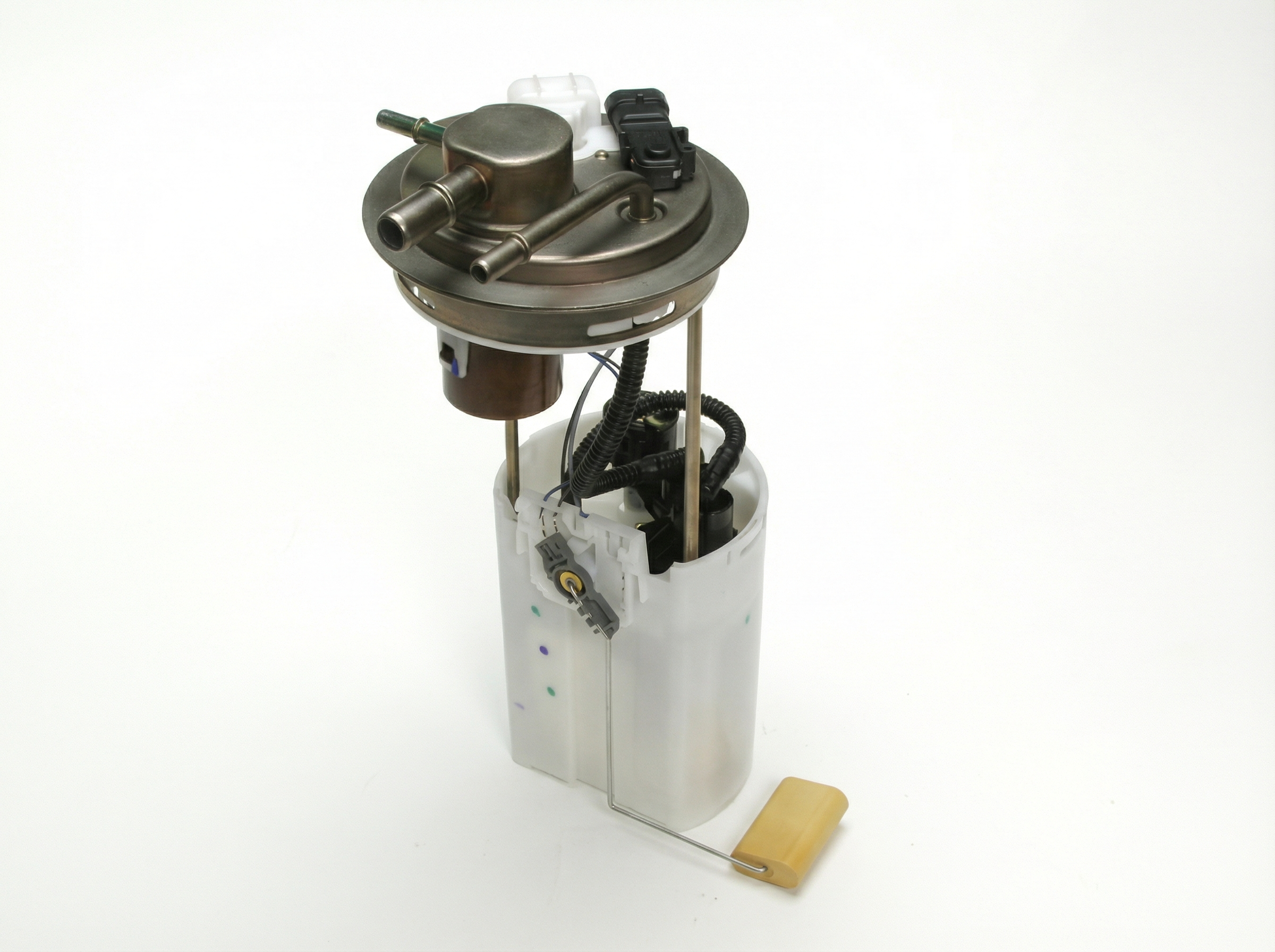
- Fuel Pump and Sender Assembly
(OEM #Varies by year/engine. e.g., ACDelco MU1613, Delphi FG0329)— This is the most common cause of failure. The fuel level sensor (sender) is integrated into the fuel pump module. While the sensor is sometimes sold separately (e.g., GM 19329219 for 2010-2016 models), replacing the entire module is common practice to also refresh the fuel pump and avoid a second repair down the road. 🎬 Watch a mechanic perform a full fuel pump module replacement.
Trusted brands: ACDelco (OEM), Delphi, Spectra Premium, Carter
OEM price range: $350-$500
Aftermarket price range: $250-$400 - Fuel Level Sensor Kit
(OEM #19329219 (replaces 19258178))— If the fuel pump itself is working fine, it is possible to replace only the failed level sensor. This is a more economical but less comprehensive repair. A common mistake is buying a 'fuel pump module kit' that does NOT include the sensor, so careful part selection is critical.
Trusted brands: ACDelco (OEM)
OEM price range: $80-$170
Related Codes That Often Appear With This One
- P0462 — This code means 'Fuel Level Sensor 'A' Circuit Low Input.' P0462 indicates a short to ground, while P0463 indicates an open circuit. Seeing either points to a problem with the same sensor or wiring.
- P0461 — This code means 'Fuel Level Sensor 'A' Circuit Range/Performance.' It can be set if the sensor signal is erratic or irrational, which often happens as the sensor begins to fail completely.
Technical Service Bulletins (TSBs) & Recalls
- PIT3208D: Addresses erratic fuel gauge readings and related codes, pointing to a large connector near the fuse block (C101) as a potential source of the issue. (Mentioned in forums, full text not found in search).
- 17-NA-204: For some dual-tank equipped trucks (not directly Savana, but relevant GM tech), this TSB addresses inaccurate fuel gauge readings (including P0463) caused by a failing front level sender, which can lead to the fuel tank expanding or being damaged by the driveshaft.
- 10-08-45-001: Provides the correct procedure for electrical ground repair, critical for G400 if it is relocated or serviced, to prevent corrosion and ensure good contact.
- 14-06-04-002: Addresses no-start conditions on LPG-equipped vans due to an inoperative fuel pump, which can be caused by an improperly connected G400 ground terminal or issues at connector X305.
Platform-Specific Known Issues
- Due to the long, exposed frame of the Savana van, the wiring harness for the fuel pump is susceptible to damage from road debris and corrosion, which can cause an open circuit and trigger a P0463 code.
- The main electrical connector on top of the fuel pump module can become brittle with age and heat, often breaking upon removal during service, requiring a new connector pigtail to be spliced in.
- As noted in NHTSA ODI #10371391, the P0463 error indicates the variable resistor is showing a high input instead of a typical small value, which occurs when the resistor fails to change value correctly.
Mechanic-Grade Diagnostic Values
- Fuel Level Sensor Resistance — expected: Approximately 40 Ohms (Full) to 250 Ohms (Empty). The resistance should change smoothly when moving the float arm.. Failure: An infinite resistance (Open Loop) reading, or erratic/jumping values when moving the float arm.
- Fuel Level Sensor Signal Voltage (at sensor connector) — expected: A variable voltage, typically between ~0.5V (Empty) and ~2.5-2.9V (Full), depending on the exact model year and PCM calibration.. Failure: A constant 5V reading indicates an open in the signal circuit or a failed sensor.
- Sensor Ground Voltage (at sensor connector, circuit loaded) — expected: Less than 0.1V (100mV).. Failure: A reading close to 5V on the ground wire indicates a bad ground connection, which can cause the signal circuit to read high.
- PCM Internal Pull-Up Resistor (Calculated) — expected: Approximately 243 Ohms. This is not a directly measurable value but is the calculated internal resistance used in the PCM's voltage divider circuit for the fuel level sensor.. Failure: N/A - This value is for circuit analysis and understanding, not direct diagnosis.
Scan Tool Commands That Help
- Tech2 / GDS2 or equivalent professional scan tool: Jumping the sensor connector pins — To perform a circuit integrity test without a scan tool. Jumping the signal (purple) and ground (black/white) wires at the tank connector should make the gauge read Empty. Leaving it unplugged should make it read Full. This confirms the wiring, PCM, and instrument cluster are working, isolating the fault to the in-tank sending unit.
- Tech2 / GDS2: Fuel Pump Relay control — While not directly for P0463, if other fuel system codes (like P0230) are present, this bidirectional command allows a technician to turn the fuel pump on and off to verify the FPCM and pump motor are functional, helping to isolate the issue to the level sensor circuit.
Wiring & Ground Locations
- Fuel Pump / Sending Unit Connector — On top of the fuel tank, accessible after lowering the tank.. This is the primary connection point for testing. The signal wire (typically Purple) and the sensor ground (typically Black or Black/White) can be tested here for voltage, resistance, and continuity. The connector itself is a common failure point due to corrosion or becoming brittle.
- G400 — On the chassis frame rail, often near the fuel tank or under the driver's side. Its exact location may have been moved by upfitters on commercial vans.. This is a critical ground point for the fuel system. A corroded or loose G400 can cause a variety of fuel system issues, including erratic sensor readings. A TSB specifically notes that improper servicing of this ground can lead to fuel pump failure.
- Fuel Pump Control Module (FPCM) — On later models (approx. 2008+), typically mounted on the frame rail near the spare tire.. The FPCM controls the fuel pump and on some architectures, the fuel level signal may pass through or be influenced by it. It is highly susceptible to corrosion and failure due to its exposed location.
- Underhood Fuse Block — In the engine compartment on the driver's side.. Contains the fuse for the fuel pump (e.g., Fuse #12 on 2003-2005 models) and potentially other related circuits. While a blown fuse is not a direct cause of a 'High Input' code, it should be checked as part of a comprehensive diagnosis.
Real Owner Repair Stories
- YouTube video on a 2014 Chevy Express (2014 Chevrolet Express (identical platform)) — Crank no start, multiple fuel system codes including P0461 and P0463.
❌ Tried (didn't work) Initial diagnosis pointed towards the sending unit.
✅ What actually fixed it The problem was a broken ground wire for the fuel system located under the A/C compressor on the engine block. Repairing this main ground connection resolved the fuel system codes and the no-start condition. - YouTube video on a GMC 2500 Truck (GMC 2500 Truck (similar GM wiring)) — Inaccurate fuel level after replacing fuel pump.
❌ Tried (didn't work) Following the wiring diagram included with the aftermarket (Carter) fuel pump.
✅ What actually fixed it The wiring diagram provided with the new pigtail connector was incorrect for the vehicle. The technician had to manually test the old pump to determine the correct pinout (Purple and Orange/Black for the sensor) and rewire the new pigtail accordingly. This highlights the risk of incorrect instructions with aftermarket parts. - GMC Owner Report (NHTSA ODI #10551564) — An owner reported that after using about 5 gallons of fuel, the gauge would fluctuate from Full to Empty every few minutes before triggering the P0463 code.
- GMC Owner Report (NHTSA ODI #10513803) — A driver experienced a scary situation where the vehicle would not turn on, and a subsequent scan revealed P0463 due to a failed fuel sending unit.
OEM Part Supersession History
19258178→19329219— Standard part revision and update by the manufacturer.
Heads up: Part 19329219 is the correct service replacement for 19258178 for applicable models, typically 2010-2017. No incompatibility is noted.
Model Year Variations Within This Range
- Approx. 2008-2017: These model years are more likely to use a separate Fuel Pump Control Module (FPCM), often part number 25967325 or similar. This module is an additional point of failure and often requires programming to the vehicle's VIN upon replacement.
- Approx. 2018+: Later models may use a different FPCM design and part number. There is conflicting information on whether these newer modules require programming, with some owner experiences suggesting they may be plug-and-play, while service information often states programming is required.
- 2003-2007: These earlier models typically do not have a separate FPCM. The fuel pump relay is controlled more directly by the PCM, simplifying the circuit and removing the FPCM as a potential cause.
Diagnostic Flowchart
Other Known Issues on This Vehicle
Issues unrelated to this code that are worth knowing about as an owner of this generation:
- 4L60E / 4L80E Transmission Failures 🔴 High — Common, especially in high-mileage or heavy-use work vans. Symptoms include harsh 1-2 shifts, getting stuck in 3rd gear, or loss of reverse.
- Intake Manifold Gasket Leaks 🟠 Medium — Very common on Vortec V6 and V8 engines, particularly from the late 90s to mid-2000s. Can cause coolant and oil leaks, leading to overheating if not addressed.
- Peeling Paint 🟡 Low — Widespread issue, particularly on white-painted vans from the 2000s and 2010s. Large sheets of paint can delaminate and peel off.
- Air Conditioning System Failure 🟠 Medium — Frequently reported problem. Failures can stem from the compressor, refrigerant leaks, or blower motors, leading to loss of cabin cooling.
- Excessive Oil Consumption (5.3L Vortec) 🔴 High — Affects 5.3L Vortec engines from roughly 2010-2014 due to design flaws, leading to internal engine damage if oil levels are not monitored closely.
- Passlock Security System Faults 🟠 Medium — A common GM issue from the 2000s where the anti-theft system can malfunction, preventing the vehicle from starting.
Used vs. New Parts: Buying Guide for This Vehicle
When a used part is the smart pick: A used part is generally NOT recommended for the fuel pump module or the level sensor. The labor to access the part inside the fuel tank is significant, and the risk of a used part failing shortly after installation is high. A used part only makes sense for external components like a connector pigtail or a Fuel Pump Control Module (FPCM) if it is known-good and shows no signs of corrosion.
Donor-vehicle mileage cap: roughly under 50000 miles for the part to have meaningful remaining life.
What to inspect on the donor part:
- For an FPCM: Check the connector for any green or white corrosion. Ensure the module casing is not swollen or cracked.
- For a wiring harness/pigtail: Inspect for any cuts, abrasions, or signs of melting. Ensure the connector locking tabs are intact.
- Avoid parts from vehicles in regions with heavy road salt use (Rust Belt) as corrosion is the primary failure mode.
OEM-only on this vehicle (don't cheap out):
- Fuel Level Sensor (if purchased separately): The ACDelco OEM sensor (e.g., 19329219) is the most reliable option. Aftermarket sensors are not widely available or trusted.
- Fuel Pump Control Module (FPCM): While some aftermarket options exist, OEM (ACDelco) is recommended, and it's critical to ensure it is pre-programmed to your VIN if required for your model year.
Aftermarket brands forum-validated for this vehicle:
- Delphi: Often an OEM supplier to GM, their complete fuel pump modules are considered a top-tier alternative to ACDelco.
- Carter: A long-standing brand with generally positive feedback, though care must be taken to verify any included wiring instructions are correct for your vehicle.
Brands owners have reported issues with on this vehicle:
- Unbranded or generic "white box" parts from online marketplaces. These often have high failure rates, and the savings do not justify the risk of repeating the labor-intensive repair.
Real Owner Stories
Aggregated from forums and TSBs cited above. Mileages and costs reflect what owners reported in those sources.
GMC Savana (Year not specified)
Symptoms: The P0463 code persisted even after a shop replaced the fuel pump. Additionally, the shop broke the main electrical connector during the repair process.
What fixed it: The owner discovered the replacement fuel pump assembly they provided did not actually include the fuel level sensor; the sensor had to be properly installed/included.
Source hint: GMTNation - 'Fuel gauge issue after fuel pump P0463'
2009 GMC Savana
Symptoms: Fuel gauge reads erratically and the Check Engine Light is on for P0463.
What fixed it: Testing the sensor's resistance across the pins on the fuel pump module (should be 40-250 ohms) and checking the purple signal wire for a 5V reference.
Source hint: YouTube - '2009 GMC Fuel Gage Reads'
GMC Envoy (Cross-Model Reference)
Symptoms: An owner reported an inaccurate fuel reading that produced code P0463 (NHTSA ODI #10520340). Another report (NHTSA ODI #10362931) noted that sudden loss of power in traffic could occur alongside fuel system codes like P0463.
Documented NHTSA Reports
NHTSA ODI #10513803 describes a scenario where a GMC vehicle would not turn on, and a diagnostic check revealed code P0463 for a failed fuel sending unit. Furthermore, NHTSA ODI #10551564 notes a known issue where the fuel gauge fluctuates between full and empty after using a small amount of fuel, eventually triggering the P0463 code.
Related OBD-II Codes
Frequently Asked Questions
Can I replace just the fuel level sensor on my GMC Savana, or do I need the whole pump assembly?
Is there a specific connector issue on the Savana that causes the P0463 code?
Does TSB PIT3208D apply to my erratic fuel gauge and P0463 code?
I have an LPG-equipped Savana with fuel pump issues; could this be related to a ground problem?
Why is the Savana's wiring harness so prone to triggering P0463?
What voltage should I see at the fuel level sensor if it's working correctly?
Helpful Videos
We Have This Part in Stock

The information in this article is provided for general reference and educational purposes only. Vehicle specifications, procedures, and part compatibility can vary by production date, trim level, and region. Always consult your vehicle's factory service manual and verify part numbers before purchasing or performing repairs. Safety-critical components such as airbags, seat belts, and braking systems should be installed by a qualified professional.
- GMC Savana:
- 🧭 Diagnostic Flowchart
- 🎬 Helpful Videos
- 🛍️ Shop This Part
- What's Unique About the 2003-2026 GMC Savana
- Symptoms You May Notice
- Most Likely Causes
- Rare But Worth Checking
- Diagnosis Steps
- Parts You'll Likely Need
- Related Codes That Often Appear With This One
- Technical Service Bulletins (TSBs) & Recalls
- Platform-Specific Known Issues
- Mechanic-Grade Diagnostic Values
- Scan Tool Commands That Help
- Wiring & Ground Locations
- Real Owner Repair Stories
- OEM Part Supersession History
- Model Year Variations Within This Range
- Other Known Issues on This Vehicle
- Used vs. New Parts: Buying Guide for This Vehicle
- Real Owner Stories
- GMC Savana (Year not specified)
- 2009 GMC Savana
- GMC Envoy (Cross-Model Reference)
- Documented NHTSA Reports
- Related OBD-II Codes
- Frequently Asked Questions
- 🎟️ Get 5% Off