

P0463 on 2016-2021 Hyundai Tucson: Fuel Gauge Problems and Fixes
This code means your fuel gauge is getting an invalid signal from the tank. On a 2016-2021 Tucson, the most likely cause is a faulty fuel level sending unit, which is part of the fuel pump assembly. Expect to pay $250-$450 for the part and 1-2 hours of labor if you don't do it yourself.
- P0463 on a 2016-2021 Tucson means your fuel gauge is unreliable due to a sensor circuit problem.
- The most likely cause is a failed fuel level sending unit, which is part of the fuel pump assembly.
- You can still drive the car, but track your mileage manually to avoid running out of fuel.
- The repair is accessible for a skilled DIYer thanks to an access panel under the rear seat, avoiding the need to drop the fuel tank.
- Always diagnose the wiring and connectors before buying an expensive new fuel pump assembly.
What's Unique About the 2016-2021 Hyundai Tucson
The third-generation Hyundai Tucson (2016-2021) is generally reliable, but like many modern cars, its fuel level sensor (or sending unit) is integrated into the main fuel pump assembly inside the tank. While no specific recalls for P0463 exist for this model, owner forums contain numerous complaints about erratic or failed fuel gauges. A user on the Hyundai Tucson Forum reported their dealer acknowledged the issue with the float and sensor, even mentioning a potential recall for which parts were not yet available. Fortunately, Hyundai provided an access panel under the rear seat, making the replacement of the fuel pump assembly more straightforward than on vehicles where the entire fuel tank must be dropped.
Symptoms You May Notice
- Check Engine Light is on
- Fuel gauge is stuck on Full or Empty.
- Fuel gauge fluctuates randomly.
- Low fuel warning light stays on or flashes, even with fuel in the tank.
- Distance-to-empty calculation is inaccurate or unreliable. 🎬 Watch: Understanding the causes and fixes for the P0463 code
- Vehicle may run out of gas unexpectedly while the gauge still shows fuel.
- Replacing the instrument cluster first. This is an expensive and unlikely cause of the problem. Always diagnose the sending unit and wiring first.
- Replacing the fuel pump for a drivability issue when only P0463 is present. This code is for the fuel *level* sensor, not the pump's performance. While they are in the same assembly, the pump itself may be working fine.
Most Likely Causes
- Faulty Fuel Level Sending Unit 🔴 High Probability → Shop Fuel Tank Sending Unit This is the most common failure point for this system on most vehicles, including the Tucson. The resistive strip on the sensor wears out over time from the float arm's constant movement, causing incorrect readings. This wear creates dead spots or high resistance areas in the sweep.
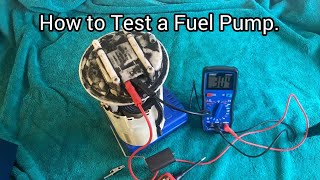
How to confirm: Access the fuel pump assembly under the rear seat. Disconnect the sensor and measure the resistance across its terminals with a multimeter while manually moving the float arm. 🎬 See how to test the fuel pump and sender unit The reading should change smoothly. For many Hyundai/Kia vehicles, the resistance should be low (e.g., ~7-10 ohms) when full and high (e.g., ~170-240 ohms) when empty. A sudden jump, drop to zero (short), or infinite reading (open circuit) indicates a bad sensor.
Typical fix: Replace the entire fuel pump and sending unit assembly. While some aftermarket companies may offer the sender separately, the OEM solution is typically the complete assembly.
Est. part cost: $250-$450 - Damaged Wiring or Corroded Connector 🟡 Medium Probability The main connector is located on top of the fuel pump access panel under the rear seat. It can be susceptible to moisture, physical damage if the cover is not sealed correctly, or if work has been done in the area previously. A short to power on the signal wire is a common cause for a 'High Input' code.
How to confirm: Visually inspect the wiring harness and connector leading to the fuel pump assembly. Look for any signs of corrosion (green or white powder), chafed wires, or loose pins. Use a multimeter to check for a short to power in the signal wire and verify the integrity of the ground circuit.
Typical fix: Clean the connector terminals with a specialized electrical contact cleaner. If the wiring is damaged, repair the affected section. If the connector itself is damaged, it may need to be replaced.
Est. part cost: $5-$50 - Stuck Fuel Float Arm ⚪ Low Probability This is uncommon but can happen if the fuel tank is damaged or if there is significant sediment from poor quality fuel. The arm can get physically stuck in the 'full' position, which would cause a constant high reading.
How to confirm: After removing the fuel pump assembly from the tank, visually inspect the float. It should move freely throughout its entire range of motion without binding.
Typical fix: Usually, the float is part of the sending unit assembly. If it is stuck due to debris, you may be able to free it, but replacement of the assembly is the most reliable fix.
Est. part cost: $250-$450
Rare But Worth Checking
- Faulty Instrument Cluster: → Shop Instrument Cluster If the sending unit and wiring test perfectly, the problem could be with the gauge cluster itself. This is rare and should be the last thing you check.
- Faulty Powertrain Control Module (PCM): This is extremely rare. Before condemning the PCM, every other possibility, including all wiring, should be exhaustively checked. A PCM replacement is expensive and requires programming.
Diagnosis Steps
- Confirm the P0463 code is present using an OBD-II scanner.
- Check the fuel gauge. Does it read full, empty, or move erratically? Note its behavior.
- Gain access to the fuel pump assembly by removing the lower rear seat cushion and the black metal access panel.
- Visually inspect the electrical connector on top of the fuel pump assembly for any signs of corrosion, damage, or loose connections.
- If the connector looks good, use a multimeter to test the circuit. With the key on, check for the correct reference voltage (typically 5V) and a good ground at the connector (refer to a service manual for specific pinouts and values).
- If the wiring seems okay, the next step is to test the sending unit itself. Disconnect the battery. Remove the fuel pump assembly from the tank, being careful to relieve any fuel pressure first.
- With the assembly removed, measure the resistance of the sending unit with a multimeter while moving the float arm up and down. The resistance should change smoothly and linearly. Look for values roughly in the range of 7-10 ohms at full and 170-240 ohms at empty. If it jumps, drops to zero, or shows an open circuit (OL), the sending unit is bad.
- If the sending unit and wiring test good, the problem may lie with the instrument cluster or PCM, which would require more advanced diagnostics.
Parts You'll Likely Need
- Fuel Pump and Sending Unit Assembly
(OEM #31120-D3500, 94460-D3500 (sender only))— This is the most common cause of P0463. The fuel level sensor (sending unit) is integrated into the assembly and typically fails before the pump itself. Part number 31120-D3500 is listed as the full assembly for the 2016-2021 Tucson. Part 94460-D3500 is listed for the sender unit itself.
Trusted brands: Hyundai (OEM), Delphi, Bosch, Spectra Premium, Denso
OEM price range: $350-$450
Aftermarket price range: $250-$350
Platform-Specific Known Issues
- Owner Experience on Hyundai Tucson Forums: A 2022 Tucson owner reported their fuel gauge only reading 3/4 full after a fill-up. The dealer diagnosed a faulty float and sensor, acknowledging it as a known issue and mentioning a recall for which parts were not yet in stock. This indicates a pattern of failure with these components.
- Cross-Manufacturer Reference (Hyundai): Similar fuel sensor circuit failures have been documented across the Hyundai lineup. NHTSA ODI #11218601 describes a case where a dealer recommended replacing the fuel sensor after a P0463 code appeared. In another instance, NHTSA ODI #10958317 notes that this fuel sensor circuit fault is dangerous because the gauge can suddenly change readings while driving.
Mechanic-Grade Diagnostic Values
- Fuel Level Sensor Resistance — expected: Approximately 40 Ohms (Empty) to 250 Ohms (Full). Some sources suggest a tighter range for similar Hyundai models of ~170-240 Ohms (Empty) to ~7-10 Ohms (Full). The key is a smooth, linear change, not the exact numbers.. Failure: An open circuit (infinite resistance), a short (near zero resistance), or erratic jumps in the reading as the float arm is moved indicates a failed sender.
- Fuel Level Sensor Signal Voltage — expected: Typically operates on a 5-volt reference circuit. The return signal voltage will vary based on fuel level.. Failure: A signal voltage that is stuck high (near 5V) or reads above the maximum expected voltage for a set period will trigger P0463.
Scan Tool Commands That Help
- Hyundai GDS (Global Diagnostic System) or equivalent professional scan tool: Instrument Cluster Self-Test / Actuator Test — To command the fuel gauge to sweep through its full range (e.g., Empty, 1/2, Full). If the gauge responds correctly to the command, it confirms the instrument cluster and gauge motor are functional, pointing the diagnosis back towards the sending unit or wiring.
Wiring & Ground Locations
- Instrument Panel Fuse Box — Located on the driver's side of the dashboard, behind a cover.. Contains fuses that power the instrument cluster. A failure here could affect the fuel gauge's operation, though it would likely affect other gauges as well.
- Engine Compartment Fuse Box — Located on the left side of the engine compartment.. Contains the fuel pump relay and main ECU/PCM fuses. While a failure here would more likely cause a no-start condition, it's part of the overall circuit to inspect.
- Fuel Pump/Sender Connector — On top of the fuel pump assembly, accessible under the rear seat by removing a black metal access panel.. This is the primary connection point for the fuel level sender. It is a common spot for corrosion or damage that can cause the high resistance fault of P0463.
OEM Part Supersession History
94460-D3500→N/A— This is the current OEM part number for the fuel level sending unit (sender only).
Heads up: This part is listed as compatible for the entire 2015-2021 Tucson generation.31120-D3500→N/A— This is the current OEM part number for the complete fuel pump and sender assembly.
Heads up: This part is listed as compatible for the entire 2016-2021 Tucson generation.
Model Year Variations Within This Range
- 2019-2021: The Hyundai Tucson received a facelift for the 2019 model year. While the core powertrain and fuel system architecture remained largely the same, there were minor changes to interior and exterior styling. However, the fuel pump and sending unit part numbers appear to be consistent across the entire 2016-2021 generation, suggesting no significant changes relevant to P0463.
Diagnostic Flowchart
Other Known Issues on This Vehicle
Issues unrelated to this code that are worth knowing about as an owner of this generation:
- Engine Failure (Theta II & Nu GDI) 🔴 High — Widespread across multiple model years, particularly 2016-2018. Can manifest as excessive oil consumption, engine knocking, and eventual seizure. (Ref: Multiple recalls (e.g., 21V727000) and class-action lawsuits have been issued related to these engines for fire risk and bearing wear.)
- 7-Speed Dual-Clutch Transmission (DCT) Failure 🔴 High — Common on models with the 1.6L Turbo engine. Symptoms include hesitation from a stop, shuddering, and complete loss of acceleration. (Ref: Hyundai issued recalls and service campaigns (e.g., for 2016 models) to reprogram the Transmission Control Module (TCM), but problems persist for many owners.)
- Excessive Oil Consumption 🟠 Medium — Frequently reported, often as a precursor to engine failure. Owners report adding a quart of oil every 1,000 miles or less. (Ref: Often addressed through dealer-monitored oil consumption tests as part of engine warranty claims.)
- Clutch Actuator Failure (DCT) 🟠 Medium — A specific component failure within the DCT that can cause inability to engage certain gears (e.g., odd or even gears), leading to poor performance and diagnostic codes like P073F.
Used vs. New Parts: Buying Guide for This Vehicle
When a used part is the smart pick: For this repair, buying a used fuel pump assembly from a junkyard is generally NOT recommended. The failure is due to a wear item (the resistive strip on the sender), and a used part has unknown wear and a high likelihood of premature failure. The labor involved in accessing the pump makes it unwise to use a part with no guarantee.
Donor-vehicle mileage cap: roughly under 40000 miles for the part to have meaningful remaining life.
What to inspect on the donor part:
- Verify the part came from a vehicle that was not in a major rear-end collision, which could damage the tank or assembly.
- Inspect the electrical connector pins for any signs of corrosion, melting, or damage.
- If possible, ask for the mileage of the donor vehicle; lower is always better.
OEM-only on this vehicle (don't cheap out):
- Fuel Pump and Sending Unit Assembly
Aftermarket brands forum-validated for this vehicle:
- Delphi
- Bosch
- Denso
Brands owners have reported issues with on this vehicle:
- Unbranded, 'white-box' parts from online marketplaces should be avoided. Forum discussions frequently attribute repeat failures to cheap, no-name fuel pump assemblies.
Documented NHTSA Reports
Fuel Sensor Circuit Hazards
An owner reported that the fuel sensor circuit issue is extremely dangerous because the gauge can suddenly read incorrectly while driving (NHTSA ODI #10958317). Another report mentions that after filling up with gas, the fuel gauge goes to zero, the service engine light illuminates, and codes P0463 and P0464 are generated, leaving the accuracy of the gauge in question (NHTSA ODI #10960401).
Repair Complexity and Costs
NHTSA ODI #11315420 describes a situation where although the required part was listed at a relatively low price, it was integrated into the fuel pump, complicating the repair. In a similar case involving multiple fuel sensor circuit codes including P0463, an owner reported repair costs reaching close to $900 (NHTSA ODI #10845942).
Real Owner Stories
Aggregated from forums and TSBs cited above. Mileages and costs reflect what owners reported in those sources.
2019 Hyundai Tucson — 18598 miles
Symptoms: P0463 – FUEL LEVEL SENSOR A CIRCUIT HIGH
What fixed it: Not specified in the service record.
Source hint: River Crest Tire And Auto Service
2022 Hyundai Tucson
Symptoms: Fuel gauge only reading 3/4 full after a fill-up.
What fixed it: Dealer diagnosed a faulty float and sensor; acknowledged as a known issue.
Source hint: Hyundai Tucson Forum (www.tucsonforums.com/threads/230-n-line-s-faulty-fuel-gauge.48626/)
Related OBD-II Codes
Frequently Asked Questions
Where is the fuel level sensor located on my 2016-2021 Hyundai Tucson?
Is there a recall for the fuel gauge issues on the newer Tucson models?
Can I just replace the sensor, or do I need the whole $250-$450 fuel pump assembly?
What are the specific resistance values I should look for when testing my Tucson's sending unit?
Could my P0463 code be related to the Theta II engine recalls?
Why is my distance-to-empty reading inaccurate on my Tucson?
Diagnostic Flowchart
Helpful Videos
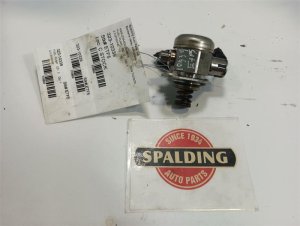
Used OEM Parts in Stock
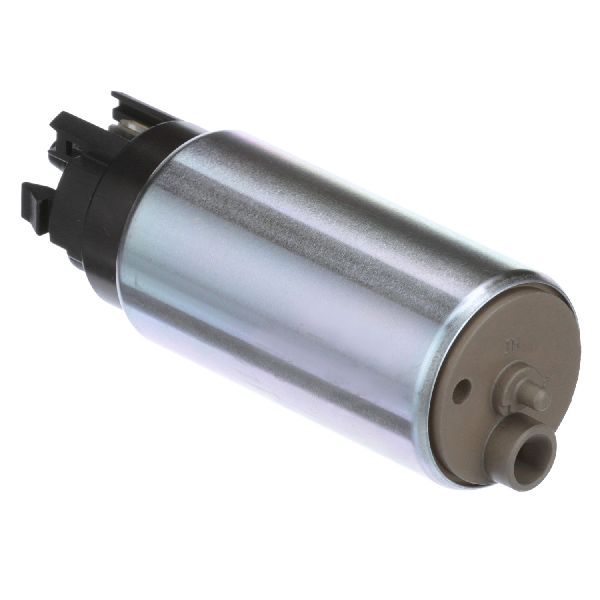
New Aftermarket Parts Available

The information in this article is provided for general reference and educational purposes only. Vehicle specifications, procedures, and part compatibility can vary by production date, trim level, and region. Always consult your vehicle's factory service manual and verify part numbers before purchasing or performing repairs. Safety-critical components such as airbags, seat belts, and braking systems should be installed by a qualified professional.
- Hyundai Tucson:
- 🧭 Diagnostic Flowchart
- 🎬 Helpful Videos
- 🛍️ Shop This Part
- What's Unique About the 2016-2021 Hyundai Tucson
- Symptoms You May Notice
- Most Likely Causes
- Rare But Worth Checking
- Diagnosis Steps
- Parts You'll Likely Need
- Platform-Specific Known Issues
- Mechanic-Grade Diagnostic Values
- Scan Tool Commands That Help
- Wiring & Ground Locations
- OEM Part Supersession History
- Model Year Variations Within This Range
- Other Known Issues on This Vehicle
- Used vs. New Parts: Buying Guide for This Vehicle
- Documented NHTSA Reports
- Fuel Sensor Circuit Hazards
- Repair Complexity and Costs
- Real Owner Stories
- 2019 Hyundai Tucson — 18598 miles
- 2022 Hyundai Tucson
- Related OBD-II Codes
- Frequently Asked Questions
- 🎟️ Get 5% Off