

P0463 on 2007-2018 Jeep Wrangler JK: Fuel Level Sensor Circuit High Causes and Fixes
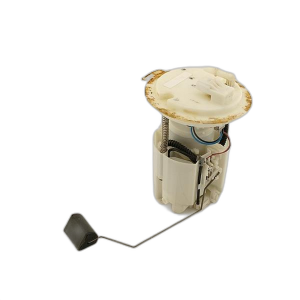
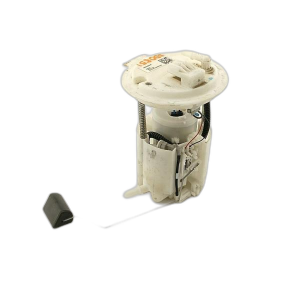
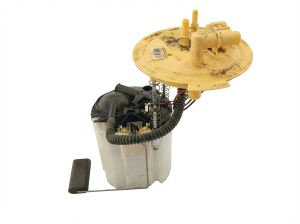
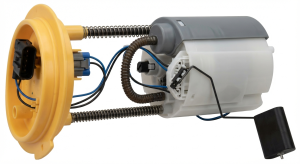
On a 2007-2018 Jeep Wrangler JK, code P0463 is almost always caused by a failed fuel level sending unit. Since the sender is part of the fuel pump module, the fix is to replace the entire module, which costs $200-$400 for the part and requires dropping the fuel tank. Before replacing, check the wiring harness for damage, as off-roading can cause issues.
- P0463 on your Wrangler JK almost certainly means you need a new fuel pump module, as the sensor is built into it.
- Before ordering parts, perform a quick visual inspection of the wiring harness leading to the fuel tank for obvious damage, as this could be a cheaper fix. Water intrusion is a known cause of this code.
- This repair requires dropping the fuel tank, which is a moderately difficult DIY job. Run the tank as empty as possible before starting.
- Inspect your fuel tank skid plate. It is very likely to be rusted and you should plan on potentially replacing it at the same time.
What's Unique About the 2007-2018 Jeep Wrangler
For the Jeep Wrangler JK, this code is a very common issue. The fuel level sending unit is integrated directly into the fuel pump module inside the gas tank. This means that a failure of the small sensor component typically requires replacing the entire fuel pump assembly. Due to the Wrangler's off-road nature, the wiring harness leading to the fuel tank is also more susceptible to damage from debris or water intrusion, which can mimic the symptoms of a failed sensor. A forum user on JK-Forum.com specifically noted the P0463 code would only appear after driving through a creek, and would resolve itself after drying out, strongly indicating a wiring or connector issue.
Generation note: This guide covers the Jeep Wrangler JK generation, produced from 2007 to 2018. Note that in 2018, both the outgoing JK and the new JL generation were sold. This guide is specific to the JK model. The 2007-2011 models use the 3.8L V6, while the 2012-2018 models use the 3.6L Pentastar V6, which may use different part numbers for the fuel pump module.
Symptoms You May Notice
- Check Engine Light is on
- Fuel gauge reads full at all times
- Fuel gauge reads empty, even with fuel in the tank
- Fuel gauge fluctuates erratically
- Low fuel warning light may be on or flashing
- In some cases, the gauge may read correctly when the engine is off (ignition on) but fail once the engine is running
- Replacing only the fuel pump when the sending unit is the actual problem (they are sold together in a module for this reason).
- Replacing the instrument cluster before verifying the sensor and wiring.
- Assuming a new fuel pump module will fix the issue without first checking the wiring harness for damage.
Most Likely Causes
- Failed Fuel Level Sending Unit 🔴 High Probability → Shop Fuel Tank Sending Unit The sending unit's resistive strip wears out over time, creating an open circuit that the PCM reads as high voltage. It is integrated into the fuel pump module, a common failure item. This is the most frequent cause of P0463. 🎬 Watch: How to diagnose and fix the P0463 engine code
How to confirm: Use a multimeter to test the resistance of the sending unit at the fuel pump connector. As you rock the vehicle to slosh the fuel, the resistance should change smoothly. An infinite (OL) reading indicates a failed sender. A user on a forum confirmed this diagnostic method, isolating the problem to the variable resistor inside the module.
Typical fix: Replace the entire fuel pump module assembly, which includes the fuel pump, fuel level sending unit, and float. 🎬 See this step-by-step fuel pump replacement walkthrough
Est. part cost: $150-$400 - Damaged Wiring or Corroded Connector 🟡 Medium Probability The wiring harness runs along the frame to the top of the fuel tank and is exposed to water, mud, and potential impacts from off-roading, which can cause corrosion or breaks.
How to confirm: Visually inspect the wiring harness leading to the fuel tank for any chafing, breaks, or corrosion, especially at the main connector on top of the tank. A forum user noted the issue only occurred after driving through water, indicating a compromised connector or wire. Another user replaced the sending unit but the code remained, suggesting the next step is to troubleshoot the circuit wiring.
Typical fix: Repair the damaged section of wire or clean/replace the corroded connector.
Est. part cost: $10-$50 - Poor Ground Connection ⚪ Low Probability The fuel pump module relies on a solid ground to the vehicle's chassis. Frame rust or a loose ground strap can create high resistance in the circuit, which the PCM can interpret as a high voltage signal.
How to confirm: Locate the ground strap for the fuel tank/pump circuit and check for corrosion or looseness. Perform a voltage drop test on the ground circuit. The ground point should be inspected for rust, which is common on these vehicles.
Typical fix: Clean the grounding point on the frame and re-secure the ground wire.
Est. part cost: $0-$10
Rare But Worth Checking
- Faulty Instrument Cluster: → Shop Instrument Cluster A failure in the instrument cluster itself can cause incorrect gauge readings, though it's less likely to be the source of the P0463 code, which is set by the PCM based on the sensor input voltage.
- Faulty Powertrain Control Module (PCM): In very rare cases, the PCM's internal circuit for reading the fuel level sensor can fail. This should only be considered after all other possibilities have been exhaustively ruled out.
- Faulty TIPM (Totally Integrated Power Module): While more known for causing fuel pump relay issues (crank-no-start), a failing TIPM can cause a host of bizarre electrical problems. A user on a forum replaced the fuel pump twice for P0463 before also replacing the TIPM to try and solve the recurring problem.
Diagnosis Steps
- Read the trouble codes with an OBD-II scanner to confirm P0463 is present.
- Check for any other related codes.
- Visually inspect the wiring harness running to the fuel tank. Look for any signs of physical damage, chafing against the frame, or corrosion at the connectors. Pay special attention to areas exposed to water or trail damage.
- Using a scan tool with live data, observe the 'Fuel Level' voltage or percentage. If it's stuck at a maximum value (e.g., >4.8V), it confirms the high circuit input.
- Special Test: With the ignition in the 'ON' position (engine off), check if the fuel gauge reads correctly. Then, start the engine. If the gauge only fails when the engine is running, it could point to an issue influenced by engine vibration or voltage changes from the alternator, as noted by one owner.
- If wiring appears okay, the next step is to test the sending unit itself. This requires accessing the connector on top of the fuel tank.
- Disconnect the fuel pump module connector. Using a multimeter set to Ohms, measure the resistance between the pins for the fuel level sender (refer to a service manual for pinout).
- A reading of open loop (OL) or infinite resistance points to a failed sending unit. You can also try shaking the vehicle to see if the reading becomes erratic, which also indicates a failing resistor.
- If the sender and wiring test good, the issue could be a rare fault in the instrument cluster or PCM, which may require professional diagnosis.
Parts You'll Likely Need
- Fuel Pump and Sending Unit Assembly
(OEM #68003444AA (for 3.8L V6, 2007-2010), 68145826AB (for 3.6L V6, 2011-2018))— This is the most common cause of failure. The sending unit wears out and is only sold as part of the complete fuel pump module for the JK Wrangler.
Trusted brands: Mopar, Delphi, Crown Automotive
OEM price range: $250-$400
Aftermarket price range: $150-$250 - Fuel Tank Skid Plate
(OEM #Dorman 999-975 (2-door) or 999-900 (4-door Unlimited))— Often found to be severely rusted when dropping the fuel tank, especially in regions where roads are salted. It is common to replace it at the same time as the fuel pump. The skid plate also provides structural support for the plastic fuel tank.
Trusted brands: Mopar, Dorman, Rough Country
OEM price range: $200-$350
Aftermarket price range: $150-$250
Platform-Specific Known Issues
- The fuel tank skid plate on the JK Wrangler is known to trap moisture and rust out, often requiring replacement when servicing the fuel pump. A severely rusted skid plate is a safety issue as it is the primary support for the fuel tank. 🎬 Watch: How to replace the fuel tank and skid plate
- The EVAP line connections on top of the fuel tank can become brittle and break during fuel pump replacement. A video guide for a 2008 JK specifically calls out a broken rollover valve connector as a common issue during the job.
Mechanic-Grade Diagnostic Values
- Fuel Level Sending Unit Resistance — expected: Approximately 80 Ohms at Full to 998 Ohms at Empty.. Failure: An open circuit (OL on multimeter) or erratic, non-linear readings when rocking the vehicle to slosh fuel. A reading of ~52 Ohms that jumps to OL when disturbed indicates a faulty sender.
- Fuel Level Sensor Signal Voltage — expected: 0.5V (Empty) to 4.5V (Full) at the PCM.. Failure: A reading consistently above 4.8V indicates a circuit high condition, triggering P0463.
- Ground Circuit Resistance — expected: Less than 5 Ohms.. Failure: A value above 5 Ohms between the sensor ground terminal and the chassis suggests a poor ground connection that needs to be cleaned or repaired.
Scan Tool Commands That Help
- Professional OBD-II Scanner (e.g., WiTECH): Bidirectional control to read fuel-level sensor input. — Use this to command the PCM/ECM to read the sensor's input directly. If the scan tool shows a correct value from the sensor but the gauge is wrong, it points towards an instrument cluster issue. If the scan tool shows a high/fixed value despite a good sensor, it may point towards a PCM issue.
Wiring & Ground Locations
- Fuel Pump Module Connector (C317) — On top of the fuel tank, accessible after dropping the tank.. This is the primary connection point for testing the fuel level sender and pump. Pin 2 (Dark Blue wire) is the fuel level signal wire where voltage/resistance should be measured. Pin 1 (Black wire) is the ground.
- G301 / Fuel Pump Ground — Typically a small black wire coming from the sending unit that grounds to the body/frame directly above the fuel tank.. Corrosion or a break in this ground wire can cause high resistance in the circuit, leading to a P0463 code. On Wranglers, this location is highly susceptible to rust and mud.
- G201 / G203 — Under the kick panel in the passenger footwell.. These are common interior chassis ground points. While not the primary ground for the fuel pump, a problem here could indicate wider vehicle grounding issues that might manifest as strange electrical faults.
Real Owner Repair Stories
- JK-Forum.com user Mgh20180 (2009 Jeep Wrangler JKU Rubicon) — P0463 and fuel gauge failure would only occur after the vehicle's underside got wet, such as after a creek crossing. The issue would resolve itself once the vehicle dried out.
❌ Tried (didn't work) Initial visual inspection showed no obvious damage.
✅ What actually fixed it The problem was identified as water intrusion into a damaged wiring harness or connector for the fuel pump module. The intermittent nature tied directly to moisture confirmed it was not a failed sending unit, but an external circuit problem. - JK-Forum.com user KTMKayaker (Jeep Wrangler JKU with a swapped-in 2006 TJ fuel tank.) — Fuel gauge read half-full when the tank was actually empty, leading to running out of gas. Initially threw a P0462 (Circuit Low) but the principle is the same.
❌ Tried (didn't work) Replacing the fuel pump with a Bosch unit for a TJ., Verifying the float arm had full range of motion.
✅ What actually fixed it Discovered that the fuel level sending unit resistance ranges are incompatible between a TJ and a JK. The TJ sender is 220 ohms (empty) to 21 ohms (full), while the JK sender is 998 ohms (empty) to 80 ohms (full). The fix required using a JK-compatible sending unit.
Model Year Variations Within This Range
- 2007-2011 vs 2012-2018: The engine changed from the 3.8L V6 to the 3.6L Pentastar V6 in 2012. This requires different fuel pump module part numbers (e.g., 68003444AA for 3.8L vs. 68145826AB for 3.6L). While the P0463 code diagnosis is the same, the replacement part is different.
Diagnostic Flowchart
Other Known Issues on This Vehicle
Issues unrelated to this code that are worth knowing about as an owner of this generation:
- Death Wobble 🔴 High — Common, especially on lifted vehicles, but can occur on stock models. Typically triggered by hitting a bump at speeds over 45 mph. Caused by worn front-end components like the track bar, ball joints, or tie rod ends. (Ref: While no single recall covers all instances, various service bulletins and a class-action lawsuit settlement for 2018-2020 models have addressed related steering components.)
- TIPM (Totally Integrated Power Module) Failure 🟠 Medium — Very common on 2007-2013 models. Causes a wide range of bizarre electrical issues, including fuel pump problems (crank-no-start), horn honking randomly, wipers activating on their own, and door lock malfunctions. (Ref: No official recall, but the issue is widely documented. The most common failure is the internal fuel pump relay.)
- Cracked Exhaust Manifolds (3.8L V6) 🟠 Medium — A very common issue on the 2007-2011 models equipped with the 3.8L V6 engine. The cast iron manifolds are prone to cracking, causing an exhaust leak typically heard as a ticking noise that may quiet down as the engine warms up.
- Oil Cooler/Filter Housing Leaks (3.6L V6) 🟠 Medium — Common on 2012-2018 models with the 3.6L Pentastar engine. The plastic oil filter housing, located in the engine valley, can crack and leak oil.
- Water Leaks (Hardtop and Soft Top) 🟡 Low — Extremely common across all years. Leaks from the door seals, A-pillar, and roof panels can lead to wet floorboards and potential electrical issues.
Used vs. New Parts: Buying Guide for This Vehicle
When a used part is the smart pick: A used fuel tank skid plate from a dry, rust-free region is an excellent choice to save money. A used wiring harness pigtail is also viable if only the connector is damaged. A used fuel pump module is a significant gamble due to the high labor cost of replacement and should only be considered from a very low-mileage donor vehicle.
Donor-vehicle mileage cap: roughly under 75000 miles for the part to have meaningful remaining life.
What to inspect on the donor part:
- For skid plates: check for deep rust pits or perforations. Surface rust is acceptable and can be treated.
- For wiring: check for brittle plastic, cut wires, or heavy corrosion on pins.
- For fuel pump module: No reliable external cues. It's an electronic/mechanical part where failure is not always visible.
OEM-only on this vehicle (don't cheap out):
- Totally Integrated Power Module (TIPM) - Aftermarket versions are known to be highly unreliable and can cause more electrical issues.
Aftermarket brands forum-validated for this vehicle:
- Delphi
- Bosch
Brands owners have reported issues with on this vehicle:
- Spectra
- Carter
- Airtex
Real Owner Stories
Aggregated from forums and TSBs cited above. Mileages and costs reflect what owners reported in those sources.
2008 Jeep Wrangler JK
Symptoms: The fuel gauge failed specifically when the engine was running, though it appeared to function correctly when the ignition was in the 'ON' position with the engine off.
What fixed it: Diagnosis pointed to issues influenced by engine vibration or alternator voltage changes affecting the fuel circuit.
Source hint: JK-Forum.com - An owner reported the gauge failing only when the engine is running
Jeep Wrangler JK
Symptoms: The P0463 code and fuel gauge issues occurred specifically after driving the vehicle through water.
What fixed it: Inspection of the wiring harness and connectors for water intrusion or compromise.
Source hint: JK-Forum.com - Corroborated that water intrusion on the underside can trigger P0463
Jeep Wrangler JK
Symptoms: P0463 code persisted even after the owner replaced the fuel level sending unit.
What fixed it: Troubleshooting the circuit wiring for breaks or high resistance after the component replacement failed to clear the code.
Source hint: JK-Forum.com - A user replaced the sending unit but the P0463 code remained
2008 Jeep Wrangler JK
Symptoms: Fuel gauge malfunction and P0463 code; during the repair, the rollover valve connector was found to be fragile.
What fixed it: Replacement of the fuel pump module assembly, while taking care not to break the brittle EVAP line connections.
Source hint: A video guide for a 2008 JK specifically calls out a broken rollover valve connector
Related OBD-II Codes
Frequently Asked Questions
Is there a specific TSB or recall for the TIPM failure on my 2007-2013 Wrangler that might cause fuel pump issues?
Why does my fuel gauge only fail when the engine is running but work when the ignition is just 'ON'?
I just replaced my fuel pump but the P0463 code is still there. What should I check next?
Do I need to replace the entire fuel pump assembly to fix a P0463?
Are there any other parts I should inspect while dropping the tank to fix the fuel sender?
Could off-roading be the cause of my P0463 code?
Helpful Videos
Used OEM Parts in Stock
New Aftermarket Parts Available



The information in this article is provided for general reference and educational purposes only. Vehicle specifications, procedures, and part compatibility can vary by production date, trim level, and region. Always consult your vehicle's factory service manual and verify part numbers before purchasing or performing repairs. Safety-critical components such as airbags, seat belts, and braking systems should be installed by a qualified professional.
- Jeep Wrangler:
- 🧭 Diagnostic Flowchart
- 🎬 Helpful Videos
- 🛍️ Shop This Part
- What's Unique About the 2007-2018 Jeep Wrangler
- Symptoms You May Notice
- Most Likely Causes
- Rare But Worth Checking
- Diagnosis Steps
- Parts You'll Likely Need
- Platform-Specific Known Issues
- Mechanic-Grade Diagnostic Values
- Scan Tool Commands That Help
- Wiring & Ground Locations
- Real Owner Repair Stories
- Model Year Variations Within This Range
- Other Known Issues on This Vehicle
- Used vs. New Parts: Buying Guide for This Vehicle
- Real Owner Stories
- 2008 Jeep Wrangler JK
- Jeep Wrangler JK
- Jeep Wrangler JK
- 2008 Jeep Wrangler JK
- Related OBD-II Codes
- Frequently Asked Questions
- 🎟️ Get 5% Off