

P0463 on 2014-2018 Kia Forte: Fuel Level Sensor Circuit High Causes and Fixes
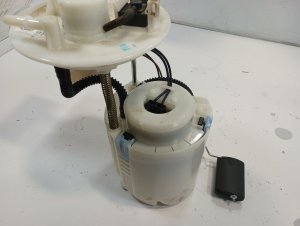
This code almost always means the fuel level sending unit has failed. It's located in the fuel tank as part of the fuel pump assembly. Expect to pay $80-$150 for an OEM replacement sender, and the job can be done by a skilled DIYer in about 1-2 hours. The issue is common enough that it also affects its platform-mate, the Hyundai Elantra.
- P0463 on a 2014-2018 Forte points directly to a problem with the fuel level sensor circuit, most often the sensor itself, which is a very common failure on this platform.
- The sensor is located inside the fuel tank, attached to the fuel pump, but is accessible from under the rear seat without removing the tank.
- You can drive with this code, but you risk running out of gas. It's best to track mileage as a backup until it's fixed.
- Verify your vehicle's model year before ordering parts, as the fuel sending unit part number is different for 2014-2016 (94460-A7000) and 2017-2018 (94460-B0000) models.
- While DIY is possible, it involves working with fuel lines. Take proper safety precautions, like disconnecting the battery, working in a well-ventilated area, and having a fire extinguisher nearby.
What's Unique About the 2014-2018 Kia Forte
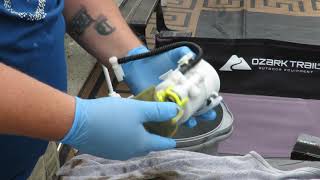
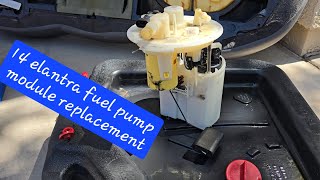
On the second-generation Kia Forte (and its sibling, the Hyundai Elantra), the fuel level sensor (or sending unit) is a very common failure item that leads to the P0463 code. The sensor is integrated into the fuel pump module, which is accessible from an access panel under the rear seat cushion, making replacement possible without the difficult job of dropping the fuel tank. 🎬 Watch: This step-by-step guide shows how to replace the fuel pump. Be aware that the part number for the sending unit changed for the 2017 model year, so it's crucial to buy the correct part for your specific vehicle.
Symptoms You May Notice
- Check Engine Light is on
- Fuel gauge reads incorrectly (e.g., stuck on full, stuck on empty, or fluctuates randomly)
- Low fuel warning light may be illuminated even with fuel in the tank
- Distance-to-empty (DTE) display is inaccurate or shows zero
- Replacing the entire fuel pump assembly when only the less expensive sending unit has failed. While replacing the whole assembly is preventative, it's not always necessary to fix just the P0463 code.
- Mistaking the code for a catalytic converter issue. One owner on a forum reported a shop incorrectly diagnosed P0463 as a bad catalytic converter, which is entirely unrelated.
Most Likely Causes
- Faulty Fuel Level Sending Unit 🔴 High Probability → Shop Fuel Tank Sending Unit The variable resistor on the sending unit wears out over time, which is a common failure pattern for this component across many vehicles, including the Forte. The failure is so common on this platform that it's the first and most likely culprit.
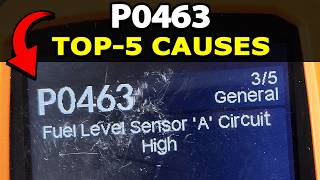
How to confirm: Access the fuel pump connector under the rear seat. Use a multimeter to measure the resistance of the sending unit circuit while manually moving the float arm (if the unit is removed). The resistance should change smoothly. An open circuit (infinite resistance) or a reading that doesn't change indicates a bad sensor. A high input code specifically points to an open in the sensor's resistor strip. 🎬 See how to diagnose and fix the P0463 circuit high code.
Typical fix: Replace the fuel level sending unit. Since it is attached to the fuel pump module, some owners choose to replace the entire fuel pump assembly at the same time, especially on higher mileage vehicles or if the pump is original.
Est. part cost: $80-$150 - Wiring or Connector Issue 🟡 Medium Probability The connector is located under the rear seat, where it can potentially be disturbed, damaged during other repairs, or corrode if moisture gets under the carpet, though this is less common than sensor failure.
How to confirm: Visually inspect the wiring harness and connector at the top of the fuel pump assembly for any signs of damage, corrosion, or loose pins. A high input code can be caused by a short to power or an open in the ground circuit. Check for continuity on the signal and ground wires between the pump connector and the PCM.
Typical fix: Repair the damaged section of wiring or clean/replace the connector.
Est. part cost: $5-$50
Rare But Worth Checking
- Faulty Instrument Cluster: → Shop Instrument Cluster While rare, the instrument cluster itself can fail, causing incorrect gauge readings. This is usually suspected only after the sending unit and wiring have been confirmed to be good.
- Faulty Powertrain Control Module (PCM): A PCM failure is extremely rare but possible. This should be the last item to consider after all other possibilities have been exhausted.
Diagnosis Steps
- Scan the vehicle's computer system to confirm P0463 is the only code present. If other codes exist, address them first.
- Gain access to the fuel pump assembly by removing the rear seat bottom cushion (held by two 12mm bolts and front clips 🎬 Watch: A helpful walkthrough for removing the seat and fuel pump.) and the black service cover sealed with black butyl tape.
- With the key on, check the voltage at the fuel level sensor signal wire. A reading of 5 volts or higher points towards an open circuit or a faulty sensor.
- Disconnect the battery. Disconnect the fuel pump connector and inspect it for corrosion or damage.
- Use a multimeter to test the resistance of the fuel level sensor at the connector pins. Refer to a service manual for the correct pins and resistance specifications for your model year. An infinite resistance reading (open circuit) is a definitive sign of a failed sender.
- If the resistance is out of specification, the sending unit is faulty and needs to be replaced.
- If the sensor tests good, the problem lies in the wiring between the pump and the PCM. Check for an open or short in the signal wire or an open in the ground wire.
- In very rare cases where the sensor and wiring are confirmed good, the issue could be with the instrument cluster or the PCM itself.
Parts You'll Likely Need
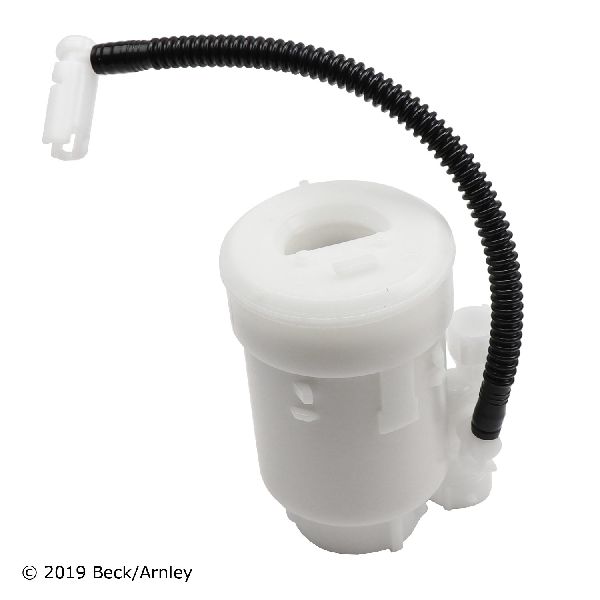
- Fuel Pump Sender Assembly (Fuel Level Sensor)
(OEM #94460-A7000 (for 2014-2016 models), 94460-B0000 (for 2017-2018 models))— This is the most common failure point for code P0463. The internal resistor fails, causing an open circuit and a high voltage signal. Part numbers differ by model year, so verifying with a VIN is critical. The Pass 1 part numbers were for a different Hyundai/Kia model and have been corrected.
Trusted brands: Genuine Kia, Delphi, Spectra Premium
OEM price range: $90-$150
Aftermarket price range: $60-$110 - Fuel Pump Assembly
(OEM #31110-A7000 (for 2014-2016 models), 31110-B0000 (for 2017-2018 models))— The sending unit is part of the fuel pump assembly. Many owners and shops opt to replace the entire module as a preventative measure, especially if the fuel pump is original and has high mileage. This avoids having to do the job twice if the pump fails later.
Trusted brands: Delphi, Bosch, Spectra Premium
OEM price range: $350-$500
Aftermarket price range: $150-$300 - Fuel Tank Lock Ring
(OEM #31152-0W000)— This plastic ring holds the fuel pump assembly in the tank. It can be brittle and is often damaged or difficult to remove without the proper tool. It's a cheap part worth replacing to ensure a proper seal.
Trusted brands: Genuine Kia
OEM price range: $10-$20
Aftermarket price range: $5-$15
Platform-Specific Known Issues
- Owner Experience: Code Appears Only on Full Tank: Some owners on forums have noted that the P0463 code only appears immediately after filling the fuel tank completely. As the fuel level drops, the code may clear on its own, only to return at the next fill-up. This is a classic symptom of a worn-out spot at the 'full' end of the sensor's resistor strip.
Mechanic-Grade Diagnostic Values
- Fuel Level Sensor Signal Voltage — expected: Approximately 0.5V (Full) to 4.5V (Empty). Varies by model.. Failure: A signal voltage greater than 4.5V - 4.8V, or a steady 5V, indicates an open circuit or faulty sensor, triggering P0463.
- Fuel Level Sensor Resistance — expected: Resistance should be low when the tank is full and increase smoothly as the level drops.. Failure: An infinite resistance (Open Loop) reading across the sender pins, or a reading that does not change when the float arm is moved, indicates a failed sensor.
- Low-Pressure Fuel System Pressure at Idle — expected: 46.9 - 52.6 psi (323 - 363 kPa).. Failure: While not a direct cause of P0463, low pressure indicates a weak fuel pump, which may lead a technician to replace the entire assembly.
Scan Tool Commands That Help
- Kia GDS (Global Diagnostic System): Clear DTCs — May be required after performing diagnostic steps that involve disconnecting the fuel pump relay, as this can set other temporary codes.
- Kia GDS or equivalent professional scan tool: Fuel Pump Activation / Fuel System Test — This is a likely available bidirectional test to command the fuel pump to run with the engine off. It helps verify the pump motor's operation and check for leaks, confirming part of the assembly is functional before focusing solely on the sender circuit.
Wiring & Ground Locations
- GC301 — Left rear of the engine compartment.. This is the ground point for the fuel tank level sender on the 2015 2.0L Forte. A poor connection at this specific ground could cause an open circuit, leading to the high voltage reading of a P0463 code.
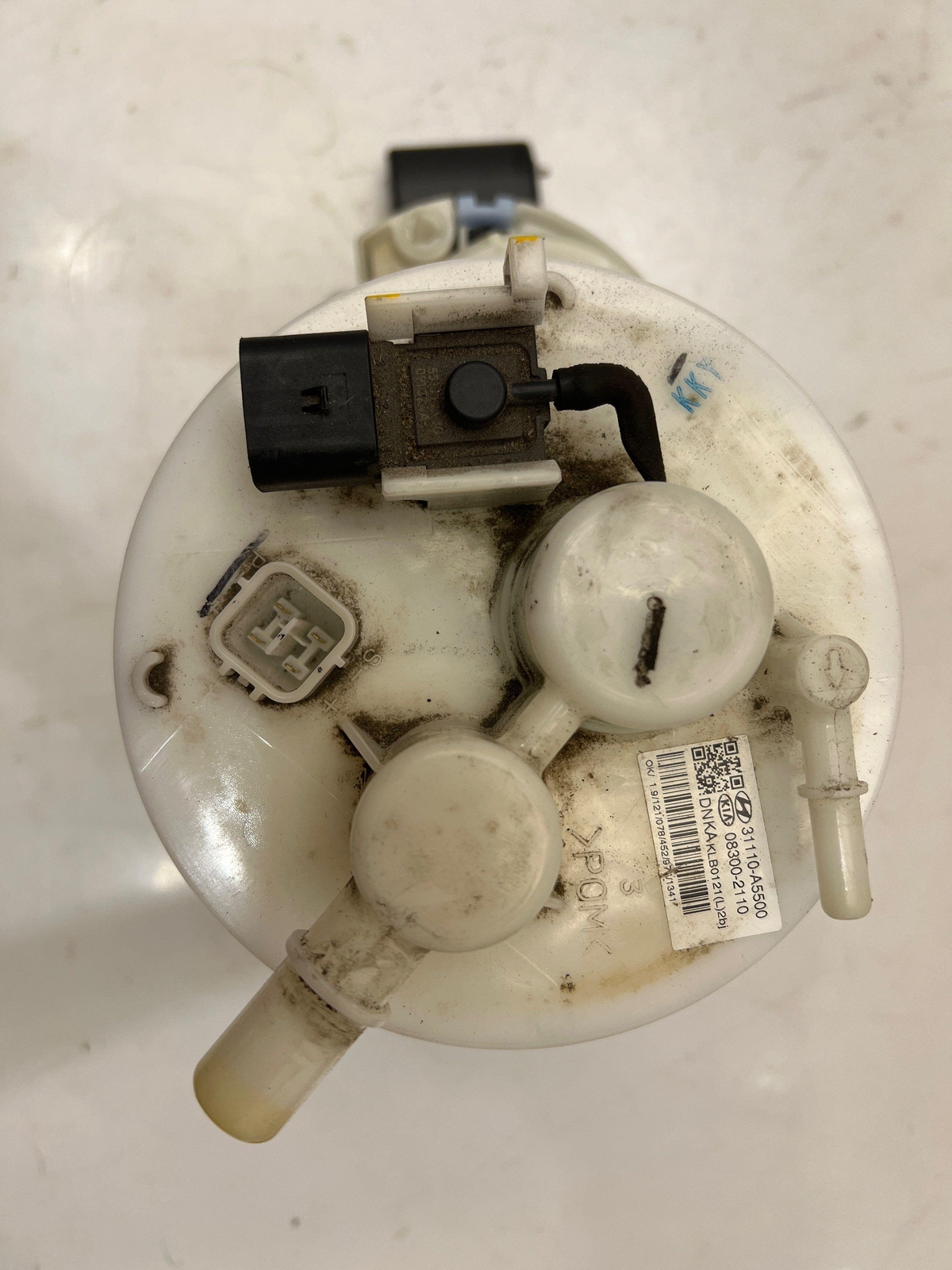
- Fuel Pump Assembly Connectors — On top of the fuel pump assembly, under the access panel beneath the rear seat.. There are two separate connectors: one for the fuel pump motor and one for the fuel level sender. A visual inspection for corrosion or damage here is a primary diagnostic step. P0463 specifically relates to the sender connector and its wiring.
Real Owner Repair Stories
- YouTube: 'G Automotive Repair' (2015 Kia Forte, 82,895 miles) — P0463 code stored (Check Engine Light was not on), fuel gauge reads incorrectly after filling up, and two instances of the car not starting.
❌ Tried (didn't work) The diagnosis went straight to the fuel pump assembly, as it is the most common cause.
✅ What actually fixed it The entire fuel pump module, which includes the integrated fuel level sensor, was replaced. The video documents the complete repair process.
OEM Part Supersession History
94460-A7000→N/A - This is the correct part for the specified years.— Part for 2014-2016 model years.
Heads up: This part is for pre-facelift models and is not compatible with 2017-2018 vehicles.94460-B0000→N/A - This is the correct part for the specified years.— Part for 2017-2018 model years, following the mid-generation refresh.
Heads up: This part is for post-facelift models and is not compatible with 2014-2016 vehicles.
Model Year Variations Within This Range
- 2017-2018: The 2017 model year refresh introduced changes that require different part numbers for the fuel pump and sending unit. Furthermore, within these later years, there can be different part numbers for vehicles with Federal vs. California emissions standards, and for MPI (Multi-Point Injection) vs. GDI (Gasoline Direct Injection) engines. It is critical to verify the correct part number with the vehicle's VIN.
Diagnostic Flowchart
Other Known Issues on This Vehicle
Issues unrelated to this code that are worth knowing about as an owner of this generation:
- Engine Failure (Nu 2.0L GDI/MPI) 🔴 High — Widespread enough to trigger multiple recalls (e.g., NHTSA 20V750, 21V622000) and a class-action lawsuit. Problems include excessive oil consumption, connecting rod bearing wear, and potential for engine seizure or fire. (Ref: NHTSA Recalls 20V750, 21V622000; Kia Class Action Settlement (In re: Hyundai and Kia Engine Litigation II))
- Electrical System Faults 🟠 Medium — A high number of owner complaints relate to the electrical system, including issues with lighting, speakers failing, and various sensor malfunctions.
- Transmission Hesitation/Jerking (DCT models) 🟡 Low — Owners of models equipped with the Dual-Clutch Transmission (DCT), primarily the GT models, sometimes report jerky or hesitant behavior at low speeds. This is often described as a characteristic of the technology rather than a defect, but can be concerning for drivers unfamiliar with DCTs.
- Air Bag Control Unit (ACU) Malfunction 🔴 High — A recall was issued for 2017-2018 models where the ACU cover could damage the circuit board, potentially deactivating the airbags. (Ref: NHTSA Recall 21V260000)
- Excessive Oil Consumption 🟠 Medium — Primarily affecting 1.8L and 2.0L engines in the 2014-2015 model years, some vehicles may experience scuffing between pistons and cylinders, leading to high oil consumption. Kia has issued TSBs to address this, such as TSB ENG222. (Ref: Kia TSB ENG222)
Used vs. New Parts: Buying Guide for This Vehicle
When a used part is the smart pick: It is strongly discouraged to buy a used fuel level sending unit. As a component with a variable resistor that wears out over time, a used part has an unknown and limited remaining lifespan. The labor involved in the replacement makes it unwise to use a part that may fail again soon.
Donor-vehicle mileage cap: roughly under 30000 miles for the part to have meaningful remaining life.
What to inspect on the donor part:
- Verify the part is from a vehicle with very low mileage.
- Inspect electrical connectors for any signs of green or white corrosion.
- Ensure the float arm is not bent and moves smoothly through its full range of motion without sticking.
- Check that the plastic housing is not cracked or brittle.
OEM-only on this vehicle (don't cheap out):
- While not strictly 'OEM-only', using a genuine Kia/Hyundai sending unit or a reputable OE-supplier like Delphi or Bosch is highly recommended for reliability and fitment.
Aftermarket brands forum-validated for this vehicle:
- Delphi
- Spectra Premium
- Bosch
Brands owners have reported issues with on this vehicle:
- Unbranded, low-cost units from online marketplaces are a significant gamble and may fail prematurely or provide inaccurate readings out of the box.
Real Owner Stories
Aggregated from forums and TSBs cited above. Mileages and costs reflect what owners reported in those sources.
2014 Kia Forte
Symptoms: Customer reported no symptoms when idle or driving; the check engine light was not on when brought in, but a history code P0463 was found.
What fixed it: The technician found the fuel level sensor connector was not plugged in properly. They reconnected it, performed a wiggle test, and reset the adaptives.
Source hint: New Motor Vehicle Board Decision (nhtsa_complaint)
2015 Kia Forte
Symptoms: Fuel gauge reading incorrectly and Check Engine Light on for P0463.
What fixed it: Replacement of the fuel pump assembly.
Source hint: YouTube: P0463 Kia Forte Fuel Pump [FIX] Replacement Hyundai Elantra by 'G Automotive Repair'
2014-2018 Kia Forte
Symptoms: Fuel gauge on empty even though the tank was half full; Check Engine Light on.
What fixed it: The owner was incorrectly told it was a catalytic converter, but the code P0463 actually requires fuel level sensor repair.
Source hint: Reddit r/MechanicAdvice: "Shop says I need new cats because of a P0463 Fuel Level Sensor A Circuit High??"
2014-2018 Kia Forte
Symptoms: The P0463 code only appears immediately after filling the fuel tank completely and may clear as the fuel level drops.
What fixed it: Replacement of the fuel level sending unit due to a worn-out resistor strip at the 'full' position.
Source hint: Owner Experience: Code Appears Only on Full Tank
Documented NHTSA Reports
Manufacturer Sibling Report
Symptoms: An owner of a related Kia model reported that filling the tank did not move the fuel gauge at all. A code reading identified OBD-II code P0463, described as a high pressure fuel sensor issue.
Context: The owner questioned if the failure was related to recent manufacturer recalls.
Source hint: NHTSA ODI #11316903
Related OBD-II Codes
Frequently Asked Questions
Where is the fuel level sensor located on my 2014-2018 Kia Forte?
Why does my fuel gauge only act up and trigger P0463 when I fill the tank completely?
Is there a recall for the P0463 code on the Kia Forte?
Can I replace just the sensor, or do I need a whole new fuel pump?
My shop says P0463 means I need a new catalytic converter. Is that right?
Does the Hyundai Elantra have this same problem?
Helpful Videos
![P0463 Kia Forte Fuel Pump [FIX] Replacement Hyundai Elantra | 2013 - 2015 | Level Circuit A High](https://img.youtube.com/vi/BWMGkKxxkAE/mqdefault.jpg)

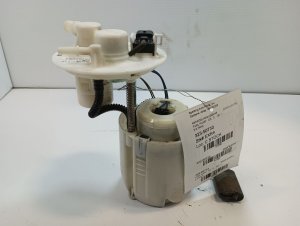
Used OEM Parts in Stock
New Aftermarket Parts Available


The information in this article is provided for general reference and educational purposes only. Vehicle specifications, procedures, and part compatibility can vary by production date, trim level, and region. Always consult your vehicle's factory service manual and verify part numbers before purchasing or performing repairs. Safety-critical components such as airbags, seat belts, and braking systems should be installed by a qualified professional.
- Kia Forte:
- 🧭 Diagnostic Flowchart
- 🎬 Helpful Videos
- 🛍️ Shop This Part
- What's Unique About the 2014-2018 Kia Forte
- Symptoms You May Notice
- Most Likely Causes
- Rare But Worth Checking
- Diagnosis Steps
- Parts You'll Likely Need
- Platform-Specific Known Issues
- Mechanic-Grade Diagnostic Values
- Scan Tool Commands That Help
- Wiring & Ground Locations
- Real Owner Repair Stories
- OEM Part Supersession History
- Model Year Variations Within This Range
- Other Known Issues on This Vehicle
- Used vs. New Parts: Buying Guide for This Vehicle
- Real Owner Stories
- 2014 Kia Forte
- 2015 Kia Forte
- 2014-2018 Kia Forte
- 2014-2018 Kia Forte
- Documented NHTSA Reports
- Manufacturer Sibling Report
- Related OBD-II Codes
- Frequently Asked Questions
- 🎟️ Get 5% Off