

P0463 on 2014-2019 Kia Soul: Fuel Level Sensor Circuit High Input Causes and Fixes
This code almost always means the fuel level sending unit in the gas tank has failed. The fuel gauge will be inaccurate. The fix is to replace the sensor, which is attached to the fuel pump module under the rear seat. Expect to pay $40-$90 for an aftermarket sensor and $100-$180 for an OEM part.
- P0463 on a 2014-2019 Soul means your fuel gauge is unreliable because the fuel level sensor has likely failed.
- The car is safe to drive, but you should track your mileage manually to avoid running out of fuel.
- The most probable fix is replacing the fuel level sending unit, which is attached to the fuel pump inside the gas tank.
- Accessing the part is straightforward for a DIYer: it's under the rear seat cushion.
- Always verify the correct part number for your vehicle's specific year, as it changed mid-generation.
What's Unique About the 2014-2019 Kia Soul
On the second-generation (2014-2019) Kia Soul, the fuel level sending unit is a known common failure item. While the code is generic, the cause on this specific vehicle is very frequently the sensor itself wearing out, rather than more complex wiring or computer issues. The sensor is attached to the main fuel pump assembly but can often be purchased and replaced separately, making for a more affordable repair. This issue is so prevalent that numerous owner forums and DIY videos specifically address this repair on the Gen 2 Soul.
Symptoms You May Notice
- Check Engine Light is on.
- Fuel gauge reads empty, even after filling the tank.
- Fuel gauge is stuck on full.
- Fuel gauge fluctuates erratically or gives inconsistent readings.
- The 'Distance to Empty' (DTE) display is inaccurate or shows flashing dashes.
- Low fuel warning light is on constantly, regardless of fuel level.
- Replacing the entire fuel pump assembly when only the sending unit has failed. While they are housed together, the sending unit is often available as a separate, cheaper part.
- Assuming the issue is with the instrument cluster without first testing the sensor and its circuit.
Most Likely Causes
- Faulty Fuel Level Sending Unit 🔴 High Probability → Shop Fuel Tank Sending Unit This is a widely reported failure point on the 2014-2019 Kia Soul. The variable resistor contacts on the sensor wear out over time, leading to an open circuit or a signal voltage that is out of range (too high). Forum discussions and mechanic reports confirm this is the most frequent culprit for P0463 on this platform.
How to confirm: Access the fuel pump electrical connector under the rear seat. Use a multimeter set to Ohms to measure the resistance across the two fuel level sensor pins. If the circuit is open (OL or infinite resistance) or the resistance does not change when you rock the vehicle to slosh fuel around, the sensor is bad. A normal resistance range should be checked against a service manual, but a failed sensor often reads completely open.
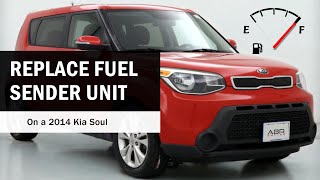
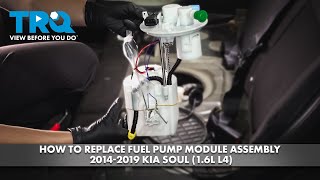
Typical fix: Replace the fuel level sending unit. This requires removing the fuel pump assembly from the tank to access and swap the sensor. The sensor itself unclips from the side of the fuel pump module. 🎬 Watch: How to swap the fuel sensor unit on a Soul
Est. part cost: $40-$180 - Damaged Wiring or Poor Connection ⚪ Low Probability While less common than sensor failure, wiring can be damaged by rodents or corrosion, especially the harness on top of the fuel tank.
How to confirm: Visually inspect the wiring harness leading to the fuel pump assembly. Look for any breaks, corrosion, or signs of rodent damage. Check for a solid connection at the fuel pump module connector and ensure the ground connection for the circuit is clean and tight.
Typical fix: Repair the damaged section of the wiring harness or clean the corroded connectors.
Est. part cost: $5-$25
Rare But Worth Checking
- Stuck Fuel Float Arm: Less common than outright sensor failure, but the float arm can become physically jammed in the 'full' position due to debris or deformation within the tank.
- Faulty Instrument Cluster or PCM: → Shop Instrument Cluster This is extremely rare. Before suspecting the cluster or computer, all other possibilities with the sensor and wiring should be exhaustively ruled out. A diagnostic scan tool capable of reading live data from the instrument cluster could help verify if the cluster is receiving the correct signal from the PCM.
Diagnosis Steps
- Scan the vehicle for trouble codes to confirm P0463 is the primary code.
- Gain access to the fuel pump assembly by removing the rear seat bottom cushion. This typically involves removing one or two bolts and then lifting the seat.
- Remove the black metal access plate, which is usually held on by several Phillips head screws.
- Disconnect the electrical connector from the top of the fuel pump assembly. Be sure to clean any dust or debris from the area first to prevent it from falling into the tank later.
- Identify the pins for the fuel level sensor. Using a multimeter set to Ohms, measure the resistance between these pins.
- An open circuit (OL or infinite resistance) indicates a failed sensor, which is the most common finding for this code.
- If you get a resistance reading, gently rock the vehicle side-to-side to make the fuel slosh in the tank. The resistance reading should change. If it is stuck on one value, the sensor or float is bad.
- If the sensor tests good, the next step is to inspect the wiring harness for damage, shorts to power, or a bad ground connection between the pump and the PCM.
- If the sensor is confirmed bad, proceed with removing the fuel pump assembly to replace the sending unit. This involves disconnecting fuel lines and unbolting the pump's retaining ring.
Parts You'll Likely Need
- Fuel Pump Sending Unit (Fuel Level Sensor)
(OEM #94460-B2000, 94460-2K300, 94460-2V000)— This is the most common point of failure for the P0463 code on this vehicle. The resistive element wears out, causing the 'high input' signal. Part number can vary by specific model year and trim, so confirming with a VIN is essential. For example, 94460-2V000 is cited in some repair videos.
Trusted brands: Kia (OEM), Spectra Premium, Delphi, Autotecnica
OEM price range: $100-$180
Aftermarket price range: $40-$90
Technical Service Bulletins (TSBs) & Recalls
- No specific TSB for P0463 on the 2014-2019 Kia Soul was found during research. The issue is typically handled as a standard component failure and repair.
Platform-Specific Known Issues
- A user on kiasoulforums.com described their fuel gauge dropping to empty with the check engine light on, a classic symptom. Another member confirmed this is a common DIY project, pointing to the accessibility of the sensor under the rear seat.
- A Reddit thread in r/AskMechanics about a 2014 Soul with a fuel gauge reading empty after a fill-up had a top comment correctly diagnosing a likely P0463 and a failed level sensor, calling it a very common issue on Kias.
Mechanic-Grade Diagnostic Values
- Fuel Level Sensor Resistance — expected: Approximately 5-10 Ohms at Full, and 180-200 Ohms at Empty. The resistance should change smoothly as the float moves.. Failure: An open circuit (Infinite resistance or 'OL' on a multimeter) or a resistance value that is stuck and does not change when the vehicle is rocked.
- Fuel Level Sensor Signal Voltage — expected: A normal range is typically between 0.5V (Empty) and 4.5V (Full) on a 5V reference circuit.. Failure: A voltage reading consistently above 4.8V for a set period will trigger the P0463 code. This indicates an open in the signal circuit or a faulty sensor.
- Sensor Ground Circuit Resistance — expected: Less than 5 Ohms between the sensor's ground pin at the connector and a clean chassis ground.. Failure: Resistance above 5 Ohms indicates a poor ground connection, which can cause an artificially high signal voltage reading.
Scan Tool Commands That Help
- Kia GDS (Global Diagnostic System) / KDS: Live Data / Current Data — To monitor the raw fuel level sensor voltage and/or resistance value as seen by the PCM. This helps determine if the signal is faulty at the source or if the issue is with the instrument cluster's interpretation of the data.
- Kia GDS (Global Diagnostic System) / KDS: Actuation Test - Instrument Cluster — To command the fuel gauge to sweep through its range (e.g., Empty, 1/2, Full). If the gauge moves correctly during this test, the instrument cluster is likely good, and the fault lies in the sensor circuit. If it fails to move, the cluster itself is suspect.
- Kia GDS (Global Diagnostic System) / KDS: Reset Adaptive Values — After replacing the fuel level sensor or repairing the circuit, it's good practice to reset any learned values in the PCM or Body Control Module related to the fuel system to ensure the new part's readings are accepted immediately.
Wiring & Ground Locations
- F51 — The main electrical connector on top of the fuel pump assembly, accessible under the rear seat.. This is the primary test point for the fuel level sensor circuit. All voltage and resistance measurements should be taken here first to isolate the problem to the in-tank unit or the vehicle's body harness.
- G11 — A chassis ground point located under or near the rear seat area.. The fuel pump and sending unit rely on a solid ground connection. A corroded or loose G11 ground can cause high resistance in the circuit, leading to the P0463 code. Verifying this ground is a key step if the sensor itself tests good.
Real Owner Repair Stories
- Reddit user in r/KiaSoulClub (2016 Kia Soul) — Gas gauge dropped to 'E' with about a half tank of fuel.
❌ Tried (didn't work) A shop initially replaced just the fuel pump, but the problem returned two months later.
✅ What actually fixed it The shop then replaced the entire fuel pump and sender unit assembly, which resolved the problem. This suggests the aftermarket or initial replacement part was faulty or incomplete. - YouTube video by 'Fix it All' (2016 Kia Soul with 39,000 miles) — Fuel light on, gas gauge showing completely empty despite having at least half a tank.
❌ Tried (didn't work) The owner ruled out the instrument cluster and checked wiring for continuity and voltage, finding no issues.
✅ What actually fixed it Replaced only the fuel level sending unit (Part No. 94460-B2000), which was purchased from Kia for about $50, successfully fixing the gauge without replacing the entire expensive fuel pump assembly. - NHTSA ODI #11316903 (Kia Owner) — An owner of a similar Kia model reported that filling the tank did not move the gauge at all. A code reading identified P0463, which was described as a high pressure fuel sensor issue in their specific report.
When the Usual Fixes Don't Work
- While replacing only the sending unit is the most common and cost-effective fix, at least one owner reported that an aftermarket sending unit failed within months. The final, lasting repair was to replace the entire fuel pump module with an OEM assembly. This suggests that for long-term reliability, especially if the vehicle has higher mileage, replacing the complete OEM module may be a better investment than using an aftermarket sensor.
OEM Part Supersession History
94460-B2000→N/A, but has variations.— This part number is specific to the 2014-2016 Kia Soul.
Heads up: For the 2017-2019 models, which received a facelift, a different part number (e.g., 94460-D9000) is used. The parts are not physically interchangeable. The part number 94460-2K300 is for the first-generation Soul and will not work. Always confirm the part number with the vehicle's VIN.
Model Year Variations Within This Range
- 2014-2016 vs 2017-2019: The fuel level sending unit part number changed following the 2017 model year facelift. Early models typically use part number 94460-B2000, while later models use a different, non-interchangeable part.
Diagnostic Flowchart
Other Known Issues on This Vehicle
Issues unrelated to this code that are worth knowing about as an owner of this generation:
- Engine Failure / Excessive Oil Consumption (1.6L GDI & 2.0L Nu) 🔴 High — Widespread issue, particularly on 2012-2016 1.6L GDI and 2014-2015 2.0L Nu engines. Can occur at various mileages, often noted around 70,000-100,000 miles. (Ref: Multiple recalls, including SC176 and SC200, were issued to address engine risks. The recalls often involved a software update (KSDS) and, if necessary, engine inspection or replacement.)
- Catalytic Converter Failure 🟠 Medium — Common problem, often linked to the engine issues causing high exhaust temperatures or oil burning, which contaminates the converter. Often presents with code P0420. (Ref: Recall SC176 addresses catalytic converter damage on 2012-2016 1.6L models, including inspection and potential replacement.)
- Steering Coupler Failure 🟡 Low — A flexible rubber coupler in the electronic power steering column can wear out, causing a clicking or clunking noise when turning the steering wheel. This is a common issue across many Kia/Hyundai models of this era. (Ref: No specific recall, but it is a well-known repair. The part itself is inexpensive, but labor is involved to access it within the steering column.)
- Engine Compartment Fire Risk 🔴 High — Several recalls were issued for various model years within this generation due to risks of oil or fuel leaks leading to engine fires. (Ref: NHTSA campaign 19V120000 (SC176) is one example related to rod bearing wear that could lead to an oil leak and fire.)
Used vs. New Parts: Buying Guide for This Vehicle
When a used part is the smart pick: Buying a used fuel level sending unit is highly discouraged. Because it is a known wear item, a used part from a donor vehicle is likely to have significant wear and could fail soon after installation, repeating the problem.
Donor-vehicle mileage cap: roughly under 30000 miles for the part to have meaningful remaining life.
What to inspect on the donor part:
- Verify the donor vehicle's mileage is extremely low.
- Inspect the resistor card for any visible dark tracks or worn spots.
- Ensure the float arm moves freely without binding.
- Check connector pins for any signs of corrosion or heat damage.
OEM-only on this vehicle (don't cheap out):
- For maximum reliability and to avoid repeat repairs, the complete fuel pump module is best sourced as an OEM part. Some owner experiences show aftermarket sending units failing prematurely.
Aftermarket brands forum-validated for this vehicle:
- Spectra Premium
- Delphi
Brands owners have reported issues with on this vehicle:
- Unbranded, 'white-box' parts from online marketplaces are a significant gamble and have a higher risk of premature failure.
Real Owner Stories
Aggregated from forums and TSBs cited above. Mileages and costs reflect what owners reported in those sources.
2014 Kia Soul, base model — 160000 miles
Symptoms: Gas tank showed empty, then full; fuel gauge and distance will be empty and flash while driving occasionally; car just shuts down when driving occasionally.
What fixed it: Failed fuel level sensor on the pump assembly.
Source hint: Reddit - r/AskMechanics - '2014 Kia Soul P0463, P0420,P0300- where to start'
2014 Kia Soul
Symptoms: Fuel gauge reading empty immediately after a full tank fill-up.
What fixed it: Replacement of the fuel level sending unit.
Source hint: Reddit - r/AskMechanics - '2014 Kia Soul - Full tank if gas showing E'
2014-2019 Kia Soul
Symptoms: Fuel gauge dropping to empty with the check engine light on.
What fixed it: Replacing the fuel level sensor, accessed under the rear seat.
Source hint: KiaSoulForums.com - 'Is replacing the fuel level sensor a DIY project?'
Kia Owner (NHTSA ODI #11316903)
Symptoms: The fuel gauge did not move at all after filling the tank. A diagnostic scan performed at an auto parts store returned code P0463.
What fixed it: The owner sought dealership assistance regarding the high pressure fuel sensor code and its relation to existing recalls.
Source hint: NHTSA ODI #11316903
Related OBD-II Codes
Frequently Asked Questions
Is there a TSB or recall for the P0463 fuel level sensor issue on my 2014-2019 Kia Soul?
Can I replace the fuel level sensor myself on a 2014 Soul?
Why is my 'Distance to Empty' (DTE) display flashing dashes along with the P0463 code?
My 2014 Kia Soul is showing P0463 and P0420; are these related?
What is the typical cost for the parts to fix the P0463 code on this vehicle?
Helpful Videos
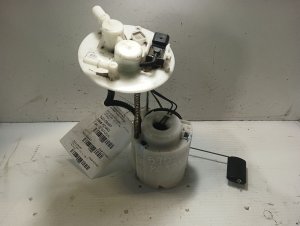
Used OEM Parts in Stock
New Aftermarket Parts Available

The information in this article is provided for general reference and educational purposes only. Vehicle specifications, procedures, and part compatibility can vary by production date, trim level, and region. Always consult your vehicle's factory service manual and verify part numbers before purchasing or performing repairs. Safety-critical components such as airbags, seat belts, and braking systems should be installed by a qualified professional.
- Kia Soul:
- 🧭 Diagnostic Flowchart
- 🎬 Helpful Videos
- 🛍️ Shop This Part
- What's Unique About the 2014-2019 Kia Soul
- Symptoms You May Notice
- Most Likely Causes
- Rare But Worth Checking
- Diagnosis Steps
- Parts You'll Likely Need
- Technical Service Bulletins (TSBs) & Recalls
- Platform-Specific Known Issues
- Mechanic-Grade Diagnostic Values
- Scan Tool Commands That Help
- Wiring & Ground Locations
- Real Owner Repair Stories
- When the Usual Fixes Don't Work
- OEM Part Supersession History
- Model Year Variations Within This Range
- Other Known Issues on This Vehicle
- Used vs. New Parts: Buying Guide for This Vehicle
- Real Owner Stories
- 2014 Kia Soul, base model — 160000 miles
- 2014 Kia Soul
- 2014-2019 Kia Soul
- Kia Owner (NHTSA ODI #11316903)
- Related OBD-II Codes
- Frequently Asked Questions
- 🎟️ Get 5% Off