

P0463 on 2003-2014 Nissan Murano: Fuel Level Sensor Causes and Fixes
This code means the primary fuel level sensor has failed, causing the gas gauge to read incorrectly (usually stuck on full). On the Murano, this is almost always a faulty sending unit on the driver's side of the fuel tank. The fix is to replace just the sensor, not the entire expensive fuel pump assembly. Expect to pay $70-$150 for an aftermarket sensor, with a DIY difficulty of 3/5.
- P0463 on a Murano almost certainly means the driver's side fuel level sensor has failed.
- Do NOT let a shop replace the entire fuel pump assembly. The sensor is available separately and is a much cheaper repair.
- The vehicle is safe to drive, but you must track your mileage to avoid running out of gas.
- The repair can be done by a DIYer with moderate skills by accessing the sensor through a panel under the rear seat.
- Ensure you purchase the correct sensor for your generation (2003-2007 vs. 2009-2014) and for the correct side (driver's/left side).
What's Unique About the 2003-2014 Nissan Murano
The Nissan Murano, like many AWD vehicles, uses a saddle-shaped fuel tank to accommodate the driveshaft. This design requires two separate fuel level sending units. Code P0463 specifically points to a fault in the 'A' circuit, which corresponds to the primary sending unit located on the driver's side (left side) of the fuel tank, attached to the main fuel pump module. A very common and well-documented issue on this platform is the failure of this sensor's internal resistor contacts, which wear out or get contaminated. Crucially, Nissan and aftermarket manufacturers make the sensor available separately, allowing for a much more affordable repair than replacing the entire fuel pump assembly, a fact confirmed by Nissan Technical Service Bulletin NTB22-026.
Generation note: The 2003-2014 range covers two Murano generations (Z50 and Z51), both of which are prone to this issue. The repair procedure is similar, but part numbers differ: * First Generation (Z50): 2003–2007. The primary sending unit is OEM part number 25060-CA00C. * Second Generation (Z51): 2009–2014 (There was no 2008 model year in North America). The primary sending unit is OEM part number 25060-1AA0D, which supersedes 25060-1AA0B and 25060-1AA0C.
Symptoms You May Notice
- Check Engine Light is on
- Fuel gauge is stuck on 'Full'
- Fuel gauge fluctuates erratically or reads empty when the tank is not
- Low fuel warning light may illuminate incorrectly
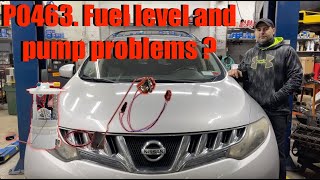
- Risk of running out of fuel unexpectedly 🎬 Watch: A quick breakdown of P0463 causes and common fixes.
- Replacing the entire fuel pump assembly. This is the most common and costly mistake. TSB NTB22-026 explicitly warns against this, stating the sensor should be replaced independently.
- Replacing the passenger side (sub) fuel level sensor. P0463 specifically refers to the primary 'A' sensor, which is on the driver's side.
Most Likely Causes
- Faulty Primary (Driver's Side) Fuel Level Sending Unit 🔴 High Probability → Shop Fuel Tank Sending Unit The variable resistor contacts on the sending unit wear out or become contaminated with fuel deposits over time, creating an open circuit (infinite resistance). This is a very common failure part on many Nissan vehicles of this era, including the Murano, Maxima, and Quest.
How to confirm: Access the driver's side fuel pump module under the rear seat. Disconnect the sensor and measure its resistance with a multimeter. While manually moving the float arm, the resistance should change smoothly. For most Nissan models, the range is approximately 4-6 Ohms at Full and 73-85 Ohms at Empty. If you get an infinite (OL) reading at any point, or the reading is stuck at 0-2 ohms, the sensor is bad.
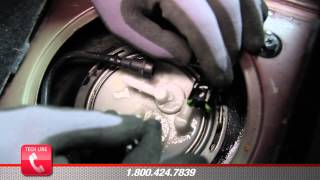
Typical fix: Replace the primary fuel level sending unit. The sensor can be unclipped from the fuel pump assembly inside the tank. The entire fuel pump module does not need to be replaced. 🎬 See this walkthrough for replacing the sensor on a 2009 Murano. Some owners have had temporary success by cleaning the sensor's contacts with a pencil eraser or fine-grit sandpaper, but replacement is the permanent solution.
Est. part cost: $70-$180 - Damaged Wiring or Corroded Connector ⚪ Low Probability The connectors are located under the rear seat, which is generally a protected area, but moisture from spills or damage during other repairs can occur. The pins on the connector at the top of the fuel pump assembly can sometimes corrode.
How to confirm: Visually inspect the wiring harness and connector pins at the fuel pump access panel for any signs of corrosion, moisture, or bent/broken pins. Perform a continuity test on the signal wire between the pump connector and the PCM if the sensor tests good.
Typical fix: Clean the corroded terminals with an electrical contact cleaner or repair the damaged section of the wiring harness. Ensure the connector is fully seated.
Est. part cost: $5-$25 - Poor Ground Connection ⚪ Low Probability While less common than sensor failure, a corroded or loose ground for the fuel pump assembly can increase circuit resistance, leading to a P0463 code. Some systems ground through a strap on the fuel tank itself.
How to confirm: Locate the chassis ground point for the fuel pump circuit (refer to a service manual for the exact location). Check for corrosion and ensure the connection is tight. Measure resistance between the ground wire at the pump connector and a clean chassis ground; it should be less than 1 ohm.
Typical fix: Clean the grounding point to bare metal and re-secure the ground wire.
Est. part cost: $0-$5
Rare But Worth Checking
- Faulty Instrument Cluster or PCM: → Shop Instrument Cluster This is extremely rare. Before considering this, all other possibilities (sensor, wiring, grounds) must be exhaustively ruled out. A failure here would likely cause other symptoms as well. A Reddit user with a 2003 Maxima reported being told this was the cause, though it's more often misdiagnosed.
- Faulty EVAP Vapor Canister Purge Solenoid: In some cases, a stuck-open purge solenoid (e.g., part 14930-JA10A) can create unusual vacuum conditions in the fuel tank that the ECM misinterprets as a fuel level sensor voltage fault, triggering P0463 even if the sensor is good. This is less common but has been documented on related Nissan models like the Altima.
Diagnosis Steps
- Verify the code with an OBD-II scanner. Confirm P0463 is present.
- Note the fuel gauge reading. Is it stuck on full?
- Safety First: Disconnect the negative battery terminal and relieve fuel system pressure by opening the gas cap.
- Gain access to the fuel pump modules by removing the rear seat bottom cushion. This requires removing several 16mm bolts and plastic trim pieces. 🎬 Watch: How to access and install the pump on 2003-2007 models. There are two metal access panels.
- Uncover the driver's side (left) access panel. This is the primary 'A' unit.
- Disconnect the electrical connector. Inspect for corrosion or damage.
- Using a multimeter set to Ohms (Ω), probe the two terminals for the fuel level sensor on the pump assembly side.
- While observing the multimeter, carefully reach into the tank and move the float arm up and down. The resistance reading should change smoothly from ~4-6 Ω (Full) to ~73-85 Ω (Empty).
- If the reading is infinite (OL), jumps around, or stays fixed, the sending unit is faulty and must be replaced.
- If the sensor tests good, the fault is likely in the wiring harness or, very rarely, the PCM. Inspect the harness for damage and test for continuity back to the PCM.
Parts You'll Likely Need
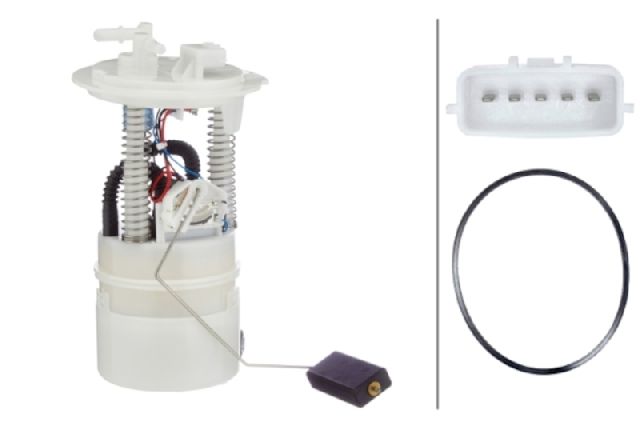
- Primary Fuel Level Sensor (Driver's Side)
(OEM #Gen 1 (03-07): 25060-CA00C | Gen 2 (09-14): 25060-1AA0D)— This is the component that fails over 95% of the time for this code on this vehicle.
Trusted brands: Nissan OE, Dorman (e.g., 911-042 for Gen 1), NGK/NTK, Standard Motor Products (SMP), WSO
OEM price range: $120-$180
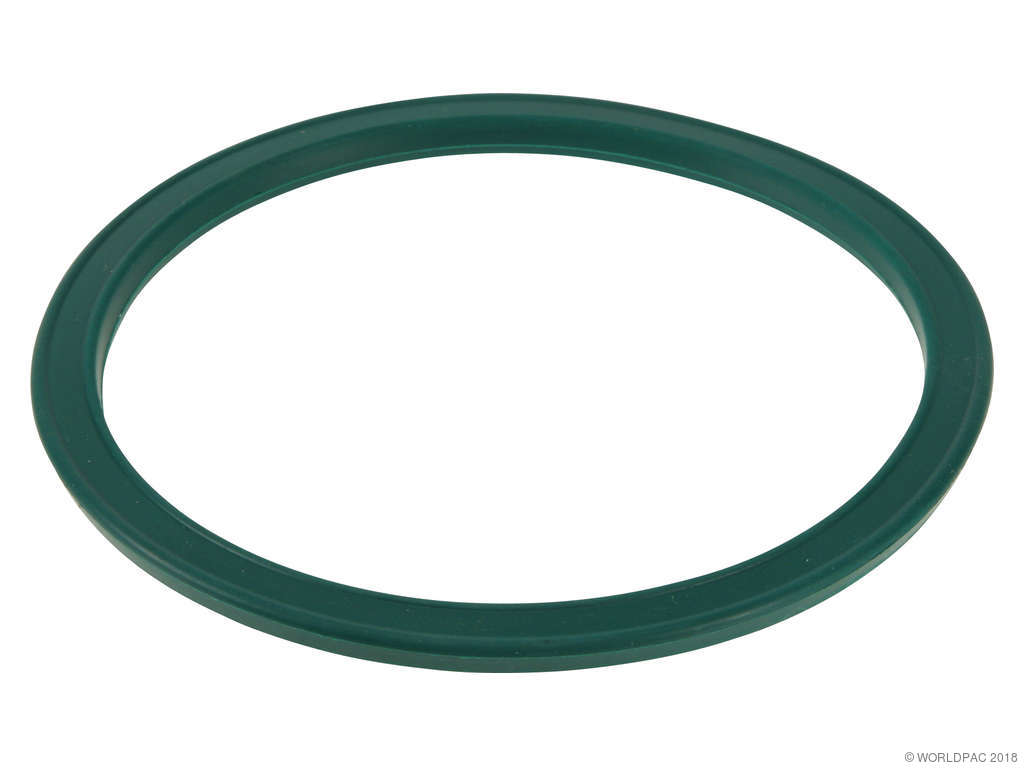
Aftermarket price range: $70-$120 - Fuel Pump Module O-Ring / Gasket
(OEM #17342-EA000 (fits many models))— The large rubber gasket that seals the access port should always be replaced when the module is removed to prevent fuel leaks and EVAP codes. Many new sensors include one.
Trusted brands: Nissan OE, Dorman
OEM price range: $20-$35
Aftermarket price range: $10-$20
Related Codes That Often Appear With This One
- P0462 — Fuel Level Sensor 'A' Circuit Low Input. This is the opposite fault (stuck on empty), but can sometimes appear intermittently if the sensor's resistor is failing erratically.
- P0461 — Fuel Level Sensor 'A' Circuit Range/Performance. This code indicates the PCM sees an irrational signal from the sensor, such as the level changing too quickly, which is common when the sensor contacts are worn and making intermittent contact.
Technical Service Bulletins (TSBs) & Recalls
- NTB22-026: This bulletin applies to many Nissan models, including newer Muranos, but its principle is key. It explicitly states that for fuel gauge inaccuracy codes like P0463, if the sensor is the diagnosed cause, only the sensor should be replaced, not the entire fuel pump assembly. It warns that claims for full assembly replacement for this issue will be charged back.
- NTB17-030a: While not directly for P0463, this TSB addresses issues with slow fuel filling on many Nissans, including the Murano. It involves inspecting the EVAP vent lines and tank. It's relevant because a blocked vent system could potentially affect tank pressure and, in rare cases, contribute to fuel system faults.
- NTB07-069A: An owner reported in NHTSA ODI #10504080 that this service bulletin is associated with code P0463, noting the high cost of repair required to pass vehicle inspection.
Platform-Specific Known Issues
- The Murano has two fuel level sensors due to its saddle tank. P0463 always refers to the primary sensor on the driver's side. Do not confuse it with the passenger side sensor, which would typically trigger a different code (e.g., P0460 range, or a 'B' circuit code).
- NHTSA ODI #11011553 notes that this fuel sensor error with code P0463 is a known issue for this vehicle period, similar to other Nissan models like the Xterra and Pathfinder.
Mechanic-Grade Diagnostic Values
- Fuel Level Sensor 'A' Resistance — expected: Approximately 4-6 Ohms at Full and 77-83 Ohms at Empty, with a smooth sweep in between.. Failure: A reading of infinite resistance (OL - Open Loop), or a reading that jumps, sticks, or does not change when the float arm is moved.
- Fuel Level Sensor 'A' Signal Voltage (Live Data) — expected: A variable voltage between approximately 0.5V (Empty) and 4.5V (Full).. Failure: A constant high voltage, typically stuck at or near 5V (>4.8V), which triggers P0463.
- Sensor Ground Wire Voltage (at connector, while plugged in) — expected: Very low voltage, close to 0V (e.g., under 0.05V or 50mV).. Failure: A high voltage reading on the ground wire indicates a bad ground connection between the sensor and the chassis, which can cause a P0463 code.
Scan Tool Commands That Help
- Nissan CONSULT: Active Test for Combination Meter / Fuel Meter Operation — This bidirectional command allows the technician to force the fuel gauge to sweep through its range (Empty, 1/4, 1/2, 3/4, Full). If the gauge sweeps correctly during the test, it proves the instrument cluster and its internal motor are working. This helps isolate the fault to the sensor, wiring, or PCM, and rules out a faulty gauge cluster itself.
Wiring & Ground Locations
- Main Fuel Pump/Level Sensor Connector — On top of the fuel tank, under the driver's side rear seat cushion, beneath a metal access panel. On some later models, this may be a gray connector designated B72.. This is the primary connection point for the 'A' circuit. Corrosion, moisture, or backed-out pins in this connector are the most likely wiring-related cause for P0463, creating the high-resistance/open circuit condition.
- Fuel Pump Assembly Ground — The fuel pump and sensor assembly often share a common ground. This ground may be a wire in the harness that attaches to the chassis near the tank, or the system may ground through the fuel tank's mounting straps to the chassis.. A corroded or loose ground connection can add resistance to the circuit, which the PCM can misinterpret as a high voltage signal, triggering P0463.
Real Owner Repair Stories
- YouTube user comment on a P0463 diagnostic video (2006 Nissan Murano) — Check engine light on with code P0463, fuel gauge stuck on full.
❌ Tried (didn't work) Initially thought it might be a complex wiring issue.
✅ What actually fixed it The user accessed the fuel pump under the driver's side rear seat, removed the sensor, and cleaned the resistor contacts. This provided a temporary fix. They later noted that the permanent fix is to replace the sensor itself, as cleaning is not a long-term solution. This confirms the common failure of the sensor's resistor. - NHTSA ODI #10504080 — An owner reported their vehicle would not pass inspection due to code P0463. They were quoted $655 for the repair and noted that while a service bulletin exists, the repair was not covered under their warranty.
- NHTSA ODI #11011553 — An owner described a fuel sensor error with code P0463 as being unusual for most cars but common for this period of Nissan vehicles, with estimated repair costs ranging from $600 to $800.
OEM Part Supersession History
25060-1AA0B, 25060-1AA0C→25060-1AA0D— Standard part revision and improvement by the manufacturer.
Model Year Variations Within This Range
- 2003-2007 (Z50): Uses a different fuel level sensor (PN: 25060-CA00C) and has a slightly different rear seat removal procedure compared to the second generation.
- 2009-2014 (Z51): Uses fuel level sensor PN 25060-1AA0D (and its predecessors). The rear seat removal involves more plastic trim and harness connectors to disconnect before the seat can be lifted out.
Diagnostic Flowchart
Used vs. New Parts: Buying Guide for This Vehicle
When a used part is the smart pick: A used part is generally NOT recommended for this repair. The fuel level sensor is a known high-failure-rate wear item. A used sensor from a junkyard is likely to have significant wear on its resistor contacts and could fail soon after installation, forcing you to do the labor-intensive job twice.
Donor-vehicle mileage cap: roughly under 50000 miles for the part to have meaningful remaining life.
What to inspect on the donor part:
- If considering used, insist on seeing the donor vehicle's mileage; lower is better.
- Ask for a clear photo of the resistor board on the sensor; look for any visible scoring, dark spots, or worn-through traces.
- Ensure the float arm moves freely without binding and is not bent.
Aftermarket brands forum-validated for this vehicle:
- Nissan OE
- NGK/NTK
- Standard Motor Products (SMP)
- Dorman
Brands owners have reported issues with on this vehicle:
- Unnamed, no-brand parts from online marketplaces should be avoided, as their resistance ranges may not be correctly calibrated, leading to inaccurate gauge readings even if they clear the code.
Real Owner Stories
Aggregated from forums and TSBs cited above. Mileages and costs reflect what owners reported in those sources.
2009 Nissan Murano
Symptoms: Check Engine Light with code P0463. The fuel gauge works most of the time but has twice dropped to empty, causing the distance-to-empty display to flash, before slowly moving back up.
What fixed it: A technician on the forum advised: "Yep, it sounds like the sensor is going bad in the tank, when it gets bad enough, I would replace the fuel pump module."
Source hint: 2CarPros forum post titled '2009 Nissan Murano Codes P0463 and P0725, Check Engine Light On'
2009 Nissan Murano
Symptoms: Check engine light with a code P0463, fuel level sensor code.
What fixed it: The video shows the replacement of both fuel level sensors (A and B). The mechanic notes there are two sensors, one on the pump and one on the other side of the saddle tank.
Source hint: YouTube video by A2Z Auto Masters titled 'How to change fuel pump? fuel level sensor? P0463 Nissan 2009 Murano'
Related OBD-II Codes
Frequently Asked Questions
My 2009 Murano has a P0463 code. Does this mean I need to replace both fuel level sensors?
The dealership wants to replace the entire fuel pump assembly for my P0463 code. Is this necessary?
I've heard you can clean the fuel sending unit to fix P0463. Is this a permanent solution for a Murano?
What resistance values should I look for when testing the fuel level sensor on my 2003-2014 Murano?
My friend's Nissan Maxima had the same P0463 problem. Is this a common issue across different Nissan models?
My fuel gauge is stuck on full and the check engine light is on. Is P0463 the likely cause on my Murano?
Helpful Videos

Used OEM Parts in Stock
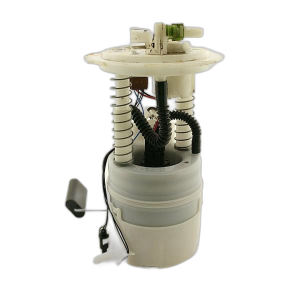
New Aftermarket Parts Available


The information in this article is provided for general reference and educational purposes only. Vehicle specifications, procedures, and part compatibility can vary by production date, trim level, and region. Always consult your vehicle's factory service manual and verify part numbers before purchasing or performing repairs. Safety-critical components such as airbags, seat belts, and braking systems should be installed by a qualified professional.
- Nissan Murano:
- 🧭 Diagnostic Flowchart
- 🎬 Helpful Videos
- 🛍️ Shop This Part
- What's Unique About the 2003-2014 Nissan Murano
- Symptoms You May Notice
- Most Likely Causes
- Rare But Worth Checking
- Diagnosis Steps
- Parts You'll Likely Need
- Related Codes That Often Appear With This One
- Technical Service Bulletins (TSBs) & Recalls
- Platform-Specific Known Issues
- Mechanic-Grade Diagnostic Values
- Scan Tool Commands That Help
- Wiring & Ground Locations
- Real Owner Repair Stories
- OEM Part Supersession History
- Model Year Variations Within This Range
- Used vs. New Parts: Buying Guide for This Vehicle
- Real Owner Stories
- 2009 Nissan Murano
- 2009 Nissan Murano
- Related OBD-II Codes
- Frequently Asked Questions
- 🎟️ Get 5% Off