

P0463 on 2016-2022 Nissan Rogue: Fuel Level Sensor Circuit High Input Causes and Fixes
On a 2016-2022 Nissan Rogue, P0463 almost always means the fuel level sensor (or sending unit) in the gas tank has failed. The sensor is sending a voltage signal higher than the normal range, making the car's computer think the tank is overfilled. Nissan TSB NTB22-026 confirms the sensor can be replaced separately from the fuel pump, making for a cheaper repair. Expect to pay around $150 for the part and 1-2 hours of labor.
- P0463 on a Nissan Rogue means the fuel level sensor has failed, causing your fuel gauge to be inaccurate.
- The most common symptom is the Check Engine Light being on and the fuel gauge being stuck on 'Full'.
- You can continue to drive, but you must track your mileage to avoid running out of fuel.
- Nissan has a service bulletin (NTB22-026) stating the sensor can be replaced by itself, which is cheaper than replacing the whole fuel pump.
- This repair involves working with the fuel tank and is best left to a professional or an experienced DIYer with proper safety precautions.
What's Unique About the 2016-2022 Nissan ROGUE
The 2016-2022 Nissan Rogue spans two generations (T32 and T33), but this issue is common to both. Nissan has acknowledged problems with the fuel level sensor on these vehicles through a Technical Service Bulletin (TSB). 🎬 Watch: Understanding the P0463 code and fuel sensor circuit fixes. The key takeaway from this TSB is that the fuel level sensor can be replaced independently of the entire fuel pump assembly, which is a significant cost-saving measure for owners, as you don't need to buy a whole new pump when only the small sensor has failed. Dealers are specifically warned that warranty claims for replacing the entire pump for this issue may be charged back.
Diagnostic Flowchart
Tap your situation to follow the diagnostic path that matches what you're seeing on this vehicle.
Generation note: The 2016-2022 model years cover the end of the second generation (T32, 2016-2020) and the beginning of the third generation (T33, 2021-2022) of the Nissan Rogue. The P0463 code and its primary cause, a faulty fuel level sensor, are common across both generations. The repair procedure is similar, involving access to the fuel tank. TSB NTB22-026 explicitly covers all model years from 2016-2022. All-Wheel Drive (AWD) models feature a saddle-style tank that requires two fuel level sensors, a primary and a secondary unit, while Front-Wheel Drive (FWD) models use a single sensor configuration.
Symptoms You May Notice
- Check Engine Light is on
- Fuel gauge reads full all the time
- Fuel gauge fluctuates wildly or reads inaccurately
- Low fuel warning light stays on or flashes
- Running out of fuel unexpectedly despite the gauge showing fuel is present
- Distance-to-empty (DTE) reading is inaccurate or shows zero.
- Replacing the entire fuel pump assembly. Per Nissan TSB NTB22-026, this is unnecessary and wasteful, as the sensor is available separately. Warranty claims for replacing the whole assembly for this issue may be rejected by Nissan.
- Confusing the P0463 code with an EVAP system leak. While fuel system codes can sometimes be related, P0463 specifically points to an electrical circuit input issue from the level sensor, not a vapor leak.
Most Likely Causes
- Faulty Fuel Level Sensor (Sending Unit) 🔴 High Probability → Shop Fuel Tank Sending Unit Nissan issued TSB NTB22-026 specifically for this issue, indicating it's a known point of failure. The sensor's internal variable resistor can fail, creating an open circuit that results in a high voltage signal (over 5V).
How to confirm: Access the fuel pump module connector and measure the resistance of the fuel level sensor circuit with a multimeter. An out-of-spec or infinite resistance reading (open circuit) confirms a failed sensor. A scan tool can also show live data, which will display a fixed high voltage from the sensor. For reference, on similar Nissan models, a full tank should read around 4-6 Ohms and an empty tank around 77-85 Ohms; a reading outside this range indicates a fault.
Typical fix: Replace the fuel level sensor. Per TSB NTB22-026, this part can be replaced separately from the main fuel pump assembly.
Est. part cost: $100-$170 - Damaged Wiring or Connectors 🟡 Medium Probability The wiring harness runs underneath the vehicle to the fuel tank, exposing it to potential damage from road debris or corrosion. The connector on top of the fuel pump assembly can also corrode or be damaged during removal.
How to confirm: Visually inspect the wiring harness leading to the fuel tank for any signs of chafing, corrosion, or rodent damage. Check the connector at the fuel pump assembly for corrosion or loose pins. A break in the ground circuit or an open in the signal wire would cause this code.
Typical fix: Repair or replace the damaged section of the wiring harness. Clean or replace the affected connector. Applying dielectric grease can prevent future corrosion.
Est. part cost: $10-$50 - Mechanically Stuck Float Arm ⚪ Low Probability If a vehicle sits for an extended period, old fuel can cause components to rust or gum up. It's possible for the float arm to become stuck in the 'full' position.
How to confirm: This can sometimes be diagnosed by rocking the vehicle side-to-side while monitoring the sensor's resistance or voltage; if the value doesn't change, the float may be stuck. A definitive diagnosis requires removing the fuel pump assembly and visually inspecting the float's movement.
Typical fix: In some cases, the arm can be freed. More often, the entire sending unit is replaced as it's already been removed for inspection.
Est. part cost: $100-$170
Rare But Worth Checking
- Faulty Instrument Cluster: → Shop Instrument Cluster This is rare, but if the sensor and wiring are confirmed to be good, the problem could lie within the instrument cluster that processes the signal for the gauge. This is an uncommon cause. Advanced scan tools may offer a gauge sweep test to confirm functionality.
- Faulty Powertrain Control Module (PCM): This is extremely unlikely and should only be considered after all other possibilities have been exhaustively ruled out. PCM failure is rare.
Diagnosis Steps
- Confirm the P0463 code is present using an OBD-II scanner.
- Observe the fuel gauge behavior. Is it stuck on full or behaving erratically?
- Use a scan tool to monitor the live data for 'Fuel Level Sensor Voltage'. A reading stuck at a high voltage (e.g., near 5.0 volts) points towards the issue.
- Disconnect the battery.
- Gain access to the top of the fuel tank, usually via an access panel under the rear seat cushion.
- Disconnect the fuel pump electrical connector and inspect for any corrosion or damage.
- Using a multimeter set to Ohms, measure the resistance across the fuel level sensor pins on the pump assembly side. Compare this reading to the manufacturer's specifications. An open circuit (infinite resistance) indicates a failed sensor. (Reference spec for many Nissans: ~4-6 Ohms full, ~77-85 Ohms empty).
- If the sensor resistance seems plausible, check the wiring harness. Test for continuity on the ground wire and check for an open or a short to power on the signal wire between the PCM and the fuel tank connector.
- If wiring and sensor are good, the fault may lie with the instrument cluster or PCM, which requires more advanced diagnostics.
Parts You'll Likely Need
- Fuel Level Sensor
(OEM #25060-4BA4B, 25060-6FK5A (Note: Part number varies by VIN/manufacturing location - US, Japan, or Korea.))— This is the most common failure point for code P0463 on this vehicle, as confirmed by Nissan's own service bulletin.
Trusted brands: Nissan (OEM), Hitachi
OEM price range: $140-$200
Aftermarket price range: $100-$150
Related Codes That Often Appear With This One
- P0460 — Relates to 'Fuel Level Sensor Slosh', indicating an erratic signal over time. This code is also covered by TSB NTB22-026.
- P0461 — Relates to 'Fuel Level Sensor Circuit Range/Performance', indicating the signal is out of its expected performance range. This code is also covered by TSB NTB22-026.
- P0462 — Relates to 'Fuel Level Sensor Circuit Low Input', the opposite of P0463, often caused by a short to ground. This code is also covered by TSB NTB22-026.
Technical Service Bulletins (TSBs) & Recalls
- NTB22-026: States that for DTCs P0460, P0461, P0462, and P0463, the fuel level sensor can be replaced separately from the fuel pump assembly. It explicitly warns that warranty claims for replacing the entire assembly for this issue will be charged back.
Platform-Specific Known Issues
- Nissan issued Technical Service Bulletin NTB22-026, which states that for P0463 (and related codes), the fuel level sensor can be replaced separately, and dealers should not replace the entire fuel pump assembly for this specific problem.
- For the T32 generation (2014-2020), the correct fuel level sensor part number depends on where the vehicle was manufactured (USA, Japan, or Korea), which can be determined by the VIN.
Mechanic-Grade Diagnostic Values
- Fuel Level Sensor Resistance (Primary Sensor) — expected: Approximately 4-6 Ω (Ohms) at Full and 77-85 Ω at Empty. The resistance should change smoothly when moving the float arm.. Failure: A reading of infinite resistance (open circuit), zero resistance (short circuit), or readings that jump erratically indicate a failed sensor.
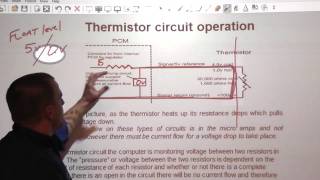
- Fuel Level Sensor Circuit Voltage (Live Data) — expected: A voltage that corresponds to the fuel level, typically between 0.5V (Empty) and 4.5V (Full).. Failure: A voltage signal stuck at or near 5.0V indicates a high input/open circuit fault.
Scan Tool Commands That Help
- Nissan CONSULT or equivalent advanced scan tool: Instrument Cluster Self-Test / Gauge Sweep — Use this function if the fuel level sensor and wiring have been tested and confirmed to be good. This command will make the tool command all instrument cluster gauges (including the fuel gauge) to sweep through their full range of motion. If the fuel gauge fails to move correctly during the test, it indicates a fault within the instrument cluster itself, rather than the sending unit.
Wiring & Ground Locations
- Fuel Pump / Sending Unit Connector — On top of the fuel tank, accessible via a panel under the rear seat cushion.. This is the primary connection point for the fuel level sensor. Corrosion, moisture, or damaged pins at this connector can cause an open circuit, leading directly to a P0463 code.
- Fuel Pump Relay — Located in the under-hood fuse box (IPDM E/R - Intelligent Power Distribution Module Engine Room). On a 2017 Rogue, this corresponds to fuse location #61 (20A).. While a failed relay typically causes a no-start condition (P0230, P0627), intermittent power issues or problems within the IPDM could theoretically affect the sensor circuit it powers. It's a secondary check if direct sensor/wiring tests are inconclusive.
OEM Part Supersession History
25060-4BA4A→25060-4BA4B— Standard part revision by the manufacturer.
Heads up: This part is specified for US/Korea-built models ('Without Japan built'). Using it on a Japan-built Rogue may result in improper fitment or function. Always verify the correct part number with the vehicle's VIN.
Model Year Variations Within This Range
- 2016-2022: All-Wheel Drive (AWD) models use a 'saddle' style fuel tank that requires two separate fuel level sensors: a primary unit with the fuel pump and a secondary 'sub' fuel level sensor on the opposite side. Front-Wheel Drive (FWD) models have a different tank and use a single sensor configuration. A P0463 code could originate from either sensor on an AWD model, requiring more specific diagnosis to isolate the faulty unit.
Helpful Videos



The information in this article is provided for general reference and educational purposes only. Vehicle specifications, procedures, and part compatibility can vary by production date, trim level, and region. Always consult your vehicle's factory service manual and verify part numbers before purchasing or performing repairs. Safety-critical components such as airbags, seat belts, and braking systems should be installed by a qualified professional.
- Nissan ROGUE:
- 🧭 Diagnostic Flowchart
- 🎬 Helpful Videos
- What's Unique About the 2016-2022 Nissan ROGUE
- Symptoms You May Notice
- Most Likely Causes
- Rare But Worth Checking
- Diagnosis Steps
- Parts You'll Likely Need
- Related Codes That Often Appear With This One
- Technical Service Bulletins (TSBs) & Recalls
- Platform-Specific Known Issues
- Mechanic-Grade Diagnostic Values
- Scan Tool Commands That Help
- Wiring & Ground Locations
- OEM Part Supersession History
- Model Year Variations Within This Range
- 🎟️ Get 5% Off