

P0463 on 2005-2010 Pontiac G6: Fuel Level Sensor Circuit High Input Causes and Fixes
This code means the fuel level sensor is sending an impossibly high voltage signal, usually causing the gas gauge to read full or empty. The most common cause on the Pontiac G6 is a failed fuel level sensor, which is part of the in-tank fuel pump module. Replacing the entire fuel pump module is the typical fix.
- P0463 on a Pontiac G6 almost always points to a problem with the fuel level sending unit or its wiring.
- The most common symptom is a fuel gauge that is stuck on full or empty.
- The fuel level sensor is part of the fuel pump module, located inside the fuel tank, but is accessible via a panel under the rear seat.
- While you can continue to drive the car, you risk running out of gas unexpectedly.
- The most likely fix is to replace the entire fuel pump module assembly.
What's Unique About the 2005-2010 Pontiac G6
The Pontiac G6, like many GM vehicles from this era built on the Epsilon platform, integrates the fuel level sensor (also called the sending unit) with the main fuel pump assembly inside the gas tank. While the code itself is generic, the repair almost always involves accessing the fuel tank. A key feature of the G6 is an access panel under the rear seat, which allows for fuel pump replacement without having to drop the entire fuel tank. GM's fuel level sensor design from this period is known to be susceptible to wear on the internal resistor contacts, often due to high sulfur content in gasoline, which can create an open or high-resistance spot that triggers the P0463 code.
Symptoms You May Notice
- Check Engine Light is on
- Fuel gauge reads inaccurately (e.g., stuck on Full or Empty, or fluctuates wildly)
- Low fuel warning light may illuminate even with fuel in the tank
- Fuel gauge reading changes erratically
- Replacing the instrument cluster before testing the fuel level sensor and wiring.
- Replacing the entire fuel pump when only the sending unit has failed (though they are often sold as one assembly for reliability).
- Assuming the issue is a bad fuel pump when the car runs fine, as the P0463 code is specific to the level sensing circuit.
Most Likely Causes
- Failed Fuel Level Sensor 🔴 High Probability → Shop Fuel Tank Sending Unit The sensor's internal variable resistor card wears out over time, creating an open or high-resistance point that the float's wiper arm contacts. This is a very common failure mode for GM vehicles of this era, sometimes accelerated by sulfur in fuel corroding the contacts.
How to confirm: The most definitive test is to remove the fuel pump module and test the sensor's resistance with a multimeter while manually moving the float arm. The resistance should change smoothly without any dropouts or spikes to infinity (open circuit).
Typical fix: Replace the fuel level sensor. On the G6, the sensor is typically sold as part of the complete fuel pump module assembly. Access is through a panel under the rear seat cushion.
Est. part cost: $150-$350 - Damaged Wiring or Corroded Connectors 🟡 Medium Probability The main wiring harness connector on top of the fuel tank is exposed to the elements under the car, making it susceptible to moisture intrusion, corrosion (green/white powder), and physical damage from road debris.
How to confirm: Visually inspect the wiring harness and connector at the top of the fuel tank for any signs of corrosion, broken wires, or loose pins. Test for 5V reference on the purple wire and a good ground on the black wire at the fuel pump connector.
Typical fix: Clean the connector terminals with a contact cleaner or replace the connector pigtail if corrosion is severe. Repair any broken wires.
Est. part cost: $10-$100 - Poor Ground Connection ⚪ Low Probability
How to confirm: Locate the ground strap or ground wire for the fuel tank/pump assembly (often attached to the chassis near the tank) and inspect it for corrosion or looseness. Use a multimeter to test for high resistance between the ground point on the chassis and the ground pin at the fuel pump connector.
Typical fix: Clean the ground connection point on the chassis with a wire brush and re-secure the ground wire.
Est. part cost: $1-$5
Rare But Worth Checking
- Faulty Instrument Panel Cluster (IPC): → Shop Instrument Cluster While rare, the cluster itself can fail and cause incorrect gauge readings. This is a known issue on some GM vehicles of this era, but it is usually suspected only after the sensor and wiring have been confirmed to be good.
- Faulty Powertrain Control Module (PCM): This is extremely unlikely and should be considered a last resort after all other possibilities have been exhausted. A PCM failure typically presents with multiple other codes and drivability issues.
Diagnosis Steps
- Scan for Codes: Confirm P0463 is the primary code. Note any other codes like P0461 or P0462, which point more strongly to the sensor itself.
- Visual Inspection: Inspect the wiring harness and electrical connector on top of the fuel pump module. Look for obvious signs of damage, corrosion, or loose connections.
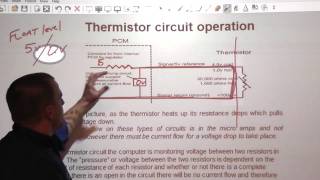
- Check Live Data: Use a capable scan tool to observe the 'Fuel Level Sensor' voltage or 'Fuel Tank Level' percentage. A voltage reading stuck near 5.0 volts confirms the 'High Input' condition.
- Test the Circuit at the Pump: Access the fuel pump connector under the rear seat. Disconnect it. With the key on, use a multimeter to check for a 5V reference on the purple wire and a good ground on the black wire. If either is missing, the problem is in the wiring going to the PCM.
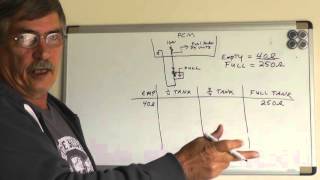
- Test the Sensor: If the wiring provides correct voltage and ground, the fault is likely the sensor. The most reliable test involves removing the fuel pump module from the tank. Connect a multimeter set to Ohms to the sensor's two pins. Manually sweep the float arm from empty to full. The resistance reading should change smoothly and consistently (e.g., ~40 ohms empty to ~250 ohms full on many GM models). Any sudden jumps to infinity (OL) or erratic readings indicate a bad sensor.
- Isolate the Fault: If the sensor tests good but the code persists, there may be an intermittent open in the wiring harness between the tank and the PCM. If the sensor tests bad, it needs to be replaced.
Parts You'll Likely Need
- Fuel Pump Module Assembly
(OEM #19179894, 19180190, 19366851)— This is the most common failure. The fuel level sensor is integrated into this assembly, and replacing the whole unit is often the most practical and reliable repair, as it also replaces the fuel pump and filter.
Trusted brands: ACDelco, Delphi, Spectra Premium, Detroit Axle
OEM price range: $250-$350
Aftermarket price range: $100-$220 - Fuel Level Sensor (Sender Only)
(OEM #SK1342, SK1448, 13504685)— If available separately, this can be a more affordable fix. It requires disassembling the fuel pump module, which adds complexity and time to the repair.
Trusted brands: ACDelco, Dorman, NGK/NTK
OEM price range: $70-$120
Aftermarket price range: $60-$90
Related Codes That Often Appear With This One
- P0461 (Fuel Level Sensor Performance)
- P0462 (Fuel Level Sensor Circuit Low Input)
Technical Service Bulletins (TSBs) & Recalls
- Some GM TSBs were issued for erratic fuel gauge readings on various models from this era, sometimes recommending a PCM reprogram or noting issues with sulfur in fuel damaging the sensor contacts. While no single TSB is exclusively for the G6 and P0463, TSBs related to code P0461 or general fuel gauge inaccuracy on the Epsilon platform are relevant.
Platform-Specific Known Issues
- Owner Experience: Gauge Stuck on Full: A user on G6OwnersClub.com with a 2007 G6 reported the P0463 code and a fuel gauge permanently stuck on 'Full'. After confirming the wiring was intact, they replaced the entire fuel pump module with a Delphi unit. The repair was done in their driveway in about 2 hours by accessing the pump through the panel under the rear seat, which resolved the code and restored normal gauge function.
- Internal Fuel Line Interference: → Shop Fuel Line In some cases, the fuel gauge may read erratically due to a fuel vapor line inside the tank physically interfering with the fuel level sensor's float arm. Repositioning and securing the vapor line away from the float arm can resolve the issue without replacing parts. This issue may also trigger code P0461.
Mechanic-Grade Diagnostic Values
- Fuel Level Sensor Resistance — expected: Approximately 40 Ohms (Full) to 250 Ohms (Empty).. Failure: The resistance reading is infinite (Open Line), does not change when the float is moved, or jumps erratically.
- Fuel Level Sensor Signal Voltage (at PCM) — expected: Approximately 0.5V (Full) to 4.5V (Empty). Note: GM systems often invert this, so high voltage can mean empty.. Failure: Voltage is stuck near 5.0V, which indicates an open circuit and triggers P0463.
- Fuel Pump Operating Pressure — expected: 386-427 kPa (56-62 psi) with the pump commanded ON by a scan tool.. Failure: Pressure below this range may indicate a weak pump, but does not directly relate to the P0463 code, which is an electrical circuit fault.
Scan Tool Commands That Help
- GM Tech 2: IPC Gauge Sweep Test — To verify the functionality of the instrument panel cluster's fuel gauge. If the gauge sweeps correctly during this test, it confirms the cluster is likely not the source of the problem, pointing diagnosis back toward the sending unit or wiring. The path is typically Body > Instrument Panel Cluster > Special Functions > IPC Gauges.
Wiring & Ground Locations
- Fuel Pump Connector — On top of the fuel pump module, accessible under the rear seat cushion.. This is the primary test point. The purple wire is the fuel level signal (should have 5V reference from PCM with key on, connector unplugged), and the black wire is the ground.
- G301 — On the right rear of the passenger compartment, located under the right rear seat back.. This is a primary body ground point for components in the rear of the vehicle. While the fuel pump has its own ground wire in the harness, a poor connection at a major chassis ground point like this can cause difficult-to-diagnose electrical issues.
- G303 — On the left front of the passenger compartment, in the back of the left front kick panel.. This ground point is associated with the Body Control Module (BCM). Since the BCM processes the fuel level signal for the instrument cluster, a fault at this ground could potentially cause erratic gauge behavior, though it is a less likely cause for P0463 specifically.
Real Owner Repair Stories
- Car Talk Community Forum User (2008 Pontiac G6 2.4L) — Fuel gauge would only read up to 3/4 of a tank after filling up.
❌ Tried (didn't work) Initial internet searches pointed to either the sensor or the gauge motor.
✅ What actually fixed it A GM service bulletin (09-06-04-007A) was cited, which addresses a fuel gauge that is stuck or not working. The likely cause is an issue with the sending unit in the tank, potentially an internal vapor line interfering with the float arm, requiring the fuel pump module to be accessed for inspection and repair/replacement.
OEM Part Supersession History
15289060, 22677570, 25833833→25903895— Standard part evolution, likely for improved materials or minor design changes.
Heads up: These part numbers refer to the fuel tank wiring harness that connects to the pump module. While not the module itself, replacing a corroded connector often involves using a new harness pigtail or this full replacement harness.
Diagnostic Flowchart
Other Known Issues on This Vehicle
Issues unrelated to this code that are worth knowing about as an owner of this generation:
- Electric Power Steering (EPS) Failure 🔴 High — Common, typically occurs around 70,000-100,000 miles. Can be intermittent at first. (Ref: NHTSA Campaign 14V153000)
- Intermediate Steering Shaft Clunk 🟠 Medium — Very common. A clunking or popping noise is heard/felt in the steering wheel during low-speed turns. (Ref: GM TSB 06-02-32-007G)
- 4T45-E Automatic Transmission Problems 🔴 High — Failures of shift solenoids are common, leading to harsh shifting or getting stuck in gear. Typically occurs over 100,000 miles.
- Leaking Sunroof Drains 🟠 Medium — Common issue where drain tubes clog or disconnect, causing water to leak into the cabin, often onto the floor or seatbelts.
- Instrument Panel Cluster (Gauges) Failure 🟡 Low → Shop Instrument Cluster — Less common than other issues, but can cause gauges to stick, work intermittently, or fail completely.
Used vs. New Parts: Buying Guide for This Vehicle
When a used part is the smart pick: A used fuel pump module from a junkyard is generally NOT recommended for this repair. The fuel level sensor is a known high-failure wear item. Installing a used part carries a high risk of the same failure occurring in a short time, forcing you to do the labor-intensive job again.
Donor-vehicle mileage cap: roughly under 40000 miles for the part to have meaningful remaining life.
What to inspect on the donor part:
- Verify the donor vehicle was not in a major rear-end collision that could have damaged the tank or pump.
- If possible, inspect the electrical connector on the used pump for any signs of corrosion, melting, or pin damage.
- Ask for the donor vehicle's mileage; a low-mileage part is slightly less risky but still not guaranteed.
OEM-only on this vehicle (don't cheap out):
- While not strictly 'OEM-only', a high-quality branded part is critical. The labor to access the fuel pump means that using a cheap, unreliable part is a poor economic choice. The risk of being stranded by a failed fuel pump outweighs the initial savings.
Aftermarket brands forum-validated for this vehicle:
- ACDelco (often the original equipment manufacturer)
- Delphi (also a top-tier OEM supplier, widely trusted for fuel systems)
- Carter
Brands owners have reported issues with on this vehicle:
- Unbranded, 'white box' parts from online marketplaces should be avoided.
- Spectra Premium has mixed reviews; while some have success, others report premature failure compared to ACDelco or Delphi.
Real Owner Stories
Aggregated from forums and TSBs cited above. Mileages and costs reflect what owners reported in those sources.
2007 Pontiac G6
Symptoms: The P0463 code was present and the fuel gauge was permanently stuck on 'Full'.
What fixed it: Replaced the entire fuel pump module with a Delphi unit via the access panel under the rear seat.
Source hint: G6OwnersClub.com - P0463 Fuel Level Sensor High Voltage
2006 Chevrolet Malibu
Symptoms: The fuel level sensor A electrical circuit input signal had high voltage for a predetermined period of time.
What fixed it: Identified as a common failure of the fuel level sensor/sending unit, shared with its platform mate, the G6.
Source hint: RepairPal - 2006 Chevy Malibu P0463
Related OBD-II Codes
Frequently Asked Questions
Do I have to drop the fuel tank on my 2005-2010 Pontiac G6 to replace the fuel level sensor?
My fuel gauge is stuck on 'Full' and I have code P0463. Is this a common issue for the G6?
Can I just replace the sensor, or do I need the whole fuel pump assembly?
Are there any TSBs for erratic fuel gauges on the G6?
Could something inside the tank be physically blocking my fuel gauge float?
What wires should I test at the fuel pump connector to rule out a wiring issue?
Helpful Videos
![How to Fix P0463 Engine Code in 2 Minutes [1 DIY Method / Only $11.5]](https://img.youtube.com/vi/vmZ6y3GoXH4/mqdefault.jpg)
Used OEM Parts in Stock
New Aftermarket Parts Available



The information in this article is provided for general reference and educational purposes only. Vehicle specifications, procedures, and part compatibility can vary by production date, trim level, and region. Always consult your vehicle's factory service manual and verify part numbers before purchasing or performing repairs. Safety-critical components such as airbags, seat belts, and braking systems should be installed by a qualified professional.
- Pontiac G6:
- 🧭 Diagnostic Flowchart
- 🎬 Helpful Videos
- 🛍️ Shop This Part
- What's Unique About the 2005-2010 Pontiac G6
- Symptoms You May Notice
- Most Likely Causes
- Rare But Worth Checking
- Diagnosis Steps
- Parts You'll Likely Need
- Related Codes That Often Appear With This One
- Technical Service Bulletins (TSBs) & Recalls
- Platform-Specific Known Issues
- Mechanic-Grade Diagnostic Values
- Scan Tool Commands That Help
- Wiring & Ground Locations
- Real Owner Repair Stories
- OEM Part Supersession History
- Other Known Issues on This Vehicle
- Used vs. New Parts: Buying Guide for This Vehicle
- Real Owner Stories
- 2007 Pontiac G6
- 2006 Chevrolet Malibu
- Related OBD-II Codes
- Frequently Asked Questions
- 🎟️ Get 5% Off