

P0463 on 2010-2014 Subaru Outback: Fuel Level Sensor Circuit High Input Causes and Fixes
This code typically indicates a faulty fuel level sending unit or a wiring issue. The most common fix is replacing one or both of the fuel level sensors, which are accessible under the rear seat. Expect to pay $80-$150 for the parts and 1-2 hours of labor.
- P0463 on a 2010-2014 Outback points to a problem in the fuel level sensor circuit, most often a failed sensor.
- The vehicle has two fuel level sensors (main and sub) located under the rear seat; either one can cause the code.
- Diagnosis is straightforward with a multimeter by testing the resistance of each sensor while moving the float. An open circuit (infinite resistance) is the most common finding.
- This is a DIY-friendly repair that does not require dropping the fuel tank.
- Driving with this code active is possible, but carries the risk of running out of gas unexpectedly.
What's Unique About the 2010-2014 Subaru Outback
The 2010-2014 Subaru Outback, like many Subarus, uses a saddle-shaped fuel tank to accommodate the all-wheel-drive system's driveshaft. This design requires two separate fuel level sending units—a main and a sub-unit—one for each side of the tank. The main sensor is typically integrated with the fuel pump assembly on the passenger side, while the sub-level sensor is on the driver's side. These sensors are wired in series, which can make diagnosis slightly more complex as a failure in either sensor or the wiring between them can trigger the P0463 code. An open circuit in either unit will cause the total resistance to be infinite, triggering the code.
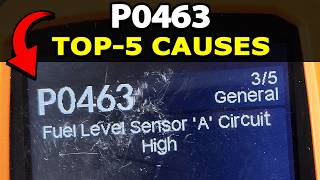
🎬 Watch: How to diagnose and fix a P0463 engine codeSymptoms You May Notice
- Check Engine Light is on
- Fuel gauge reads empty and the low fuel light is flashing (most common symptom)
- Fuel gauge is stuck on full
- Fuel gauge fluctuates erratically
- Cruise control may be disabled (a common Subaru response to any Check Engine Light)
- Vehicle Dynamics Control (VDC) warning light may also illuminate
- Replacing the entire fuel pump assembly when only the sending unit is at fault. On this Outback, the sending units are typically sold separately from the fuel pump.
- Replacing the instrument cluster before thoroughly testing the fuel level sensors and their wiring.
- Assuming the issue is with the main sensor on the fuel pump side when the sub-level sensor is just as, if not more, likely to be the culprit.
Most Likely Causes
- Faulty Fuel Level Sending Unit (Main or Sub) 🔴 High Probability → Shop Fuel Tank Sending Unit The variable resistor on the sending unit can wear out or corrode over time, causing an open circuit, which results in a high voltage signal. Owners on forums frequently report one of the two sensors failing.
How to confirm: Access the sending units under the rear seat. Disconnect the electrical connector and measure the resistance of the sensor with a multimeter while moving the float arm. A healthy sensor's resistance should change smoothly. An infinite (OL) or out-of-spec reading indicates a bad sensor. While specific OEM specs are hard to find, a functioning sensor will show a clear change in resistance, whereas a failed one will typically read as an open circuit.
Typical fix: Replace the faulty sending unit. Since there are two and they are wired in series, many owners and mechanics recommend replacing both at the same time to avoid a future failure of the second unit. The sub-level sensor (driver's side) is often cited as the more common failure point in forum discussions.
Est. part cost: $80-$150 per sensor - Damaged Wiring or Loose Connector 🟡 Medium Probability The connectors for the fuel level sensors are located under the rear seat and can be disturbed by passengers, liquid spills, or previous repairs. Rodent damage to wiring under the vehicle is also a possibility that has been reported by owners.
How to confirm: Visually inspect the wiring harnesses and connectors leading to both fuel level sending units. Check for corrosion (especially green crust), broken wires, or loose pins. A broken clip on the connector can cause an intermittent connection. Perform a continuity test on the wires if a visual inspection reveals no issues.
Typical fix: Repair the damaged section of the wiring harness or clean/replace the faulty connector.
Est. part cost: $5-$50
Rare But Worth Checking
- Faulty Instrument Cluster: → Shop Instrument Cluster This is uncommon, but a failure within the instrument cluster's circuitry can cause it to misinterpret the signal from the fuel level sensors. This should only be considered after the sensors and wiring have been confirmed to be good.
- Faulty Engine Control Module (ECM): An internal ECM fault is very rare but possible. This is the last item to suspect after all other possibilities have been exhausted.
Diagnosis Steps
- Read the code with an OBD-II scanner to confirm P0463 is present.
- Remove the rear seat bottom cushion. It is held in by two clips at the front and can be pulled up firmly.
- You will see two black, circular access covers held by several 8mm bolts. The driver's side (left) is the sub-level sensor, and the passenger side (right) is the main sensor/fuel pump assembly.
- Remove the bolts and the access cover. Disconnect the electrical connector from the top of the unit.
- Visually inspect the wiring and connector for any obvious damage, corrosion, or looseness.
- Use a multimeter set to Ohms (Ω) to measure the resistance across the sensor's terminals. Refer to a service manual for the specific pins.
- Manually move the float arm up and down. The resistance reading should change smoothly and consistently. If the reading is infinite (OL - open circuit) or does not change, the sensor is faulty.
- Repeat the inspection and resistance test for the second sending unit on the other side.
- If both sensors test good, check for continuity and voltage on the wiring harness between the sensors and the instrument cluster. A wiring diagram is highly recommended for this step.
Parts You'll Likely Need
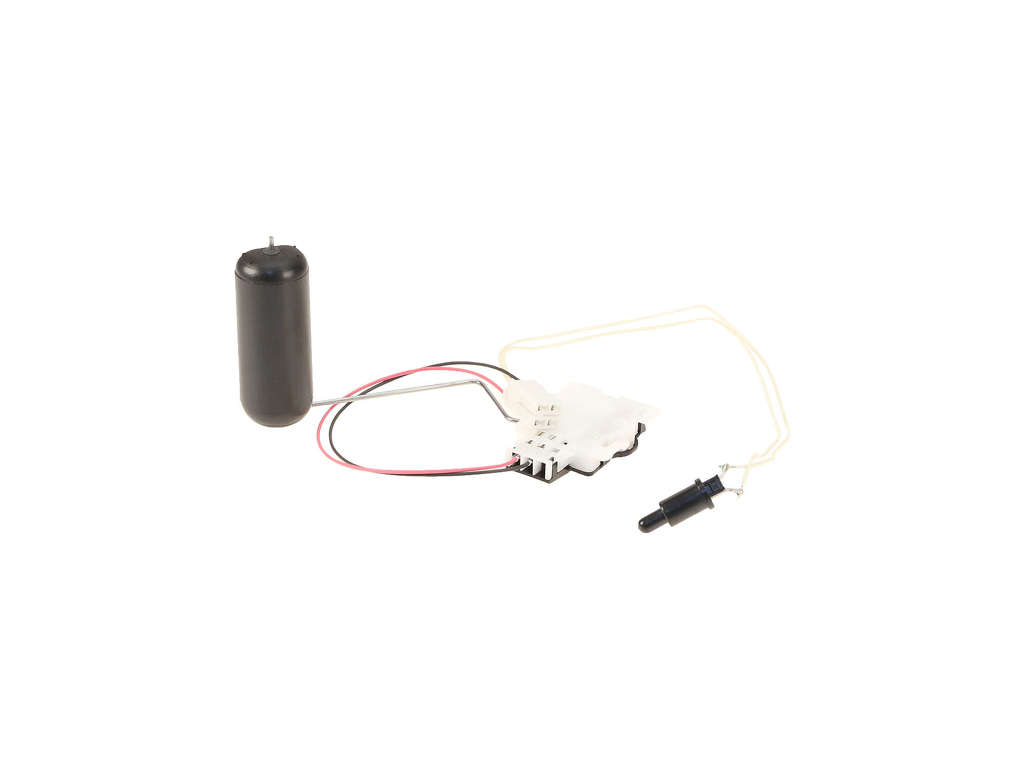
- Fuel Level Sending Unit (Sub)
(OEM #42081AJ140)— This is the sensor on the driver's side of the tank. Failure of the internal variable resistor is the most common cause of P0463.
Trusted brands: Subaru (OEM)
OEM price range: $80-$120
Aftermarket price range: $50-$90 - Fuel Level Sending Unit (Main)
(OEM #42081AJ021 (supersedes 42081AJ020))— This is the second sensor, located on the passenger side, often attached to the fuel pump assembly. It is just as likely to fail as the sub-unit. Many owners replace both simultaneously.
Trusted brands: Subaru (OEM)
OEM price range: $80-$120
Aftermarket price range: $50-$90
Platform-Specific Known Issues
- Owner Experience: Flashing Gauge and Multiple Lights: A common owner experience shared on Reddit and subaruoutback.org involves suddenly seeing the fuel gauge drop to empty with the low fuel light flashing, followed by the Check Engine Light, cruise control light, and VDC light all illuminating. This cascade of warnings is a typical Subaru response to a fault code and is almost always resolved by replacing the faulty fuel level sensor(s).
- DIY Repair Story: A user on subaruoutback.org detailed their DIY repair. After getting the P0463 code, they removed the rear seat, accessed both sending units, and used a multimeter to test resistance. The driver's side (sub) sensor showed an open circuit (infinite resistance). They replaced only that sensor (part #42081AJ140), cleared the code, and the fuel gauge returned to normal operation. The entire job took about an hour.
Mechanic-Grade Diagnostic Values
- Individual Fuel Level Sensor Resistance — expected: Approximately 2-3 Ohms at Full, and ~45 Ohms at Empty. The resistance should change smoothly as the float arm is moved through its range.. Failure: A reading of infinite resistance (OL) indicates an open circuit in the sensor, which is a common failure. Jumpy or erratic readings also indicate a faulty sensor.
Wiring & Ground Locations
- R58 — The electrical connector on top of the main fuel pump and sending unit assembly, located under the access panel on the passenger (RH) side rear seat area.. This is the primary connector for the main fuel level sensor ('A' circuit). Testing for voltage and resistance begins here. Corrosion or a poor connection at this point can directly cause P0463.
- R59 — The electrical connector on top of the sub-level sending unit, located under the access panel on the driver (LH) side rear seat area.. Because the two sensors are wired in series, a fault, open circuit, or bad connection at the sub-level sensor connector (R59) will also cause a high input reading for the entire circuit, triggering P0463.
Real Owner Repair Stories
- Reddit user in r/subaru (2015 Outback (Note: The user's vehicle is a 2015, but the dual-sensor series circuit design and fault logic are the same as the 2010-2014 models)) — Fuel gauge dropped to 'E' with a flashing fuel light, followed by a cascade of other warning lights including the Check Engine Light.
❌ Tried (didn't work) The user initially researched replacing just one sensor but was unsure which one had failed.
✅ What actually fixed it The community confirmed the dual-sensor setup is wired in series, meaning a failure in either sensor or the wiring between them would cause the code. The recommended procedure, which resolves the issue, is to test both sensors for resistance and replace the one that reads as an open circuit.
OEM Part Supersession History
42081AJ020→42081AJ021— Standard part revision by the manufacturer. No specific reason for the change is publicly documented, but it's often for minor improvements in materials or manufacturing.
Diagnostic Flowchart
Other Known Issues on This Vehicle
Issues unrelated to this code that are worth knowing about as an owner of this generation:
- Excessive Oil Consumption 🔴 High — Common in 2013-2014 models with the 2.5L FB25 engine. Can start as early as 30,000-60,000 miles. (Ref: Subject of a class-action lawsuit which resulted in an extended warranty (8 years/100,000 miles) and potential reimbursement for repairs for affected vehicles.)
- CVT Transmission Problems 🔴 High — Issues like shuddering, hesitation, and torque converter lock-up failure were more common in early models (2010-2012). Complete failure can occur, often requiring a costly replacement. (Ref: Subaru extended the CVT warranty for some models and issued software updates to address some drivability concerns.)
- Steering Wheel Vibration / Shaking 🟠 Medium — Some 2010-2011 models experienced a noticeable vibration or shake in the steering wheel at highway speeds (typically 55-65 mph). (Ref: Subaru issued TSB 05-48-10 for the 2010-2011 models, which involved a complex procedure of replacing steering and suspension components to resolve the issue.)
- Leaking Head Gaskets 🔴 High — While less common on the FB engine, the EJ25 engine used in some 2010-2012 models can still be susceptible to head gasket leaks, though it's a more prevalent issue in prior generations.
- Frequently Burnt-Out Headlight Bulbs 🟡 Low — Many owners report that low-beam headlight bulbs burn out frequently, sometimes every 6-12 months. Access for replacement is inconvenient, requiring work through the wheel well. (Ref: Subaru offered an extended warranty on bulbs for some owners but not a full recall.)
Used vs. New Parts: Buying Guide for This Vehicle
When a used part is the smart pick: Buying a used fuel level sending unit can be a cost-effective option, as it is a relatively simple electro-mechanical part. It makes sense if you can verify the part is from a lower-mileage, accident-free vehicle and you are on a tight budget.
Donor-vehicle mileage cap: roughly under 80000 miles for the part to have meaningful remaining life.
What to inspect on the donor part:
- Check for any physical damage to the float arm or the sensor body.
- Ensure the electrical connector pins are clean, straight, and free of corrosion.
- If possible, test the resistance of the used part with a multimeter before purchase to ensure it reads within spec (~2-45 ohms) and moves smoothly.
- Avoid parts from vehicles that have sat for a long time with old fuel, as this can varnish the resistor contacts.
OEM-only on this vehicle (don't cheap out):
- While not strictly 'OEM-only', using genuine Subaru sensors is highly recommended for fitment and reliability. The cost difference between OEM and quality aftermarket is often minimal for these parts.
Brands owners have reported issues with on this vehicle:
- Unnamed, no-brand sensors from online marketplaces should be avoided, as their quality control and longevity can be highly questionable.
Real Owner Stories
Aggregated from forums and TSBs cited above. Mileages and costs reflect what owners reported in those sources.
2011 Outback 2.5i 6sp manual — 227800 miles
Symptoms: a Christmas tree of lights as subaru does and it spit out this code
What fixed it: Installed a new warrantied fuel module (Carter p76798m).
Source hint: reddit.com - r/AskAMechanic
2010-2014 Subaru Outback
Symptoms: Fuel gauge dropped to empty with the low fuel light flashing, followed by the Check Engine Light, cruise control light, and VDC light all illuminating.
What fixed it: Replacing the faulty fuel level sensor(s).
Source hint: subaruoutback.org - Thread 'P0463 Fuel Level Sensor A Circuit High Input'
2010-2014 Subaru Outback
Symptoms: P0463 code; driver's side (sub) sensor showed an open circuit (infinite resistance) during multimeter testing.
What fixed it: Replaced the driver's side sub-sensor (part #42081AJ140) and cleared the code.
Source hint: subaruoutback.org - DIY Repair Story
2015 Outback
Symptoms: Flashing empty gauge and multiple warning lights.
What fixed it: Identified failure in the dual-sensor setup in the saddle tank where sensors are wired in series.
Source hint: reddit.com/r/subaru - Thread '2015 Outback P0463 help'
Related OBD-II Codes
Frequently Asked Questions
Why did my cruise control and VDC light come on along with the fuel gauge error?
Which fuel sensor is more likely to fail on my Outback, the main or the sub?
Where are the fuel level sensors located on the 2010-2014 Outback?
Can I replace just one sensor, or do I need to replace both?
Is there a specific part number for the driver's side sensor mentioned by other owners?
Does the 2010-2014 Subaru Legacy have this same fuel gauge issue?
Helpful Videos
We Have This Part in Stock

The information in this article is provided for general reference and educational purposes only. Vehicle specifications, procedures, and part compatibility can vary by production date, trim level, and region. Always consult your vehicle's factory service manual and verify part numbers before purchasing or performing repairs. Safety-critical components such as airbags, seat belts, and braking systems should be installed by a qualified professional.
- Subaru Outback:
- 🧭 Diagnostic Flowchart
- 🎬 Helpful Videos
- 🛍️ Shop This Part
- What's Unique About the 2010-2014 Subaru Outback
- Symptoms You May Notice
- Most Likely Causes
- Rare But Worth Checking
- Diagnosis Steps
- Parts You'll Likely Need
- Platform-Specific Known Issues
- Mechanic-Grade Diagnostic Values
- Wiring & Ground Locations
- Real Owner Repair Stories
- OEM Part Supersession History
- Other Known Issues on This Vehicle
- Used vs. New Parts: Buying Guide for This Vehicle
- Real Owner Stories
- 2011 Outback 2.5i 6sp manual — 227800 miles
- 2010-2014 Subaru Outback
- 2010-2014 Subaru Outback
- 2015 Outback
- Related OBD-II Codes
- Frequently Asked Questions
- 🎟️ Get 5% Off