

P0463 on 2017-2020 Toyota 86: Fuel Level Sensor 'A' Circuit High Causes and Fixes
On a 2017-2020 Toyota 86, code P0463 almost always means a failed fuel level sending unit, causing an inaccurate fuel gauge. The repair involves replacing the sender in the fuel tank. Owners using E85 or flex fuel tunes see this code frequently, suggesting a link between the fuel type and sensor failure. Diagnosis requires testing the resistance of both senders in the saddle tank.
- P0463 on a Toyota 86 means the primary fuel level sensor circuit is reading a higher-than-normal voltage, usually indicating an open circuit from a failed sensor.
- The most common cause is a failed fuel level sending unit, often the primary one located with the fuel pump on the passenger side.
- Use of E85 fuel is strongly correlated with this code, either by causing the sensor's float to stick or by accelerating wear on the sensor components.
- Diagnosis involves testing the resistance of both the primary and secondary fuel senders; an 'OL' reading on a multimeter indicates failure.
- The vehicle is safe to drive, but the fuel gauge will be unreliable, requiring you to track mileage to avoid running out of fuel.
What's Unique About the 2017-2020 Toyota 86
The Toyota 86, a mechanical twin to the Subaru BRZ, uses a saddle-style fuel tank to accommodate the driveshaft for its rear-wheel-drive layout. This design requires two separate fuel level sending units—a primary one ('Sensor A') with the fuel pump on the passenger side and a secondary (sub) one on the driver's side. Furthermore, this platform is popular for performance modifications, including flex fuel tunes for E85 gasoline. Multiple owner reports strongly suggest a correlation between running E85 and the appearance of code P0463, possibly due to the fuel's properties affecting the sensor's components or software conflicts with aftermarket tunes. Some owners report the float getting stuck after prolonged E85 use, which can be temporarily resolved by switching back to gasoline for a few tanks.
Symptoms You May Notice
- Check Engine Light is on
- Fuel gauge is inaccurate, stuck on 'Full' or 'Empty', or fluctuates randomly.
- Low fuel warning light may illuminate or flash incorrectly.
- Cruise control may be disabled when the Check Engine Light is active.
- Replacing the fuel pump when only the sending unit has failed. While they are often in the same assembly, sometimes the sender can be replaced separately.
- Replacing the wrong sending unit. The 86/BRZ has two sending units; P0463 refers to 'Sensor A' (the primary unit on the passenger side), but it's crucial to confirm with resistance tests before buying parts.
Most Likely Causes
- Failed Fuel Level Sending Unit 🔴 High Probability → Shop Fuel Tank Sending Unit The sending unit's resistor contacts can wear out or become corroded over time, creating an open circuit. This is a common failure point on many vehicles. On the 86/BRZ platform, frequent use of E85 fuel may accelerate this wear or cause the float to stick. One owner on ft86club.com noted their sending units failed twice in 5 years while running E85 almost exclusively.
How to confirm: Access the top of the fuel tank and disconnect the sender's electrical connector. Use a multimeter to measure the resistance across the sender's pins. According to a forum post citing the service manual, the primary sender (passenger side) should read ~6.5-8.5 ohms at full and ~168-172 ohms at empty. The sub-sender (driver side) should read ~5.5-9.5 ohms at full and ~236-244 ohms at empty. An infinite resistance reading (OL) confirms an open circuit and a failed unit.
Typical fix: Replace the faulty fuel level sending unit. Since the 86 has two senders (main and sub), it's important to diagnose which one is faulty. P0463 points to 'Sensor A', the primary unit with the fuel pump. Many owners replace the entire fuel pump module which includes the main sender.
Est. part cost: $150-$400 - Damaged Wiring or Corroded Connector 🟡 Medium Probability The wiring harness runs from the fuel tank to the front of the car. Wires can be damaged or connectors can corrode, especially at the fuel pump assembly connector on top of the tank, which is exposed to the elements from underneath the car.
How to confirm: Visually inspect the wiring harness for any signs of fraying, breaks, or chafing. Check the connector at the fuel pump module for corrosion or backed-out pins. Test for continuity and voltage between the ECM and the sensor connector using a multimeter and a wiring diagram.
Typical fix: Repair the damaged section of wire or clean/replace the corroded connector.
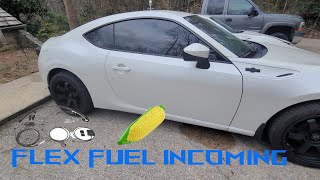
Est. part cost: $10-$50 - Aftermarket Tune/Flex Fuel Kit Issue ⚪ Low Probability This is a very popular platform for tuning. Some aftermarket tunes, especially for flex fuel, can cause software conflicts 🎬 See this flex fuel sensor installation guide that lead to a P0463 code. One owner on Reddit reported their tune was configured with an incorrect voltage range for their flex fuel kit, triggering the code. Another on ft86club.com suspected their EcuTek E85 map was the cause.
How to confirm: If the vehicle is tuned, flash the stock ECU map back onto the car. If the code disappears after a drive cycle, the issue is with the tune. Alternatively, discuss the code with your tuner.
Typical fix: Contact the tuning company for a revised map with the correct parameters for the fuel level sensor circuit.
Est. part cost: $0
Rare But Worth Checking
- Faulty Instrument Cluster or ECM: → Shop Instrument Cluster This is very rare. Before suspecting the cluster or Engine Control Module (ECM), all other possibilities like the sensor, wiring, and grounds must be exhaustively ruled out through proper electrical diagnostics.
Diagnosis Steps
- Scan the vehicle's computer for stored trouble codes to confirm P0463 is the only code present. Note any other codes.
- Note the fuel level indicated on the gauge and compare it to the actual amount of fuel in the tank.
- If the vehicle is modified with a flex fuel kit or an aftermarket tune, consider this a potential cause. Try flashing the stock tune if possible to see if the problem resolves.
- Gain access to the fuel pump and sending unit connectors, which are under the rear seat/cargo area via two separate access panels.
- Visually inspect the electrical connectors and wiring for any signs of damage, corrosion, or loose pins.
- Disconnect the connector for the primary fuel level sensor ('Sensor A', passenger side). Use a multimeter set to Ohms (Ω) to measure the resistance between the sensor's signal and ground pins.
- Compare the reading to the manufacturer's specifications. Per forum findings citing the service manual, expect ~6.5-172 ohms for the primary sender. A reading of infinite resistance (OL - Open Loop) indicates a failed sending unit.
- If the primary sensor's resistance is within spec, repeat the test on the sub-level sender (driver's side). Expect ~5.5-244 ohms. While P0463 points to sensor 'A', a fault in the secondary sensor can sometimes cause system-wide issues.
- If both sensors' resistance values are within spec, the problem is likely in the wiring. Check for voltage and ground at the connector. A wiring diagram is necessary for this step.
Parts You'll Likely Need
- Fuel Pump Module Assembly (includes main level sensor)
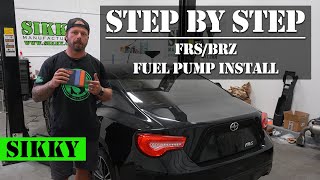
(OEM #SU003-08240 (Toyota) / 22647AA50A (Subaru))— This is the most common failure. The assembly contains the fuel pump, filter, and the primary fuel level sending unit ('Sensor A'). Replacing the whole module is often easier than replacing the sender alone. 🎬 Watch: Step-by-step fuel pump installation walkthrough
Trusted brands: Denso
OEM price range: $350-$500
Aftermarket price range: $150-$300 - Fuel Tank Sender Assembly, Sub (secondary level sensor)
(OEM #SU003-02739 (Toyota) / 42081CA000 (Subaru))— If the primary sender tests good, or if an owner wants to replace both preventatively, this part is needed. It is located on the driver's side of the fuel tank.
Trusted brands: Subaru Genuine Parts
OEM price range: $70-$120
Aftermarket price range: $50-$100
Technical Service Bulletins (TSBs) & Recalls
- Subaru TSB 09-54-12R: Addresses the common high-pressure fuel pump 'chirp', a well-known sound on this platform but unrelated to P0463.
- Toyota Safety Recall J1A / Subaru WTY-84: Pertains to the 2012-2013 model year valve spring failure, a critical issue for early platform owners but not directly related to P0463.
Platform-Specific Known Issues
- Code P0463 is frequently reported by owners running E85 fuel or aftermarket flex fuel tunes, suggesting a link between the alternative fuel and sensor issues.
- The saddle-style fuel tank necessitates two fuel level sensors, which can complicate diagnosis if not taken into account.
Mechanic-Grade Diagnostic Values
- Primary Fuel Level Sender (Passenger Side) Resistance — expected: ~6.5-8.5 Ω (Full) to ~168-172 Ω (Empty). Failure: Infinite resistance (OL) or a reading outside the specified range.
- Sub-Level Fuel Sender (Driver Side) Resistance — expected: ~5.5-9.5 Ω (Full) to ~236-244 Ω (Empty). Failure: Infinite resistance (OL) or a reading outside the specified range.
- Combined Fuel Sender Resistance (at Instrument Cluster) — expected: Under 18 Ω (Full) to over 404 Ω (Empty). Failure: A reading that doesn't correspond to the sum of the two individual senders.
- Fuel Pump Trigger Wire Voltage (Key On) — expected: ~5 Volts (PWM Signal). Failure: This is a PWM-controlled circuit, so a simple multimeter may show ~5V instead of 12V. This is not necessarily a fault. An oscilloscope is needed to properly diagnose the signal.
Wiring & Ground Locations
- Fuel Pump / Sender Ground Wire — At the fuel pump assembly connector in the tank.. The common ground wire for the fuel pump and sender on the AE86 chassis (precursor to the 86) is White with a Black stripe. A bad ground can cause high resistance in the circuit, potentially triggering a P0463.
- Fuel Pump Control ECU (G12) — Located in the rear of the vehicle, near the fuel pump assembly.. This module controls the fuel pump via a PWM signal. A user reported measuring ~5V at the pump's trigger wire, which is expected from this controller, not a full 12V. Misunderstanding this could lead to misdiagnosis of the wiring.
- Instrument Cluster Connector Pins 27 & 28 — At the back of the main instrument cluster/combination meter.. The signals from both fuel level senders run to these pins. Testing resistance or voltage here can help determine if the fault is in the wiring harness between the tank and the dash, or within the cluster itself.
Real Owner Repair Stories
- Reddit user in r/ft86 (2015 Subaru BRZ with Flex Fuel Kit) — P0463 code appeared while running E85 (70% ethanol content).
❌ Tried (didn't work) Initial diagnosis pointed towards the sensor itself or E85-related damage.
✅ What actually fixed it The issue was a faulty aftermarket tune. The voltage range configured in the flex fuel tune exceeded the voltage of the flex fuel kit, causing the ECU to see a high input. Switching to a corrected 93 octane or E85 tune resolved the code. - ft86club.com user 'Ronthebiker14' (2013 Scion FR-S with Delicious Tuning flex fuel kit) — Recurring P0463 code, fuel gauge stuck at 1/3 after filling up. The issue appeared after switching to run E85 almost exclusively.
❌ Tried (didn't work) Resetting the code (it came back instantly)., Reseating the electrical connectors at the sending units.
✅ What actually fixed it The user had previously replaced both sending units two years prior to fix the same issue. The story highlights that even with new parts, the problem can recur, strongly suggesting a link between long-term E85 use and repeated sending unit failure on this platform. The user's next step was to burn the tank of E85 and switch to 91 octane to see if it would resolve the stuck float. - Reddit user in r/ft86 (Unknown year, with OFT E85 tune) — Started getting P0463 after the third fill-up with E85.
❌ Tried (didn't work) Using fuel additives (Marvel Mystery Oil) to lubricate the pump did not provide a permanent solution.
✅ What actually fixed it The float was getting stuck due to E85 use. The fix was to switch back to premium gasoline for a few fill-ups, which unstuck the float and made the code disappear. The user recommended periodically running a tank of premium gasoline or using fuel conditioners when running E85 long-term.
Model Year Variations Within This Range
- 2017-2020: There are no significant mechanical differences in the fuel system or related electronics between the 2017 and 2020 model years of the Toyota 86. Aftermarket parts compatibility lists that show differences are likely based on incomplete data rather than actual part changes. The 2017 model year refresh included engine and chassis updates, but the core fuel delivery and sensing system remained consistent through 2020.
Diagnostic Flowchart
Other Known Issues on This Vehicle
Issues unrelated to this code that are worth knowing about as an owner of this generation:
- Engine Valve Spring Fracture (Recall) 🔴 High — Affects 2012-2013 models. A recall was issued because a fracture can lead to engine stall and failure to restart. Botched recall repairs by technicians unfamiliar with boxer engines sometimes caused secondary engine failures due to improper application of sealant. (Ref: Toyota Safety Recall J1A / Subaru Safety Recall WTY-84)
- High-Pressure Fuel Pump 'Crickets' 🟡 Low → Shop Fuel Pump — Very common across all years, especially 2013 models. A high-pitched chirping sound comes from the HPFP at idle when the engine is warm. It is considered non-detrimental. The sound can often be mitigated by using different brands of gasoline (e.g., Chevron is often cited as quieting the noise). (Ref: Subaru TSB 09-54-12R)
- Tail Light Condensation/Water Intrusion 🟠 Medium — Common on earlier models (pre-2017) due to an inadequate tail light housing gasket. Water can enter the trunk and the light housings. Owners often fix this by replacing the OEM gaskets with thicker aftermarket versions or by applying silicone sealant. (Ref: Subaru TSB 12-182-15R (related to updated gasket design))
- Clutch Throw-Out Bearing Failure 🟠 Medium — Affects manual transmission models, particularly earlier years. The bearing can wear prematurely, causing a chirping or squeaking noise when the clutch pedal is depressed.
Used vs. New Parts: Buying Guide for This Vehicle
When a used part is the smart pick: For this specific repair, buying a used fuel pump module or sending unit is generally not recommended. The failure is often related to wear on the resistor strip or float mechanism, and is potentially accelerated by E85 fuel. A used part from a donor vehicle, especially one with unknown history or high mileage, is likely to have similar wear and could fail soon after installation.
Donor-vehicle mileage cap: roughly under 40000 miles for the part to have meaningful remaining life.
What to inspect on the donor part:
- Ask for the VIN of the donor car to verify it wasn't from a region where E85 is common.
- If possible, test the resistance of the used sender across its range of motion before purchasing. Ensure the movement is smooth with no dead spots.
- Visually inspect the electrical connector for any signs of corrosion, melting, or backed-out pins.
- Avoid parts from vehicles that show signs of having sat for a long time with old fuel, as this can cause corrosion and sticking floats.
OEM-only on this vehicle (don't cheap out):
- Fuel Pump Module Assembly
- Fuel Level Sending Unit (Main and Sub)
Aftermarket brands forum-validated for this vehicle:
- Denso (OEM supplier)
Brands owners have reported issues with on this vehicle:
- Unbranded, no-name parts from online marketplaces are a significant gamble, as their internal resistor quality and ethanol compatibility are unverified.
Real Owner Stories
Aggregated from forums and TSBs cited above. Mileages and costs reflect what owners reported in those sources.
2017-2020 Toyota 86
Symptoms: The fuel gauge was acting incorrectly and the car threw a P0463 code after running E85 almost exclusively.
What fixed it: The owner had to replace the sending units; notably, they reported the units failed twice within a 5-year period due to E85 use.
Source hint: ft86club.com - Thread 'Fuel Gauge Woes/P0463'
2017-2020 Toyota 86
Symptoms: The Check Engine Light triggered a P0463 code due to an incorrect voltage range configuration for a flex fuel kit.
What fixed it: The issue was identified as a software conflict in the aftermarket tune.
Source hint: reddit.com/r/ft86
2015 Scion FR-S
Symptoms: The car would repeatedly throw P0463 codes specifically when the gas level was low.
What fixed it: The owner discussed the code appearing on stock or lightly modified cars when fuel levels dropped.
Source hint: ft86club.com - Thread 'Keep throwing P0463 codes on low gas'
Related OBD-II Codes
Frequently Asked Questions
Does the high-pressure fuel pump 'chirp' mentioned in Subaru TSB 09-54-12R cause the P0463 code on my Toyota 86?
I run E85 in my 2017 Toyota 86; could this be why my fuel gauge is acting up?
Which fuel sensor should I check first on my Toyota 86 for a P0463 code?
Can my aftermarket flex fuel tune cause a P0463 code?
Where are the access panels for the fuel sensors located in the 2017-2020 Toyota 86?
What resistance readings should I see on a healthy primary fuel sender for this car?
Helpful Videos


We Have This Part in Stock


The information in this article is provided for general reference and educational purposes only. Vehicle specifications, procedures, and part compatibility can vary by production date, trim level, and region. Always consult your vehicle's factory service manual and verify part numbers before purchasing or performing repairs. Safety-critical components such as airbags, seat belts, and braking systems should be installed by a qualified professional.
- Toyota 86:
- 🧭 Diagnostic Flowchart
- 🎬 Helpful Videos
- 🛍️ Shop This Part
- What's Unique About the 2017-2020 Toyota 86
- Symptoms You May Notice
- Most Likely Causes
- Rare But Worth Checking
- Diagnosis Steps
- Parts You'll Likely Need
- Technical Service Bulletins (TSBs) & Recalls
- Platform-Specific Known Issues
- Mechanic-Grade Diagnostic Values
- Wiring & Ground Locations
- Real Owner Repair Stories
- Model Year Variations Within This Range
- Other Known Issues on This Vehicle
- Used vs. New Parts: Buying Guide for This Vehicle
- Real Owner Stories
- 2017-2020 Toyota 86
- 2017-2020 Toyota 86
- 2015 Scion FR-S
- Related OBD-II Codes
- Frequently Asked Questions
- 🎟️ Get 5% Off