

OBD-II Code P0464: Fuel Level Sensor 'A' Circuit Intermittent
The Ultimate 2026 Guide to Diagnosing and Fixing P0464
- A P0464 code means your fuel level sensor signal is cutting out, making your fuel gauge unreliable and increasing your risk of running out of gas.
- Before replacing a $500 fuel pump module, visually inspect the wiring harness and perform a 'wiggle test' to find corroded connectors or chafed wires.
- On GM and Ford vehicles, adding a $20 bottle of PEA-based fuel system cleaner (like Chevron Techron) often dissolves sulfur deposits on the sensor and clears the code.
- Do not clear the P0464 code right before a state inspection; the unstable fuel reading prevents the EVAP monitor from running, guaranteeing an automatic emissions failure.
What Does P0464 Mean?
P0464 means your car's Powertrain Control Module (PCM) is receiving an unstable, erratic, or jumpy signal from the fuel level sensor. This sensor tells the computer how much gas is in the tank to control the dashboard fuel gauge. Because the signal cuts in and out, the computer flags the inconsistency and triggers the Check Engine Light.
Technical definition: The official SAE/OBD-II definition is "Fuel Level Sensor 'A' Circuit Intermittent." The PCM detects the voltage signal from the fuel level sensor changing faster than physically possible from normal fuel sloshing. The computer sets this code when the signal fluctuates erratically or drops out, proving an electrical fault rather than an actual change in fuel level.
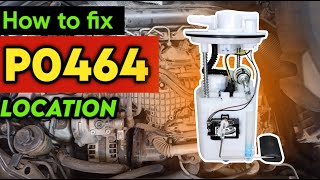
🎬 Watch: A quick overview of the P0464 code and its meaning.Can I Drive With P0464?
Yes, But With Caution. Yes, but your fuel gauge is unreliable. The primary risk is unexpectedly running out of fuel, leaving you stranded. Use your trip odometer to manually track mileage between fill-ups. Running the tank completely dry stresses and damages the fuel pump, which relies on fuel for cooling. A failed fuel pump adds $800-$1200 to your total repair cost.
Common Causes
- Damaged, Corroded, or Loose Wiring/Connectors (Very Common) — The most frequent cause. The wiring harness between the fuel tank and the PCM is exposed to the elements. Connectors, especially on top of the fuel pump module, corrode from moisture and road salt. Wires chafe against the frame or break, creating a poor connection that cuts in and out.
- Faulty Fuel Level Sending Unit (Common) — The sensor itself, part of the fuel pump module, fails internally. The variable resistor develops dead spots, or the float arm sticks, sending erratic signals as it moves.
- Poor Ground Connection (Common) — The fuel level sensor circuit requires a solid ground for an accurate voltage signal. A loose or corroded ground strap for the fuel tank or sensor circuit causes the signal to fluctuate and triggers the code.
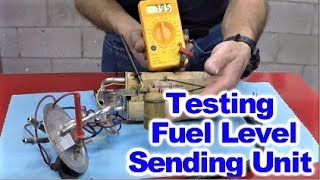
- High-Sulfur Fuel or Fuel Additives (Varnish Build-up) (Less Common) — On certain GM and Ford vehicles, high-sulfur fuel causes a varnish-like film to build up on the sensor's resistor card. This film insulates the wiper contact, preventing a clean reading. 🎬 See how to test your fuel level sensor without removing the pump.
- Intermittent Short to Power or Ground (Less Common) — A wire in the sensor circuit intermittently touches a power source or chassis ground. This spikes the signal voltage to battery voltage or drops it to zero unexpectedly.
- Failing Instrument Cluster or Body Control Module (BCM) (Rare) — The computer module interpreting the sensor's signal develops internal faults due to software glitches or failing electronic components, misreading a perfectly good sensor signal.
- Physical Damage to Float or Sending Unit Arm (Rare) — If the fuel tank is dented or improperly serviced, the float arm bends or sticks, preventing free movement. Debris or rust inside the tank also impedes movement.
- Software/Calibration Mismatch (Rare) — The control module's software is sometimes too sensitive and interprets normal fuel slosh as an intermittent fault. Manufacturers release software updates (re-flashes) to correct this.
Symptoms
- Erratic, Fluctuating, or Inaccurate Fuel Gauge — The most common symptom. The needle jumps around, drops to empty, shoots to full, or gets stuck on one level regardless of the actual fuel amount.
- Check Engine Light is On — The Malfunction Indicator Lamp (MIL) illuminates. On some vehicles, it flashes or turns on and off as the fault occurs.
- Low Fuel Light Comes On Intermittently — The low fuel warning light flashes or stays on even when the tank has plenty of fuel, corresponding with the gauge dropping to empty.
- Engine Stalling or Difficulty Starting — In rare cases, if the PCM uses the fuel level input for other calculations or if the issue is part of a larger fuel pump module failure, it leads to stalling or starting problems.
- EVAP Monitor 'Not Ready' Status (scan-tool only — no driver-felt sign) — The onboard diagnostic system requires a stable fuel level reading (typically 15-85% full) to run EVAP system tests. An intermittent signal prevents this monitor from running, causing a failed emissions test.
Diagnostic Flowchart
Tap your situation to follow the diagnostic path that matches what you're seeing on this code.
Common Fixes & Costs
- Repairing Wiring or Cleaning Connectors — Parts: $10-$30, Labor: $125-$250, ~1.5 hr book time (Intermediate)
- Cleaning or Repairing Ground Connection — Parts: $5-$15, Labor: $50-$150, ~0.8 hr book time (Intermediate)
- Using a High-Quality Fuel System Cleaner
— Parts: $15-$30, Labor: $0, ~0.1 hr book time
(Beginner)
: OEM
: OEM - Replacing the Fuel Level Sensor/Sending Unit Only
— Parts: $50-$150, Labor: $250-$400, ~2.5 hr book time
(Professional)
: OEM
: OEM
: OEM - Replacing the Entire Fuel Pump Module (includes sensor)
— Parts: $250-$600, Labor: $350-$600, ~3 hr book time
(Professional)
: OEM
: OEM
: OEM - Reprogramming or Replacing the PCM/BCM/Instrument Cluster — Parts: $500-$1000, Labor: $150-$300, ~1.5 hr book time (Professional)
Used vs. New Parts: Buying Guide
When a used part is worth it: For a complete fuel pump module, a used OEM unit from a low-mileage, accident-totaled vehicle is a cost-effective alternative to a new aftermarket part with questionable reliability.
Donor-vehicle mileage cap: roughly under 60000 miles for the part to have meaningful remaining life.
Donor quality checklist:
- Verify the donor vehicle was not scrapped for fuel system or electrical issues.
- Inspect the electrical connector on the used part for corrosion or heat damage.
- Match the OEM part number exactly, as different numbers have different resistance ranges for the sender.
Decision logic:
- If The fix is a simple wiring repair or cleaning connectors → Always use new wires and connectors; never splice in used wiring.
- If The vehicle is over 100K miles and budget is the primary concern → A used OEM fuel pump module is a viable option, but carries the risk of a shorter lifespan.
- If The part is just the fuel level sender (not the whole pump) → Favor a new OEM or high-quality aftermarket part, as the labor to access it is high and not worth risking on a used sensor.
Warranty tradeoff: Used parts from salvage yards typically offer a 30-90 day warranty. New aftermarket parts come with a 1-year to limited lifetime warranty. New OEM parts carry a 1-2 year warranty.
Worst-case if a used part fails: 600-1000 if a used fuel pump module fails prematurely, requiring repeat labor costs plus the price of another replacement part.
What Happens If You Wait — Timeline
- 0-1 month: Check Engine Light illuminates. Fuel gauge occasionally flickers or drops to empty for a few seconds before returning to normal. No other performance issues. (MPG impact: 0%% · Added cost: $0)
- 1-4 months: Gauge becomes more erratic, frequently showing empty or full regardless of the actual level. Low fuel light flashes randomly. The driver loses all trust in the gauge and must rely on the trip odometer. Risk of being stranded increases. (MPG impact: 0%% · Added cost: $50-$150 (Potential cost of roadside assistance if you run out of fuel))
- 4-12 months: The EVAP readiness monitor is consistently 'Not Ready', causing an automatic emissions test failure. Repeatedly running the tank completely dry (due to the bad gauge) begins to overheat and strain the fuel pump. (MPG impact: 0-2% (If PCM makes minor adjustments based on faulty data)% · Added cost: $150 (Failed emissions test and re-test fees))
- 12+ months: The fuel pump, stressed from repeated dry runs, fails completely. The vehicle cranks but will not start, requiring a tow. The entire fuel pump module must now be replaced, a significantly more expensive repair than just the sensor or wiring. (MPG impact: 100% (Vehicle is inoperable)% · Added cost: $800-$1500 (Cost for a tow plus full fuel pump module replacement))
Cost of Not Fixing It
- Immediate: Unreliable fuel gauge, leading to the risk of running out of fuel and being stranded. (Added cost: 0)
- 1-6 Months: Repeatedly running the tank completely dry overheats and prematurely wears out the fuel pump, which relies on fuel for cooling and lubrication. (Added cost: 800-1300)
- 6+ Months: A failed fuel pump causes a no-start condition, requiring a tow and replacement of the entire fuel pump module. Inability to pass state emissions inspections. (Added cost: 1000-1500)
Diagnosis Steps
- Read the Code and Freeze Frame Data
Use an OBD-II scanner to confirm P0464 is the active code. Analyze the freeze-frame data to see the vehicle's conditions (fuel level percentage, voltage, speed) when the fault triggered. Note related codes like P0460, P0461, P0462, or P0463.
Tools: OBD-II Scanner (Beginner) - Check for Technical Service Bulletins (TSBs)
Check for TSBs for your vehicle's make, model, and year. Manufacturers release bulletins for known issues, including simple software re-flashes to fix an overly sensitive PCM.
Tools: Online Repair Database or Dealer Access (Beginner) - Visually Inspect Wiring and Connectors
Thoroughly inspect the wiring harness leading to the fuel tank. Look for chafed, burnt, or broken wires. Disconnect the main connector at the fuel pump module (access is often under the rear seat) and inspect the pins for corrosion (green/white powder), moisture, or pushed-out pins.
Tools: Flashlight, Trim Removal Tools (Beginner) - Monitor Live Data and Perform a 'Wiggle Test'
View live data for 'Fuel Level Sensor Voltage' or 'Fuel Level %'. With the vehicle stationary, the reading must be stable. Have a helper gently wiggle the wiring harness at the tank connector and along the frame while you watch the data. If the voltage jumps erratically or drops out, you found the intermittent fault location.
Tools: Advanced OBD-II Scanner (Intermediate) - [PRO TIP] Test Sensor Voltage and Reference
Back-probe the sensor connector with a multimeter. Check for a 5-volt reference signal from the PCM on the specified wire. Then, check the signal wire. Voltage must be steady and typically range from 0.5V (empty) to 4.5V (full). A reading that jumps wildly or drops to 0V intermittently while stationary indicates a sensor or wiring fault.
Tools: Digital Multimeter, Vehicle-Specific Wiring Diagram (Advanced) - [PRO TIP] Perform a Voltage Drop Ground Test
A poor ground is a common hidden cause. Set your multimeter to a low DC voltage scale (e.g., 2V). Connect the positive lead to the battery's negative terminal and the negative lead to the fuel level sensor's ground pin at the connector. With the key on, the reading must be less than 100 millivolts (0.1V). A higher reading indicates excessive resistance in the ground circuit.
Tools: Digital Multimeter (Advanced) - Test the Sensor's Resistance Sweep
Disconnect the sensor and connect a multimeter set to Ohms (Ω) to the signal and ground pins. Manually move the float arm from empty to full. The resistance reading must change smoothly without dropouts or spikes. An infinite (OL) or zero reading indicates a failed sensor.
Tools: Digital Multimeter, Vehicle Repair Manual (Intermediate) - [ADVANCED] Advanced Live Data Analysis
Monitor PIDs related to the fuel system. Check the 'EVAP System Monitor Status'. If it is 'Not Ready', the fuel level is not stable within the required 15-85% range. Monitor 'Fuel Tank Level Input' in voltage. The PCM sets P0464 when it sees a voltage change greater than a calibrated amount in a very short time (e.g., >0.8V in less than 4 seconds).
Tools: Professional Bi-Directional Scan Tool (Advanced) - [ADVANCED] PCM Fault Trigger Verification
View the specific criteria for setting a DTC. For P0464, the PCM sets the code if the fuel level signal voltage changes by more than 0.5-1.0 volts in 1-2 seconds. If your live data shows voltage spikes exceeding this manufacturer-specified threshold, it confirms the intermittent fault condition.
Tools: OEM-Level Scan Tool or Advanced Repair Manual (Advanced) - Inspect the Instrument Cluster
With the key in the 'on' position, gently tap on the dashboard near the instrument cluster. If the fuel gauge needle jumps or corrects itself, it indicates a loose connection or a fault within the cluster itself.
Tools: Basic Hand Tools (Beginner)
When This Code Triggers (Freeze-Frame Conditions)
- Engine Coolant Temp: 175-210°F (Engine at full operating temperature.)
- RPM: 1200-2800 RPM (Steady cruise or light acceleration, not typically at idle.)
- Engine Load: 25-70% (Vehicle is being driven, not coasting or at wide-open throttle.)
- Vehicle Speed: 30-65 mph (City or highway driving, where fuel slosh occurs but the intermittent electrical fault is more pronounced.)
Related Codes
- P0460 — A generic fault for the fuel level sensor circuit. P0464 is more specific, indicating the fault is intermittent. P0460 sets for a wider range of circuit failures, while P0464 points specifically to an unstable signal.
- P0461 — Indicates the sensor's signal is out of its expected performance range. This is a precursor to P0464, where the signal is not just out of range but is erratically fluctuating.
- P0462 — Indicates the circuit input is consistently low (stuck on empty). A P0464 triggers if the signal voltage momentarily drops to the P0462 threshold. If both codes are present, suspect an intermittent short to ground.
- P0463 — Indicates the circuit input is consistently high (stuck on full). A P0464 sets if the signal intermittently spikes to the P0463 threshold. This points to a connection that is intermittently opening or shorting to power.
Climate & Environmental Factors
- High Humidity & Road Salt ('Rust Belt' Regions): Significantly accelerates corrosion on the fuel pump module connector, wiring harness, and ground connections on the vehicle's frame. This is a leading cause of the intermittent electrical signals that trigger P0464.
- High-Sulfur Gasoline: Causes a sulfur-based varnish to build up on the resistor contacts of the fuel level sending unit, particularly noted in certain GM and Ford vehicles. This insulates the sensor's wiper, causing erratic readings.
- Extreme Cold: Causes already brittle or aging wires to lose flexibility, making them more likely to crack or break a connection when the vehicle is moving. It exacerbates poor connections at connectors as materials contract.
How to Talk to a Mechanic About This Code
Say this: "I have a P0464 code and an erratic fuel gauge. I want to book a diagnostic appointment to test the fuel level sensor circuit, including the wiring, connector, and ground, before considering a full fuel pump assembly replacement."
This shows you understand the most common causes are electrical, not the expensive pump itself. It directs the technician to perform a proper diagnosis first, preventing them from jumping to the most expensive conclusion.
Avoid saying:
- 'My fuel gauge is broken, just fix it.'
- 'I think I need a new fuel pump.'
- 'My check engine light is on, can you look at it?'
Questions to ask before authorizing the repair:
- Did you perform a 'wiggle test' on the harness while watching live data?
- What was the result of the voltage drop test on the sensor's ground circuit?
- Can you show me the corrosion on the connector or the chafe point on the wire?
- Is the fuel level sensor available separately from the entire fuel pump module for my vehicle?
Where to Take It: Dealer vs Independent vs Chain
- Dealer:
Good for software fixes or complex known issues, but the most expensive option for a common wiring or sensor fault.
Best for: Vehicles under warranty., Known TSBs that require a PCM software update (re-flash)., Complex, vehicle-specific issues like the dual-sensor systems in Subarus or Jeeps.
Downsides: Highest labor rates., Defaults to replacing the entire fuel pump module, even if only the sensor or a wire is bad. (Typical cost: +50% vs. baseline) - Independent Shop:
Best fit. A good independent diagnostician finds the true intermittent electrical fault and performs a cost-effective repair, saving you from buying an unnecessary fuel pump assembly.
Best for: Out-of-warranty vehicles where cost is a factor., Diagnosing and repairing electrical faults like bad wires, connectors, or grounds.
Downsides: Shop quality and diagnostic skill vary greatly. Look for shops with ASE-certified technicians specializing in electrical systems. (Typical cost: +0% vs. baseline) - Chain Shop:
High risk. Avoid for diagnosing a P0464. They are likely to replace the entire fuel pump module unnecessarily.
Best for: Simple, clear-cut part replacements.
Downsides: Technicians lack the advanced electrical diagnostic training needed for intermittent faults., High pressure to sell parts leads to a quick misdiagnosis of 'bad fuel pump' without proper circuit testing. (Typical cost: -10% vs. baseline)
When to Walk Away From the Repair
If the estimated repair cost exceeds 40-50% of the car's private-party value (check KBB or CARFAX), sell the car as-is instead of repairing it.
- Car worth $4000, fix is $850: Fix it. The repair cost is well below the 50% threshold.
- Car worth $3000, fix is $1500: Walk away. The repair cost is 50% of the car's value. Sinking $1500 into a $3000 car is not worth it.
- Car worth $10000, fix is $250: Fix it. This is a minor cost relative to the vehicle's value.
What Scan Tool You Need for This Code
Minimum: An OBD-II scanner that reads and graphs live data, specifically the 'Fuel Level Sensor' voltage or percentage PID.
A basic $20 code reader only shows the 'P0464' code, but cannot show the live, fluctuating voltage signal. Seeing the signal jump around on a graph is mandatory to confirm an intermittent electrical fault and perform a 'wiggle test'.
Budget: BlueDriver Bluetooth Pro (~$100) — Pairs with your smartphone to display and graph live sensor data in real-time. Perfect for watching the fuel level voltage while wiggling wires to pinpoint the intermittent connection.
Mid-range: Innova 5610 or Foxwell NT510 Elite (~$150) — Provides a dedicated handheld device with a screen for robust live data graphing. These tools have faster refresh rates and access manufacturer-specific codes.
Professional: Autel MaxiCOM MK808 / MK808Z (~$500) — Offers professional-level diagnostics with a tablet interface, fast live data, and the ability to access data from nearly all vehicle modules.
Rent vs buy: For a one-time diagnosis, use the free loaner tool program from stores like O'Reilly Auto Parts or AutoZone. Ensure the loaner scanner displays live data. If it cannot, purchasing a budget pick is a better investment.
How to Clear the Code After You Fix It
- Use an OBD-II scan tool to clear the P0464 code from the PCM's memory.
- If the battery was disconnected for the repair, reconnect it.
- Perform a complete drive cycle to allow the vehicle's readiness monitors to run.
Drive cycle (~20 minutes): Start the vehicle from a cold start (sitting for 8+ hours). Let it idle for 2-3 minutes. Drive in stop-and-go city traffic for 5-10 minutes. Drive at a steady highway speed (50-60 mph) for 5-10 minutes. Allow the vehicle to cool down completely.
Readiness monitors affected: EVAP System, Catalyst Monitor
Before emissions retest: drive at least 50 miles to fully set monitors.
Watch out for:
- Clearing the code with a scanner resets all readiness monitors, causing an immediate emissions test failure if not followed by a proper drive cycle.
- The code returns quickly if the underlying intermittent electrical fault was not properly repaired.
- Disconnecting the battery fails to clear the code from all control modules on modern vehicles.
Will This Fail Emissions / State Inspection?
Yes — this code typically fails an OBD-II emissions inspection.
- California: A P0464 code causes an automatic failure of the Smog Check. The EVAP readiness monitor remains 'Not Ready' due to the unstable fuel level signal, resulting in a failure.
- New York: The NYS vehicle inspection includes an OBD-II scan. An active P0464 code and illuminated Check Engine Light results in an emissions failure.
- Texas: In the 17 counties requiring emissions testing, an active P0464 trouble code causes the vehicle to fail the OBD portion of the annual inspection.
Most Commonly Affected Vehicles
- Subaru Outback, Legacy, Forester (2001-2008) — These models use two fuel level sensors in a saddle-style tank. Corrosion on the sensor contacts or the connectors under the access plates behind the rear seats is a very common cause. Often only one sensor fails but triggers the code.
- Dodge/Ram 1500, 2500, Durango (2002-2018) — Extremely common on 4th Gen Ram trucks (2009-2018). A faulty fuel level sending unit within the fuel pump module causes the gauge to become erratic or read empty. This disables the remote start feature as a safety precaution.
- Ford F-150, Explorer, Focus (2004-2012) — Wiring issues are a frequent source of this code, particularly chafing against the frame rail or corrosion at the connector on top of the fuel tank. Some models are susceptible to sulfur contamination on the sending unit.
- Chevrolet/GMC Tahoe, Suburban, Silverado, Sierra (2005-2014) — Commonly caused by sulfur deposits on the fuel level sensor contacts. GM issued TSB 07-06-04-019 recommending the use of GM Fuel System Treatment PLUS to clean the sender before attempting replacement.
- Jeep Grand Cherokee, Wrangler (2005-2011) — On models like the Grand Cherokee (WK), a dual-sensor system in the saddle tank is a common failure point. The code triggers from a faulty sensor in the primary or secondary fuel pump module.
- Hyundai Sonata, Santa Fe, Genesis (2006-2012) — Failure of the fuel level sensor itself is a known issue. The PCM is particularly sensitive and sets the code if the signal changes by a specific voltage (e.g., >0.8V) too quickly.
- Nissan Altima, Maxima, Titan (2004-2012) — Often related to a faulty fuel sending unit, which is part of the fuel pump module. The connector, accessible under the rear seat or in the trunk on sedans, must be checked first for corrosion or loose pins.
- Chrysler/Dodge Town & Country, Grand Caravan (2008-2016) — The wiring harness to the fuel pump module is a known weak point. The connector pins corrode or lose tension, causing an intermittent connection and triggering this code.
Manufacturer-Specific Notes
- Subaru: Many models use a dual-sensor system for their saddle-shaped fuel tanks. The code sets from a failure in either the primary or secondary sensor. Cleaning the connectors on both access plates under the rear seat often resolves the issue without parts replacement.
- General Motors (Chevrolet/GMC): GM issued Technical Service Bulletin (TSB) 07-06-04-019 for various models experiencing this code due to high sulfur content in gasoline. The official fix is to add a bottle of GM Fuel System Treatment PLUS and fill the tank, allowing the cleaner to dissolve deposits on the sensor card.
- Dodge/Ram: On 4th generation Ram trucks, this code is notorious and disables the remote start functionality. While dealers often replace the entire expensive fuel pump assembly, the fuel level sensor is sometimes purchased and replaced separately for a fraction of the cost.
- Ford: On many F-Series trucks and SUVs, the main wiring harness routes along the driver-side frame rail. This harness rubs against the frame or fuel tank straps, eventually causing wires to chafe and create an intermittent short or open circuit. A careful visual inspection of this harness is a critical diagnostic step.
Real Owner Stories
2004 Subaru Outback 3.0L with P0464
Check Engine Light came on. The fuel gauge would often not reset to empty when the car was turned off. The code was P0464.
Outcome: A forum member clarified that on this model, there are two separate sender units that are replaced independently of the pump for around $60 each. The high quote was for replacing the entire fuel pump assembly unnecessarily.
Lesson: On vehicles with saddle-style tanks like many Subarus, there are often two level sensors. A P0464 code triggers from just one, and the sensors are usually replaceable separately from the expensive fuel pump module.
2011 Ram 1500 with erratic fuel gauge
Fuel gauge started fluctuating wildly, dropping to empty and then shooting back up. The remote start feature was disabled. The active code was P0464.
Outcome: After driving about 50 miles with the fuel cleaner in the tank, the gauge stabilized and began reading correctly. The Check Engine Light went off on its own after two days of normal driving. The issue did not return.
Lesson: For under $20, a quality fuel system cleaner fixes the P0464 code on certain GM, Ford, and Dodge/Ram vehicles susceptible to sulfur deposits on the sending unit. It is a mandatory first step before attempting expensive repairs.
2008 Ford F-150 with intermittent P0464
The fuel gauge was unreliable, and the P0464 code appeared and disappeared. The issue worsened after driving on bumpy roads.
Outcome: The second mechanic performed a thorough inspection of the wiring harness along the driver-side frame rail. They found a spot where the harness rubbed against a sharp edge of the frame, wearing through the insulation of the fuel level sensor signal wire. Repairing the chafed wire and protecting the harness with a conduit permanently solved the problem.
Lesson: Never assume the sensor is bad. The most common cause of P0464 is a wiring or connection issue. Always perform a wiggle test and a careful visual inspection of the entire harness route before replacing expensive parts.
How to Prevent This Code From Triggering
- Use Top Tier certified gasoline (Every fill-up) — Top Tier gas contains a higher concentration of detergents that prevent and clean deposits from forming on critical components, including the fuel level sensor's resistor card. This prevents sulfur-related issues common on GM and Ford models.
- Apply dielectric grease to connectors (Anytime a relevant connector is disconnected) — Applying a small amount of dielectric grease to the rubber seals and around the pins of electrical connectors (like the one on the fuel pump module) seals out moisture and oxygen, preventing the corrosion that causes intermittent signals.
- Inspect and secure wiring harnesses (During other under-vehicle maintenance (e.g., oil change)) — Periodically checking that the fuel pump wiring harness is properly secured and not rubbing against the frame, suspension, or fuel tank straps prevents chafing that eventually wears through the wire's insulation.
- Avoid consistently running the tank near empty (Daily habit) — The fuel pump relies on being submerged in gasoline for cooling. Constantly running the tank low causes the pump to run hotter, shortening its life and the life of the integrated sending unit. Debris at the bottom of the tank is also more likely to contaminate the sensor float mechanism.
Frequently Asked Questions
Can I fix a P0464 code myself?
If the problem is a dirty or loose connector that is easily accessible (e.g., under the rear seat), a DIY fix is possible. However, if the fuel level sensor or fuel pump needs to be replaced, this often requires dropping the fuel tank. This involves significant safety risks when handling gasoline and is best left to a professional.
Will P0464 go away on its own?
Because it's an intermittent fault, the Check Engine Light turns off if the PCM sees a stable signal for several drive cycles. However, the code remains stored in memory, and the underlying electrical or mechanical problem does not fix itself. The light will almost certainly return.
What is the most common misdiagnosis for P0464?
The most common mistake is immediately replacing the entire fuel pump assembly without testing the circuit. An expensive fuel pump replacement fails to fix the issue if the actual fault is a corroded wire, a bad ground connection, or a dirty connector. Always diagnose the wiring first.
Is the fuel level sensor the same as the fuel pump?
Not exactly, but they are usually housed together in one assembly called the fuel pump module. The fuel pump sends fuel to the engine, while the fuel level sensor reports the fuel level. You often have to buy the complete module to replace a failed sensor.
Can fuel additives really fix a P0464 code?
In specific cases, yes. For many GM and some Ford vehicles, the problem is caused by sulfur deposits on the sensor. A high-quality fuel system cleaner with polyetheramine (PEA), like Chevron Techron, dissolves these deposits and restores normal function.
Does P0464 affect emissions tests?
Yes, it causes an automatic emissions test failure. Many vehicle self-tests, particularly for the EVAP system, require a stable fuel level reading to run. If the signal is intermittent, the EVAP monitor never completes its cycle, resulting in a 'Not Ready' status.
Can a bad battery cause a P0464 code?
While not a primary cause, a failing battery or alternator creates fluctuating system voltage. This electrical instability causes various sensors, including the fuel level sensor, to send erratic data. If you have other electrical symptoms like dimming lights, test your battery and charging system first.
Key Takeaways
- A P0464 code means your fuel level sensor signal is cutting out, making your fuel gauge unreliable and increasing your risk of running out of gas.
- Before replacing a $500 fuel pump module, visually inspect the wiring harness and perform a 'wiggle test' to find corroded connectors or chafed wires.
- On GM and Ford vehicles, adding a $20 bottle of PEA-based fuel system cleaner (like Chevron Techron) often dissolves sulfur deposits on the sensor and clears the code.
- Do not clear the P0464 code right before a state inspection; the unstable fuel reading prevents the EVAP monitor from running, guaranteeing an automatic emissions failure.
Helpful Videos

Shop the Parts Behind P0464
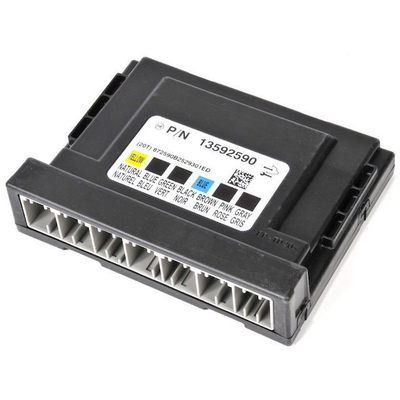
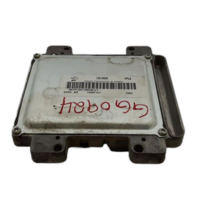
Below are the parts most often responsible for code P0464, ranked by how frequently each one is the actual culprit (per the diagnosis above). Tap any to see what we have for your vehicle.




The information in this article is provided for general reference and educational purposes only. Vehicle specifications, procedures, and part compatibility can vary by production date, trim level, and region. Always consult your vehicle's factory service manual and verify part numbers before purchasing or performing repairs. Safety-critical components such as airbags, seat belts, and braking systems should be installed by a qualified professional.
- 🧭 Diagnostic Flowchart
- 🎬 Helpful Videos
- 🛍️ Shop This Part
- What Does P0464 Mean?
- Can I Drive With P0464?
- Common Causes
- Symptoms
- Common Fixes & Costs
- Used vs. New Parts: Buying Guide
- What Happens If You Wait — Timeline
- Cost of Not Fixing It
- Diagnosis Steps
- When This Code Triggers (Freeze-Frame Conditions)
- Related Codes
- Climate & Environmental Factors
- How to Talk to a Mechanic About This Code
- Where to Take It: Dealer vs Independent vs Chain
- When to Walk Away From the Repair
- What Scan Tool You Need for This Code
- How to Clear the Code After You Fix It
- Will This Fail Emissions / State Inspection?
- Most Commonly Affected Vehicles
- Manufacturer-Specific Notes
- Real Owner Stories
- 2004 Subaru Outback 3.0L with P0464
- 2011 Ram 1500 with erratic fuel gauge
- 2008 Ford F-150 with intermittent P0464
- How to Prevent This Code From Triggering
- Frequently Asked Questions
- Can I fix a P0464 code myself?
- Will P0464 go away on its own?
- What is the most common misdiagnosis for P0464?
- Is the fuel level sensor the same as the fuel pump?
- Can fuel additives really fix a P0464 code?
- Does P0464 affect emissions tests?
- Can a bad battery cause a P0464 code?
- Key Takeaways
- 🎟️ Get 5% Off