

P0480 on 2008-2017 Buick Enclave 3.6L: Cooling Fan Circuit Malfunction Causes and Fixes
On a 2008-2017 Buick Enclave, code P0480 is most often caused by a failed cooling fan relay in the underhood fuse box or a bad engine coolant temperature (ECT) sensor. Replacing a relay is a simple, low-cost fix (around $15-$30), while an ECT sensor replacement is slightly more involved. Wiring issues and the fan motor itself are also common culprits.
- P0480 on your Enclave means the computer has detected an electrical fault in the primary cooling fan circuit.
- Before buying expensive parts, always check the simple things first: the fan fuses and relays in the underhood fuse box.
- A faulty Engine Coolant Temperature (ECT) sensor is a common problem on this engine and can cause the fans to run incorrectly, triggering this code.
- Do not continue to drive in traffic if you notice the temperature gauge climbing, as overheating can cause catastrophic engine damage.
- A scan tool that can read live data is extremely helpful for diagnosing whether the ECT sensor is reporting correctly.
What's Unique About the 2008-2017 Buick Enclave
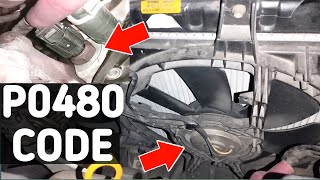
The Buick Enclave and its GM Lambda platform siblings (Chevy Traverse, GMC Acadia, Saturn Outlook) use a dual-fan system with three separate relays to control fan speed. The relays work together to provide low-speed operation (by running the fans in series) and high-speed operation (by running them in parallel). P0480 specifically points to a fault in the 'Fan 1' control circuit, which is typically the low-speed fan relay control circuit. 🎬 Watch: Understanding the P0480 code and how to fix it. A very common issue on this 3.6L V6 engine is for a faulty Engine Coolant Temperature (ECT) sensor to give false readings, causing the ECM to default the fans to run constantly as a protective measure, which can stress the relays and sometimes trigger circuit codes.
Symptoms You May Notice
- Engine temperature rises or overheats while idling or in stop-and-go traffic
- A/C blows warm air when the vehicle is not moving
- Cooling fans do not turn on when the engine gets hot
- Cooling fans run constantly, even when the engine is cold or turned off (often points to a stuck relay or bad ECT sensor)
- Illuminated Check Engine Light
- Pinging or detonation sounds on acceleration due to high engine temperatures.
- Replacing the cooling fan assembly when only a simple relay has failed.
- Replacing the thermostat, as it typically causes overheating at all speeds, not just at idle.
Most Likely Causes
- Faulty Cooling Fan Relay 🔴 High Probability → Shop Engine Cooling Fan Blade The cooling fan relays are under constant use and can fail from electrical wear, causing them to stick open or closed. The Enclave uses three identical relays in the underhood fuse box for fan control, making diagnosis by swapping them straightforward.
How to confirm: Locate the fan relays in the underhood fuse box (near the battery). They are often labeled 'COOL FAN 1,' 'COOL FAN 2,' and 'COOL FAN CTRL.' Swap the 'Fan 1' relay with an identical relay from a non-critical circuit (like the horn) or the 'Fan 2' relay. If the fan now works (and the other component doesn't), the relay is bad.
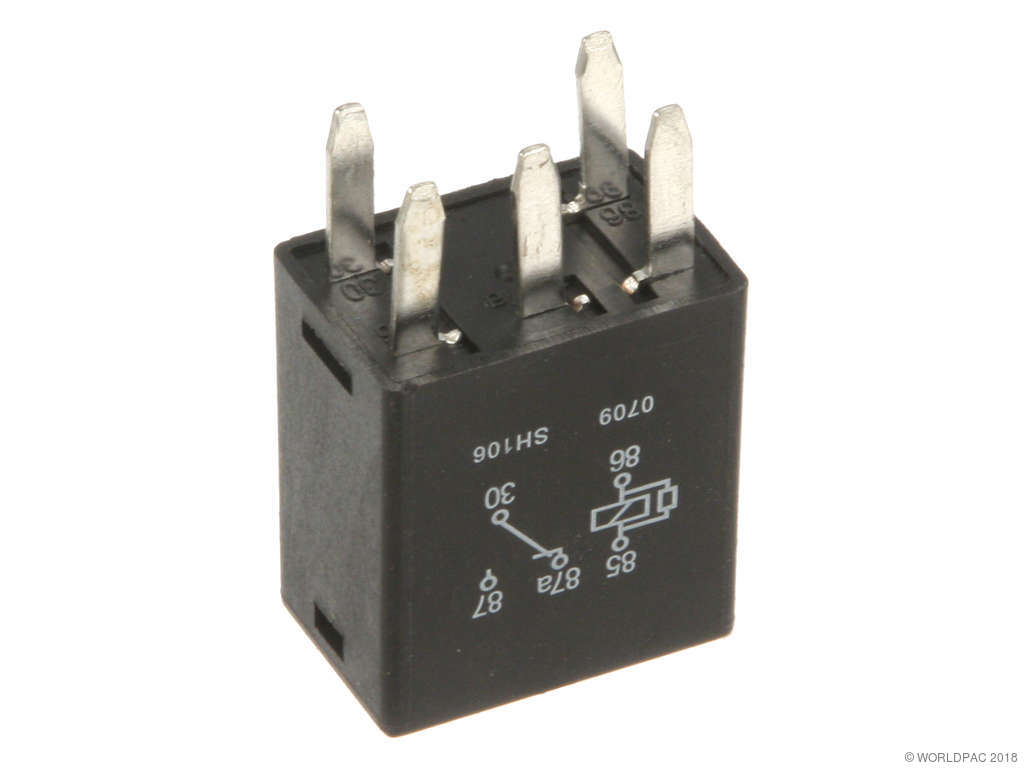
Typical fix: Replace the faulty relay with a new one. The common OEM part is a gray 4-pin relay.
Est. part cost: $15-$40 - Failed Engine Coolant Temperature (ECT) Sensor 🟡 Medium Probability This sensor is a known failure point on the GM 3.6L V6. It can send incorrect temperature readings to the ECM (e.g., stuck at -40°F), causing the fans to run erratically, stay on constantly, or not at all.
How to confirm: Use an OBD-II scanner to monitor the live data from the ECT sensor. If the reading is stuck at an extreme value or doesn't change logically as the engine warms up, the sensor is likely bad.
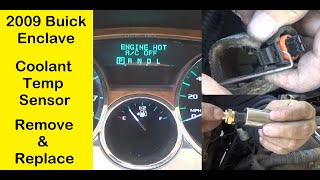
Typical fix: Replace the engine coolant temperature sensor. It is located on the driver's side of the engine, near the thermostat housing, but access can be tight. 🎬 See this walkthrough for replacing the coolant temperature sensor.
Est. part cost: $20-$50 - Failed Cooling Fan Assembly 🟡 Medium Probability → Shop Engine Cooling Fan Blade
How to confirm: With the engine off, check if the fan blades spin freely by hand. If they are seized, the motor is bad. You can also disconnect the fan's electrical connector and apply 12V power and ground directly to the motor terminals using jumper wires to see if it runs.
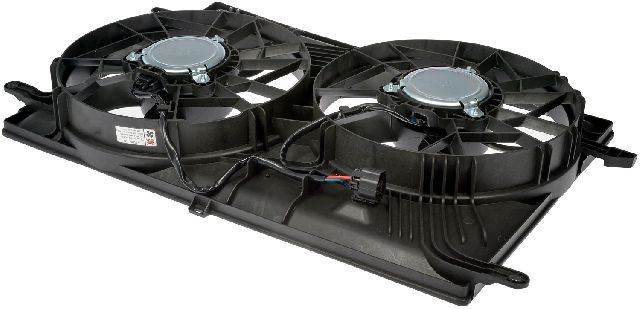
Typical fix: Replace the entire cooling fan assembly, which typically includes both fans, motors, and the shroud, as a single unit. 🎬 Watch: Step-by-step guide to replacing the cooling fan assembly.
Est. part cost: $150-$350 - Damaged Wiring or Connectors ⚪ Low Probability
How to confirm: Visually inspect the wiring harness leading to the cooling fan assembly and the fuse box. Look for any signs of melting, corrosion, chafing, or broken wires. The main connector at the fan shroud is a common point of failure due to heat and vibration. GM TSB 20-NA-198 also notes potential for engine harness chafing on various components that can cause a wide array of DTCs, including P0480.
Typical fix: Repair the damaged section of wiring or replace the faulty connector pigtail.
Est. part cost: $10-$100 - Blown Fuse ⚪ Low Probability
How to confirm: Visually inspect the high-amperage fuses for the cooling fans in the underhood fuse block. Use a multimeter to test for continuity if a visual inspection is inconclusive.
Typical fix: Replace the blown fuse. Note that a blown fuse often indicates a deeper problem, such as a seized fan motor drawing too much current.
Est. part cost: $5-$10
Rare But Worth Checking
- Faulty Engine Control Module (ECM): This is very rare. The ECM should only be considered after all other possibilities, including relays, sensors, the fan motor, and all wiring, have been thoroughly tested and ruled out.
- Faulty Fan Control Module: While some vehicles use a separate Fan Control Module to manage fan speed, the Lambda platform primarily uses the three-relay system. However, some diagrams show a control module integrated or associated with the circuit, which could be a rare failure point.
Diagnosis Steps
- Read the code with an OBD-II scanner and check for any other related codes (e.g., P0481, P0117, P0118).
- Visually inspect the cooling fans for any obstructions.
- Check the large 40A or 60A cooling fan fuses in the underhood fuse block.
- Locate the three cooling fan relays (often labeled FAN 1, FAN 2, FAN CTRL) in the fuse block. Swap the Fan 1 relay with a known good, identical relay (e.g., from the horn circuit or Fan 2) and see if the fan operates. A common fix is simply replacing this relay.
- If relays are good, use a scan tool with bidirectional control to command the cooling fans ON (low and high speed). Listen for the relays clicking and see if the fans run.
- If the fans do not run when commanded, disconnect the fan motor connector. Use a multimeter to check for power and ground at the connector when the fan is commanded ON. If power and ground are present but the fan doesn't run, the fan motor is bad.
- If power or ground is missing, trace the wiring back from the fan connector to the relay box, looking for breaks, corrosion, or shorts. Pay close attention to the large connector on the fan shroud.
- Use the scan tool to monitor the Engine Coolant Temperature (ECT) sensor live data. Ensure the temperature reading is logical (not -40°F) and rises steadily as the engine warms. If it's erratic or stuck, the sensor is likely faulty.
Parts You'll Likely Need
- Cooling Fan Relay (Multi-Purpose Relay)
(OEM #13500114)— This is the most common and easiest part to fail in the fan control circuit. It's a simple electro-mechanical switch that wears out. This part number is a common 4-pin, 35A relay used across many GM vehicles for various functions.
Trusted brands: ACDelco (GM Genuine), Standard Motor Products, Bosch
OEM price range: $25-$40
Aftermarket price range: $15-$30 - Engine Coolant Temperature (ECT) Sensor
(OEM #12608814)— A known failure item on this engine that directly controls the ECM's decision to activate the fans. A faulty sensor gives bad data, leading to cooling problems.
Trusted brands: ACDelco, Delphi, NTK
OEM price range: $30-$50
Aftermarket price range: $20-$40 - Engine Cooling Fan Assembly
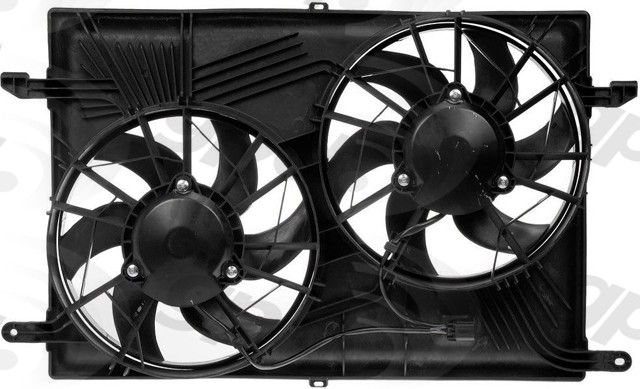
(OEM #23377354)— If the fan motor itself has burned out or seized, the entire assembly (both fans, motors, and shroud) must be replaced as a single unit.
Trusted brands: ACDelco (GM Genuine), TYC, Four Seasons
OEM price range: $300-$450
Aftermarket price range: $150-$350
Related Codes That Often Appear With This One
- P0481 — This code is for 'Cooling Fan 2 Control Circuit Malfunction'. Since the Enclave uses a multi-relay system, a fault affecting multiple relays, the fan assembly itself, or shared wiring can trigger both codes.
- P0117 / P0118 — These codes indicate a fault with the Engine Coolant Temperature (ECT) sensor circuit (low or high input). A bad ECT sensor is a common cause of erratic fan behavior and can lead to the P0480 code being set.
- P0128 — This code means 'Coolant Thermostat (Coolant Temperature Below Thermostat Regulating Temperature)'. If the ECT sensor is faulty and reading too cold, it can trigger this code along with P0480 if the ECM's fan control logic is affected.
Technical Service Bulletins (TSBs) & Recalls
- TSB 20-NA-198: This bulletin addresses various DTCs that can be caused by the engine wiring harness chafing on different components, such as a PVC hose clamp. While not exclusive to P0480, it highlights a known potential cause for electrical circuit faults on this platform.
Platform-Specific Known Issues
- Owner Experience: Relay Swap Fix: An owner on enclaveforum.net with a P0480 code and overheating at idle was able to solve the problem by swapping the cooling fan relay #1 with the rear wiper relay in the underhood fuse box. When the fan started working, they confirmed the relay was the culprit and purchased a new one for a simple fix.
- Owner Experience: Fans Running Constantly: A user on traverseforum.com reported their fans were running constantly and the temperature gauge was dead. The issue was resolved by replacing the Engine Coolant Temperature (ECT) sensor, a common failure point that causes the ECM to enter a fail-safe mode, running the fans continuously.
Mechanic-Grade Diagnostic Values
- Cooling Fan Relay Coil Resistance — expected: 70-110 ohms between terminals 85 and 86.. Failure: A reading outside this range indicates a faulty relay coil.
- Cooling Fan Relay Switched Contacts Resistance (Energized) — expected: Less than 2 ohms between terminals 30 and 87 when the coil (85 & 86) is energized with 12V.. Failure: Resistance greater than 2 ohms indicates pitted or failed internal contacts.
- ECM Fan Relay Control Circuit Voltage (Key On, Engine Off) — expected: 2.6-4.6 volts (this is a pull-up voltage from within the ECM).. Failure: 0 volts or battery voltage may indicate a short to ground or a short to power in the control wire.
- Fan Activation Temperature — expected: Approximately 223°F (106°C).. Failure: Fans not activating at or above this temperature (when commanded by the ECM) points to a fault in the circuit.
Scan Tool Commands That Help
- GM Tech2 / GDS2 or equivalent professional scan tool: Cooling Fan Relay ON/OFF Command — Use this bidirectional control to manually command the Fan 1 relay on and off to verify if the ECM, control circuit wiring, relay, and fan motor are capable of functioning. This isolates the control side from the sensor input side.
- GM Tech2 / GDS2 or equivalent professional scan tool: Cooling Fan Speed Control (0-90%) — For vehicles with variable speed control (less common on this specific relay-based system but applicable to newer models), this command allows for precise testing of the fan module's response across its operational range.
Wiring & Ground Locations
- G105 — Located at the left front of the engine compartment, behind the cooling fan relays.. This is the primary ground point for the cooling fan assembly. A corroded or loose connection at G105 will cause high resistance, preventing the fan from operating correctly and can trigger a P0480 code.
- Underhood Fuse Block — Located in the engine compartment, typically on the passenger side.. This block houses the three critical cooling fan relays (FAN 1, FAN 2, FAN 3/CTRL) and their associated high-amperage fuses. Poor terminal contact within the fuse block for these components can cause intermittent fan operation and circuit codes.
- Cooling Fan Assembly Connector (X125) — The main electrical connector on the cooling fan shroud.. This connector is a common failure point due to exposure to heat, moisture, and vibration. Corrosion or melted pins in this connector will create an open or short in the fan motor circuit, directly causing a P0480 fault.
Real Owner Repair Stories
- GM-Trucks.com forum user (2009 Buick Enclave) — Cooling fan running on high full time after the A/C system failed and lost pressure.
❌ Tried (didn't work) The owner's mechanic believed the fan was running constantly simply because of the A/C fault, implying an expensive A/C repair was the only solution.
✅ What actually fixed it A forum member explained that the 3-wire A/C pressure switch, when it sees zero pressure, can cause an open circuit on the high-pressure signal wire. The ECM interprets this as a fault and defaults the cooling fans to high speed as a protective measure. The likely fix is addressing the A/C pressure switch circuit or the A/C system leak, not a primary cooling system component. - YouTube video by 'Fix It All' (2015 Buick Enclave) — Cooling fan running on high, A/C not working, engine temperature gauge not working, and Check Engine Light with code P0128.
❌ Tried (didn't work) Temporarily restarting the car would sometimes reset the system, but the fault would quickly return.
✅ What actually fixed it The problem was a faulty Engine Coolant Temperature (ECT) sensor. Replacing the inexpensive sensor restored the temperature gauge reading, normal A/C operation, and normal cooling fan function.
When the Usual Fixes Don't Work
- While the most common causes of P0480 are a bad relay or fan motor, a significant number of cases exist where the root cause is external to the fan control circuit itself. A documented case on a 2009 Enclave showed that a complete loss of A/C refrigerant pressure caused the A/C pressure switch to send a fault signal to the ECM, which in turn commanded the cooling fans to run on high speed constantly as a default action. In this scenario, replacing cooling system parts would not solve the issue; the A/C system leak and/or pressure switch circuit had to be addressed. This highlights the importance of checking for seemingly unrelated codes or system faults (especially HVAC) before focusing solely on the fan circuit.
OEM Part Supersession History
Multiple (e.g., 12193606, 15328866, 19116057)→13500114— Part consolidation and design updates by GM over many years.
Heads up: The 13500114 relay is the modern, widely available replacement for a long list of older part numbers used in various GM vehicles for different functions (horn, fuel pump, fans, etc.). It is physically and functionally compatible.
Model Year Variations Within This Range
- 2008-2017: While the 3-relay system is consistent, the exact layout of the underhood fuse block had minor revisions around the 2013/2014 facelift. Always confirm fuse and relay positions using the diagram on the fuse box cover or the owner's manual for the specific model year.
- 2011-2012: Service information shows conflicting relay coil resistance specifications for different vehicles on the same platform (e.g., 70-110 ohms for Enclave vs. 200-240 ohms for Traverse). This suggests that even within the same model year, different batches of relays with slightly different internal specs may have been used. The functional test (commanding ON/OFF) is more reliable than relying solely on a resistance measurement.
Diagnostic Flowchart
Other Known Issues on This Vehicle
Issues unrelated to this code that are worth knowing about as an owner of this generation:
- Premature Timing Chain Stretch 🔴 High — Very common, especially on 2008-2012 models with the LLT engine. Often occurs between 70,000 and 120,000 miles. The issue was partially addressed in later LFX engines but can still occur. (Ref: GM Special Coverage #14582 (now expired) extended warranty to 10 years/120k miles. TSB #12-06-01-009F provides repair guidance.)
- 6T75 Transmission 3-5-R Wave Plate Failure 🔴 High — Most prevalent in 2008-2011 models. Failure can happen suddenly, often resulting in loss of 3rd, 5th, and Reverse gears, requiring a transmission rebuild.
- Power Steering Rack Leaks / Intermittent Loss of Assist 🟠 Medium — Common across many model years, particularly noted in the 2008-2010 range. Owners report binding or difficulty turning, sometimes intermittently.
- Water Pump Failure 🟠 Medium — A frequent failure item, often identified by a coolant leak from the pump's weep hole.
- Cracked or Blocked Fuse Block Terminals 🟠 Medium — Can cause a wide range of difficult-to-diagnose electrical issues, including engine stalling or no-start conditions.
Used vs. New Parts: Buying Guide for This Vehicle
When a used part is the smart pick: A complete cooling fan assembly (shroud, motors, blades) from a reputable auto recycler is a cost-effective alternative to a new OEM unit, which can be expensive. Relays and sensors are inexpensive new and should not be purchased used.
Donor-vehicle mileage cap: roughly under 80000 miles for the part to have meaningful remaining life.
What to inspect on the donor part:
- Ensure the donor vehicle was in a front-end collision that did NOT damage the radiator or fan assembly.
- Manually spin the fan blades; they should move freely with minimal resistance and no grinding noises.
- Inspect the plastic shroud for any cracks or broken mounting tabs.
- Examine the main electrical connector for any signs of melting, charring, or heavy corrosion on the pins.
OEM-only on this vehicle (don't cheap out):
- Engine Control Module (ECM) - should only be replaced with a new or professionally remanufactured and programmed unit as a last resort.
Aftermarket brands forum-validated for this vehicle:
- Relays: ACDelco (Genuine GM), Standard Motor Products (SMP), Bosch
- ECT Sensors: ACDelco, Delphi, NTK
- Fan Assemblies: TYC, Four Seasons, VDO
Brands owners have reported issues with on this vehicle:
- No-name, unbranded fan assemblies from online marketplaces often have lower quality motors that may fail prematurely or create excessive noise.
Real Owner Stories
Aggregated from forums and TSBs cited above. Mileages and costs reflect what owners reported in those sources.
Buick Enclave 3.6L V6
Symptoms: P0480 code was present and the engine was overheating at idle.
What fixed it: The owner swapped the cooling fan relay #1 with the rear wiper relay in the underhood fuse box. The fan started working, confirming the relay was bad. A new relay permanently fixed the issue.
Source hint: Owner Experience: Relay Swap Fix (from enclaveforum.net)
Chevrolet Traverse 3.6L V6 (platform mate)
Symptoms: The cooling fans were running constantly and the temperature gauge was dead.
What fixed it: The issue was resolved by replacing the Engine Coolant Temperature (ECT) sensor. The faulty sensor was causing the engine computer to enter a fail-safe mode.
Source hint: Owner Experience: Fans Running Constantly (from traverseforum.com)
Related OBD-II Codes
Frequently Asked Questions
Where are the cooling fan relays on my 2008-2017 Buick Enclave, and how can I test them for a P0480 code?
My Enclave's cooling fans are running constantly, even when the engine is off. Is this related to P0480?
Could a wiring problem cause the P0480 code on my Enclave, and is there a known trouble spot?
I have a P0480 code on my GMC Acadia. Is the diagnosis the same as for the Buick Enclave?
What is the most common and easiest fix for P0480 on the Buick Enclave?
How can I test the Engine Coolant Temperature (ECT) sensor on my Enclave without just replacing it?
Helpful Videos
We Have This Part in Stock


The information in this article is provided for general reference and educational purposes only. Vehicle specifications, procedures, and part compatibility can vary by production date, trim level, and region. Always consult your vehicle's factory service manual and verify part numbers before purchasing or performing repairs. Safety-critical components such as airbags, seat belts, and braking systems should be installed by a qualified professional.
- Buick Enclave:
- 🧭 Diagnostic Flowchart
- 🎬 Helpful Videos
- 🛍️ Shop This Part
- What's Unique About the 2008-2017 Buick Enclave
- Symptoms You May Notice
- Most Likely Causes
- Rare But Worth Checking
- Diagnosis Steps
- Parts You'll Likely Need
- Related Codes That Often Appear With This One
- Technical Service Bulletins (TSBs) & Recalls
- Platform-Specific Known Issues
- Mechanic-Grade Diagnostic Values
- Scan Tool Commands That Help
- Wiring & Ground Locations
- Real Owner Repair Stories
- When the Usual Fixes Don't Work
- OEM Part Supersession History
- Model Year Variations Within This Range
- Other Known Issues on This Vehicle
- Used vs. New Parts: Buying Guide for This Vehicle
- Real Owner Stories
- Buick Enclave 3.6L V6
- Chevrolet Traverse 3.6L V6 (platform mate)
- Related OBD-II Codes
- Frequently Asked Questions
- 🎟️ Get 5% Off