

P0480 on 1995-2005 Chevrolet Cavalier: Cooling Fan Control Circuit Causes and Fixes
On a 1995-2005 Cavalier, code P0480 is most often caused by a failed cooling fan relay located in the under-hood fuse box. This is an inexpensive part (around $10-$30) and is a simple 1/5 difficulty DIY fix. Swapping the fan relay with the horn relay is a common and effective diagnostic first step.
- P0480 means there's an electrical fault in the cooling fan circuit; do not ignore this code as it can lead to engine overheating.
- Start your diagnosis with the easiest and most common fixes: check the cooling fan fuse and swap the cooling fan relay in the under-hood fuse box.
- If the fuse and relay are good, test the fan motor directly by applying 12V power before assuming a more complex wiring or computer issue.
- Be aware that your 1995-2005 Cavalier has either a pre-2003 LN2 engine or a 2003+ Ecotec engine, which can change the location of components like the ECT sensor.
What's Unique About the 1995-2005 Chevrolet Cavalier
The 1995-2005 Cavalier generation is unique because it used two different 2.2L I4 engines. Early models (1995-2002) used the pushrod LN2 engine, while later models (2003-2005) used the more modern DOHC L61 Ecotec. While many causes for P0480 are the same, this engine change affects the location of some components, most notably the Engine Coolant Temperature (ECT) sensor, which can be a contributing cause. Always verify your engine type before diagnosing or ordering parts, as wiring and component designs differ.
Generation note: While this range covers the third generation Cavalier, it spans two different 2.2L engines. The diagnostic process is similar, but part locations and specific part numbers can differ. - 1995-2002 models: Use the 2.2L LN2 (OHV pushrod) engine. - 2003-2005 models: Use the 2.2L L61 (Ecotec DOHC) engine.
Symptoms You May Notice
- Engine overheating, especially at idle or in stop-and-go traffic
- Check Engine Light is on
- Air conditioning performs poorly or blows warm air when the vehicle is not moving
- Cooling fan does not turn on when the engine gets hot (typically above 223°F/106°C) or when the A/C is activated.
- Engine temperature gauge reading higher than normal
- Replacing the fan motor when only the relay was bad.
- Replacing the PCM when the issue was a simple broken wire, corroded connector, or bad ground.
- Replacing the ECT sensor without checking for sensor-specific codes first.
Most Likely Causes
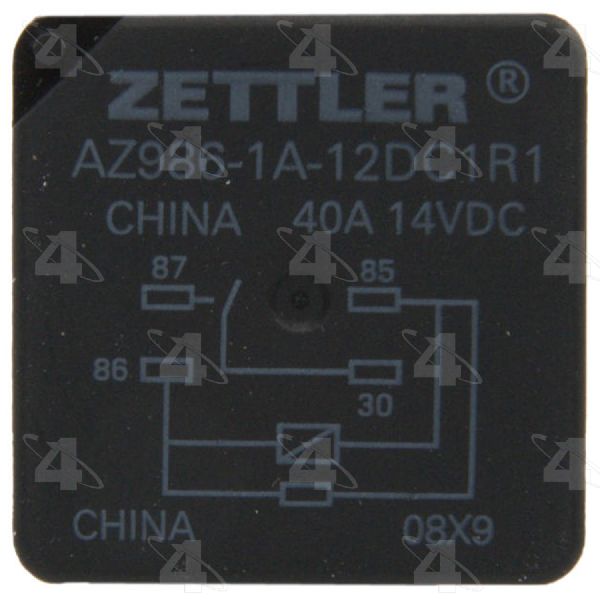
- Faulty Cooling Fan Relay 🔴 High Probability → Shop Engine Cooling Fan Blade The relay is an electro-mechanical switch that cycles frequently. Its internal contacts can wear out, burn, or weld together over time, which is a very common failure on older vehicles like the Cavalier.
How to confirm: Locate the cooling fan relay in the under-hood fuse box. The lid of the fuse box should have a diagram. Swap it with an identical relay from a non-critical circuit (like the horn relay, if the part number matches) and see if the fan now operates when the engine is hot or A/C is on. If it works, the relay is bad.
Typical fix: Replace the faulty relay with a new one.
Est. part cost: $10-$30 - Failed Cooling Fan Motor 🟡 Medium Probability → Shop Engine Cooling Fan Blade The electric motor can burn out from age, high electrical resistance, or seize due to debris. One owner reported this code appeared after the fan was clogged with snow, which likely overloaded and damaged the motor.
How to confirm: Disconnect the fan's electrical connector. Use jumper wires to apply 12V power and ground directly from the battery to the fan motor terminals. 🎬 Watch: How to diagnose and replace the cooling fan motor. If the fan does not spin, the motor is dead. You can also try spinning the fan by hand (with the engine off); if it feels stiff or gritty, the motor is likely failing.
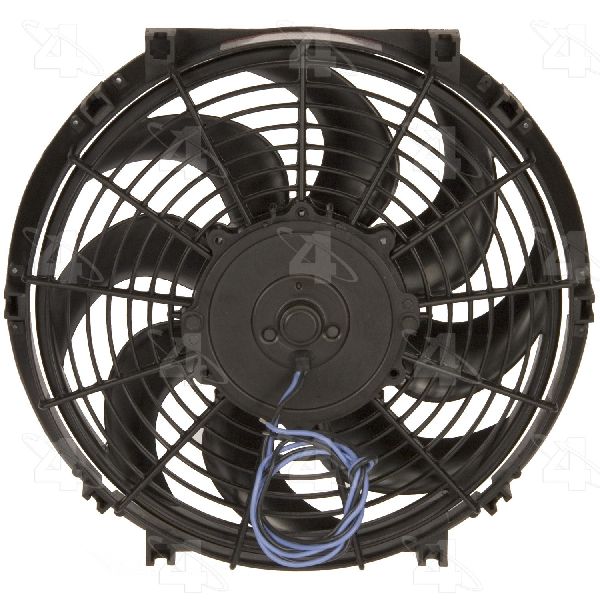
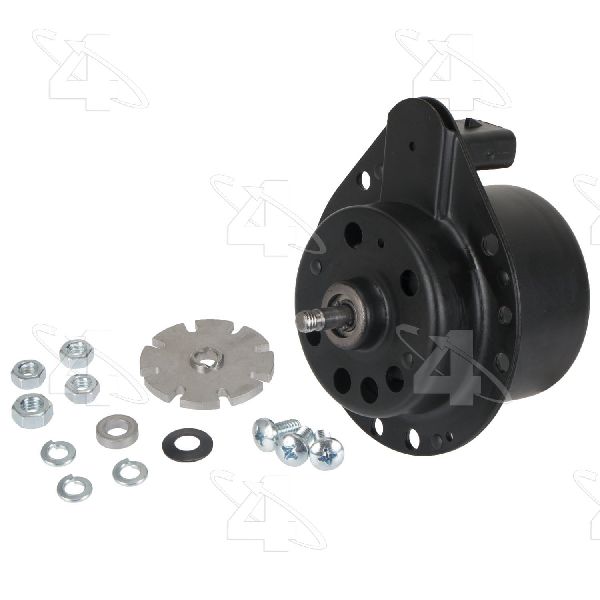
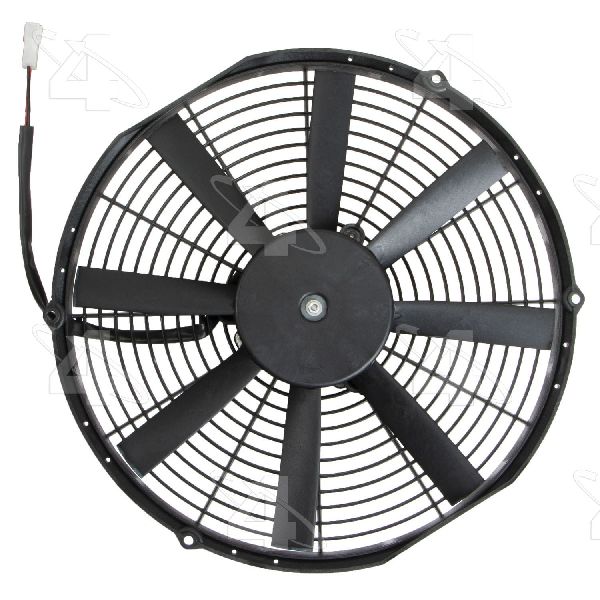
Typical fix: Replace the entire cooling fan assembly (motor, shroud, and fan blade).
Est. part cost: $50-$120 - Blown Cooling Fan Fuse 🟡 Medium Probability → Shop Engine Cooling Fan Blade A surge from a failing or seized fan motor will often blow the high-amperage fuse (typically 30A) as a protective measure. A short in the wiring can also cause this.
How to confirm: Locate the fuse labeled 'COOLING FAN' or similar in the under-hood fuse box and visually inspect it to see if the internal filament is broken. Use a multimeter to test for continuity if unsure.
Typical fix: Replace the blown fuse. If it blows again immediately, you have a short circuit or a bad fan motor that is drawing too much current and needs to be addressed.
Est. part cost: $1-$5 - Damaged Wiring or Connectors ⚪ Low Probability On these older vehicles, wires can become brittle and break, or connectors can corrode. The main fan connector near the radiator is exposed to heat and moisture, making it a common point of failure. The female terminals inside the relay socket can also spread apart, causing a poor connection.
How to confirm: Visually inspect all wiring in the fan circuit for breaks, chafing, or melted insulation. Unplug the fan connector and the relay and look for green/white corrosion or burnt/blackened terminals.
Typical fix: Repair the damaged section of wire or clean/replace the corroded connector. Pigtail connector kits are available for the fan motor.
Est. part cost: $5-$25 - Faulty Engine Coolant Temperature (ECT) Sensor ⚪ Low Probability The ECT sensor tells the PCM when the engine is hot enough to require the fan. If it fails and sends an inaccurate (cold) signal, the PCM may never get the command to activate the fan circuit.
How to confirm: A failing ECT sensor usually sets its own codes (e.g., P0117, P0118). If no other codes are present, this is less likely. You can monitor the ECT reading with a scan tool to see if it's providing plausible data as the engine warms up.
Typical fix: Replace the ECT sensor. Note the location difference: on the 2.2L LN2 engine (pre-2003), it's behind the alternator. 🎬 See this walkthrough for replacing the ECT sensor on LN2 engines. On the 2.2L Ecotec (2003+), it's on the back of the cylinder head. 🎬 Watch: Replacing the coolant temperature sensor on 2003-2005 Ecotec models.
Est. part cost: $15-$40
Rare But Worth Checking
- Powertrain Control Module (PCM) Fault: This is extremely rare. It should only be considered after all other possibilities (relay, fuse, fan motor, wiring, and sensor) have been thoroughly tested and ruled out. A key symptom would be confirming there is no ground signal being sent from the PCM to the relay's control pin when the fan should be on (engine hot or A/C on).
Diagnosis Steps
- Read the code with an OBD-II scanner to confirm P0480.
- Open the under-hood fuse box and visually inspect the fuse for the cooling fan (often labeled 'COOL FAN'). Replace if blown. Test with a multimeter for continuity if unsure.
- Locate the cooling fan relay. Swap it with a known-good, identical relay (e.g., horn relay). Start the car and turn on the A/C. If the fan runs, the original relay is faulty and needs replacement.
- If the relay swap doesn't work, inspect the relay socket for corrosion or loose-fitting female terminals. A poor connection here is a common issue.
- If the relay and fuse are good, turn the engine off. Disconnect the cooling fan electrical connector. Use jumper wires to supply 12V power and a ground directly from the battery to the fan motor terminals. If the fan doesn't spin, the fan motor has failed.
- If the fan motor works with direct power, the problem is in the control circuit. Use a multimeter to check for 12V power at the fan connector when the fan should be on (engine hot or A/C on).
- If power is present but the fan doesn't run (contradicting step 5), check the ground connection for the fan circuit. It may be loose or corroded. A common ground point for the fan circuit is G105.
- If power is not present at the fan connector, use a test light or multimeter to check the relay socket. You should have constant 12V power on one pin, and ignition-on power on another. The final pin is the ground signal from the PCM. If power is present at the socket but the relay doesn't 'click' when the fan is commanded on, check for the ground signal from the PCM on the relay's control circuit pin (Dark Green wire, Pin 43 at PCM Connector 1 for a 2005 model). Lack of a ground signal points to a wiring issue between the PCM and relay, or a rare PCM fault.
Parts You'll Likely Need
- Cooling Fan Relay
(OEM #15328866 (Verify by VIN, common for this era))— This is the most common failure point for the P0480 code on this vehicle due to normal wear and tear from frequent cycling.
Trusted brands: ACDelco, Standard Motor Products (SMP), Bosch
OEM price range: $15-$25
Aftermarket price range: $10-$20 - Cooling Fan Assembly
(OEM #22688426 (Ecotec) or 22610113 (LN2) - Verify by VIN)— If the fan motor itself has burned out or seized, the entire assembly must be replaced. This is the second most likely cause after the relay.
Trusted brands: Dorman, TYC, SKP, ACDelco
OEM price range: $150-$250
Aftermarket price range: $50-$120 - Engine Coolant Temperature (ECT) Sensor
(OEM #213-4514 (Ecotec) or 213-928 (LN2) - Verify by VIN)— If the PCM doesn't receive a correct signal that the engine is hot, it will not command the fan to turn on. Ensure you buy the correct sensor for your engine (LN2 vs. Ecotec).
Trusted brands: ACDelco, Delphi
OEM price range: $25-$40
Aftermarket price range: $15-$30
Platform-Specific Known Issues
- Relay Socket Connection: Owners on forums frequently report that even after replacing the relay, the problem persists. The issue is often the female terminals in the fuse box socket becoming loose or corroded, preventing a solid connection with the relay pins. Bending the relay pins slightly for a tighter fit or carefully tightening the socket terminals can sometimes resolve this.
Technical Service Bulletins (TSBs) & Recalls
- Bulletin #PIC6160B: While issued for other GM models like the Camaro, this bulletin notes that a P0480 can be caused by water intrusion in the forward lamp harness. Technicians are advised to inspect for damaged harnesses and components if the cooling fan is inoperative.
- Bulletin #PIC6160: This manufacturer service bulletin warns that if a P0480 condition is ignored and the cooling fan stops operating, the engine can overheat, causing severe engine component damage.
Mechanic-Grade Diagnostic Values
- Engine Coolant Temperature (ECT) Sensor Resistance — expected: Approximately 2,500 Ω at 20°C (68°F) and 1,459 Ω at 40°C (104°F).. Failure: An open circuit (infinite resistance) or a reading significantly outside the expected range for a given temperature indicates a faulty sensor.
- Cooling Fan Motor Resistance — expected: A very low resistance, typically between 0.2 and 5.0 Ohms.. Failure: A reading of infinite resistance (open circuit) means the motor is burned out. A reading of zero ohms indicates an internal short.
- Cooling Fan Relay Coil Resistance — expected: Typically between 50 and 120 Ohms across the control circuit terminals (usually pins 85 and 86).. Failure: A reading outside this range, or infinite resistance, indicates a bad relay coil.
- PCM Ground Signal at Relay Socket — expected: When the fan is commanded ON (A/C on or engine hot), the PCM should provide a ground signal to the control pin of the relay.. Failure: With the fan commanded ON, using a test light connected to battery positive, the light should illuminate when probing the PCM control pin. If it does not, there is no ground signal.
Scan Tool Commands That Help
- Tech 2 / GDS2 or equivalent professional scanner: Cooling Fan Relay Control / Output Control — This bidirectional command allows a technician to manually command the cooling fan ON and OFF directly from the scan tool. This is the most effective way to test the entire control circuit. If the fan turns on with the scan tool command, it proves the relay, fan motor, and wiring are all functional, pointing the diagnosis towards the inputs (like the ECT sensor) or the PCM's automatic control logic.
Wiring & Ground Locations
- G105 — This is a common ground point for the cooling fan circuit on similar GM platforms. On a related platform (HHR), it is located on the engine block, sometimes below the alternator.. A loose or corroded G105 ground will prevent the fan motor from operating even if it receives 12V power, as it cannot complete the circuit. One owner on a similar vehicle found the bolt for this ground had bottomed out, leaving the ring terminal loose and causing an intermittent no-fan condition.
- Underhood Fuse Block — Located in the engine compartment on the driver's side, past the battery.. This block contains both the 'COOLING FAN' fuse (typically a 30A Maxi fuse) and the cooling fan relay. The relay socket terminals are a critical test point.
- PCM Connector C1, Pin 43 (Dark Green Wire) — This is the specific pin on the Powertrain Control Module that sends the ground signal to the fan relay on a 2005 2.2L Ecotec model.. Testing for a ground signal directly at this pin is the definitive test to determine if the PCM is commanding the fan on. If a ground signal is present here but not at the relay socket, there is a broken wire between the PCM and the fuse box.
Real Owner Repair Stories
- ChevroletForum.com user 'ruffrider285' (2000 Cavalier) — Intermittent P0480 code, fan would not turn on until the car was almost overheating.
❌ Tried (didn't work) Swapping the cooling fan relay
✅ What actually fixed it The issue was ultimately traced to a faulty coolant level sensor. While not directly in the fan control circuit, on some GM logic, a fault in this related sensor can affect cooling system operation and trigger codes. - YouTube channel 'Wrenching With Kenny' (2002 Chevrolet Cavalier) — Cooling fans not working, P0480 code present.
❌ Tried (didn't work) The previous owner had already replaced the cooling fan assembly, the cooling fan relay, and the engine coolant temperature sensor.
✅ What actually fixed it A broken dark green wire in the harness between the PCM (Pin 43) and the underhood fuse box. The PCM was sending the ground signal, but it never reached the relay to activate it. The wire was repaired to fix the issue. - 2CarPros.com user 'CHRIS STARK' (1995 Chevrolet Cavalier 2.2L) — Cooling fan does not come on automatically. However, if the ECT sensor is disconnected, the fan turns on (fail-safe mode).
❌ Tried (didn't work) Replacing the ECT sensor with a new one., Replacing the cooling fan relay., Checking all fuses.
✅ What actually fixed it The user's final diagnosis pointed towards a faulty PCM, as all other components in the circuit (sensor, relay, fuse, fan) were confirmed to be working correctly, and the fail-safe mode worked as designed. The PCM was not correctly interpreting the new sensor's signal to activate the relay under normal conditions.
OEM Part Supersession History
15328866→13500114, 13502679, 19116057, and others.— Standard part evolution and consolidation by GM. The original grey Delphi relay is no longer produced.
Heads up: The newer black relays are functionally identical and fully compatible. However, some owners seeking a visually original restoration may find it difficult to source the original grey Delphi-branded relay.
Model Year Variations Within This Range
- 1995-2002 vs 2003-2005: The primary difference affecting this code is the engine type. Pre-2003 models use the 2.2L LN2 pushrod engine, while 2003-2005 models use the 2.2L L61 Ecotec. This changes the location of the Engine Coolant Temperature (ECT) sensor. On the LN2, it is behind the alternator. On the Ecotec, it is on the back of the cylinder head near the coolant outlet. Wiring diagrams and PCM pinouts can also differ slightly. For example, the specific PCM pin for the fan control may vary.
Diagnostic Flowchart
Other Known Issues on This Vehicle
Issues unrelated to this code that are worth knowing about as an owner of this generation:
- GM Passlock Anti-Theft System Failure 🔴 High — Extremely common across all years. The 'SECURITY' or 'THEFT' light illuminates, and the system disables the fuel injectors, causing a crank-no-start condition. Often requires a 10-minute wait for a temporary reset.
- 2.2L Ecotec (L61) Timing Chain Tensioner Failure 🔴 High — Common on 2003-2004 models. The original tensioner design could be starved of oil at idle, leading to a rattling noise on startup, and eventually a jumped or broken timing chain, causing catastrophic engine damage. (Ref: GM released an updated tensioner design to fix this, but it was not a formal recall.)
- Ignition Switch Failure / Recall 🔴 High — Common on 1998-2001 models. A faulty ignition switch could overheat and cause a fire, especially if the key was held in the 'start' position for an extended time (e.g., due to a no-start condition). (Ref: NHTSA Recall #04002)
- Instrument Cluster Malfunction 🟠 Medium — Widespread issue where gauges (speedometer, tachometer, fuel, temp) behave erratically or stop working entirely. Often caused by failing stepper motors on the cluster's circuit board.
- 2.2L LN2 (OHV) Engine 'Piston Slap' 🟡 Low — Very common characteristic of the pre-2003 pushrod engine. A knocking or tapping sound is heard for the first few minutes after a cold start, which then disappears as the engine warms up. It is generally considered harmless.
Used vs. New Parts: Buying Guide for This Vehicle
When a used part is the smart pick: A used cooling fan assembly from a junkyard is a very reasonable choice, especially for a DIY repair on an older, lower-value vehicle like a Cavalier. The cost savings are significant compared to a new OEM part.
Donor-vehicle mileage cap: roughly under 80000 miles for the part to have meaningful remaining life.
What to inspect on the donor part:
- Spin the fan blade by hand. It should spin freely with no noise or gritty feeling, which would indicate bad motor bearings.
- Inspect the electrical connector for any signs of melting, heavy corrosion, or broken locking tabs.
- Check the fan shroud for any cracks or broken mounting points.
- If possible, ask the junkyard to test the fan with a 12V source before purchase.
OEM-only on this vehicle (don't cheap out):
- There are no parts for this specific repair that are strictly 'OEM-only'. The components are simple and widely available.
Aftermarket brands forum-validated for this vehicle:
- Relays: ACDelco (OEM), Standard Motor Products (SMP), Bosch
- Fan Assemblies: Dorman, TYC, SKP are common and generally accepted aftermarket brands.
- Sensors: ACDelco (OEM), Delphi
Brands owners have reported issues with on this vehicle:
- Avoid unbranded, 'white-box' relays and sensors from online marketplaces. While cheap, they have a high failure rate and can make diagnosis more difficult.
Real Owner Stories
Aggregated from forums and TSBs cited above. Mileages and costs reflect what owners reported in those sources.
2001 Chevrolet Cavalier 2.2L
Symptoms: The Check Engine Light was on with a recurring P0480 code, and the 30A cooling fan fuse kept blowing.
What fixed it: Replacing a faulty cooling fan relay resolved both the code and the fuse blowing issue.
Source hint: ChevroletForum.com thread titled 'Engine Code P0480 HELP'
1998 Chevrolet Cavalier 2.2L
Symptoms: The P0480 code appeared immediately after driving into a snowbank, which physically clogged the cooling fan.
What fixed it: The fan motor was overloaded and burned out from the obstruction. Replacing the cooling fan motor assembly fixed the problem.
Source hint: Carjunky.com thread titled 'P0480....Cooling Fan 1 Control Circuit- HELP!!!'
Related OBD-II Codes
Frequently Asked Questions
At what temperature should the cooling fan turn on in my 1995-2005 Cavalier?
I replaced the cooling fan relay for P0480, but the fan still doesn't work. What's next?
Where is the cooling fan relay located on my 2.2L Cavalier?
Can I test the cooling fan relay by swapping it with another one?
Where is the Engine Coolant Temperature (ECT) sensor located on my 2.2L engine?
Is this P0480 problem the same on a Pontiac Sunfire?
Helpful Videos
We Have This Part in Stock

The information in this article is provided for general reference and educational purposes only. Vehicle specifications, procedures, and part compatibility can vary by production date, trim level, and region. Always consult your vehicle's factory service manual and verify part numbers before purchasing or performing repairs. Safety-critical components such as airbags, seat belts, and braking systems should be installed by a qualified professional.
- Chevrolet Cavalier:
- 🧭 Diagnostic Flowchart
- 🎬 Helpful Videos
- 🛍️ Shop This Part
- What's Unique About the 1995-2005 Chevrolet Cavalier
- Symptoms You May Notice
- Most Likely Causes
- Rare But Worth Checking
- Diagnosis Steps
- Parts You'll Likely Need
- Platform-Specific Known Issues
- Technical Service Bulletins (TSBs) & Recalls
- Mechanic-Grade Diagnostic Values
- Scan Tool Commands That Help
- Wiring & Ground Locations
- Real Owner Repair Stories
- OEM Part Supersession History
- Model Year Variations Within This Range
- Other Known Issues on This Vehicle
- Used vs. New Parts: Buying Guide for This Vehicle
- Real Owner Stories
- 2001 Chevrolet Cavalier 2.2L
- 1998 Chevrolet Cavalier 2.2L
- Related OBD-II Codes
- Frequently Asked Questions
- 🎟️ Get 5% Off