

P0480 on 2011-2019 Ford Explorer 3.5L: Cooling Fan Circuit Causes and Fixes
For 2016-2018 models, the most likely cause is a faulty cooling fan relay covered under Ford's Customer Satisfaction Program 21N01, which extends the warranty for this specific part. For other years, the entire cooling fan assembly is the most common failure. Always check fuses and relays first before replacing the fan assembly, which can cost between $150 and $400 for the part.
- For a 2016-2018 Explorer with P0480, the first step should be to investigate Ford's Customer Satisfaction Program 21N01 for a faulty relay.
- Always check the simple and cheap parts first: fuses and relays are much easier and less expensive to replace than the entire fan assembly.
- Do not drive the vehicle for extended periods with this code, as a non-functioning fan can lead to serious engine overheating and costly damage.
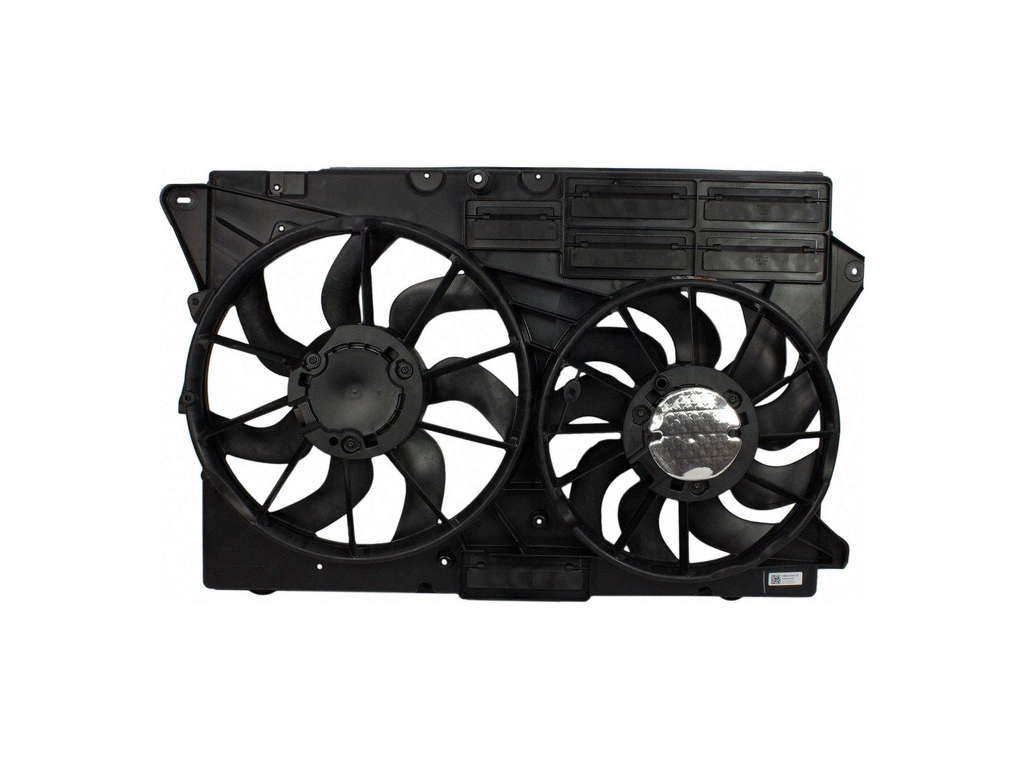
- If fuses and relays are good, the most likely culprit is the complete cooling fan assembly, which includes the fan motors.
What's Unique About the 2011-2019 Ford Explorer
The 2011-2019 Ford Explorer, particularly models from 2016-2018, is known for a specific cooling fan relay failure. Ford addressed this with Customer Satisfaction Program 21N01, which involved replacing a problematic relay that could overheat and melt the terminals in the under-hood fuse box (Battery Junction Box). For the entire generation, the complete dual-fan assembly, which includes the motors and a fan control module, is a common failure point. Unlike some vehicles with separate components, replacing the entire assembly is often the most practical fix if the relays and fuses are good.
Generation note: The 2011-2019 year range covers the fifth generation of the Ford Explorer. However, a key difference exists for 2016-2018 models, which are subject to a specific Customer Satisfaction Program (21N01) for a faulty high-speed cooling fan relay. This program extends coverage for this specific repair to 10 years or 150,000 miles.
Symptoms You May Notice
- Check Engine Light illuminated
- Engine overheating, especially in traffic or at idle
- A/C blowing warm or hot air when the vehicle is stopped
- Cooling fan does not turn on when the engine is hot
- Cooling fan runs continuously, even with the engine off, potentially draining the battery
- Replacing the coolant temperature sensor. While a faulty sensor can cause cooling issues, it's less likely to trigger a P0480 'circuit' code. A sensor issue would more likely result in the fan running at the wrong times or not at all, but without the specific circuit malfunction detection unless it triggers other codes like P0117 or P0118.
Most Likely Causes
- Faulty Cooling Fan Relay (Especially 2016-2018 Models) 🔴 High Probability → Shop Engine Cooling Fan Blade A specific high-speed cooling fan relay used in 2016-2018 models was prone to failure, causing it to stick on or not activate at all. This led Ford to issue Customer Satisfaction Program 21N01. The failure can generate enough heat to melt the relay and damage the fuse box terminals.
How to confirm: Check if your vehicle falls within the 2016-2018 model years and check its VIN for eligibility under program 21N01. The relays are in the under-hood fuse box. You can swap the cooling fan relay with an identical one from a non-essential circuit (like the horn) to see if the fan starts working. A visual inspection may also show signs of melting, burning, or corrosion at the relay terminals.
Typical fix: For affected 2016-2018 vehicles, a Ford dealer should perform the repair under program 21N01, which involves splicing in new terminals and a new, more robust relay. For other years, or if the program is not applicable, replace the faulty relay.
Est. part cost: $20-$50 - Failed Cooling Fan Assembly 🔴 High Probability → Shop Engine Cooling Fan Blade The electric motors within the fan assembly can wear out over time, or the integrated Fan Control Module can fail, leading to a complete failure where the fans will not spin.
How to confirm: After confirming fuses and relays are good, test for power at the fan assembly connector. With the engine hot or A/C on, check for voltage at the main connector on the fan shroud. If power and ground are present but the fans don't spin, the assembly is bad. You can also try to spin the fan blades by hand (with the engine OFF); if they are seized, the motor has failed. A bidirectional scanner can also be used to command the fan on to test functionality.
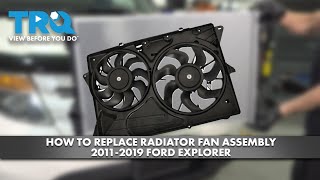
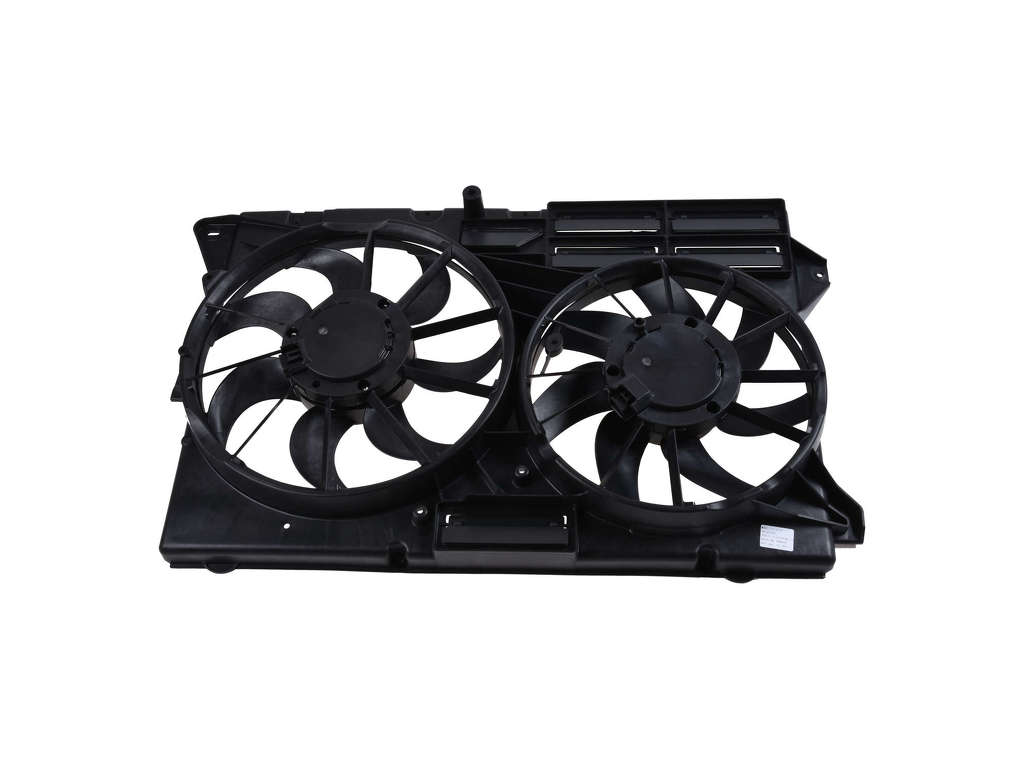
Typical fix: Replace the entire cooling fan and shroud assembly. 🎬 Watch: Step-by-step radiator fan assembly replacement guide This is typically sold as a single unit including the fans, motors, shroud, and fan control module.
Est. part cost: $150-$400 - Blown Fuse 🟡 Medium Probability A failing fan motor or a short in the wiring can draw excessive current, causing the fuse to blow as a protective measure. A manufacturer service bulletin, TSB Bulletin #SSM 48895, notes that some Ford vehicles may exhibit an open fuse F34 along with P0480 and P0481 codes.
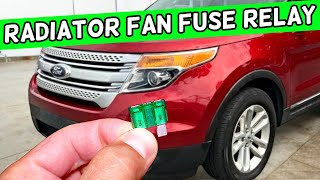
How to confirm: Locate the under-hood fuse box. Check the fuses related to the cooling fan (often labeled 'RAD FAN' or similar). A video for 2011-2015 models shows the fuse box layout. 🎬 See this video on locating the fuse and relay Visually inspect the fuse for a broken filament or test for continuity with a multimeter. If a replacement fuse blows immediately, it confirms a short circuit in the fan motor or wiring.
Typical fix: Replace the blown fuse. If the new fuse blows immediately, it indicates a short circuit or a failing fan motor that needs to be addressed.
Est. part cost: $5-$15 - Damaged Wiring or Connector ⚪ Low Probability The wiring harness to the fan assembly is exposed to heat and vibration, which can cause wires to fray or the main connector on the fan shroud to melt or corrode. This is a known issue on some Ford platforms.
How to confirm: Visually inspect the wiring leading to the cooling fan assembly. Pay close attention to the large electrical connector on the fan shroud for any signs of melting, discoloration, or corrosion on the pins. Check for continuity on the power, ground, and signal wires with a multimeter.
Typical fix: Repair the damaged section of the harness or replace the connector pigtail.
Est. part cost: $15-$50
Rare But Worth Checking
- Faulty Powertrain Control Module (PCM): This is extremely rare. The PCM is the computer that controls the fan circuit. It should only be considered after all other possibilities, including wiring, have been exhaustively ruled out by a professional.
Diagnosis Steps
- Read the trouble codes with an OBD-II scanner to confirm P0480 is present.
- For 2016-2018 models, check with a Ford dealer for eligibility under Customer Satisfaction Program 21N01.
- Inspect the cooling fan fuses in the under-hood fuse box. Replace if blown.
- Locate the cooling fan relays in the same fuse box. Swap the fan relay with an identical relay from a non-critical system (e.g., horn) to see if the fan operates. If it does, the relay is bad.
- If fuses and relays are good, perform a visual inspection of the wiring harness and the main connector at the fan shroud for any signs of melting, corrosion, or damage.
- With the engine cool, try to spin the fan blades by hand. They should spin freely. If they are stiff or seized, the fan motor has failed.
- If all else seems fine, the next step is to test for power at the fan assembly connector. Using a multimeter, check for battery voltage and ground at the connector when the fan should be on (e.g., with A/C on max or engine at operating temperature).
- If voltage and ground are present at the connector but the fans do not run, the cooling fan assembly (including its integrated control module) is faulty and needs to be replaced.
- If voltage is not present, there is an issue upstream in the wiring or, rarely, the PCM.
Parts You'll Likely Need
- Cooling Fan Assembly
(OEM #DB5Z-8C607-D)— This is the most common fix when fuses and relays are confirmed to be working. The motors or the integrated control module in the original assembly fail over time. This part number supersedes DB5Z8C607A, DB5Z8C607B, and DB5Z8C607C.
Trusted brands: Motorcraft, Dorman, Four Seasons, TYC
OEM price range: $300-$500
Aftermarket price range: $150-$250 - Cooling Fan Relay
(OEM #8T2T-14B192-AA)— This is the primary point of failure for 2016-2018 models under program 21N01 and a common, inexpensive part to fail on other model years.
Trusted brands: Motorcraft, Standard Motor Products
OEM price range: $20-$40
Aftermarket price range: $15-$30
Related Codes That Often Appear With This One
- P0481 — P0481 refers to 'Fan 2 Control Circuit Malfunction.' Since these vehicles use a dual-fan assembly, a fault affecting the overall system, like the control module or main power feed, can sometimes trigger both codes.
- P0217 — This code indicates an engine overheat condition. If P0480 is present because the fan isn't working, the engine will likely overheat, triggering P0217 as a direct consequence.
Technical Service Bulletins (TSBs) & Recalls
- 21N01 - Customer Satisfaction Program for High Speed Cooling Fan Motor Relay.
- TSB Bulletin #SSM 47999 - Notes that vehicles may exhibit a concern where the engine cooling fan stays on at all times or is inoperative, with P0480 stored in the PCM.
- TSB Bulletin #SSM 48895 - Describes an illuminated MIL and DTC P0480 occurring alongside an open F34 fuse in some Ford platforms.
Platform-Specific Known Issues
- Customer Satisfaction Program 21N01: Affects 2016-2018 Ford Explorers built between Sept 19, 2014, and Dec 1, 2017. A faulty high-speed cooling fan relay can fail, causing the fan to not run or to run continuously. The failure can generate enough heat to melt the relay and damage the fuse box terminals. The program provides a one-time repair for up to 10 years/150,000 miles.
Mechanic-Grade Diagnostic Values
- Voltage between the two large power and ground wires at the fan assembly connector. — expected: ~12V (Battery Voltage) when the fan is commanded on by the PCM (engine hot or A/C on).. Failure: 0V indicates a problem upstream (fuse, relay, or main power wiring).
- PCM control signal on the small wire at the fan assembly connector (tested with the connector plugged in). — expected: A 12-volt square wave, with a duty cycle that varies based on the fan speed commanded by the PCM. This requires a lab scope to properly visualize.. Failure: No signal, or a flat 0V or 12V line, indicates a break in the signal wire or a fault in the PCM's driver circuit.
- Voltage on the small signal wire (backprobed). — expected: The fan control module supplies ~12V to this circuit; the PCM then pulls this voltage to ground to create the square wave signal. One video showed a reading of 2.4V, which may represent an average voltage under certain conditions.. Failure: A constant 0V or a constant 12V when the fan should be operating suggests a fault.
Scan Tool Commands That Help
- FORScan or Ford IDS: Actuation Test: Fan Control (Low/High Speed) or Fan Speed % Command — This is a critical diagnostic step. After checking fuses/relays, use this to command the fan on. If the fan doesn't run despite the command, it helps isolate the fault to the fan assembly or its wiring, bypassing sensors. A 'request out of range' error during the test can point to a faulty fan control module.
Wiring & Ground Locations
- Cooling Fan Assembly Connector — On the driver's side of the cooling fan shroud, plugged into the integrated fan control module.. This 3-pin connector is the primary test point. It has two large wires (power and ground) and one small wire (PCM control signal). Testing for voltage and signal here confirms if the problem is upstream (wiring/PCM) or downstream (fan assembly).
- Underhood Fuse Box (Battery Junction Box) — In the engine compartment, typically on the driver's side.. This box contains the high-amperage fuse (e.g., 'RAD FAN') and the control relay(s) for the cooling fan circuit. It is the first place to check for simple failures like a blown fuse or a bad relay, especially on 2016-2018 models known for relay issues.
Real Owner Repair Stories
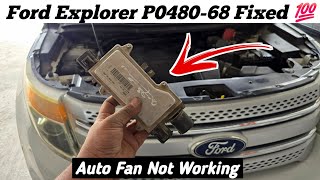
- YouTube video 'How To Fix P0480-68 In Ford Explorer' (2012 Ford Explorer) — A/C fan not working, auto fan not working, P0480-68 code present. Scan tool actuation test failed to execute.
❌ Tried (didn't work) The diagnostic process showed that the scan tool could not command the fan on, pointing away from a simple sensor issue.
✅ What actually fixed it The technician tested the 3-wire connector. Power (12V) and ground were present on the two large wires. The small signal wire showed a 2.4V signal from the PCM. Since power, ground, and signal were all reaching the fan assembly but the fan would not run, the technician concluded the integrated Fan Control Module on the fan assembly was faulty. The fix was to replace the entire cooling fan assembly.
Documented NHTSA Reports
- NHTSA ODI #11531903 describes a situation where a vehicle would randomly shut off and then turn back on, with OBD II error codes P0480 and P0481 found alongside oil in the spark plugs.
- An owner reported in NHTSA ODI #10561056 that their vehicle would not accelerate above 1,000 RPM while throwing a large cluster of codes including P0480, P060B, and P2135.
OEM Part Supersession History
BA8Z-8C607-C→BA8Z-8C607-G— Revision and improvement of the fan assembly.
Heads up: This part number series appears specific to early 5th generation Explorers. Using a later DB5Z series part may not be compatible.DB5Z-8C607-A, DB5Z-8C607-B, DB5Z-8C607-C→DB5Z-8C607-D— Multiple revisions to improve reliability of the fan motors and/or the integrated control module.
Heads up: DB5Z-8C607-D is the current replacement for a wide range of 2013-2019 models, but always verify by VIN.
Model Year Variations Within This Range
- 2011-2012: These early models may use a different cooling fan assembly part number series (BA8Z-8C607-x) compared to later models.
- 2013-2015: These pre-facelift models use the DB5Z-8C607-x series fan assembly but do not fall under the specific relay-related Customer Satisfaction Program. Failure is most often the fan assembly itself.
- 2016-2018: A mid-generation refresh occurred in 2016. These specific years are subject to Customer Satisfaction Program 21N01 for a faulty high-speed cooling fan relay that can melt the fuse box. This should be the first item to check for these model years.
Diagnostic Flowchart
Other Known Issues on This Vehicle
Issues unrelated to this code that are worth knowing about as an owner of this generation:
- Internal Water Pump Failure 🔴 High — Commonly occurs around 80,000-120,000 miles. Failure can be external (coolant drip from a weep hole below the alternator) or internal (coolant mixes with engine oil).
- Power Transfer Unit (PTU) Failure (AWD Models) 🔴 High — Common on vehicles over 60,000 miles. The 'lifetime' fluid degrades from heat exposure from the nearby exhaust, leading to gear oil breakdown and unit failure. (Ref: TSB 19-2017 (for a related seal leak))
- A-Pillar Exterior Trim Detachment 🟠 Medium — Affects all 2011-2019 models. (Ref: Recall 24S02)
- Exhaust Odor in Cabin 🟠 Medium — Widespread on 2011-2017 models, particularly during hard acceleration or with HVAC on recirculation. (Ref: TSB 14-0130, TSB 17-0044)
- Electronic Throttle Body (ETB) Malfunction 🟠 Medium — Common across multiple Ford models of this era.
Used vs. New Parts: Buying Guide for This Vehicle
When a used part is the smart pick: A used OEM fan assembly from a reputable salvage yard can be a cost-effective option, especially if from a low-mileage, rear-ended donor vehicle. Given that the integrated control module is a common failure point, a used part is a gamble, but may be preferable to a low-quality new aftermarket part.
Donor-vehicle mileage cap: roughly under 75000 miles for the part to have meaningful remaining life.
What to inspect on the donor part:
- Inspect the plastic fan shroud and blades for any cracks, especially around the motor hub.
- Spin the fan blades by hand (both of them). They should spin smoothly with minimal resistance and no grinding or gritty sounds.
- Examine the main electrical connector on the shroud. The pins should be clean and straight, with no signs of green corrosion or melted/burnt plastic.
- If possible, confirm the donor vehicle's year to avoid part number variations between early and late models.
OEM-only on this vehicle (don't cheap out):
- For the 2016-2018 relay issue, use the specific, updated Motorcraft relay and pigtail specified in the TSB/CSP repair. Do not use a generic relay.
Aftermarket brands forum-validated for this vehicle:
- Dorman (often provides redesigned connectors or components to address OEM weaknesses)
- Four Seasons
- TYC
- Continental
Brands owners have reported issues with on this vehicle:
- Unbranded, no-name parts from online marketplaces with no warranty or seller history. These often have lower-quality motors and control modules that fail prematurely.
Real Owner Stories
Aggregated from forums and TSBs cited above. Mileages and costs reflect what owners reported in those sources.
2016-2018 Ford Explorer 3.5L — ~100000 miles
Symptoms: The high-speed cooling fan relay failed, causing the fan to either not run at all or run continuously even with the engine off, risking a dead battery.
What fixed it: A Ford dealer performed a repair under program 21N01, which involved splicing in new terminals and installing a new, more robust relay.
Source hint: Customer Satisfaction Program 21N01
2013-2015 Ford Explorer 3.5L — ~120000 miles
Symptoms: Engine overheating specifically in traffic or at idle; cooling fan does not turn on when the engine is hot.
What fixed it: Replacement of the entire cooling fan and shroud assembly after confirming power was reaching the unit but the motors would not spin.
Cost: $150-$400
Source hint: https://www.explorerforum.com/forums/index.php?threads/p0480-code-fan-not-working.465123/
Related OBD-II Codes
Frequently Asked Questions
Is there a recall or special program for the cooling fan issue on my 2017 Ford Explorer?
My 2016 Explorer's fan stays running after I turn the car off. Is this related to P0480?
Can I test the fan relay myself on a 2013 Explorer?
Why is my A/C blowing warm air when I'm stopped at a light, but cold when I'm driving?
Does the P0480 code on my Ford Flex mean I have the same problem as the Explorer?
What should I look for when inspecting the fan connector on my 2015 Explorer?
Helpful Videos
We Have This Part in Stock

The information in this article is provided for general reference and educational purposes only. Vehicle specifications, procedures, and part compatibility can vary by production date, trim level, and region. Always consult your vehicle's factory service manual and verify part numbers before purchasing or performing repairs. Safety-critical components such as airbags, seat belts, and braking systems should be installed by a qualified professional.
- Ford Explorer:
- 🧭 Diagnostic Flowchart
- 🎬 Helpful Videos
- 🛍️ Shop This Part
- What's Unique About the 2011-2019 Ford Explorer
- Symptoms You May Notice
- Most Likely Causes
- Rare But Worth Checking
- Diagnosis Steps
- Parts You'll Likely Need
- Related Codes That Often Appear With This One
- Technical Service Bulletins (TSBs) & Recalls
- Platform-Specific Known Issues
- Mechanic-Grade Diagnostic Values
- Scan Tool Commands That Help
- Wiring & Ground Locations
- Real Owner Repair Stories
- Documented NHTSA Reports
- OEM Part Supersession History
- Model Year Variations Within This Range
- Other Known Issues on This Vehicle
- Used vs. New Parts: Buying Guide for This Vehicle
- Real Owner Stories
- 2016-2018 Ford Explorer 3.5L — ~100000 miles
- 2013-2015 Ford Explorer 3.5L — ~120000 miles
- Related OBD-II Codes
- Frequently Asked Questions
- 🎟️ Get 5% Off