

P0480 on 2012-2018 Ford Focus: Cooling Fan Circuit Causes and Fixes
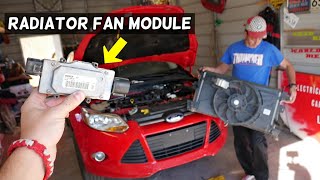
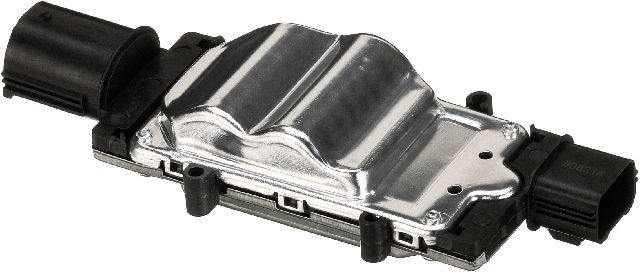
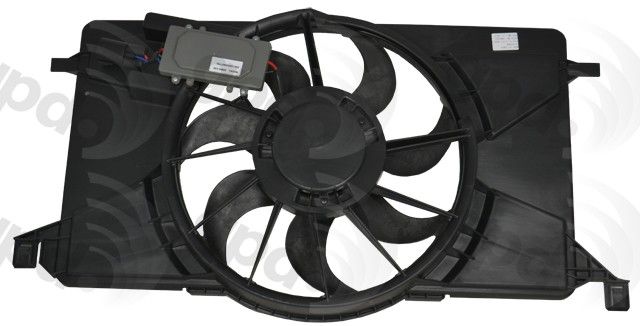
On a 2012-2018 Ford Focus, code P0480 is most often caused by a failed cooling fan control module. This is a small electronic box attached to the fan shroud. Expect to pay around $40-$100 for an aftermarket module, which is a common DIY fix with a difficulty of 2/5. Before replacing, always check fuses F32 (10A) and Mega Fuse 8 (50A), and swap relay R12.
- For a P0480 code on a 2012-2018 Focus, suspect the cooling fan control module first.
- Before buying parts, always check the simple things: fuses (F32, Mega 8) and the fan relay (R12).
- Replacing just the module is much cheaper than replacing the whole fan assembly and is a very common fix.
- Do not ignore this code. Driving without a working cooling fan can lead to expensive engine damage from overheating.
What's Unique About the 2012-2018 Ford Focus
Unlike many vehicles where a simple relay or the fan motor itself is the primary suspect, the third-generation Ford Focus (2012-2018) is known for frequent failures of the separate cooling fan control module. This module, which regulates fan speed, is a widely documented weak point and should be the primary focus of your diagnosis after checking fuses. Owners on forums frequently report that replacing only this module solves the P0480 code, avoiding the cost of a full fan assembly replacement. Some owners have had to replace the module multiple times, with some noting that cheap aftermarket versions can fail quickly.
Symptoms You May Notice
- Check Engine Light is on
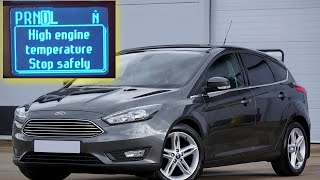
- Engine overheating, especially at low speeds or when stopped
- A/C blows warm or does not get cold (the fan is needed to cool the A/C condenser)
- Cooling fan does not turn on when the engine gets hot or when the A/C is activated
- Cooling fan runs constantly, even when the engine is off, which can drain the battery.
- Intermittent overheating where the fan works sometimes and not others.
- Replacing the entire cooling fan assembly when only the much cheaper and easier-to-replace fan control module has failed.
- Replacing the fan motor when the issue is a simple blown fuse or faulty relay.
Most Likely Causes
- Faulty Cooling Fan Control Module 🔴 High Probability → Shop Engine Cooling Fan Blade This specific component is a widely documented failure point on the Mk3 Focus platform, often failing before the fan motor itself. Forum discussions are filled with owners who resolved P0480 by replacing just this module.
How to confirm: After confirming fuses and the relay are good, check for power (Pin 1) and ground (Pin 2) at the module's connector with the key on. If power is present but the fan doesn't operate (or operates incorrectly), the module is the most likely culprit. A scan tool can command the fan on to test the circuit's response. Some owners have noted that even OEM modules are prone to failure.
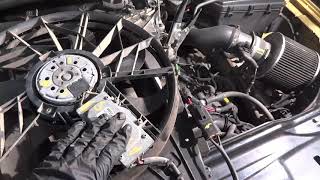
Typical fix: Replace the cooling fan control module. It is typically mounted directly to the radiator fan shroud with a few screws and can be replaced without removing the entire fan assembly. 🎬 Watch: How to replace the fan control module
Est. part cost: $40-$100 - Faulty Cooling Fan Relay 🟡 Medium Probability → Shop Engine Cooling Fan Blade
How to confirm: The cooling fan relay is located in the under-hood fuse box, typically at position R12. You can test it by swapping it with an identical relay from a non-critical system (like the horn) and seeing if the fan then operates. A user on a forum noted high resistance across the switched pins of a faulty relay.
Typical fix: Replace the relay with a new one.
Est. part cost: $10-$25 - Blown Fuse ⚪ Low Probability While not specific to this vehicle, fuses can blow due to shorts in the circuit. On the related Ford Escape platform, TSB Bulletin #SSM 48895 notes that vehicles may exhibit an open fuse (F34) alongside DTC P0480 and other codes in the powertrain control module.
How to confirm: Check the under-hood fuse box for a blown cooling fan fuse. Specifically, check the 10A mini fuse at position F32 (powers the relay coil) and the 50A Mega Fuse at position 8 (powers the fan module).
Typical fix: Replace the blown fuse. If it blows again, there is an underlying short circuit in the wiring or fan motor that must be found.
Est. part cost: $1-$5 - Failed Cooling Fan Motor ⚪ Low Probability → Shop Engine Cooling Fan Blade
How to confirm: If the fan control module is confirmed to be sending power and ground to the fan motor, but the fan does not spin, the motor has failed. Manufacturer service bulletin #SSM 47999 notes that similar Ford cooling systems may exhibit a concern where the engine cooling fan stays on at all times or is inoperative when P0480 is stored.
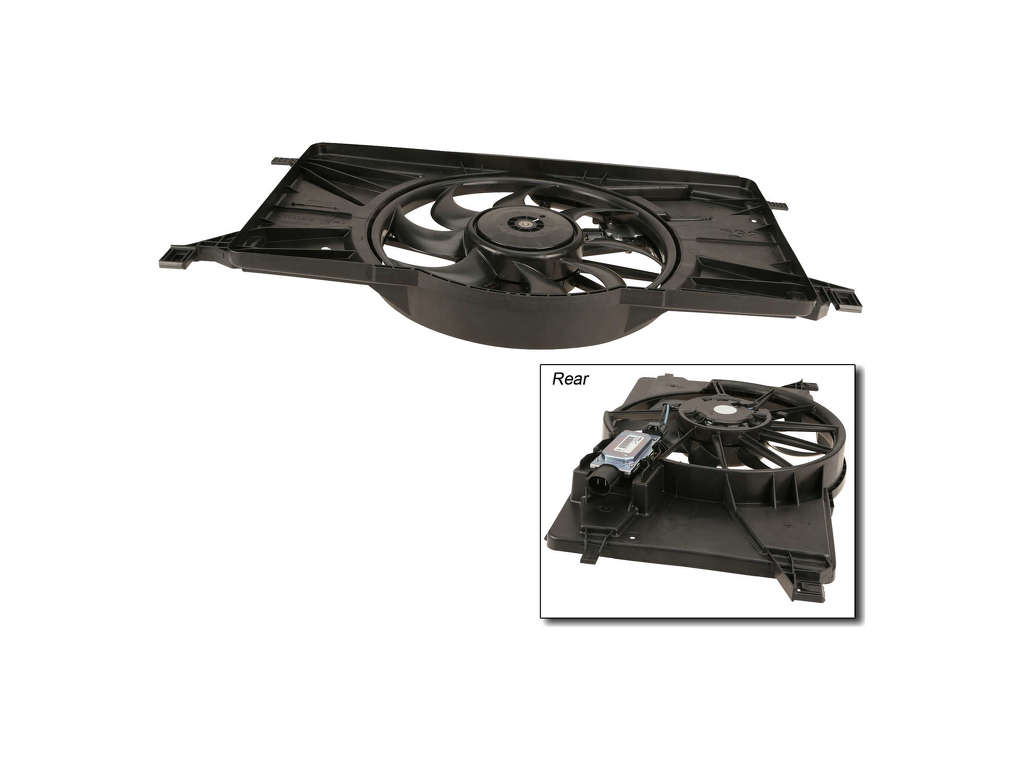
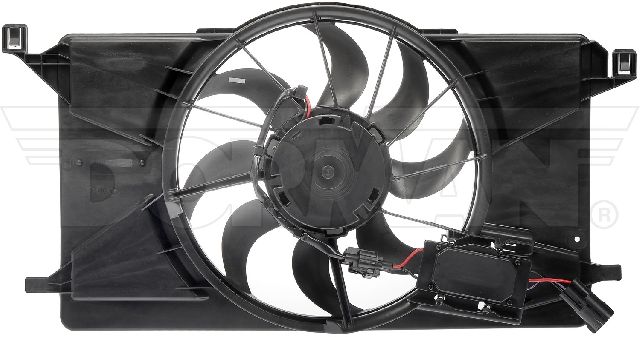
Typical fix: Replace the entire cooling fan assembly, as the motor is typically integrated into it.
Est. part cost: $100-$250
Rare But Worth Checking
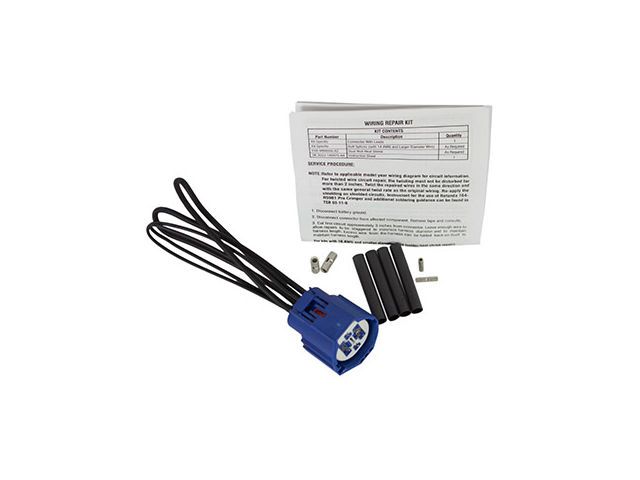
- Damaged Wiring or Connectors: Wiring near the fan can become brittle from heat cycles or damaged from road debris. A broken control wire (often a thin blue wire) between the PCM and the fan module can cause this code. Always inspect the harness for melted wires, corrosion in the connectors, or loose pins, especially at the fan module connector.
- Faulty Powertrain Control Module (PCM): This is very rare. The PCM should only be considered a possibility after all other components in the fan control circuit (fuses, relay, module, motor, and wiring) have been thoroughly tested and proven to be good.
Diagnosis Steps
- Read the codes with an OBD-II scanner to confirm P0480 and check for any other related codes.
- Inspect the fuses first. Check the 10A fuse (F32) and the 50A Mega Fuse (8) in the engine bay fuse box. Visually inspect and test for continuity.
- Locate the cooling fan relay (R12) in the same fuse box. Swap it with a known-good, identical relay (e.g., the horn relay) to see if the problem is resolved.
- Visually inspect the wiring harness leading to the fan control module and the fan motor. Look for any signs of melting, chafing, or corrosion on the connectors, paying close attention to the module connector.
- If possible, use a bi-directional scan tool to command the cooling fan ON. Listen for a click from the relay and see if the fan spins.
- If the fan does not run, access the connector for the cooling fan control module. Use a multimeter to test for battery voltage on Pin 1 and a solid ground connection on Pin 2 with the key in the 'RUN' position.
- If power and ground to the module are good, the fan control module is the most likely failed component.
- To be certain, you can test for power output from the module to the fan motor. If the module has power in but no power out when commanded, it has failed. If it sends power out but the fan doesn't spin, the fan motor itself is bad.
Parts You'll Likely Need
- Engine Cooling Fan Control Module
(OEM #CV6Z-8C607-K (superseded by CV6Z-8C607-P))— This is the most common failure point on the 2012-2018 Focus for a P0480 code. The original part number has been superseded multiple times, indicating revisions to the part.
Trusted brands: Motorcraft (OEM), Gates, Dorman, Four Seasons
OEM price range: $150-$250
Aftermarket price range: $40-$100
Related Codes That Often Appear With This One
- P0217 — This code means 'Engine Coolant Over Temperature Condition.' It will often appear with P0480 if the fan circuit failure has led to an actual overheating event.
- P1299 — This is a Ford-specific code for 'Cylinder Head Over-Temperature Protection Active.' It's a more severe warning that the PCM has detected dangerous head temperatures and may be limiting engine power to prevent damage. It confirms a serious overheat has occurred due to the fan failure.
Platform-Specific Known Issues
- The cooling fan control module is known to fail intermittently at first, causing confusion during diagnosis. It may work sometimes and not others before failing completely.
- Some owners report the fan running constantly after shutdown or even turning on when a car door is opened, leading to a dead battery. This is a classic symptom 🎬 Watch: Diagnosing a fan that runs constantly of a failed fan control module.
- Owners on forums caution against using cheap, unbranded aftermarket modules from sites like eBay, as they have a high rate of premature failure. Opting for a known brand or an OEM part is recommended.
Mechanic-Grade Diagnostic Values
- Voltage at Cooling Fan Relay (R12) socket, Pin 1 — expected: Battery Voltage (12V+). Failure: No voltage indicates a problem with the power supply from fuse F32 or the fuse itself.
- Voltage at Cooling Fan Relay (R12) socket, Pin 3 — expected: Battery Voltage (12V+). Failure: No voltage indicates a problem with the power supply from Mega Fuse 8.
- Voltage at Fan Control Module Connector — expected: Battery Voltage (12V+) at Pin 1, solid ground at Pin 2 (less than 0.1V).. Failure: Missing power or ground points to a wiring issue between the relay and the module, or a bad ground connection.
- Cooling Fan Motor Current Draw — expected: 15 to 25 Amps. Failure: Excessive current suggests a failing motor; no current suggests an open circuit in the motor or power supply.
- Cooling Fan Relay Coil Resistance — expected: 70 to 100 Ohms. Failure: Resistance outside this range, or infinite resistance (open), indicates a faulty relay coil.
Scan Tool Commands That Help
- Ford IDS, FORScan, or equivalent bidirectional scanner: Fan Speed Desired Percentage (or similar name) — This active test allows a technician to command the fan to run at a specific duty cycle (e.g., 10%, 50%, 90%) to verify if the PCM, control module, and fan motor are responding to commands. If the fan speed doesn't change as commanded, it helps isolate the fault.
Wiring & Ground Locations
- Under-hood Fuse Box (Battery Junction Box) — Located next to the battery in the engine compartment.. Contains the key fuses and relay for the fan circuit: Mega Fuse 8 (50A main power), Fuse F32 (10A relay control power), and Relay R12 (cooling fan relay).
- Fan Control Module Connector — On the fan control module, which is attached to the fan shroud.. This is the primary test point to confirm power and ground are reaching the module. Pin 1 should have 12V+ from the relay, and Pin 2 should have a good ground.
- Fan Motor Connector — Connects the fan control module to the fan motor itself, often a short pigtail.. Testing here for voltage/PWM signal from the module can confirm if the module is sending a command but the motor is failing to respond.
Real Owner Repair Stories
- Reddit user in r/FocusST (Ford Focus ST (year not specified)) — P0480 code, fan not working.
❌ Tried (didn't work) Replacing the Fan Control Module (FCM) with three different cheap aftermarket units., Replacing the FCM with a used junkyard Bosch unit., Unplugging the coolant temp sensor to force the fan on., Swapping tunes.
✅ What actually fixed it The user was advised to perform deeper electrical diagnosis, specifically checking for high resistance in the R12 relay's switched pins. Another user in the same thread found their issue was a faulty relay with high internal resistance, which was solved by swapping it with an identical relay (R15 for rear defrost). - Reddit user in r/FocusST (2013 Ford Focus ST) — Fan came on when opening a door, then started overheating in traffic with A/C on, P0480 code stored.
❌ Tried (didn't work) Initial diagnosis pointed to the fan control module.
✅ What actually fixed it The owner replaced their failed module (Bosch P/N 1137328464) with one from a junkyard 2013 Focus SE (non-turbo) with a different part number (1137328567). The fan worked correctly, and the car made it home without overheating. Another user confirmed they had been running an SE module on their ST for 5 months with no issues, suggesting the parts are interchangeable despite different part numbers. - Reddit user in r/FordFocus (2012 Ford Focus 2.0L) — A/C worked only while driving, fan was erratic (staying on after shutdown), then stopped working completely.
❌ Tried (didn't work) Replacing the R12 cooling fan relay.
✅ What actually fixed it After a replacement fan assembly also failed, the user determined the control module was the root cause. As a permanent fix, they bypassed the module entirely and hot-wired the fan to a fuse in the under-hood box, making it run whenever the car is on. This confirms the module was the single point of failure. - NHTSA ODI #11531903 — An owner reported that their vehicle would randomly shut off but turn back on, eventually finding P0480 and P0481 codes for the fan control circuits.
- NHTSA ODI #10561056 — A report describes an incident where a vehicle would not accelerate above 1,000 RPM with multiple codes present, including P0480.
When the Usual Fixes Don't Work
- While the fan control module is the most common cause, do not immediately assume it's bad without testing. A subtle but confirmed failure mode is the R12 relay developing high internal resistance on its switched contacts. It will still 'click' and may show continuity, but the high resistance is enough to trigger P0480. Swapping the relay with a known-good one is a critical and easy diagnostic step.
- Be highly skeptical of cheap, unbranded aftermarket control modules. Multiple owners have wasted time and money replacing these parts multiple times, only to find the new parts were also faulty. A used OEM Bosch module from a junkyard is often a more reliable choice than a new, cheap aftermarket one.
OEM Part Supersession History
CV6Z-8C607-B, CV6Z-8C607-G, CV6Z-8C607-K→CV6Z-8C607-P— These part numbers refer to the entire fan, shroud, and motor assembly. Revisions are common to improve reliability.
Heads up: Crucially, Ford does not sell the electronic control module as a separate part from the fan assembly. It must be purchased as a complete unit if buying new from the dealer.Bosch P/N 1 137 328 684→N/A— These are Bosch part numbers found on the module itself.
Heads up: A forum user noted that while physically identical, Bosch module 1 137 328 567 is internally different and not compatible with a car that came with 1 137 328 684. This is a potential trap when sourcing used parts.
Model Year Variations Within This Range
- 2012-2018: While the core design is the same, owner experiences suggest that the fan control module from a non-turbo Ford Focus SE is functionally interchangeable with the one used on the 2.0L EcoBoost (ST model). This provides a wider range of donor vehicles when searching for a used part at a junkyard.
Diagnostic Flowchart
Other Known Issues on This Vehicle
Issues unrelated to this code that are worth knowing about as an owner of this generation:
- DPS6 'PowerShift' Automatic Transmission Failure 🔴 High — Extremely common on 2012-2016 models. Symptoms include shuddering, hesitation, rough shifting, and complete loss of drive. (Ref: Multiple class-action lawsuits and extended warranty programs (e.g., 14M01, 14M02) were issued, but the underlying design flaw persists.)
- Passenger-Side Hydraulic Engine Mount Collapse 🟠 Medium — Very common failure point across all Mk3 models. Causes severe vibration at idle and clunking noises. Often fails prematurely.
- Canister Purge Valve Failure 🟠 Medium — Common issue on 2.0L GDI engines, causing rough idle, stalling, and difficulty starting after refueling. (Ref: NHTSA Recalls 18V735 and 19V515 were issued to reprogram the PCM and replace the valve if necessary.)
- SYNC Infotainment System Glitches 🟡 Low — Widespread complaints of the system freezing, Bluetooth connectivity dropping, or the screen going blank. (Ref: No specific recall, but common fixes include soft resets, master resets, or pulling the SYNC fuse (often F67 in the passenger fuse box) to force a hard reboot.)
Used vs. New Parts: Buying Guide for This Vehicle
When a used part is the smart pick: For the Engine Cooling Fan Control Module. Ford does not sell this part new separately from the entire fan assembly. A used, OEM Bosch-branded module from a reputable salvage yard is the most common and cost-effective solution.
Donor-vehicle mileage cap: roughly under 100000 miles for the part to have meaningful remaining life.
What to inspect on the donor part:
- Source the part from a vehicle without significant front-end collision damage.
- Inspect the module's connectors for any signs of melting, corrosion, or broken pins.
- Prioritize obtaining the OEM Bosch-branded module. If the donor car has an unbranded aftermarket module, avoid it.
- If possible, match the Bosch part number exactly, but be aware that modules from non-turbo Focus models of the same generation may also work.
OEM-only on this vehicle (don't cheap out):
- If buying a complete new fan assembly, the Motorcraft (Ford OEM) unit is strongly recommended. The reliability of the integrated control module on aftermarket assemblies is questionable based on forum reports.
Aftermarket brands forum-validated for this vehicle:
- No specific aftermarket brand is consistently recommended by owners. Bosch is the original equipment manufacturer for the module itself.
Brands owners have reported issues with on this vehicle:
- Unbranded, low-cost modules from online marketplaces like eBay and Amazon are frequently reported to be dead-on-arrival or fail prematurely. Some have been found to be manufactured incorrectly, lacking proper internal grounding.
Real Owner Stories
Aggregated from forums and TSBs cited above. Mileages and costs reflect what owners reported in those sources.
2013-2018 Ford Focus ST 2.0L EcoBoost
Symptoms: The cooling fan stayed on after the car was shut down and eventually the car began overheating.
What fixed it: Replacement of the cooling fan control module.
Source hint: r/FocusST on Reddit: Thread 'P0480 Fan Control Module'
2013-2018 Ford Focus ST 2.0L EcoBoost
Symptoms: Experienced a P0480 code and went through extensive troubleshooting, including multiple failures of cheap replacement parts.
What fixed it: Replacing the fan control module with a high-quality part after cheap aftermarket versions failed.
Source hint: r/FocusST on Reddit: Thread 'P0480 code'
2005 Ford Focus C-Max
Symptoms: Radiator fan was not working and the car threw a P0480 error.
What fixed it: Repairing a broken blue control wire located between the fuse box and the fan module.
Source hint: elektroda.com: Thread 'Focus C-max 2005 - Radiator Fan Not Working, P0480 Error'
Related OBD-II Codes
Frequently Asked Questions
Can I use a cooling fan control module from a Ford Escape on my Focus?
Why does my Focus battery keep dying after I turn the car off?
Where is the cooling fan relay located on a 2012-2018 Focus?
Which fuses should I check for the P0480 code on my Mk3 Focus?
Is it necessary to replace the whole fan assembly if the module fails?
Are cheap aftermarket fan modules recommended for the Focus ST?
Helpful Videos

We Have This Part in Stock


The information in this article is provided for general reference and educational purposes only. Vehicle specifications, procedures, and part compatibility can vary by production date, trim level, and region. Always consult your vehicle's factory service manual and verify part numbers before purchasing or performing repairs. Safety-critical components such as airbags, seat belts, and braking systems should be installed by a qualified professional.
- Ford Focus:
- 🧭 Diagnostic Flowchart
- 🎬 Helpful Videos
- 🛍️ Shop This Part
- What's Unique About the 2012-2018 Ford Focus
- Symptoms You May Notice
- Most Likely Causes
- Rare But Worth Checking
- Diagnosis Steps
- Parts You'll Likely Need
- Related Codes That Often Appear With This One
- Platform-Specific Known Issues
- Mechanic-Grade Diagnostic Values
- Scan Tool Commands That Help
- Wiring & Ground Locations
- Real Owner Repair Stories
- When the Usual Fixes Don't Work
- OEM Part Supersession History
- Model Year Variations Within This Range
- Other Known Issues on This Vehicle
- Used vs. New Parts: Buying Guide for This Vehicle
- Real Owner Stories
- 2013-2018 Ford Focus ST 2.0L EcoBoost
- 2013-2018 Ford Focus ST 2.0L EcoBoost
- 2005 Ford Focus C-Max
- Related OBD-II Codes
- Frequently Asked Questions
- 🎟️ Get 5% Off