

P0480 on 2010-2013 Hyundai Sonata: Cooling Fan Circuit Malfunction Causes and Fixes
For a 2010-2013 Hyundai Sonata, code P0480 usually points to a failed cooling fan relay, a faulty cooling fan control module/resistor, or the fan motor itself. On the 2011-2013 (YF) models, the cooling fan control module is a very common failure point. Replacing the relay is a cheap and easy first step, while the control module is also a common and relatively affordable DIY fix.
- P0480 means there's a fault in your Sonata's cooling fan circuit, which can cause overheating.
- For 2011-2013 models, the most common culprits are the cooling fan relays or the fan control module/resistor.
- Start your diagnosis with the cheapest and easiest parts: check the 40A fuse and swap the fan relays.
- Do not ignore this code. Driving without a functioning cooling fan can lead to expensive engine damage from overheating.
- The 2010 model is a different generation than the 2011-2013 models, so part locations may vary slightly.
What's Unique About the 2010-2013 Hyundai Sonata
The 2010-2013 Hyundai Sonata range spans two different generations. The 2010 model is the final year of the 'NF' generation, while the 2011-2013 models are part of the 'YF' generation, which featured a major redesign. While the P0480 code's meaning is consistent, the specific location and part numbers for components like the cooling fan control module and relays may differ. For the YF generation (2011-2013), a failing cooling fan resistor (also called the control module) is a very frequently discussed point of failure, leading to the fan not running at all or only at one speed. The control module for the YF Sonata is mounted directly on the fan shroud and is a known high-failure part.
Generation note: The 2010 model year is the last of the fifth generation (NF) Sonata. The 2011-2013 model years belong to the sixth generation (YF). This guide focuses primarily on the YF generation (2011-2013) due to more available data and a higher incidence of this specific issue, but the diagnostic principles are similar for the 2010 NF model. The cooling system design, particularly the fan control, is different between the two.
Symptoms You May Notice
- Check Engine Light is on.
- Engine temperature gauge reads high or the engine overheats, especially when idling or in slow traffic.
- A/C blows warm or hot air, especially when the vehicle is stopped, because the fan isn't pulling air over the A/C condenser.
- Cooling fan does not turn on when the engine is hot or when the A/C is activated.
- Cooling fan runs constantly, even when the engine is cold (less common symptom).
- Pinging or knocking sounds during acceleration due to high engine temperatures.
- Replacing the entire cooling fan assembly when only the inexpensive and separate control module/resistor has failed (a very common mistake on 2011-2013 models).
- Replacing the coolant temperature sensor without checking for other related trouble codes or verifying its data on a scan tool.
- Replacing relays without testing them or swapping them first.
Most Likely Causes
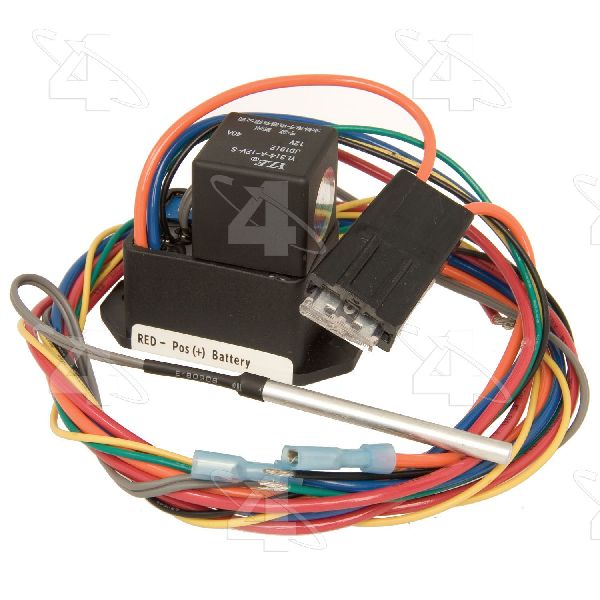
- Defective Cooling Fan Control Module/Resistor 🔴 High Probability → Shop Engine Cooling Fan Blade For the YF Sonata (2011-2013), this module is the most common culprit. It's mounted on the fan shroud, exposed to significant heat and vibration, causing internal electronics to fail. Aftermarket brands like Gates have engineered improved versions due to the high failure rate of the original part.
How to confirm: The module is mounted on the cooling fan shroud with an electrical connector. Visually inspect it and its connector for damage or corrosion. A diagnostic check involves verifying power and ground to the module and checking for a PWM (Pulse Width Modulated) signal from the PCM with a multimeter or oscilloscope. Often, if the fan motor works when directly powered, the module is the problem.
Typical fix: Replace the cooling fan control module. It is a simple 'plug-and-play' part held on by a few screws. 🎬 Watch: How to replace the cooling fan module
Est. part cost: $50-$100 - Faulty Cooling Fan Relay 🟡 Medium Probability → Shop Engine Cooling Fan Blade Relays are electromechanical switches that wear out from repeated use. They are a common failure point in many vehicles and are relatively inexpensive to replace.
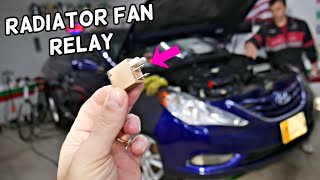
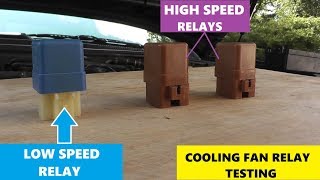
How to confirm: Locate the cooling fan relays (labeled 'C/FAN L' for low and 'C/FAN H' for high) in the engine compartment fuse box. You can test a relay with a multimeter or, more easily, swap it with an identical relay from a non-critical circuit 🎬 See: Hyundai Sonata cooling fan relay location guide (like the horn) to see if the fan starts working.
Typical fix: Replace the faulty relay(s).
Est. part cost: $10-$30 - Failed Cooling Fan Motor 🟡 Medium Probability → Shop Engine Cooling Fan Blade The electric motor that spins the fan can wear out or seize over time due to age and exposure to the elements.
How to confirm: With the engine off and cool, try to spin the fan blades by hand. If they don't move freely, the motor is likely seized. You can also supply 12V power directly to the fan motor's connector using jumper wires to see if it spins. If it doesn't, the motor has failed.
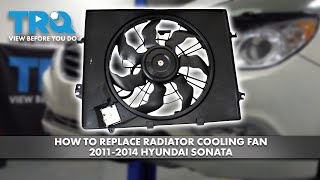
Typical fix: Replace the entire cooling fan assembly, which includes the motor, blades, and shroud. 🎬 Watch: Step-by-step radiator cooling fan replacement walkthrough
Est. part cost: $150-$300 - Blown Fuse ⚪ Low Probability A fuse typically blows as a symptom of another problem, like a seized fan motor drawing excessive current, or a short circuit in the wiring.
How to confirm: Check the 'C/FAN' 40-amp fuse in the engine compartment fuse box. A visual inspection or a multimeter can confirm if it's blown.
Typical fix: Replace the blown fuse. If it blows again immediately, there is a short or an overloaded circuit that needs to be diagnosed and repaired.
Est. part cost: $1-$5 - Wiring or Connector Issues ⚪ Low Probability Engine bay heat and vibrations can cause wires to become brittle and connectors to corrode or loosen over time, especially the main connector to the fan assembly or control module.
How to confirm: Visually inspect the wiring harness and connectors for the fan motor, control module, and relays for any signs of melting, corrosion, or physical damage. Use a multimeter to check for continuity and proper voltage at various points in the circuit.
Typical fix: Repair the damaged section of wiring or replace the faulty connector.
Est. part cost: $5-$50
Rare But Worth Checking
- Faulty Engine Coolant Temperature (ECT) Sensor: While less common for P0480 specifically, a faulty ECT sensor can prevent the PCM from knowing the engine is hot, so it never commands the fan to turn on. This usually sets other codes like P0117 or P0118.
- Faulty Powertrain Control Module (PCM): This is extremely rare and should be considered a last resort. The PCM should only be suspected after all other possibilities, including all wiring and grounds, have been exhaustively checked and ruled out.
Diagnosis Steps
- Check for other DTCs: Use an OBD-II scanner to see if any other codes are present that could point to a related issue (e.g., ECT sensor codes P0117/P0118).
- Visual Inspection: Inspect the cooling fan for any obstructions. Check all related wiring and connectors for damage, melting, or corrosion, paying close attention to the connector at the fan control module.
- Check Fuses and Relays: In the engine bay fuse box, inspect the 40A 'C/FAN' fuse. Swap the 'C/FAN L' and 'C/FAN H' relays with a known good, identical relay (like the horn relay) to see if the fan activates. This is a quick and effective test.
- Test the Fan Motor Directly: With the engine off, disconnect the fan motor connector. Use jumper wires to apply 12V directly from the battery to the fan motor terminals. If the fan doesn't spin, the motor is bad and the assembly needs replacement.
- Test the Fan Control Module/Resistor (2011-2013 YF): If the fan motor works when jumped, the control module is the next and most likely culprit. Check for 12V power, a solid ground, and a control signal (PWM) at the module's connector using a multimeter. If power and ground are good but the fan doesn't run, the module has likely failed.
- Test the Engine Coolant Temperature (ECT) Sensor: Use a scan tool to monitor the live data from the ECT sensor. The temperature should rise steadily as the engine warms up. An erratic or illogical reading indicates a problem with the sensor or its circuit.
- Check for PCM Command: An advanced scan tool can show if the PCM is commanding the fan relay to turn on. If the command is sent but the fan doesn't run, the problem is in the circuit (relay, module, motor, or wiring). If no command is sent (and the engine is hot), the issue could be the ECT sensor or the PCM itself.
Parts You'll Likely Need
- Cooling Fan Control Module / Resistor
(OEM #25385-2T500)— For the 2011-2013 Sonata (YF), this module is the most frequent point of failure for P0480. It's often replaceable separately from the fan assembly.
Trusted brands: Hyundai OE, Gates, Dorman, Four Seasons
OEM price range: $80-$120
Aftermarket price range: $50-$90 - Cooling Fan Relay
(OEM #95224-2D000 (or equivalent))— This is a very common and inexpensive failure point that is easy to replace as a first diagnostic step.
Trusted brands: Hyundai OE, Standard Motor Products
OEM price range: $20-$40
Aftermarket price range: $10-$25 - Radiator Cooling Fan Assembly
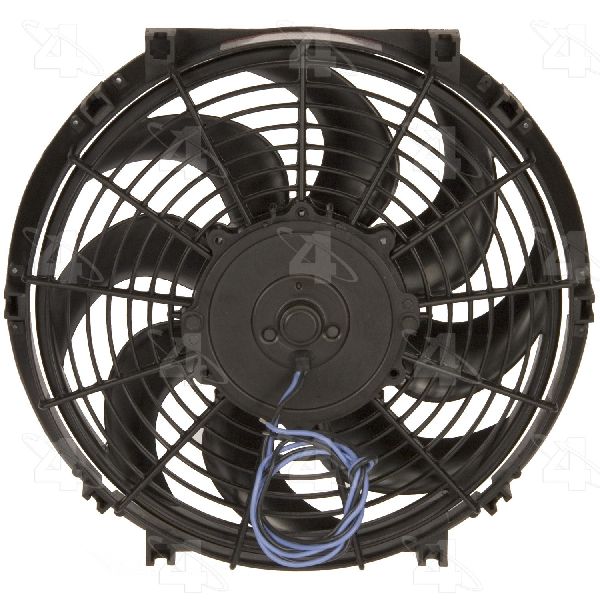
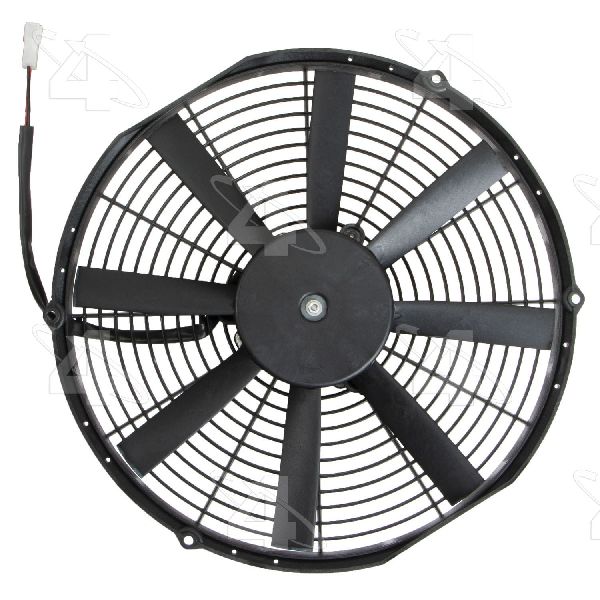
(OEM #25380-3Q170 (for 2.4L YF models, verify by VIN))— If the fan motor itself has burned out or seized, the entire assembly (including the fan, shroud, and sometimes the control module) must be replaced.
Trusted brands: Hyundai OE, TYC, Four Seasons, Dorman
OEM price range: $350-$500
Aftermarket price range: $150-$300
Platform-Specific Known Issues
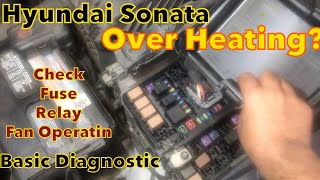
- Owner Experience: 2011 Sonata Overheating, P0480: A YouTube video by 'RB The Mechanic' details the diagnostic process for an overheating 2011 Sonata. The video highlights checking the 40A C/FAN fuse, the C/FAN LOW and HIGH relays in the under-hood fuse box, and points to the fan control resistor/module as a primary suspect if the relays and fuse are good. It also shows how to confirm the fan motor works by jumping it directly with 12V power.
- Forum Discussion: P0480 and A/C Issues: A thread on Hyundai Forums discusses how P0480 can manifest as the A/C blowing warm at idle. This is because the fan is required to pull air across the A/C condenser to dissipate heat. When the fan fails, the A/C system pressure gets too high at a standstill, reducing cooling performance.
Mechanic-Grade Diagnostic Values
- Cooling Fan Control Module PWM Signal Frequency — expected: 20-250 Hz (Varies by manufacturer, but this is a common range). Failure: No signal, or a signal outside this frequency range.
- Cooling Fan Control Module PWM Signal Duty Cycle — expected: Variable from 0% (off) to 100% (full speed) depending on PCM command.. Failure: Signal is stuck at 0% or 100% regardless of engine temp, or does not change when commanded by a scan tool.
- Cooling Fan Relay Coil Resistance — expected: Tens to a few hundred ohms.. Failure: Infinite resistance (open circuit) or near-zero resistance (shorted circuit).
- Cooling Fan Motor Current Draw — expected: 5-30 Amps, depending on fan speed.. Failure: Significantly higher current draw suggests a failing/seized motor; zero draw indicates an open circuit in the motor or wiring.
Scan Tool Commands That Help
- Hyundai GDS (or advanced aftermarket scanner): Cooling Fan Actuation Test / Bidirectional Control — This command allows the technician to manually turn the cooling fan on (often at variable speeds) to verify if the fan motor, control module, and relays are working. If the fan turns on with the scan tool but not automatically when the engine is hot, the problem is more likely with the input to the PCM (like the ECT sensor) rather than the fan circuit itself.
Wiring & Ground Locations
- C/FAN L and C/FAN H Relays — Located in the main engine compartment fuse and relay box.. These are the primary relays that control the cooling fan. Swapping them with a known-good relay is a key diagnostic step.
- Cooling Fan Assembly Connector — The main electrical connector on the radiator fan shroud, connecting the vehicle harness to the fan motor and control module.. This connector is a common point for corrosion or damage due to heat and vibration. Checking for power, ground, and signal at this connector is essential for diagnosis.
- Cooling Fan Control Module Connector — On 2011-2013 models, this is a 4-pin connector that plugs directly into the control module mounted on the fan shroud.. This is the point where power, ground, and the PWM control signal from the PCM are delivered. Back-probing this connector is the definitive way to test if the module is receiving the correct inputs.
Real Owner Repair Stories
- YouTube video by 'Electrical Car Repair LIVE' (2013 Hyundai Sonata) — Car may overheat, fan not working correctly.
❌ Tried (didn't work) The video focuses on locating and replacing the part rather than a sequence of failed attempts.
✅ What actually fixed it The video identifies the cooling fan resistor (control module) as the component that controls fan speed and activation, and shows its location and replacement. This implies its failure is a common reason for fan issues. - 2CarPros Forum (2011 Hyundai Sonata, 140,000 miles) — Car running at halfway mark on temp gauge, smoke from grille, radiator fan not engaging.
❌ Tried (didn't work) The user was initially unsure if it was the thermostat or the fan.
✅ What actually fixed it The resolution was not posted by the user, but an ASE Master Technician provided the cooling fan wiring diagram and instructed the user to check if the fan runs when the A/C is turned on, pointing the diagnosis toward the fan control circuit (relays, module, motor) rather than the thermostat.
OEM Part Supersession History
25385-2T500→25385-2T500 (current)— This part number appears to be stable for the specified vehicle range.
Heads up: This part number is listed for 2009-2014 Hyundai Sonata and 2014-2015 Kia Optima models, indicating broad compatibility within this platform. However, always verify with VIN.
Model Year Variations Within This Range
- 2011-2013 (YF Generation): Uses a separate, replaceable cooling fan control module (resistor), part number 25385-2T500, mounted directly on the fan shroud. This module is the most common point of failure for P0480 on these models.
- 2010 (NF Generation): The cooling fan control system is different from the YF generation. While it also uses relays, the control logic and component locations may vary. It may use a more traditional multi-speed relay setup without the separate PWM control module found on the YF. Diagnosis should focus more heavily on the relays and the fan motor itself.
Diagnostic Flowchart
Other Known Issues on This Vehicle
Issues unrelated to this code that are worth knowing about as an owner of this generation:
- Theta II Engine Failure (Connecting Rod Bearings) 🔴 High — Widespread across 2011-2014 models with 2.0L and 2.4L GDI engines. Failure can occur at various mileages, often preceded by a knocking sound. (Ref: Multiple recalls (e.g., NHTSA 15V-568, 17V-226) and a class-action lawsuit resulted in a lifetime engine warranty and a Knock Sensor Detection System (KSDS) software update for affected vehicles.)
- Worn Steering Column Flexible Coupler 🟠 Medium — Extremely common. Owners report a clicking or clunking noise from the steering column when turning the wheel. The rubber coupler disintegrates over time. (Ref: Hyundai issued a warranty extension (TXX7) to 10 years/100,000 miles and TSB 17-ST-002 to address this. The part number for the improved coupler is 56315-2K000-FFF.)
- Faulty Brake Pedal Stopper / Stop Lamp Switch 🟠 Medium — Common issue where the plastic stopper pad on the brake pedal arm disintegrates, causing the brake lights to stay on and allowing the shifter to be moved out of Park without pressing the brake. (Ref: Subject to NHTSA Recall 136 and Hyundai Recall 131. The fix involves replacing the small plastic stopper pad.)
Used vs. New Parts: Buying Guide for This Vehicle
When a used part is the smart pick: A complete cooling fan assembly from a low-mileage donor vehicle can be a cost-effective option if the entire assembly needs replacement. Since the fan motor itself is not a high-failure item compared to the control module, a used OEM assembly can be a reliable choice.
Donor-vehicle mileage cap: roughly under 75000 miles for the part to have meaningful remaining life.
What to inspect on the donor part:
- Check the fan blades for any cracks or damage.
- Attempt to spin the fan by hand; it should spin freely with minimal resistance and no grinding noises.
- Inspect the electrical connector for any signs of corrosion, melting, or broken pins.
- If possible, verify the donor vehicle's mileage and ensure it was not in a severe front-end collision.
OEM-only on this vehicle (don't cheap out):
- No parts in this specific repair are strictly OEM-only; reputable aftermarket options are widely available.
Aftermarket brands forum-validated for this vehicle:
- Gates (specifically mentioned as having engineered improvements for the control module).
- Dorman (known for OE-style fit and construction).
- Four Seasons / TYC (common, budget-friendly options for fan assemblies).
Brands owners have reported issues with on this vehicle:
- No-name, unbranded parts from online marketplaces should be avoided, as quality control can be inconsistent. Some users have reported mixed reviews on lower-cost brands like Spectra for critical components.
Real Owner Stories
Aggregated from forums and TSBs cited above. Mileages and costs reflect what owners reported in those sources.
2011 Hyundai Sonata
Symptoms: The vehicle was experiencing an overheating issue. The diagnostic process involved checking the 40A C/FAN fuse and the LOW/HIGH relays.
What fixed it: The fan control resistor/module was identified as the primary suspect after confirming the relays and fuse were functional and the fan motor worked when jumped with 12V power.
Source hint: YouTube - Hyundai Sonata 2011 OVER HEATING issue diagnostic check cooling ran FUSE and Relay
2011-2013 Hyundai Sonata (YF)
Symptoms: The A/C was acting weird and blowing warm air specifically when the car was idling or at a standstill.
What fixed it: Repairing the cooling fan circuit to ensure the fan pulls air across the A/C condenser at idle.
Source hint: Hyundai Forums - P0480 AC Fan acting weird
Related OBD-II Codes
Frequently Asked Questions
Why does my 2011-2013 Hyundai Sonata A/C blow warm air only when I am stopped at a red light?
Is there a specific part that frequently fails on the YF Sonata (2011-2013) causing the P0480 code?
Where are the cooling fan relays located on my 2010-2013 Sonata?
Can I test the cooling fan relays myself without special tools?
What fuse should I check for a P0480 code on my Sonata?
If my fan motor works when I connect it directly to the battery, what is likely broken?
Helpful Videos
Used OEM Parts in Stock
New Aftermarket Parts Available


The information in this article is provided for general reference and educational purposes only. Vehicle specifications, procedures, and part compatibility can vary by production date, trim level, and region. Always consult your vehicle's factory service manual and verify part numbers before purchasing or performing repairs. Safety-critical components such as airbags, seat belts, and braking systems should be installed by a qualified professional.
- Hyundai Sonata:
- 🧭 Diagnostic Flowchart
- 🎬 Helpful Videos
- 🛍️ Shop This Part
- What's Unique About the 2010-2013 Hyundai Sonata
- Symptoms You May Notice
- Most Likely Causes
- Rare But Worth Checking
- Diagnosis Steps
- Parts You'll Likely Need
- Platform-Specific Known Issues
- Mechanic-Grade Diagnostic Values
- Scan Tool Commands That Help
- Wiring & Ground Locations
- Real Owner Repair Stories
- OEM Part Supersession History
- Model Year Variations Within This Range
- Other Known Issues on This Vehicle
- Used vs. New Parts: Buying Guide for This Vehicle
- Real Owner Stories
- 2011 Hyundai Sonata
- 2011-2013 Hyundai Sonata (YF)
- Related OBD-II Codes
- Frequently Asked Questions
- 🎟️ Get 5% Off