

P0480 on 1999-2006 Mazda MPV: Cooling Fan Circuit Malfunction Causes and Fixes
On 2002-2006 models with the 3.0L V6, this code is almost always caused by a failed cooling fan control module (Part #1355A124). On 1999-2002 models with the 2.5L V6, the cause is more likely a bad cooling fan relay. The module is a notorious failure point but is a straightforward DIY replacement located behind the battery.
- First, confirm if your MPV has the 2.5L (1999-2002) or 3.0L (2002.5-2006) engine, as the fix is different.
- For 3.0L V6 models, the cooling fan control module is the most likely cause of P0480. Symptoms are fans that either run constantly or never turn on.
- For 2.5L V6 models, the problem is more likely a simple cooling fan relay in the under-hood fuse box.
- Always check the 30A 'FAN1' fuse before replacing parts, as a blown fuse can indicate a shorted fan motor.
- Do not drive the vehicle extensively with this code, as engine overheating can cause catastrophic damage.
What's Unique About the 1999-2006 Mazda MPV
The 1999-2006 MPV generation is split into two distinct cooling system designs. Models from 2002.5-2006 with the 3.0L V6 use an electronic cooling fan control module that is notoriously prone to failure. This module was subject to a recall (Mazda SSP 60) on 2002-2003 models for weak internal soldering, but even replacement parts are known to fail repeatedly. When it fails, it often enters a 'limp mode', causing the fans to run constantly to prevent overheating. In contrast, the earlier 1999-2002 models with the 2.5L V6 use a more traditional and complex system with up to seven relays controlling two dual-speed fans.
Generation note: While this vehicle range covers a single generation (the second-gen 'LW' platform), there was a major powertrain change. - 1999-2002 models used a Mazda 2.5L V6 with a cooling system controlled primarily by relays. - 2002.5-2006 models used a Ford-derived 3.0L V6 with a cooling system controlled by an electronic fan control module. The cause and fix for P0480 are different between these two versions.
Symptoms You May Notice
- Engine overheating, especially at idle or in slow traffic.
- A/C blowing warm air when the vehicle is stopped, but getting cold when moving.
- Cooling fans not turning on when the engine is hot.
- Cooling fans running constantly, even when the engine is cold, potentially draining the battery.
- Check Engine Light is on.
- Replacing the coolant temperature sensor. While a faulty sensor can cause cooling issues, it typically sets its own specific trouble codes (like P0117/P0118) and is not the direct cause of a P0480 circuit fault.
- Replacing the fan motor when the fan control module is the actual problem (on 2002-2006 models).
Most Likely Causes
- Failed Cooling Fan Control Module (2002.5-2006 models) 🔴 High Probability → Shop Engine Cooling Fan Blade A well-documented design flaw involving weak internal soldering led to a recall (Mazda Special Service Program SSP 60) on 2002-2003 models. The issue persists even on post-recall vehicles, with many owners replacing the module multiple times.
How to confirm: Check if fans run constantly with the key on, or if they never run at all. A tap on the module might temporarily change the fan's behavior. The module is located on the driver's side of the fan shroud, behind the battery and battery tray. A scan tool can command the fan on; if the command is sent but the fan doesn't run (and the fan motor is good), the module is bad.
Typical fix: Replace the cooling fan control module. This is a bolt-on part with three electrical connectors, considered a common DIY job. 🎬 Watch: Step-by-step guide to replacing the fan control module.
Est. part cost: $40-$120 - Failed Cooling Fan Relay (1999-2002 models) 🔴 High Probability → Shop Engine Cooling Fan Blade On the earlier models without a control module, the relay is the primary switch that controls power to the fan and is a common failure point in any relay-based system. The 2.5L system uses up to seven different relays, making diagnosis complex.
How to confirm: Locate the cooling fan relays in the under-hood relay box. Swap the fan relay with an identical relay from a non-essential system (like the horn) and see if the fan starts working.
Typical fix: Replace the faulty relay.
Est. part cost: $10-$25 - Blown Fuse 🟡 Medium Probability A failing fan motor or a short in the fan module can draw excessive current, causing the main 'FAN1' and 'FAN2' fuses (often 30A or 40A) to blow as a protective measure.
How to confirm: Check the main fan fuses in the under-hood fuse box. For 2004+ models, these are typically 40A FMX/JCase fuses. If a fuse is blown, replace it. If it blows again, investigate the fan motor, module, 🎬 See how to diagnose a P0480 code and check relays. or wiring for a short circuit.
Typical fix: Replace the fuse. If it reoccurs, find and fix the underlying short circuit.
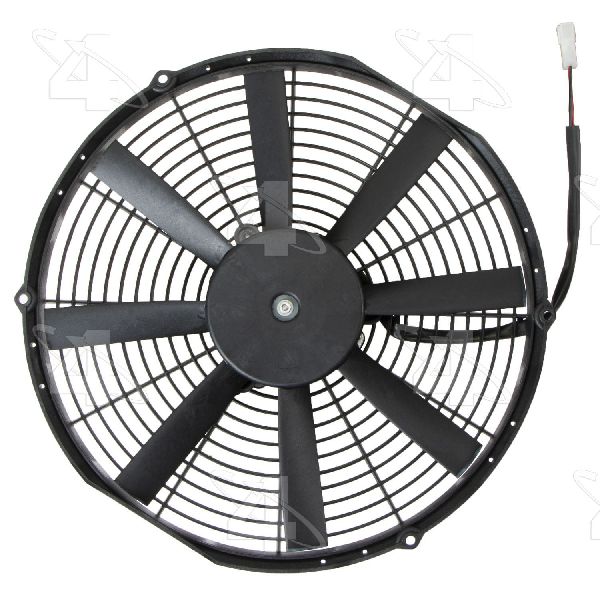
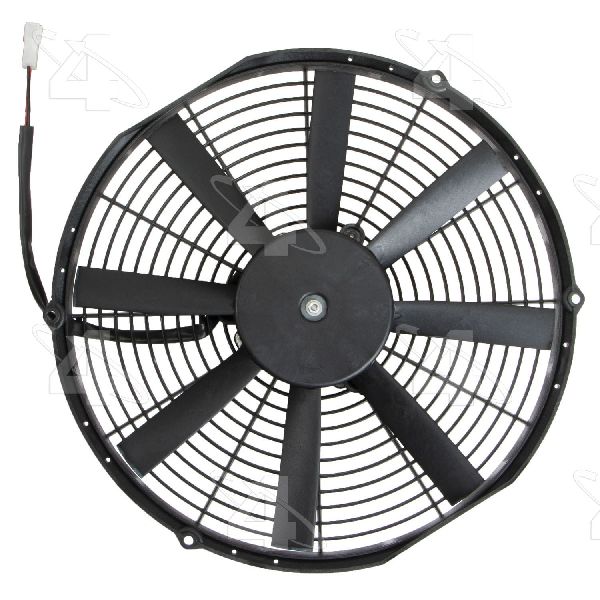
Est. part cost: $1-$5 - Faulty Cooling Fan Motor ⚪ Low Probability → Shop Engine Cooling Fan Blade
How to confirm: Disconnect the fan motor and apply 12V power and ground directly to its terminals using jumper wires. If the fan does not spin, the motor is dead. Also, if only one of the two fans operates, it may point to a single bad fan motor.
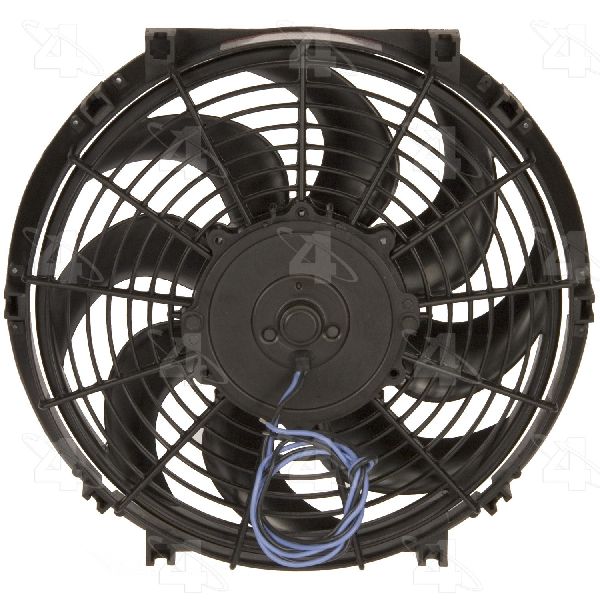
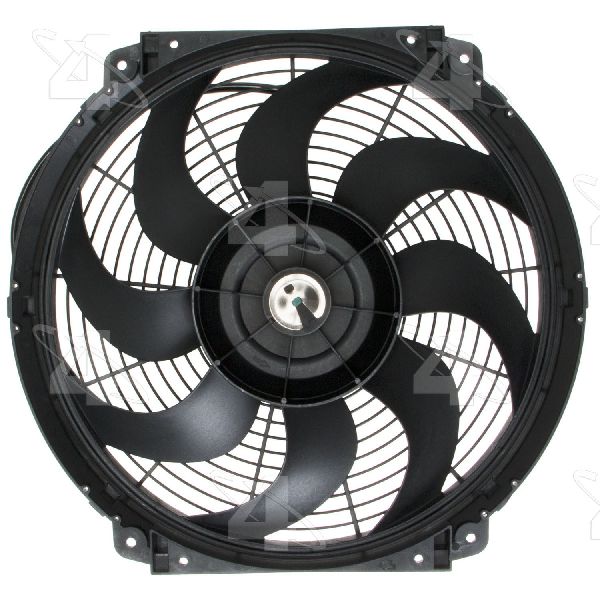
Typical fix: Replace the cooling fan motor, which is typically sold as part of the complete fan and shroud assembly.
Est. part cost: $150-$250 - Damaged Wiring or Connectors ⚪ Low Probability
How to confirm: Visually inspect the wiring harness leading to the fan module/relay and the fan motor for any signs of corrosion, melting, or physical damage. Pay close attention to the three connector plugs on the control module, as they can corrode or burn.
Typical fix: Repair or replace the damaged section of wiring or the connector.
Est. part cost: $5-$50
Rare But Worth Checking
- Faulty Powertrain Control Module (PCM): This is extremely rare. The PCM should only be suspected after all other components in the circuit (module/relay, fuses, wiring, and fan motor) have been tested and confirmed to be working correctly.
Diagnosis Steps
- Identify your engine: Determine if you have the 2.5L V6 (1999-2002) or the 3.0L V6 (2002.5-2006) as the diagnostic path differs.
- Check Fuses: Inspect the 'FAN1' and 'FAN2' fuses (typically 30A or 40A) in the under-hood fuse box. If blown, replace and see if it blows again.
- For 2002.5-2006 (3.0L V6): Suspect the Cooling Fan Control Module. This is the most likely culprit. 🎬 Watch: Troubleshooting common fan control issues on a 2005 MPV. Observe symptoms: is the fan always on (a common failure mode) or never on? The module is behind the battery and battery tray.
- For 1999-2002 (2.5L V6): Test the Cooling Fan Relays. The system can have up to 7 relays. Locate the main fan relays in the under-hood box and swap one with a known-good, identical relay from another circuit (e.g., horn) to test.
- Test the Fan Motor: Disconnect the fan motor and supply it with 12V power directly from the battery. If it doesn't spin, the motor is bad.
- Inspect Wiring: Visually check all related wiring and connectors for damage, corrosion, or loose connections, especially the three plugs going into the fan control module.
- If all other components test good, the final and least likely possibility is a fault within the Powertrain Control Module (PCM).
Parts You'll Likely Need
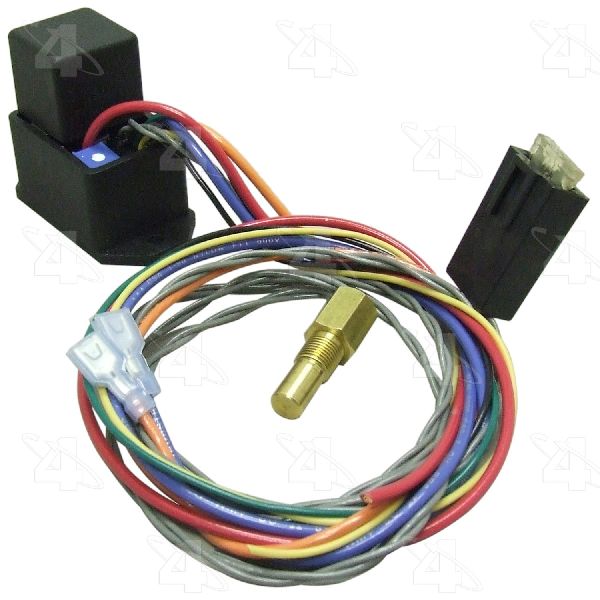
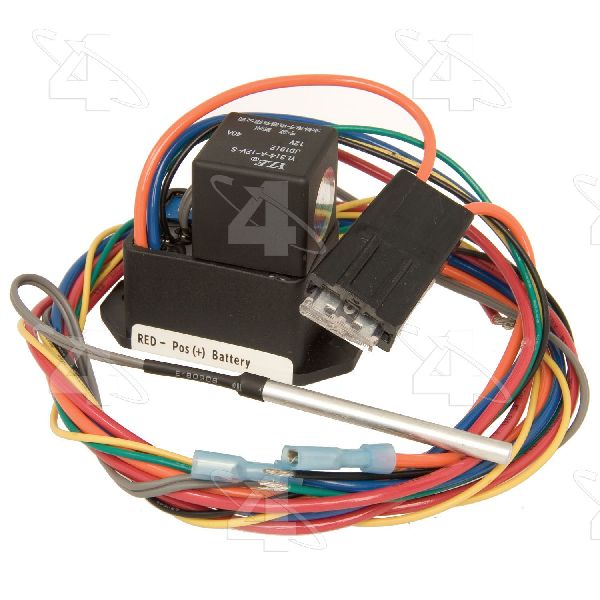
- Engine Cooling Fan Control Module (for 2002.5-2006 3.0L V6)
(OEM #AJY2-15-SC0, AJ51-15-15Y, 1C232-19700. The most common cross-reference is the Mitsubishi part number 1355A124.)— This is the most common failure part for the P0480 code on the 3.0L V6 models due to a known design flaw.
Trusted brands: Dorman (902-428), Standard Motor Products (RY1595), Wells, Gates (FCM102), Beck/Arnley (203-0270)
OEM price range: $150-$250
Aftermarket price range: $40-$120 - Cooling Fan Relay (for 1999-2002 2.5L V6) — This is the primary switch for the cooling fan on earlier models and a common point of electrical failure.
Trusted brands: Standard Motor Products, Bosch
OEM price range: $20-$40
Aftermarket price range: $10-$25 - Radiator Fan Assembly
(OEM #AJ5115025A)— Needed if the fan motor itself has failed. Often sold as a complete unit with the shroud and motor.
Trusted brands: TYC, Dorman
OEM price range: $300-$450
Aftermarket price range: $150-$250
Technical Service Bulletins (TSBs) & Recalls
- Mazda Special Service Program (SSP 60) for 2002-2003 models to replace the cooling fan control module.
Platform-Specific Known Issues
- A voluntary recall, Mazda Special Service Program (SSP 60), was issued for 2002-2003 Mazda MPVs to replace the cooling fan control module due to weak soldering that could crack and cause failure. The failure is so common that even post-recall vehicles and later model years experience the same issue, with some owners on forums reporting they have replaced the part multiple times.
Mechanic-Grade Diagnostic Values
- Fan Control Module Power Supply (2002.5-2006 3.0L) — expected: Battery Voltage (B+), approximately 12.6V with key on, engine off. Power is supplied via two 30A or 40A fuses ('FAN1', 'FAN2') wired in parallel.. Failure: Voltage below 12V or 0V indicates a blown fuse, wiring issue, or bad connection before the module.
- Fan Control Module Ground (2002.5-2006 3.0L) — expected: Less than 0.1 Ohms of resistance between the ground pin on the module's harness connector and a clean chassis ground point (e.g., G1).. Failure: High resistance (OL or > 1 Ohm) indicates a corroded or broken ground wire, which is a common cause of electrical circuit failure.
- Cooling Fan Relay Power Supply (1999-2002 2.5L) — expected: Constant Battery Voltage (B+) at one terminal of the relay socket and ignition-on B+ at another terminal.. Failure: Absence of voltage at the expected terminals points to a blown fuse or an issue with the main or ignition relays.
Hidden / Shadow Codes Worth Checking
- N/A: For this specific fault on this platform, there are no commonly documented hidden or shadow codes. However, some Mazda diagnostic procedures note that under certain fault conditions, Freeze Frame Data may not be stored for a P0480 code, making diagnosis slightly more difficult. (see via This is an absence of data rather than a specific code to be read.)
Scan Tool Commands That Help
- Mazda IDS, FORScan, or equivalent professional scan tool: Active Command / Bidirectional Control for Cooling Fan (e.g., 'FAN_CTRL', 'KOER Fan Test') — This is a critical diagnostic step. Use this command to bypass the temperature sensors and PCM's automatic logic to directly order the fan module/relay to turn on. If the fan turns on with the scan tool command, the module/relay, wiring, and fan motor are likely good, and the problem may be with a sensor input or the PCM. If the fan does not turn on, it confirms the fault lies within the control circuit itself (module, relay, wiring, or motor).
Wiring & Ground Locations
- Fan Control Module Connectors (2002.5-2006) — On the fan control module itself, located on the driver's side of the fan shroud, behind the battery and battery tray.. There are three separate electrical connectors on the module. These are common points of failure due to corrosion or heat damage. Inspecting them is a key step.
- Ground Point G1 (2004 MPV) — At the right side of the engine compartment.. This is a primary chassis ground point for components in the engine bay. A poor connection here can cause a variety of electrical issues, including the fan control circuit malfunction.
- Ground Point G3 (2004 MPV) — At the right rear of the engine.. An engine-block ground point that can be relevant for the cooling fan circuit's integrity.
- Ground Point G101 (2001 MPV 2.5L) — Located at the front of the right front fender.. A key ground point for the earlier 2.5L models which use a relay-based system.
Real Owner Repair Stories
- mazdaforum.com user 'MNOP Neal' (2004 Mazda MPV) — Cooling fans not working when the engine is hot or when the A/C is turned on.
❌ Tried (didn't work) The original fan controller failed and was replaced with a genuine Mazda part, which also failed after a couple of years., The Mazda part was then replaced with a Gates FCM102 aftermarket module, which failed after only 10 months.
✅ What actually fixed it The user was in the process of replacing the failed Gates module with a third new module. This story highlights the extremely high failure rate of this part, affecting both OEM and aftermarket versions, suggesting a persistent design or quality control issue across the board. - YouTube channel 'Online Auto Repair Videos' (2004 Mazda MPV LX) — Check Engine Light with code P0480 and cooling fans running constantly at high speed, even with a cold engine.
❌ Tried (didn't work) The mechanic immediately suspected the fan control module based on the 'limp mode' symptom.
✅ What actually fixed it Replacing the fan control module (Beck/Arnley P/N 203-0270) immediately solved the problem. With the new module installed, the fan remained off with the key on and the cold engine, confirming the fix.
OEM Part Supersession History
AJY2-15-SC0, 1C232-19700→AJ51-15-15YA, Mitsubishi P/N 1355A124, 1355A125— Standard part revisions and cross-compatibility with other vehicles (Mitsubishi Lancer/Outlander, Mazda 6) that use the same module.
Heads up: While many part numbers are interchangeable, it is critical to match the 3-plug design. Some similar-looking modules from other vehicles may have different plug configurations or internal logic.
Model Year Variations Within This Range
- 1999-2002: These models use a 2.5L V6 with a complex cooling fan system controlled by up to seven separate relays for dual-speed fan operation. Diagnosis focuses on identifying and testing individual relays rather than a single control module.
- 2002.5-2006: These models use a 3.0L V6 with a single, notoriously unreliable electronic fan control module (e.g., 1355A124) that controls both fans. The diagnosis for P0480 on these years almost always leads to this module.
Diagnostic Flowchart
Other Known Issues on This Vehicle
Issues unrelated to this code that are worth knowing about as an owner of this generation:
- Automatic Transmission Failure / Harsh Shifting 🔴 High — Common, especially on earlier 2000-2003 models. Can manifest as 'shift shock' or complete failure. Some owners report improvement with regular fluid changes or a PCM reflash per a TSB. (Ref: A TSB was issued for dealers to reprogram the transmission control module to address 'shift shock'.)
- Ignition Coil Failure (3.0L V6) 🟠 Medium — Very common. The three rear ignition coils (cylinders 1, 2, 3) are located under the upper intake manifold, making replacement extremely labor-intensive. It's standard practice to replace all three rear coils and spark plugs at the same time to avoid repeat labor.
- PCV Hose Collapse/Rupture (3.0L V6) 🟡 Low — A common issue where the PCV hose deteriorates and collapses, causing vacuum leaks and drivability problems. An updated, more reinforced hose is available. (Ref: A recall was issued to replace the original hose design.)
- Rear Heater Core Pipe Leak 🟠 Medium — On models equipped with the optional rear climate control, the metal pipes running to the rear heater core are prone to corrosion and leaking coolant.
- Stalling When Slowing Down 🟠 Medium — Some owners, particularly of 2005 models, report the engine stalling without warning when coming to a stop or at low speeds.
Used vs. New Parts: Buying Guide for This Vehicle
When a used part is the smart pick: A used part is a reasonable choice for the complete fan assembly (shroud and motors) or for the relays on 1999-2002 models, provided they can be tested. A used fan control module for 2002.5-2006 models is a significant gamble and generally not recommended due to the extremely high failure rate of even new OEM and aftermarket parts.
Donor-vehicle mileage cap: roughly under 100000 miles for the part to have meaningful remaining life.
What to inspect on the donor part:
- For a fan assembly, spin the blades by hand to check for smooth bearing movement and inspect for any cracks or damage.
- Test the fan motors by applying 12V directly from a battery before purchase.
- For any used part, inspect electrical connectors for corrosion, melting, or broken locking tabs.
OEM-only on this vehicle (don't cheap out):
- No parts for this specific repair are strictly 'OEM-only'. Forum evidence suggests that even genuine Mazda replacement fan control modules have a high failure rate, making reputable aftermarket brands a viable, and sometimes preferable, alternative.
Aftermarket brands forum-validated for this vehicle:
- Dorman (902-428)
- Gates (FCM102)
- Beck/Arnley (203-0270)
- Standard Motor Products
- TYC (for fan assemblies)
Brands owners have reported issues with on this vehicle:
- No specific brand is universally cited as 'bad', but be cautious. One forum user reported a Gates module failing within 10 months, indicating that quality can be inconsistent even among known brands for this particular part. Prioritize parts with a lifetime warranty if available.
Real Owner Stories
Aggregated from forums and TSBs cited above. Mileages and costs reflect what owners reported in those sources.
2003 Mazda MPV 3.0L V6
Symptoms: The cooling fans were either running constantly or not turning on at all. The owner reported going through three separate replacement modules.
What fixed it: Replacing the cooling fan control module.
Source hint: mazdaforum.com - Thread: 'cooling fan'
2004 Mazda MPV LX 3.0L V6
Symptoms: The Check Engine Light was on with code P0480, and the cooling fan was stuck running constantly. The mechanic described this as a 'limp mode' caused by the module failure.
What fixed it: Replacement of the cooling fan control module.
Source hint: YouTube - Online Auto Repair Videos: '2004 Mazda MPV LX - P0480 - Fan Relay 1 Control Circuit'
2003 Mazda MPV 3.0L V6
Symptoms: The vehicle was experiencing an engine overheating problem.
What fixed it: The problem was resolved by replacing the cooling fan control module, which is accessed by removing the battery and battery tray.
Source hint: YouTube - Charlie Fella: 'Mazda MPV Fan Control Module Replacement - Overheating Repair'
2002 Mazda MPV 3.0L V6
Symptoms: Cooling fan failure due to weak soldering inside the control module that was prone to cracking.
What fixed it: Mazda issued a recall (SSP 60) to replace the faulty cooling fan control module.
Source hint: Mazda Special Service Program (SSP 60)
Related OBD-II Codes
Frequently Asked Questions
My 2003 Mazda MPV has a P0480 code. Does the recall, SSP 60, apply to my vehicle?
Why are the cooling fans on my 2004 MPV running constantly, even when the engine is cold?
I have a 2001 MPV. Where is the fan control module located?
My A/C blows warm when I'm stopped in traffic but gets cold on the highway. Is this related to the P0480 code?
How can I test a cooling fan relay on my 2000 MPV without special tools?
I need to replace the fan control module on my 2005 MPV. Where is it?
I replaced the fan control module a year ago and it failed again. Is this normal?
Helpful Videos
We Have This Part in Stock

The information in this article is provided for general reference and educational purposes only. Vehicle specifications, procedures, and part compatibility can vary by production date, trim level, and region. Always consult your vehicle's factory service manual and verify part numbers before purchasing or performing repairs. Safety-critical components such as airbags, seat belts, and braking systems should be installed by a qualified professional.
- Mazda MPV:
- 🧭 Diagnostic Flowchart
- 🎬 Helpful Videos
- 🛍️ Shop This Part
- What's Unique About the 1999-2006 Mazda MPV
- Symptoms You May Notice
- Most Likely Causes
- Rare But Worth Checking
- Diagnosis Steps
- Parts You'll Likely Need
- Technical Service Bulletins (TSBs) & Recalls
- Platform-Specific Known Issues
- Mechanic-Grade Diagnostic Values
- Hidden / Shadow Codes Worth Checking
- Scan Tool Commands That Help
- Wiring & Ground Locations
- Real Owner Repair Stories
- OEM Part Supersession History
- Model Year Variations Within This Range
- Other Known Issues on This Vehicle
- Used vs. New Parts: Buying Guide for This Vehicle
- Real Owner Stories
- 2003 Mazda MPV 3.0L V6
- 2004 Mazda MPV LX 3.0L V6
- 2003 Mazda MPV 3.0L V6
- 2002 Mazda MPV 3.0L V6
- Related OBD-II Codes
- Frequently Asked Questions
- 🎟️ Get 5% Off