

P0480 on 2020-2024 Toyota Corolla: Cooling Fan Circuit Malfunction Causes and Fixes
On a 2020-2024 Corolla, code P0480 is most often caused by a failed cooling fan control module or a faulty fan motor assembly. Always check the 30A 'FAN NO.1' fuse first. A new fan module costs around $340 from the dealer, while a complete fan assembly is about $100-$200 for an aftermarket part.
- P0480 on a 2020-2024 Corolla means there's a fault in the cooling fan circuit.
- Always check the 30A 'FAN NO.1' fuse in the engine bay fuse box first; it's a simple and cheap potential fix.
- The most common culprits are a failed Cooling Fan Control Module or a bad fan motor.
- Do not drive the vehicle extensively with this code, as the risk of engine overheating and severe damage is high.
- You can test the fan motor directly by applying 12V power to rule it in or out before buying expensive parts.
What's Unique About the 2020-2024 Toyota Corolla
Unlike older vehicles that use simple on/off relays, the 12th generation (E210) Corolla utilizes a more complex Cooling Fan Control Module (sometimes called a fan computer) to manage fan speed. This module uses a Pulse Width Modulation (PWM) signal to provide variable speed control, which is quieter and more efficient. This module is a very common point of failure for this code and is confirmed to be a plug-and-play part that does not require dealer programming. While the fan motor itself can also fail, diagnosis often leads to this specific control module, which integrates the functions of a traditional relay into a more sophisticated unit.
Symptoms You May Notice
- Engine temperature gauge rising higher than normal, especially when idling or in traffic.
- Air conditioning (A/C) blows warm or not cold when the vehicle is stopped or moving slowly.
- The cooling fan does not turn on when the engine is hot or when the A/C is activated.
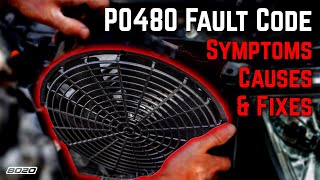
- Check Engine Light is illuminated. 🎬 Watch: A quick guide to understanding the P0480 code
- The cooling fan runs continuously even after the engine is turned off, potentially draining the battery.
- Replacing the fan motor when the actual problem is the cooling fan control module or a blown fuse.
- Replacing the coolant temperature sensor without checking for other related fault codes or testing the fan circuit first.
Most Likely Causes
- Blown 'FAN NO.1' Fuse 🔴 High Probability A short in the fan motor or a failing control module can cause a current surge that blows the protective fuse.
How to confirm: Locate the engine compartment fuse box. Check the 30A fuse at position F20, labeled 'FAN NO.1'. A visual inspection or a multimeter can confirm if it's blown.
Typical fix: Replace the fuse. If the new fuse blows immediately, it indicates a persistent short circuit in the fan motor or wiring that must be addressed before replacing the fuse again.
Est. part cost: $1-$5 - Faulty Cooling Fan Control Module 🔴 High Probability → Shop Engine Cooling Fan Blade This electronic module, mounted near the fan shroud, is exposed to heat and vibration and is a widely reported failure point for this platform and its mates like the C-HR.
How to confirm: After confirming the fuse, wiring, and fan motor are good, the module is the most likely culprit. A diagnostic trick is to unplug the Engine Coolant Temperature (ECT) sensor while the engine is running; the ECM should enter a fail-safe mode and command the fan to full speed. If it doesn't, the module is likely faulty.
Typical fix: Replace the cooling fan control module. It is a plug-and-play component mounted to the fan shroud, requiring no special programming.
Est. part cost: $340-$510 - Failed Cooling Fan Motor 🟡 Medium Probability → Shop Engine Cooling Fan Blade Electric motors wear out over time due to brush wear or internal shorts, leading to an open circuit, a short, or physical seizure.
How to confirm: Disconnect the fan motor's electrical connector and apply 12V power and ground directly to the motor's terminals using jumper wires. If the fan does not spin, the motor has failed.
Typical fix: Replace the entire cooling fan and shroud assembly. It is almost always sold as a single, integrated unit.
Est. part cost: $100-$250 - Damaged Wiring or Connectors ⚪ Low Probability Vibration and heat in the engine bay can cause wires to break or connector pins to corrode over time, especially at the connector for the fan control module.
How to confirm: Visually inspect the wiring harness leading to the fan motor and control module for any signs of melting, chafing, or corrosion. Use a multimeter to check for continuity and proper voltage at the connectors per the vehicle's wiring diagram.
Typical fix: Repair the damaged section of the wiring harness or clean/replace the affected connector.
Est. part cost: $10-$100
Rare But Worth Checking
- Faulty Engine Coolant Temperature (ECT) Sensor: While less common for P0480 specifically, a faulty ECT sensor can prevent the ECM from knowing the engine is hot, so it never commands the fan to turn on. This is more likely to be accompanied by other codes like P0117 or P0118.
- Faulty Engine Control Module (ECM): This is extremely rare. The ECM should only be considered after all other possibilities, including all wiring and components, have been exhaustively ruled out by a professional.
Diagnosis Steps
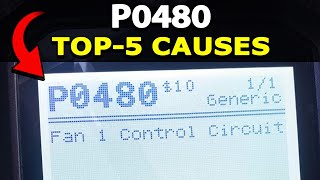
- Read the code with an OBD-II scanner 🎬 Watch: How to diagnose and fix the P0480 code to confirm P0480 is present.
- Check the 30A 'FAN NO.1' fuse in the engine bay fuse box. Replace if blown.
- Perform a visual inspection of the cooling fan, its shroud, and all related wiring. Look for obstructions, damage, or corroded connectors.
- With the engine cool and off, try to spin the fan blade by hand. If it feels stuck or makes grinding noises, the motor is likely seized.
- A quick functional test: Start the engine and turn the A/C to its maximum setting. This should command the cooling fan to turn on. If it doesn't, proceed with electrical checks.
- Disconnect the fan motor connector. Use jumper wires to apply 12V battery power and ground directly to the fan terminals. If the fan runs, the motor is good. If not, the fan assembly needs replacement.
- If the fan motor works with direct power, the problem lies in the control circuit. Check for power, ground, and the PWM signal at the fan control module connector using a multimeter and the vehicle's wiring diagram.
- If power and signal are present at the module but the fan doesn't run (and the fan motor is known good), the Cooling Fan Control Module is the definitive cause of failure and should be replaced.
Parts You'll Likely Need
- Cooling Fan Control Module
(OEM #89257-K0020, 89257-12020)— This electronic module is the most common failure point that controls fan operation on this Corolla generation and its platform mates.
Trusted brands: Toyota (Genuine), Dorman, Standard Motor Products
OEM price range: $340-$512
Aftermarket price range: $70-$150 - Radiator Cooling Fan Assembly
(OEM #16361-0T230)— The fan motor can burn out or seize, requiring replacement of the entire fan and shroud assembly.
Trusted brands: TYC, Kool Vue, Toyota (Genuine)
OEM price range: $250-$400
Aftermarket price range: $100-$200 - 30A Blade Fuse — This is the first and cheapest part to check. A short in the fan motor or module will often blow this fuse.
Trusted brands: Bussmann, Littlefuse
OEM price range: $1-$5
Aftermarket price range: $1-$5
Technical Service Bulletins (TSBs) & Recalls
- T-SB-0088-23: Addresses a vibration or rattle from the right-hand engine mount at idle on 2020-2024 Corollas.
- T-SB-0010-24 Rev2: Details a procedure to fix cold-start misfire DTCs on vehicles including the 2019-2025 Corolla by replacing exhaust-side valve lash adjusters.
Mechanic-Grade Diagnostic Values
- Cooling Fan Motor Current Draw — expected: 15 to 25 Amps. Failure: Excessive current suggests a failing motor; zero current indicates an open circuit in the motor or wiring.
- Voltage at Fan Control Module Connector (Pin B+ to Ground) — expected: 11 to 14 Volts (Battery Voltage). Failure: No voltage indicates a problem with the power supply, likely the 30A FAN NO.1 fuse or wiring.
- Resistance at Fan Control Module Connector (Pin GND to Body Ground) — expected: Below 1 Ohm. Failure: High resistance indicates a poor ground connection, which is a common cause of electrical faults.
- ECM Voltage to Fan Relays (FANL and FANH pins) — expected: 11 to 14 Volts with ignition ON. Failure: No voltage from the ECM pins suggests an internal ECM fault, though this is rare.
Scan Tool Commands That Help
- Toyota Techstream: Active Test: 'Control the Cooling Fan' — This bidirectional command allows a technician to directly order the ECM to activate the cooling fan. If the fan runs during the active test, it confirms the fan motor, module, and wiring are likely functional, pointing the diagnosis towards the input sensors (like ECT) or the ECM itself.
- Toyota Techstream: Data List: 'Coolant Temp' — Used to monitor the live reading from the Engine Coolant Temperature (ECT) sensor. This helps verify if the ECM is receiving the correct temperature data needed to make the decision to turn the fan on. An illogical or stuck reading would indicate a faulty ECT sensor.
Wiring & Ground Locations
- Cooling Fan Control Module Connector — Mounted on the radiator fan shroud in the engine bay.. This is the central connection point. Key pins to test are: B+ (power from 30A fuse), GND (ground), and SI (PWM signal from ECM). A failure at any of these pins will cause P0480.
- Ground Point EA — On the left side of the engine compartment, near the fender.. A wiring diagram for a similar generation Corolla shows the cooling fan circuit grounding at point 'EA'. A corroded or loose connection at this specific point can cause an open in the fan control circuit, leading to P0480.
Real Owner Repair Stories
- chrforums.uk user (Toyota C-HR (shares platform and fan control module with 2020-2024 Corolla)) — A/C not working at idle, fan not spinning, P0480 code stored.
❌ Tried (didn't work) Initial diagnosis pointed towards the fan motor.
✅ What actually fixed it The problem was a failed cooling fan control module. The owner replaced the module (part number 89257-12020, which is shared with the Corolla) and it resolved all symptoms and cleared the code.
OEM Part Supersession History
16363-37130→16363-24120— Standard part revision or supplier change.
Heads up: The new part number (16363-24120) is the correct replacement for the original fan motor.
Diagnostic Flowchart
Other Known Issues on This Vehicle
Issues unrelated to this code that are worth knowing about as an owner of this generation:
- Valvetronic Motor Failure (1.8L Engine) 🟠 Medium — Can occur at low mileage on early-production 2020 models. An updated part was issued. Symptoms include low power or a no-start condition. (Ref: No specific TSB, but it is a known issue discussed by Toyota technicians.)
- CVT Transmission Hesitation or Roughness 🟡 Low — Some owners report a noticeable jerk or hesitation, particularly at low speeds or when shifting from 1st to 2nd on models with the 'launch gear' CVT. It is often considered a characteristic rather than a failure.
- Interior Rattles (Dashboard/Door Panels) 🟡 Low — Frequently reported by owners, especially when driving on uneven roads. Rattles often originate from dashboard trim pieces or door panels.
- Engine Mount Vibration at Idle 🟡 Low — A noticeable vibration or rattle from the right-side engine mount may occur at idle and disappear at higher RPMs. (Ref: TSB T-SB-0088-23)
- MIL ON with Misfire DTCs in Cold Weather 🟠 Medium — On cold starts (14°F – 41°F), the engine may throw misfire codes (P0300, P0301, etc.) due to an issue with the valve lash adjusters on the exhaust side. (Ref: TSB T-SB-0010-24 Rev2)
- Fuel Pump Failure (Recall) 🔴 High — A recall was issued for the low-pressure fuel pump, which could fail and cause the engine to stall while driving. (Ref: NHTSA RECALL 20V012000)
Used vs. New Parts: Buying Guide for This Vehicle
When a used part is the smart pick: A used cooling fan assembly (motor and shroud) from a low-mileage donor vehicle is often a cost-effective and reliable repair. The fan motor is a relatively simple component.
Donor-vehicle mileage cap: roughly under 60000 miles for the part to have meaningful remaining life.
What to inspect on the donor part:
- Verify the fan blade spins freely by hand with no grinding or resistance.
- Inspect the plastic shroud for any cracks or broken mounting tabs.
- Check the electrical connector pins for corrosion, melting, or damage.
- Ensure the part number on the donor part matches the required OEM number for your vehicle.
OEM-only on this vehicle (don't cheap out):
- While not strictly required, using a genuine Toyota Cooling Fan Control Module (89257-K0020) is recommended due to its critical role and high failure rate, ensuring you get the latest revision.
Aftermarket brands forum-validated for this vehicle:
- TYC is a well-regarded aftermarket brand for fan assemblies, often providing OE-quality fit and function at a lower price.
Brands owners have reported issues with on this vehicle:
- Avoid unbranded, no-name electronic modules from online marketplaces, as their quality control and longevity can be highly questionable.
Related OBD-II Codes
Frequently Asked Questions
My 2020 Corolla is vibrating at idle; is this related to the P0480 cooling fan code?
Could a blown fuse be the reason my A/C stops blowing cold when I'm stopped in my 2022 Corolla?
Is there a recall for the cooling fan control module on the 2020-2024 Corolla?
I have a P0480 and my engine is misfiring in the morning. Are these the same problem?
Can I use a fan control module from a Toyota C-HR to fix my Corolla's P0480?
How can I test if the fan motor itself has failed on my 1.8L Corolla?
Helpful Videos
Used OEM Parts in Stock
New Aftermarket Parts Available

The information in this article is provided for general reference and educational purposes only. Vehicle specifications, procedures, and part compatibility can vary by production date, trim level, and region. Always consult your vehicle's factory service manual and verify part numbers before purchasing or performing repairs. Safety-critical components such as airbags, seat belts, and braking systems should be installed by a qualified professional.
- Toyota Corolla:
- 🧭 Diagnostic Flowchart
- 🎬 Helpful Videos
- 🛍️ Shop This Part
- What's Unique About the 2020-2024 Toyota Corolla
- Symptoms You May Notice
- Most Likely Causes
- Rare But Worth Checking
- Diagnosis Steps
- Parts You'll Likely Need
- Technical Service Bulletins (TSBs) & Recalls
- Mechanic-Grade Diagnostic Values
- Scan Tool Commands That Help
- Wiring & Ground Locations
- Real Owner Repair Stories
- OEM Part Supersession History
- Other Known Issues on This Vehicle
- Used vs. New Parts: Buying Guide for This Vehicle
- Related OBD-II Codes
- Frequently Asked Questions
- 🎟️ Get 5% Off