

P0481 on 2017-2019 Ford Escape: Cooling Fan Circuit Fault Causes and Fixes
On a 2017-2019 Ford Escape, P0481 is almost always caused by a blown 10A fuse F34 in the under-hood fuse box. This fuse often blows due to a short in a related wiring harness, specifically the 12A690 (1.5L) or 12C508 (2.0L) harness. Check this fuse before inspecting any other components.
- For a 2017-2019 Ford Escape, P0481 is most often not a fan problem, but a fuse problem.
- Always check the 10A fuse in position F34 of the engine bay fuse box first.
- If P0481 is present with other seemingly unrelated codes (like P0034, P023A, P0645), it's almost certainly the F34 fuse.
- If the F34 fuse blows repeatedly, a wiring short is the underlying cause and must be located and repaired.
- Do not replace expensive parts like the fan or PCM until you have ruled out the simple fuse and wiring issues.
What's Unique About the 2017-2019 Ford ESCAPE
For this specific generation of Ford Escape with the 1.5L or 2.0L engines, P0481 is strongly linked to a known issue documented in multiple Ford Technical Service Bulletins (TSBs). A single 10-amp fuse, F34, powers multiple seemingly unrelated components, including the A/C clutch relay, turbocharger wastegate, and active grille shutters. A short circuit in any of these components' wiring can blow the fuse, triggering a host of DTCs, including P0481, and may even cause an AWD Fault warning on the dash. The TSBs specifically point to the 12A690 (1.5L) or 12C508 (2.0L) wiring harnesses as the location for potential chafing and short circuits.
Diagnostic Flowchart
Tap your situation to follow the diagnostic path that matches what you're seeing on this vehicle.
Symptoms You May Notice
- Check Engine Light is on
- Engine overheating, especially at idle or in stop-and-go traffic
- A/C system may not blow cold air
- AWD Fault warning message on the instrument cluster [SSM 48895, SSM 47575, SSM 47086, 13]
- Traction Control (TC) light may be on
- Replacing the cooling fan assembly without first checking fuse F34 and the associated relay.
- Replacing the PCM when the actual fault is a simple short circuit in the 12A690 or 12C508 wiring harness.
- Repeatedly replacing fuse F34 without finding and fixing the underlying wiring short.
Most Likely Causes
- Blown Fuse F34 (10A) 🔴 High Probability As documented in Ford TSBs SSM 48895, SSM 47575, and SSM 47086, this fuse is the most common failure point. It powers several circuits, and a short in any of them will cause it to blow, triggering P0481 and other codes.
How to confirm: Locate the power distribution box in the engine compartment. Find fuse F34 and visually inspect it or test it with a multimeter for continuity.
Typical fix: Replace the 10A fuse. If it blows again, you must find and repair the underlying short circuit in the wiring harness. The most common location for the short is the 12A690 (1.5L) or 12C508 (2.0L) wiring harness where it may chafe against the engine or other components.
Est. part cost: $1-$5 - Damaged Wiring or Connectors 🟡 Medium Probability TSB SSM 47575 explicitly calls out the 12A690 (1.5L) and 12C508 (2.0L) wiring harnesses for potential chafing due to improperly installed retainers. This vulnerability is the root cause for the F34 fuse blowing repeatedly.
How to confirm: Visually inspect the wiring harness running from the battery junction box (fuse box) to the PCM. Pay close attention to any points where the harness makes contact with metal brackets, the engine block, or the A/C compressor. Look for signs of chafing, melting, or exposed copper wire.
Typical fix: Repair the damaged section of the wiring harness using solder and heat-shrink tubing, then protect it from future damage using high-quality electrical tape or a new plastic wire loom. Ensure harness retainers are properly seated.
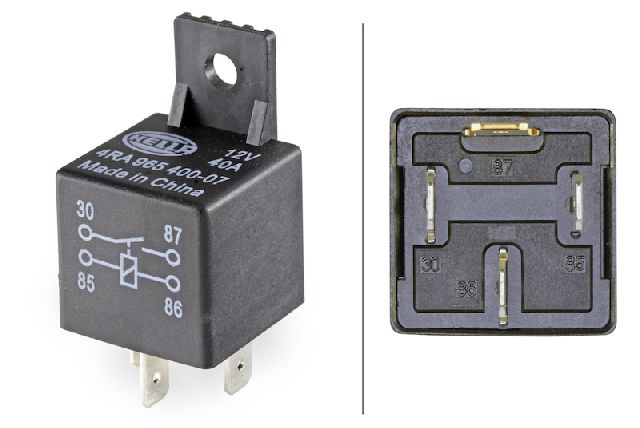
Est. part cost: $5-$25 - Faulty Cooling Fan Relay 🟡 Medium Probability → Shop Engine Cooling Fan Blade Relays are mechanical switches that wear out over time. While less common than the F34 fuse issue on this platform, a stuck or failed relay is a frequent cause of cooling fan codes on any vehicle.
How to confirm: Locate the cooling fan relays in the under-hood fuse box (may include R1, R5, R6, R12, R15). Swap the suspect relay with an identical one from a non-critical circuit (like the horn) and see if the fan starts working or if the problem moves.
Typical fix: Replace the faulty relay. The common multi-purpose relay is Motorcraft part number 5M5Z-14N089-BA.
Est. part cost: $15-$40 - Faulty Cooling Fan Motor ⚪ Low Probability → Shop Engine Cooling Fan Blade
How to confirm: After confirming the fuse, relay, and wiring are good, you can test the fan motor directly. Disconnect the fan and carefully apply 12V power and ground to its terminals. If the fan doesn't spin, the motor is bad.
Typical fix: Replace the cooling fan assembly. The OEM Motorcraft part number varies by engine and options, but a common number is GJ5Z-8C607-A.
Est. part cost: $150-$350
Rare But Worth Checking
- Faulty Powertrain Control Module (PCM): This is extremely rare and should only be considered after all other possibilities (fuses, relays, wiring, and the fan motor itself) have been exhaustively ruled out. A wiring short is far more likely.
Diagnosis Steps
- Retrieve all stored DTCs with an OBD-II scanner. Note all codes present, as a group of codes points strongly to the F34 fuse.
- Open the under-hood power distribution box and locate fuse F34 (10A). 🎬 Watch: How to find the fan fuse location
- Thoroughly inspect fuse F34. If it is blown, replace it. Start the engine and turn on the A/C to command the fan on. If the code does not return, the issue may be resolved. If the fuse blows again, proceed to the next step.
- If the fuse is blowing repeatedly, disconnect the battery. Carefully inspect the 12A690 (1.5L) or 12C508 (2.0L) wiring harnesses as specified in TSB 47575. Look for any signs of chafing against the engine block, frame, or A/C compressor. This is the most likely root cause.
- If a chafe is found, repair the wire(s) and insulate the harness to prevent future contact.
- If fuse F34 is intact, test the cooling fan relays (R1, R5, R6, R12, R15 may be involved). Swap one with a known good, identical relay to see if the fault changes.
- Inspect the wiring and connectors at the cooling fan assembly for any damage, corrosion, or loose connections.
- If relays and wiring appear good, command the fan on with a capable scan tool. If it doesn't respond, test the fan motor directly by applying 12V power.
- If the fan motor works when powered directly, but not when commanded by the PCM, 🎬 See how to test the fan control module use a multimeter to check for the command signal from the PCM at the relay socket.
Parts You'll Likely Need
- Mini Fuse — Fuse F34 (10A) is the most likely failure point, often due to a wiring short as described in Ford TSBs.
Trusted brands: Bussmann, Littlefuse, Motorcraft
OEM price range: $1-$5
Aftermarket price range: $1-$5 - Multi-Purpose Relay
(OEM #5M5Z-14N089-BA)— The relay is the switch that sends power to the fan. It's a common failure item in any vehicle's cooling fan circuit and can get stuck.
Trusted brands: Motorcraft, Standard Motor Products
OEM price range: $25-$50
Aftermarket price range: $15-$40 - Radiator Cooling Fan Assembly
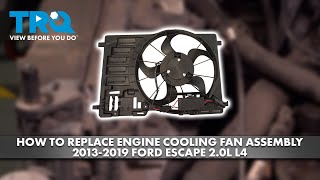
(OEM #GJ5Z-8C607-A)— If the fan motor itself has failed after all other circuit components have been verified, the entire assembly usually needs to be replaced. 🎬 Watch: Step-by-step cooling fan assembly replacement guide
Trusted brands: Motorcraft, Four Seasons, TYC
OEM price range: $300-$450
Aftermarket price range: $150-$350
Related Codes That Often Appear With This One
- P0480 — This code is for Cooling Fan 1 Control Circuit. Both fans are often controlled by related circuits and can be affected by the same electrical issues, like the blown fuse F34.
- P0034, P023A, P0245, P0645, P06A0, P06DB, P188D, P2602, P2681 — According to Ford TSBs, all these codes can appear with P0481 because their components (like the A/C clutch, turbo wastegate solenoid, etc.) share the same power source through fuse F34. A blown fuse cuts power to all of them simultaneously.
Technical Service Bulletins (TSBs) & Recalls
- SSM 48895: Notes that 2019 models may exhibit a blown fuse F34 with DTCs including P0481.
- SSM 47575: Describes the same F34 fuse issue for 2017-2018 models, leading to P0481 and other codes. Crucially, it points to the 12A690/12C508 wiring harness chafing as the cause.
- SSM 47086: Covers the same F34 fuse issue for 2017 models built on or before Jan 24, 2018.
Platform-Specific Known Issues
- Ford Technical Service Bulletins (SSM 48895, SSM 47575, SSM 47086) describe an issue on 1.5L and 2.0L engines where a blown fuse F34 can cause P0481 along with a list of other DTCs and an AWD fault warning. The root cause is typically a short to ground in one of the circuits powered by this fuse.
- TSB 47575 specifically identifies the 12A690 (1.5L) or 12C508 (2.0L) wiring harnesses as the likely location for chafing and shorts due to improper retainer installation from the factory.
Mechanic-Grade Diagnostic Values
- Scan Tool PID: Engine Coolant Temperature (ECT) — expected: PCM may command fans on around 223°F (106°C).. Failure: If temperature exceeds this threshold and fan PIDs show no command, the issue may be with sensor inputs rather than the fan circuit itself.
- Scan Tool PID: Fan Control Variable (FCV) or FAN_CTRL — expected: Percentage value (0-100%) representing the PCM's command to the fan controller.. Failure: A value greater than 0% with no fan activity suggests a fault in the control circuit or fan motor. A value of 0% when the engine is hot suggests the PCM is not commanding the fan on.
- Scan Tool PID: Low Speed Fan Control (LFC) — expected: Should show 'On' or 'Active' when the PCM commands the low-speed fan operation.. Failure: PID shows 'On' but the fan is not running, pointing to a circuit or component failure downstream of the PCM command.
Scan Tool Commands That Help
- FORScan or other professional scan tool: PCM Actuation Test: Cooling Fan Control — This bidirectional test allows the technician to bypass sensors and directly command the cooling fan on at various speeds (e.g., 20%, 50%, 100% duty cycle). If the fan operates correctly during this test, it confirms the integrity of the fan motor, relays, and wiring, pointing the diagnosis towards an input issue (like a sensor) or the PCM itself.
Wiring & Ground Locations
- 12A690 / 12C508 Harness — Engine wiring harness section running from the Battery Junction Box (BJB) to the Powertrain Control Module (PCM).. This is the specific harness identified in Ford TSBs as being prone to chafing and shorting, which blows fuse F34 and triggers P0481. Common chafe points are near the A/C compressor and where retainers are improperly installed.
- G103 — Potentially located on the cylinder head.. A poor ground connection at G103 could cause a variety of electrical issues in the engine harness, potentially affecting sensor readings or control module operation related to the cooling fan circuit.
- Cooling Fan Motor Connector — The electrical plug on the cooling fan assembly itself.. This 2-pin connector is the final point for power delivery to the fan motor. A replacement pigtail may be available under part number 7283-5596 if the connector or its immediate wiring is damaged.
Real Owner Repair Stories
- Reddit user on r/fordescape (2006 Ford Escape 2.3L (demonstrates a principle applicable to the 2017-2019 model)) — Cooling fans would not turn on no matter how hot the engine got.
❌ Tried (didn't work) Confirmed fan worked when jumping the relay and during a FORScan self-test. Ruled out the fan motor and relay as the primary cause.
✅ What actually fixed it The user discovered the cooling fans would only operate correctly when the A/C system was charged with refrigerant. When the refrigerant leaked out, the PCM would not command the fans on based on engine temperature alone. The diagnosis revealed the fan control logic was dependent on a functional A/C system pressure reading.
Helpful Videos

Used OEM Parts in Stock
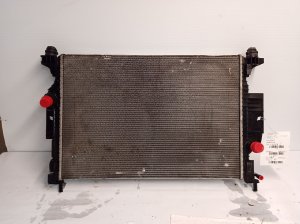
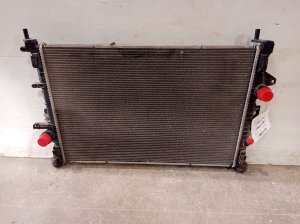
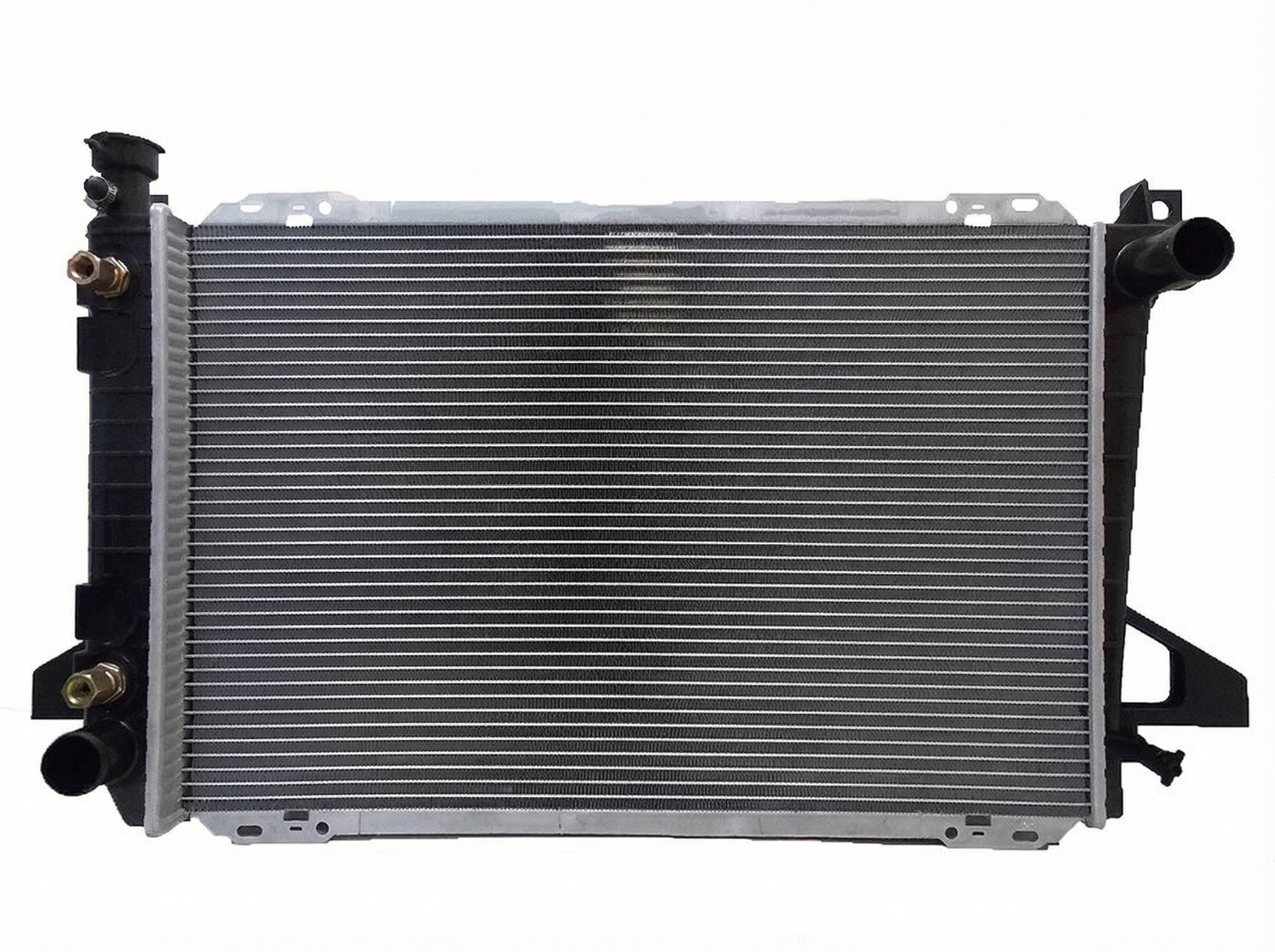
New Aftermarket Parts Available

The information in this article is provided for general reference and educational purposes only. Vehicle specifications, procedures, and part compatibility can vary by production date, trim level, and region. Always consult your vehicle's factory service manual and verify part numbers before purchasing or performing repairs. Safety-critical components such as airbags, seat belts, and braking systems should be installed by a qualified professional.
- Ford ESCAPE:
- 🧭 Diagnostic Flowchart
- 🎬 Helpful Videos
- 🛍️ Shop This Part
- What's Unique About the 2017-2019 Ford ESCAPE
- Symptoms You May Notice
- Most Likely Causes
- Rare But Worth Checking
- Diagnosis Steps
- Parts You'll Likely Need
- Related Codes That Often Appear With This One
- Technical Service Bulletins (TSBs) & Recalls
- Platform-Specific Known Issues
- Mechanic-Grade Diagnostic Values
- Scan Tool Commands That Help
- Wiring & Ground Locations
- Real Owner Repair Stories
- 🎟️ Get 5% Off