

OBD-II Code P0482: Cooling Fan 3 Control Circuit Malfunction
What P0482 means, why it triggers, and how to fix it
- Code P0482 indicates an electrical failure in the high-speed cooling fan circuit, requiring immediate attention to prevent overheating.
- Stop driving immediately; operating a vehicle with a disabled cooling fan causes rapid overheating and can result in $1,500+ in head gasket damage.
- Swap the cooling fan relay with an identical non-essential relay (like the horn) to test the circuit for free before buying parts.
- Test the fan motor directly by applying 12 volts from the battery; if it spins, the $300 motor is fine and the fault lies in the $20 relay or wiring.
- Expect repair costs between $400 and $1,000 if you drive a modern VW, Audi, or Jeep, as the fan controller is often integrated into the main fan assembly.
What Does P0482 Mean?
The Powertrain Control Module (PCM) detected an electrical problem in the circuit controlling the third cooling fan. The '3' refers to the high-speed setting of a multi-speed fan system, or rarely, a third physical fan. The fan will not turn on when needed, causing the engine to overheat rapidly when idling or in slow traffic.
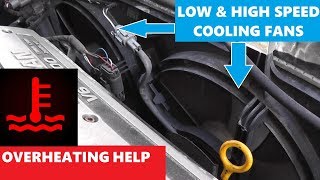
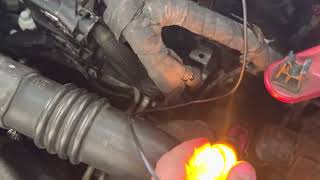
Technical definition: Cooling Fan 3 Control Circuit Malfunction. 🎬 Watch: Real-world diagnostic walkthrough for a P0482 overheating issue. The Powertrain Control Module (PCM) detected a voltage in the cooling fan 3 control circuit outside the manufacturer's normal parameters. The PCM triggers this code when the commanded state (on or off) and the actual voltage feedback from the circuit do not match, typically when engine temperature exceeds 223°F (106°C).
Can I Drive With P0482?
No — Do Not Drive. Do not drive. Operating a vehicle with a P0482 code exposes the engine to a severe risk of overheating, especially in traffic or warm weather. A single severe overheating event causes catastrophic damage, such as a warped cylinder head or blown head gasket, leading to repairs costing between $1,500 and $3,000+, or complete engine failure.
Common Causes
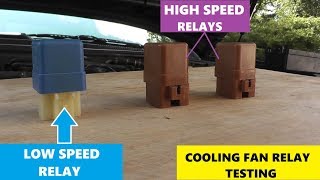
- Faulty Cooling Fan Relay 3 (Very Common) — The relay is an electrical switch controlling power to the fan. It is the most frequent point of failure, often getting stuck open or closed due to burnt internal contacts. 🎬 See how to test low and high speed fan relays.
- Blown Fuse (Common) — A blown fuse cuts off power to the fan circuit. This is almost always a symptom of a deeper problem, such as a shorted wire or a failing fan motor drawing excessive current.
- Failed Cooling Fan 3 Motor (Common) — The fan motor burns out, seizes from age, or sustains damage from road debris. This requires replacing the motor or the entire fan assembly.
- Wiring Harness or Connector Damage (Common) — Corroded, frayed, or disconnected wires interrupt the electrical signal from the PCM. High resistance often melts the plastic connector at the fan motor or relay socket.
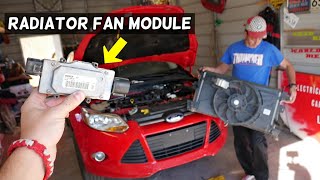
- Faulty Fan Control Module or Resistor (Less Common) — Many vehicles use a dedicated module or resistor to manage fan speeds. Electronic failure within this component prevents the fan from activating on the commanded high-speed setting.
- Faulty Engine Coolant Temperature (ECT) Sensor (Less Common) — The ECT sensor reports engine temperature to the PCM. An incorrect signal prevents the computer from knowing when to activate the fan.
- Faulty A/C Pressure Sensor (Rare) — Cooling fans activate to cool the A/C condenser. An erroneous signal from the A/C pressure sensor disrupts the fan control circuit logic.
- Faulty Powertrain Control Module (PCM) (Very Rare) — The computer controlling the fan circuit fails. Test this only after exhaustively ruling out all other circuit components.
Symptoms
- Engine Overheating at Low Speeds — The temperature gauge climbs into the red zone when idling, in traffic, or during heavy towing due to insufficient natural airflow through the radiator.
- Cooling Fan Does Not Turn On — The cooling fan remains off even when the engine is hot and the vehicle is parked.
- Air Conditioning (A/C) Not Working Correctly — The PCM disables the A/C system when a cooling fan fault is detected to reduce engine load and prevent condenser overheating.
- Steam from Engine Bay — Coolant boils and escapes the system as steam, indicating a critical overheating event.
- Cooling Fan Stays On Continuously — A stuck-closed relay forces the fan to run constantly, even with the engine off, draining the battery.
- Check Engine Light is On (also visible on scanner) — The PCM illuminates the Check Engine Light to alert the driver of the circuit fault.
Diagnostic Flowchart
Tap your situation to follow the diagnostic path that matches what you're seeing on this code.
Common Fixes & Costs
- Replace Cooling Fan Relay — Parts: $20-$50, Labor: $50-$75, ~0.5 hr book time (DIY)
- Replace Blown Fuse — Parts: $1-$10, Labor: $0-$25, ~0.1 hr book time (DIY)
- Repair Wiring or Connectors — Parts: $30-$80, Labor: $150-$300, ~2 hr book time (Intermediate)
- Replace Cooling Fan Resistor / Module — Parts: $40-$150, Labor: $75-$150, ~1.2 hr book time (Intermediate)
- Replace Radiator Fan Motor/Assembly — Parts: $250-$700, Labor: $150-$300, ~2.0 hr book time (Professional)
Used vs. New Parts: Buying Guide
When a used part is worth it: Purchase a used OEM part from a low-mileage donor vehicle when replacing expensive, integrated fan assemblies. Never buy used relays or fuses.
Donor-vehicle mileage cap: roughly under 80000 miles for the part to have meaningful remaining life.
Donor quality checklist:
- Verify the donor vehicle was not scrapped due to front-end damage.
- Check for cracked blades or a corroded motor housing.
- Match the part number exactly; integrated control modules are highly vehicle-specific.
Decision logic:
- If The part is a simple relay or fuse → Always buy new; cost savings are negligible.
- If The part is a full fan assembly and the vehicle has over 120k miles → A used OEM part saves money, but expect a shorter remaining lifespan.
- If The part is a computer-controlled module integrated into the fan assembly → A used OEM part is often more reliable than a cheap, unbranded aftermarket alternative.
Warranty tradeoff: Junkyard parts include a 30-90 day exchange warranty. New aftermarket parts carry a 1-year to limited lifetime warranty.
Worst-case if a used part fails: $300-$500 if a used fan assembly fails after the warranty period, requiring repeat labor and a new part.
What Happens If You Wait — Timeline
- Immediate: Code P0482 is set. The Check Engine Light turns on. The PCM disables the A/C compressor. No physical damage occurs if the vehicle is not driven in traffic. (MPG impact: 0%% · Added cost: $0)
- First drive in traffic (0-1 hour): Engine temperature rises above normal. The driver must pull over to let the engine cool, risking being stranded. (MPG impact: 0%% · Added cost: $100-$250 in towing fees.)
- A single severe overheating event (1-3 hours): Coolant boils over. This single event warps the aluminum cylinder head or blows the head gasket. (MPG impact: N/A% · Added cost: $1,500-$3,000 for head gasket replacement.)
- Long-Term (Driving for days/weeks): Repeated overheating causes catastrophic damage. Coolant mixing with oil destroys bearings, seizing the engine completely. (MPG impact: N/A% · Added cost: $4,000-$8,000+ for engine replacement.)
Cost of Not Fixing It
- Immediate (0-1 week): Engine overheats in traffic, leaving you stranded. A/C system disabled. (Added cost: Towing costs ($100-$250))
- Short-Term (1 week - 3 months): A single severe overheating event warps the cylinder head or blows the head gasket. (Added cost: $1500-$3000)
- Long-Term (3+ months): Continued operation with severe overheating destroys piston rings and bearings, requiring complete engine replacement. (Added cost: $4000-$8000+)
Diagnosis Steps
- Swap the Fan Relay
Locate Fan Relay 3 in the under-hood fuse box. Swap it with an identical relay from a non-essential circuit (like the horn). If the fan starts working, the original relay is bad. This is the fastest, most common fix.
Tools: Owner's manual (Beginner) - Check the Fuses
Inspect the high-amperage fuses for the cooling fan circuit. Replace any blown fuses. If the new fuse blows immediately, stop; you have a short circuit or a seized fan motor.
Tools: Fuse puller or needle-nose pliers (Beginner) - Visual Inspection
Check for debris blocking the fan blades. Inspect electrical connectors at the fan and relays for melted plastic or green corrosion. With the engine off, spin the fan by hand; stiffness or grinding indicates shot motor bearings.
Tools: Flashlight (Beginner) - Test the Fan Motor Directly
Disconnect the fan's electrical connector. Use fused jumper wires to apply 12V directly from the battery to the fan motor terminals. If the fan spins, the motor is good. If it doesn't, the motor requires replacement.
Tools: Fused jumper wires, basic hand tools (Intermediate) - Test the Circuit for Power and Ground
With the key on and engine hot (or A/C on high), use a multimeter to verify 12V power at the fan connector. Measure resistance between the ground pin and the chassis to confirm a solid ground (less than 1 ohm).
Tools: Multimeter (Intermediate) - Pro Tip: Perform a Voltage Drop Test
Find hidden resistance by performing a voltage drop test. Connect the positive multimeter lead to the battery positive post and the negative lead to the power pin on the fan connector. With the fan commanded on, the reading must be less than 0.5V. Repeat on the ground side. Higher readings indicate failing wiring or connectors.
Tools: Multimeter with long leads (Advanced) - Check for Signal from the PCM
Verify the PCM sends the ground signal to activate the fan relay. Backprobe the relay control circuit terminal at the relay socket. When the engine reaches operating temperature, the PCM grounds this circuit, dropping voltage from 12V to near 0V.
Tools: Multimeter, vehicle wiring diagram, backprobe pins (Advanced) - Pro Tip: Analyze the Control Signal with an Oscilloscope
For vehicles with a Fan Control Module, the PCM sends a Pulse Width Modulated (PWM) signal. Connect an oscilloscope to the signal wire. A missing or erratic square wave points to a PCM or wiring fault. A clean signal in with no fan action out points to a faulty module.
Tools: Oscilloscope, wiring diagram (Professional) - Advanced: Test the Engine Coolant Temperature (ECT) Sensor
Disconnect the ECT sensor and measure its resistance with a multimeter. Compare the reading to manufacturer specs (e.g., ~2500 ohms at 68°F). Infinite resistance indicates a failed sensor preventing fan activation.
Tools: Multimeter, vehicle service manual with resistance chart (Advanced) - Advanced: Verify ECT Circuit Integrity
Substitute the ECT sensor with a known resistance (e.g., a 1000-ohm resistor) across the harness terminals. Use a scan tool to observe the temperature reading. An illogical temperature indicates a wiring or PCM fault.
Tools: Scan tool, resistor kit, service manual (Advanced)
When This Code Triggers (Freeze-Frame Conditions)
- Engine Coolant Temp: 220-240°F (104-115°C) (The PCM commanded the high-speed fan on due to elevated temperatures.)
- Vehicle Speed: 0-20 mph (Low speed or idle, where natural airflow is insufficient for cooling.)
- RPM: 600-1500 (Engine is at idle or low RPM, typical for stop-and-go traffic.)
- A/C Request Signal: On (A/C system is active, requiring the fan to cool the condenser.)
Related Codes
- P0480 — Indicates a malfunction in the 'Cooling Fan 1 Control Circuit.' If P0480, P0481, and P0482 appear together, the fault lies in a shared component like the main fuse, ground wire, or PCM.
- P0481 — Points to a fault in the 'Cooling Fan 2 Control Circuit.' Seeing P0481 and P0482 together indicates a failure in the high-speed fan settings or a shared secondary fan component.
- P0530-P0534 — Relates to the A/C Refrigerant Pressure Sensor. Because fans cool the A/C condenser, a failed pressure sensor causes the PCM to set a secondary fan circuit code like P0482.
- P1474 — A manufacturer-specific code for fan control faults. On Fords, it points specifically to a 'Fan Control Primary Circuit' issue, narrowing down the diagnostic area.
Climate & Environmental Factors
- High Heat & Humidity: Hot climates force the cooling fan to run constantly, accelerating wear on the relay and motor. Coastal humidity dramatically accelerates corrosion inside electrical connectors and relay terminals, a primary cause of P0482.
- Cold Climates: Freezing temperatures make plastic wire insulation and connector housings brittle, causing them to crack and invite moisture intrusion during subsequent thaws.
How to Talk to a Mechanic About This Code
Say this: "I have a P0482 code and the engine overheats at low speeds. I checked the fuses and swapped the fan relay, but the fan still won't turn on. I need a diagnostic to test the fan motor, control module, and circuit wiring."
This proves you've done basic homework, preventing the shop from charging you for simple checks and directing their focus to complex circuit testing.
Avoid saying:
- 'My check engine light is on, can you look at it?' (Invites a wide-ranging, expensive diagnostic process).
- 'Just fix whatever is wrong.' (Gives the shop a blank check to replace parts without approval).
- 'My car is overheating.' (Too vague; providing the specific code P0482 is required).
Questions to ask before authorizing the repair:
- Did you test the fan motor by applying 12-volt power directly to it?
- Did you perform a voltage drop test on the power and ground sides of the circuit to check for high resistance?
- Can you show me the damaged part, like the corroded connector, before you replace it?
- Does my vehicle have a separate fan control module, or is it integrated into the fan assembly?
- What is the warranty on the recommended parts and labor?
Where to Take It: Dealer vs Independent vs Chain
- Dealer:
Best for complex cases or warranty work, but the most expensive option for out-of-warranty repairs.
Best for: Vehicles under powertrain or extended warranty., Complex electrical issues on VW/Audi/Jeep models with integrated fan control modules., When an independent shop fails to diagnose the problem.
Downsides: Significantly higher labor rates and OEM part costs., More likely to replace an entire fan assembly rather than repair a single wire. (Typical cost: +50% vs. baseline) - Independent Shop:
Best fit for most P0482 repairs. A reputable independent shop offers the best balance of electrical expertise and value.
Best for: Out-of-warranty vehicles where cost is a major factor., Diagnosing common electrical faults like bad relays, wiring, or fan motors.
Downsides: Technician skill varies widely; vet shops based on reviews and ASE certifications. (Typical cost: +0% vs. baseline) - Chain Shop:
Risky for P0482 diagnosis. Acceptable only if you have already confirmed a simple part (like the relay) is the sole cause.
Best for: Simple part replacements like a single relay or fuse.
Downsides: Lacks advanced diagnostic experience for circuit tracing., High pressure to upsell entire fan assemblies without proper diagnosis. (Typical cost: -10% vs. baseline)
When to Walk Away From the Repair
Sell or trade the vehicle if the estimated repair cost exceeds 40% of its private-party value.
- Car worth $3000, fix is $1800: Walk away. The repair cost is 60% of the car's value. Sell the car 'as-is' or scrap it.
- Car worth $10000, fix is $850: Fix it. The repair cost is 8.5% of the vehicle's value, well below the threshold.
- Car worth $4500, fix is $2500: Walk away. This scenario involves engine damage from overheating. The repair cost is 55% of the car's value.
What Scan Tool You Need for This Code
Minimum: An OBD-II scanner with bidirectional control to command the fan on/off.
A simple code reader only confirms the P0482 code. A scanner with bidirectional control commands the fan on, testing the entire circuit (PCM, relay, wiring, and motor) in seconds.
Budget: Ancel BD310 or XTOOL A30M (~$70-100) — Bluetooth dongles offering full system scanning and basic bidirectional controls to activate relays and fans.
Mid-range: Innova 5610 or Foxwell NT510 Elite (~$150-350) — Handheld scanners providing robust bidirectional controls to command Fan 1, 2, and 3 on and off directly.
Professional: Autel MaxiCOM MK808 / MX900 (~$450-600) — Professional-level bidirectional control, detailed live data graphs, and OEM-level diagnostic information for tracking complex electrical faults.
Rent vs buy: For a one-time diagnosis, borrow an OBD-II scanner for free from AutoZone or Advance Auto Parts. Buy a scanner only if you perform diagnostics regularly.
How to Clear the Code After You Fix It
- Use an OBD-II scan tool to clear the P0482 code and related codes.
- Ensure the fuel tank is between 1/4 and 3/4 full.
- Perform a complete drive cycle to allow readiness monitors to run.
Drive cycle (~30 minutes): Start the engine cold and idle for 3 minutes. Drive at a steady 55 mph for 15 minutes on a highway. Drive in stop-and-go city traffic for 10 minutes. Allow the vehicle to cool down completely.
Readiness monitors affected: Comprehensive Component Monitor, Catalyst Monitor, Oxygen (O2) Sensor Monitor
Before emissions retest: drive at least 100 miles to fully set monitors.
Watch out for:
- Disconnecting the battery does not reliably clear permanent codes or reset readiness monitors for emissions testing.
- The code returns immediately if the underlying electrical fault remains unfixed.
- Incorrect fuel levels prevent the EVAP monitor from running, causing emissions test failures.
Will This Fail Emissions / State Inspection?
Yes — this code typically fails an OBD-II emissions inspection.
- California: An illuminated Check Engine Light is an automatic smog test failure. Readiness monitors must be set to 'Ready' after repair, which takes up to 100 miles of driving.
- New York: An active Check Engine Light automatically fails the OBD-II portion of the annual safety and emissions inspection.
- Texas: In the 17 counties requiring emissions testing, an illuminated Check Engine Light is an automatic failure.
Most Commonly Affected Vehicles
- Chevrolet Cruze, Sonic, Trax (2011-2016) — Notorious for cooling fan resistor burnouts. The fan operates only on high speed or fails entirely. GM updated the resistor part number multiple times to address durability.
- Dodge Dart, ProMaster (2013-2016) — Prone to cooling fan assembly and wiring failures. On the ProMaster, a seized fan motor often burns out the fan resistor in a domino effect.
- Jeep Cherokee (2014-2018) — Cooling fan module failures and melted wiring harness connectors are the primary sources for this code. Repairs range from $300 (wiring) to $800+ (assembly replacement).
- Ford Focus, Mondeo, Kuga (2008-2021) — 2012-2018 Focus models suffer from fan control module wiring harnesses that are too short, causing physical stress, chafing, and eventual circuit failure.
- Volkswagen Golf, Jetta, Passat (2005-2020) — The fan control module is permanently integrated into the larger of the two cooling fans. Module failure requires replacing the entire $400+ main fan assembly.
- Honda Civic, Accord, CR-V (2007-2019) — The electrical connector at the fan motor frequently corrodes or melts due to high resistance. Wiring pigtail replacement is the standard fix.
- Toyota Avensis, RAV4, Auris (2006-2020) — Failures range from simple relays to the fan motor itself. Always check for Technical Service Bulletins (TSBs) regarding updated fan control modules.
- BMW 3 Series, 5 Series, X3, X5 (2006-2018) — Uses a variable speed fan controlled by a final stage resistor or PWM signal. Failure of this final stage controller is the leading cause of P0482.
Manufacturer-Specific Notes
- General Motors (Chevrolet, GMC): A separate, shroud-mounted cooling fan resistor fails frequently, causing the fan to work on only one speed or not at all. GM has released multiple updated part numbers to fix this design flaw.
- Ford, Renault, Opel: These brands utilize unusual wiring layouts and hidden relay locations. Ford issued TSB 16-0033 for 2012-2016 Focus models specifically addressing damaged fan control module wiring harnesses.
- Dodge/Chrysler/Jeep: The cooling fan module is permanently integrated into the fan shroud assembly. A simple $50 circuit failure forces owners to replace the entire $500 fan assembly.
- Volkswagen/Audi: The fan controller is built directly into the main cooling fan motor housing. If the controller's circuit board fails, the entire fan unit must be replaced, even if the electric motor is flawless.
Real Owner Stories
2015 Jeep Cherokee at 110K miles - The Easy Fix
Check Engine Light illuminated, A/C stopped blowing cold, and the temperature gauge climbed in traffic.
What they tried:
- Located the fan relay in the under-hood fuse box.
- Swapped the fan relay with the identical horn relay to test the circuit.
Outcome: The A/C and cooling fan started working immediately. The owner purchased a new Mopar relay for $45. The Check Engine Light cleared and did not return.
Lesson: Always try the simplest test first. Swapping a relay is a free diagnostic step that saves a trip to the mechanic.
2013 Dodge Dart at 85K miles - A Misdiagnosis Story
Engine overheated in stop-and-go traffic with code P0482 present.
What they tried:
- A general repair shop replaced the entire cooling fan assembly for $750, assuming motor failure.
- The P0482 code and overheating returned the next day.
Outcome: A dealership technician found the new fan was fine, but the pigtail connector to the fan control module was melted from high resistance. The actual wiring repair cost $250. The initial $750 repair was unnecessary.
Lesson: Never replace an expensive fan assembly without verifying it failed. Applying 12V directly to the motor proves if it works, directing focus to the wiring or relay.
2016 Ram ProMaster at 95K miles - The Domino Effect
Vehicle overheated severely. One of the two cooling fans was not spinning. Codes P0480 and P0482 were present.
What they tried:
- A technician found a blown 60-amp fuse. Replacing it caused it to blow again immediately.
- Testing the fan motors directly revealed one motor was completely seized, drawing massive current.
Outcome: The seized motor drew excessive current, burning out the fan's power resistor and blowing the main fuse. The fix required replacing the fan motor assembly, resistor, and fuse for over $600.
Lesson: A blown fuse is a symptom, not the cause. In multi-component systems, one failure causes a chain reaction. Test all related parts before finalizing the repair.
How to Prevent This Code From Triggering
- Apply Dielectric Grease to Connectors (During related maintenance (e.g., radiator flush)) — Dielectric grease on the fan motor connector and relay sockets seals out moisture, preventing the corrosion that causes high resistance.
- Keep Radiator and Condenser Fins Clean (Annually) — Debris in the radiator fins restricts airflow, forcing the fan to run longer and harder, accelerating motor and relay wear.
- Perform Regular Coolant Flushes (Every 3-5 years) — Degraded coolant leads to higher operating temperatures, forcing the fan system to work overtime.
- Inspect Wiring Harnesses (During oil changes) — Visually checking the fan wiring for chafing or proximity to hot exhaust prevents future short circuits.
Frequently Asked Questions
What does the '3' in P0482 mean?
The '3' refers to the third cooling fan circuit. In most vehicles, this indicates the third speed setting (high speed) for a single or dual-fan setup, not a third physical fan.
What are the most common mistakes when diagnosing P0482?
The biggest mistake is immediately replacing the expensive fan motor or PCM. Always test the cheap components first: check fuses, swap the fan relay, and inspect connectors for melted plastic.
My fan relay 'clicks'. Does that mean it's working properly?
No. A 'click' only means the internal electromagnet is moving. The high-amperage contacts inside can still be burnt or corroded, preventing power from reaching the fan motor.
Can I just replace the relay to fix P0482?
Replacing the relay is a smart first step since it is a common failure point. However, if the code returns immediately, a shorted wire or failing motor is destroying the new relay.
Can a bad thermostat cause a P0482 code?
Indirectly, yes. A stuck-closed thermostat causes overheating, prompting the PCM to command the fan on. If the fan circuit has a separate electrical fault, P0482 triggers alongside the overheat.
How much does it cost for a shop to diagnose a P0482 code?
Most auto repair shops charge a standard diagnostic fee ranging from $100 to $165 to trace the electrical fault.
Is it safe to clear the code and see if it comes back?
You can clear it, but P0482 will return as soon as the PCM attempts to activate the fan. Ignoring it guarantees engine overheating in traffic.
Why did my A/C stop working with code P0482?
The cooling fan cools both the radiator and the A/C condenser. The PCM disables the A/C compressor to prevent excessive pressure buildup and reduce engine load during a fan failure.
Key Takeaways
- Code P0482 indicates an electrical failure in the high-speed cooling fan circuit, requiring immediate attention to prevent overheating.
- Stop driving immediately; operating a vehicle with a disabled cooling fan causes rapid overheating and can result in $1,500+ in head gasket damage.
- Swap the cooling fan relay with an identical non-essential relay (like the horn) to test the circuit for free before buying parts.
- Test the fan motor directly by applying 12 volts from the battery; if it spins, the $300 motor is fine and the fault lies in the $20 relay or wiring.
- Expect repair costs between $400 and $1,000 if you drive a modern VW, Audi, or Jeep, as the fan controller is often integrated into the main fan assembly.
Helpful Videos
Shop the Parts Behind P0482
Below are the parts most often responsible for code P0482, ranked by how frequently each one is the actual culprit (per the diagnosis above). Tap any to see what we have for your vehicle.



The information in this article is provided for general reference and educational purposes only. Vehicle specifications, procedures, and part compatibility can vary by production date, trim level, and region. Always consult your vehicle's factory service manual and verify part numbers before purchasing or performing repairs. Safety-critical components such as airbags, seat belts, and braking systems should be installed by a qualified professional.
- 🧭 Diagnostic Flowchart
- 🎬 Helpful Videos
- 🛍️ Shop This Part
- What Does P0482 Mean?
- Can I Drive With P0482?
- Common Causes
- Symptoms
- Common Fixes & Costs
- Used vs. New Parts: Buying Guide
- What Happens If You Wait — Timeline
- Cost of Not Fixing It
- Diagnosis Steps
- When This Code Triggers (Freeze-Frame Conditions)
- Related Codes
- Climate & Environmental Factors
- How to Talk to a Mechanic About This Code
- Where to Take It: Dealer vs Independent vs Chain
- When to Walk Away From the Repair
- What Scan Tool You Need for This Code
- How to Clear the Code After You Fix It
- Will This Fail Emissions / State Inspection?
- Most Commonly Affected Vehicles
- Manufacturer-Specific Notes
- Real Owner Stories
- 2015 Jeep Cherokee at 110K miles - The Easy Fix
- 2013 Dodge Dart at 85K miles - A Misdiagnosis Story
- 2016 Ram ProMaster at 95K miles - The Domino Effect
- How to Prevent This Code From Triggering
- Frequently Asked Questions
- What does the '3' in P0482 mean?
- What are the most common mistakes when diagnosing P0482?
- My fan relay 'clicks'. Does that mean it's working properly?
- Can I just replace the relay to fix P0482?
- Can a bad thermostat cause a P0482 code?
- How much does it cost for a shop to diagnose a P0482 code?
- Is it safe to clear the code and see if it comes back?
- Why did my A/C stop working with code P0482?
- Key Takeaways
- 🎟️ Get 5% Off