

OBD-II Code P0486: EGR Sensor 'B' Circuit Malfunction
The Ultimate Guide to Meaning, Diagnosis, and Repair
- P0486 is an electrical circuit code, but in over 70% of cases, the root cause is a mechanical blockage like a carbon-clogged EGR valve or melted DPFE hoses.
- Do not replace the $200 EGR valve without first using a multimeter to verify the 5-volt reference and ground circuits at the sensor connector.
- On Ford vehicles built between 2004 and 2011, inspect the two small rubber hoses connecting the DPFE sensor to the exhaust tube before performing any other diagnostics.
- Driving with an active P0486 code for more than 6 months causes excessive combustion temperatures that can permanently destroy a $1,500 catalytic converter.
What Does P0486 Mean?
The Powertrain Control Module (PCM) detected an electrical fault in the 'B' sensor circuit of the Exhaust Gas Recirculation (EGR) system. This means the voltage signal from the sensor is higher, lower, or more erratic than the manufacturer's specified range. The EGR system recirculates a small amount of exhaust gas back into the engine's cylinders to lower combustion temperatures, reducing harmful Nitrogen Oxide (NOx) emissions.
Technical definition: Exhaust Gas Recirculation (EGR) Sensor 'B' Circuit. This generic powertrain code signifies the PCM registered an out-of-spec voltage reading or an open/short in the EGR 'B' sensor's electrical circuit. 🎬 Watch: A complete repair guide for the P0486 sensor circuit. The 'B' sensor is a secondary feedback sensor used to verify EGR flow, such as an EGR temperature sensor, a pressure sensor (like Ford's DPFE), or a secondary position sensor.
Can I Drive With P0486?
Yes, But With Caution. You can drive with this code active, but limit it to short trips. Ignoring it causes stalling in traffic, rough running, and significantly increased emissions. Prolonged driving (over 500 miles) with a malfunctioning EGR system causes excessive combustion temperatures, leading to engine knocking and piston damage. Critically, it overheats the catalytic converter, forcing a replacement that costs between $800 and $2,500.
Common Causes
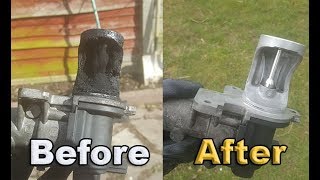
- Faulty or Clogged EGR Valve (Very Common) — Carbon and soot buildup causes the EGR valve's internal plunger to stick open or closed. 🎬 See how to clean your EGR valve to fix sticking issues. This mechanical failure triggers an electrical code because the sensor's reported position does not match the PCM's commanded position.
- Blocked or Cracked EGR Hoses (Common) — Metal tubes and rubber hoses carrying exhaust gases become restricted with carbon or crack from heat. This prevents the expected pressure changes when the EGR valve opens. On Ford DPFE systems, clogged rubber hoses are the primary cause of this code.
- Failed EGR Sensor 'B' (Common) — The electronic sensor fails internally due to extreme heat cycles and age. Altered internal resistance forces the sensor to send incorrect voltage readings to the PCM, even if the EGR valve functions perfectly.
- Damaged Wiring or Connectors (Common) — Wiring harnesses exposed to engine heat and vibration become brittle, fray, or break, causing an open circuit. Corroded connector pins create poor contact and erratic signals, while worn insulation causes shorts to ground or power.
- Exhaust Backpressure Issues (Less Common) — A clogged catalytic converter or restricted diesel particulate filter (DPF) creates excessive exhaust backpressure. This pressure forces the EGR valve open or causes erratic behavior, triggering out-of-range sensor readings.
- Faulty EGR Vacuum Solenoid (Less Common) — On vacuum-operated systems, the electronic solenoid controlling vacuum flow to the EGR valve fails. If the solenoid sticks, the EGR valve ignores PCM commands, causing a mismatch in expected sensor readings.
- Faulty PCM (Rare) — The PCM's internal driver circuit that processes the EGR 'B' sensor signal fails. This sets a P0486 code despite a perfectly functioning sensor, wiring harness, and EGR valve.
Symptoms
- Rough Idle or Stalling — A stuck-open EGR valve leaks exhaust gases into the intake manifold at idle. This disrupts the air-fuel mixture, causing the engine to shake or stall at stops.
- Engine Pinging or Knocking — A stuck-closed EGR valve spikes combustion chamber temperatures under load. This prematurely detonates the fuel-air mixture, creating a metallic pinging sound.
- Reduced Engine Performance and Fuel Economy — The engine operates outside optimal combustion parameters, causing sluggish acceleration and a 5-10% drop in fuel efficiency.
- Black Exhaust Smoke — On diesel engines, improper air-fuel ratios from a malfunctioning EGR system cause the engine to run rich, emitting heavy black smoke during acceleration.
- Check Engine Light is On (also visible on scanner) — The Malfunction Indicator Lamp (MIL) illuminates on the dashboard. This is often the only initial symptom.
- Failed Emissions Test (scan-tool only — no driver-felt sign) — The vehicle automatically fails smog checks due to elevated NOx levels and an incomplete EGR readiness monitor.
Diagnostic Flowchart
Tap your situation to follow the diagnostic path that matches what you're seeing on this code.
Common Fixes & Costs
- Cleaning the EGR Valve and Passages — Parts: $10-$30, Labor: $150-$250, ~2 hr book time (Intermediate)
- Replacing Clogged/Cracked DPFE Hoses (Ford)
— Parts: $20-$40, Labor: $75-$150, ~0.6 hr book time
(DIY)
Ford (General): OEM Motorcraft (Silicone high-temp hose) (Alt: Dorman 904-215) - Replacing the EGR Position/Pressure/Temp Sensor ('B')
— Parts: $50-$150, Labor: $129-$200, ~0.8 hr book time
(DIY)
Ford F-150 (2004-2011): OEM Motorcraft DPFE15 (Alt: Standard Motor Products VP8T, Dorman 911-123) - Replacing the EGR Valve Assembly
— Parts: $150-$450, Labor: $250-$650, ~1.5 hr book time
(Intermediate)
Ford F-150 (5.4L, 2004-2010): OEM Motorcraft EGV1055 (Alt: Standard Motor Products EGV1136, Delphi EG10665)
Chevy Silverado (LML Duramax, 2011-2016): OEM ACDelco 12665547 (Alt: Standard Motor Products EGV1240, Dorman 904-5065)
Ram (6.7L Cummins, 2007-2012): OEM Mopar R8026995AB (Alt: Standard Motor Products EGV1149, Dorman 904-268) - Repairing Damaged Wiring or Connector — Parts: $15-$60, Labor: $150-$350, ~1.8 hr book time (Professional)
Used vs. New Parts: Buying Guide
When a used part is worth it: For older, high-mileage vehicles where a new OEM EGR valve is cost-prohibitive. A used OEM valve is a cost-effective alternative to unbranded aftermarket parts.
Donor-vehicle mileage cap: roughly under 80000 miles for the part to have meaningful remaining life.
Donor quality checklist:
- Verify the part number matches exactly.
- Inspect for heavy carbon buildup, corrosion, or physical damage.
- Prefer sellers offering a 30-90 day warranty.
Decision logic:
- If The part is an electronic sensor only → Buy new. Used sensors have an unknown lifespan and are a high-risk purchase.
- If The part is a complete EGR valve assembly and the vehicle is over 150K miles → A used, cleaned OEM part is an acceptable budget option.
- If The part is for a diesel engine known for heavy sooting (e.g., Duramax, Cummins) → Buy new or professionally reconditioned parts to avoid internal buildup.
Warranty tradeoff: Used parts carry a 30-90 day warranty. New aftermarket parts offer 1-year to limited lifetime warranties. New OEM parts carry a 1-2 year warranty.
Worst-case if a used part fails: $300-$800 if a used part fails, requiring repeat labor and a second replacement part.
What Happens If You Wait — Timeline
- 0-1 month: Check Engine Light illuminates. Vehicle fails an OBD-II emissions test. (MPG impact: 0-3%% · Added cost: $0-$20 in wasted fuel)
- 1-3 months: Intermittent rough idle, hesitation, or engine pinging occurs. Fuel economy loss becomes noticeable. (MPG impact: 3-8%% · Added cost: $50-$150 in wasted fuel and spark plug cleaning.)
- 3-9 months: Sustained high combustion temperatures stress the catalytic converter. Carbon buildup accelerates in the intake manifold, fouling O2 sensors. (MPG impact: 5-15%% · Added cost: $400-$1000 (O2 sensor damage or early catalytic converter degradation).)
- 9+ months: Catastrophic failure of the catalytic converter occurs due to prolonged overheating. On diesels, a completely clogged DPF results from failed regeneration cycles. (MPG impact: 10-25%% · Added cost: $1500-$3500+ (catalytic converter or DPF replacement).)
Cost of Not Fixing It
- 0-1 month: Failed emissions test, noticeable drop in fuel economy (5-10%), and rough idling or stalling. (Added cost: Negligible, other than increased fuel cost.)
- 1-6 months: High combustion temperatures cause engine knocking. Carbon buildup fouls spark plugs and O2 sensors. (Added cost: $200-$600)
- 6+ months: Sustained high combustion temperatures destroy the catalytic converter. A stuck-open valve clogs the diesel particulate filter (DPF). (Added cost: $1200-$2800)
Diagnosis Steps
- Scan for Codes and Review Freeze Frame Data
Confirm P0486 and note related codes (e.g., P0401 for flow, P0408 for high circuit). Analyze freeze frame data to identify the exact engine RPM, load, and temperature when the fault triggered.
Tools: OBD-II Scanner (Beginner) - Thorough Visual Inspection
Inspect the EGR system for burnt or broken wires leading to the 'B' sensor. Check the connector for corrosion or loose pins. Examine all vacuum and pressure hoses for cracks or blockages, paying special attention to Ford DPFE hoses.
Tools: Flashlight, Inspection Mirror (Beginner) - [PRO TIP] Live Data and Commanded Actuation
View the live data PID for the EGR 'B' sensor (typically 0.5-1.2V at idle). Command the EGR valve to open 25%, 50%, and 75% using bidirectional controls. The voltage must rise smoothly to ~4.5V at 100%. A jumpy or dead signal points to a faulty sensor or sticking valve.
Tools: Advanced OBD-II Scanner with Live Data/Bidirectional Control (Advanced) - Test Sensor Circuit at the Connector
Disconnect the EGR 'B' sensor and turn the ignition ON (engine off). Verify the 5-volt reference signal from the PCM and check for a solid ground (less than 0.1 volts). Missing voltage or ground requires tracing the harness back to the PCM.
Tools: Digital Multimeter, Vehicle-specific Wiring Diagram (Advanced) - Check for Carbon Buildup
Remove the EGR valve. Inspect the pintle and intake manifold ports for heavy carbon deposits. A severely clogged valve cannot move freely, making this a primary mechanical root cause.
Tools: Basic Hand Tools (Wrenches, Sockets) (Intermediate) - Test Sensor Signal Voltage
Back-probe the connected sensor's signal wire with the key ON (engine off). Readings below 0.2V indicate a short to ground; readings near 5.0V indicate a short to power or open ground. Out-of-range resting voltages confirm a sensor or wiring fault.
Tools: Digital Multimeter, Back-probe Kit (Advanced) - Check Wiring Harness Continuity
Disconnect the harness from the sensor and PCM. Measure resistance on the signal wire end-to-end (must be < 1 Ohm). Test for a short to ground between the signal pin and the chassis (must read OL/Over Limit). If continuity fails, take the vehicle to a shop for harness repair.
Tools: Digital Multimeter, Vehicle-specific Wiring Diagram (Advanced) - Manually Test the EGR Valve
For vacuum-actuated valves, apply 5-8 inHg of vacuum directly to the diaphragm at idle. The engine must stumble or stall. If idle remains smooth, the valve is stuck or the passages are completely blocked.
Tools: Hand-held Vacuum Pump (Intermediate) - Inspect for Exhaust Restrictions
If all EGR components and wiring test good, a clogged catalytic converter or DPF is causing abnormal backpressure. Take the vehicle to a professional for an exhaust backpressure test.
Tools: Exhaust Backpressure Gauge (Professional)
When This Code Triggers (Freeze-Frame Conditions)
- Engine Coolant Temp: 180-200°F (82-93°C) (The engine must be fully warmed up to closed-loop operation.)
- RPM: 1500-2500 (The EGR monitor runs during steady-state cruising, not at idle or high acceleration.)
- Engine Load: 20-60% (The test is performed under light to moderate engine load, simulating highway driving.)
- Vehicle Speed: 40-60 mph (64-97 km/h) (A steady speed is required for the PCM to accurately measure changes when the EGR valve opens.)
Related Codes
- P0401 — Indicates 'Insufficient EGR Flow'. A clogged passage causes P0401, while a bad sensor wire causes P0486. They frequently appear together.
- P0405 — Indicates 'EGR Sensor 'A' Circuit Low'. This points to a low voltage fault in the primary EGR sensor circuit, whereas P0486 refers to the secondary 'B' circuit.
- P0406 — Indicates 'EGR Sensor 'A' Circuit High'. Similar to P0405, this suggests a high voltage issue in the primary ('A') EGR sensor circuit.
- P0408 — Indicates 'EGR Sensor 'B' Circuit High'. This is the direct counterpart to P0486, specifically indicating the PCM sees a continuously high voltage signal from the 'B' sensor.
Climate & Environmental Factors
- Extreme Temperature Cycles: Repeated heating to high operating temperatures followed by cooling accelerates the aging of rubber hoses and plastic wiring insulation, leading to cracks and electrical failures.
- High Humidity / Road Salt: Moisture and road salt penetrate electrical connectors, promoting corrosion on the EGR sensor pins. This creates high resistance and erratic signals.
- Short Trip Driving: Engines that rarely reach full operating temperature fail to burn off exhaust moisture. This moisture mixes with soot to create a sludge that rapidly clogs EGR valves.
How to Talk to a Mechanic About This Code
Say this: "I have an OBD-II code P0486 for the EGR Sensor 'B' Circuit. I'd like to schedule a diagnostic to pinpoint the cause. Can you please check for carbon buildup, test the sensor's voltage and ground, and inspect any related wiring and hoses before recommending a part replacement?"
This signals that you understand the code is for an electrical circuit but is often caused by a mechanical issue like carbon buildup. It directs the mechanic to perform a thorough diagnosis rather than immediately replacing the expensive EGR valve.
Avoid saying:
- 'My check engine light is on, can you fix it?'
- 'I think I need a new EGR valve.'
- 'Just do whatever it takes to get the light off.'
Questions to ask before authorizing the repair:
- Did you find the failure in the sensor, the wiring, or the valve itself?
- If the valve is sticking, did you check if the EGR passages in the manifold are also clogged?
- Can you show me the damaged part or the carbon buildup?
- What is the warranty on the parts and labor for this repair?
Where to Take It: Dealer vs Independent vs Chain
- Dealer:
Best for: Vehicles under an emissions or powertrain warranty., Complex diesel systems (Duramax, Cummins, Power Stroke) known for systemic soot issues., Vehicles with known TSBs or special warranty extensions for this issue (e.g., VW/Audi TDI, Chevy Volt).
Downsides: Highest labor rates., May recommend replacing an entire assembly (e.g., EGR valve and cooler) when only one component failed. (Typical cost: +50% vs. baseline) - Independent Shop:
Best fit for most common vehicles. An experienced independent shop effectively diagnoses and repairs the root cause, whether it's a simple cleaning, a wiring issue, or a part replacement, saving significant money over the dealer.
Best for: Most out-of-warranty gasoline vehicles., Common, well-documented failures like Ford DPFE sensors and hoses., Cost-conscious owners who have a trusted local mechanic.
Downsides: Diagnostic capabilities for complex, modern EGR systems vary., Quality of service depends on the individual shop's experience. (Typical cost: +0% vs. baseline) - Chain Shop:
Use with caution. Acceptable for a simple, pre-diagnosed sensor swap. AVOID for initial diagnosis, as they default to replacing expensive parts without confirming the root cause.
Best for: Simple, straightforward part replacements where the diagnosis is already certain.
Downsides: Technician experience is inconsistent., Lacks advanced diagnostic tools to differentiate between a sensor, wiring, or mechanical fault., High pressure to upsell services. (Typical cost: -10% vs. baseline)
When to Walk Away From the Repair
If the estimated repair cost exceeds 50% of your car's private-party value, seriously consider selling or trading it in.
- Car worth $4500, fix is $2300: Borderline. This is right at the 50% mark. Get a second opinion before proceeding.
- Car worth $10000, fix is $800: Fix it. The repair cost is well below the threshold and is a reasonable investment to keep the car running properly.
- Car worth $3000, fix is $2100: Walk away. The repair cost is a significant percentage of the car's value, making it a poor financial decision.
What Scan Tool You Need for This Code
Minimum: A scanner that reads and clears codes, and displays live data for the EGR sensor.
A basic $20 code reader only shows the P0486 code. It cannot display the live voltage or position percentage from the EGR sensor, which is essential to see if the sensor responds to commands. Without live data, you are guessing which part to replace.
Budget: BlueDriver Pro (~$100) — Connects to your smartphone to read/clear codes, view freeze frame data, and stream live data for the EGR sensor. This allows a DIYer to determine if the sensor signal is dead, stuck, or erratic.
Mid-range: Foxwell NT510 Elite (~$180) — Offers bidirectional control (active tests) for many vehicle makes. This allows you to command the EGR valve to open and close directly from the tool while watching live sensor data, confirming if the valve is sticking or the sensor is faulty.
Professional: Autel MaxiCOM MK808 / MK906BT (~$500-1200) — Provides full bidirectional control, OEM-level diagnostics, and performs special functions like EGR adaptation or relearn procedures required after replacing a valve on modern vehicles.
Rent vs buy: Auto parts stores read codes for free, but they do not offer live data. If you plan on doing your own repairs more than once a year, buying a scanner like the BlueDriver Pro is a necessary investment.
How to Clear the Code After You Fix It
- Use an OBD-II scan tool to clear the P0486 trouble code.
- Perform the specific EGR drive cycle to run the system's readiness monitor.
- Check readiness status with a scan tool to confirm the EGR monitor shows 'Ready'.
Drive cycle (~20 minutes): Start with a cold engine. Idle for 5 minutes to enter closed-loop operation. Drive at a steady speed between 40-60 mph for 8-10 minutes. Stop and idle for 3 minutes before shutting down.
Readiness monitors affected: EGR System, Catalyst monitor, O2 sensor monitor
Before emissions retest: drive at least 50 miles to fully set monitors.
Watch out for:
- Clearing the code resets readiness monitors to 'Not Ready', causing an immediate emissions test failure.
- The code returns quickly if the underlying mechanical or electrical fault is ignored.
Will This Fail Emissions / State Inspection?
Yes — this code typically fails an OBD-II emissions inspection.
- California: An illuminated Check Engine Light is an automatic failure. A specific drive cycle must be completed to set all readiness monitors before a retest.
- New York: An active Check Engine Light fails the emissions inspection. For 2001 and newer vehicles, only one readiness monitor is allowed to be 'Not Ready'.
- Texas: In testing counties, an illuminated Check Engine Light is an automatic failure. For 2001 and newer vehicles, the test fails if more than one readiness monitor is 'Not Ready'.
Most Commonly Affected Vehicles
- Ford F-Series, Explorer, Ranger (2004-2011) — The DPFE sensor serves as the 'B' sensor. The two rubber hoses connecting it frequently become brittle, crack, or clog with carbon, triggering P0486 alongside P0401.
- Chevrolet / GMC Silverado, Sierra (with Duramax diesel) (2006-2016) — Heavy soot buildup in the EGR valve and cooler causes this code. Fixes require extensive cleaning or a $500-$700 replacement of the valve assembly.
- Dodge / Ram Ram Trucks (with Cummins diesel) (2007-2018) — The 6.7L Cummins builds thick soot in the EGR valve and crossover tube. Dealerships quote $2,000-$2,600 for a complete EGR system service and cooler replacement.
- Volkswagen / Audi Jetta, Golf, A4 (TDI models) (2009-2015) — EGR faults prevent the Diesel Particulate Filter (DPF) from regenerating, causing expensive DPF failures. Many are covered by the 10-year/120,000-mile Extended Emissions Warranty.
- Chevrolet Volt (2016-2019) — Generation 2 Volts suffer from stuck EGR valves. GM issued special service coverage (N192283420) extending the warranty for this specific failure.
- Subaru Forester, Outback, Impreza, Crosstrek (2012-2017) — Electronic failures within the EGR valve assembly trigger this code, requiring complete valve replacement even if the mechanical components appear clean.
- Hyundai / Kia Santa Fe, Tucson, Sorento (2011-2016) — This code points directly to a failure of the EGR valve position sensor. The sensor is integrated into the valve, necessitating the replacement of the entire assembly.
- Honda Accord, Civic, CR-V (2008-2015) — Heavy carbon buildup clogs the EGR distribution passages inside the intake manifold. The fix requires removing the entire intake manifold for cleaning.
Manufacturer-Specific Notes
- Ford: The 'B' sensor is almost always a DPFE sensor. The number one cause of EGR codes on these vehicles is the two small rubber hoses connecting the sensor to the main EGR tube. Always inspect these hoses for clogs or melting first.
- General Motors (Diesel): On Duramax engines, treat P0486 as a symptom of a heavily sooted EGR system. The root cause is often a clogged EGR cooler restricting flow and causing erratic valve operation.
- Dodge / Ram (Diesel): On the 6.7L Cummins, the EGR valve and crossover tubes build up thick layers of soot. Cleaning is a temporary fix; replacement of the valve and cooler is the permanent solution for high-mileage trucks.
- Volkswagen / Audi (TDI): An active P0486 fault inhibits the DPF regeneration process. Ignoring this code leads to a completely clogged DPF. Check if your vehicle is covered by the Extended Emissions Warranty, which covers the entire EGR system.
Real Owner Stories
2010 VW Jetta TDI with P0486 & P045B
The Check Engine Light and a flashing glow plug light illuminated. The owner was concerned about repair costs.
What they tried:
- The owner took the vehicle to a repair shop for diagnosis.
Outcome: The shop diagnosed a faulty EGR valve. Installing a replacement EGR valve resolved both codes and restored normal operation.
Lesson: On modern TDI engines, EGR codes prevent the DPF from performing its soot regeneration cycle. Fixing the EGR valve is critical to prevent a much more expensive DPF failure.
Ford truck with P0486 and related flow codes
Check Engine Light illuminated with codes indicating an EGR circuit fault and insufficient flow.
What they tried:
- The owner initially considered replacing the expensive EGR valve or the DPFE sensor.
Outcome: Inspection revealed the two small rubber hoses connected to the DPFE sensor were clogged with carbon and melting. Clearing the blockage resolved the issue without replacing major components.
Lesson: On Ford vehicles, always inspect the small DPFE sensor hoses first. These hoses are a frequent, inexpensive failure point that mimics a bad sensor.
Nissan with P0486 and heavy carbon buildup
Vehicle diagnosed with a P0486 code. The owner wanted a DIY solution.
What they tried:
- Removed the EGR valve and found it heavily caked with carbon.
- Soaked the valve in chemical cleaner to dissolve deposits.
- Removed and cleaned the intake manifold.
Outcome: Thorough cleaning and reinstallation cleared the code permanently, saving the cost of a new EGR valve assembly.
Lesson: If the code is caused by a sticking valve, a deep cleaning is a highly effective, low-cost repair. This mechanical fix only works if the sensor electronics are intact.
How to Prevent This Code From Triggering
- Use high-quality fuel with detergent additives (Every fill-up) — Top-tier fuels contain detergents that keep the fuel system clean. This promotes complete combustion, reducing the soot available to clog the EGR system.
- Perform periodic highway driving (At least 20-30 minutes weekly) — Sustained highway driving increases exhaust gas temperatures, burning off soft carbon deposits that accumulate during short-trip driving.
- Use the correct specification engine oil (Every oil change) — Low-ash (Low SAPS) oil produces fewer metallic ash deposits when burned, preventing rapid EGR and DPF clogging in diesel engines.
- Avoid long periods of idling (Daily habit) — Extended idling creates cooler combustion temperatures and incomplete fuel burn. This generates excessive soot that clogs the EGR valve and cooler.
- Schedule professional intake/EGR cleaning (Every 50,000-60,000 miles) — Professional services using specialized chemicals or walnut blasting remove hardened carbon buildup, restoring flow and preventing sticking issues.
Frequently Asked Questions
What are the most common mistakes when diagnosing P0486?
The biggest mistake is replacing the EGR valve or sensor without testing the circuit. Technicians often find the true cause is a clogged port, cracked vacuum line, or melted DPFE hoses. Always test the 5V reference and ground before buying parts.
Can I just clean the EGR valve to fix P0486?
Yes, if the code was triggered by carbon buildup causing the valve to stick. However, cleaning will not fix an internal sensor failure, damaged wiring, or clogged intake manifold passages.
What is the difference between EGR Sensor 'A' and 'B'?
Sensor 'A' is the primary sensor measuring the EGR valve's pintle position. Sensor 'B' is a secondary feedback sensor (like a temperature or pressure sensor) that verifies actual exhaust flow. The PCM compares both signals to ensure the system operates correctly.
How much does it cost to diagnose the P0486 code?
Repair shops charge a standard diagnostic fee covering one hour of labor, typically ranging from $120 to $180. This fee covers reading live data, visual inspections, and initial circuit tests to pinpoint the exact failure.
Will an EGR delete kit fix this code?
No, removing the physical components triggers permanent fault codes unless the PCM is reprogrammed with a custom tune. Deleting emissions equipment is illegal for on-road vehicles and guarantees an automatic emissions test failure.
Can a bad MAP sensor cause P0486?
It is highly unlikely. While the PCM uses MAP sensor data to verify EGR flow, a failing MAP sensor triggers its own specific fault codes (like P0106) rather than an EGR circuit code.
Can a vacuum leak cause a P0486 code?
Yes, on vehicles with vacuum-actuated EGR valves. A cracked vacuum line prevents the valve from opening, causing the 'B' sensor to report no change in flow and triggering the circuit code.
Key Takeaways
- P0486 is an electrical circuit code, but in over 70% of cases, the root cause is a mechanical blockage like a carbon-clogged EGR valve or melted DPFE hoses.
- Do not replace the $200 EGR valve without first using a multimeter to verify the 5-volt reference and ground circuits at the sensor connector.
- On Ford vehicles built between 2004 and 2011, inspect the two small rubber hoses connecting the DPFE sensor to the exhaust tube before performing any other diagnostics.
- Driving with an active P0486 code for more than 6 months causes excessive combustion temperatures that can permanently destroy a $1,500 catalytic converter.
Helpful Videos
![How to Fix P0486 Engine Code in 3 Minutes [2 DIY Methods / Only $4.41]](https://img.youtube.com/vi/WU4v23IyBlM/mqdefault.jpg)
Shop the Parts Behind P0486
Below are the parts most often responsible for code P0486, ranked by how frequently each one is the actual culprit (per the diagnosis above). Tap any to see what we have for your vehicle.



The information in this article is provided for general reference and educational purposes only. Vehicle specifications, procedures, and part compatibility can vary by production date, trim level, and region. Always consult your vehicle's factory service manual and verify part numbers before purchasing or performing repairs. Safety-critical components such as airbags, seat belts, and braking systems should be installed by a qualified professional.
- 🧭 Diagnostic Flowchart
- 🎬 Helpful Videos
- 🛍️ Shop This Part
- What Does P0486 Mean?
- Can I Drive With P0486?
- Common Causes
- Symptoms
- Common Fixes & Costs
- Used vs. New Parts: Buying Guide
- What Happens If You Wait — Timeline
- Cost of Not Fixing It
- Diagnosis Steps
- When This Code Triggers (Freeze-Frame Conditions)
- Related Codes
- Climate & Environmental Factors
- How to Talk to a Mechanic About This Code
- Where to Take It: Dealer vs Independent vs Chain
- When to Walk Away From the Repair
- What Scan Tool You Need for This Code
- How to Clear the Code After You Fix It
- Will This Fail Emissions / State Inspection?
- Most Commonly Affected Vehicles
- Manufacturer-Specific Notes
- Real Owner Stories
- 2010 VW Jetta TDI with P0486 & P045B
- Ford truck with P0486 and related flow codes
- Nissan with P0486 and heavy carbon buildup
- How to Prevent This Code From Triggering
- Frequently Asked Questions
- What are the most common mistakes when diagnosing P0486?
- Can I just clean the EGR valve to fix P0486?
- What is the difference between EGR Sensor 'A' and 'B'?
- How much does it cost to diagnose the P0486 code?
- Will an EGR delete kit fix this code?
- Can a bad MAP sensor cause P0486?
- Can a vacuum leak cause a P0486 code?
- Key Takeaways
- 🎟️ Get 5% Off