

P0496 on 2013-2019 Buick Encore: Causes and Fixes for EVAP Flow Fault
On a 2013-2019 Buick Encore, code P0496 is almost always caused by a faulty vapor canister purge valve that is stuck open. This is a very common issue, and replacing the valve is a simple, low-cost DIY repair that typically takes less than 15 minutes. Before purchasing the part, owners should check with a GM dealer for eligibility under special coverage programs that may provide a free replacement.
- P0496 on a Buick Encore is almost certainly a failed vapor canister purge valve, a very common and inexpensive DIY fix.
- Key symptoms include a Check Engine Light and difficulty starting the car immediately after refueling.
- The correct diagnostic procedure is to check for vacuum at the valve's port while the engine is idling; any suction means the valve is bad.
- Before buying the part, call a GM dealer with your VIN to check for free replacement under Special Coverage programs N192210240 or N232395300.
- The issue is shared across other GM vehicles with the 1.4L Turbo engine, including the Chevrolet Cruze, Sonic, and Trax.
What's Unique About the 2013-2019 Buick ENCORE

This code is exceptionally common on the 1.4L turbo engine used in the Buick Encore and its platform-mates like the Chevy Cruze, Sonic, and Trax. The failure of the canister purge valve is so frequent that GM has issued several special coverage programs extending the warranty on this part for many model years. While the fix is usually simple, official GM Technical Service Bulletins (TSBs) note that the code can sometimes persist even after diagnostics, occasionally pointing to issues with a customer's driving cycle or other complex factors requiring dealer-level support. [PIP5284A, PIP5284]
Diagnostic Flowchart

Tap your situation to follow the diagnostic path that matches what you're seeing on this vehicle.
Generation note: The 2013-2019 year range covers the first generation of the Buick Encore. This generation received a significant facelift in 2017 with updated styling and a revised interior. However, the primary 1.4L turbo engines (LUV and LE2) and the EVAP system components related to code P0496 remained largely the same, making this guide applicable to all years in this range. The issue is also prevalent on the second generation Encore up to 2022.
Symptoms You May Notice

- Check Engine Light is on.
- Difficulty starting the engine, especially right after getting gasoline.
- Rough, surging, or unstable idle, which may sometimes result in stalling.
- Slightly reduced fuel economy.
- A clicking, rattling, or buzzing noise from the purge valve on top of the engine.
- Hesitation when accelerating from a stop.
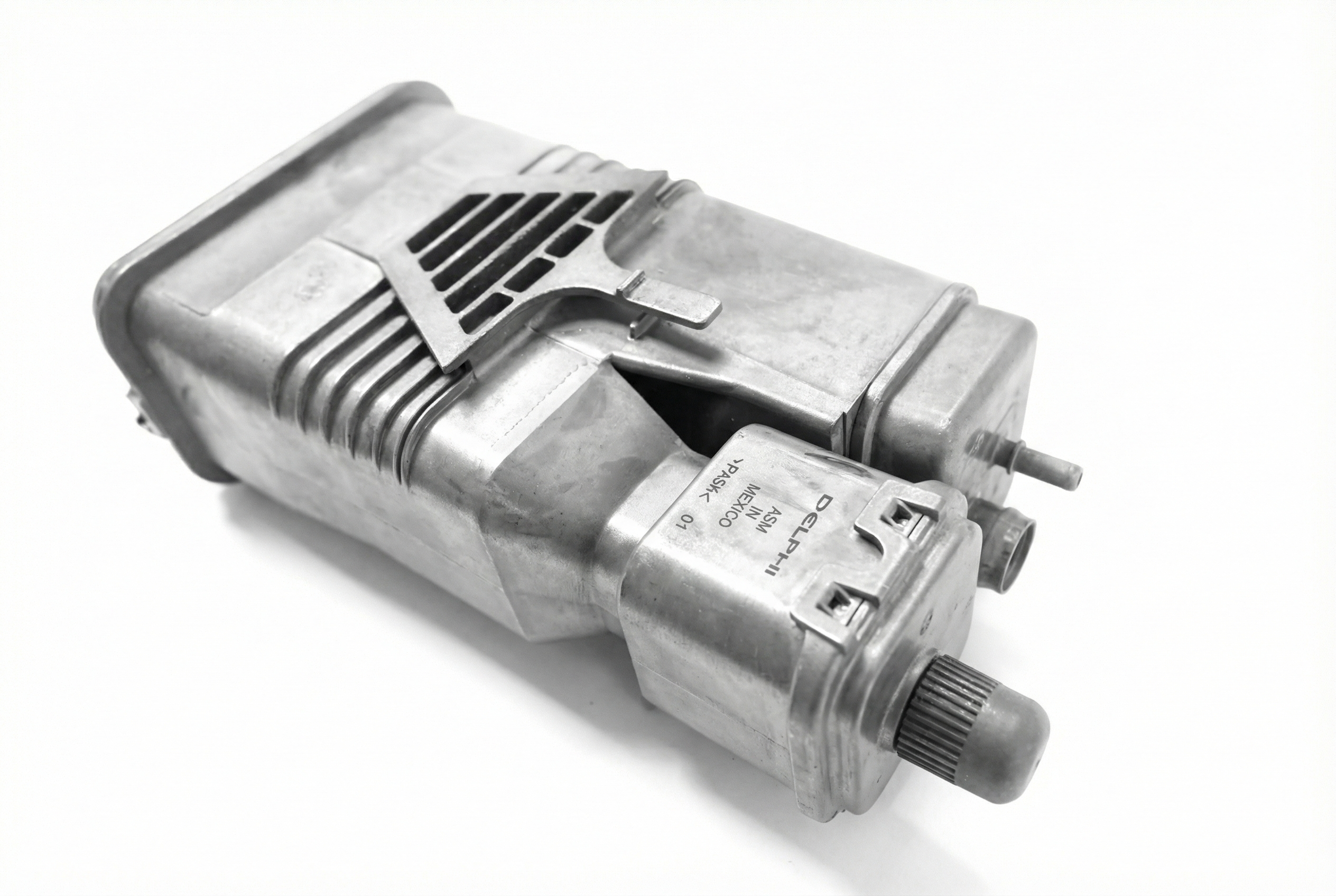
- Replacing the charcoal canister. The canister can become saturated with fuel as a *result* of a stuck-open purge valve, but it is not the root cause of P0496. Replacing the canister without fixing the purge valve will not solve the problem.
- Replacing the EVAP vent solenoid. The vent solenoid is located near the fuel tank and is responsible for sealing the system for pressure tests. P0496 specifically points to a flow issue when purging is off, which is controlled by the purge valve on the engine.
Most Likely Causes

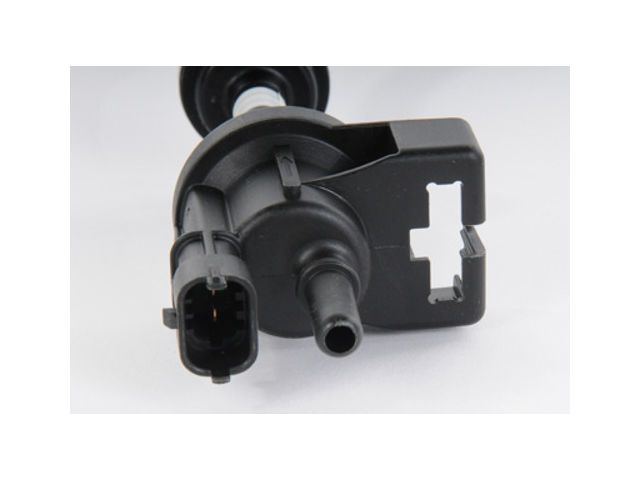
- Faulty Vapor Canister Purge Valve (Solenoid) 🔴 High Probability → Shop Vapor Canister This is a very common failure item on the 1.4L turbo engine. The valve's internal rubber diaphragm can tear or deteriorate, causing it to stick in the open position and create a constant vacuum leak. This failure is so common that multiple GM Special Coverage programs have been issued.
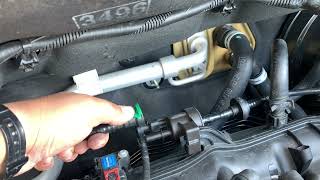
How to confirm: With the engine running, disconnect the EVAP hose from the purge valve. There should be no vacuum present. If you can feel suction with your finger or a vacuum gauge shows vacuum, the valve is stuck open and faulty. 🎬 Watch: How to properly diagnose and test the solenoid. You can also remove the valve and try to blow through it; if any air passes, it is bad. A brand new part should not allow air to pass.
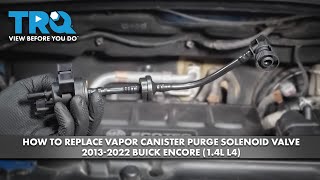
Typical fix: Replace the vapor canister purge valve. It is located on top of the engine, is easily accessible, and is held in place by a bracket and two hose connections, requiring no special tools for replacement. 🎬 See this step-by-step walkthrough for replacing the purge valve.
Est. part cost: $20-$50 - Loose or Faulty Gas Cap ⚪ Low Probability → Shop Fuel Tank Cap
How to confirm: Ensure the gas cap is tightened until it clicks. Inspect the cap's seal for any cracks or damage. A loose cap typically sets other codes like P0455 (Gross Leak) or P0457, but it's a simple first check. P0496 is specifically for flow when none is commanded, which points more directly to the purge valve than the cap.
Typical fix: Tighten or replace the gas cap if the seal is compromised.
Est. part cost: $15-$30
Rare But Worth Checking
- Damaged EVAP Hoses: A crack, leak, or torn O-ring in one of the EVAP system hoses could potentially cause a vacuum issue, though it's much less common than the purge valve failure.
- Faulty Fuel Tank Pressure (FTP) Sensor: → Shop Fuel Tank If the sensor that monitors EVAP system pressure provides incorrect readings to the ECU (e.g., it's skewed towards vacuum), it could falsely trigger a P0496 code. This can be diagnosed by observing live data with a scan tool. On some GM models, this sensor is on top of the fuel tank, requiring the tank to be lowered for replacement.
- Wiring Harness Issue: A short or break in the wiring to the purge valve solenoid could cause it to operate incorrectly, though this is rare.
- Defective Replacement Part: Some owners have reported that a brand new, out-of-the-box purge valve was also faulty. It is recommended to test the new part by attempting to blow through it before installation 🎬 See how to quickly fix P0496 on a 1.4T engine. to ensure it is properly sealed.
Diagnosis Steps
- Read the trouble codes with an OBD-II scanner to confirm P0496 is present. Note any other codes like P0171 or P1101.
- Check the gas cap to ensure it is tight and the seal is intact.
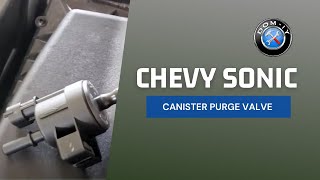
- Locate the vapor canister purge valve on the top of the engine. It's a small black cylinder with two hoses and an electrical connector.
- Start the engine and allow it to idle.
- Disconnect the vapor line that runs from the purge valve towards the intake manifold. Place your finger over the port on the valve itself.
- If you feel suction, the valve is stuck open and must be replaced. The valve should be normally closed at idle with no flow.
- As an alternative test, remove the valve completely. Try to blow air through it. If any air passes, the internal diaphragm has failed and the part is bad.
- If no suction is felt and the valve tests good, the problem may be more complex, such as an intermittent electrical issue, a faulty fuel tank pressure sensor, or a cracked EVAP line, which may require more advanced diagnostics like a smoke test or live data analysis with a professional scan tool.
- Before purchasing a new part, call a GM dealership with your VIN to check for eligibility under Special Coverage programs N192210240 or N232395300.
- After replacing the faulty part, clear the codes with the scanner. The light should stay off. In some cases, the light will turn off on its own after several drive cycles.
Parts You'll Likely Need
- Vapor Canister Purge Valve
(OEM #55573017)— This is the overwhelming cause of code P0496 on the 1.4L engine. It fails by sticking open, causing a constant, un-commanded flow of fuel vapor into the intake.
Trusted brands: ACDelco (GM OE), Bosch, Standard Motor Products (CP781), Dorman
OEM price range: $32-$55
Aftermarket price range: $20-$45
Related Codes That Often Appear With This One
- P0171 — A stuck-open purge valve creates a vacuum leak, allowing unmetered air (and fuel vapor) into the intake manifold. This can lean out the air/fuel mixture enough to trigger a System Too Lean (Bank 1) code.
- P1101 — This GM-specific code relates to the Mass Airflow (MAF) sensor performance. A significant vacuum leak from a faulty purge valve can cause airflow readings that are out of the expected range, triggering P1101 alongside P0496.
- P0442 — This code for a small EVAP leak can sometimes accompany P0496, as the underlying purge valve issue can be interpreted by the ECU as a leak under certain test conditions. GM's special coverage bulletins often list P0442 as a related code.
Technical Service Bulletins (TSBs) & Recalls
- PIP5284A: Addresses recurring P0496 codes after diagnostics, suggesting drive cycles as a potential factor. [PIP5284A]
- PIP5284: Instructs technicians to contact GM Technical Assistance if P0496 persists after completing strategy-based diagnostics. [PIP5284]
- N192210240: Special Coverage program for the purge valve on various 2016-2018 GM vehicles, including the Buick Encore. Extends coverage to 10 years/120,000 miles.
- N232395300: Special Coverage program for the purge valve on various 2019-2020 GM vehicles, including the 2020 Buick Encore. Extends coverage to 15 years/150,000 miles.
Platform-Specific Known Issues
- GM Technical Service Bulletin #PIP5284A notes that if P0496 continues to set after standard diagnostics, the customer's driving cycle may be a contributing factor. [PIP5284A]
- GM Special Coverage N192210240: For certain 2016-2018 models (including Encore), this extends the warranty on the purge valve to 10 years or 120,000 miles. It covers P0496 and related codes.
- GM Special Coverage N232395300: For certain 2020 models (including Encore with 1.4L LUV engine), this extends the warranty on the purge valve to 15 years or 150,000 miles. Owners should check with a GM dealer with their VIN to see if their vehicle is covered for a free repair.
Mechanic-Grade Diagnostic Values
- Fuel Tank Pressure (FTP) Sensor Voltage — expected: Approximately 1.5V (acceptable range 1.3V - 1.7V) with the gas cap off (at atmospheric pressure).. Failure: A reading stuck high near 5V or low near 0.3V can indicate a faulty sensor or wiring issue, potentially triggering a false P0496.
- EVAP Purge/Vent Solenoid Coil Resistance — expected: Typically 15 to 30 Ohms for a purge valve; a specific source cites 20-50 Ohms for the EVAP canister vent valve solenoid on this platform.. Failure: A reading of 0 Ohms (short circuit) or infinite/OL (open circuit) indicates the solenoid's internal coil has failed and the part must be replaced.
- Long-Term Fuel Trim (LTFT) Live Data — expected: As close to 0% as possible. A range of +/- 6% is generally acceptable.. Failure: If P0496 is accompanied by a P0171 (System Too Lean) code, the LTFT will be high (e.g., +9% or more) at idle. After replacing a faulty purge valve, this value should immediately begin to decrease toward 0%, confirming the fix.
Scan Tool Commands That Help
- GDS2 / Professional Scan Tool: EVAP Output Control / Actuation Test — This function allows a technician to command the EVAP purge valve on and off manually while monitoring the Fuel Tank Pressure (FTP) sensor. To confirm a P0496 fault, command the purge valve closed (0% duty cycle) at idle; the FTP sensor should show no vacuum being pulled. Then, command the valve to purge; you should see the system begin to draw a vacuum, confirming the valve and circuit can operate when commanded.
Wiring & Ground Locations
- X50A Fuse Block - Underhood — The main fuse box in the engine compartment.. A 2014 wiring diagram shows fuse F3UA (5A) is assigned to the 'CANISTER VENT SOLENOID' for the LUV/LUJ engine, which is part of the EVAP system. While P0496 points to the purge valve, checking related system fuses is a basic electrical diagnostic step.
- G101 / G106 — G101 is on the lower front of the engine block. G106 is on the front center of the frame cross rail.. G101 is a primary ground for the Engine Control Module (ECM). A poor ground connection here can cause a wide range of erratic engine control behavior and fault codes.
- G103 — Located on the cowl in the left rear of the engine compartment, above the brake booster.. This is a major ground point for the Body Control Module (BCM) and the Data Link Connector (DLC). While not a direct cause, ensuring this ground is clean and tight is critical for overall system communication and diagnostics.
- Purge Valve Connector — On the purge valve solenoid itself, on top of the engine.. This is a two-wire connector. One pin receives 12V power (ignition on), and the other is the control wire that the ECM pulses to ground to open the valve. Checking for power and the control signal here is a key diagnostic step if the valve itself tests good.
Real Owner Repair Stories
- YouTube channel 'P0496 Fix EASY & CHEAP' (2017 Buick Encore 1.4T (LUV) with 83,000 miles) — Check Engine Light with code P0496.
✅ What actually fixed it The owner replaced the vapor canister purge solenoid valve with a part purchased from eBay for under $20. The Check Engine Light remained off after the repair. - YouTube channel 'Fix It All' (2016 Buick Encore) — Codes P0496 and P0171 (System Too Lean).
✅ What actually fixed it Replacing the purge valve solenoid fixed both codes. The video shows on a scan tool that the long-term fuel trim was at +9% before the fix and immediately started dropping towards 0% after the new part was installed, confirming the vacuum leak was sealed. - Chevrolet Forum user (Chevrolet Trailblazer (different vehicle, but identical code and component principle)) — Recurring P0496 code.
❌ Tried (didn't work) Replaced the purge solenoid valve, but the code returned after two months.
✅ What actually fixed it The owner suspected that debris from an aging charcoal canister was fouling the new purge valves, causing them to leak. On the second replacement, they installed a small, generic in-line fuel filter on the hose between the charcoal canister and the new purge valve. This prevented the debris from reaching the valve and permanently solved the recurring code.
When the Usual Fixes Don't Work
- While the vast majority of P0496 codes on the Buick Encore are fixed by replacing the purge valve, in rare cases the code may return. One well-documented case on a similar GM vehicle found that the root cause was the charcoal canister breaking down internally and sending carbon debris into the new purge valve, causing it to fail prematurely. The ultimate fix was to install a simple in-line fuel filter before the purge valve to protect it from contamination, a step not found in standard service procedures.
OEM Part Supersession History
55573017 (GM)→55573017 (current)— This part number has remained stable for the specified model years.
Heads up: ACDelco markets the same part under their number 214-2317. Be cautious, as parts catalogs may show other purge valves for the 'Encore' name (e.g., 12703879, 25207556), but these are often for the newer, unrelated Encore GX model with a different engine. Always verify the part number against the vehicle's VIN.
Model Year Variations Within This Range
- 2011 only (platform mates): On the first model year of the platform mate Chevy Cruze (2011), a different purge valve part number was used: GM 55577313 or ACDelco 214-2320. The 2012-2019 Encore and its direct platform mates use part number 55573017.
Helpful Videos

Used OEM Parts in Stock

New Aftermarket Parts Available


The information in this article is provided for general reference and educational purposes only. Vehicle specifications, procedures, and part compatibility can vary by production date, trim level, and region. Always consult your vehicle's factory service manual and verify part numbers before purchasing or performing repairs. Safety-critical components such as airbags, seat belts, and braking systems should be installed by a qualified professional.
- Buick ENCORE:
- 🧭 Diagnostic Flowchart
- 🎬 Helpful Videos
- 🛍️ Shop This Part
- What's Unique About the 2013-2019 Buick ENCORE
- Symptoms You May Notice
- Most Likely Causes
- Rare But Worth Checking
- Diagnosis Steps
- Parts You'll Likely Need
- Related Codes That Often Appear With This One
- Technical Service Bulletins (TSBs) & Recalls
- Platform-Specific Known Issues
- Mechanic-Grade Diagnostic Values
- Scan Tool Commands That Help
- Wiring & Ground Locations
- Real Owner Repair Stories
- When the Usual Fixes Don't Work
- OEM Part Supersession History
- Model Year Variations Within This Range
- 🎟️ Get 5% Off