

P0496 on 2013-2022 Buick Encore 1.4T: Causes and Fixes for EVAP High Purge Flow
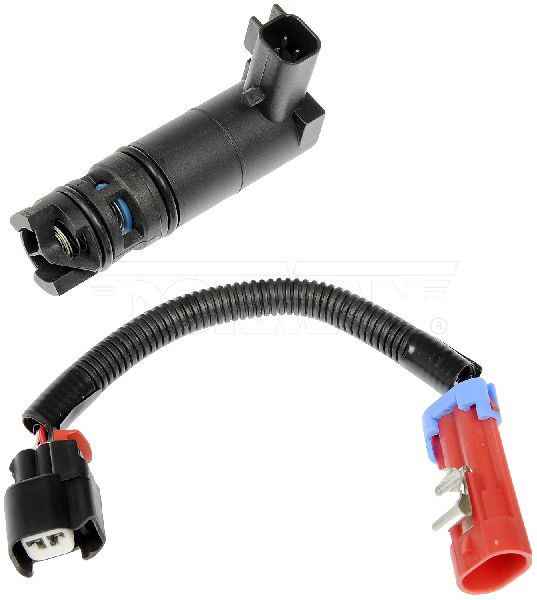
On a 2013-2022 Buick Encore with the 1.4T engine, code P0496 is almost always caused by a failed vapor canister purge valve that is stuck open. It's a very common, inexpensive, and easy DIY fix, with the part costing between $20 and $55. Before buying, check with a GM dealer for warranty coverage under special programs.
- P0496 on your Encore almost certainly means you need a new vapor canister purge valve.
- Key symptoms are a Check Engine Light and difficulty starting the car right after you get gas.
- This is a very simple and inexpensive DIY repair that takes less than 15 minutes with no special tools.
- Before buying the part, call a GM dealer with your VIN to see if your vehicle is covered by Special Coverage N192210240 or N232395300 for a free repair.
- The most common replacement part number is 55573017 (ACDelco 214-2283).
What's Unique About the 2013-2022 Buick Encore
This P0496 code is an extremely common issue on the GM 1.4L Turbo (LUV) engine, which is shared with the Chevrolet Cruze, Sonic, and Trax. The failure rate of the vapor canister purge valve is high, often due to an internal rubber diaphragm tearing, which allows vacuum to pass through when it should be sealed. The issue is so prevalent that GM has issued multiple Special Coverage programs for certain model years, extending the warranty on this specific part.
Symptoms You May Notice
- Check Engine Light is on
- Difficulty starting the engine, or long crank times, immediately after refueling.
- Rough, unstable, or low idle.
- Reduced fuel economy.
- Engine may hesitate or stall at idle speeds.
- A 'whooshing' sound when removing the gas cap due to vacuum in the tank.
- Replacing the gas cap. While a bad gas cap can cause other EVAP codes (like P0455 for a large leak), it does not cause P0496, which is specifically about flow when none is commanded.
- Replacing the charcoal canister. The canister can become saturated with fuel as a result of a stuck-open purge valve, but it is not the root cause of P0496.
- Replacing the EVAP vent solenoid. The vent solenoid is located near the fuel tank and is responsible for sealing the system for pressure tests. P0496 points to a flow issue at the engine side, controlled by the purge valve.
Most Likely Causes
- Failed Vapor Canister Purge Valve (Solenoid) 🔴 High Probability → Shop Vapor Canister The purge valve on this engine is known to fail frequently. The internal rubber diaphragm can tear, causing the valve to stick open and create a constant vacuum leak from the EVAP system. A YouTube video by 'NoNonsenseKnowHow' shows a cut-open valve with the exact torn diaphragm that causes this failure.
How to confirm: With the engine off, disconnect the purge valve. Try to blow through the port that goes to the charcoal canister (it may be marked with an arrow indicating flow). If any air passes through, the valve is stuck open and has failed. Alternatively, with the engine running at idle, disconnect the hose leading from the valve to the canister and place your finger over the port on the valve; any suction indicates a failed, internally leaking valve.
Typical fix: Replace the vapor canister purge valve. It is located on top of the intake manifold and is easily accessible, held by one 10mm bolt and 🎬 Watch this quick walkthrough of the purge valve replacement process. two quick-connect fittings.
Est. part cost: $20-$55
Rare But Worth Checking
- Damaged EVAP Hoses or O-rings: A cracked hose or a torn O-ring at a connection point can create a vacuum leak. Before replacing the valve, quickly inspect the short hoses connected to it for brittleness or obvious damage.
- Faulty Fuel Tank Pressure (FTP) Sensor: → Shop Fuel Tank In rare cases, the sensor that measures pressure in the EVAP system can fail or provide incorrect readings, causing the computer to falsely trigger a P0496 code. This usually requires a scan tool with live data capabilities to diagnose by observing the sensor readings.
Diagnosis Steps
- Verify the code with an OBD-II scanner. Confirm P0496 is present, and check for related codes like P0171 or P1101.
- Perform a simple test on the purge valve. With the engine off, disconnect the EVAP line from the valve. Try to blow through the valve; if air passes, it is stuck open and must be replaced.
- Alternatively, start the engine and let it idle. Disconnect the EVAP line from the valve and place your finger over the port on the valve. If you feel any suction, the valve is leaking internally and has failed.
- Inspect the hoses connected to the purge valve for any cracks, brittleness, or loose connections.
- Before purchasing parts, call a GM dealer with your VIN to check for eligibility under Special Coverage programs N192210240 or N232395300, which may provide a free replacement.
- After replacing the part, you can cut the old valve open to see the torn internal diaphragm for a definitive, post-mortem confirmation of the failure.
Parts You'll Likely Need
- Vapor Canister Purge Valve / Solenoid
(OEM #55573017)— This is the overwhelming cause of code P0496 on the 1.4L engine. It fails by sticking open, causing a constant, un-commanded flow of fuel vapor into the intake manifold.
Trusted brands: ACDelco (GM Genuine), Bosch, Dorman, Standard Motor Products
OEM price range: $32-$55
Aftermarket price range: $20-$45
Related Codes That Often Appear With This One
- P0171 — A stuck-open purge valve creates a vacuum leak, allowing unmetered air and fuel vapor into the engine. This can make the air-fuel mixture too lean, triggering a 'System Too Lean (Bank 1)' code. The official service procedure for 🎬 Watch: Diagnosing P0171 and P0496 codes on the 1.4L Turbo. Special Coverage N232395300 lists P0171 as a possible related code.
- P1101 — This GM-specific code relates to unexpected airflow readings from the Mass Airflow (MAF) sensor. A significant vacuum leak from a bad purge valve can cause airflow to be out of the expected range, triggering P1101. A Reddit thread on /r/AskAMechanic confirms owners often see P1101 and P0496 together.
- P0442 — This code for a small EVAP leak can sometimes appear with P0496. The constant vacuum from the stuck purge valve can be interpreted by the ECU as a small leak under certain test conditions. GM's Special Coverage documentation acknowledges this code may appear alongside P0496.
Technical Service Bulletins (TSBs) & Recalls
- N192210240: Special Coverage for the purge valve on 2016-2017 Buick Encore and platform mates. Covers replacement for 10 years/120,000 miles due to a condition where the valve may not fully close, causing rough idle, hesitation, or stalling.
- N232395300: Special Coverage for the purge valve on 2020 Buick Encore and platform mates. Extends coverage to 15 years/150,000 miles for the same condition.
- PIP5284A: An older technical service bulletin that addresses recurring P0496 codes, suggesting technicians check diagnostics and drive cycles. This is less relevant now due to the well-known part failure and Special Coverage programs.
- Bulletin #PIP5284: This bulletin provides information to technicians regarding vehicles that continue to set P0496 even after Strategy Based Diagnostics have been completed, instructing them to contact the General Motors Technical Assistance Center.
Platform-Specific Known Issues
- Special Coverage N192210240: GM issued this for some 2016-2017 Buick Encore, Chevy Cruze, Sonic, and Trax models, extending the warranty for the purge valve to 10 years or 120,000 miles, whichever comes first.
- Special Coverage N232395300: GM issued this for certain 2020 Buick Encore, Chevy Sonic, and Trax models, extending the warranty for the purge valve to 15 years or 150,000 miles, whichever comes first.
- Owner Experience with Special Coverage: A user on Reddit's /r/MechanicAdvice forum shared their experience receiving the letter for N232395300 and being told by the dealer that a diagnostic fee would apply if the valve was not the confirmed cause, which is standard procedure but good for owners to be aware of.
- Persistent Codes and Drive Cycles: Manufacturer Bulletin #PIP5284A notes that if P0496 continues to set after standard diagnostics, the customer's drive cycle may be contributing to the concern.
Mechanic-Grade Diagnostic Values
- Vapor Canister Purge Valve Solenoid Resistance — expected: 15 to 30 Ohms. Failure: A reading of 0 Ohms (short circuit) or infinite/OL (open circuit) indicates the internal coil has failed.
- Long-Term Fuel Trim (LTFT) on Scan Tool — expected: Close to 0% (+/- 6%). Failure: A sustained positive value, especially above +10%, indicates the ECU is compensating for a vacuum leak, which a stuck-open purge valve creates.
- Fuel Tank Pressure (FTP) Sensor at Idle (Purge Valve Commanded Off) — expected: Near 0 inches of water (inH2O) or stable atmospheric pressure.. Failure: A negative reading (vacuum) indicates vapor is being drawn from the tank when it shouldn't be, pointing to a leaking purge valve.
Scan Tool Commands That Help
- GDS2 / Professional Scan Tool: EVAP Output Control / Actuation Test — This bidirectional control is the 🎬 See how to use a scan tool for advanced EVAP diagnosis. definitive software test for P0496. A technician can command the purge valve to 0% (closed) at idle. If the Fuel Tank Pressure (FTP) sensor shows a vacuum developing, it confirms the valve is mechanically stuck open despite being electrically commanded closed. The technician can then command it open to verify the control circuit and valve can function when requested.
- GDS2 / Professional Scan Tool: EVAP Purge/Seal — This function seals the EVAP system and allows a technician to monitor for pressure changes. While primarily for leak codes like P0442, it can help verify the integrity of the entire system after a P0496 repair.
Wiring & Ground Locations
- Q12 Evaporative Emission Purge Solenoid Valve — On top of the intake manifold, easily visible when the engine cover is removed.. This is the component that fails. It has a two-wire connector; one wire is ignition voltage (12V when key is on) and the other is the control wire pulsed to ground by the ECM to open the valve.
- G101 / G106 — G101 is on the lower front of the engine block. G106 is on the front center of the frame cross rail.. G101 is a primary ground for the Engine Control Module (ECM). A poor connection here can cause a wide range of erratic engine behavior and fault codes, though it is not a common cause for an isolated P0496.
- G103 — Located on the cowl in the left rear of the engine compartment, above the brake booster.. This is a major ground point for the Body Control Module (BCM) and Data Link Connector (DLC). A clean connection is critical for stable system communication and accurate diagnostics.
- X50A Fuse Block - Underhood / Fuse F3UA — Under the hood. A 2014 wiring diagram shows fuse F3UA (5A) is assigned to the 'CANISTER VENT SOLENOID' for the LUV engine.. While P0496 points to the purge valve (not the vent solenoid), checking related system fuses is a fundamental step in any electrical diagnosis.
Real Owner Repair Stories
- YouTube channel 'P0496 Fix EASY & CHEAP' (2017 Buick Encore 1.4T (LUV) with 83,000 miles) — Check Engine Light with code P0496.
✅ What actually fixed it The owner replaced the vapor canister purge solenoid valve with an aftermarket part purchased from eBay for under $20. The Check Engine Light remained off for two weeks following the repair, confirming the fix. - YouTube channel 'The Car Doctor' (2017 Chevrolet Trax Premier 1.4L AWD (platform mate)) — Check engine light on, hard start after refueling, codes P0171, P0300, P0496, and P1101.
❌ Tried (didn't work) The combination of codes could have led to misdiagnosis of a PCV valve cover failure or other vacuum leaks.
✅ What actually fixed it The combination of P0496 and hard starting after fueling pointed directly to a stuck-open EVAP purge solenoid. Replacing the purge valve resolved all codes. - YouTube channel 'Encore purge valve P0496' (Buick Encore, unspecified year) — Check Engine Light with code P0496, hard starting issues after filling the gas tank, and a loud ticking/rattling noise from the purge valve itself.
✅ What actually fixed it Replaced the purge valve with an aftermarket part from Amazon. After clearing the code with a scanner, the light stayed off.
OEM Part Supersession History
55573017→55573017— This part number appears to be stable and has not been superseded. It is the consistent OEM number for the 1.4L LUV engine across its entire production run in the Encore, Cruze, Sonic, and Trax.N/A→N/A— Cross-reference part numbers include Bosch 0280142505 and Dorman 911-409.
Model Year Variations Within This Range
- 2017: The first-generation Encore received a significant facelift for the 2017 model year, including updated styling and interior. However, the 1.4L LUV engine and the associated EVAP system components, including the failure-prone purge valve, remained the same.
- 2022: For its final model year, the 2022 Encore received a new, more powerful 1.4L turbo engine (RPO code LE2), producing 155 hp compared to the LUV's 138 hp. Despite the engine update, the fundamental design and associated EVAP components are similar, and the P0496 purge valve failure remains a common issue.
Diagnostic Flowchart
Used vs. New Parts: Buying Guide for This Vehicle
When a used part is the smart pick: For this specific repair, a used part from a junkyard is NOT recommended. The purge valve is a known high-failure item due to an internal rubber diaphragm that degrades over time and with use. A used part has an unknown history and is highly likely to either be already faulty or fail shortly after installation.
What to inspect on the donor part:
- Not applicable, as used parts are not advised for this repair.
OEM-only on this vehicle (don't cheap out):
- While not strictly 'OEM-only', using a GM Genuine (ACDelco) part is highly recommended for the best chance of a long-lasting repair. The cost difference is minimal compared to the labor/hassle of a repeat failure.
Aftermarket brands forum-validated for this vehicle:
- Bosch: Bosch is a reputable OEM supplier and their version (part #0280142505) is a reliable alternative.
- Standard Motor Products (SMP)
Brands owners have reported issues with on this vehicle:
- Unbranded / 'White-box' parts: While some owners have had success with inexpensive parts from eBay or Amazon, there are also reports of these parts being dead-on-arrival or failing quickly. Given the low cost of a reputable brand, it is generally not worth the risk.
Real Owner Stories
Aggregated from forums and TSBs cited above. Mileages and costs reflect what owners reported in those sources.
2017 Buick Encore 1.4T LUV — 83000 miles
Symptoms: Check Engine Light with P0496 code.
What fixed it: Replaced the Vapor Canister Purge Solenoid Valve with a part from eBay.
Cost: $0-$20
Source hint: YouTube video title: P0496 Fix EASY & CHEAP - 2017 Buick Encore 1.4T LUV
2013 Buick Encore (Ecotec engine) — 90000 miles
Symptoms: Check engine light with P0496, engine misfiring during normal driving, especially uphill.
What fixed it: Initially replaced the gas cap, but the code returned after 150 miles.
Source hint: r/MechanicAdvice
2017 Buick Encore
Symptoms: Check Engine Light with codes P1101 and P0496.
What fixed it: The issue was diagnosed as the un-commanded purge flow (P0496) creating a vacuum leak that the MAF sensor wasn't expecting, which triggered the P1101 code. The implied fix is replacing the purge valve.
Source hint: Reddit: '/r/AskAMechanic - Canister Purge Valve Issue (?)- Codes P1101, P0496 for Buick Encore 2017'
2020 Buick Encore
Symptoms: Received a letter for Special Coverage N232395300 for codes including P0496.
What fixed it: Owner contacted the dealership to schedule service under the Special Coverage program and was informed of a potential diagnostic fee if the valve was not the confirmed cause.
Source hint: Reddit: '/r/MechanicAdvice - Canceled a service appointment with a Buick dealer.'
Related OBD-II Codes
Frequently Asked Questions
Is there a recall or warranty extension for the P0496 code on my Buick Encore?
What is the most common cause of P0496 on the 1.4T Encore?
My Encore is very hard to start right after I get gas. Is this related to P0496?
How can I test the purge valve myself to confirm it's bad?
I have codes P0496 and P1101 together. Are they related?
If my car is covered by a Special Coverage program, will the dealer charge me for diagnosis?
Helpful Videos

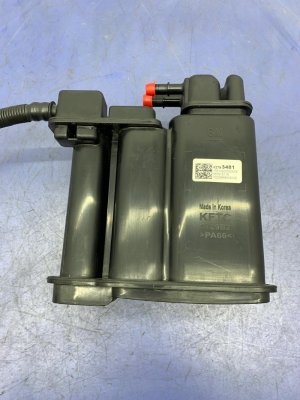
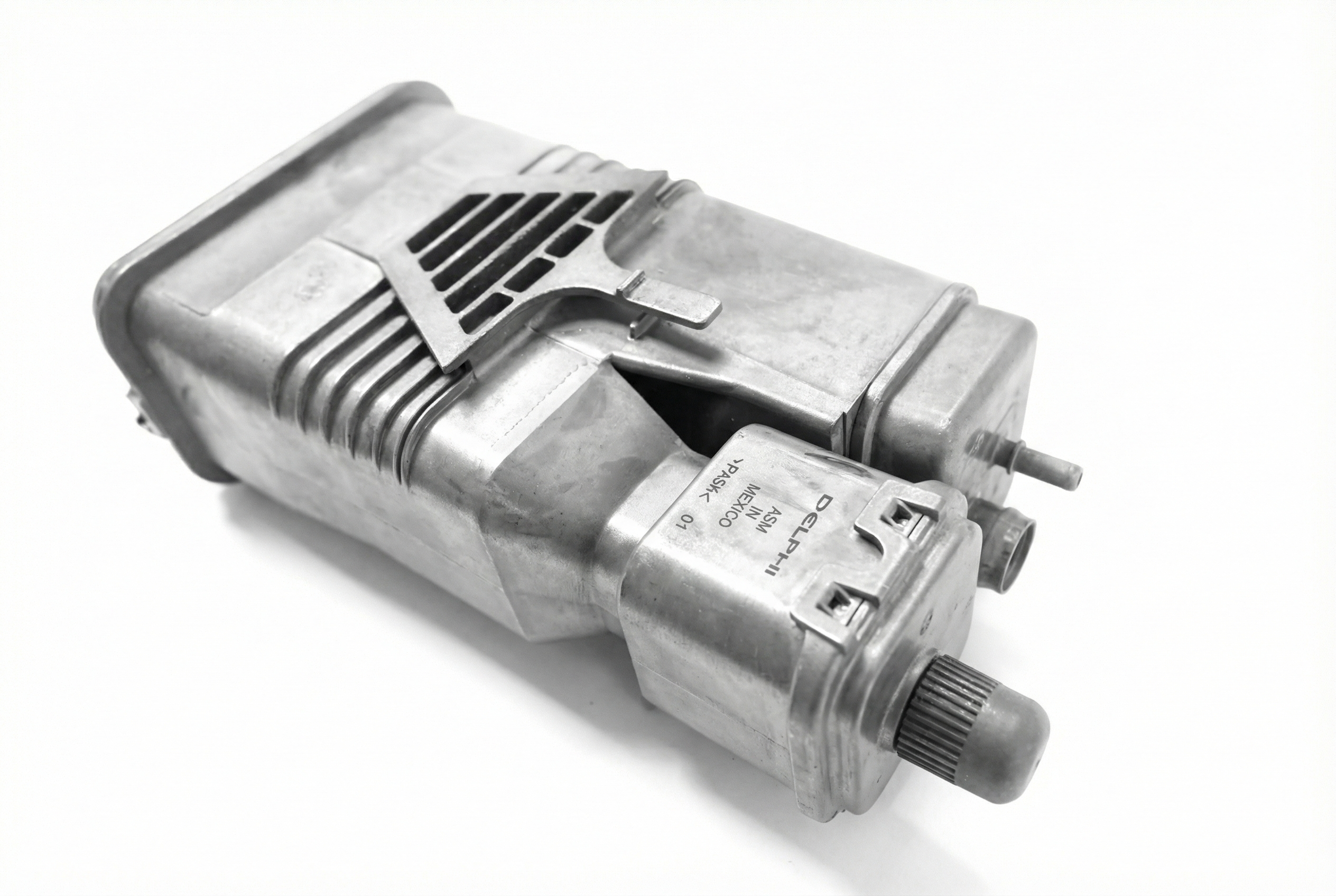
Used OEM Parts in Stock

New Aftermarket Parts Available


The information in this article is provided for general reference and educational purposes only. Vehicle specifications, procedures, and part compatibility can vary by production date, trim level, and region. Always consult your vehicle's factory service manual and verify part numbers before purchasing or performing repairs. Safety-critical components such as airbags, seat belts, and braking systems should be installed by a qualified professional.
- Buick Encore:
- 🧭 Diagnostic Flowchart
- 🎬 Helpful Videos
- 🛍️ Shop This Part
- What's Unique About the 2013-2022 Buick Encore
- Symptoms You May Notice
- Most Likely Causes
- Rare But Worth Checking
- Diagnosis Steps
- Parts You'll Likely Need
- Related Codes That Often Appear With This One
- Technical Service Bulletins (TSBs) & Recalls
- Platform-Specific Known Issues
- Mechanic-Grade Diagnostic Values
- Scan Tool Commands That Help
- Wiring & Ground Locations
- Real Owner Repair Stories
- OEM Part Supersession History
- Model Year Variations Within This Range
- Used vs. New Parts: Buying Guide for This Vehicle
- Real Owner Stories
- 2017 Buick Encore 1.4T LUV — 83000 miles
- 2013 Buick Encore (Ecotec engine) — 90000 miles
- 2017 Buick Encore
- 2020 Buick Encore
- Related OBD-II Codes
- Frequently Asked Questions
- 🎟️ Get 5% Off