

P0496 on 2006-2011 Chevrolet Impala 3.5L: Causes and Fixes for EVAP Flow Fault
On a 2006-2011 Impala with the 3.5L V6, code P0496 is almost always caused by a faulty vapor canister purge valve that is stuck open. A tell-tale symptom is the engine being hard to start right after refueling. Replacing the purge valve is a simple, low-cost DIY fix.
- P0496 on a 2006-2011 Impala almost always points to a bad vapor canister purge valve.
- The most definitive symptom, besides the Check Engine Light, is the engine struggling to start right after you fill the gas tank.
- Diagnosis is simple: check for vacuum at the valve's inlet port with the engine running. If suction is present, the part is bad.
- This is a very DIY-friendly repair that requires basic tools and can be completed in under 30 minutes.
- The correct OEM part number is typically GM 12597567 or ACDelco 214-1680. Using an OEM part is recommended to avoid premature repeat failures.
- Avoid 'topping off' your fuel tank, as this can saturate the charcoal canister and cause this problem to occur.
What's Unique About the 2006-2011 Chevrolet Impala
This generation of Chevrolet Impala, like many other GM vehicles from this era, has a very high incidence of this specific code caused by a single, common failure point: the purge valve solenoid. The issue is so prevalent that the symptom of 'hard starting after getting gas' is almost synonymous with P0496 on these cars. The part is conveniently located directly on top of the engine, making it an exceptionally easy repair compared to many other vehicles where components may be buried.
Symptoms You May Notice
- Check Engine Light is on.
- Difficulty starting the engine immediately after refueling (long crank time).
- Engine stumbles or idles roughly for a minute or two after starting, especially after refueling.
- A slight decrease in fuel economy due to the un-metered fuel vapors.
- A temporary workaround for the hard start is to hold the accelerator pedal to the floor while cranking the engine after refueling. 🎬 Watch: See how this hard start symptom looks in real-time.
- Replacing the gas cap. A bad gas cap typically causes a P0442 (small leak) or P0455 (gross leak) code, not P0496.
- Replacing the EVAP Vent Solenoid. The vent solenoid is located near the charcoal canister at the rear of the vehicle and typically causes a P0449 code when it fails.
- Replacing the Fuel Tank Pressure Sensor. While a possible cause, it is far less common than the purge valve itself. A user on ImpalaForums replaced the FTP sensor only to have the light return, with the final fix being the purge solenoid.
Most Likely Causes
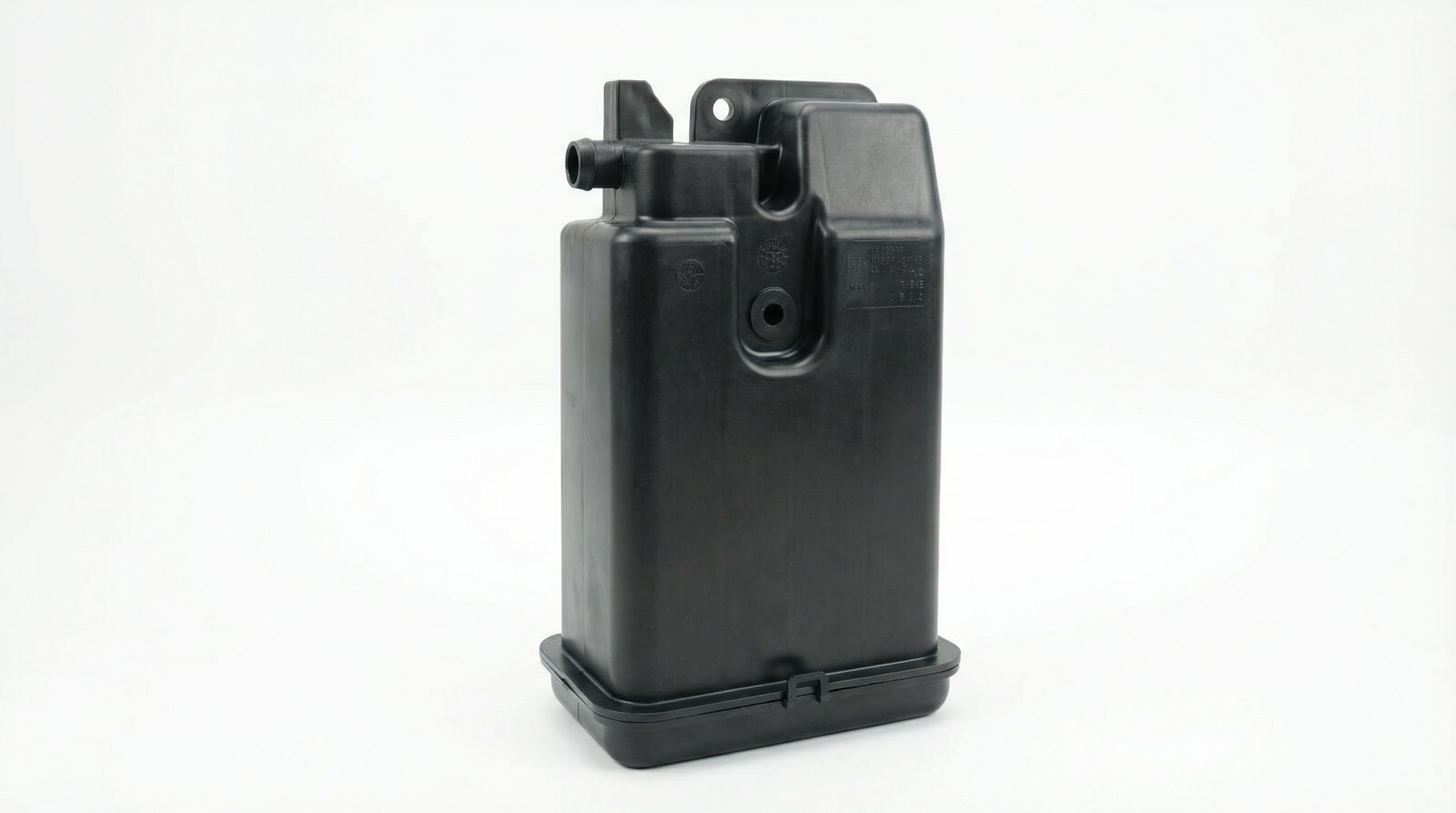
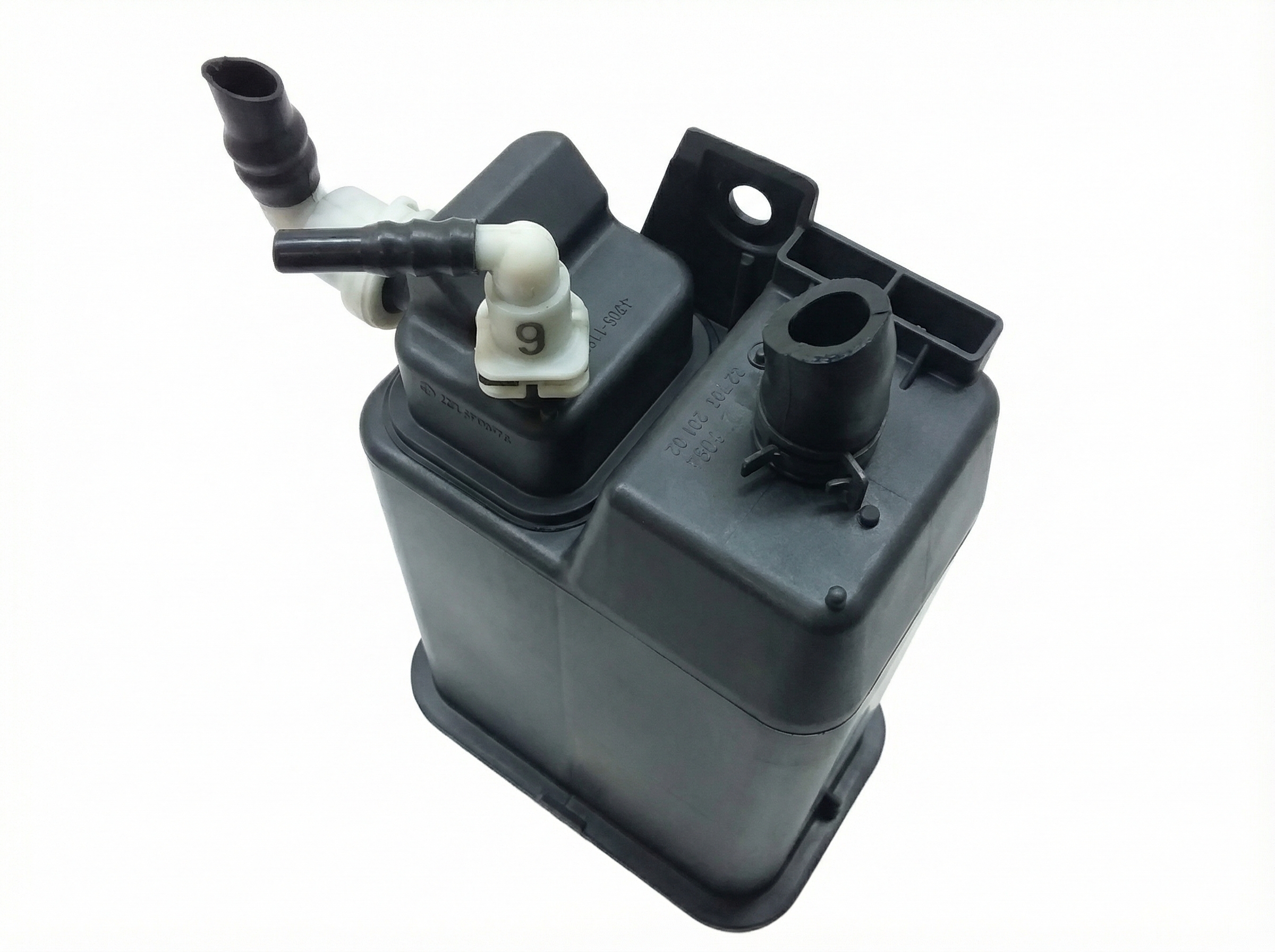
- Vapor Canister Purge Valve/Solenoid Stuck Open 🔴 High Probability → Shop Vapor Canister This specific part has a high failure rate across many GM models of this era. Internal components can wear out or get stuck from fuel vapor contaminants. Over-filling the gas tank (topping off) can exacerbate this by forcing liquid fuel into the charcoal canister and EVAP lines, contaminating the valve.
How to confirm: With the engine running, disconnect the electrical connector and the EVAP hose from the purge valve. Place your finger over the port on the valve; if you feel suction, the valve is stuck open and must be replaced. Alternatively, remove the valve (it's just one bolt) and try to blow through it. If air passes freely, it is faulty and needs to be replaced. 🎬 Watch: A mechanic's guide to diagnosing GM EVAP problems.
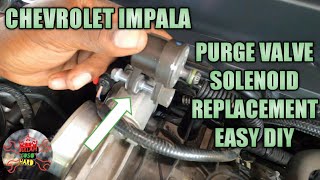
Typical fix: Replace the vapor canister purge valve. It is located on top of the engine and secured by a single 10mm bolt. The repair takes less than 15 minutes with basic tools. 🎬 See this quick walkthrough for replacing the purge valve solenoid.
Est. part cost: $25-$60
Rare But Worth Checking
- Faulty Fuel Tank Pressure (FTP) Sensor: → Shop Fuel Tank The FTP sensor is what the computer uses to detect the unwanted vacuum. If the sensor is faulty and sending incorrect readings, it could falsely trigger the P0496 code. This is much less common than a failed purge valve.
- Wiring Issue to Purge Valve: → Shop Vapor Canister A short in the wiring could cause the valve to stay energized (open) when it shouldn't be. This is rare, but possible if the harness is damaged.
- Saturated Charcoal Canister: → Shop Vapor Canister Repeatedly 'topping off' the fuel tank can saturate the charcoal canister with liquid fuel. This can cause debris from the canister to travel down the line and jam the purge valve open, leading to recurring P0496 codes even after replacing the valve.
- Damaged O-Rings: A manufacturer service bulletin for other GM models, TSB Bulletin #PIP6037A, notes that P0496 can also fail due to damaged purge solenoid valve O-rings.
Diagnosis Steps
- Verify the code with an OBD-II scanner. Note any other codes present.
- The most common symptom is a hard start after refueling. If this is present, the purge valve is the primary suspect.
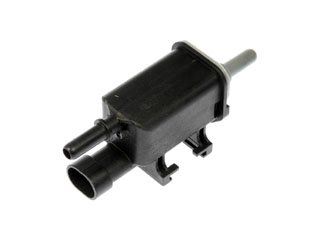
- Locate the vapor canister purge valve on the top of the 3.5L engine. It's a small black plastic part with one electrical connector and two hoses.
- Start the engine.
- Disconnect the electrical connector from the purge valve.
- Disconnect the EVAP line that runs from the charcoal canister to the purge valve.
- Check for vacuum at the valve's inlet port. There should be NO vacuum. If vacuum is present, the valve is stuck open and needs to be replaced.
- If no vacuum is present, the issue may be more complex, such as an intermittent electrical problem or a faulty Fuel Tank Pressure sensor, and may require more advanced diagnostics. Manufacturer TSB Bulletin #PIP5284A suggests that if P0496 continues to set after standard diagnostics, the customer's specific drive cycle should be evaluated as a contributing factor.
Parts You'll Likely Need
- Vapor Canister Purge Valve
(OEM #12597567 (often superseded by 12610560, 12690512, or 12735397))— This is the overwhelming cause of code P0496 on this vehicle. It gets stuck open, allowing fuel vapors into the intake at the wrong time.
Trusted brands: ACDelco (OEM): 214-1680 or 214-2149, Delphi, Dorman (Aftermarket): 911-082
OEM price range: $40-$75
Aftermarket price range: $25-$50
Related Codes That Often Appear With This One
- P0442 — A stuck-open purge valve can sometimes be interpreted by the system as a small, constant leak, triggering the P0442 code alongside P0496. GM has issued TSBs that group these codes together.
- P0171 / P0174 — While less common, if the purge valve is stuck open and there is a vacuum leak elsewhere, the system might overcompensate and trigger a lean code (P0171/P0174). Conversely, a rich condition can also occur. NHTSA ODI #11710113 describes a GM vehicle where P0496 appeared alongside P0171 and P0442, eventually leading to a "Reduced Engine Power" warning.
- P0300 — Random misfire codes can sometimes accompany EVAP flow issues. NHTSA ODI #11088522 records a case where P0496 and P0300 were found together, which led to further diagnosis of the fuel injectors.
Technical Service Bulletins (TSBs) & Recalls
- TSB 17-NA-409: Addresses MIL illumination with DTCs P0442, P0496, and/or P0455 on some Impala models, indicating a known issue with the EVAP system that can trigger this specific code.
- Special Coverage N222369620: While for newer models, this document for 2020 Impalas shows GM's continued recognition of purge valve issues causing P0496 and rough running, reinforcing the part's known failure pattern.
- TSB Bulletin #PIP6037A: Notes a potential for DTC P0496 to fail due to damaged purge solenoid valve O-rings.
- TSB Bulletin #PIP5284A: Communicates that if P0496 continues to set after performing strategy-based diagnostics, the customer's drive cycle may be a contributing factor.
Platform-Specific Known Issues
- Owner Experience: Recurring P0496: A user on Reddit with a 2012 Impala reported getting a P0496 code and hard starts after fueling in 2018. They replaced the purge solenoid, which fixed the issue for two years. When the code and symptoms returned, forum members advised them to use an OEM ACDelco part instead of a generic aftermarket one and to be careful not to overfill the gas tank, as this can saturate the EVAP system and cause premature failure of the new valve.
Mechanic-Grade Diagnostic Values
- EVAP Canister Vent Solenoid Bolt Torque — expected: 89 in-lbs. Failure: N/A - This is an installation specification.
- EVAP Canister Purge Valve Solenoid Voltage — expected: 12V (when commanded open). Failure: If the valve does not 'click' when 12V is applied, it has failed.
Scan Tool Commands That Help
- Advanced Scan Tool (e.g., Tech2, GDS2, BlueDriver): EVAP System Test / Purge/Seal — After replacing a component, a bidirectional scan tool can command the EVAP system to perform a self-test. This can verify the repair and potentially clear the code faster than waiting for the system's natural drive cycle monitors to complete.
Wiring & Ground Locations
- EVAP Canister Purge Solenoid Valve — On the 3.5L engine, it is located on the top front of the engine, near the throttle body.. This is the primary component that fails and causes P0496. Its location is critical for diagnosis and replacement.
- PCM C1 Connector - Pin 76 — At the Powertrain Control Module (PCM), which is located inside the air cleaner assembly.. Pin 76 on the C1 connector is the EVAP Canister Purge Valve Control circuit (DK GRN/WHT wire). This pin can be tested for voltage/continuity if a wiring fault is suspected between the PCM and the purge valve.
- G111 — Engine ground located above the starter motor.. A poor engine ground can cause a variety of electrical issues for engine-mounted components. While not a direct cause, verifying major grounds is a good step in complex electrical diagnosis.
- EVAP Canister Vent Solenoid — Located at the rear of the vehicle, behind the left rear wheel well, near the fuel tank.. This component is often misdiagnosed for P0496. Knowing its location helps differentiate it from the purge solenoid and correctly diagnose codes like P0449.
Real Owner Repair Stories
- Chevrolet Forum user 'TrailBlazer' (Chevrolet TrailBlazer (similar GM EVAP system)) — Check Engine Light with code P0496.
❌ Tried (didn't work) Replacing the EVAP Purge Solenoid Valve with a BWD (aftermarket) part fixed the issue for only two months before the P0496 code returned.
✅ What actually fixed it The user replaced the purge valve a second time with an OEM ACDelco part and, as a preventative measure, installed a small inline fuel filter on the hose leading into the purge valve to catch any debris from the charcoal canister that might be causing the new valves to fail. - NHTSA ODI #11606943: An owner reported a rough idle and code P0496. Even after replacing the purge solenoid, the engine still did not feel 100 percent fixed, suggesting the need for thorough secondary inspections.
OEM Part Supersession History
12597567→12610560— Part revision and consolidation by GM.12610560→12690512— Part revision and consolidation by GM.12690512→12737252— Latest part revision by GM.
Model Year Variations Within This Range
- 2006-2011: The 3.5L V6 engine came in two main variants for this Impala generation: the LZ4 and the LZE (Flex Fuel). However, for the P0496 code, the cause and the primary failed part (the purge valve solenoid) are identical across both engine variants. The location and repair procedure do not differ significantly.
Diagnostic Flowchart
Other Known Issues on This Vehicle
Issues unrelated to this code that are worth knowing about as an owner of this generation:
- 4T65-E Automatic Transmission Failure 🔴 High — Widespread issue, often occurring between 80,000 and 120,000 miles. Failures can be caused by a faulty pressure control solenoid (PCS), leading to harsh shifting, slipping, or complete failure.
- Intermediate Steering Shaft Clunk 🟠 Medium — Very common problem causing a clunking or popping noise in the steering column when turning. Caused by wear in the intermediate steering shaft's U-joints. (Ref: A TSB was issued for this problem, and the part was updated by GM.)
- HVAC Blend Door Actuator Failure 🟡 Low — Extremely common failure characterized by a repetitive clicking or ticking sound from the dashboard. The plastic gears inside the actuator strip, causing the door to get stuck on hot or cold.
- Power Steering System Leaks 🟠 Medium — Leaks can develop from the power steering rack and pinion or the pump itself. Leaks from the rack often seep into the boots, so they aren't visible as drips on the ground until advanced.
Used vs. New Parts: Buying Guide for This Vehicle
When a used part is the smart pick: For this specific repair, a used part from a junkyard is NOT recommended. The vapor canister purge valve is a known high-failure-rate item due to internal wear and contamination. A used part is likely to have significant wear and may fail shortly after installation, offering poor value.
What to inspect on the donor part:
- Not applicable as a used part is not advised.
OEM-only on this vehicle (don't cheap out):
- Vapor Canister Purge Valve. Forum users and mechanics strongly recommend using an OEM ACDelco part. Aftermarket versions, while cheaper, have a reputation for premature failure, sometimes within a few months, leading to the code returning.
Aftermarket brands forum-validated for this vehicle:
- While OEM is heavily preferred, Delphi is a reputable OEM supplier and is generally considered a reliable alternative.
Brands owners have reported issues with on this vehicle:
- Dorman: Some users report success, but others have experienced premature failure, with one user on a different platform reporting a Dorman valve failing in just 5,000 miles.
- BWD: A forum user reported a BWD-branded valve failing after only two months.
- General 'Amazon' or 'eBay' no-name brands: These are often of questionable quality and should be avoided for this part.
Real Owner Stories
Aggregated from forums and TSBs cited above. Mileages and costs reflect what owners reported in those sources.
2011 Chevrolet Impala 3.5L V6
Symptoms: Check engine light is on, OBD-II scanner shows code P0496 'evap system flow during non-purge'.
What fixed it: Replaced the vapor canister purge valve. The old valve was confirmed bad by blowing through it and finding it was stuck open.
Source hint: 2011 Chevy Impala P0496 Diagnose & Fix - YouTube
2012 Chevrolet Impala 3.5L V6
Symptoms: P0496 code and hard starts after fueling; the issue returned two years after a previous repair.
What fixed it: Replacing the purge solenoid with an OEM ACDelco part and avoiding overfilling the gas tank.
Source hint: Reddit r/MechanicAdvice
2012 Chevrolet Impala 3.5L V6
Symptoms: P0496 and hard/rough starting only after fueling.
What fixed it: Replacement of the purge valve; owner was advised to never 'top off' the fuel tank to prevent future failure.
Source hint: RepairPal Forum
2006-2011 Chevrolet Impala 3.5L V6
Symptoms: Code P0496, EVAP Purge Solenoid Valve Location Needed. User initially misdiagnosed the issue as a fuel pressure sensor.
What fixed it: Replacing the purge solenoid on the 3.5L V6 as guided by community members.
Source hint: ImpalaForums.com
Related OBD-II Codes
Frequently Asked Questions
Is there a specific TSB for the P0496 code on my Chevrolet Impala?
Why does my Impala struggle to start only after I fill up the gas tank?
Is there a trick to starting the engine when it's acting up after refueling?
Should I use an aftermarket part or an OEM part for the purge valve replacement?
Can 'topping off' my gas tank cause the P0496 code?
Where is the purge valve located on the 3.5L V6 engine?
Helpful Videos
Used OEM Parts in Stock
New Aftermarket Parts Available


The information in this article is provided for general reference and educational purposes only. Vehicle specifications, procedures, and part compatibility can vary by production date, trim level, and region. Always consult your vehicle's factory service manual and verify part numbers before purchasing or performing repairs. Safety-critical components such as airbags, seat belts, and braking systems should be installed by a qualified professional.
- Chevrolet Impala:
- 🧭 Diagnostic Flowchart
- 🎬 Helpful Videos
- 🛍️ Shop This Part
- What's Unique About the 2006-2011 Chevrolet Impala
- Symptoms You May Notice
- Most Likely Causes
- Rare But Worth Checking
- Diagnosis Steps
- Parts You'll Likely Need
- Related Codes That Often Appear With This One
- Technical Service Bulletins (TSBs) & Recalls
- Platform-Specific Known Issues
- Mechanic-Grade Diagnostic Values
- Scan Tool Commands That Help
- Wiring & Ground Locations
- Real Owner Repair Stories
- OEM Part Supersession History
- Model Year Variations Within This Range
- Other Known Issues on This Vehicle
- Used vs. New Parts: Buying Guide for This Vehicle
- Real Owner Stories
- 2011 Chevrolet Impala 3.5L V6
- 2012 Chevrolet Impala 3.5L V6
- 2012 Chevrolet Impala 3.5L V6
- 2006-2011 Chevrolet Impala 3.5L V6
- Related OBD-II Codes
- Frequently Asked Questions
- 🎟️ Get 5% Off