

P0496 on 2011-2023 Dodge Durango 3.6L: EVAP Flow During Non-Purge Causes and Fixes
For a 2011-2023 Dodge Durango with the 3.6L engine, code P0496 is almost always caused by a faulty EVAP purge valve that is stuck open, allowing un-commanded fuel vapor flow. This leads to a Check Engine Light and often causes difficult starting right after refueling. Replacing this valve is a straightforward DIY job, with the part costing between $25 and $75.
- P0496 on your Durango 3.6L almost always means you need a new EVAP purge valve.
- A key symptom is the engine struggling to start immediately after you fill up the gas tank.
- You can test the purge valve yourself in under 5 minutes with no special tools by checking for suction at the valve's inlet port with the engine running.
- This is a very common, inexpensive, and easy DIY repair that usually takes less than 15 minutes.
What's Unique About the 2011-2023 Dodge Durango
On the 3.6L Pentastar engine used in the Durango and many other Chrysler/Dodge/Jeep/Ram vehicles, the P0496 code points overwhelmingly to a failed canister purge valve (also called a purge solenoid). This valve is mounted directly on the engine and is a very common failure item known for sticking open. While other EVAP system issues can occur, the purge valve is the primary suspect and a simple repair. The vehicle's capless fuel filler system means a "loose gas cap" isn't a cause; instead, the seal on the filler neck flap would be the equivalent, though it's a less common fault for this specific code.
Generation note: The 2011-2023 model years all fall within the third generation (WD) of the Dodge Durango. While there are no major design changes to the EVAP system that affect this code, specific part numbers for the purge valve have been superseded over this period. Always verify the part number for your specific model year with your VIN before purchasing.
Symptoms You May Notice
- Check Engine Light is on
- Difficulty starting the engine, especially right after getting gas
- Rough or unstable idle
- A faint smell of fuel
- Slightly reduced fuel economy
- Replacing the charcoal canister or vent solenoid before properly testing the purge valve. The purge valve is the most frequent point of failure for this specific code on this vehicle.
- Replacing the fuel tank pressure sensor without confirming the purge valve is functioning correctly.
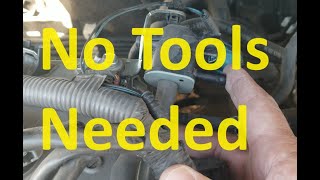
- Assuming it's a leak-related code (like P0456) and performing a smoke test before doing the 2-minute purge valve suction test. 🎬 Watch: How to test for a stuck valve with no tools
Most Likely Causes
- Faulty EVAP Canister Purge Valve/Solenoid 🔴 High Probability → Shop Vapor Canister The purge valve on the Pentastar engine is a very common failure item across numerous platforms. Over time, it can get stuck internally, allowing fuel vapors to be drawn into the engine when the computer has commanded it to be closed. This floods the engine with vapors, causing the hard start after refueling. 🎬 Watch: Why your car struggles to start after getting gas
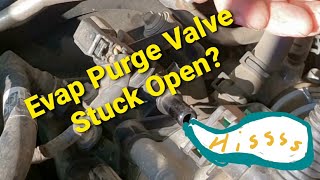
How to confirm: With the engine cold and off, disconnect the vapor line running from the purge valve to the charcoal canister (the line without the green cap). Start the engine. Place your finger or a small piece of paper over the port on the valve where the hose was connected. If you feel any suction or the paper is held in place, the valve is stuck open and needs to be replaced. You can also test it off the vehicle with a hand vacuum pump; it should hold vacuum when not energized.
Typical fix: Replace the canister purge valve. It is mounted on the driver's side of the engine, held by one 10mm bolt or a simple bracket, with two hoses and one electrical connector. The repair is very simple and takes 5-10 minutes.
Est. part cost: $25-$75 - Damaged or Leaking EVAP Hoses ⚪ Low Probability The plastic and rubber hoses in the engine bay are exposed to constant heat cycles, which can cause them to become brittle and crack over time, especially at connection points.
How to confirm: Visually inspect all EVAP hoses connected to and around the purge valve and throttle body for any visible cracks, breaks, or loose connections. A smoke test is the definitive way to find small, less obvious leaks in the lines or other components.
Typical fix: Replace the specific hose that is found to be leaking. These are often pre-formed hose assemblies.
Est. part cost: $30-$70 - Debris in Capless Fuel Filler Neck ⚪ Low Probability
How to confirm: Inspect the capless fuel filler opening for any dirt, debris, or damage that could prevent the spring-loaded flap from sealing completely. Clean the sealing area carefully with a rag.
Typical fix: Clean the fuel filler neck opening. If the seal is damaged, the entire filler neck assembly may need to be replaced.
Est. part cost: $5-$150
Rare But Worth Checking
- Faulty Fuel Tank Pressure (FTP) Sensor: → Shop Fuel Tank The sensor that detects the vacuum might be sending false readings to the computer, making it think there is flow when there isn't. This is uncommon and should only be considered after the purge valve and hoses have been confirmed to be good.
- Damaged Charcoal Canister: → Shop Vapor Canister If the canister is physically damaged or internally failed, the charcoal pellets can break loose and travel down the purge line, holding the purge valve open. If you find black charcoal granules in the EVAP lines when you disconnect them, the canister must be replaced along with the purge valve and the lines blown out.
- Shorted Purge Valve Wiring/Circuit: → Shop Vapor Canister A short in the wiring could theoretically hold the valve open, but this is far less common than a mechanical failure of the valve itself.
Diagnosis Steps
- Read the trouble codes with an OBD-II scanner to confirm P0496 is the primary code. 🎬 See this breakdown of P0496 causes and common fixes
- Inspect the capless fuel filler neck for debris or damage preventing a proper seal. Clean as necessary.
- Locate the EVAP purge valve on the 3.6L engine. It's a small black valve with an electrical connector and two vapor hoses, mounted on the driver's side of the engine near the intake manifold.
- Perform a vacuum test on the purge valve: With the engine off, disconnect the electrical connector and the EVAP line coming from the rear of the vehicle. Start the engine. There should be NO vacuum present at the valve's port. If suction is felt (e.g., it holds a piece of paper against the port), the valve is faulty and must be replaced.
- If the purge valve passes the test, visually inspect all connected EVAP hoses for obvious cracks or damage. Pay close attention to bends and connection points.
- Disconnect the line from the purge valve and check for black charcoal granules. If found, the charcoal canister has failed and needs replacement along with the purge valve.
- If no visual faults are found, the next step is to perform a smoke test on the EVAP system to identify hard-to-see leaks in the lines or other components.
- Only after confirming there are no leaks and the purge valve is good should you consider a faulty Fuel Tank Pressure (FTP) sensor as the cause.
Parts You'll Likely Need
- EVAP Canister Purge Valve / Solenoid
(OEM #4891739AA (superseded by 4891739AB), 4627972AB (superseded by 4627972AC). Verify with VIN.)— This is the most common failure part for code P0496 on this platform, as it gets stuck open.
Trusted brands: Mopar, Dorman, Standard Motor Products (SMP), Wells, Bosch
OEM price range: $50-$90
Aftermarket price range: $25-$50
Related Codes That Often Appear With This One
- P0456 — P0456 indicates a 'very small leak' in the EVAP system. A cracked hose or a purge valve that isn't sealing perfectly can sometimes trigger both codes, as the system struggles to maintain pressure integrity.
- P0441 — P0441 indicates 'Incorrect Purge Flow.' This code is very closely related to P0496 and often points to the same faulty component—the purge valve—either not flowing when it should or flowing at the wrong rate.
Technical Service Bulletins (TSBs) & Recalls
- While not a Chrysler TSB, Volkswagen TSB 01-19-09TT addresses P0496 on the 2018-2019 Atlas 3.6L, which shares engine architecture. It outlines diagnostic steps including checking for charcoal particles from a failed canister holding the purge valve open, a relevant diagnostic step for the Durango as well.
Mechanic-Grade Diagnostic Values
- EVAP Purge Valve Solenoid Coil Resistance — expected: 14 - 40 Ohms. Failure: A reading of infinite Ohms (open circuit) or near-zero Ohms (short circuit) indicates a failed solenoid.
- EVAP Purge Valve Connector Power Supply Pin — expected: Battery Voltage (>10V) with Key On, Engine Off.. Failure: Voltage significantly below 10V points to a problem in the power supply circuit (fuse, wiring).
- EVAP Purge Valve Connector Control Circuit — expected: Near battery voltage when OFF (un-commanded); drops to near 0V when commanded ON by the PCM.. Failure: Voltage does not change when commanded by a scan tool, indicating a wiring or PCM driver issue.
- Fuel Tank Pressure (FTP) Sensor Reading (via Scan Tool) — expected: Near 0 inches of water vacuum when the system is at rest and not being purged.. Failure: The PCM logs code P0496 when it detects more than 10 inches of water vacuum when purge flow is not being commanded. This indicates un-commanded flow, typically from a stuck-open purge valve.
Scan Tool Commands That Help
- wiTECH or other professional bidirectional scanner: EVAP Purge Solenoid Command / Test — Use this to verify the electrical integrity and mechanical function of the purge valve after checking for a 'stuck open' condition. When commanding the valve ON and OFF, you should hear an audible clicking sound from the valve. If it clicks but still leaks vacuum when off, it is mechanically failed. If it does not click, further electrical diagnosis of the circuit or solenoid is needed.
Wiring & Ground Locations
- EVAP Purge Valve Connector — On the EVAP purge valve itself, located on the driver's side of the 3.6L engine near the intake manifold.. This 2-pin connector provides power and control to the solenoid. One pin is the power supply (should have battery voltage with key on) and the other is the ground-side control wire from the PCM. Testing voltage at these pins is a key step in diagnosing a circuit fault vs. a failed valve.
- EVAP Purge Line — Runs from the firewall/charcoal canister area, across the top of the engine, to the purge valve on the driver's side.. This pre-formed plastic line is subjected to significant engine heat and vibration. It is known to become brittle and crack or break, especially on mid-2010s models, causing an EVAP leak that can sometimes accompany a P0496 or trigger other EVAP codes like P0456.
Real Owner Repair Stories
- YouTube channel 'Gearmo Auto' (2015 Dodge Durango 3.6L) — Check engine light with a previously broken and epoxied EVAP purge hose.
❌ Tried (didn't work) A previous attempt to repair the broken hose with epoxy had failed.
✅ What actually fixed it The entire pre-formed EVAP purge hose assembly (Part No. 68189075AE) was replaced. The video creator specifically recommended using the OEM part over aftermarket alternatives to ensure all necessary mounting clips were included and fit correctly. - YouTube channel 'Fix it Rich' (2018 Dodge Durango 3.6L) — Check engine light with code P0456 (Small EVAP Leak).
✅ What actually fixed it During a smoke test, a significant leak was found from a broken EVAP purge line right at the connection to the purge valve. The plastic line had become brittle and snapped. This demonstrates a common failure point for the physical lines in the system that can cause leak codes and potentially affect purge flow. - Cross-Manufacturer Reference: NHTSA ODI #10734898 — An owner of a related Dodge platform reported a strong fuel smell and a P0496 code. The owner noted the smell would dissipate when the fuel level was under 1/2 tank, leading them to only fill the tank halfway to manage the issue.
"I Checked Everything" — The Actual Cause
- A P0496 code is for improper *flow*, not necessarily a *leak*, so a smoke test may come back clean. The primary test should be checking for vacuum at the purge valve while the engine is running. If the purge valve and smoke test are both good, the root cause could be a faulty Fuel Tank Pressure (FTP) sensor that is slightly out of calibration. The PCM may interpret the faulty sensor data as un-commanded vacuum (flow) in the system, setting the P0496 code even though no actual flow is occurring.
OEM Part Supersession History
4891739AA→4891739AB— Standard part revision and update by manufacturer.
Heads up: These parts are generally interchangeable for the specified applications, but 4891739AB is the current recommended replacement.4627972AB→4627972AC— Standard part revision and update by manufacturer.
Heads up: These parts are generally interchangeable for the specified applications. 4627972AC is the current recommended replacement for vehicles originally equipped with 4627972AB.68189075AD→68189075AE— Part revision for the pre-formed EVAP purge line assembly.
Heads up: This applies to the full hose assembly, not just the valve. It is critical to use the correct hose for the model year, as routing and clip locations may differ.
Model Year Variations Within This Range
- 2016-2023: For the 2016 model year, the 3.6L Pentastar V6 received a significant update (sometimes called the 'PUG' upgrade). This included a two-stage variable valve lift, increased compression ratio, and other changes to improve efficiency and power. While the fundamental operation of the EVAP purge valve remained the same, wiring, software calibrations, or related components may have subtle differences from the earlier 2011-2015 engines.
- 2014-2018: The pre-formed plastic EVAP purge line that runs across the engine appears to be a common failure point due to cracking, particularly on models from this era. While a bad hose typically causes a leak code (P0456), a crack near the purge valve could potentially affect flow detection.
Diagnostic Flowchart
Other Known Issues on This Vehicle
Issues unrelated to this code that are worth knowing about as an owner of this generation:
- Cracked Oil Filter Housing / Cooler Assembly 🔴 High — Extremely common, can occur at any mileage but often after 50k miles. The plastic housing cracks from heat cycles, causing significant oil and/or coolant leaks into the engine valley. (Ref: No recall has been issued, despite widespread failure.)
- Rocker Arm / Lifter Failure ('Pentastar Tick') 🔴 High — Common, particularly on earlier (pre-2016) engines. Worn rocker arm bearings cause a distinct ticking noise, leading to misfires and potential camshaft damage if ignored. (Ref: A class-action lawsuit was filed regarding this issue.)
- TIPM (Totally Integrated Power Module) Failure 🔴 High — Especially prevalent in 2011-2013 models. The TIPM is the main fuse/relay box and its failure causes a wide range of bizarre electrical problems, including fuel pump issues, engine stalling, or no-start conditions. (Ref: Multiple lawsuits and some limited recalls on related vehicles have occurred.)
- Left Cylinder Head Failure (2011-2013) 🔴 High — Common on early Pentastar engines. Premature wear of the valve guides and seats on the left-bank cylinder head leads to compression loss and misfire codes (e.g., P0302, P0304, P0306). (Ref: Chrysler issued TSB #09-002-14 and an extended warranty (X56) for 10 years/150,000 miles on the left cylinder head for affected vehicles.)
- Heater Core Clogging 🟠 Medium — Fairly common. Often attributed to casting sand from the engine block manufacturing process circulating and clogging the heater core, resulting in poor or no heat on one side of the cabin.
Used vs. New Parts: Buying Guide for This Vehicle
When a used part is the smart pick: For this specific repair, using a used part is NOT recommended. The primary failure part, the EVAP purge valve, is an inexpensive wear item. The risk of getting a used part that has limited life remaining or is already faulty is too high to justify the small cost savings over a new part.
What to inspect on the donor part:
- N/A - Do not source used electronic or plastic emissions components for this repair.
OEM-only on this vehicle (don't cheap out):
- EVAP Purge Line Assembly: While aftermarket versions exist, owner experiences suggest that OEM Mopar lines are the best choice to ensure all mounting clips and retainers are present and fit correctly, preventing future rattles or damage.
Aftermarket brands forum-validated for this vehicle:
- Standard Motor Products (SMP): Often considered a high-quality alternative to OEM for sensors and valves.
- Bosch: A reputable OEM supplier for many electronic components.
Brands owners have reported issues with on this vehicle:
- Unbranded/white-box parts: While Dorman is a common aftermarket brand, some users prefer to avoid it for electronic components in favor of SMP or OEM due to perceived quality differences. For a critical emissions part that is labor-intensive to re-diagnose if it fails prematurely, sticking to a known good brand is advisable.
Real Owner Stories
Aggregated from forums and TSBs cited above. Mileages and costs reflect what owners reported in those sources.
2011-2023 Dodge Durango 3.6L
Symptoms: The owner experienced trouble starting the vehicle specifically after a fill-up at the gas station.
What fixed it: Replacing the stuck-open EVAP purge valve which was flooding the engine with vapors.
Source hint: Reddit - r/DodgeDurango: Thread titled 'Trouble starting after fill up'
2018-2019 Volkswagen Atlas 3.6L (Pentastar Architecture)
Symptoms: P0496 code triggered by a purge valve being held open by external debris.
What fixed it: Diagnostic steps identified charcoal particles from a failed canister; required replacement of the canister and purge valve.
Source hint: Volkswagen TSB 01-19-09TT
Dodge Platform Owner Report
Symptoms: An owner reported a strong smell of fuel and a check engine light with code P0496. The smell was most prominent when the fuel tank was more than half full.
What fixed it: Diagnostic scan confirmed P0496; the owner resorted to only filling the tank to 1/2 to mitigate the fuel smell until repairs were made.
Source hint: NHTSA ODI #10734898
Related OBD-II Codes
Frequently Asked Questions
Why does my Dodge Durango 3.6L have trouble starting specifically after I fill up the gas tank?
Is there a TSB for P0496 that applies to my 3.6L Durango?
Where is the purge valve located on the 2011-2023 Durango 3.6L for a quick inspection?
Could my Durango's capless fuel filler neck be causing the P0496 code?
If I find black charcoal granules in the vacuum line, what does that mean for my repair?
Is the P0496 issue common to other vehicles with the same engine?
Helpful Videos

We Have This Part in Stock


The information in this article is provided for general reference and educational purposes only. Vehicle specifications, procedures, and part compatibility can vary by production date, trim level, and region. Always consult your vehicle's factory service manual and verify part numbers before purchasing or performing repairs. Safety-critical components such as airbags, seat belts, and braking systems should be installed by a qualified professional.
- Dodge Durango:
- 🧭 Diagnostic Flowchart
- 🎬 Helpful Videos
- 🛍️ Shop This Part
- What's Unique About the 2011-2023 Dodge Durango
- Symptoms You May Notice
- Most Likely Causes
- Rare But Worth Checking
- Diagnosis Steps
- Parts You'll Likely Need
- Related Codes That Often Appear With This One
- Technical Service Bulletins (TSBs) & Recalls
- Mechanic-Grade Diagnostic Values
- Scan Tool Commands That Help
- Wiring & Ground Locations
- Real Owner Repair Stories
- "I Checked Everything" — The Actual Cause
- OEM Part Supersession History
- Model Year Variations Within This Range
- Other Known Issues on This Vehicle
- Used vs. New Parts: Buying Guide for This Vehicle
- Real Owner Stories
- 2011-2023 Dodge Durango 3.6L
- 2018-2019 Volkswagen Atlas 3.6L (Pentastar Architecture)
- Dodge Platform Owner Report
- Related OBD-II Codes
- Frequently Asked Questions
- 🎟️ Get 5% Off