

P0496 on 2021-2024 Ford Bronco: EVAP High Purge Flow Causes and Fixes
For a 2021-2024 Ford Bronco with either the 2.3L or 2.7L engine, code P0496 is almost always caused by a faulty canister purge valve (or vapor management valve) that is stuck open. This is a simple, 15-minute DIY replacement with the entire hose assembly costing between $40 (aftermarket) and $200 (OEM).
- P0496 on a 2021-2024 Bronco points directly to a problem with the EVAP system, most likely a stuck-open canister purge valve.
- The most common symptom, besides the Check Engine Light, is the engine struggling to start immediately after you finish refueling.
- The fix is typically replacing the purge valve assembly on top of the engine, which is a very simple 15-minute DIY job that can save you hundreds of dollars compared to a dealer visit.
- Before replacing the valve, perform a simple blow-through test. If it's sealed, consider a professional smoke test or the specific FDRS scan tool tests recommended by Ford in TSB SSM 50306.
What's Unique About the 2021-2024 Ford Bronco
On the 6th generation Bronco, the canister purge valve is not just a small, standalone solenoid but is integrated into a larger hose assembly that sits visibly on top of the engine, making it very easy to access and replace. However, Ford has issued Special Service Message (SSM 50306) for the 2021 Bronco (and many other models) noting that many returned purge valves test as fully functional. This suggests that while the valve is the most common culprit, a thorough system test is recommended. Ford specifically advises technicians to use the FDRS scan tool to run the 'Full System EVAP Leak Test' and the 'EVAP Purge Valve Leak Test' before replacing parts.
Symptoms You May Notice
- Check Engine Light is on
- Difficulty starting the engine, particularly right after refueling 🎬 Watch: Why Ford vehicles often struggle to start after refueling
- Rough or unstable idle
- Slight decrease in fuel economy
- Possible difficulty filling the fuel tank (gas pump clicks off prematurely)
- A faint fuel smell may be noticeable
- Vehicle stalling on the freeway or shutting off entirely, as noted in NHTSA ODI #11727824
- Replacing the gas cap. The Ford Bronco uses a capless fuel filler system, so there is no traditional gas cap to replace. The issue would be with the filler neck seal itself.
Most Likely Causes
- Faulty Canister Purge Valve / Vapor Management Valve Assembly 🔴 High Probability → Shop Vapor Canister The purge valve can become stuck open or fail to seal properly, a common failure mode for this component across many Ford EcoBoost vehicles. Overfilling the gas tank can saturate the charcoal canister and send raw fuel into the valve, causing it to fail prematurely. The plastic retaining clips on the hose assembly are also known to be fragile and can break during removal.
How to confirm: With the engine off, disconnect the purge valve assembly hoses. Try to blow through the valve in the direction of flow to the intake manifold. If any air passes through, the valve is stuck open and has failed. A professional diagnosis involves using a scan tool to command the valve closed and check for vacuum decay, as recommended by Ford's SSM 50306.
Typical fix: Replace the entire purge valve and hose assembly. It is located on top of the engine and is secured with several clips and typically requires no tools for replacement. 🎬 See how to test your purge valve without any tools
Est. part cost: $40-$200 - Disconnected Internal Fuel Vapor Line: Manufacturer bulletin #TSB 25-2431 notes that P0496 and stalling after refueling can be caused by a disconnected fuel vapor line located inside the fuel tank.
Rare But Worth Checking
- Leak in an EVAP System Hose: A cracked or disconnected hose can mimic the symptoms of a bad purge valve. Ford's TSB (SSM 50306) specifically advises checking for system leaks before replacing the valve. A smoke test is the best way to find a small leak.
- Faulty Fuel Tank Pressure (FTP) Sensor: → Shop Fuel Tank The sensor that monitors EVAP system pressure could be sending incorrect data to the ECU, causing it to trigger the code even if there is no leak. This is less common than a purge valve failure but has been noted by Ford as a possible misdiagnosis.
- Leaking Capless Fuel Filler Neck: Debris or damage to the seal on the capless fuel filler can cause a pressure leak, which may contribute to or trigger this code. Ensure the flap is clean and seals properly.
- Wiring Harness Connection Issues: Manufacturer bulletin #SSM 51247 indicates that P0496 may be caused by the wiring harness connection at connector C1198 on the driver's side lower frame area.
- PCM Software Calibration: According to manufacturer bulletin #TSB 24-2246, some Ford vehicles may exhibit P0496 due to software issues that require a PCM reprogram to correct.
Diagnosis Steps
- Read the code with an OBD-II scanner to confirm P0496 is present. 🎬 Watch: Understanding the causes and fixes for code P0496
- Visually inspect the capless fuel filler neck for debris or damage to the sealing flap.
- Locate the canister purge valve assembly on top of the engine.
- With the engine off, disconnect the valve and attempt to blow air through it. It should be completely sealed. If air passes, it needs to be replaced.
- If the valve seems okay, inspect all visible EVAP hoses connected to the assembly for cracks, loose connections, or damage.
- If the valve and hoses appear to be in good condition, the next step is a professional diagnosis. Per Ford SSM 50306, a technician should use the FDRS scan tool to perform a 'Full System EVAP Leak Test' and an 'EVAP Purge Valve Leak Test' before replacing any parts.
Parts You'll Likely Need
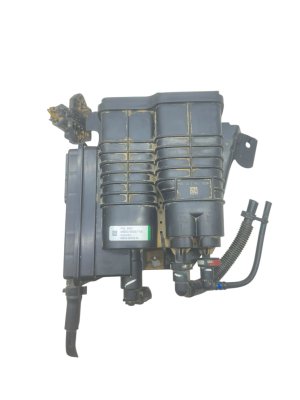
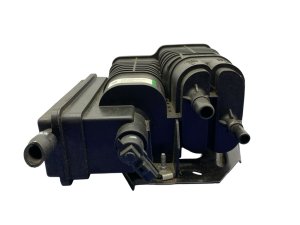
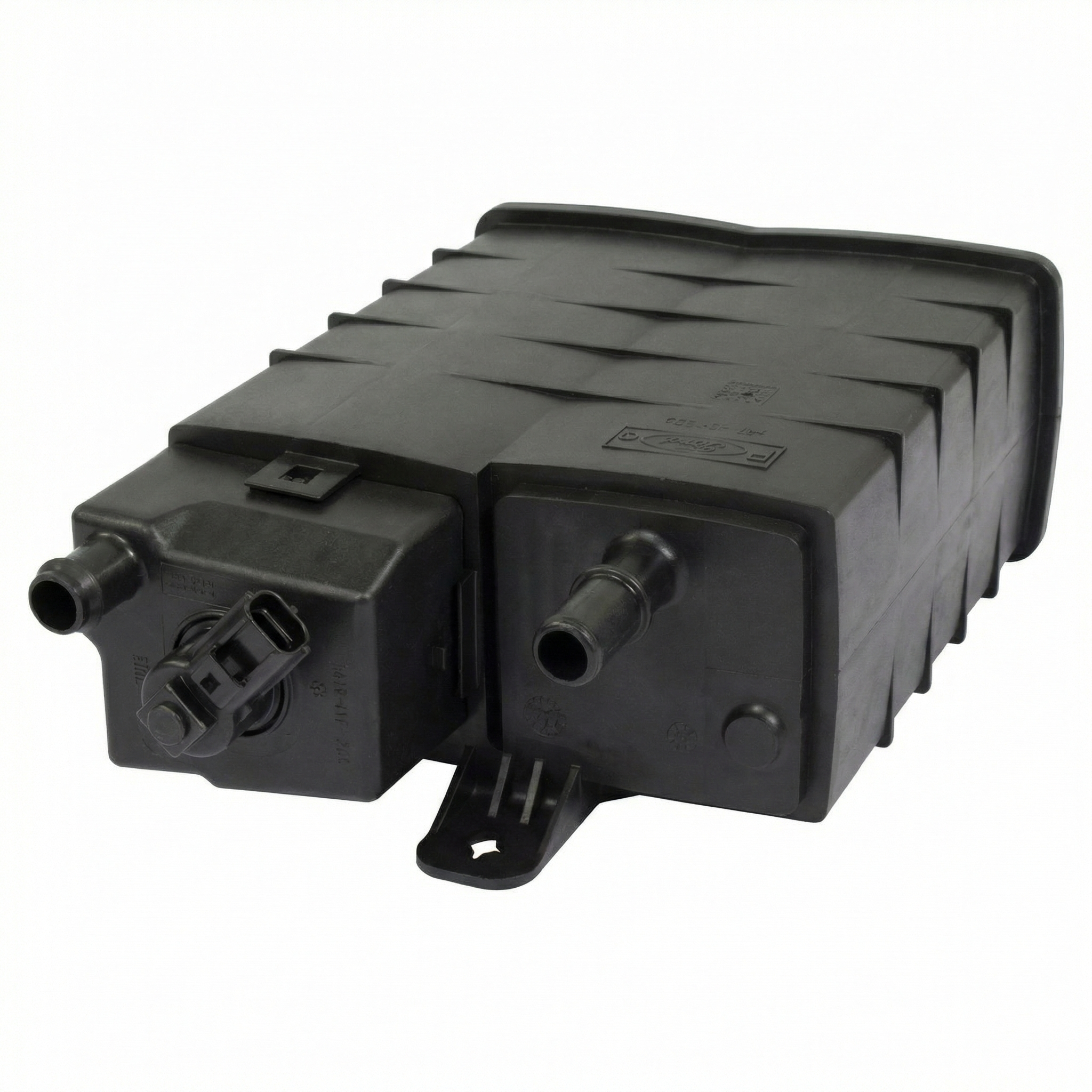
- Vapor Canister Purge Valve / Vapor Management Valve Assembly
(OEM #CX-2776 (solenoid only); assembly number varies by engine.)— This is the most common failure point for code P0496. The valve gets stuck open, allowing un-commanded fuel vapor into the engine. On this platform, the valve is part of a larger, easy-to-replace hose assembly.
Trusted brands: Motorcraft (OEM), Standard Motor Products (SMP) - e.g., CP3768 for Bronco Sport, Dorman - e.g., 994-041 for Bronco Sport
OEM price range: $100-$200
Aftermarket price range: $40-$150 - Charcoal Canister: → Shop Vapor Canister In some instances, such as those described in NHTSA ODI #11537486, both the Vapor Management Valve (VMV) and the charcoal canister may require replacement along with a VMV reprogramming.
Related Codes That Often Appear With This One
- P0456 — P0456 indicates a "Small EVAP Leak". A purge valve that is not sealing correctly can be interpreted by the system as both a high flow condition (P0496) and a general small leak (P0456).
- P0455 — P0455 indicates a "Large EVAP Leak". If the purge valve is stuck wide open, the system may register it as a large leak.
- P1450 — This Ford-specific code for 'Unable to Bleed Up Fuel Tank Vacuum' is very often caused by the same faulty purge valve being stuck open, creating a constant vacuum that the system cannot overcome. Seeing it with P0496 makes the purge valve the prime suspect.
- P04F0, P0451, P018C, or P008A — These codes may appear alongside P0496 due to fuel vapor line issues or wiring harness faults as noted in TSB 25-2431 and SSM 51247.
Technical Service Bulletins (TSBs) & Recalls
- SSM 50306: Advises performing full EVAP system and purge valve leak tests with the FDRS scan tool prior to replacing the canister purge valve, as many returned parts for codes like P0496 were found to be fully functional. Applies to a wide range of 2018-2022 Ford vehicles, including the 2021 Bronco.
- TSB 25-2431: Notes that P0496 may be stored due to a disconnected fuel vapor line inside the fuel tank, which can also cause stalling upon restart after refueling.
- SSM 51247: Reports that P0496 and other EVAP codes may be due to a wiring harness connection issue at connector C1198 located on the driver's side lower frame area.
- TSB 24-2246: States that P0496 may be exhibited due to PCM calibration, requiring a software reprogram to correct the condition.
Platform-Specific Known Issues
- Ford issued Special Service Message (SSM) 50306, which includes the 2021 Bronco, advising technicians that many returned purge valves for this code were found to be working correctly. This highlights the importance of performing a full EVAP system leak test before defaulting to valve replacement.
- The specific diagnostic procedures recommended in SSM 50306 are the 'Full System EVAP Leak Test' and the 'EVAP Purge Valve Leak Test' using the Ford Diagnosis and Repair System (FDRS) scan tool.
Mechanic-Grade Diagnostic Values
- Canister Purge Valve Solenoid Resistance — expected: 14 - 30 Ohms. Failure: A reading outside this range (e.g., 0 for a short, OL for an open circuit) indicates an electrical failure of the solenoid coil. Note: This test does not check for a mechanically stuck valve.
- EVAP System Vacuum (during non-purge) — expected: Less than 10 inches of H2O. Failure: The PCM triggers code P0496 when it detects a vacuum greater than 10 inches of water when the purge valve is commanded closed, indicating an unwanted flow.
- Fuel Tank Pressure (FTP) Sensor Voltage (KOEO) — expected: ~2.5 Volts (at normal atmospheric pressure). Failure: A voltage reading significantly higher than 2.5V (e.g., approaching 4.5V) with the engine running and purge valve commanded closed can indicate an unwanted vacuum in the tank, consistent with a stuck-open purge valve.
Hidden / Shadow Codes Worth Checking
- P1450: Unable to Bleed Up Fuel Tank Vacuum. This is a Ford-specific code that is frequently caused by a canister purge valve stuck open, which creates a constant vacuum that the system cannot overcome during its self-test. (see via Standard OBD-II scanner. If seen alongside P0496, it makes the purge valve the primary suspect.)
Scan Tool Commands That Help
- Ford Diagnosis and Repair System (FDRS): EVAP Purge Valve Leak Test (CPV Check) — Use this specific bidirectional test to command the purge valve closed and monitor for leaks or flow. Ford recommends this in TSB SSM 50306 *before* replacing the purge valve to avoid misdiagnosis. The path is: TOOLBOX > PCM > Evap Emission System Toolbox > CPV Check.
- Ford Diagnosis and Repair System (FDRS): Full System EVAP Leak Test — A comprehensive test that seals and pressurizes the entire EVAP system to check for leaks. This should be used if the purge valve passes its individual test but a problem is still suspected. The path is: TOOLBOX > PCM > PCM - Evap Emissions System Test.
Wiring & Ground Locations
- Purge Valve Connector — On the purge valve assembly, top of the engine.. The connector has two pins. Following general Ford architecture, one pin is for power (VPWR - Key On Engine Off voltage) which is shared with other sensors and solenoids. The other pin is the control wire, which the PCM pulls to ground to activate the solenoid. A short to ground on this control wire could hold the valve open, mimicking a mechanical failure.
Real Owner Repair Stories
- Reddit user on r/BroncoSport (2021 Ford Bronco Sport Badlands 2.0L) — Check Engine Light with codes P0496 (High Purge Flow) and P0456 (Small Leak). Difficulty filling the gas tank (pump clicks off) and hard starting after refueling.
❌ Tried (didn't work) Initial diagnosis was confusing because the symptoms seemed contradictory (stuck open vs. system pressure issues).
✅ What actually fixed it Replacing the purge valve assembly fixed the P0496 code and the hard-starting issue. However, the P0456 code and the difficulty-fueling issue remained, suggesting a separate, secondary problem, possibly with the fuel filler neck or vent valve, which would require a smoke test to diagnose properly. - User on Broncosportforum.com (Ford Bronco Sport (year not specified)) — Check Engine Light with P0496, hard to start after getting gas.
❌ Tried (didn't work) Resetting the code would only work temporarily; the issue and code would return after refueling.
✅ What actually fixed it Replaced the entire EVAP purge valve assembly. The repair took 15 minutes in the cold. This resolved all symptoms, including the code and the hard-starting issue. The OEM part was purchased online for about $155. - NHTSA ODI #11537486 — An owner reported struggling to turn the vehicle on after a fill-up. A dealership inspection found codes P0496 and P0456, leading to a recommendation to replace the VMV and charcoal canister along with reprogramming.
- NHTSA ODI #11727824 — An owner experienced P0496 codes after fueling, resulting in the car failing to start or struggling to start, along with rough idling and stalling on the freeway.
"I Checked Everything" — The Actual Cause
- While no specific owner stories were found, Ford's TSB SSM 50306 implies this scenario is common. A technician may perform a smoke test and find no leaks, and the purge valve may even pass a simple blow-through test. However, the P0496 code persists. The actual cause in this case is often a faulty Fuel Tank Pressure (FTP) sensor that is sending incorrect data to the PCM, or an intermittent electrical issue in the purge valve circuit. The PCM misinterprets the faulty sensor data and flags a high flow condition that doesn't physically exist. This is why Ford recommends using the FDRS scan tool to test the components' electronic responses, not just their physical integrity.
OEM Part Supersession History
Varies by door configuration→MB3Z-9D333-A (2/3-door models), MB3Z-9D333-B (4/5-door models)— Part refinement and consolidation for different chassis lengths.
Heads up: The purge valve is part of a hose assembly with different lengths for 2-door and 4-door models. Ensure you order the correct part (A for 2-door, B for 4-door) for your specific Bronco.lx6z9d289c, lx6z9d289w, lx6z9d289y, lx6z9d289z→LX6Z-9D289-SH— Part updates and revisions for the 2.0L/2.3L engines in related platforms like the Bronco Sport.
Heads up: This part is for the related Bronco Sport platform but is often confused with the Bronco. It is not interchangeable.
Diagnostic Flowchart
Other Known Issues on This Vehicle
Issues unrelated to this code that are worth knowing about as an owner of this generation:
- 2.7L V6 EcoBoost Catastrophic Engine Failure 🔴 High — Primarily affects engines in 2021-2022 models built before October 31, 2021. Can occur at very low mileage (<10,000 miles). (Ref: NHTSA Investigation / Ford Recall 24S55.)
- Molded-in-Color (MIC) Hard Top Defects 🟠 Medium — Widespread on early 2021-2022 models. Issues included cosmetic blemishes, discoloration ('honeycomb' pattern), and poor edge finishing after exposure to humidity. (Ref: Ford initiated a customer satisfaction program to replace all affected hard tops.)
- Steering Rack and Tie Rod Failure 🔴 High — More common on vehicles used for off-roading or modified with larger tires. Can lead to a complete loss of steering control. (Ref: Ford released a heavy-duty replacement steering rack (Part M-3200-WT). Recall 23S09 was also issued for a separate internal steering gear defect on some 2022-2023 models.)
Used vs. New Parts: Buying Guide for This Vehicle
When a used part is the smart pick: For this specific part, buying used is generally not recommended. The canister purge valve is a known high-failure item, and the cost of a new aftermarket part is low enough ($40-$60) that the risk of getting a faulty or near-failure used part outweighs the small potential savings.
Donor-vehicle mileage cap: roughly under 20000 miles for the part to have meaningful remaining life.
What to inspect on the donor part:
- If considering a used part, source it only from a very low-mileage, late-model (2023+) wreck.
- Visually inspect the plastic hoses for any signs of brittleness, cracking, or heat damage.
- Check that all plastic connector clips (especially the small colored ones) are intact and not broken, as they are very fragile.
OEM-only on this vehicle (don't cheap out):
- While not strictly OEM-only, using the Motorcraft (OEM) part provides the highest confidence in fitment and longevity, especially given the TSBs surrounding this issue.
Aftermarket brands forum-validated for this vehicle:
- Motorcraft (OEM)
- Dorman
- Standard Motor Products (SMP)
Brands owners have reported issues with on this vehicle:
- No-name, unbranded parts from online marketplaces should be avoided, as quality control can be highly inconsistent for emissions components.
Real Owner Stories
Aggregated from forums and TSBs cited above. Mileages and costs reflect what owners reported in those sources.
2022 Bronco Sasquatch — 1030 miles
Symptoms: Check engine light on; first occurrence was at ~500 miles and recurred at 1030 miles.
What fixed it: The dealer performed a pinpoint test and a smoke test (which showed no leaks), then replaced the EVAP purge valve after it failed a leak test.
Source hint: Bronco6G - Check Engine Light Issues 2022 Bronco Sas
2021-2024 Ford Bronco Sport
Symptoms: Hard-start-after-fueling symptom and a P0496 code.
What fixed it: Replaced the purge valve assembly; the fix took 15 minutes in the cold.
Cost: $155-$155
Source hint: Broncosportforum.com - Thread 'P0496 EVAP Purge Valve Replacement'
2021-2024 Ford Bronco Sport
Symptoms: Check engine light (P0496).
What fixed it: Purchased the entire assembly on Amazon and replaced it in 20 minutes with no tools.
Cost: $40-$40
Source hint: Reddit (r/BroncoSport) - Thread 'P0496 Purge Valve Fix'
Related OBD-II Codes
Frequently Asked Questions
Does Ford have a specific service message for the P0496 code on my 2021 Bronco?
Why does my Bronco struggle to start only after I fill up the gas tank?
Can overfilling my gas tank cause the P0496 code?
Are there any fragile parts I should be aware of when trying to fix this myself?
Is the P0496 issue common on other Ford vehicles with the same engine?
What is the recommended diagnostic test for a P0496 on a Bronco?
Helpful Videos

Used OEM Parts in Stock
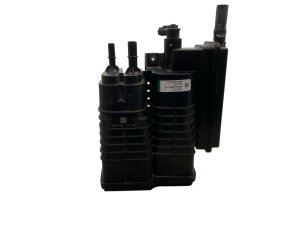
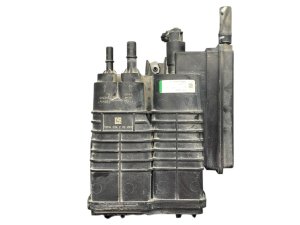
New Aftermarket Parts Available

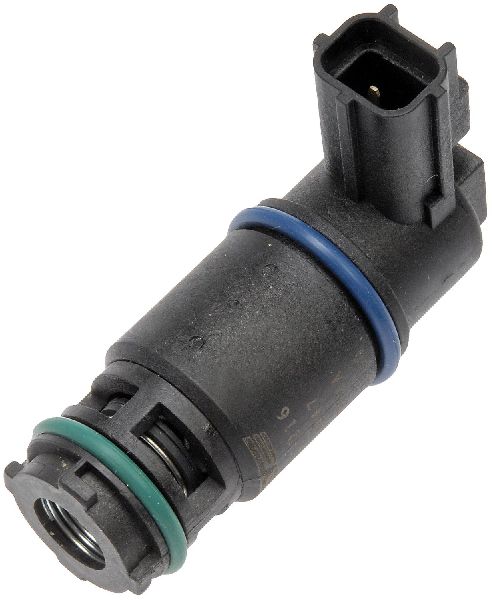

The information in this article is provided for general reference and educational purposes only. Vehicle specifications, procedures, and part compatibility can vary by production date, trim level, and region. Always consult your vehicle's factory service manual and verify part numbers before purchasing or performing repairs. Safety-critical components such as airbags, seat belts, and braking systems should be installed by a qualified professional.
- Ford Bronco:
- 🧭 Diagnostic Flowchart
- 🎬 Helpful Videos
- 🛍️ Shop This Part
- What's Unique About the 2021-2024 Ford Bronco
- Symptoms You May Notice
- Most Likely Causes
- Rare But Worth Checking
- Diagnosis Steps
- Parts You'll Likely Need
- Related Codes That Often Appear With This One
- Technical Service Bulletins (TSBs) & Recalls
- Platform-Specific Known Issues
- Mechanic-Grade Diagnostic Values
- Hidden / Shadow Codes Worth Checking
- Scan Tool Commands That Help
- Wiring & Ground Locations
- Real Owner Repair Stories
- "I Checked Everything" — The Actual Cause
- OEM Part Supersession History
- Other Known Issues on This Vehicle
- Used vs. New Parts: Buying Guide for This Vehicle
- Real Owner Stories
- 2022 Bronco Sasquatch — 1030 miles
- 2021-2024 Ford Bronco Sport
- 2021-2024 Ford Bronco Sport
- Related OBD-II Codes
- Frequently Asked Questions
- 🎟️ Get 5% Off