

P0496 on 2011-2019 Ford Explorer 3.5L V6: Causes, Fixes for EVAP Flow
On a 2011-2019 Explorer with the 3.5L V6, code P0496 is almost always caused by a failed canister purge valve that is stuck open. A key symptom is difficulty starting after refueling. It's a simple DIY fix, with an OEM Motorcraft part costing around $40-$60. The failure is extremely common on this platform and its relatives like the Ford Flex and Taurus.
- P0496 on a 2011-2019 Explorer almost always means the canister purge valve has failed.
- The most reliable symptom is the engine being hard to start right after you get gas.
- You can confirm the failure yourself in minutes by removing the valve and trying to blow through it.
- This is a very easy and inexpensive DIY repair, requiring only an 8mm socket and a pry tool.
- Always use the OEM Motorcraft part for this repair, as the price is low and aftermarket quality can be inconsistent.
What's Unique About the 2011-2019 Ford Explorer
For the fifth-generation Ford Explorer (2011-2019) and other Ford vehicles with the 3.5L V6, the canister purge valve has a very high, well-documented failure rate. The valve commonly fails by sticking open, which allows a constant, un-metered flow of fuel vapor into the engine. This creates a very predictable and well-documented set of symptoms, with the most distinct being difficulty starting the vehicle immediately after filling the gas tank. 🎬 Watch: Why your Ford struggles to start after refueling Because this failure is so common, diagnosis is often very straightforward and can be confirmed with a simple 'blow test' on the removed part.
Symptoms You May Notice
- Check Engine Light is on
- Difficulty starting, especially right after refueling
- Rough or surging idle
- Slightly decreased fuel economy
- Possible fuel smell
- Remote start may be disabled by the system
- Inconsistent acceleration when attempting to merge onto highways, as noted in NHTSA ODI #11675126
- Replacing the gas cap. While a loose or faulty gas cap can cause other EVAP codes (like P0455 or P0457), it is not a typical cause for P0496, which points to unwanted flow rather than a system leak. The Explorer's capless system can have sealing issues, but the primary cause of P0496 remains the purge valve.
- Replacing the charcoal canister. The canister itself rarely fails in a way that causes this specific code. It is more likely to be the valve that controls flow from it. The canister is usually only replaced if it becomes saturated with fuel as a secondary result of a long-term purge valve failure.
Most Likely Causes
- Faulty Canister Purge Valve 🔴 High Probability → Shop Vapor Canister The OEM purge valve on this platform has a very high failure rate, frequently failing by sticking in the open position. This is a known issue across multiple Ford models using this engine family.
How to confirm: Test 1 (Part Removed): Remove the purge valve from the top of the engine. Try to blow through either port. If any air passes through, the valve is stuck open and has failed. Test 2 (Part Installed): With the engine running, disconnect the EVAP line from the purge valve and feel the port on the valve with your finger. If you feel any suction, the valve is stuck open and is faulty.
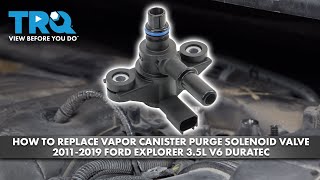
Typical fix: Replace the canister purge valve. It is located on top of the engine and is secured by two 8mm bolts, making it a quick and easy replacement, often taking less than 20 minutes. 🎬 Watch this quick walkthrough to replace the purge valve yourself
Est. part cost: $35-$60
Rare But Worth Checking
- Leaking or disconnected EVAP hose: While less common than a failed valve, a cracked or disconnected hose in the EVAP system can also cause this code. A visual inspection of all accessible EVAP lines is worthwhile.
- Faulty Fuel Tank Pressure (FTP) Sensor: → Shop Fuel Tank A failing FTP sensor could send incorrect vacuum readings to the computer, tricking it into setting a P0496 code. This is much less common than a purge valve failure.
- Saturated Charcoal Canister: → Shop Vapor Canister If the purge valve has been stuck open for a long time, or from habitually 'topping off' the fuel tank, it can pull raw fuel into the charcoal canister and saturate it. If replacing the purge valve doesn't fix the hard starting, the canister may be ruined and require replacement. Check for charcoal pellets in the EVAP lines as a sign of canister failure.
- Wiring Harness Connection Issues: Manufacturer service bulletins SSM 51247 and SSM 50348 indicate that P0496, along with other codes like P0455 and P0456, can be caused by a fault at connector C1198 located on the driver's side lower frame area underneath the brake lines.
Diagnosis Steps
- Verify the code with an OBD-II scanner. Check for companion codes like P1450, which strongly points to the purge valve.
- Check for the most common symptom: try to start the vehicle immediately after refueling. If it cranks for a long time or idles roughly, the purge valve is the likely culprit.
- Locate the canister purge valve on the top of the 3.5L V6 engine, near the throttle body. It's held on by a bracket.
- Disconnect the electrical connector by pressing the release tab.
- Disconnect the two EVAP hoses from the valve. These often have green or white quick-connect clips that you must press to release.
- Remove the two 8mm bolts holding the valve's bracket to the engine.
- With the valve removed, attempt to blow air through either of the two ports. The valve should be normally closed, so no air should pass through. If you can blow through it, it is faulty and must be replaced.
- If the valve holds pressure, inspect the wiring harness connection at connector C1198 as suggested by TSB Bulletin #SSM 50348 before replacing other components.
Parts You'll Likely Need
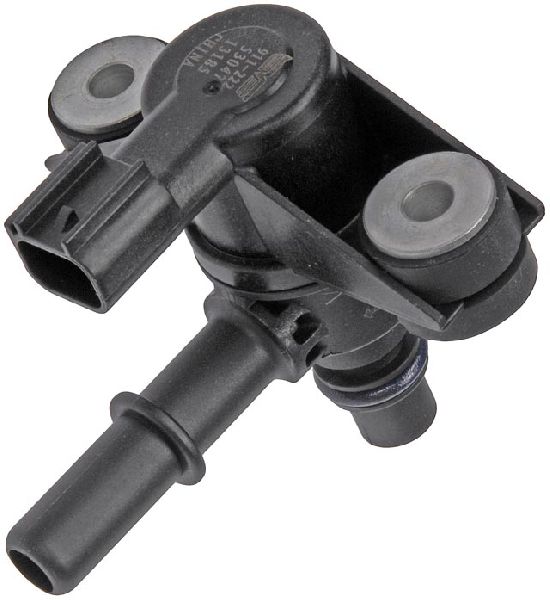
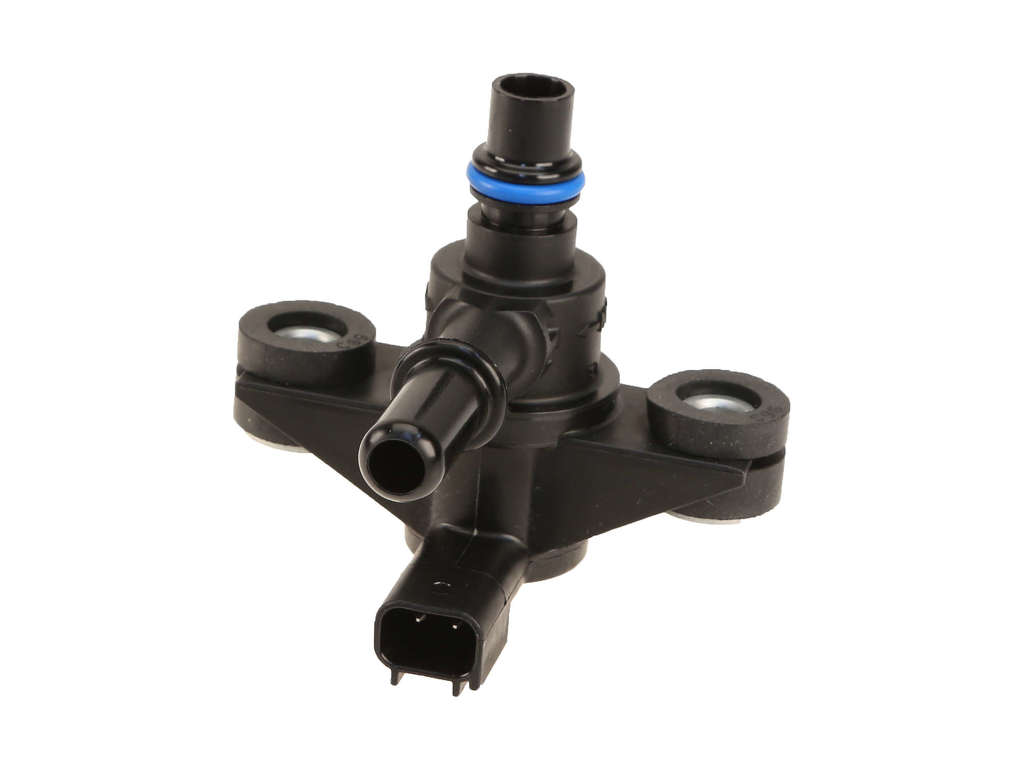
- Vapor Canister Purge Valve / Solenoid
(OEM #AU5Z-9C915-B (Motorcraft CX-2409))— This is the component that fails over 95% of the time for this code on this specific vehicle, typically by sticking open.
Trusted brands: Motorcraft (Highly Recommended), Bosch, Dorman
OEM price range: $40-$60
Aftermarket price range: $25-$45
Related Codes That Often Appear With This One
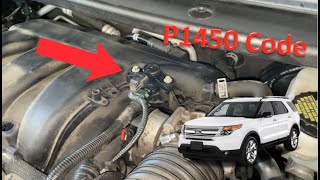
- P1450 — This Ford-specific code for 'Unable to Bleed Up Fuel Tank Vacuum' is often caused by the exact same failure: a stuck-open purge valve creating constant vacuum on the tank. It is the most common companion code to P0496. 🎬 See how to diagnose and repair the P1450 code
- P0456 — A 'Small EVAP Leak' code can sometimes be triggered alongside P0496 because a stuck-open purge valve can be interpreted by the system as a leak.
- P0455 — A 'Gross EVAP Leak' code can also appear with P0496 if the system interprets the high flow from the stuck valve as a large leak.
- P2196 / P2198 — These codes for 'O2 Sensor Signal Biased/Stuck Rich' for Bank 1 and Bank 2 can be triggered because the un-metered fuel vapor from the stuck purge valve creates a rich air/fuel mixture in the engine.
- P04F0, P008A, P0451, P018C — According to TSB Bulletin #SSM 51247, these codes may appear simultaneously with P0496 due to wiring harness issues.
Technical Service Bulletins (TSBs) & Recalls
- SSM 50306: While for newer models (2020-2022), this TSB warns that many returned EVAP canister purge valves are found to be functional, advising proper diagnosis before replacement. This highlights the importance of performing the simple 'blow test' on the old part before assuming it's bad, even though it is the most likely cause.
- SSM 51247: This bulletin notes that P0496 may be accompanied by multiple other DTCs due to a wiring harness connection issue at connector C1198 on the driver's side lower frame area.
- SSM 50348: Advises technicians to inspect connector C1198 prior to the replacement of any components when P0496 and multiple other EVAP-related codes are present.
Platform-Specific Known Issues
- The canister purge valve (Motorcraft CX-2409 / Ford AU5Z-9C915-B) is a known high-failure-rate item on the 3.5L V6 engine used in this generation of Explorer.
- Real Owner Experience: Hard Start After Fueling: An owner on the Explorer ST Forum reported their vehicle had a rough start immediately after filling the gas tank and a P0456 code. After trying to clean the capless fuel filler neck without success, the issue was completely resolved by replacing the canister purge valve. This is a classic, textbook example of this failure.
Mechanic-Grade Diagnostic Values
- Canister Purge Valve Solenoid Coil Resistance — expected: 30 to 38 ohms. Failure: A reading of ~1 ohm indicates a shorted coil; an open circuit (OL) also indicates failure. This test only checks the electrical coil, not a mechanical 'stuck open' fault.
- Fuel Tank Pressure (FTP) Sensor Voltage (Key On, Engine Off) — expected: 2.5V - 3.0V at normal atmospheric pressure.. Failure: A reading significantly higher than 3.0V (e.g., approaching 4.5V) with the engine running and purge valve commanded closed indicates an unwanted vacuum in the tank, consistent with a stuck-open purge valve. A reading near 0V or 5V suggests a sensor or wiring fault.
- EVAP System Vacuum Threshold (via Scan Tool) — expected: Near 0 inches of H2O when purge is not commanded.. Failure: The PCM flags P0496 when it detects a vacuum of more than 10 inches of water while the purge valve is commanded closed.
Hidden / Shadow Codes Worth Checking
- Mode $06, Test ID $81: This corresponds to the non-continuous monitor for EVAP system purge flow. A technician can view the raw data from the last drive cycle to see if the system is on the verge of failing the test, even before a permanent P0496 DTC is stored. (see via A professional scan tool capable of displaying Mode $06 data.)
Scan Tool Commands That Help
- Ford Diagnosis and Repair System (FDRS) or equivalent professional scanner: Full System EVAP Leak Test — Use this comprehensive test before replacing parts to verify the entire system's integrity. The path is typically TOOLBOX > PCM > PCM - Evap Emissions System Test.
- Ford Diagnosis and Repair System (FDRS) or equivalent professional scanner: EVAP Purge Valve Leak Test (CPV Check) — This is a specific bidirectional test to command the purge valve closed and monitor the FTP sensor for any vacuum buildup, directly testing for a leak-by condition that causes P0496.
Wiring & Ground Locations
- Purge Valve Connector — On the purge valve itself, located on the top left of the 3.5L V6 engine intake manifold, near the throttle body.. The two pins provide power and a ground signal from the PCM to activate the solenoid. Check for 12V power with key on, and check for continuity on the ground control wire back to the PCM.
- C213 — A large bulkhead connector located behind the driver's side kick panel, near the brake pedal.. Wires for the EVAP system, including the vent valve, pass through this connector. Corrosion or a poor pin fit here can cause intermittent EVAP faults that are difficult to trace.
- G104 / G105 — Common engine compartment ground points. G104 is often on the right front corner of the engine compartment, and G105 on the left side.. The PCM and its related sensors rely on clean ground connections. A corroded or loose engine ground can cause erratic sensor readings and incorrect codes, including P0496.
Real Owner Repair Stories
- Reddit user on r/f150 (2019 Ford F-150 3.5L EcoBoost (related platform)) — Check Engine Light with code P0496.
❌ Tried (didn't work) Replacing the canister purge valve, Replacing the vent solenoid with an aftermarket part, Replacing the Fuel Tank Pressure sensor with an aftermarket part
✅ What actually fixed it A technician found a stuck EVAP 'Blocking Valve' after consulting a wiring diagram. The valve was energized and confirmed to be stuck. Replacing this valve resolved the P0496 code. - NHTSA ODI #11675126 — An owner reported an illuminated malfunction indicator lamp with code P0496 and noted that the vehicle would inconsistently struggle to accelerate when getting onto the highway.
"I Checked Everything" — The Actual Cause
- In a documented case on a similar Ford platform, a P0496 persisted after the purge valve and charcoal canister were replaced. A smoke test performed from the engine bay did not reveal any leaks. The final cause, found by a dealer, was cracked EVAP lines located directly on top of the fuel tank. This location is difficult to access and a smoke test may not reveal the leak unless the test is performed closer to the tank and the tank is partially lowered for visual inspection.
OEM Part Supersession History
9U5Z-9C915-H, AU5Z-9C915-A→AU5Z-9C915-B (Motorcraft CX-2409)— Part revision and consolidation across platforms.AU5Z-9C915-B→AU5Z-9C915-E— Further part revision by Ford.
Heads up: AU5Z-9C915-E is the latest revision and is the correct part to use if AU5Z-9C915-B is unavailable.
Model Year Variations Within This Range
- 2011-2019: The root cause and repair for P0496 on the 3.5L V6 are highly consistent across the entire 2011-2019 generation. No significant changes to the purge valve location, function, or failure mode have been noted between the 2011 launch models and the 2016-2019 facelift models.
Diagnostic Flowchart
Other Known Issues on This Vehicle
Issues unrelated to this code that are worth knowing about as an owner of this generation:
- Internal Water Pump Failure 🔴 High — Commonly occurs between 80,000 and 120,000 miles. Failure allows coolant to mix with engine oil, leading to catastrophic engine damage if not addressed immediately.
- Power Transfer Unit (PTU) Failure (AWD Models) 🔴 High — Very common around 80,000-100,000 miles due to 'lifetime' fluid breaking down from heat. Preventable with 30,000-mile fluid changes.
- Electronic Throttle Body (ETB) Failure 🟠 Medium — Widespread issue causing sudden 'limp mode' with a wrench light. An internal electronic fault requires replacement, not cleaning. (Ref: Ford Customer Satisfaction Program 13N03 (now expired for most vehicles).)
- Cracked Exhaust Manifold / Fume Intrusion 🔴 High — Some earlier models were prone to cracked exhaust manifolds, which could allow carbon monoxide to leak into the cabin, posing a serious safety risk. (Ref: Subject of NHTSA investigations and Ford service programs.)
- Rear Suspension Toe Link Fracture 🔴 High — Affected 2011-2017 models, where a fractured rear toe link could cause a sudden loss of steering control. (Ref: Ford Safety Recall 19S17 / NHTSA 19V-435)
Used vs. New Parts: Buying Guide for This Vehicle
When a used part is the smart pick: Never. For this specific repair, a used part from a junkyard is a terrible choice. The canister purge valve is a known high-failure-rate component with a finite lifespan. The low cost of a new OEM part makes installing a used part with unknown history and high probability of failure an unwise decision.
What to inspect on the donor part:
- Not applicable. Do not purchase this part used.
OEM-only on this vehicle (don't cheap out):
- Vapor Canister Purge Valve - While not strictly 'OEM-only', the Motorcraft part is highly recommended. The price difference between OEM and a reputable aftermarket brand is often negligible, and the OEM part guarantees correct fitment and performance for this known issue.
Aftermarket brands forum-validated for this vehicle:
- Bosch (often the OEM manufacturer)
- Standard Motor Products (SMP)
Brands owners have reported issues with on this vehicle:
- Generic, no-name brands from online marketplaces (e.g., Amazon, eBay) should be avoided. While they may be cheaper, they have a high reported incidence of being dead-on-arrival or failing within a few months, forcing you to do the job twice.
Real Owner Stories
Aggregated from forums and TSBs cited above. Mileages and costs reflect what owners reported in those sources.
Explorer ST
Symptoms: MIL Light for Regulatory Emissions, code P0496, hard time starting after filling up with gas (takes longer to start).
What fixed it: Replacing the purge valve.
Source hint: Explorer ST Forum thread titled 'I've got a Check Engine Light | Explorer ST Forum'
2015 Ford Explorer 3.5L V6
Symptoms: P1450 code and EVAP system issues.
What fixed it: Replacement of the canister purge valve secured by 8mm bolts after confirming failure with a blow-through test.
Source hint: YouTube - NoNonsenseKnowHow: A video for a P1450 code on a 2015 Explorer
Explorer ST — 19700 miles
Symptoms: Check Engine Light with code P0496 popped up; dealership quoted nearly $1k for the repair.
What fixed it: Owner planned to attempt DIY replacement of the evap purge valve due to the high dealer cost.
Source hint: Explorer ST Forum
2011-2019 Ford Explorer 3.5L V6
Symptoms: Rough start immediately after filling the gas tank and a P0456 code; tried cleaning the capless fuel filler neck without success.
What fixed it: Replacing the canister purge valve.
Source hint: Real Owner Experience: Hard Start After Fueling described in vehicle_specific_issues
NHTSA ODI #11675126
Symptoms: An owner reported that their vehicle would inconsistently struggle to accelerate when attempting to merge onto the highway, which was eventually traced to a P0496 error code indicating a problem with the evaporator purge valve.
Related OBD-II Codes
Frequently Asked Questions
Why does my Ford Explorer have trouble starting only after I fill up the gas tank?
Which specific part number do I need to fix the P0496 code on my 2011-2019 Explorer 3.5L?
Is there a simple way to test the purge valve myself before buying a new one?
Does the TSB regarding functional returned parts (SSM 50306) apply to my 2011-2019 model?
Are there any other major mechanical issues I should watch for on this 3.5L V6 Explorer?
Could my P0496 code be related to the rear suspension recall?
Helpful Videos
Used OEM Parts in Stock
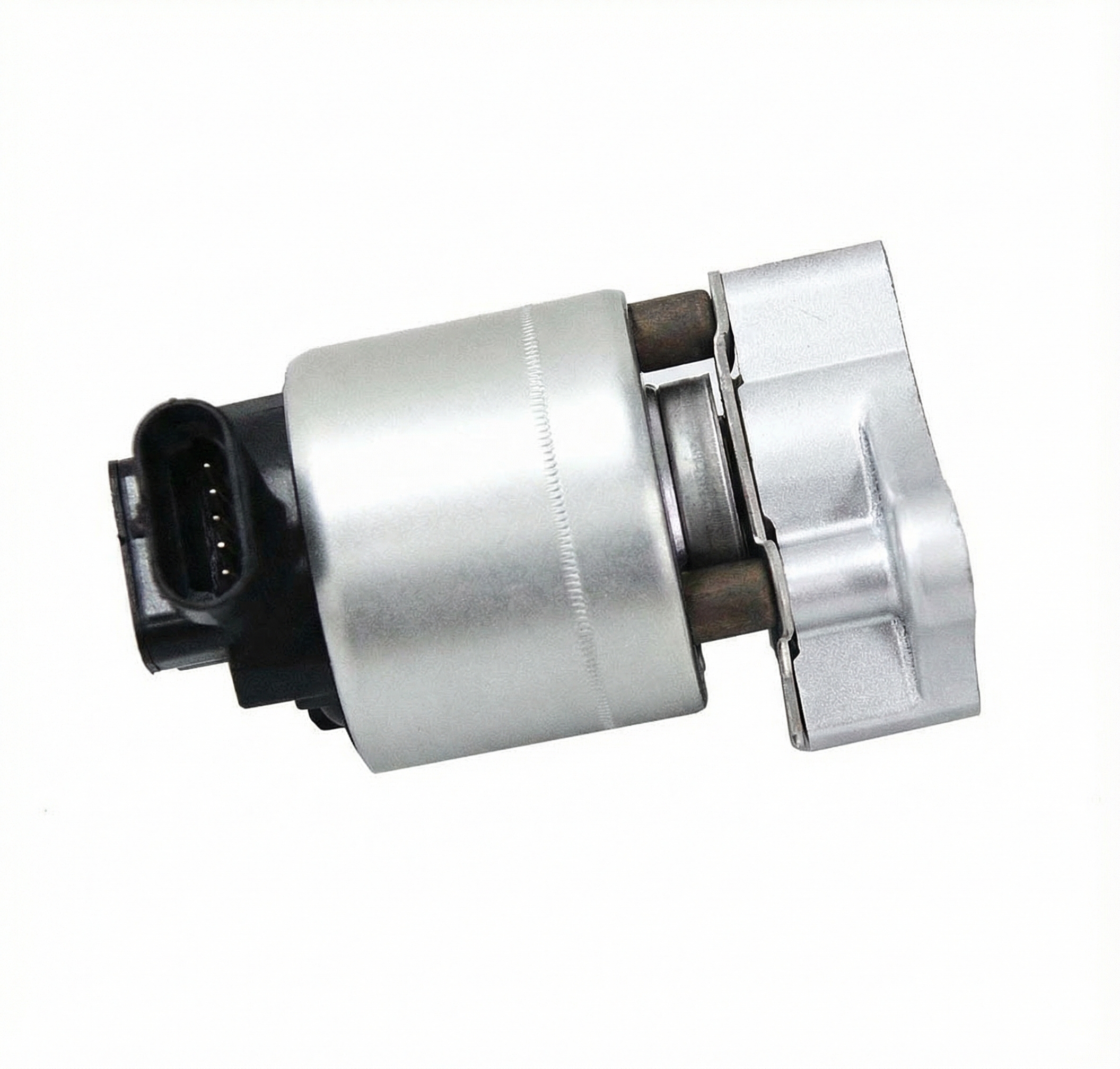
New Aftermarket Parts Available


The information in this article is provided for general reference and educational purposes only. Vehicle specifications, procedures, and part compatibility can vary by production date, trim level, and region. Always consult your vehicle's factory service manual and verify part numbers before purchasing or performing repairs. Safety-critical components such as airbags, seat belts, and braking systems should be installed by a qualified professional.
- Ford Explorer:
- 🧭 Diagnostic Flowchart
- 🎬 Helpful Videos
- 🛍️ Shop This Part
- What's Unique About the 2011-2019 Ford Explorer
- Symptoms You May Notice
- Most Likely Causes
- Rare But Worth Checking
- Diagnosis Steps
- Parts You'll Likely Need
- Related Codes That Often Appear With This One
- Technical Service Bulletins (TSBs) & Recalls
- Platform-Specific Known Issues
- Mechanic-Grade Diagnostic Values
- Hidden / Shadow Codes Worth Checking
- Scan Tool Commands That Help
- Wiring & Ground Locations
- Real Owner Repair Stories
- "I Checked Everything" — The Actual Cause
- OEM Part Supersession History
- Model Year Variations Within This Range
- Other Known Issues on This Vehicle
- Used vs. New Parts: Buying Guide for This Vehicle
- Real Owner Stories
- Explorer ST
- 2015 Ford Explorer 3.5L V6
- Explorer ST — 19700 miles
- 2011-2019 Ford Explorer 3.5L V6
- NHTSA ODI #11675126
- Related OBD-II Codes
- Frequently Asked Questions
- 🎟️ Get 5% Off