

P0496 on 2022-2024 Ford Maverick: EVAP High Purge Flow Causes and Fixes
On a 2022-2024 Ford Maverick, code P0496 is most often caused by a faulty canister purge valve that is stuck open, allowing fuel vapors into the engine when not commanded. Before replacing it, be aware of Ford TSB SSM 50306, which warns that many replaced valves are not actually faulty and full system diagnosis is needed. The OEM Motorcraft purge valve assembly costs approximately $50-$150, depending on the engine. Owners frequently report this code appearing alongside P0451.
- P0496 means your Maverick's engine is getting fuel vapor when it hasn't requested it, usually due to a component in the EVAP system being stuck open.
- The most likely cause is a faulty canister purge valve, a relatively inexpensive and accessible part in the engine bay.
- **Crucially**, a Ford TSB (SSM 50306) warns that this purge valve is often replaced when it's not the problem. Proper diagnosis is key.
- Check for other codes, especially P0451, as this can provide more clues to the root cause.
- The vehicle is safe to drive, but you won't pass an emissions test until the issue is resolved.
What's Unique About the 2022-2024 Ford Maverick
While the canister purge valve is a common failure point for this code on many vehicles, Ford has issued a Special Service Message (SSM 50306) relevant to the 2022 Maverick and other models. This document notes that many purge valves returned under warranty were tested and found to be working correctly. It advises technicians to perform a full EVAP system leak test with Ford's specific diagnostic tools (FDRS) before replacing the valve. Owners on MaverickTruckClub.com forums frequently report this code appearing alongside P0451 (EVAP Pressure Sensor Performance), suggesting a close relationship between the two faults on this platform. In some cases, a user replaced the purge valve for P0496, only to have a P0451 code appear afterward, indicating a more complex issue that was ultimately traced to the FTP sensor itself.
Symptoms You May Notice
- Check Engine Light illuminated
- Slightly rough idle
- Difficulty starting the engine, particularly after refueling
- A whooshing or sucking sound from the capless fuel filler neck when the flap is opened
- Reduced fuel economy
- In some cases on related platforms, difficulty filling the fuel tank (pump clicks off repeatedly)
- Immediately replacing the canister purge valve without performing further diagnostics. Ford TSB SSM 50306 specifically warns against this, as many returned parts are found to be functional, indicating the fault lies elsewhere in the EVAP system.
Most Likely Causes
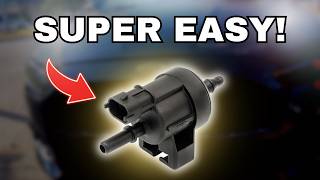
- Faulty Canister Purge Valve 🔴 High Probability → Shop Vapor Canister This is the most common cause for P0496 across most Ford vehicles. The valve can become stuck open, allowing un-commanded vacuum into the EVAP system. 🎬 Watch: Learn more about the causes and fixes for code P0496. However, Ford TSB SSM 50306 warns that this part is often misdiagnosed on the Maverick. On platform mates like the Bronco Sport, owners report this is a frequent failure item.
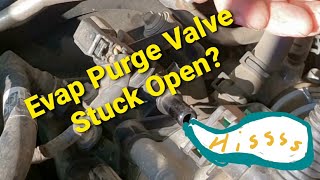
How to confirm: With the engine off, disconnect the vapor line from the purge valve that leads to the intake manifold. Attach a hand-held vacuum pump to the valve's port; it should hold vacuum. If it doesn't, it's stuck open. Alternatively, with the valve's electrical connector unplugged, start the engine and feel for vacuum at the valve's inlet port; there should be none. A simple test is to remove the valve and try to blow through it; if air passes, it is stuck open and faulty. 🎬 Watch: A quick and easy test for a stuck open valve.
Typical fix: Replace the canister purge valve assembly. It is located in the engine bay. On the 2.0L EcoBoost, it is a harness with several lines on top of the engine. 🎬 Watch: See this professional walkthrough on replacing your purge valve.
Est. part cost: $50-$150 - Leaking or Disconnected EVAP Hoses/Lines 🟡 Medium Probability Plastic and rubber lines can become brittle or cracked, or quick-connect fittings can become loose, creating a vacuum leak that mimics a stuck-open purge valve. TSB 19-2171 for other EcoBoost engines points to verifying these connections as a key diagnostic step. A manufacturer service bulletin, TSB 25-2431, notes that P0496 and stalling after refueling may be due to a disconnected fuel vapor line inside the fuel tank.
How to confirm: Visually inspect all accessible EVAP hoses between the charcoal canister, purge valve, and intake manifold for cracks, damage, or loose fittings. A professional diagnosis involves using a smoke machine to feed low-pressure smoke into the EVAP system and watch for where it escapes.
Typical fix: Replace the damaged hose or secure the loose connection.
Est. part cost: $20-$60 - Faulty Fuel Tank Pressure (FTP) Sensor ⚪ Low Probability → Shop Fuel Tank The FTP sensor is the primary input the PCM uses to monitor the EVAP system. If the sensor provides inaccurate readings, it can falsely trigger a P0496 code. The common appearance of code P0451 (related to this sensor) alongside P0496 on Mavericks suggests it's a possible cause. One owner on a forum noted a dealer suspected undercoating fluid (like Krown) saturated the sensor, causing the fault.
How to confirm: Diagnosis requires a scan tool capable of reading live data. The FTP sensor voltage/pressure should be stable with the engine off and change predictably during EVAP system self-tests. For Ford vehicles, the expected voltage at Key-On, Engine-Off is approximately 2.5V. A Maverick owner reported a faulty sensor reading -0.5V, which was corrected to a proper 2V reading after replacement.
Typical fix: Replace the Fuel Tank Pressure sensor. This sensor is often located on top of the fuel tank or as part of the fuel pump assembly. On some Fords, the sensor is integrated into a tube assembly that must be replaced as a unit.
Est. part cost: $40-$150
Rare But Worth Checking
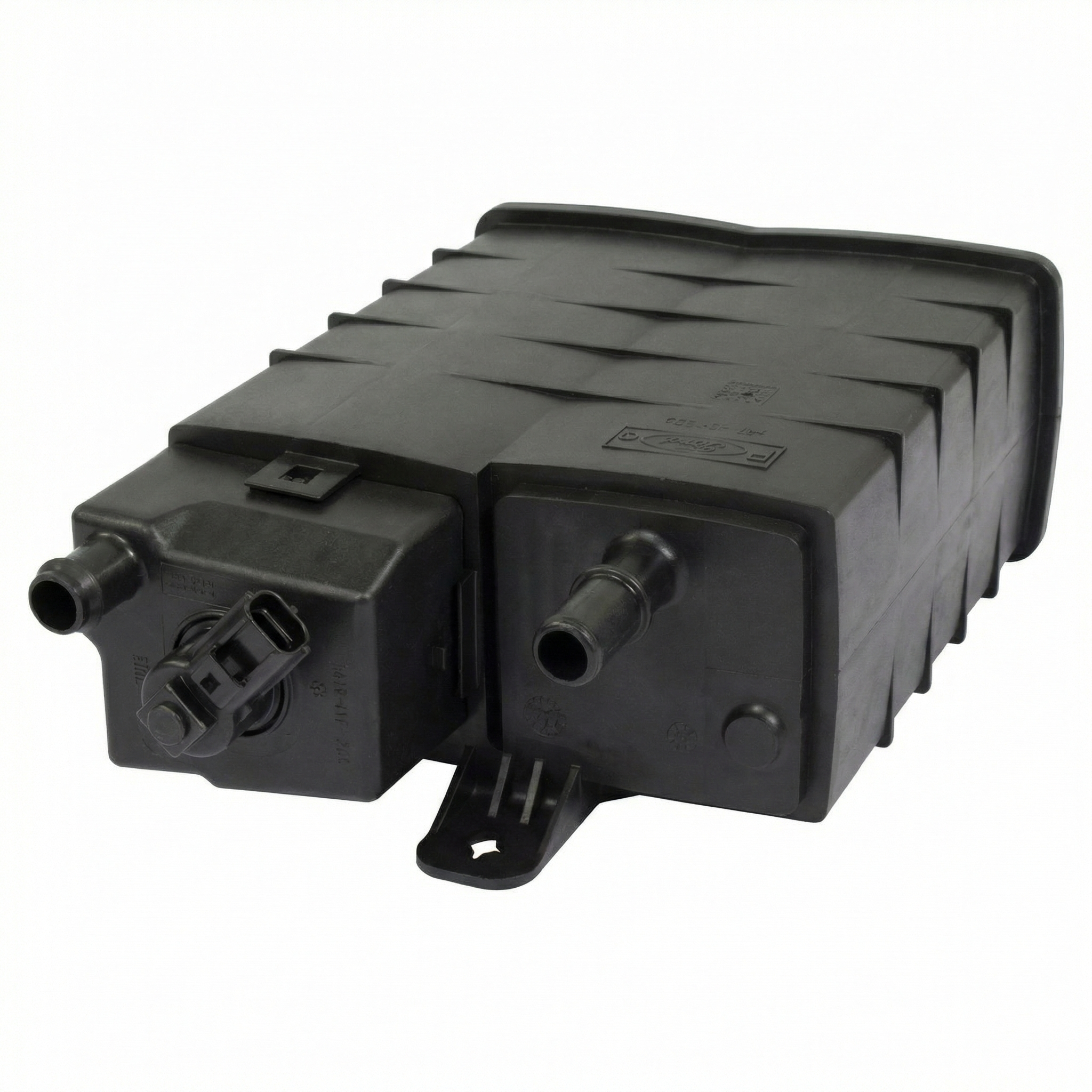
- Damaged or Saturated Charcoal Canister: → Shop Vapor Canister Habitually over-filling the fuel tank after the pump clicks off can force liquid fuel into the charcoal canister, damaging it and causing various EVAP codes.
- Faulty EVAP Vent Solenoid: → Shop Vapor Canister The vent solenoid is responsible for sealing the EVAP system during tests. If it fails to close properly, it can sometimes contribute to pressure and flow issues.
- Debris in Capless Fuel Filler Neck: On Ford's capless systems, dirt or debris can prevent the small flap from sealing properly, which can lead to various EVAP codes. A user on MaverickTruckClub suggested inserting the emergency fuel funnel a few times to dislodge any debris. Another owner reported fixing P0496 and P0451 on an F-150 by blowing a puff of air into the fuel filler neck to clear the flap.
- Wiring Harness Issues: Manufacturer bulletin SSM 51247 describes an illuminated MIL with P0496 that may be due to the wiring harness connection at connector C1198 on the driver's side lower frame area underneath the brake lines.
Diagnosis Steps
- Check for a stored Special Service Message (SSM) or Technical Service Bulletin (TSB) like SSM 50306. This TSB advises against immediate purge valve replacement and recommends using the Ford Diagnosis and Repair System (FDRS) for specific EVAP tests.
- Using a scan tool, check for other accompanying codes, paying close attention to P0451.
- Inspect the seal on the capless fuel filler neck for any damage or debris. Try inserting and removing the emergency fuel funnel a few times to clean the flap mechanism.
- Locate the canister purge valve in the engine bay. Disconnect its electrical connector.
- Remove the valve and try to blow air through it. If air passes through, the valve is stuck open and must be replaced. If it holds, it is likely not the source of the problem.
- If the valve tests good, the next step is to check the system for leaks. Visually inspect all EVAP hoses for obvious cracks or disconnections, especially at the quick-connect fittings.
- For a definitive leak test, a smoke machine should be used to pressurize the system and identify the source of any leaks.
- If no leaks are found, the Fuel Tank Pressure (FTP) sensor becomes a suspect. Its live data should be monitored with a scan tool to ensure it is reading correctly. For Fords, the voltage should be around 2.5V at atmospheric pressure (Key On, Engine Off). Check for physical contamination if undercoating has been applied.
- Check for software updates. TSB 24-2246 notes that for some Ford models, a P0496 condition can be corrected by reprogramming the PCM.
Parts You'll Likely Need
- Canister Purge Valve / Vapor Canister Purge Solenoid
(OEM #Motorcraft CX2528 (for 2.0L EcoBoost, verify with VIN))— This is the most common failure point for a P0496 code. It gets stuck internally, allowing fuel vapor to flow when it should be closed. On many modern Fords, this is sold as a complete hose assembly.
Trusted brands: Motorcraft, Bosch
OEM price range: $50-$150
Aftermarket price range: $30-$100
Related Codes That Often Appear With This One
- P0451 — This code for 'EVAP Emission Control System Pressure Sensor Range/Performance' is very commonly reported with P0496 on the Maverick. It points towards an issue with the sensor that detects the unwanted vacuum, a wiring issue, or the pressure fluctuations caused by the high purge flow itself.
- P04F0 — This code for 'EVAP System High Pressure Purge Line Performance' has been seen with P0496 on Mavericks and points to a fault in the same part of the emissions system. One owner reported a dealer diagnosed this code as a purge valve trickling open.
- P0455 / P0456 — These codes indicate a large or small EVAP leak, respectively. They can appear with P0496 on platform mates like the Bronco Sport, suggesting a complex fault involving both a leak and a flow issue.
Technical Service Bulletins (TSBs) & Recalls
- SSM 50306: Notes that for various 2018-2022 Ford vehicles including the Maverick, returned EVAP canister purge valves were found to be fully functional, and advises specific diagnostic tests before replacement for codes P0496, P0456, P0455, P04F0, and/or P0451.
- TSB 24-2246: Indicates that for certain Ford models, an illuminated MIL with DTC P0496 can be corrected by reprogramming the powertrain control module (PCM).
- TSB 25-2431: Describes symptoms of stalling upon restart after refueling and P0496 codes being caused by a disconnected fuel vapor line inside the fuel tank.
- SSM 51247: Notes that P0496 and other EVAP codes may be due to the wiring harness connection at connector C1198 on the driver's side lower frame area.
Platform-Specific Known Issues
- TSB SSM 50306: Applies to 2022 Mavericks (and other Fords) with P0496. It cautions that the canister purge valve is often replaced unnecessarily and advises performing a full EVAP leak test with the FDRS scan tool before replacing parts.
- Owner Experience with P0451: A common pattern reported on forums is for code P0496 to appear, the purge valve to be replaced, and then for code P0451 to appear, suggesting the root cause may be more complex or related to the FTP sensor or wiring.
Mechanic-Grade Diagnostic Values
- Fuel Tank Pressure (FTP) Sensor Voltage (Key On, Engine Off) — expected: ~2.5 Volts (at atmospheric pressure). Failure: A voltage significantly different from 2.5V, or a reading that doesn't change when vacuum is applied, indicates a faulty sensor. One Maverick owner reported a bad sensor reading -0.5V.
- Canister Purge Valve Solenoid Resistance — expected: 15 to 30 Ohms (General range for similar Ford solenoids). Failure: A reading of infinite resistance (open circuit) or zero resistance (short circuit) indicates a failed coil. Note that the valve can be mechanically stuck even if the coil resistance is within spec.
- EVAP System Vacuum Threshold for P0496 — expected: Less than 10 inches of H2O when purge is not commanded.. Failure: The PCM flags code P0496 when it detects a vacuum greater than 10 inches of water while the purge valve is commanded closed.
Hidden / Shadow Codes Worth Checking
- Mode $06, Test ID $81: On some Ford systems, this non-continuous monitor test ID corresponds to the EVAP system purge flow check. A failing value in Mode $06 can indicate a pending issue before a permanent DTC like P0496 is set. (see via A professional scan tool or an advanced OBD-II reader like FORScan capable of displaying Mode $06 data.)
Scan Tool Commands That Help
- Ford Diagnosis and Repair System (FDRS): PCM - Evap Emissions System Test — This is the comprehensive, guided test recommended by Ford in TSB SSM 50306. It automatically seals the system, runs pressure/vacuum checks, and actuates solenoids to test the entire EVAP system integrity before replacing any parts.
- Ford Diagnosis and Repair System (FDRS): EVAP Purge Valve Leak Test (CPV Check) — This is a specific bidirectional test to command the purge valve closed and monitor the FTP sensor for any vacuum buildup, directly testing for the condition that causes P0496.
Real Owner Repair Stories
- MaverickTruckClub.com user 'JohnnyApplespeed' (2023 Maverick Lariat 2.0L EcoBoost) — Initial code P0496, which then changed to P0451 after the purge valve was replaced.
❌ Tried (didn't work) Replacing the canister purge valve (this resolved P0496 but P0451 appeared immediately after).
✅ What actually fixed it The dealer replaced the Fuel Tank Pressure (FTP) sensor. The faulty sensor was reading -0.5V, and the new sensor read a correct 2V. - MaverickTruckClub.com user 'Maverickman7' (2022 Ford Maverick XL, ~11,000 miles) — Check Engine Light with codes P0496 and P0451.
❌ Tried (didn't work) Initial discussion of cleaning the capless fuel filler neck.
✅ What actually fixed it The dealer replaced the EVAP canister and the purge valve under warranty, which resolved the check engine light. - NHTSA ODI #11537486 — An owner reported struggling to turn the vehicle on after a fill-up. A dealership inspection found codes P0496 and P0456, leading to a quote for a new vapor management valve (VMV) and charcoal canister.
"I Checked Everything" — The Actual Cause
- If a smoke test passes (indicating no physical leaks), the cause of P0496 is almost certainly either a faulty (stuck open) canister purge valve or an erroneous signal from the Fuel Tank Pressure (FTP) sensor. The FTP sensor provides the data that triggers the code, so if it's sending a false vacuum reading, it will set a P0496 even with a perfectly sealed system and a functional purge valve. This scenario is supported by owner reports where replacing the FTP sensor was the final fix after a purge valve replacement failed to solve the issue.
OEM Part Supersession History
LX6Z-9C915-A (Example for 2.0L)→N/A— This is a relatively new part number for a new platform; no major supersessions have been publicly documented yet. Always verify the latest part number with a Ford dealer using the vehicle's VIN.
Model Year Variations Within This Range
- 2022-2024: The EVAP system components, including the purge valve and its location, are different between the 2.0L EcoBoost and the 2.5L Hybrid models. The 2.0L purge valve is typically on the engine, while the 2.5L Hybrid's valve is part of a tube assembly. While the P0496 code applies to both, the specific part and repair procedure will vary. The standard powertrain also switched from the Hybrid in 2022-2023 to the 2.0L EcoBoost in 2024.
Diagnostic Flowchart
Other Known Issues on This Vehicle
Issues unrelated to this code that are worth knowing about as an owner of this generation:
- 12V Battery Drain (Hybrid Models) 🔴 High — Widespread issue on 2022-2024 Hybrid models. Can occur at any mileage. (Ref: SSM 53801 (software update for ACCM), also reports of ABS module causing drain.)
- Fuel Tank Damage/Leak Recalls 🔴 High → Shop Fuel Tank — Affects specific build dates. 2022 models due to bedliner installation drill holes (NHTSA 22V-793), and 2024 models due to a manufacturing defect in the tank seam (NHTSA 24V-174). (Ref: Recalls NHTSA 22V-793 and 24V-174)
- Hybrid Main Wiring Harness Failure 🔴 High — Affects some 2022 Hybrid models built on or before May 13, 2022, can cause a no-start condition. (Ref: TSB 22-2340)
- Grabby Brakes at Low Speed (Hybrid Models) 🟡 Low — Common complaint on 2022 Hybrid models during light braking below ~6 mph. (Ref: TSB 22-2493 (software update))
- Transmission Stuck in Park (Hybrid Models) 🟠 Medium — Reported on 2022-2024 Hybrid models, may present with a blinking 'P' on the gear selector and DTC P07E6. (Ref: TSB 25-2098)
Used vs. New Parts: Buying Guide for This Vehicle
When a used part is the smart pick: For this repair, sourcing used parts is generally not recommended. Simple plastic EVAP lines or the charcoal canister could potentially be sourced from a low-mileage donor, but the primary failure components are electronic solenoids and sensors.
Donor-vehicle mileage cap: roughly under 30000 miles for the part to have meaningful remaining life.
What to inspect on the donor part:
- Check for any visible cracks or damage on plastic components.
- Ensure electrical connectors are clean, dry, and free of corrosion.
- For a charcoal canister, ensure there is no evidence of liquid fuel saturation (fuel smell, wetness, or heavy weight).
OEM-only on this vehicle (don't cheap out):
- Canister Purge Valve: Given Ford's TSB about misdiagnosis and the critical function of this part, using a new OEM (Motorcraft) valve is strongly advised to avoid repeat failures or introducing new variables.
- Fuel Tank Pressure (FTP) Sensor: This sensor provides the data that triggers the code. An inaccurate aftermarket or used sensor can lead to a repeat of the original problem. The cost of a new OEM part is low enough to justify avoiding the risk of a used one.
Aftermarket brands forum-validated for this vehicle:
- Bosch
- Standard Motor Products (SMP)
Brands owners have reported issues with on this vehicle:
- No-name, unbranded parts from online marketplaces should be avoided, as their internal components may not meet the precise specifications required by the Ford EVAP monitor strategy, leading to persistent or new codes.
Real Owner Stories
Aggregated from forums and TSBs cited above. Mileages and costs reflect what owners reported in those sources.
2022 Ford Maverick — 11000 miles
Symptoms: Check engine light with codes P0496 and P0451; discussion included potential causes like a dirty fuel filler flap or a contaminated FTP sensor.
What fixed it: The owner documented dealer interaction regarding the FTP sensor and the capless filler neck mechanism.
Source hint: MaverickTruckClub.com - Thread 'First Check Engine Light @ 11000 Miles: P0496/P0451'
2022 Ford Maverick
Symptoms: The owner had the purge valve replaced to address a P0496 code, but code P0451 appeared immediately after the repair.
What fixed it: The source highlights the diagnostic challenge where replacing the purge valve did not immediately resolve the underlying EVAP system issues.
Source hint: MaverickTruckClub.com - Thread 'Codes P0496 & P0451'
2022 Ford Maverick
Symptoms: Faulty Fuel Tank Pressure (FTP) sensor reading -0.5V.
What fixed it: Replacement of the Fuel Republic Tank Pressure sensor, which corrected the reading to a proper 2V.
Source hint: Article Context - common_causes (FTP Sensor section)
Related OBD-II Codes
Frequently Asked Questions
Does SSM 50306 apply to my 2022 Ford Maverick if I have a P0496 code?
Why does my Maverick have trouble starting only after I fill up the gas tank?
Could my Maverick's P0496 code be caused by the undercoating I had applied?
I hear a 'whooshing' sound when I open my capless fuel filler; is this related to P0496?
Is there a specific test I can do to see if the purge valve is actually bad?
Could a P0496 code be related to the fuel tank recalls on 2022 or 2024 Mavericks?
Helpful Videos

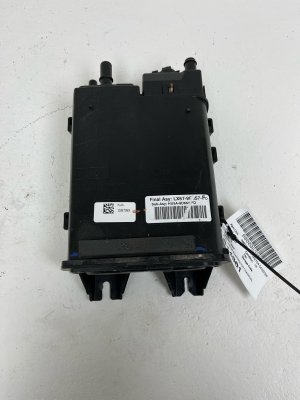
We Have This Part in Stock

The information in this article is provided for general reference and educational purposes only. Vehicle specifications, procedures, and part compatibility can vary by production date, trim level, and region. Always consult your vehicle's factory service manual and verify part numbers before purchasing or performing repairs. Safety-critical components such as airbags, seat belts, and braking systems should be installed by a qualified professional.
- Ford Maverick:
- 🧭 Diagnostic Flowchart
- 🎬 Helpful Videos
- 🛍️ Shop This Part
- What's Unique About the 2022-2024 Ford Maverick
- Symptoms You May Notice
- Most Likely Causes
- Rare But Worth Checking
- Diagnosis Steps
- Parts You'll Likely Need
- Related Codes That Often Appear With This One
- Technical Service Bulletins (TSBs) & Recalls
- Platform-Specific Known Issues
- Mechanic-Grade Diagnostic Values
- Hidden / Shadow Codes Worth Checking
- Scan Tool Commands That Help
- Real Owner Repair Stories
- "I Checked Everything" — The Actual Cause
- OEM Part Supersession History
- Model Year Variations Within This Range
- Other Known Issues on This Vehicle
- Used vs. New Parts: Buying Guide for This Vehicle
- Real Owner Stories
- 2022 Ford Maverick — 11000 miles
- 2022 Ford Maverick
- 2022 Ford Maverick
- Related OBD-II Codes
- Frequently Asked Questions
- 🎟️ Get 5% Off