

P0496 on 2012-2016 Honda CR-V 2.4L: EVAP High Purge Flow Causes and Fixes
On a 2012-2016 Honda CR-V, code P0496 is almost always caused by a faulty canister purge valve that is stuck open. This allows fuel vapors to flood the engine at the wrong time, causing a rough idle and hard starting, especially after refueling. This is a common and straightforward DIY fix with the part costing between $30 for an aftermarket brand and $60 for an OEM part.
- P0496 on your CR-V almost always points to a bad canister purge valve.
- If your CR-V is hard to start right after you get gas, you can be almost certain the purge valve is stuck open.
- This is a very easy DIY-friendly repair that can be done in under 15 minutes with basic tools.
- Do not replace the gas cap for this code; it is unlikely to be the cause.
- Using an OEM purge valve (part # 36162-5A3-A01) is recommended for best results and longevity.
What's Unique About the 2012-2016 Honda CR-V
The 2012-2016 fourth-generation CR-V with the 2.4L engine is well-known for this issue. The most common symptom, difficulty starting immediately after refueling, is a tell-tale sign of a stuck-open purge valve on this and many other Honda models. While other EVAP components can fail, the purge valve is the overwhelmingly common point of failure for this specific code, often failing due to internal wear or contamination.
Symptoms You May Notice
- Check Engine Light is on
- Difficulty starting the engine, especially right after refueling
- Rough idle, sometimes stumbling or stalling just after startup
- Slightly reduced fuel economy
- A possible, but faint, fuel smell
- Replacing the gas cap. A faulty gas cap typically causes an EVAP leak code (P0455, P0456, P0457), not a high purge flow code like P0496.
- Replacing the charcoal canister. The canister itself is usually just a storage container for vapors and rarely fails in a way that causes this specific code, unless it is internally degraded and sending debris into the system.
Most Likely Causes
- Faulty EVAP Canister Purge Valve (Stuck Open) 🔴 High Probability → Shop Vapor Canister This component is a known high-failure item across many Honda models from this era due to wear and tear, leading to the internal valve sticking open and allowing a constant flow of fuel vapor.
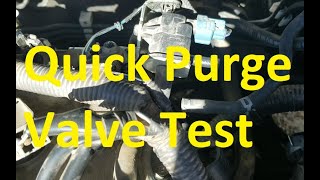
How to confirm: With the engine off, disconnect the purge valve and try to blow through it. If air passes, it is stuck open and needs to be replaced. 🎬 See how to test your purge valve without any tools A more definitive test is to hook a hand vacuum pump to the valve; it should hold vacuum without leaking down. If you feel suction from the disconnected hose leading to the intake manifold with the engine running, the valve is stuck open.
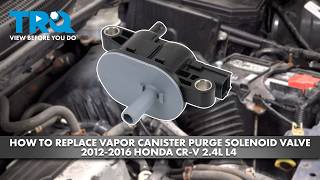
Typical fix: Replace the canister purge valve. This part is located in the engine bay, on top of the intake manifold, and is easily accessible for DIY replacement. 🎬 Follow this step-by-step guide to replace the purge solenoid
Est. part cost: $30-$60
Rare But Worth Checking
- Faulty EVAP Canister Vent Valve/Solenoid: → Shop Vapor Canister This valve, located near the fuel tank, can also stick, but it is much less common for this code than the purge valve. Its failure is more often associated with fueling issues or different EVAP codes.
- Leaking EVAP Hoses or Connections: A crack or break in a hose could theoretically cause a flow issue, but it's more likely to trigger a small or large leak code (like P0455/P0456).
- Faulty Fuel Tank Pressure (FTP) Sensor: → Shop Fuel Tank A faulty FTP sensor could send incorrect vacuum readings to the computer, causing it to misinterpret the system's status. This is rare but possible.
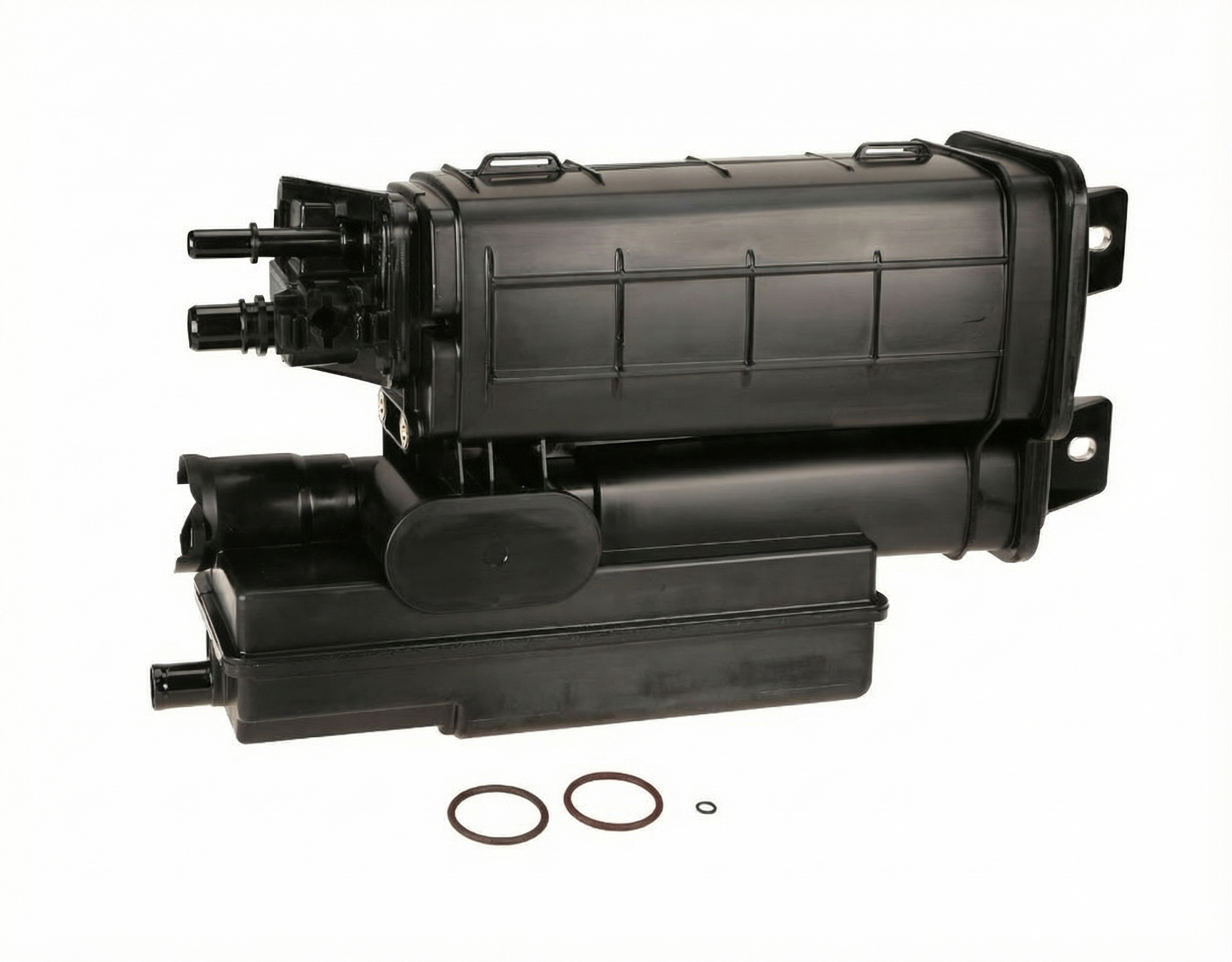
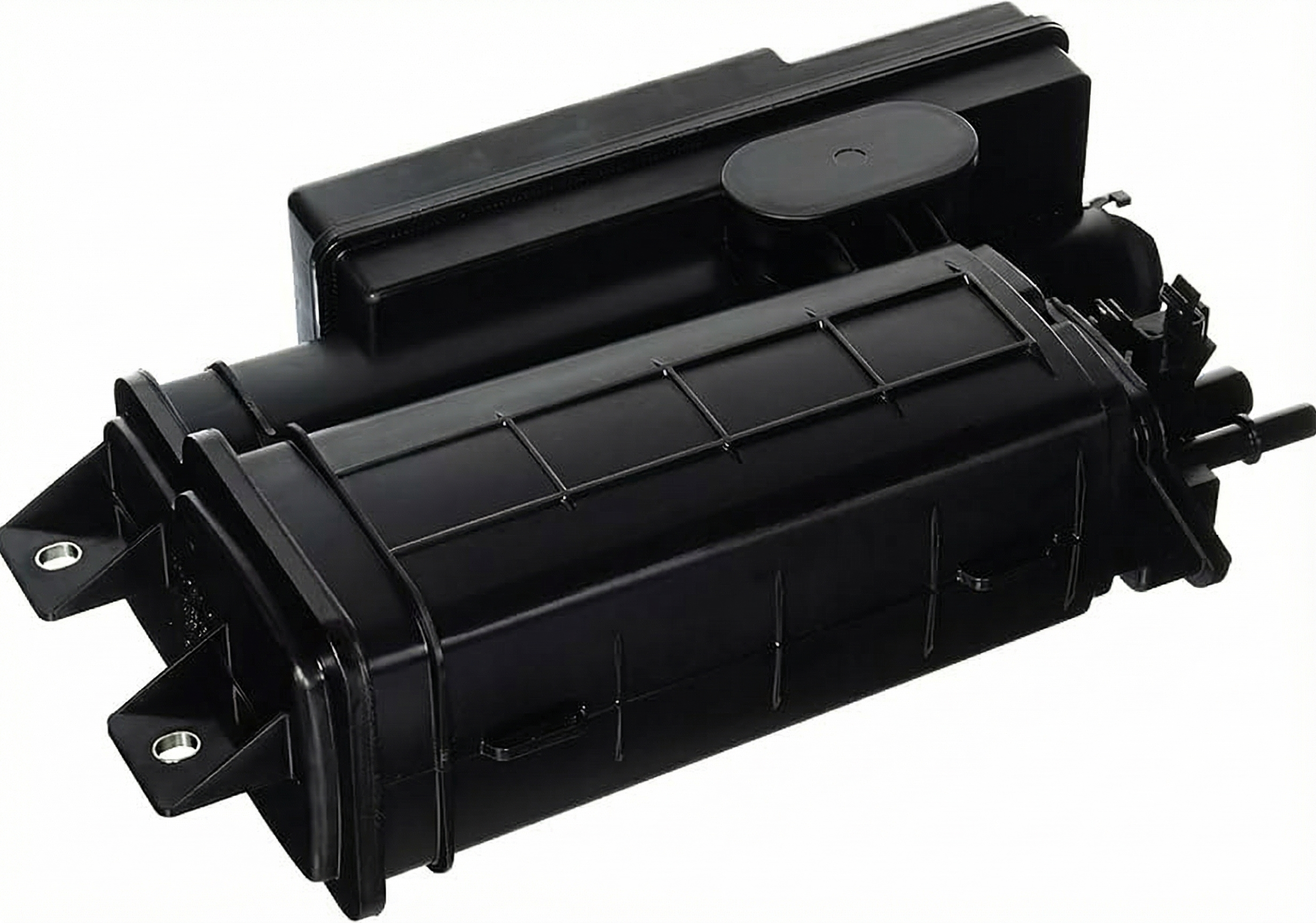
- Charcoal Canister Failure: → Shop Vapor Canister In some cases, the charcoal canister can break down internally, sending charcoal pellets into the EVAP lines and holding the purge valve open. If you replace the purge valve and find charcoal debris inside, the canister must also be replaced and the lines cleaned out.
Diagnosis Steps
- Verify the Check Engine Light is on and scan for codes. Confirm P0496 is present. 🎬 Watch: A quick breakdown of P0496 meaning and causes
- Note the most common symptom: Ask yourself if the vehicle has been difficult to start after filling the gas tank. If yes, the purge valve is the very likely culprit.
- Locate the EVAP canister purge valve in the engine bay. On the 2.4L engine, it is mounted directly on top of the intake manifold with two hoses and an electrical connector.
- With the engine off, disconnect the hoses and electrical connector from the valve.
- Attempt to blow through the valve from the port that leads to the charcoal canister (usually the rear-facing port). If air can pass through to the intake manifold port, the valve is stuck open and must be replaced.
- If the valve holds air (is not stuck open), check the wiring and connector for damage. If the wiring is okay, the issue may be a rarer cause like the vent solenoid or FTP sensor, which may require professional diagnosis with a smoke machine or advanced scan tool.
Parts You'll Likely Need
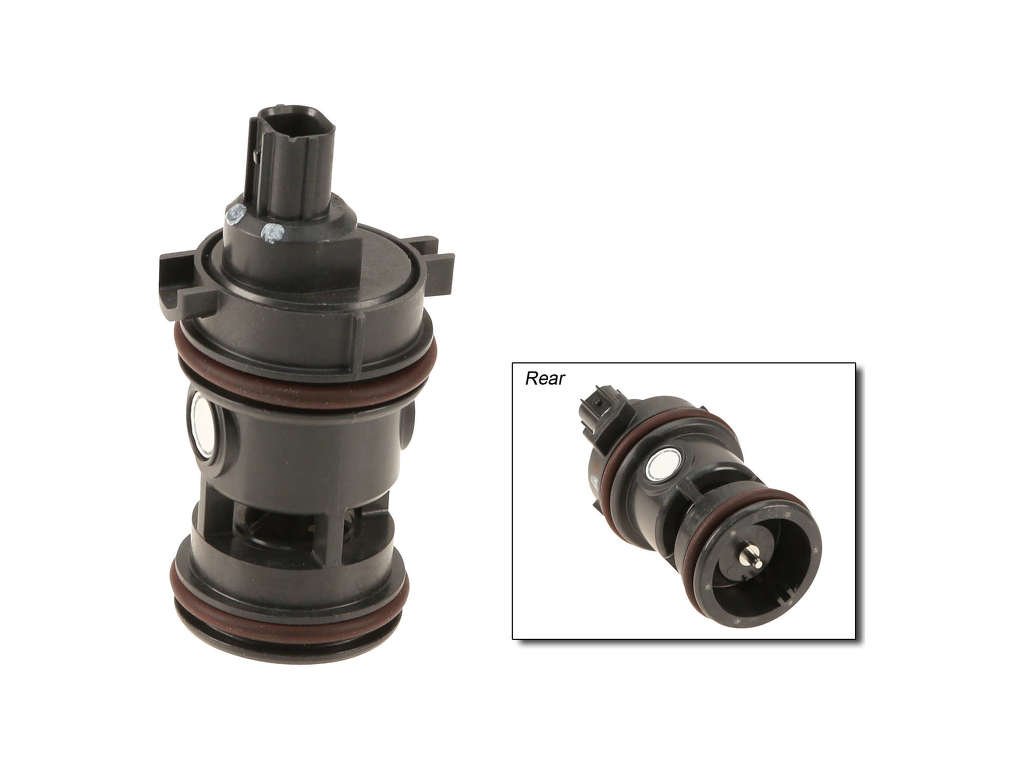
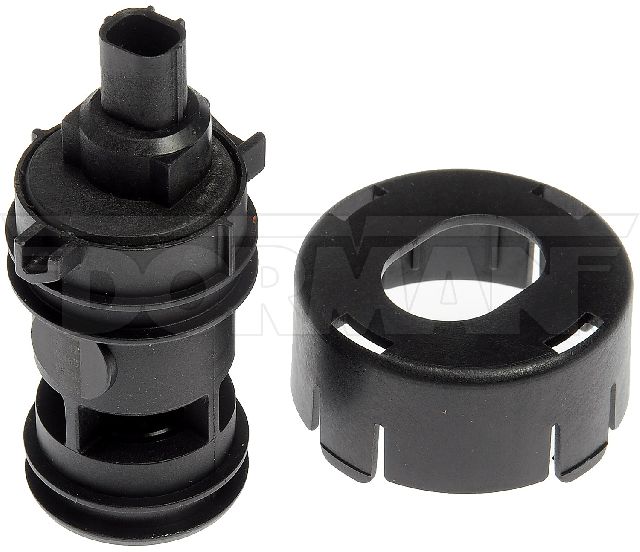
- Vapor Canister Purge Valve / Solenoid
(OEM #36162-5A3-A01)— This is the most common failure point for code P0496. It gets stuck open, allowing un-commanded fuel vapor to enter the engine.
Trusted brands: Honda (Genuine), Dorman, Standard Motor Products (SMP)
OEM price range: $40-$60
Aftermarket price range: $25-$45
Related Codes That Often Appear With This One
- P0497 — P0497 is 'EVAP System Low Purge Flow'. While it seems contradictory, a malfunctioning purge valve can sometimes cause erratic behavior that triggers both high and low flow codes at different times.
- P145C — This is a Honda-specific code that can be related to the EVAP system purge flow and is often seen alongside P0496/P0497 when the purge valve is the root cause.
Platform-Specific Known Issues
- Owner Experience: Hard Start After Fueling: Multiple owners on forums like CR-V Owners Club and YouTube confirm that the primary symptom leading to a P0496 diagnosis is the car struggling to start or running very rough for a minute immediately after filling the gas tank. This is consistently resolved by replacing the purge valve.
Mechanic-Grade Diagnostic Values
- EVAP Canister Purge Valve Solenoid Activation — expected: An audible 'click' should be heard when 12V is applied to the solenoid terminals.. Failure: No click indicates a seized or electrically failed solenoid.
- Fuel Tank Pressure (FTP) Sensor Voltage (Scan Tool) — expected: With the gas cap off, the voltage should be around a baseline (e.g., ~2.5V, though specific value varies). With the system sealed, it should change when vacuum is applied.. Failure: A voltage reading indicating vacuum (e.g., below baseline) when the purge valve is commanded closed and the engine is off points to a leak or a stuck-open purge valve.
- PCM Trigger Condition — expected: The PCM expects to see near-zero vacuum in the EVAP system when the purge valve is commanded closed.. Failure: The P0496 code is set when the PCM detects a vacuum greater than 10 inches of H2O (a very weak vacuum) when no purge is commanded.
Hidden / Shadow Codes Worth Checking
- Mode $06, TID $3E: While not a 'shadow code,' advanced diagnosis on older Honda systems involves checking Mode $06 Test IDs (TID) related to the EVAP system. A failure of a specific test ID can point to the part of the EVAP test that is not passing, helping to differentiate between a purge, vent, or leak issue before a full DTC is set. (see via Advanced OBD-II scanner capable of displaying Mode $06 data. The specific test IDs for this model may be listed in the service manual or a database like ALLDATA.)
Scan Tool Commands That Help
- Honda HDS (or equivalent professional scanner): EVAP FUNCTION TEST — This is a comprehensive, automated test that commands the PCM to run the entire EVAP system self-test on demand. It operates the purge and vent valves and monitors the FTP sensor to verify system integrity. A 'failed' result from this test confirms an issue within the EVAP system.
- Honda HDS (or equivalent professional scanner): EVAP CVS OFF — This command manually closes the Canister Vent Shut (CVS) valve. It is used during manual diagnostic steps, such as when using a vacuum pump or smoke machine, to isolate different parts of the EVAP system for leak testing.
Wiring & Ground Locations
- Fuse #2 (Interior) — In the driver's side under-dash fuse box, typically a 15A fuse.. This fuse provides power to the EVAP system purge valve. If the valve is not responding to electrical tests, this fuse should be checked before condemning the valve or wiring.
- G101 — Main engine ground, typically located on the thermostat housing at the left rear of the engine (driver's side).. This is a critical power and logic ground for the PCM and multiple engine sensors. Corrosion or a loose connection at G101 can cause a wide range of erratic sensor readings and DTCs, including incorrect data from the FTP sensor that could potentially trigger a P0496.
Model Year Variations Within This Range
- 2012-2014: These models use the 2.4L K24Z7 port-injected engine paired with a conventional 5-speed automatic transmission. The EVAP system components are functionally similar to later models but are part of this specific powertrain configuration.
- 2015-2016: These facelifted models feature the newer 2.4L K24W9 'Earth Dreams' engine with direct injection and are paired with a Continuously Variable Transmission (CVT). While the P0496 fault and the purge valve fix are common to both engine types, a technician must be aware of the engine difference for locating components and understanding the overall system (e.g., the presence of a high-pressure fuel system).
Diagnostic Flowchart
Other Known Issues on This Vehicle
Issues unrelated to this code that are worth knowing about as an owner of this generation:
- VTC Actuator Rattle on Cold Start 🟠 Medium — Common on 2012-2014 models. A loud, metallic rattle lasting 1-3 seconds right after a cold engine start. (Ref: TSB 09-010, TSB 16-012)
- Starter Motor Failure 🟠 Medium — Common across the generation. Results in a no-start or intermittent 'click, no-start' condition. Replacement requires removing the intake manifold.
- Transmission Judder/Vibration (2012-2014 5-AT) 🟡 Low — A noticeable vibration or judder under light acceleration. Often resolved with a software update and transmission fluid change. (Ref: TSB 15-086)
- Excessive Vibration at Idle (2015-2016 CVT) 🟡 Low — A common complaint on the facelifted models with the CVT. Can be felt in the seats and steering wheel when stopped in gear. (Ref: TSB 15-046)
- Timing Chain Tensioner Rattle (2015-2016 Earth Dreams) 🟠 Medium — A cold start rattle on the newer 'Earth Dreams' engine, distinct from the VTC issue on earlier models. Caused by a faulty timing chain tensioner. (Ref: TSB 19-019)
Used vs. New Parts: Buying Guide for This Vehicle
When a used part is the smart pick: For this specific repair, a used part from a salvage yard is NOT recommended. The purge valve is a low-cost, high-failure-rate electronic solenoid. The risk of purchasing a used part that is already near the end of its service life is very high, making the small cost savings impractical.
Donor-vehicle mileage cap: roughly under 15000 miles for the part to have meaningful remaining life.
What to inspect on the donor part:
- Not applicable, as buying this part used is not advised.
OEM-only on this vehicle (don't cheap out):
- No parts for this specific P0496 repair are strictly OEM-only.
Aftermarket brands forum-validated for this vehicle:
- Dorman: Widely available and generally considered a reliable alternative for this part.
- Standard Motor Products (SMP): A reputable brand for engine management and electrical components, often considered OEM-quality.
- WVE (NGK): As a brand under NGK, it is generally considered a high-quality option.
Brands owners have reported issues with on this vehicle:
- No-name, unbranded parts from online marketplaces should be avoided, as quality control can be highly inconsistent.
Real Owner Stories
Aggregated from forums and TSBs cited above. Mileages and costs reflect what owners reported in those sources.
2009 Honda CR-V 2.4L
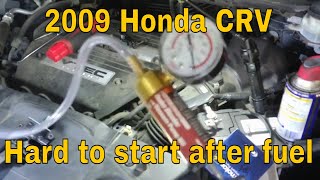
Symptoms: Hard to start after fueling; vehicle threw codes P0496 and P0497.
What fixed it: Replacement of the purge valve after a vacuum test confirmed it was failed.
Source hint: YouTube/Bah500: The video '2009 Honda CRV Hard to start after fueling.. p0496 p0497'
2012-2016 Honda CR-V 2.4L
Symptoms: Car struggling to start or running very rough for a minute immediately after filling the gas tank.
What fixed it: Replacing the purge valve.
Source hint: CRVownersclub.com: Numerous threads discuss P0496
Related OBD-II Codes
Frequently Asked Questions
Why does my 2012-2016 CR-V struggle to start specifically after I fill up the gas tank?
Where is the purge valve located on the 2.4L engine for a DIY replacement?
Can I use a used purge valve from a salvage yard to fix my P0496 code?
Is there a simple way to test if the valve is actually stuck open before I buy a new one?
My 2015 CR-V has a vibration at idle; is this related to the P0496 code?
Does the VTC actuator rattle TSB 09-010 apply to the same years as the P0496 issue?
Helpful Videos
Used OEM Parts in Stock
New Aftermarket Parts Available


The information in this article is provided for general reference and educational purposes only. Vehicle specifications, procedures, and part compatibility can vary by production date, trim level, and region. Always consult your vehicle's factory service manual and verify part numbers before purchasing or performing repairs. Safety-critical components such as airbags, seat belts, and braking systems should be installed by a qualified professional.
- Honda CR-V:
- 🧭 Diagnostic Flowchart
- 🎬 Helpful Videos
- 🛍️ Shop This Part
- What's Unique About the 2012-2016 Honda CR-V
- Symptoms You May Notice
- Most Likely Causes
- Rare But Worth Checking
- Diagnosis Steps
- Parts You'll Likely Need
- Related Codes That Often Appear With This One
- Platform-Specific Known Issues
- Mechanic-Grade Diagnostic Values
- Hidden / Shadow Codes Worth Checking
- Scan Tool Commands That Help
- Wiring & Ground Locations
- Model Year Variations Within This Range
- Other Known Issues on This Vehicle
- Used vs. New Parts: Buying Guide for This Vehicle
- Real Owner Stories
- 2009 Honda CR-V 2.4L
- 2012-2016 Honda CR-V 2.4L
- Related OBD-II Codes
- Frequently Asked Questions
- 🎟️ Get 5% Off