

P0496 on 2017-2020 Jaguar F-PACE: EVAP High Purge Flow Causes and Fixes
On a 2017-2020 Jaguar F-PACE, code P0496 is often caused by a software issue triggered by refueling too soon after shutting off the engine. A free dealer-installed software update under Service Action H422 is the first recommended fix. If the software update doesn't resolve the issue, the most common mechanical fault is a stuck-open canister purge valve. The valve is a relatively affordable and accessible part for DIY replacement.
- Before buying any parts, contact a Jaguar dealer with your VIN to check for an open Service Action H422. This is a free software update that is the most likely fix.
- If the code comes back after the software update, the most likely failed part is the canister purge valve (OEM Part #AJ814246), which is a DIY-friendly replacement.
- If you must refuel before getting the software update, wait at least 30 seconds after shutting the engine off before opening the gas cap to prevent the code from being falsely triggered.
- This code is not a serious mechanical threat and will not harm your engine, but it will cause an automatic emissions test failure.
What's Unique About the 2017-2020 Jaguar F-PACE
A unique characteristic of the Jaguar F-PACE and related JLR platforms is that this code is frequently triggered by a software sensitivity issue, not a hardware failure. Jaguar has issued Technical Service Bulletins (TSBs) and a Service Action (H422) stating that refueling within 15 seconds of turning off the engine can cause the PCM to falsely log a P0496 code. This makes it crucial to seek the no-cost software update from a dealer before replacing any parts.
Diagnostic Flowchart
Tap your situation to follow the diagnostic path that matches what you're seeing on this vehicle.
Symptoms You May Notice
- Check Engine Light is illuminated
- Slightly rough idle
- Difficulty starting the engine immediately after refueling.
- A faint fuel odor near the vehicle.
- Reduced fuel efficiency.
- Replacing the gas cap. A loose or faulty gas cap typically causes EVAP leak codes like P0455 or P0457, not a P0496 high-flow code.
Most Likely Causes
- PCM Software Sensitivity / Refueling Habits 🔴 High Probability Jaguar has officially documented this issue in Service Action H422 and TSB SSM74280. The software logic can misinterpret the pressure change during refueling if the fuel cap is removed too quickly after engine shutdown, flagging a false P0496. This is a known issue across multiple JLR models sharing the same powertrain architecture.
How to confirm: Contact a Jaguar dealer and provide your VIN to see if Service Action H422 is open for your vehicle. You can also try clearing the code and, on subsequent refuels, wait at least 30 seconds after turning the engine off before opening the fuel cap. If the code does not return, the issue was refueling timing, but the software update is still recommended for a permanent fix.
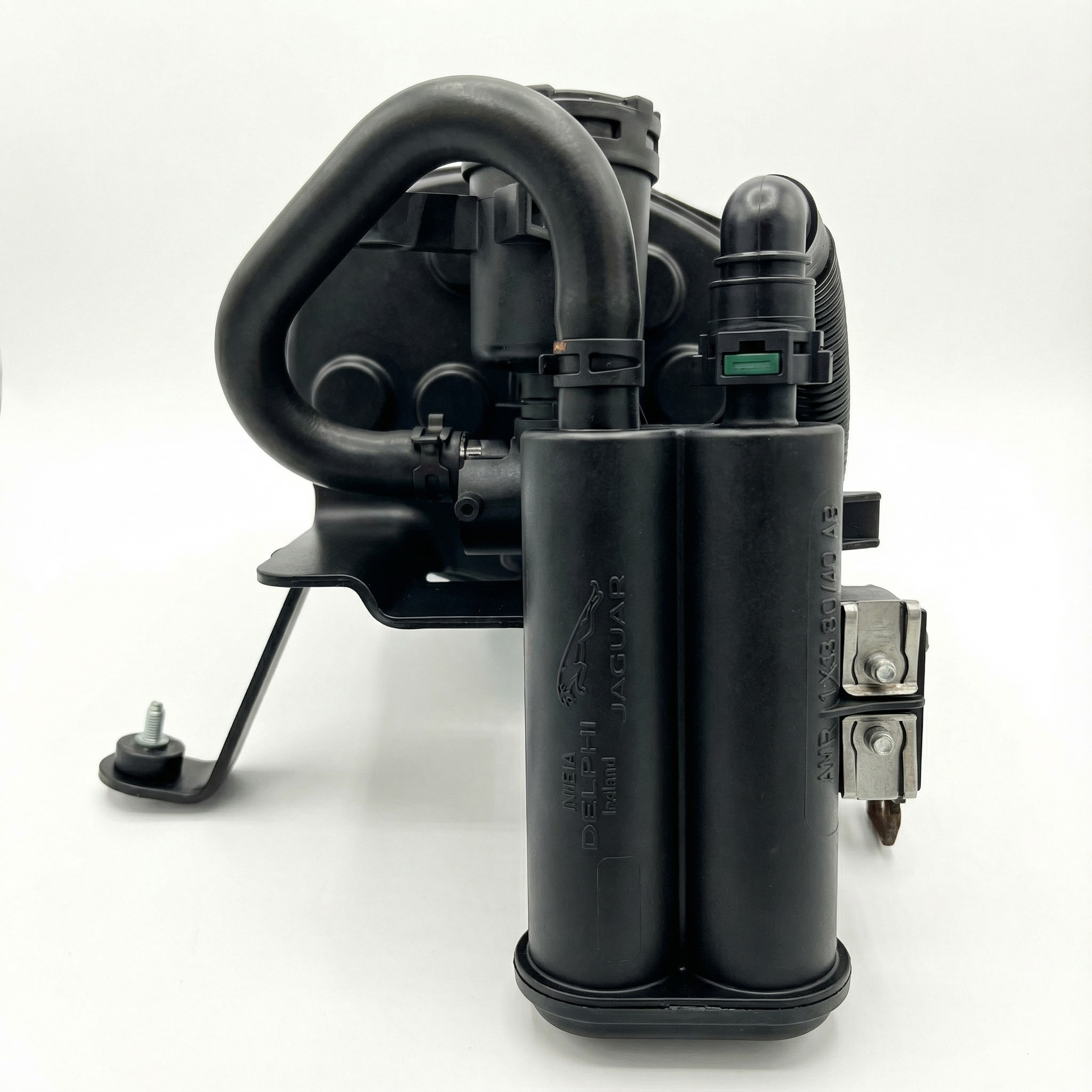
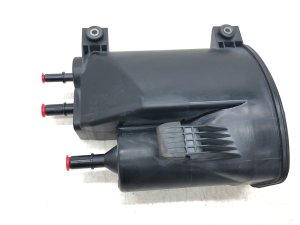
Typical fix: A Jaguar dealer needs to apply a PCM software update as specified in Service Action H422, which should be performed at no cost to the owner. - Faulty Canister Purge Valve (Stuck Open) 🟡 Medium Probability → Shop Vapor Canister This is the most common mechanical failure for P0496 on most vehicles. The valve, often a Bosch unit, can get stuck open due to age, wear, or carbon/charcoal buildup, allowing fuel vapors to be constantly drawn into the engine.
How to confirm: Locate the purge valve on the engine. On the 3.0L V6, it is often found near the firewall, next to the brake booster. With the engine off, disconnect the electrical connector and the two hoses. Try to blow through the valve; if air passes through, it is stuck open and has failed. A properly functioning valve should be closed with no power applied.
Typical fix: Replace the canister purge valve. The OEM part number AJ814246 supersedes the previous number AJ811695.
Est. part cost: $50-$180
Rare But Worth Checking
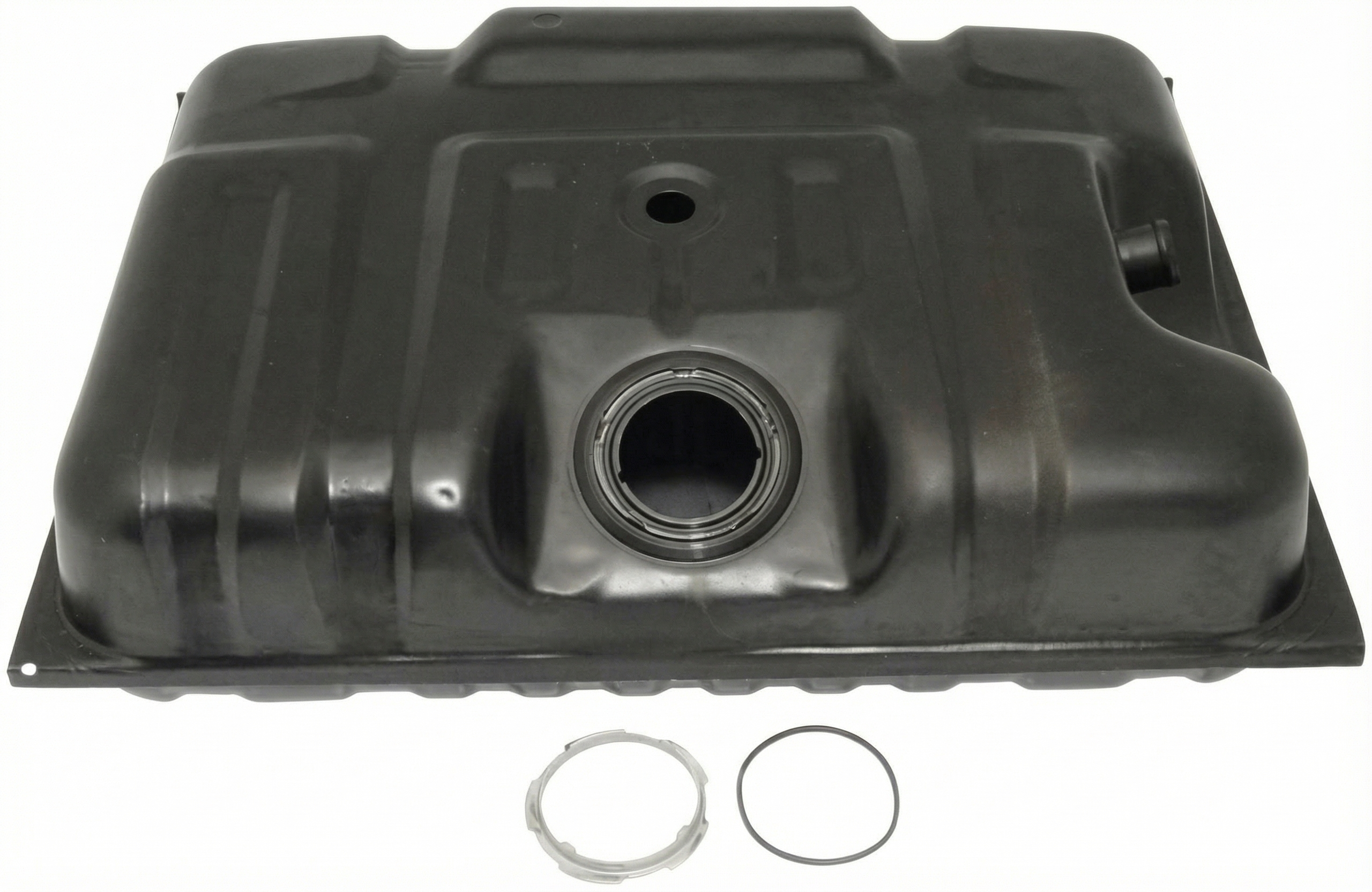
- Faulty Fuel Tank Pressure (FTP) Sensor: → Shop Fuel Tank The sensor that detects the unwanted vacuum flow can fail and send incorrect data to the PCM. If a new purge valve and software update do not resolve the code, the FTP sensor is the next logical component to test. A scan tool can monitor the FTP sensor reading to see if it shows a constant vacuum even when it shouldn't.
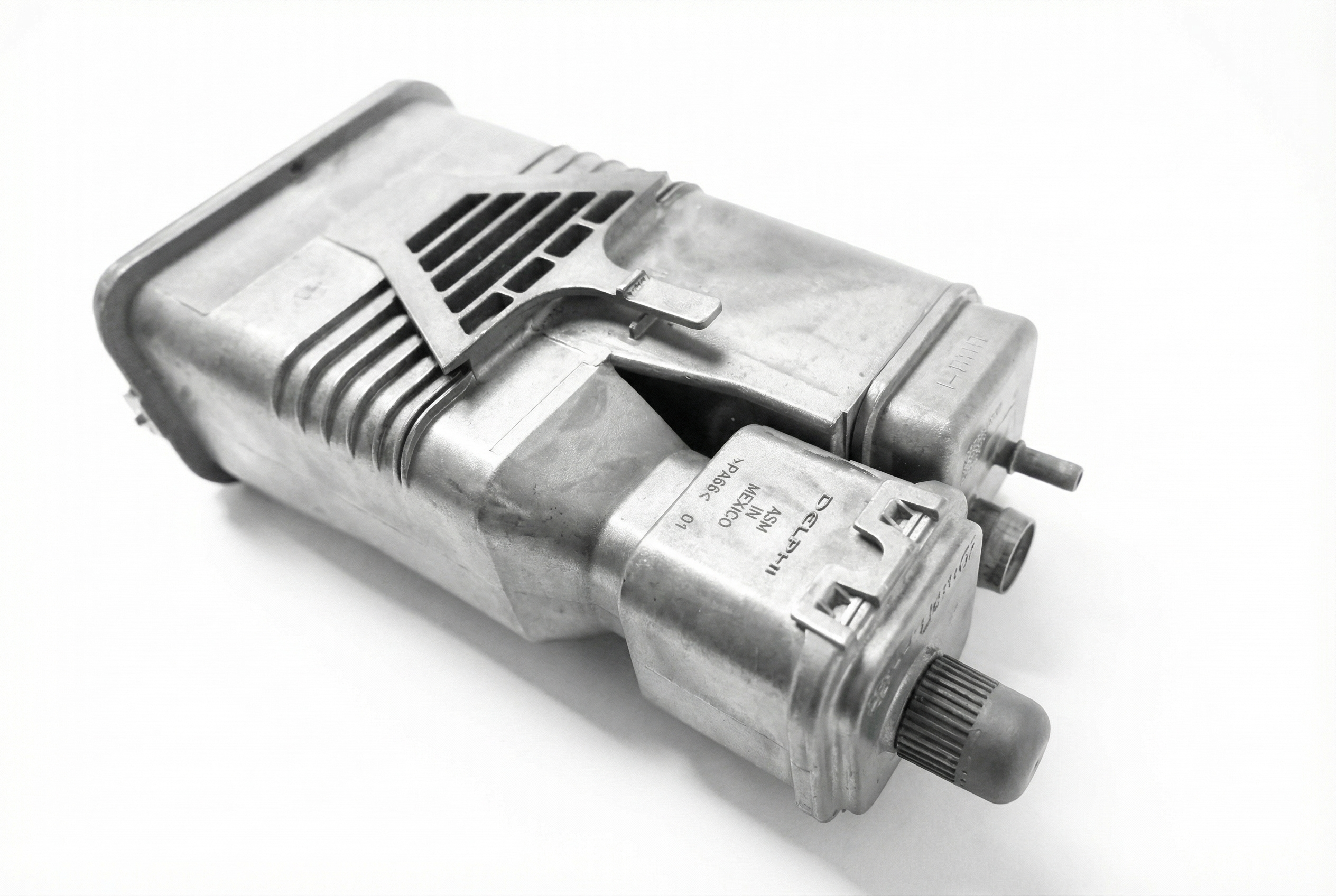
- Saturated Charcoal Canister: → Shop Vapor Canister Habitually overfilling the fuel tank (topping off after the pump clicks off) can force liquid gasoline into the charcoal canister. This can damage it, causing charcoal pellets to break free and get lodged in the purge valve, forcing it open and causing various EVAP codes, including P0496.
- Leaking or Damaged EVAP Hoses: A crack or break in the EVAP system hoses, particularly between the purge valve and the intake manifold, could cause an incorrect flow. This is less common for a high-flow code but can be diagnosed with a smoke test.
Diagnosis Steps
- Read the fault codes with an OBD-II scanner to confirm P0496 is the primary code present. Note if the JLR-specific P0496-00 is stored.
- Contact a Jaguar dealer with your VIN to check if Service Action H422 is open for your vehicle. If it is, schedule an appointment for the free software update.
- If the software update is already done or does not fix the issue, locate the canister purge valve on the engine. It will have an electrical connector and two hoses.
- Inspect the valve's connector and wiring for any visible damage.
- With the engine off, disconnect the hoses and electrical connector from the purge valve. Attempt to blow through the valve. If air passes through, the valve is stuck open and must be replaced.
- If the purge valve tests good, further diagnosis may be required. This could include a smoke test of the EVAP system to check for rare hose leaks or testing the Fuel Tank Pressure (FTP) sensor with a capable scan tool.
Parts You'll Likely Need
- Canister Purge Valve / Solenoid
(OEM #AJ814246 (supersedes AJ811695))— This is the most common mechanical part to fail for a P0496 code. It gets stuck open, allowing un-commanded fuel vapor flow into the engine.
Trusted brands: Jaguar (Genuine), Bosch, APA/URO Parts, Dorman
OEM price range: $199-$232
Aftermarket price range: $50-$120
Related Codes That Often Appear With This One
- P0496-00: The '-00' suffix is a JLR-specific identifier indicating the monitor failed due to an excessive pressure drop between the fuel tank and purge valve.
Technical Service Bulletins (TSBs) & Recalls
- Jaguar_H422_19JUL24: Notes that refueling within 15 seconds of engine-off can trigger P0496-00. This became a no-cost Customer Satisfaction Program.
- SSM74280: Describes P0496-00 as a potential "false flag" caused by refueling with the vehicle on, recommending a PCM software update and advising against replacing the purge valve if it passes a self-test.
- SSM74799: A Land Rover bulletin for the 2020 model year AJ126 engine (shared with F-PACE) which also identifies P0496-00 as being caused by an excessive pressure drop and requires a PCM calibration update via a manual patch.
Platform-Specific Known Issues
- A Technical Service Bulletin (Jaguar_H422_19JUL24) and a customer-facing Service Action (H422) explicitly state that the Malfunction Indicator Lamp (MIL) may illuminate with DTC P0496-00 if the vehicle is refueled within 15 seconds of turning the engine off. This points to a software sensitivity issue that can be mistaken for a hardware fault.
- An earlier TSB (SSM74280) also identifies this as a "false flag" due to an incorrect reference value stored when the fuel cap is removed with the vehicle on, and advises a PCM software update is the ultimate fix.
- While the P0496 code is relatively minor, owners of this platform should be aware of more serious known issues with plastic coolant pipes that can crack and cause catastrophic engine overheating with little warning.
Mechanic-Grade Diagnostic Values
- Canister Purge Valve Coil Resistance — expected: 15-30 Ohms. Failure: A reading of infinity (open circuit) or near-zero Ohms 🎬 Watch: A deep dive into purge valve operation and testing (short circuit) indicates a failed coil.
- Fuel Tank Pressure (FTP) Sensor Voltage at Atmospheric Pressure — expected: ~1.5 Volts (with gas cap off, engine running). Failure: Voltage is significantly different from 1.5V with the system open to the atmosphere, suggesting a biased or failed sensor.
- Purge Valve Connector Voltage (Power Pin) — expected: 11-12 Volts (with ignition key on, engine off). Failure: Significantly lower or no voltage indicates a wiring or fuse issue before the valve.
- Purge Valve Connector Voltage (Control Pin) — expected: Pulsed ground (PWM signal) when commanded by PCM; no ground at idle.. Failure: A constant ground signal at idle indicates a short or a faulty PCM driver holding the valve open.
Hidden / Shadow Codes Worth Checking
- P0496-00: The '-00' suffix is a JLR-specific symptom byte. For P0496, it indicates the monitor failed because the system diagnosed an 'excessive pressure drop between the fuel tank and the purge valve'. (see via Professional JLR diagnostic tools like SDD/Pathfinder, and some comprehensive aftermarket OBD-II scanners.)
Scan Tool Commands That Help
- Jaguar SDD/Pathfinder: EVAP System Leak Test / Purge & Seal Test — This function commands the canister vent solenoid closed and the purge valve open to apply engine vacuum to the system. By monitoring the Fuel Tank Pressure (FTP) sensor's live data, a technician can verify if the system holds vacuum, confirming the function of both valves and checking for leaks without a smoke machine. TSB SSM74280 specifically advises using this to test the valve before replacement.
- Jaguar SDD/Pathfinder: Purge Valve Duty Cycle Control — This allows for manually commanding the purge valve to open at various percentages (e.g., 0%, 25%, 50%). It is used to confirm the valve physically responds to PCM commands and is not mechanically stuck. A technician can command it to 0% and check for vacuum flow; if flow exists, the valve is confirmed to be stuck open.
- Jaguar SDD/Pathfinder: Configure existing module - Powertrain Control Module — This is the service function required to apply the software update as specified in Service Action H422 to resolve the refueling sensitivity issue.
Wiring & Ground Locations
- Purge Valve Connector — On the purge valve itself, located in the engine bay, typically near the intake manifold or firewall.. This 2-pin connector is the primary test point for diagnosing the purge valve circuit. One pin receives battery voltage with the ignition on, and the other receives a pulsed ground signal from the PCM to actuate the valve. Testing here differentiates a bad valve from a wiring or PCM driver issue.
Real Owner Repair Stories
- Jaguar Forums user discussion (2018 Jaguar F-Pace R-Dynamic (shares engine and PCM logic with the specified vehicle range)) — Check Engine Light with code P0496.
❌ Tried (didn't work) Initial confusion about whether a part replacement was needed.
✅ What actually fixed it The owner received an email from a JLR Dealer for an open service action H422, 'Fuel Vapor Purge'. A user posted the official campaign document confirming H422 is a no-cost Powertrain Control Module (PCM) software update to fix the P0496 issue caused by refueling habits.
"I Checked Everything" — The Actual Cause
- While no specific owner stories were found following this exact pattern, the existence of Jaguar's Technical Service Bulletin H422 implies this scenario. A technician would perform a smoke test, find no leaks, and test the purge valve, finding it functional. The root cause in this case would not be a physical leak but a software sensitivity to refueling, which is fixed by a PCM software update.
OEM Part Supersession History
AJ811695→AJ814246— Standard part revision/update by the manufacturer.Multiple (e.g., 8W939C915AA, 9W839B593AA, BW939C915AA)→LR010749, AJ814246, LR172648— Part number consolidation across the Jaguar Land Rover brand.
Heads up: These part numbers are generally interchangeable for the specified engines (AJ126 V6 / AJ133 V8), but VIN verification is always recommended as some applications may have slight connector differences.
Helpful Videos

We Have This Part in Stock

The information in this article is provided for general reference and educational purposes only. Vehicle specifications, procedures, and part compatibility can vary by production date, trim level, and region. Always consult your vehicle's factory service manual and verify part numbers before purchasing or performing repairs. Safety-critical components such as airbags, seat belts, and braking systems should be installed by a qualified professional.
- Jaguar F-PACE:
- 🧭 Diagnostic Flowchart
- 🎬 Helpful Videos
- 🛍️ Shop This Part
- What's Unique About the 2017-2020 Jaguar F-PACE
- Symptoms You May Notice
- Most Likely Causes
- Rare But Worth Checking
- Diagnosis Steps
- Parts You'll Likely Need
- Related Codes That Often Appear With This One
- Technical Service Bulletins (TSBs) & Recalls
- Platform-Specific Known Issues
- Mechanic-Grade Diagnostic Values
- Hidden / Shadow Codes Worth Checking
- Scan Tool Commands That Help
- Wiring & Ground Locations
- Real Owner Repair Stories
- "I Checked Everything" — The Actual Cause
- OEM Part Supersession History
- 🎟️ Get 5% Off