

P0496 on 2006-2011 Kia Rio: EVAP Flow During Non-Purge Causes and Fixes
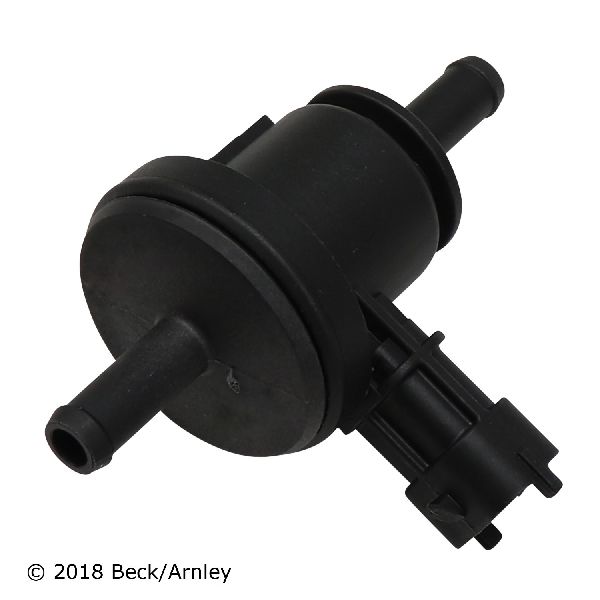
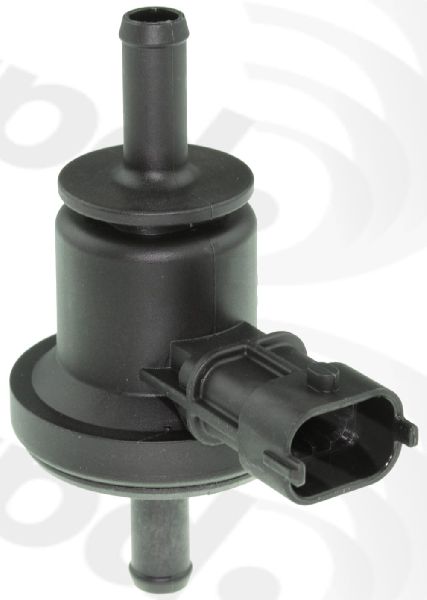
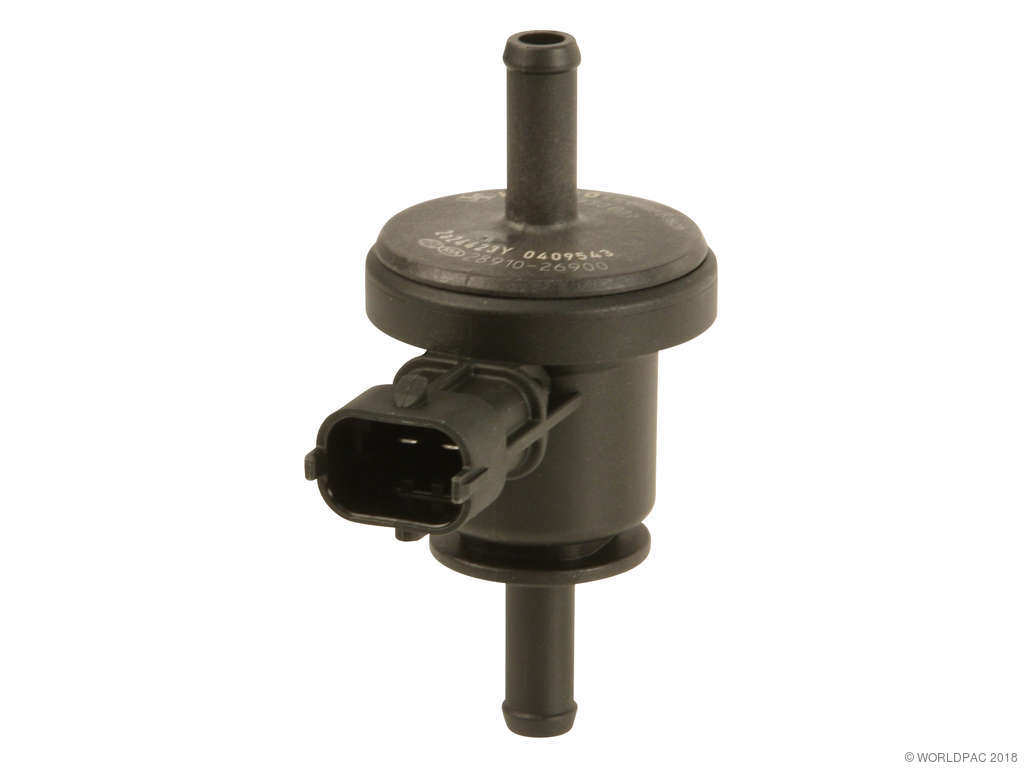
On a 2006-2011 Kia Rio with the 1.6L engine, code P0496 is almost always caused by a faulty canister purge solenoid valve (part no. 28910-26900) that is stuck open. This results in hard starting after refueling. Replacing this part is a straightforward, sub-30-minute DIY job, with the part costing between $25 and $90.
- P0496 on a 2006-2011 Kia Rio almost always points to a bad canister purge solenoid valve, OEM part number 28910-26900.
- A key, tell-tale symptom is the engine struggling to start immediately after you fill up with gas.
- You can easily test the valve at home by removing it and trying to blow through it; if air passes, it's faulty and stuck open.
- This is a very DIY-friendly repair that can be done in under 30 minutes with basic tools.
- The issue and the fix are identical for the 2006-2011 Hyundai Accent, which is the Kia Rio's platform-mate.
What's Unique About the 2006-2011 Kia Rio
The 2006-2011 Kia Rio (JB generation) and its twin, the Hyundai Accent (MC), use a common and relatively simple EVAP system design. The most frequent failure point leading to a P0496 code is the canister purge solenoid valve, located in an accessible spot on the engine's intake manifold. Unlike some vehicles where this code can be caused by a variety of sensors or complex leaks, on this specific platform, the purge valve itself is the primary and most probable culprit, a fact widely corroborated in owner forums and DIY repair videos.
Symptoms You May Notice
- Check Engine Light is on
- Difficulty starting the engine, especially right after filling the gas tank. Often requires feathering the throttle to keep the engine from dying.
- Rough or unstable idle, particularly after a cold start or after refueling.
- Slightly decreased fuel economy.
- A faint smell of fuel from the engine bay.
- Replacing the gas cap. While a loose or faulty gas cap can cause other EVAP codes (like P0455 or P0457 for leaks), it does not cause a P0496 flow code, which indicates flow when there should be none.
- Replacing the vent valve/solenoid. The vent valve is located near the charcoal canister and is responsible for sealing the system for pressure tests. A failure here typically causes leak codes (like P0449 or P0455), not a non-purge flow code.
Most Likely Causes
- Faulty Canister Purge Solenoid Valve 🔴 High Probability → Shop Vapor Canister The purge valve is a very common failure item across both the Kia Rio and Hyundai Accent of this generation. It gets stuck open internally, allowing un-commanded vapor flow which floods the engine with fumes after refueling, causing the hard start.
How to confirm: Disconnect the purge valve. With the engine off, try to blow through the valve from the inlet port (from the canister). If air passes through, the valve is stuck open and faulty. Alternatively, with the engine running at idle, disconnect the hose leading from the valve to the intake manifold and check for vacuum on the valve's port; there should be none when the valve is commanded closed (at idle on a cold engine).
Typical fix: Replace the canister purge solenoid valve. It is mounted via a rubber hanger to a bracket on the back of the intake manifold.
Est. part cost: $25-$90
Rare But Worth Checking
- Leaking EVAP System Hose: While less common than the valve itself, a cracked or disconnected hose between the purge valve and the intake manifold or between the valve and the charcoal canister can cause similar symptoms or other EVAP codes.
- Faulty Fuel Tank Pressure Sensor: → Shop Fuel Tank In rare cases, the sensor that monitors EVAP system pressure can fail and send incorrect data to the computer, making it think there is flow when there isn't. This is an uncommon cause for P0496 compared to the purge valve.
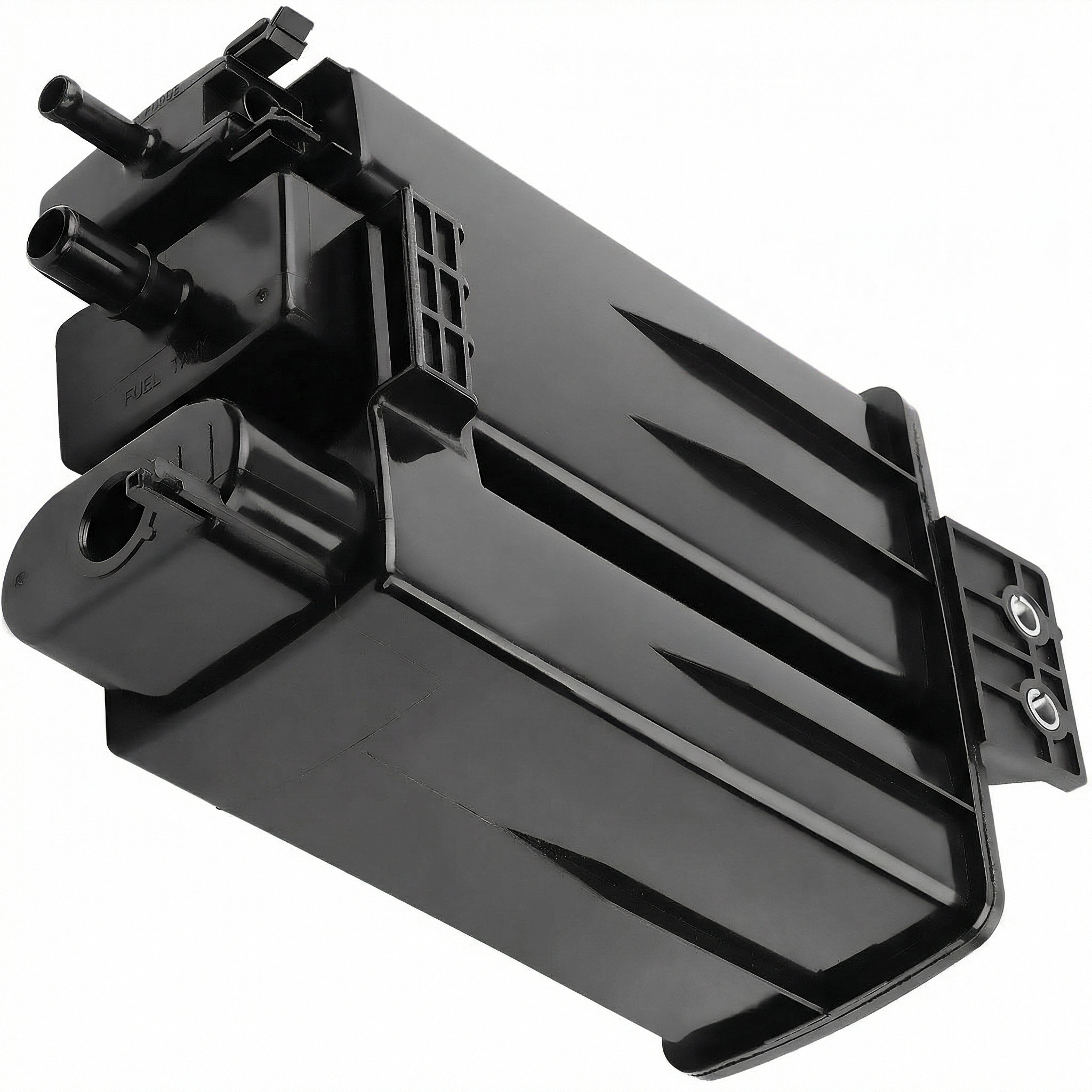
- Saturated Charcoal Canister: → Shop Vapor Canister If the charcoal canister becomes saturated with liquid fuel, it can cause a P0496 code. This is almost always caused by habitually 'topping off' the gas tank after the pump clicks off. The excess fuel floods the canister, which can then send charcoal pellets into the purge lines and valve, causing it to stick open. If the canister rattles when shaken, it has likely failed internally.
Diagnosis Steps
- Read the code with an OBD-II scanner to confirm P0496 is present. Note any other codes, like P0172.
- Locate the canister purge solenoid valve. On the 2006-2011 Rio/Accent, it's mounted on a bracket on the rear of the intake manifold, near the throttle body.
- Inspect the connected vacuum hoses for any visible cracks, brittleness, or loose connections.
- Disconnect the electrical connector and the two hoses from the purge valve. The hose clamps are typically spring-type and can be opened with pliers.
- Test the valve: Attempt to blow air through either port of the disconnected valve. A healthy, de-energized valve should be completely closed and not allow any air to pass. If you can blow through it, it is stuck open and must be replaced. This is the most definitive test.
- If the valve seems okay, check the wiring harness for damage. You can also apply 12V to the valve's pins to see if it clicks open and closed, though the 'blow test' is more reliable for detecting a stuck valve.
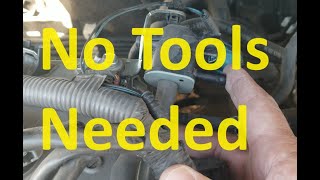
- Before installing the new valve, transfer the rubber mounting hanger 🎬 See this step-by-step walkthrough for replacing the solenoid. from the old valve to the new one.
- When installing the new valve, ensure the correct orientation. On many aftermarket parts, there may be an arrow indicating the direction of flow (from canister to intake). On the OEM part, the larger faced end generally points toward the driver's side of the vehicle.
Parts You'll Likely Need
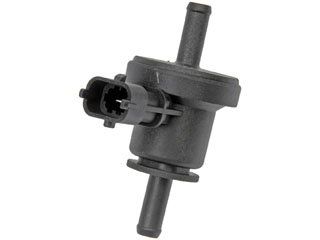
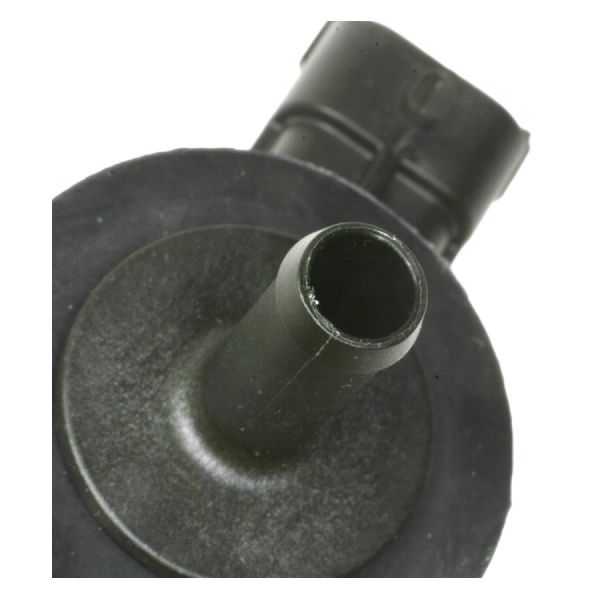
- Canister Purge Solenoid Valve
(OEM #28910-26900)— This is the most common failure point for a P0496 code on this vehicle, as it gets stuck open and allows fuel vapor to flow when it should be closed. This part is shared with the Hyundai Accent and other Kia/Hyundai models.
Trusted brands: Genuine Hyundai/Kia, Standard Motor Products, Dorman (p/n 911-800)
OEM price range: $60-$90
Aftermarket price range: $25-$50
Related Codes That Often Appear With This One
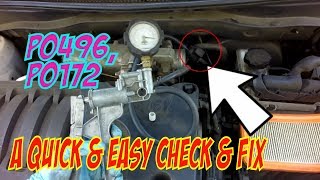
- P0172 - System Too Rich (Bank 1): A stuck-open purge valve can allow so much extra fuel vapor into the engine that it creates a rich running condition, sometimes triggering this code alongside P0496. 🎬 Watch: How to diagnose and fix P0496 and P0172 together.
Technical Service Bulletins (TSBs) & Recalls
- No specific TSBs for P0496 on the 2006-2011 (JB) Rio were found. A related TSB, FUE040, exists for the next generation 2012-2017 Rio (UB) for different EVAP leak codes (P0455/P0456) caused by a faulty Canister Close Valve (CCV), which is a different part and issue.
Platform-Specific Known Issues
- The hard start after refueling is the most frequently reported and specific symptom for this P0496 issue on the Rio and Accent. Owners describe having to hold the gas pedal down to get the car started and keep it running for a minute after a fill-up.
Mechanic-Grade Diagnostic Values
- Canister Purge Solenoid Valve (PCSV) coil resistance — expected: 16.0 Ohms at 20°C (68°F). Failure: A reading of infinite resistance (open circuit) or significantly lower resistance (short) indicates a failed coil.
- PCSV Connector Voltage (Key On, Engine Off) — expected: One pin should show battery voltage (approx. 12V) and the other should be the ECM ground control.. Failure: No voltage suggests a wiring or fuse issue. The fuse for the PCSV is often labeled 'Sensors 2' in the engine bay fuse box.
Scan Tool Commands That Help
- Generic OBD-II Scan Tool with bidirectional control / Kia GDS: EVAP Purge/Seal or EVAP Vapor Management Valve On/Off — To functionally test the purge valve. With the engine running, a technician can command the valve to open and close. While monitoring the Fuel Tank Pressure (FTP) sensor, commanding the valve closed should seal the system and cause no change in vacuum, while commanding it open should cause a drop in pressure (increase in vacuum) as the engine draws vapor. This confirms if the ECM can control the valve and if the valve responds.
Wiring & Ground Locations
- Purge Control Solenoid Valve Connector — On the purge valve itself, located on a bracket at the rear of the intake manifold.. This 2-pin connector provides power and ground control to the solenoid. A poor connection, corrosion, or damaged wires here will cause codes like P0444 (Circuit Open) or P0458/P0459 (Circuit Low/High) and can prevent a new valve from working. The connector is a common 2-wire male plug.
- Fuse: 'Sensors 2' — In the engine compartment fuse and relay box.. On some Kia models, the purge control solenoid valve receives its power through a fuse labeled 'Sensors 2'. If this fuse is blown, the valve will have no power, leading to EVAP circuit codes and preventing the valve from operating.
Real Owner Repair Stories
- Reddit user on r/mechanicadvice (2009 Kia Rio, ~40,000 miles) — Intermittent Check Engine Light, which eventually stayed on with code P0496.
❌ Tried (didn't work) Replaced gas cap., Replaced purge valve., Changed some wires., Replaced the EVAP control canister and solenoids., Performed a smoke test which showed no leaks.
✅ What actually fixed it The user's post is a request for help after multiple failed repair attempts by a shop. The final resolution was not posted, making this a cautionary tale that even after replacing all common parts (purge valve, canister, vent solenoid), the P0496 code can persist, potentially pointing to an intermittent wiring issue or a faulty ECM, which are much harder to diagnose.
OEM Part Supersession History
28910-26900→This part number appears to be stable with no major supersessions noted for the 2006-2011 model years. It is widely cross-referenced with aftermarket parts like Dorman 911-800 and 911-808, and Standard Motor Products CP534.— N/A
Heads up: While Dorman 911-800 is listed for Kia from 1996-2010, some users of Dorman parts on other vehicles have noted that supplied adapter harnesses may have poor pin contact, requiring inspection before installation.
Diagnostic Flowchart
Used vs. New Parts: Buying Guide for This Vehicle
When a used part is the smart pick: For the canister purge solenoid valve (PCSV), buying used is almost never a smart choice. The part is a common failure item, relatively inexpensive new (especially aftermarket), and its remaining lifespan is impossible to determine. A used part is highly likely to have the same internal failure as the one being replaced.
Donor-vehicle mileage cap: roughly under 30000 miles for the part to have meaningful remaining life.
What to inspect on the donor part:
- If forced to use a used part, choose one from the lowest-mileage vehicle possible.
- Visually inspect the plastic housing for cracks or heat damage.
- Test the valve before purchase by attempting to blow through it; if any air passes, it is already faulty.
- If possible, apply 12V to the pins to ensure the solenoid clicks.
OEM-only on this vehicle (don't cheap out):
- No parts in this specific P0496 repair chain are strictly 'OEM-only'. However, due to mixed reviews on some aftermarket brands, using a Genuine Kia/Hyundai part (28910-26900) provides the highest confidence in a correct fit and function.
Aftermarket brands forum-validated for this vehicle:
- Standard Motor Products (SMP)
- Bosch
Brands owners have reported issues with on this vehicle:
- Dorman: While widely available and often a direct fit, Dorman parts have a mixed reputation among technicians for long-term reliability. Some users report early failures or issues with included wiring adapters.
- Unbranded/No-Name eBay/Amazon parts: These carry a high risk of being dead-on-arrival or failing prematurely. One user review for an OEM part sold online reported it was stuck open after one day, highlighting the risk of counterfeit or poorly stored parts.
Real Owner Stories
Aggregated from forums and TSBs cited above. Mileages and costs reflect what owners reported in those sources.
2009 Kia Rio — 40000 miles
Symptoms: A check engine light that was on for several months but would intermittently disappear for weeks at a time.
What fixed it: The owner did not report a final fix. The light was still on after multiple repairs, including replacing the purge valves and the EVAP control canister.
Source hint: reddit.com - p0496 in 2009 Kia Rio after repair of Control Canister, Purge Valves, and Solenoids
Kia Rio (year not specified)
Symptoms: Check engine light with code P0496. The purge valve was constantly pulsing and pulling vacuum even when electrically unplugged.
What fixed it: Replaced the purge valve.
Source hint: youtube.com - kia rio p0496 / altima rear springs /avalon rear stabilizer links (vol 90)
2011 Kia Rio
Symptoms: The car is hard to start and stalls after filling the gas tank.
What fixed it: Replaced the canister purge valve.
Source hint: NC4x4.com - 'No start after getting gas'
2006 Kia Rio5
Symptoms: Check Engine Light with a P0496 code.
What fixed it: A shop replaced the purge control valve to fix the issue.
Source hint: Reddit r/AskMechanics - 'P0496'
Related OBD-II Codes
Frequently Asked Questions
My 2009 Rio is very hard to start right after I get gas. Is this related to the P0496 code?
Where is the canister purge valve located on my 2007 Kia Rio?
How can I test the purge valve myself to confirm it's the problem?
I have a 2010 Hyundai Accent with the same P0496 code. Is the fix the same as for the Kia Rio?
Are there any official recalls or TSBs for the P0496 code on my 2011 Rio?
What is the typical cost for a new canister purge solenoid valve for my Rio?
Helpful Videos

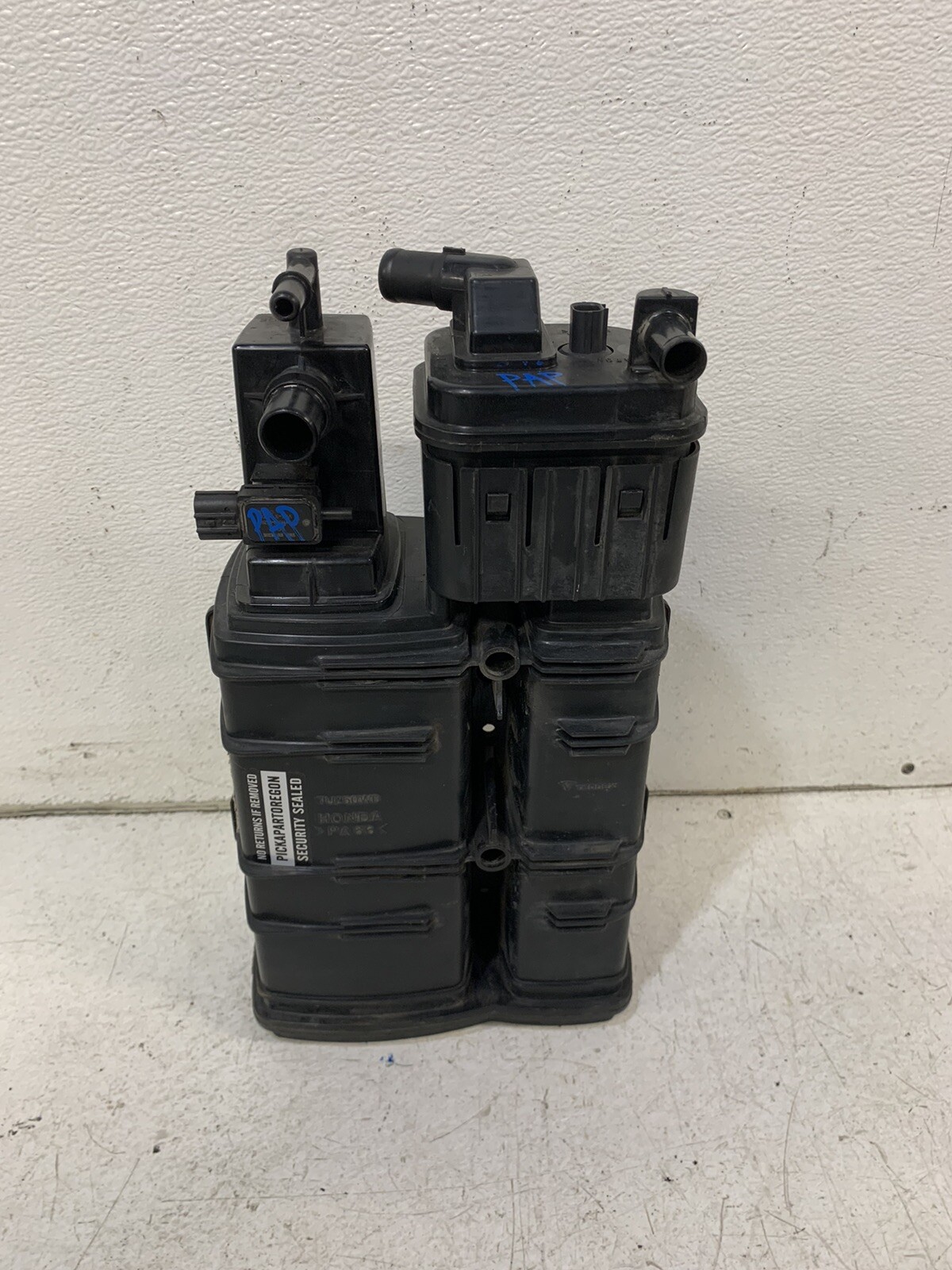
Used OEM Parts in Stock
New Aftermarket Parts Available


The information in this article is provided for general reference and educational purposes only. Vehicle specifications, procedures, and part compatibility can vary by production date, trim level, and region. Always consult your vehicle's factory service manual and verify part numbers before purchasing or performing repairs. Safety-critical components such as airbags, seat belts, and braking systems should be installed by a qualified professional.
- Kia Rio:
- 🧭 Diagnostic Flowchart
- 🎬 Helpful Videos
- 🛍️ Shop This Part
- What's Unique About the 2006-2011 Kia Rio
- Symptoms You May Notice
- Most Likely Causes
- Rare But Worth Checking
- Diagnosis Steps
- Parts You'll Likely Need
- Related Codes That Often Appear With This One
- Technical Service Bulletins (TSBs) & Recalls
- Platform-Specific Known Issues
- Mechanic-Grade Diagnostic Values
- Scan Tool Commands That Help
- Wiring & Ground Locations
- Real Owner Repair Stories
- OEM Part Supersession History
- Used vs. New Parts: Buying Guide for This Vehicle
- Real Owner Stories
- 2009 Kia Rio — 40000 miles
- Kia Rio (year not specified)
- 2011 Kia Rio
- 2006 Kia Rio5
- Related OBD-II Codes
- Frequently Asked Questions
- 🎟️ Get 5% Off