

P0496 on 2010-2013 Kia Soul: Causes, Symptoms, and Fixes for EVAP High Purge Flow
On a 2010-2013 Kia Soul, the P0496 code is almost always caused by a faulty canister purge solenoid valve that is stuck open. This results in the classic symptom of difficult starting immediately after refueling. It is a simple, DIY-friendly repair that typically costs between $25 and $105 for the part.
- P0496 on a 2010-2013 Kia Soul means fuel vapor is flowing to the engine when it shouldn't be.
- The most common symptom is difficulty starting the car immediately after getting gas.
- The problem is almost always a faulty canister purge solenoid valve that is stuck open.
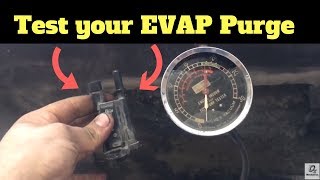
- You can test the valve yourself by removing it and trying to blow through it; if air passes, it's bad.
- Replacing the purge valve is a very easy and inexpensive DIY repair that takes less than 30 minutes.
- The OEM part number for the 1.6L engine is likely 29015-2B000; always verify with your VIN.
What's Unique About the 2010-2013 Kia Soul
The first-generation Kia Soul (2010-2013) shares its core EVAP system design with many other Hyundai and Kia vehicles of the era, including the Hyundai Accent and Kia Rio. This particular code, P0496, is a very common and well-documented issue across these platforms. The primary culprit is almost universally the canister purge solenoid valve, which tends to fail by sticking open rather than failing electrically. This leads to a highly specific and noticeable symptom: difficulty starting the engine immediately after refueling, as the engine is flooded with vapors.
Symptoms You May Notice
- Check Engine Light is illuminated
- Difficulty starting the engine, especially right after filling the gas tank
- Rough or unstable idle
- Slightly decreased fuel economy
- Possible fuel smell
- May be accompanied by a P0172 (System Too Rich) code, as the un-commanded vapors create a rich air-fuel mixture
- Replacing the gas cap. While a loose or faulty gas cap can cause other EVAP codes (like P0455, large leak), it is not a typical cause for P0496, which specifically points to flow when none is commanded.
- Replacing the vent valve. The vent valve (or canister close valve) is located near the charcoal canister and is responsible for letting fresh air into the system. While it can cause other EVAP codes if it fails (like P0446), it's not the primary cause of P0496.
Most Likely Causes
- Faulty Canister Purge Solenoid Valve (PCSV) 🔴 High Probability → Shop Vapor Canister This is a very common failure point on many Kia/Hyundai vehicles from this era, including the Soul, Accent, and Rio. The valve's internal components can wear out or get stuck from fuel vapor deposits, causing it to remain open when it should be closed.
How to confirm: Remove the purge valve. With the vehicle off, it should be impossible to blow air through it. If you can blow through it, it is stuck open and has failed. The valve is located on top of the engine near the intake manifold, though on some 2.0L models it can be tucked behind the intake.
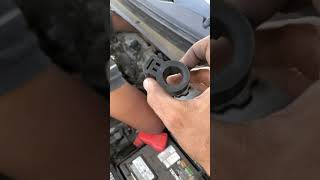
Typical fix: Replace the canister purge solenoid valve. This is a sub-30 minute DIY job. 🎬 Watch this step-by-step guide to replacing the purge valve.
Est. part cost: $25-$105
Rare But Worth Checking
- Leaking or disconnected EVAP system hose: While less common than the valve itself, a cracked or disconnected vacuum hose connected to the purge valve or EVAP canister can cause similar symptoms.
- Saturated Charcoal Canister: → Shop Vapor Canister This can happen from habitually overfilling the fuel tank (topping off). Liquid fuel floods the canister, which is only designed for vapor. This can ruin the canister and send charcoal granules into the EVAP lines, jamming the purge valve open. If the canister rattles when shaken, it may have failed internally.
- Faulty Fuel Tank Pressure Sensor: → Shop Fuel Tank In rare cases, the sensor that detects the vacuum in the system can fail and send incorrect readings to the computer, tricking it into setting the P0496 code.
- Wiring Issue: A short or break in the wiring to the purge solenoid could prevent it from closing as commanded, though this is much less common than mechanical failure of the valve itself.
Diagnosis Steps
- Read the code with an OBD-II scanner to confirm P0496 is present.
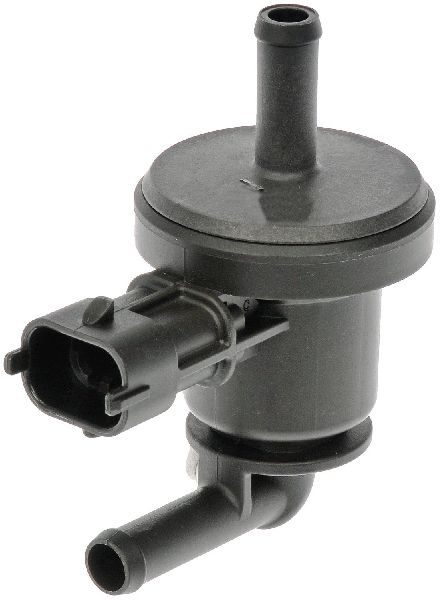
- Locate the canister purge solenoid valve (PCSV) in the engine bay. On many models it is on top of the engine, but on some 2.0L Souls it is tucked behind the intake manifold. It will have two hoses and an electrical connector.
- Inspect the vacuum hoses connected to the purge valve for any cracks, loose fittings, or disconnections.
- Disconnect the electrical connector and the two hoses from the purge valve.
- With the valve removed from the vehicle, attempt to blow air through either port. The valve should be completely sealed and no air should pass through. 🎬 Watch how to test and fix common Kia EVAP system issues.
- If air passes through, the valve is stuck open and must be replaced. This is the most common failure.
- If the valve tests good, the issue may be a saturated charcoal canister or a wiring problem, which may require more advanced diagnosis, such as using a smoke machine to check for leaks or a multimeter to check the solenoid circuit.
Parts You'll Likely Need
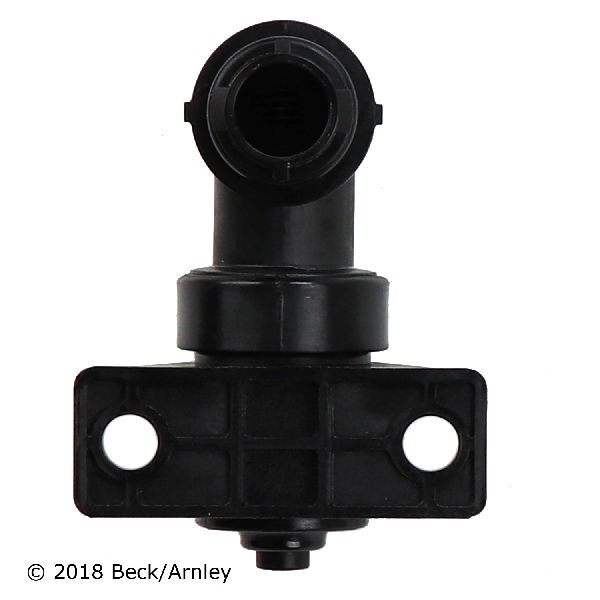
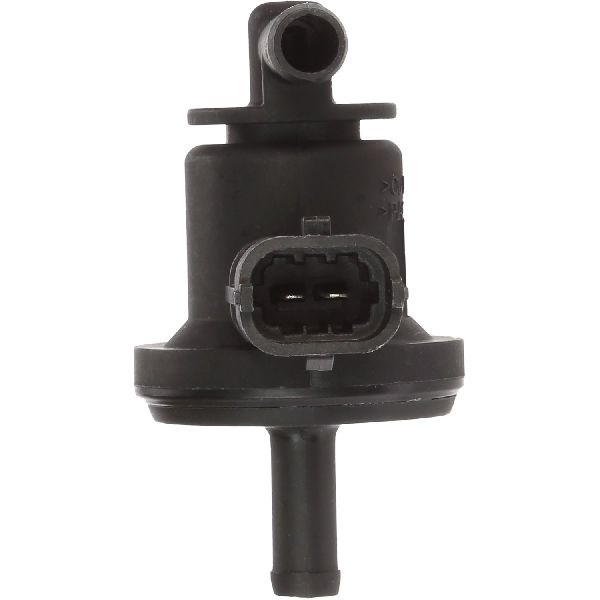
- Canister Purge Solenoid Valve (PCSV)
(OEM #29015-2B000 (for 1.6L engine), 28910-22040 (often cited for 2.0L, verify by VIN))— This valve is the most common failure point for the P0496 code on this vehicle. It gets stuck open, allowing un-commanded fuel vapor flow.
Trusted brands: Kia (OEM), Standard Motor Products, Dorman (P/N 911-808 for 2.0L, 911-390 for 1.6L), Bosch
OEM price range: $75-$105
Aftermarket price range: $25-$60
Related Codes That Often Appear With This One
- P0441 — P0441 indicates 'Incorrect Purge Flow.' It can appear alongside P0496 because a stuck-open purge valve (P0496) is a type of incorrect flow.
- P0172 — P0172 indicates 'System Too Rich.' A stuck-open purge valve allows un-commanded fuel vapors into the engine, creating a rich fuel mixture that the oxygen sensors detect.
Technical Service Bulletins (TSBs) & Recalls
- No specific TSBs for P0496 on the 2010-2013 Kia Soul were found in searches. The issue is typically handled as a straightforward component replacement.
Platform-Specific Known Issues
- owner_experience: A user on Reddit with a 2014 Soul (similar system) experienced a P0441 code (incorrect purge flow) and high oil consumption. After replacing a cracked PCV valve and the purge valve, the code was resolved. This highlights that other vacuum leaks can sometimes be related.
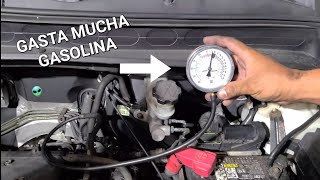
- mechanic_confirmation: A Spanish-language YouTube video by a professional mechanic specifically diagnoses a 2011 Kia Soul with P0496. Using a vacuum gauge on the purge solenoid with the engine running, he demonstrates it pulling a vacuum when it should be closed, confirming it's stuck open and needs replacement.
Mechanic-Grade Diagnostic Values
- Canister Purge Solenoid Valve (PCSV) Coil Resistance — expected: ~26 Ohms. Failure: A reading that is significantly higher (open circuit) or lower (short circuit) than the expected 26 Ohms indicates a failed solenoid coil.
- PCSV Connector Pin 1 Voltage (Key On) — expected: Battery Voltage (approx. 12V). Failure: 0V indicates a problem with the power supply to the solenoid, such as a blown fuse or a break in the wire.
- PCSV Connector Pin 2 Signal (Engine Idling, Valve Commanded Closed) — expected: Near battery voltage (the ECM is not providing a ground). Failure: A reading near 0V indicates the ECM is commanding the valve open when it shouldn't be, or there is a short to ground on the control wire.
- Fuel Tank Pressure (FTP) Sensor at Idle (Purge Valve Commanded Closed) — expected: -0.5 to +0.5 inches of H2O. Failure: A strong negative reading (vacuum), such as -10 in. H2O or more, indicates vapor is being pulled from the tank when it shouldn't be, pointing to a stuck-open purge valve.
Scan Tool Commands That Help
- Kia GDS (or equivalent professional scan tool): Purge Solenoid Valve Duty Cycle Control — This bidirectional control allows a technician to manually command the purge valve to 0% (closed) at idle. If you command the valve closed and still feel or measure vacuum on the canister side of the valve, it definitively confirms the valve is mechanically stuck open and has failed.
- Kia GDS (or equivalent professional scan tool): EVAP System Leak Test — This is a comprehensive, automated test. For diagnosing P0496, it can be used to verify that the system cannot hold vacuum when the purge valve is commanded closed, isolating the fault to the purge circuit.
Wiring & Ground Locations
- Canister Purge Valve Connector — Connected directly to the purge solenoid valve, which is on top of or behind the intake manifold.. This is the primary test point. Pin 1 is typically the 12V power supply, and Pin 2 is the ground-side control wire from the ECM. Verifying power and signal here is the first step in diagnosing a wiring issue.
- Engine Block Ground — A primary ground strap connects from the battery negative terminal or chassis to the engine block itself.. A poor engine ground can cause a variety of electrical issues, including erratic behavior of sensors and solenoids controlled by the ECM. While not a direct cause of P0496, ensuring this ground is clean and tight is a fundamental step in any electrical diagnosis.
- Chassis Ground Point — Located near the interior fuse panel, often a silver bolt with multiple ground wires attached.. This is a central grounding point for many interior and control-related circuits. A problem here could affect ECM operation, though it is a less likely cause for this specific code than a faulty valve.
Real Owner Repair Stories
- YouTube channel 'Repairs and Stuff' (2010 Kia Soul) — Check Engine Light with code P0441 (Incorrect Purge Flow), a code often seen with P0496.
✅ What actually fixed it The canister purge valve, located behind the intake manifold on this 2.0L model, was faulty. The owner removed the valve and could blow through it, confirming it was stuck open. Replacing the valve and two deteriorating vacuum hoses fixed the problem.
OEM Part Supersession History
29015-2B000→29015-2B000 (current)— This part number appears to be stable for the 1.6L engine within this generation.
Heads up: This part is specified for the 1.6L engine. It is physically different from the part used on many 2.0L models and should not be interchanged.28910-22040 / 28910-26900→28910-26900 (often cited)— Part consolidation and minor updates over time for the 2.0L engine family.
Heads up: This part is for the 2.0L engine. Aftermarket parts like Dorman 911-808 cross-reference to these OEM numbers. Always verify by VIN as there can be variations.
Model Year Variations Within This Range
- 2010-2013: The primary variation is the engine size. The 1.6L engine uses a different purge valve (OEM P/N 29015-2B000) than the 2.0L engine (commonly 28910-22040 or 28910-26900). Additionally, the location of the valve on some 2.0L models is tucked behind the intake manifold, making it slightly harder to access than on the 1.6L where it is more exposed.
Diagnostic Flowchart
Other Known Issues on This Vehicle
Issues unrelated to this code that are worth knowing about as an owner of this generation:
- Steering Column Click/Noise (MDPS Coupler Failure) 🟠 Medium — Very common, typically appears between 60,000-120,000 miles. Causes a clicking or thudding noise when turning the steering wheel. (Ref: TSB CHA074 describes the repair; Kia also issued a warranty extension program (WTY013) for this part.)
- Engine Failure / Catalytic Converter Damage (1.6L GDI) 🔴 High — Affects 2012-2016 models with the 1.6L GDI engine. High exhaust temperatures can damage the catalytic converter and lead to piston damage or complete engine failure. (Ref: Recall SC176 / NHTSA 19V120000 was issued to update ECU software and replace damaged components if necessary.)
- Engine Compartment Fire Risk (HECU) 🔴 High — Affects a wide range of 2010-2013 Kia models. The Hydraulic Electronic Control Unit (HECU) for the brakes can short circuit, potentially causing a fire while parked or driving. (Ref: Recall 23V652000 advises owners to park outside and away from structures until the HECU fuse is replaced by a dealer.)
- Detaching Headliner Plate (Sunroof Models) 🟡 Low — Affects 2010-2013 models equipped with a sunroof. The headliner support plate may not be properly secured and could detach during side curtain airbag deployment. (Ref: Recall SC112 / NHTSA 14V822000 was issued to have dealers apply additional adhesive to secure the plate.)
- Stop Lamp Switch Malfunction 🟠 Medium — Common across many 2010-2011 Kia models. A faulty switch can cause the brake lights to not illuminate, or prevent deactivation of cruise control when braking. (Ref: Recall SC098 was issued to replace the faulty switch.)
Used vs. New Parts: Buying Guide for This Vehicle
When a used part is the smart pick: For this specific repair, buying a used purge solenoid valve is not recommended. The part is a known common failure item due to internal wear and sticking. A used part from a salvage yard has an unknown history and a high likelihood of either being already faulty or failing soon after installation. Given the low cost of a new aftermarket part, it is not a cost-effective risk.
What to inspect on the donor part:
- Not applicable as used parts are not recommended for this repair.
OEM-only on this vehicle (don't cheap out):
- While not strictly 'OEM-only', using an OEM gas cap is often recommended if a gas cap issue is suspected for any EVAP code, as some aftermarket caps have sealing issues.
Aftermarket brands forum-validated for this vehicle:
- Dorman (P/N 911-808 for 2.0L, 911-390 for 1.6L)
- Standard Motor Products (SMP)
- Bosch
Brands owners have reported issues with on this vehicle:
- No specific brands are consistently cited as problematic, but ultra-cheap, unbranded parts from online marketplaces may have questionable quality control and are best avoided.
Real Owner Stories
Aggregated from forums and TSBs cited above. Mileages and costs reflect what owners reported in those sources.
2011 Kia Soul — 173852 miles
Symptoms: Experienced several P0496 engine codes.
What fixed it: Purge Control Solenoid Valve replaced with NAPA Echlin Fuel System line, part #: CRB2284042.
Source hint: Fuelly forum report
2011 Kia Soul 1.6L
Symptoms: The check engine light would come on and off intermittently, and the vehicle was consuming excessive amounts of fuel, described as 'consuming fuel as if it were a six or eight cylinder'.
What fixed it: The mechanic diagnosed a stuck-open purge valve allowing un-commanded vacuum flow and replaced it.
Source hint: YouTube: Victor Martinez - KIA SOUL 2011 (PO496 HIGH PURGE FLOW)
2014 Kia Soul
Symptoms: Experienced a P0441 code (incorrect purge flow) and high oil consumption.
What fixed it: Replacing a cracked PCV valve and the purge valve resolved the code.
Source hint: Reddit r/Cartalk user experience cited in vehicle_specific_issues
2009 Kia Rio 1.6L
Symptoms: Frustrating experience where a shop replaced multiple EVAP parts for a P0496 code.
What fixed it: The context suggests the simple purge valve test was skipped, leading to misdiagnosis on this platform-mate.
Source hint: Reddit r/Cartalk: p0496 in 2009 Kia Rio after repair...
Related OBD-II Codes
Frequently Asked Questions
Is there a specific TSB for the P0496 code on my 2010-2013 Kia Soul?
Where is the canister purge solenoid valve located on the 2.0L Kia Soul?
Can a faulty purge valve cause my Soul to use more gas?
I have a 2011 Soul with a clicking noise in the steering; is this related to the P0496 code?
Is there a recall I should be aware of for my 2010-2013 Soul while I'm fixing this EVAP issue?
What part number do I need to fix the P0496 code on a platform-mate like the Hyundai Accent?
Helpful Videos
Used OEM Parts in Stock

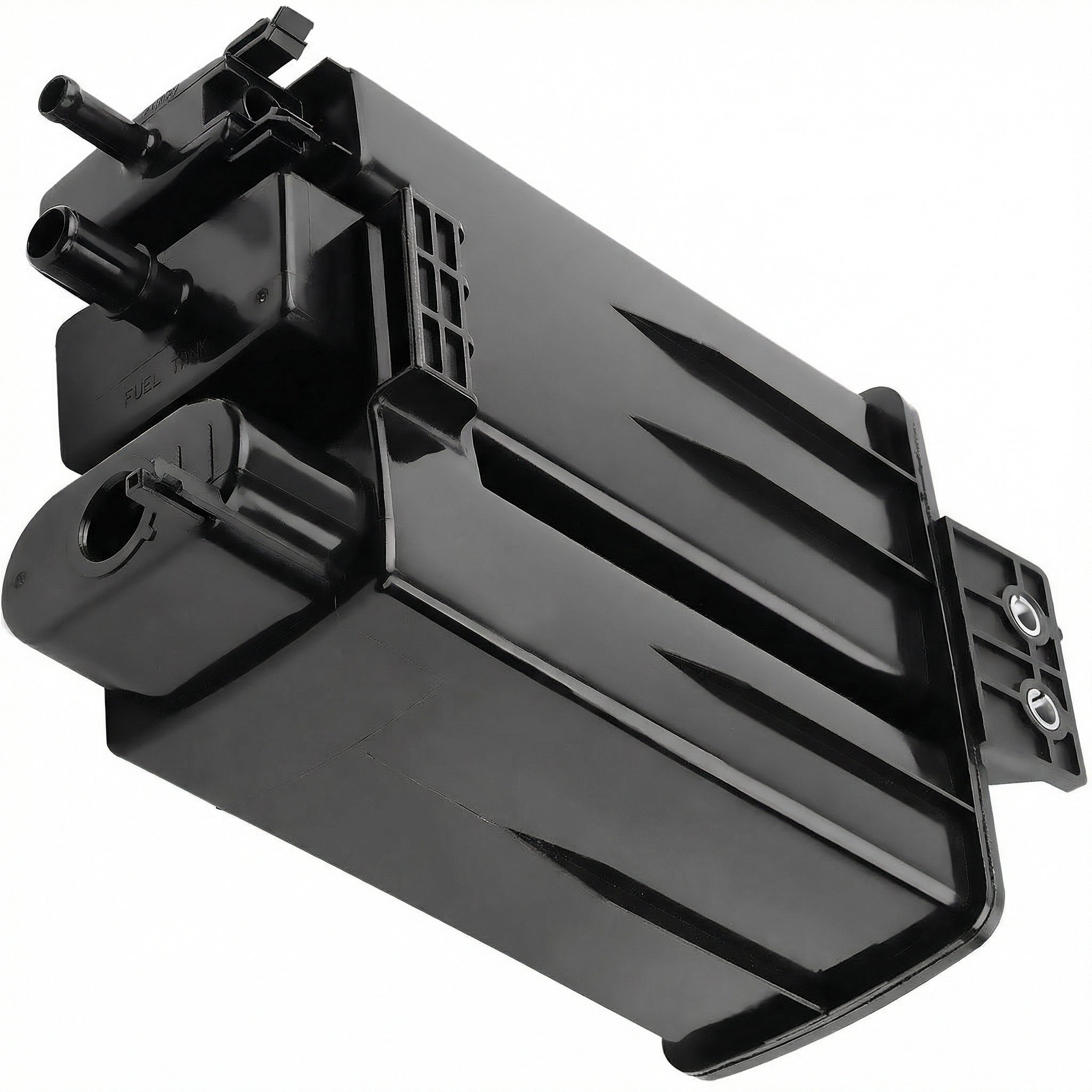
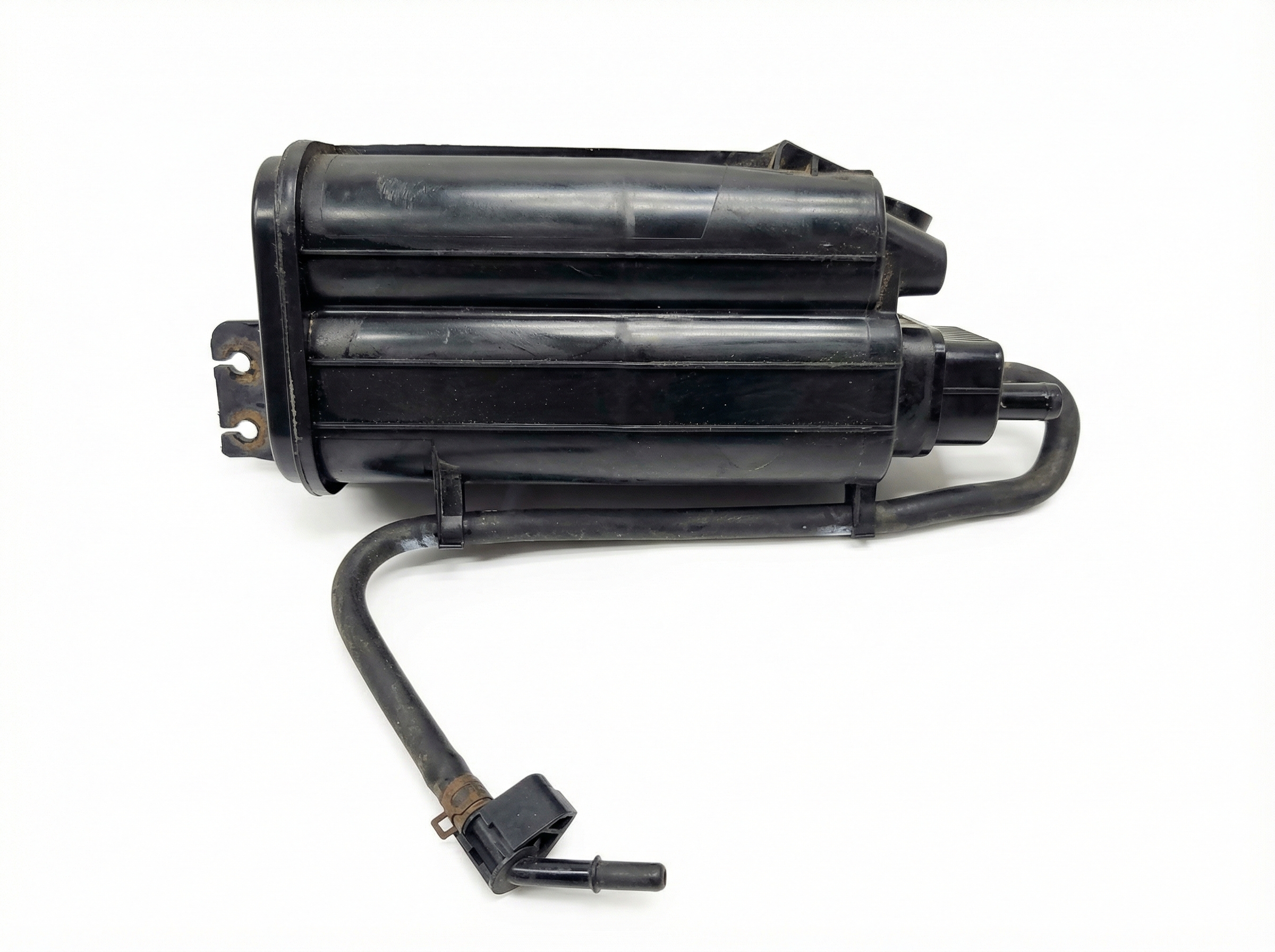
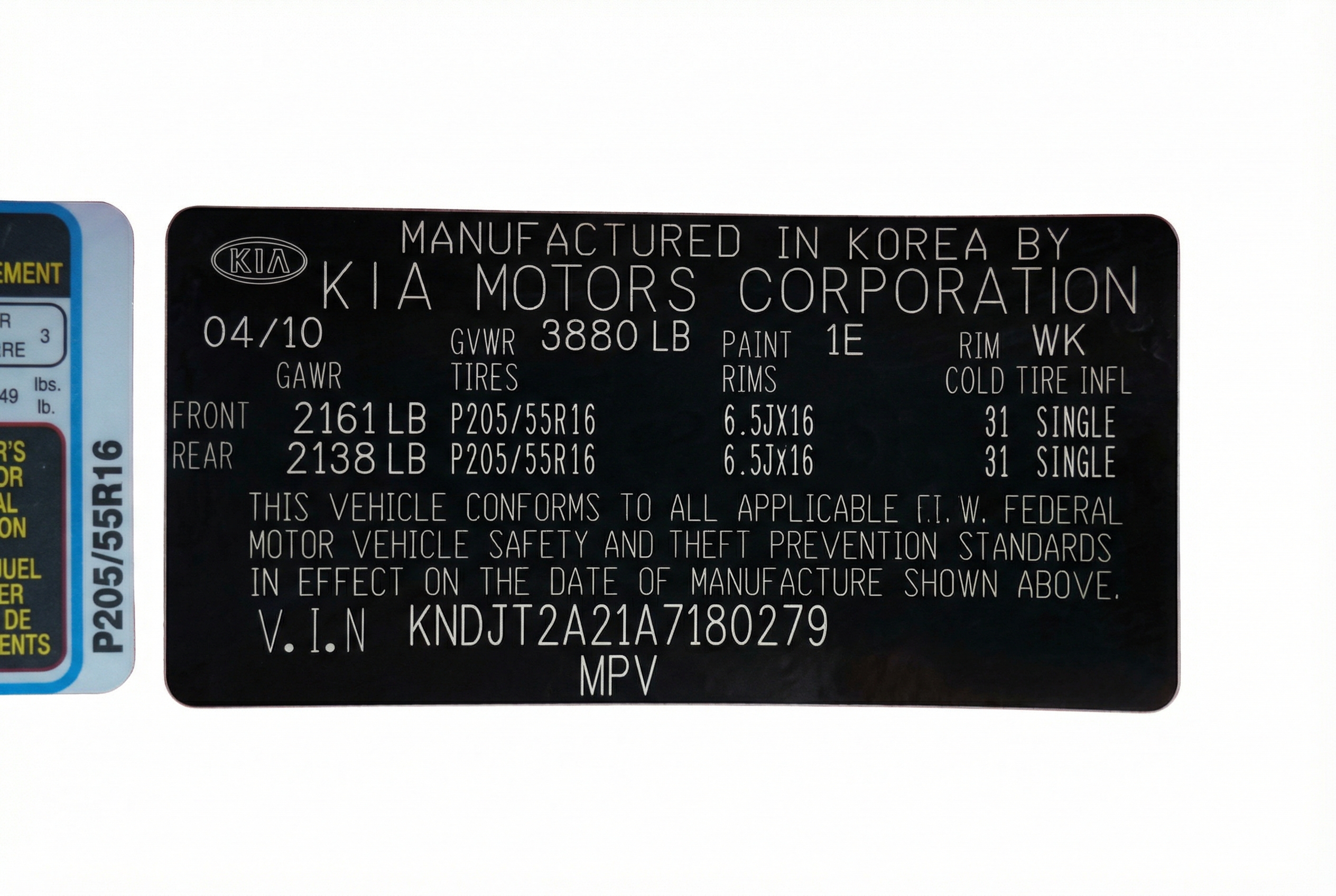
New Aftermarket Parts Available

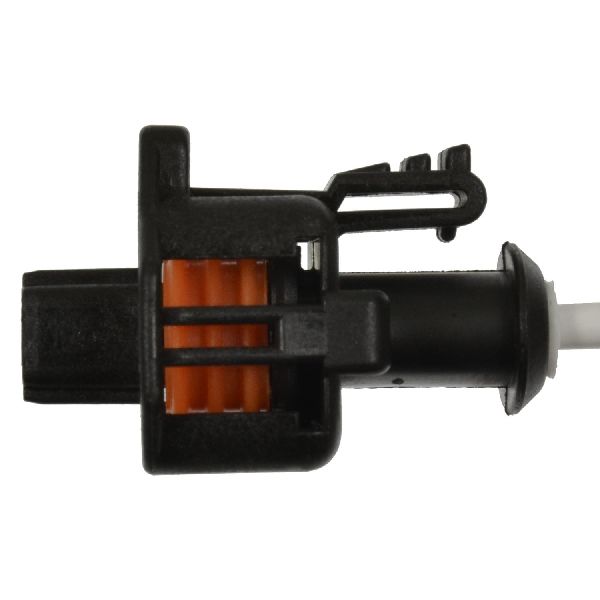

The information in this article is provided for general reference and educational purposes only. Vehicle specifications, procedures, and part compatibility can vary by production date, trim level, and region. Always consult your vehicle's factory service manual and verify part numbers before purchasing or performing repairs. Safety-critical components such as airbags, seat belts, and braking systems should be installed by a qualified professional.
- Kia Soul:
- 🧭 Diagnostic Flowchart
- 🎬 Helpful Videos
- 🛍️ Shop This Part
- What's Unique About the 2010-2013 Kia Soul
- Symptoms You May Notice
- Most Likely Causes
- Rare But Worth Checking
- Diagnosis Steps
- Parts You'll Likely Need
- Related Codes That Often Appear With This One
- Technical Service Bulletins (TSBs) & Recalls
- Platform-Specific Known Issues
- Mechanic-Grade Diagnostic Values
- Scan Tool Commands That Help
- Wiring & Ground Locations
- Real Owner Repair Stories
- OEM Part Supersession History
- Model Year Variations Within This Range
- Other Known Issues on This Vehicle
- Used vs. New Parts: Buying Guide for This Vehicle
- Real Owner Stories
- 2011 Kia Soul — 173852 miles
- 2011 Kia Soul 1.6L
- 2014 Kia Soul
- 2009 Kia Rio 1.6L
- Related OBD-II Codes
- Frequently Asked Questions
- 🎟️ Get 5% Off