

P0496 on 2017-2020 Land Rover Discovery: Causes and Fixes for High Purge Flow
For a 2017-2020 Land Rover Discovery, code P0496 is most often caused by a software glitch that requires a dealer-installed update, especially if it happens after refueling. The second most likely cause is a faulty (stuck open) canister purge valve, which is a common failure point across many JLR models with this engine.
- Before buying any parts for a P0496 code on a 2017-2020 Discovery, investigate the software issue.
- If your Check Engine Light came on after refueling, a dealer software update is the most likely fix.
- If the software is up to date, the next most common cause is a faulty canister purge valve that is stuck open.
- This is an emissions-related code that will cause you to fail a smog check.
- Replacing the purge valve is a DIY-friendly task, but the required software update must be done by a professional.
What's Unique About the 2017-2020 Land Rover DISCOVERY

What's unique about the 2017-2020 Land Rover Discovery (and related models with the 3.0L V6 'AJ126' engine) is that code P0496 is frequently caused by a software issue, not a hardware failure. Manufacturer bulletins confirm that if the check engine light appears after refueling the vehicle within 15 seconds of turning it off, a PCM software update is the required fix. This is a highly specific, documented quirk that sets it apart from many other vehicles where P0496 almost always points directly to a bad purge valve. Another TSB, SSM74280, notes that refueling with the vehicle running can also cause a false flag for this code.
Diagnostic Flowchart

Tap your situation to follow the diagnostic path that matches what you're seeing on this vehicle.
Symptoms You May Notice

- Check Engine Light (Malfunction Indicator Lamp or MIL) is on
- Difficulty starting the engine, especially right after getting gas.
- Rough or unstable idle, sometimes with a pulsing sound from the engine bay.
- Slightly reduced fuel economy
- A fuel smell near the vehicle
- In rare cases, difficulty filling the fuel tank, as if it's already full.
- Replacing the gas cap. While a loose or faulty gas cap can cause other EVAP codes (like P0455 for a large leak), it is not a typical cause for a P0496 high flow code.
- Immediately replacing the purge valve without checking for software updates first. Given the numerous TSBs for this vehicle, checking the software version should be a primary step. A forum user on landroverforums.com reported replacing the valve multiple times before realizing the root cause was likely software-related.
Most Likely Causes

- Powertrain Control Module (PCM) Software Requires Update 🔴 High Probability → Shop Engine Control Module (ECM) Land Rover issued multiple Technical Service Bulletins (TSBs) for this specific issue, indicating a known software calibration problem. TSB Discovery_N881_18APR25 directly links the code to refueling habits, while SSM74799 and LTB01302NAS1 also point to a required software update as the fix. TSB SSM74280 further clarifies that refueling while the engine is on can cause a 'false flag' of the DTC. This indicates the PCM's sensitivity for detecting flow is improperly calibrated.
How to confirm: This can only be confirmed by a Land Rover dealership or a qualified shop with JLR-specific diagnostic tools (like Pathfinder). They can check the current software version against the latest available calibration and see if any campaigns like H422 are open for the vehicle. The dealer can also run a 'Purge Valve Self-Test' routine; if the test passes, a software update is the next step.
Typical fix: Updating the PCM software to the latest version. This must be done by a dealer or specialist. For 2020 models, this may involve applying a manual patch named 'MP_PF_ER_J0023' via the Pathfinder diagnostic tool.
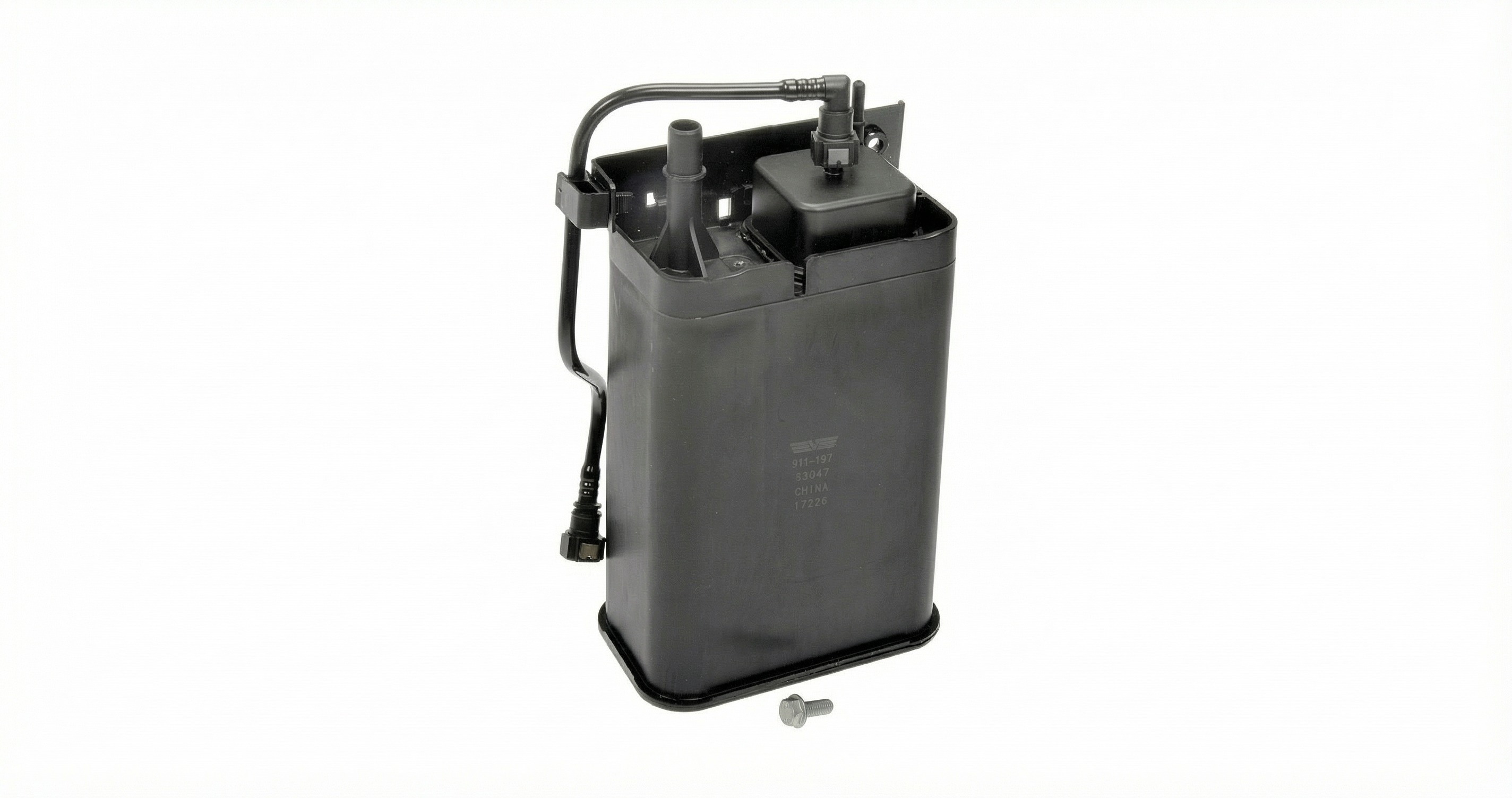
Est. part cost: $0 - Faulty Canister Purge Valve (Stuck Open) 🟡 Medium Probability → Shop Vapor Canister This is the most common mechanical failure for P0496 across all makes and models. The valve can fail and stick in the open position, allowing unregulated fuel vapor into the engine intake. Forum discussions show owners of various Land Rover models replacing this part, sometimes multiple times, indicating it can be a recurring issue.
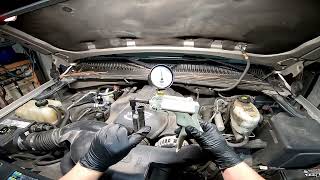
How to confirm: With the engine off, disconnect the vapor line from the purge valve to the intake manifold. Use a hand vacuum pump on the valve's intake port; it should hold vacuum. If it doesn't, the valve is stuck open. A simpler method is to disconnect the electrical connector and the outlet hose, start the engine, and feel for suction at the outlet port with your finger. If vacuum is present, the valve is stuck open and faulty.
Typical fix: Replace the canister purge valve. It is typically located on or near the intake manifold.
Est. part cost: $60-$150 - Leaking or Damaged EVAP System Hose ⚪ Low Probability Hoses can become brittle and crack over time due to heat and age, particularly the connections at the purge valve itself.
How to confirm: Visually inspect all EVAP hoses between the charcoal canister, purge valve, and intake manifold for cracks, disconnections, or damage. A smoke test is the most effective way to find leaks that aren't visible, as it will force smoke through the system and reveal any escape points.
Typical fix: Replace the damaged hose section.
Est. part cost: $20-$50
Rare But Worth Checking
- Faulty Fuel Tank Pressure (FTP) Sensor: → Shop Fuel Tank The PCM uses the FTP sensor to detect the vacuum change during a purge cycle. If the sensor gives an incorrect reading (is out of calibration), it might falsely trigger a P0496 code even if there is no improper flow.
- Clogged EVAP Canister: → Shop Vapor Canister While less common for this specific code, a clogged or saturated charcoal canister can sometimes lead to pressure irregularities within the EVAP system that may be misinterpreted by the PCM as a high flow condition.
Diagnosis Steps
- Check for Technical Service Bulletins (TSBs): Given the history with this vehicle, the first step is to see if your vehicle's VIN falls under TSBs #Discovery_N881_18APR25, #LTB01302NAS1, #SSM74799, or #SSM74280. This is the most critical first step.
- Scan for Codes: Use an OBD-II scanner to confirm P0496 is the only code present. Note any other codes.
- Consider Refueling Habits: Recall if the Check Engine Light appeared shortly after refueling. If you tend to refuel quickly (within 15 seconds) after shutting the engine off, or refuel with the engine on, the software issue is highly likely.
- Test the Purge Valve: This is the most likely hardware failure. Disconnect the electrical connector and the outlet hose. Start the engine and check for vacuum at the valve's outlet port. If vacuum is present, the valve is stuck open and must be replaced.
- Inspect the Purge Valve and Hoses: If the valve tests okay, visually inspect it and its connecting hoses in the engine bay for any obvious cracks, damage, or loose connections.
- Perform a Smoke Test: If the valve is functioning correctly, a smoke test can be performed on the EVAP system to check for any leaks between the purge valve and the fuel tank.
- Consult a Dealer for Software Update: If all mechanical parts test okay, the issue is almost certainly the PCM software. Contact a Land Rover dealer to have the PCM calibration updated as per the relevant TSBs.
Parts You'll Likely Need
- Canister Purge Valve / Solenoid
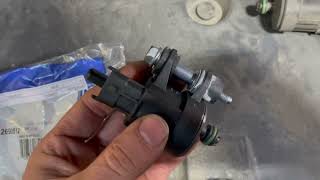
(OEM #LR172648 (replaces LR010749))— This is the most common mechanical point of failure for a P0496 code. It gets stuck open, causing the high flow condition. 🎬 Watch: How to swap out a faulty purge valve solenoid.
Trusted brands: Bosch, Denso, Genuine Land Rover
OEM price range: $120-$180
Aftermarket price range: $60-$100
Technical Service Bulletins (TSBs) & Recalls
- Discovery_N881_18APR25: Notes that refueling within 15 seconds of engine off can trigger P0496 and requires a PCM software update.
- LTB01302NAS1: Addresses MIL illumination with P0496 stored on 2017-2018 models and points to a software update.
- SSM74279: Confirms the Check Engine Light illumination with P0496-00 stored in the PCM.
- SSM74799: Defines P0496 as 'EVAP purification flow is too high' and states the fix is a PCM calibration update for 2020 models.
- SSM74280: Warns that refueling with the engine on can cause a 'false flag' and advises against replacing the purge valve if it passes a self-test, pointing to a future software update.
Platform-Specific Known Issues
- A software glitch can cause the PCM to incorrectly flag a P0496 code if the vehicle is refueled within 15 seconds of engine shutdown. This requires a dealer software update to fix, as documented in TSB #Discovery_N881_18APR25 and campaign H422.
- TSB #LTB01302NAS1 also addresses the MIL illuminating with P0496-00 stored for 2017-2018 models with the 3.0L V6 Supercharged engine, recommending a PCM software update.
- TSB #SSM74799 notes that for 2020 models with the AJ126 engine, the P0496 code is due to the system diagnosing an excessive pressure drop and requires a PCM calibration update via a manual patch.
- TSB #SSM74280 warns technicians not to replace the purge valve if it passes the self-test, and instead clear codes and advise the customer to turn the vehicle off during fueling until a software update is available.
Mechanic-Grade Diagnostic Values
- Purge Valve Solenoid Voltage — expected: Greater than 10V with ignition on, engine off.. Failure: Voltage less than 10V indicates a fault in the power supply circuit from the EMS control relay.
- EVAP System Pressure (Live Data) — expected: Near atmospheric pressure (approx. 0 kPa or 0 inH2O) at idle with the purge valve commanded closed.. Failure: A significant negative pressure (vacuum) reading, such as more than 10 inches of water, indicates flow when there should be none, pointing to a stuck-open purge valve or a faulty FTP sensor.
- Purge Valve Vacuum Test — expected: The valve should hold vacuum (e.g., 15 inHg) when disconnected and no power is applied.. Failure: If the valve cannot hold vacuum, it is stuck open internally and is defective.
Hidden / Shadow Codes Worth Checking
- P0496-00: The '-00' is a subtype identifier used by JLR and other manufacturers. It doesn't change the fundamental meaning of 'High Purge Flow' but specifies that no additional failure type information is associated with the code. It's the base version of the fault, as seen in TSBs LTB01302NAS1 and SSM74799. (see via JLR-specific diagnostic tools like Pathfinder or SDD, as well as some advanced professional OBD-II scanners.)
Scan Tool Commands That Help
- JLR Pathfinder / SDD: Purge Valve Self-Test / EVAP System Test — This is a bidirectional control function that commands the purge valve and vent solenoid to open and close, while monitoring the fuel tank pressure sensor to verify the system is sealed and components are responding. TSB SSM74280 specifically mentions using this test to confirm if the purge valve is functioning mechanically before condemning it, which is crucial for differentiating a hardware fault from the common software issue.
- JLR Pathfinder: Manual Patch Application (e.g., 'MP_PF_ER_J0023') — As per TSB SSM74799, for 2020 models, a specific manual software patch must be applied via Pathfinder to recalibrate the PCM. This is not a standard software update and is a specific action a technician must take to resolve the false P0496 trigger on these vehicles.
Wiring & Ground Locations
- Engine/Chassis Ground Straps — Key ground points include a strap from the battery negative to the body (often behind the left front wheel arch liner), and from the engine block/cylinder head to the chassis.. A poor engine ground can cause electrical noise and voltage discrepancies for sensors and actuators, including the purge valve and its control circuit. While not a primary cause, verifying grounds are clean and tight is a crucial step in diagnosing any electronic fault code.
- Purge Valve Connector (JB170) — Located on the purge valve itself, on or near the engine's intake manifold.. This is the direct connection point for testing voltage and control signals. A diagnostic procedure specifies checking for >10V at Pin 1 (Green/Blue wire) of this connector to verify power supply before testing the valve itself.
- A-Pillar Earth Headers — Inside the cabin, behind the kick panels at the bottom of the A-pillars, are main earth distribution points for many interior and control circuits.. While the purge valve's main power and ground are in the engine bay, a fault in a related control module grounded at one of these headers could potentially cause erratic behavior, making them a secondary check location for complex electrical issues.
Real Owner Repair Stories
- landroverforums.com user 'Leah_d' (Land Rover Discovery Sport (shares EVAP system components and logic)) — Started with hard starting and poor running after getting gas. Progressed to the point where the fuel tank would not accept more than a gallon of gas at a time, acting as if it were full and overflowing.
❌ Tried (didn't work) Initial focus was on the symptoms without a clear diagnosis mentioned.
✅ What actually fixed it The user identified the purge valve as the likely culprit for the symptoms described, which are classic signs of a stuck-open purge valve causing the fuel tank to be under constant vacuum, fighting the fuel pump during refueling. The user located the purge valve in the engine bay for replacement.
OEM Part Supersession History
LR010749→LR172648— The specific reason for the supersession is not officially published, but it is common for manufacturers to update parts to improve durability, change suppliers, or make minor design modifications to address known failure modes like sticking. Given the prevalence of P0496, the update was likely to create a more robust valve.
Heads up: The new part LR172648 is a direct replacement for LR010749 and is compatible with all specified applications.
Model Year Variations Within This Range
- 2020: According to TSB SSM74799, 2020 models with the AJ126 engine require a specific manual patch ('MP_PF_ER_J0023') applied via the Pathfinder diagnostic tool to fix a P0496 code. This indicates a unique software calibration issue for this model year compared to the more general software updates for 2017-2019 models.
Helpful Videos

We Have This Part in Stock

The information in this article is provided for general reference and educational purposes only. Vehicle specifications, procedures, and part compatibility can vary by production date, trim level, and region. Always consult your vehicle's factory service manual and verify part numbers before purchasing or performing repairs. Safety-critical components such as airbags, seat belts, and braking systems should be installed by a qualified professional.
- Land Rover DISCOVERY:
- 🧭 Diagnostic Flowchart
- 🎬 Helpful Videos
- 🛍️ Shop This Part
- What's Unique About the 2017-2020 Land Rover DISCOVERY
- Symptoms You May Notice
- Most Likely Causes
- Rare But Worth Checking
- Diagnosis Steps
- Parts You'll Likely Need
- Technical Service Bulletins (TSBs) & Recalls
- Platform-Specific Known Issues
- Mechanic-Grade Diagnostic Values
- Hidden / Shadow Codes Worth Checking
- Scan Tool Commands That Help
- Wiring & Ground Locations
- Real Owner Repair Stories
- OEM Part Supersession History
- Model Year Variations Within This Range
- 🎟️ Get 5% Off