

P0496 on 2020-2022 Lincoln Aviator: EVAP High Purge Flow Causes and Fixes
On a 2020-2022 Lincoln Aviator, code P0496 is often caused by a faulty canister purge valve (Motorcraft Part No. HU5Z-9F945-C), but manufacturer bulletins strongly advise checking for a specific wiring harness issue at connector C1198 before replacing any parts. This connector, located on the driver's side frame rail, is a known failure point. The issue is also identical on the Ford Explorer ST platform mate.
- P0496 means fuel vapor is flowing to the engine when it shouldn't be.
- Before replacing the common culprit (the purge valve), inspect the wiring at connector C1198 as per Ford/Lincoln's TSB SSM 50348.
- Be aware that TSB SSM 50306 warns that many purge valves are replaced unnecessarily on these vehicles.
- Symptoms are minor, usually just a Check Engine Light and possibly difficulty starting after getting gas.
- The repair is DIY-friendly, with the purge valve being accessible in the engine bay.
What's Unique About the 2020-2022 Lincoln AVIATOR

For the 2020-2022 Aviator and its platform mate, the Ford Explorer, Ford/Lincoln has issued specific Technical Service Bulletins (TSBs) that complicate the typical P0496 diagnosis. While a faulty purge valve is a common cause, TSB SSM 50306 notes that many returned purge valves from these vehicles were tested and found to be fully functional. Furthermore, TSBs SSM 50348 and SSM 51247 point to a potential wiring harness connection issue at connector C1198 as a root cause for P0496 and other related codes. This makes checking the wiring at this specific connector a critical first step before assuming the purge valve has failed.
Diagnostic Flowchart

Tap your situation to follow the diagnostic path that matches what you're seeing on this vehicle.
Symptoms You May Notice
- Check Engine Light is on
- Difficulty starting the engine, especially right after refueling
- Slightly rough idle, particularly after starting
- Possible faint fuel smell
- Excessive gunk or soot buildup on exhaust tips, as noted by some owners.
- Immediately replacing the canister purge valve without first inspecting the wiring at connector C1198, as warned against in TSBs SSM 50306 and SSM 50348.
- Replacing the fuel tank pressure (FTP) sensor when the root cause is a wiring fault at connector C1198 that is providing a bad signal from the sensor.
Most Likely Causes

- Wiring Harness Connection at Connector C1198 🔴 High Probability Manufacturer TSBs SSM 50348 and SSM 51247 specifically identify this connector as a frequent failure point for P0496 on the Aviator and Explorer. Its location on the lower frame rail makes it vulnerable to moisture and corrosion.
How to confirm: Locate connector C1198 on the driver's side lower frame rail, underneath the brake lines near the electric brake booster (EBB). Disconnect the battery, then disconnect C1198 and inspect both ends for green or white corrosion, bent pins, or water intrusion. The issue disrupts Voltage Reference (VREF) signals shared by multiple sensors.
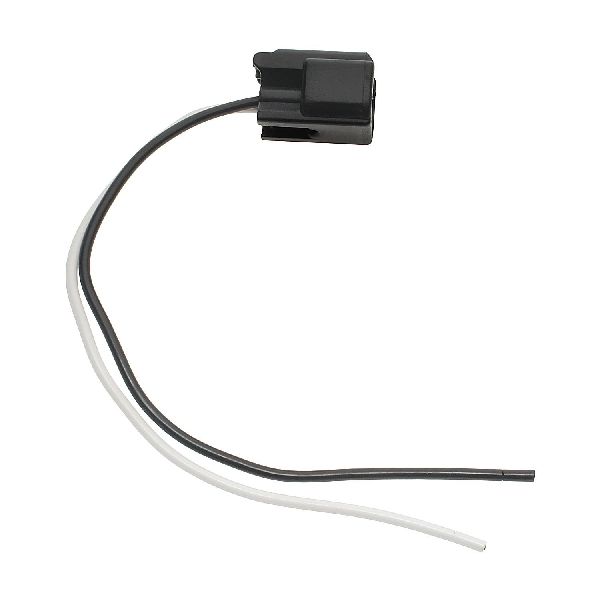
Typical fix: Repair the damaged wiring or pins. A pigtail connector, Motorcraft WPT-1198, is available for this repair.
Est. part cost: $0-$50 - Faulty Canister Purge Valve 🟡 Medium Probability → Shop Vapor Canister This is a common cause for P0496 across all makes, as the valve can get stuck open or leak internally. On this platform, it is often replaced unnecessarily, but can still be the true cause.
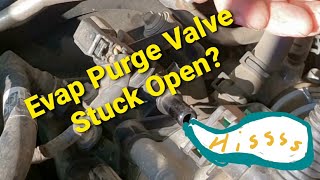
How to confirm: With the engine off, disconnect the hose leading from the purge valve to the intake manifold. Use a handheld vacuum pump on the valve; it should hold vacuum. If it doesn't, it's stuck open. Importantly, some cases show the valve passing an in-vehicle smoke test but failing when removed and tested in isolation, as it was leaking internally.
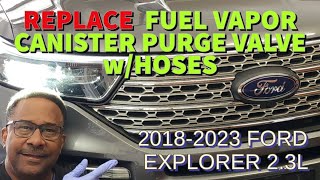
Typical fix: Replace the canister purge valve assembly. The OEM part is Motorcraft HU5Z-9F945-C. 🎬 Watch: Step-by-step guide to changing the Aviator purge valve.
Est. part cost: $50-$100 - Leaking or Blocked EVAP Hoses ⚪ Low Probability
How to confirm: Visually inspect all EVAP system hoses between the charcoal canister, purge valve, and intake manifold for cracks, kinks, or loose connections. A smoke test is the most effective way to find small leaks.
Typical fix: Replace the damaged hose section.
Est. part cost: $10-$50
Rare But Worth Checking
- Faulty Fuel Tank Pressure (FTP) Sensor: → Shop Fuel Tank The FTP sensor is what detects the unwanted vacuum. If the sensor is faulty and providing incorrect readings, it can trigger the P0496 code even if there is no actual flow. This can also be caused by the C1198 wiring issue, as the FTP sensor signal runs through it.
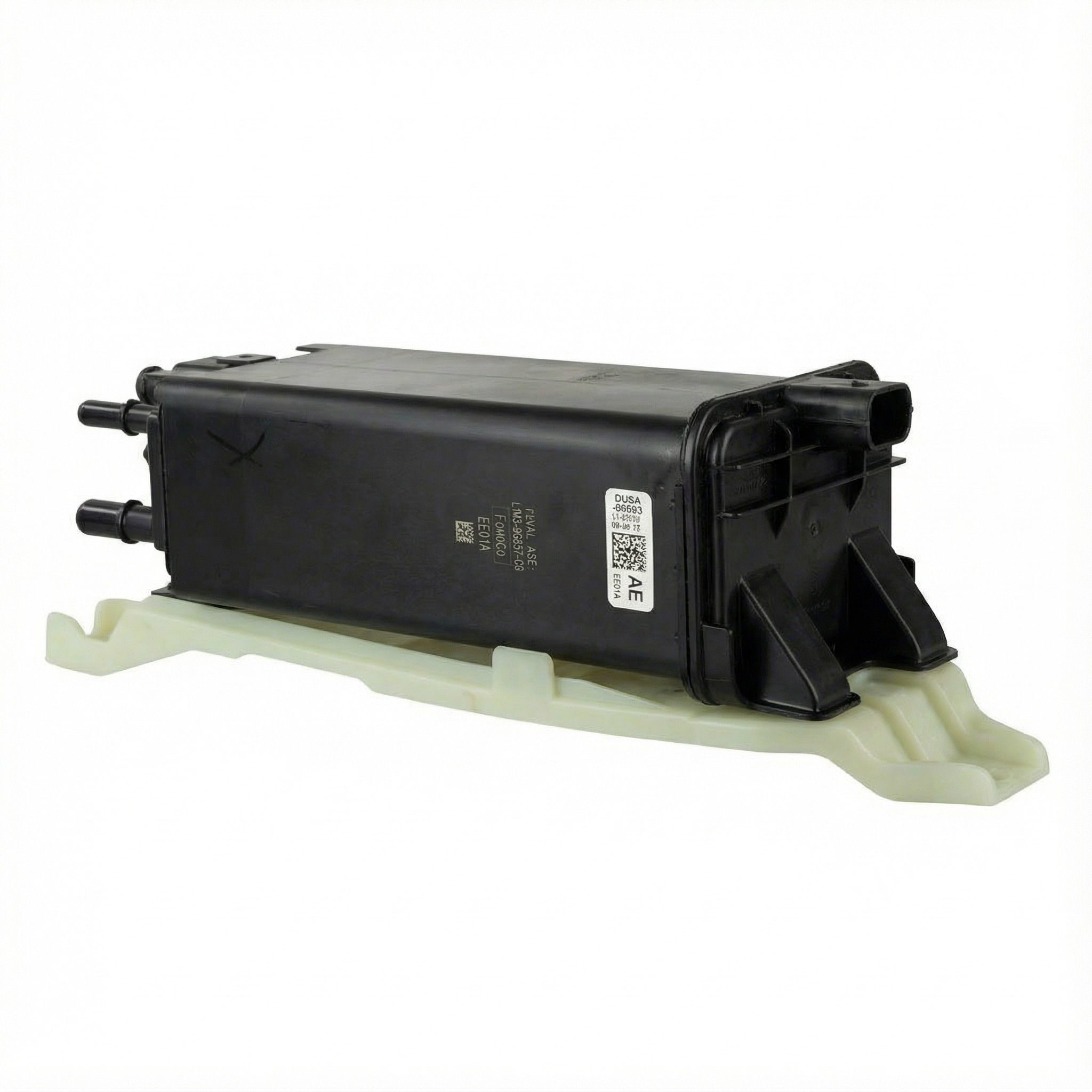
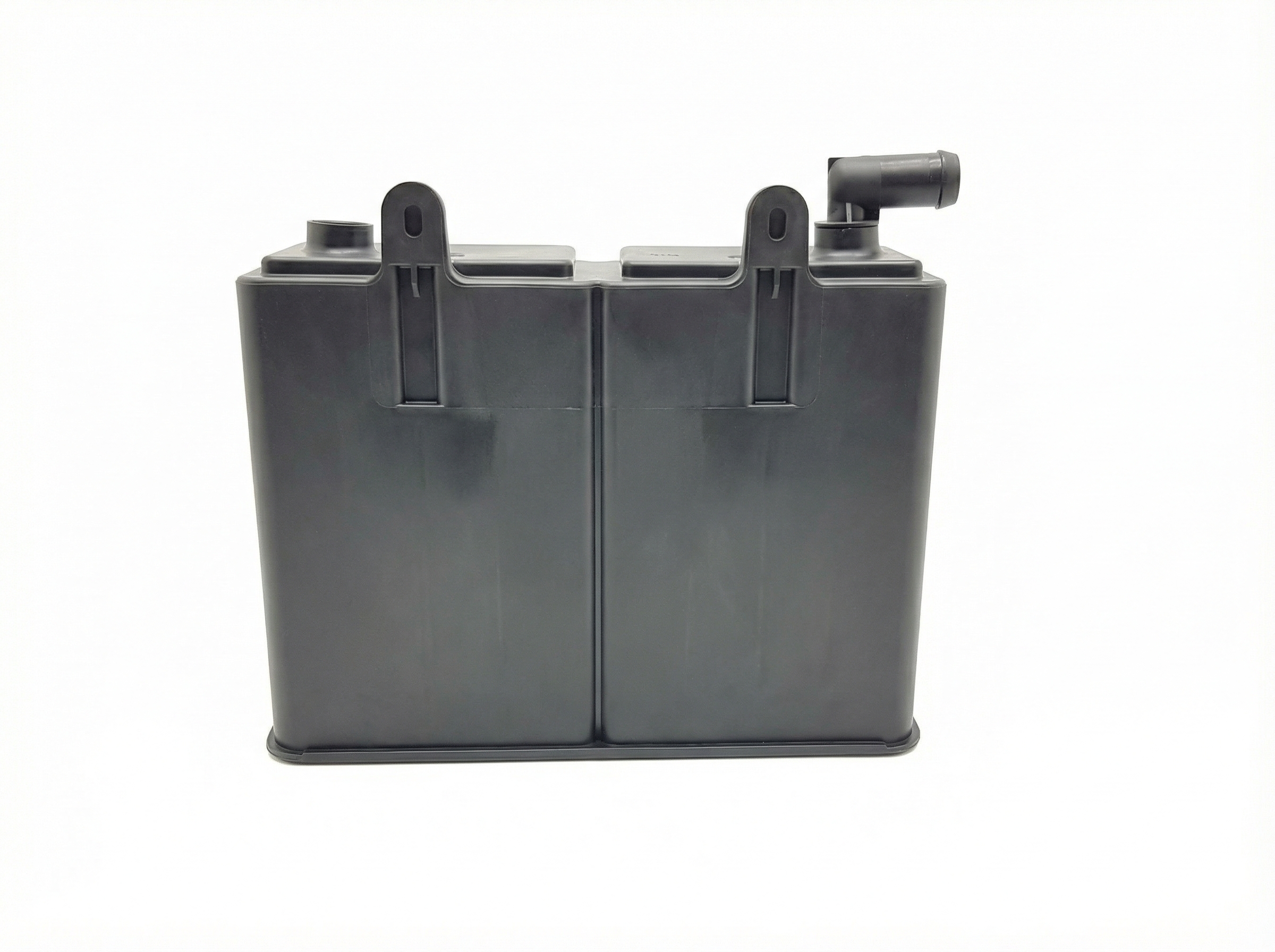
- Saturated or Leaking Charcoal Canister: → Shop Vapor Canister If the charcoal canister becomes saturated with fuel (often from repeatedly overfilling the gas tank) or develops a crack, it can cause flow problems within the EVAP system.
Diagnosis Steps
- Read the codes: Use an OBD-II scanner to confirm P0496 and check for any other related codes, especially P0451, P0456, and P04F0.
- Inspect Capless Fuel Filler: On Ford's 'Easy Fuel' system, ensure the filler neck opening is clean and free of debris, as this can cause sealing issues leading to other EVAP codes.
- Inspect Wiring at Connector C1198: Following TSB SSM 51247, this is the most critical vehicle-specific step. Locate connector C1198 on the driver's side lower frame rail near the electric brake booster. Disconnect and inspect for corrosion or damage before proceeding.
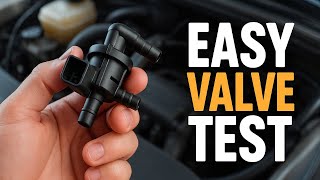
- Test the Canister Purge Valve: Locate the purge valve assembly on top of the engine. Disconnect it and test its function. When de-energized, it should be closed and hold vacuum. 🎬 Watch: A DIY guide on how to test your purge valve. If it leaks, it has failed. Remember that it can fail even if a system-wide smoke test shows no leaks.
- Inspect EVAP Hoses: Visually check all accessible EVAP lines for cracks, damage, or loose connections.
- Perform a Smoke Test: If the valve and wiring appear good, a smoke test is the best way to find hairline cracks or leaks in the EVAP system hoses or the charcoal canister.
- Consider the FTP Sensor: If all other components pass inspection, the Fuel Tank Pressure (FTP) sensor may be providing false data, requiring testing with an advanced scan tool.
Parts You'll Likely Need

- Canister Purge Valve
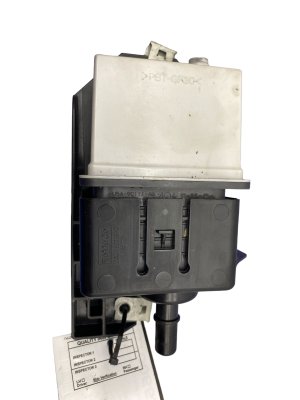
(OEM #HU5Z-9F945-C)— This valve is a frequent mechanical failure point for code P0496, as it can become stuck open. It is located on top of the engine and is an assembly with several tubes.
Trusted brands: Motorcraft, Dorman, Standard Motor Products
OEM price range: $70-$100
Aftermarket price range: $40-$70 - Connector Pigtail (for C1198)
(OEM #WPT-1198)— If the wiring at connector C1198 is found to be corroded or damaged, this pigtail is used to repair the harness side of the connection.
Trusted brands: Motorcraft
OEM price range: $30-$50
Aftermarket price range: $20-$40
Related Codes That Often Appear With This One
- P0451 — This code relates to the EVAP Pressure Sensor performance. Both P0496 and P0451 can be triggered by the wiring issue at connector C1198, as noted in TSB SSM 50348.
- P0455 — Indicates a large EVAP leak. A stuck-open purge valve can sometimes be interpreted by the system as a large leak, causing both codes to appear.
- P0456 — Indicates a small EVAP leak. This code is frequently seen with P0496 on the platform mate Ford Explorer ST, often pointing to the same purge valve or wiring faults.
- P04F0 — This code is for 'EVAP System High Pressure Purge Line Performance'. It is listed alongside P0496 in TSBs SSM 50348 and SSM 51247, pointing to a common underlying cause like wiring at C1198.
Technical Service Bulletins (TSBs) & Recalls
- SSM 50348: Illuminated MIL with multiple DTCs including P0496 may be due to the wiring harness connection at connector C1198.
- SSM 50306: Advises that returned EVAP canister purge valves have been tested and found functional, cautioning against unnecessary replacement for code P0496.
- SSM 51247: Supersedes SSM 50348 for the 2.3L Explorer but provides more specific location details for C1198 ('driver's side lower frame area underneath the brake lines that route near the electric brake booster (EBB)'), which is relevant for the Aviator as well.
Platform-Specific Known Issues
- TSB SSM 50348 / SSM 51247: Notes that P0496 (and other codes) may be caused by a wiring harness connection issue at connector C1198, located on the driver's side frame rail. It advises inspecting this connector before replacing any parts.
- TSB SSM 50306: States that Ford has tested many returned EVAP canister purge valves and found them to be fully functional, warning against replacing the valve without proper diagnosis.
- Capless Fuel Filler Neck: While more commonly associated with P0455/P0457 (large/small leak), a dirty or debris-filled capless fuel filler neck can prevent a proper seal of the EVAP system. Cleaning it is a simple, no-cost first step.
Mechanic-Grade Diagnostic Values
- Canister Purge Valve (Solenoid) Coil Resistance — expected: 12 to 130 ohms. Failure: A reading outside this range, or an open circuit (infinite resistance), points to a failed solenoid coil.
- Fuel Tank Pressure (FTP) Sensor Live Data (KOEO, system at atmospheric pressure) — expected: Approximately 2.6 to 2.65 volts. Failure: If the voltage immediately drops when the engine is started (with the purge valve commanded off), it indicates the purge valve is likely stuck open, pulling a vacuum.
- Fuel Tank Pressure (FTP) Sensor Live Data (During manual test) — expected: -0.9 to +0.9 mm Hg (-0.5 to +0.5 in. H2O). Failure: If the pressure reading goes beyond this range while the purge valve is disconnected and the engine is running at 1,200-1,500 RPM, the purge valve is faulty.
Scan Tool Commands That Help
- Ford Diagnosis and Repair System (FDRS): Full System EVAP Leak Test — As recommended by TSB SSM 50306, this guided test should be performed before replacing any components to verify a system leak. It is found under TOOLBOX > PCM > PCM - Evap Emissions System Test.
- Ford Diagnosis and Repair System (FDRS): EVAP Purge Valve Leak Test (CPV Check) — Also recommended by TSB SSM 50306, this function specifically tests the canister purge valve's integrity. It is located at TOOLBOX > PCM > Evap Emission System Toolbox > CPV Check.
- Ford IDS / FORScan: Vapor Management Valve (Purge Valve) Duty Cycle Command — This bidirectional control allows a technician to manually command the purge valve open or closed. To test for a P0496 fault, command the valve to 0% (closed) with the engine running. If the FTP sensor still shows a vacuum developing, the valve is mechanically stuck open.
Wiring & Ground Locations
- C1198 — On the driver's side lower frame rail, located underneath the brake lines that route near the electric brake booster (EBB).. This connector is a known point of failure due to moisture and corrosion, as identified in TSBs SSM 50348 and SSM 51247. A bad connection here can disrupt signals for multiple EVAP components, including the FTP sensor, directly causing P0496 and related codes.
- Engine Compartment Fuse Box — Located near the battery in the engine compartment.. This fuse box contains fuses and relays for essential engine systems, including the power supply for the EVAP purge solenoid. A blown fuse could cause a loss of power to the solenoid, although this is less likely to cause a P0496 (flow when not commanded) than a mechanical failure.
OEM Part Supersession History
CU5Z-9F945-C→HU5Z-9F945-C— Standard part revision and update by the manufacturer.
Model Year Variations Within This Range
- 2022: The 2022 model year introduced minor changes. The base 'Standard' trim became available with an Appearance package (panoramic sunroof, 20-inch wheels), and the 'Reserve' trim gained wireless device charging as a feature. The Co-Pilot360 driver aid suite was also updated to version 1.5. These changes do not affect the diagnosis of code P0496.
- 2020-2022: Across the 2020-2022 model years, the core powertrain, including the 3.0L twin-turbo V6 engine (400 hp), 10-speed automatic transmission, and EVAP system components, remained unchanged.
Helpful Videos

Used OEM Parts in Stock

New Aftermarket Parts Available


The information in this article is provided for general reference and educational purposes only. Vehicle specifications, procedures, and part compatibility can vary by production date, trim level, and region. Always consult your vehicle's factory service manual and verify part numbers before purchasing or performing repairs. Safety-critical components such as airbags, seat belts, and braking systems should be installed by a qualified professional.
- Lincoln AVIATOR:
- 🧭 Diagnostic Flowchart
- 🎬 Helpful Videos
- 🛍️ Shop This Part
- What's Unique About the 2020-2022 Lincoln AVIATOR
- Symptoms You May Notice
- Most Likely Causes
- Rare But Worth Checking
- Diagnosis Steps
- Parts You'll Likely Need
- Related Codes That Often Appear With This One
- Technical Service Bulletins (TSBs) & Recalls
- Platform-Specific Known Issues
- Mechanic-Grade Diagnostic Values
- Scan Tool Commands That Help
- Wiring & Ground Locations
- OEM Part Supersession History
- Model Year Variations Within This Range
- 🎟️ Get 5% Off